







 Publish to Newswire
 Add an Event
War - Health of the State or Addictive Poison?
"War is the health of the state." So wrote Randolph Bourne shortly after World War I, and it is hard to argue with him. Since nation-states have existed, their leaders have regularly resorted to making war abroad to shore up support at home, counting on the unifying effect of a common enemy to suppress dissent and rally the citizenry under one banner. They wouldn't still be doing it after all these centuries if it didn't work. Here in the US we have two fairly recent examples, both perpetrated by the Bush family. Shortly after taking office in 1989, George H. W. Bush, determined to emerge from Ronald Reagan's shadow and overcome the infamous "wimp factor" that had plagued his campaign, invaded Iraq in Gulf War I. This caused Bush's approval rating to skyrocket, and led to his Republican party doing far better in the 1990 midterm elections than would have been expected by historical trends.
In keeping with this new family tradition, Bush's son George W. Bush invaded Afghanistan in 2001 in response to the 9/11 attacks, despite most of the attackers being Saudis. Not satisfied with just one unwinnable foreign quagmire, Dubya's plans to invade Iraq were already well under way by the 2002 midterms. Politically, the immediate results were even more spectacular than for the previous conflict. The GOP actually gained seats in both houses of Congress that year, an unprecedented midterm victory for the party in power.
How then can we explain the historic shellacking absorbed by the Republicans in 2026, in the midst of their latest war on terror in the Middle East? The scale of the defeat is almost biblical. The party lost ground in every type of office at every level of government, from senator to mine inspector, and even the races they won were far closer than one would have expected. Just to convey the flavor, Arizona will now be governed by a Democratic trifecta for the first time since 1966. A progressive Black candidate with no national experience who supports trans rights knocked off an incumbent Republican senator in Mississippi, of all states. Worse, many polls point to the unpopularity of the Iran conflict as a major factor in the loss. What ever happened to the invigorating effect of war on the body politic? Or at least on the short-term electoral prospects of Republicans?
To be fair, Bourne might have been overstating his case a bit. As an American, he was on the winning side of WWI, perhaps not the best vantage point to appreciate a major drawback of war as an electoral tool - it only works if you don't lose. For the German and Austro-Hungarian states, war was decidedly unhealthy. While US presidents don't have to worry about the Austro-Hungarian scenario, they do face a narrow window of effectiveness. The elder Bush saw his approval rating crater in the final year of his term, and he ended up a one-term wonder after losing the 1992 election to Bill Clinton. His kid did somewhat better, winning reelection in 2004 by the skin of his teeth, but it took rampant voter suppression in Ohio to pull it off, and he left office four years later with an approval rating in the mid-twenties. By 2016, forever wars were still so unpopular that Trump felt confident running against them, even making abortive attempts to settle the Afghan conflict in his first term.
Neither of these pitfalls explain the current difficulty. Nobody thinks Iranian troops are going to march into DC and torch the White House like the British did in the War of 1812 (not that Trump needs their help). And the timing should have been perfect. Trump attacked Iran in late February as the primary season was heating up, in theory early enough to achieve maximum impact, but without leaving enough time before November for voters to become disillusioned. The problem was they never had any illusions to begin with. At no point did any serious poll show majority support for the war, let alone the kind of rampant jingoism that initially greeted both the Bushes' Iraq adventures (remember "freedom fries?"). Voters' skepticism was based on a number of factors.
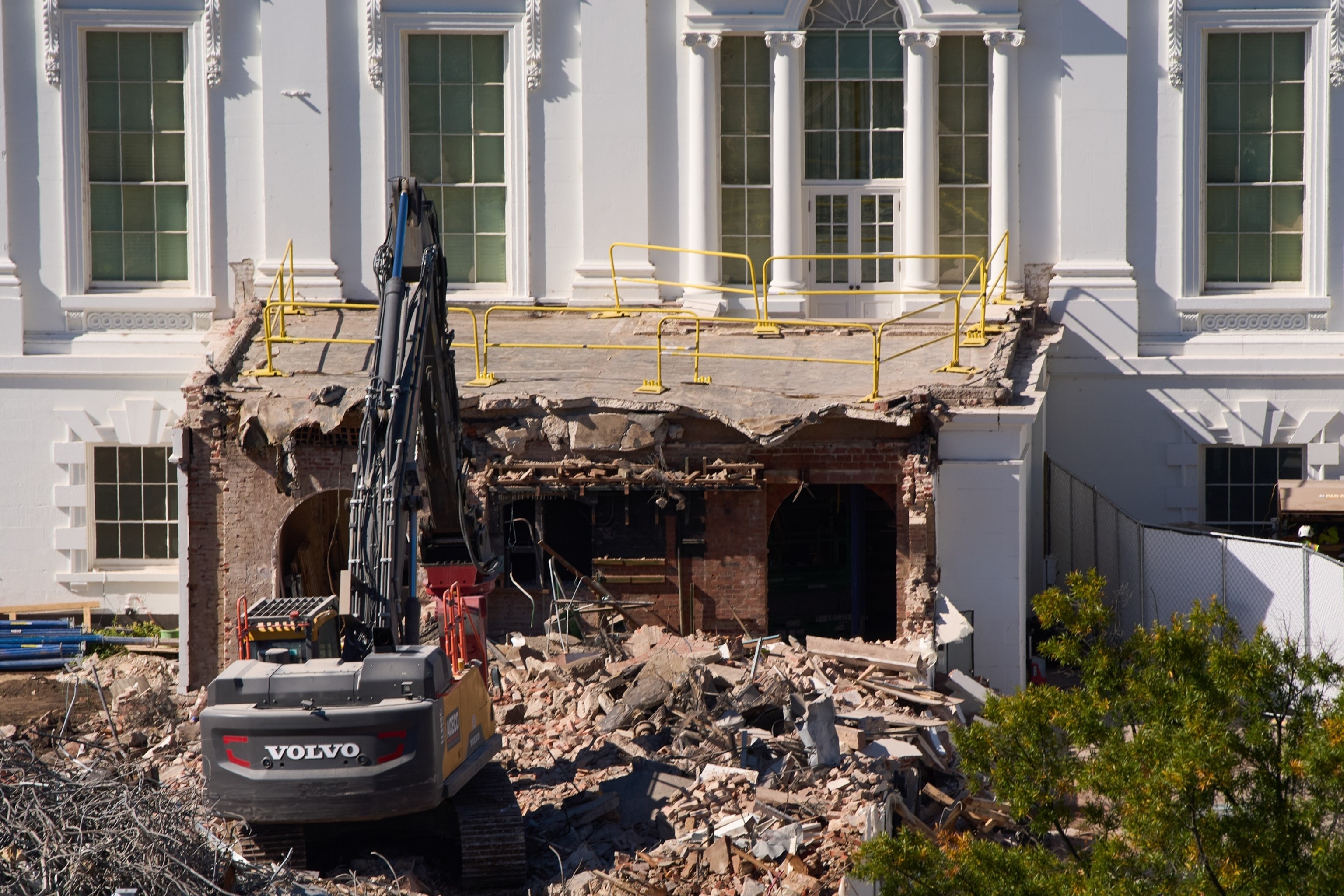
For starters, there's Trump's utter lack of credibility. His immediate motivation was diverting media attention from the Epstein files, a tactic so transparent it makes Wag the Dog look like a documentary. The midterms were just an afterthought. Subsequent revelations that Trump acted at the urging of Israeli then-Prime Minister Benjamin Netanyahu didn't help a bit. Neither did the president's abysmal track record in keeping his campaign promises, or the clown show(s) that Kristi Noem and Pam Bondi put on during their abortive Cabinet stints, among a host of other failures by the administration.
Then there's the geography. Thanks to Iran's location astride the Strait of Hormuz at the entrance to the Red Sea, it can easily choke off the transport of much of the Middle East's oil production. The Houthi rebels of Yemen, who are allied with Iran, have recently established control over the Bab El Mandeb Strait at the other end of the Red Sea. The resulting blockades have spiked the price of fuel across the globe, at a time when Trump's inexplicable tariffs had already jacked up costs on everything from lumber to hamburgers. This was a bitter pill to swallow from a president who had made such a fuss about the price of eggs in 2024.
Then there's the losing. Iranian soldiers might not be invading the capital, but they've done a great job of blowing up regional US military bases with missiles. Just repairing all the damage would cost hundreds of billions, and the bases would remain as vulnerable to aerial attack as they were before the war. The vaunted decapitation of Iran's leadership backfired badly. Supreme Leader Ali Khameni was simply replaced by his son Mojtaba Khameni, who US forces had failed to assassinate. On the military side, Iran had already decentralized its command structure, preparing individual units and commanders to operate independently in anticipation of exactly the type of "surprise" attack that Trump ordered. The economic carnage and civilian death toll inflicted by US bombings has been strategically useless, leaving Iran firmly in control of the Red Sea.
Given Iran's strategic advantages, there was probably no "right" way to conduct the war. Sure, a sensible Republican administration could have beefed up air defense around bases in the Middle East, and upgraded the toilets on its aircraft carriers, but that kind of minor tinkering would have done nothing to hold down oil prices. Knowing this still does not answer the larger question of whether any war can offer an electoral advantage to a Republican president in the current climate, but there is reason to think it can't.
Let's recap some more history. The US empire entered its trans-oceanic phase in 1898, when it won the Spanish-American War and found itself in possession of the Philippines, among other former Spanish colonies. Under soon-to-be-assassinated president William McKinley, US forces spent the next three years subjugating the archipelago, killing about a quarter million Filipinos in the process. Over the next half century, the US Marines were regularly deployed to overthrow Third World governments that had angered the United States somehow. After World War II, the CIA largely took over this function from the Marines, but the policy continued with little objection from most voters. (Stephen Kinzer's 2006 book Overthrow is an informative compendium.) Then came Vietnam. As in the Philippines, the US found itself facing a determined guerilla insurgency in a jungle environment, but the Philippine solution was no longer viable. The intervening invention of television meant that atrocities could be filmed and broadcast around the world, and the horrors of the Third Reich, still fresh in many memories in the sixties, made the widespread use of concentration camps a political nonstarter. Even the relatively small-scale atrocity of the My Lai massacre was considered a major scandal in 1968.
Thus Vietnam became the archetype of the military quagmire, a war that couldn't be won, but from which leaders were unwilling to withdraw lest they suffer the unspeakable ignominy of admitting they were wrong. Far from being healthy for the American state, the Vietnam war caused it enormous damage, driving the protest movements of the sixties and cementing a deep distaste for foreign interventions among a large segment of the electorate. One of Ronald Reagan's first goals when he took office in 1981 was overcoming "Vietnam Syndrome" to re-legitimize foreign military adventures. He started small, very small. The first casualty was Grenada, a minuscule island nation in the Caribbean that had had the misfortune to experience political upheaval at the same time Reagan was casting about for a suitable victim. Reagan's administration also conducted multiple covert wars in Latin America; engineered the overthrow of Ferdinand Marcos in the Philippines; and sent Marines to help Israel occupy Lebanon, where 241 of them were killed in a car bomb attack.
When George H. W. Bush's turn came he led off with Panama, on the excuse that its dictator Manuel Noriega was involved in international drug trafficking. Like Grenada, Panama was too small to resist even the most incompetent invasion, making it a safe target. Flush with victory, Bush leveled up to take on Saddam Hussein's Iraq, but he wasn't dumb enough to try to occupy it, or throw the country into chaos by removing Hussein from power. His son did not demonstrate the same good judgement twelve years later. Instead of a temporary incursion to capture Hussein and leave again, justice done, the junior Bush insisted on a long term occupation in order to secure Iraq's oil for his friends at ExxonMobil and Shell. Meanwhile, the parallel occupation of Afghanistan continued to absorb money and lives while benefiting only defense contractors.
Obama had a golden opportunity to end both Republican wars when he took office in 2009. As a relative newcomer to the national stage, he had no personal stake in the conflicts, and had even voted against the Iraq war during his brief Senate tenure. But as a Black politician who had inspired calls for hope and change during his campaign, he was eager to prove to major donors that he wasn't a crazy radical. Thus his selection of Joe Biden as his running mate, Hillary Clinton as Secretary of State, and Robert Gates as Defense Secretary (who had been doing the same job for Bush). His approach to the wars he inherited was to emphasize Afghanistan at the expense of Iraq, but continue both - even after killing Osama bin Laden, the ostensible reason for the Afghan invasion.
By the time the last US plane lifted off from Kabul airport in 2021, half a step ahead of the advancing Taliban, Americans were completely done with forever wars. Six successive presidential administrations had been exploiting wars abroad for political health benefits at home, a strategy that failed only the one president who finally got out - Joe Biden, who rightly took the blame for the chaotic departure from Afghanistan. But tactics that bolstered one administration in the short term fueled increasing disgust with political wars and politics in general. It is perhaps too soon to conclude that war has lost its electoral potency - the right war at the right time with the right provocation might still enthrall enough registered voters to let another Republican president squeak through another election. But the Iran war is not that war, and Trump is not that president. Stripped of the one lifeline that might have let him survive all his other terrible decisions, he enters his lame-duck phase facing substantial Democratic majorities in Congress, his coalition crumbling, and his would-be successors forced to choose between rejecting him and losing in the primary, or embracing him and losing in the general election.
In this environment, the GOP's best hope lies in their eternal dance partners, the Democrats. If Hakeem Jeffries and Chuck Schumer can stonewall their base's demands for another couple of years, they might narrow the enthusiasm gap enough to to keep GOP losses in 2028 within the bounds of respectability. They have their work cut out for them, though. Trump obviously means to double down on his least popular policies, replacing the only voice of sanity in the White House, chief of staff Susie Wiles, with the odious Stephen Miller. The economy, at this writing, is on the verge of a crash that will reverberate into the 2028 election season, furthering discrediting Trump and the GOP. The best Republicans can likely achieve congressionally is to preserve the filibuster in the Senate. In the presidential race, blue fascists like Rahm Emanuel and Mark Kelly will be vying in a very crowded field for the chance to apply competent management to Trump's corrupt and repressive policies.
It's hard to even imagine more fertile ground for anarchist organizing. If there was ever a perfect time to tell everyone that there is no hope in politics, that no one is coming to save us, that the only solutions are those we craft ourselves, it's now. For the first time in US history, they can't even start a war to distract us.
Donate

$30.00 donated
in the past month
Get Involved
If you'd like to help with maintaining or developing the website, contact us.
Publish
Publish your stories and upcoming events on Indybay.