



 Publish to Newswire
 Add an Event
From the Open-Publishing Calendar
From the Open-Publishing Newswire
Indybay Feature
The American way to take organs from people who are no longer dead
Preparing someones lungs for a transplant
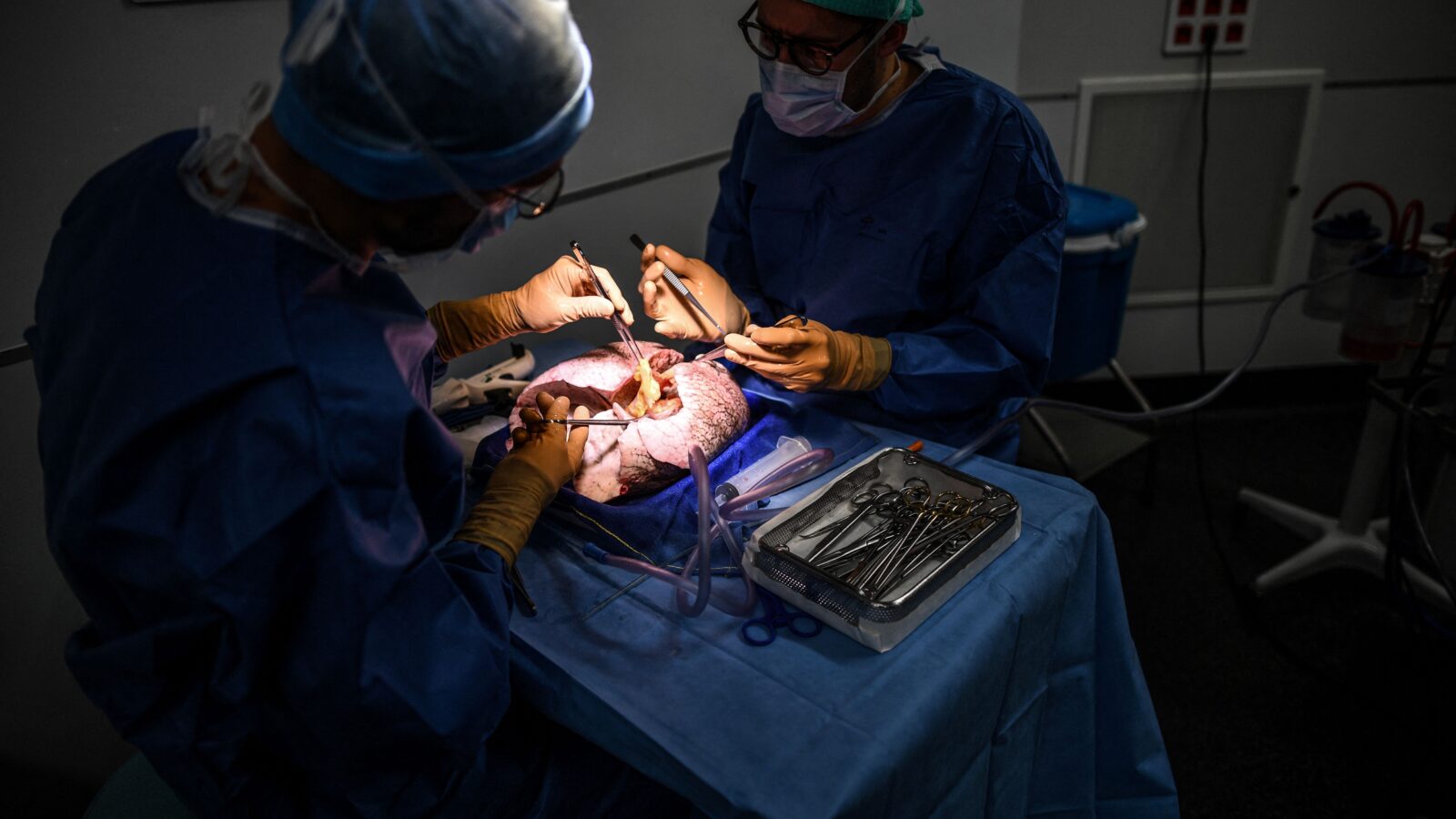
The American way to take organs from people who are no longer dead
Organ donors beware of ‘normothermic regional perfusion’ (NRP)
By Lynda Carson - November 15, 2026
The “Organ Procurement and Transplantation Network (OPTN)” of the “Health Resources and Sciences Administration” recently approved their ‘normothermic regional perfusion’ (NRP) policy, reportedly approving a policy that allows the “taking of organs from people who are no longer dead."
Critics of ‘normothermic regional perfusion’ (NRP), claim it is unethical, because “It allows the taking of organs from people who are no longer dead”, according to an NPR arcticle.
More about the horrors of organ donors who ‘woke up’ on the operating table as they were about to remove their organs, may be found by clicking here.
Click here, for a letter to Thomas J. Engels, the Administrator of the Health Resources and Sciences Administration, about the corrupt organ donor system.
See a financial disclosure form for Thomas J. Engels below…
https://projects.propublica.org/trump-team-financial-disclosures/appointees/engels-thomas/
‘Normothermic Regional Perfusion’ (NRP).
Note: [ Normothermic regional perfusion (NRP) is a technique that restores warm, oxygen-rich blood flow to selected organs after death has been declared to help preserve them for transplantation. The OPTN Board of Directors approved the NRP Policy through an emergency action so urgent safety safeguards could take effect immediately, with additional requirements implemented in phases. The policy will still undergo public comment and may be updated based on feedback. ]
A controversial policy. According to the Health Resources and Sciences Administration on 11/6/2026 https://www.hrsa.gov/optn/news-events/news/patient-safety-driven-policy , “The Organ Procurement and Transplantation Network (OPTN) Board of Directors https://www.hrsa.gov/optn/about/governance/board-of-directors approved two policies designed to strengthen patient safety, protect patients who may become deceased organ donors and patients who may receive organ transplants, and improve the donation experience for donor families.
The Board Members of OPTN include;
President
John Magee
Professor of Surgery, Section of Transplantation
Vice President
Shelley Hall
Chief, Transplant Cardiology, Mechanical Circulatory Support and Advanced Heart Failure
Vice President for Patient/Donor Affairs
William Ryan
President and Chief Executive Officer, Transplant Life Foundation
Secretary
Kymberley Watt
Medical Director, Living Donor Liver Transplant Program, Mayo Clinic
Treasurer
Alan Reed
Professor & Chief, Transplant and HPB Surgery; Director, Organ Transplant Center
Reportedly, “The Board approved the “Normothermic Regional Perfusion (NRP) Policy” https://www.hrsa.gov/optn/policies-bylaws/public-comment/normothermic-regional-perfusion-policy , through an emergency action (PDF - 1 MB) (part E.7 in the OPTN Management and Membership Policies) to begin implementation promptly in the interest of public safety. This action allows the OPTN to move forward with immediate patient safeguards while preserving an opportunity for public comment and subsequent policy updates if warranted by that feedback.
The policy follows a September 2024 directive (PDF - 170 KB) from the Health Resources and Services Administration (HRSA) to investigate potential OPTN policy violations, along with subsequent directives to develop NRP standards of practice that protect patients and address donor families’ experiences. The Board received a preview of the proposed policy at its September 2026 meeting.”
Critics of the NRP policy claim it is unethical, saying, “It allows the taking of organs from people who are no longer dead."
According to an NPR report on 11/14/2026, in part it says, “Critics, however, say NRP is unethical because it violates the Dead Donor Rule, which is the most important rule protecting potential donors. The rule says transplant surgeons can only take organs from patients after they are dead because of brain death or circulatory death. But because NRP restarts circulation, critics say the procedure reverses the very condition upon which the person has just been declared dead.
"In order to be dead by circulatory criteria it means we're not going to attempt to reestablish circulation. But that's exactly what they do in NRP," says Dr. Lainie Friedman Ross, a University of Rochester bioethicist. "So, yes, I have a real problem with NRP. I think it violates the dead donor rule. It's taking organs from people who are no longer dead."
The other aspect of NRP that troubles critics is what surgeons do to try to make sure the donor is also brain dead, after circulation has been restarted by a mechanical pump. They clamp off blood vessels that supply the head. But alarm bells started going off for organ retrieval teams when blood appeared to get restored – or "reperfused" – to the brain during some NRP cases.
"We have seen signs of life in NRP when the brain has been reperfused," says Dr. Claire Morgan, a transplant surgeon who serves on the transplant network's Patient Affairs Committee and was the first to report such cases to HRSA. "It's extremely disturbing."
The new policy also includes other protections, including recommending against giving donors drugs that would paralyze them and mask any movements.
But critics say the new safeguards are insufficient. Most surgeons already both clamp and vent blood vessels to the brain, for example, they say.
"I honestly don't believe they have created a policy that creates much or any more protection than these donors already had," says Morgan, who also disagrees with the decision to implement the first phase of the new guidelines on an emergency basis before the public had a chance to weigh in.
Critics also say the new policy doesn't begin to address the bigger concerns that NRP donors are not technically dead when surgeons remove their organs. They worry the adoption of the policy could speed the use of NRP before the troubling questions have been fully aired.
"I really think the policy is the cart before the horse," says Dr. Matthew DeCamp, a University of Colorado bioethicist. "The fundamental issues around NRP still remain unresolved."
Reportedly, “Organ donation group accused of trying to take living man’s organs faces shutdown”
The organization, Network for Hope, “strongly disagrees” with Trump admin’s decision.
BETH MOLE – AUG 6, 2026 6:20 PM
https://arstechnica.com/health/2026/08/us-to-shutter-organ-donation-group-accused-of-trying-to-take-living-mans-organs/
That’s right. Taking organs from people who are not dead has become the American way.
Indeed. Organ donors should beware of the ‘normothermic regional perfusion,’ (NRP Policy).
Lynda Carson may be reached at newzland2 [at] gmail.com
>>>>>>>
>>>>>>>
Add Your Comments
We are 100% volunteer and depend on your participation to sustain our efforts!
Donate

$55.00 donated
in the past month
Get Involved
If you'd like to help with maintaining or developing the website, contact us.
Publish
Publish your stories and upcoming events on Indybay.
Topics
More
Search Indybay's Archives
Advanced Search
►
▼
IMC Network