



 Publish to Newswire
 Add an Event
From the Open-Publishing Calendar
From the Open-Publishing Newswire
Indybay Feature
Hugs, humanity, and longer visiting hours are headed to California correctional facilities
Governor Gavin Newsom has signed three new assembly bills that will bring hugs, humanity, and longer visiting hours to California correctional facilities.
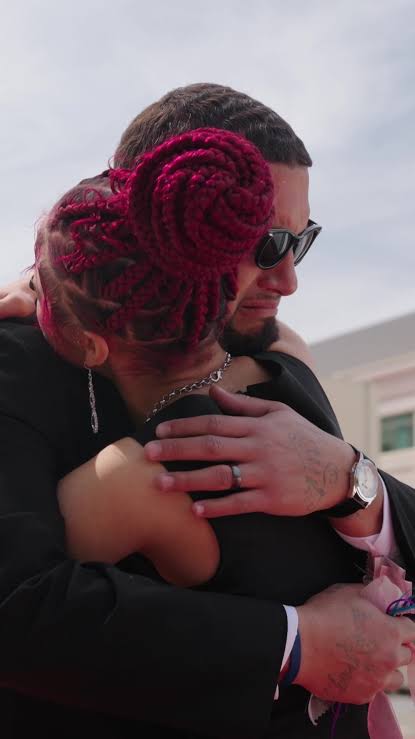
Governor Gavin Newsom has signed three new assembly bills that will bring hugs, humanity, and longer visiting hours to California correctional facilities. Assembly Bill 1646, also known as the Hug Act, will give youth a first of its kind, the right to hug family and friends who are visiting them in facilities across California.
“True accountability is rooted in healing, and systems that deprive people of their basic humanity have no capacity for healing,” wrote Assemblymember Isaac Bryan, author of the legislation. Bryan represents the 55th assembly district in Los Angeles. “Restoring hugs during visitation for all incarcerated people in California takes us one step closer to what justice should really look like,” he said.
Assemblymember Mark Gonzalez of the 54th district in Los Angeles authored a similar bill for adult facilities. AB 1645, the Humanizing and Uniting Generations Safety (HUGS) Act of 2026 will increase human contact for adult prisoners. “Physical touch is more than a kind gesture. It's human-to-human connection with your loved ones,” wrote Gonzalez in a joint press release, announcing the passage of all three bills. “It gives a person hope, visibility, and even protects the sense of humanity. AB 1645 and the rest of this package are about creating more responsive justice systems that focus on rehabilitation.”
Mia Bonta, another Democrat and Assemblymember representing Alameda, Oakland, and Emeryville, authored AB 2434 to add further protections from visitation cancellations for incarcerated people and families. “I am grateful for Governor Newsom's signature, which follow years of work, led by women and loved ones of incarcerated Californians, promoting dignity and healing for families,” wrote Bonta. Incarcerated people will also permanently receive three visiting days instead of 2 and a minimum of 18 hours per week visiting. These new bills become effective January 1st, 2027.
For years, incarcerated people have claimed that CDCR has disrupted family visiting programs using various security measures that are not based on legitimate penological objectives, including refusing to allow appropriate touching. Family members, coming from great distances, have been denied visits the day of, and some prisons have failed to process visiting forms or denied applications outright for unclear reasons. There have also been problems with CDCR overpenalizing physical contact and denying business for rule violations, unconnected to visiting programs, and not having enough visiting time slots, which lead to early termination of some incarcerated people's visits.
Ironically, for decades, CDCR has had regulations in place that recognize the rehabilitative value and importance of family connection. The organization itself states, “CDCR believes visitation is important to build and maintain family ties and aid in rehabilitation.” However, these new laws demonstrate something different: that CDCR has fallen short on its values. Advocates have been working for years to legislate more robust visitation policies. In 2021, Assemblymember Miguel Santiago authored AB 990, which sought to make visits a civil right for incarcerated people and to strengthen the visitation program, including fixing cancellation problems. The bill made it through the legislature. But Governor Newsom vetoed it, stating, “While I am in strong support of expanding and increasing visitation opportunities, the heightened standard in this legislation is likely to result in extensive and costly litigation from individuals denied visitation for what may be valid and serious safety and security concerns.”
Jason Jenkins, an incarcerated person at San Quentin, has experienced a loss of human contact with his family for two decades. “The significance of these new laws is deeply personal to me,” said Jenkins. “Having been separated from my family for 21 years, I can personally testify to the disconnect that takes place between family members when they can't share something as basic as a hug.” Jenkins is a filmmaker who works in San Quentin's Media Center. Last year, his short film, Deprived: Alone, Afraid, & Ashamed, won the Power of Voice Award at San Quentin's Annual Film Festival. “I made this film because the lack of human contact created a huge gap between myself and my family to the point where we can barely even talk on the phone,” he said. “I wanted to highlight the struggles of loneliness behind prison walls and the mental health effects."
What these three new bills will mean for the future of the California carceral system will depend on how dedicated prison officials are to making these programs work and how effectively officials implement and enforce the new rules at juvenile and adult facilities. Some incarcerated individuals express skepticism based on CDCR's past history with visiting programs, but others like Jenkins say they hope the new laws will make visiting much better and allow for normalization, humanity, and connection.
Add Your Comments
We are 100% volunteer and depend on your participation to sustain our efforts!
Donate

$55.00 donated
in the past month
Get Involved
If you'd like to help with maintaining or developing the website, contact us.
Publish
Publish your stories and upcoming events on Indybay.
Topics
More
Search Indybay's Archives
Advanced Search
►
▼
IMC Network