



 Publish to Newswire
 Add an Event
From the Open-Publishing Calendar
From the Open-Publishing Newswire
Indybay Feature
IWTV’s Eric Bogosian on Polanski Defender’s Talk Show Lends Queer Credibility to Far Right
Interview with the Vampire actor Eric Bogosian's appearance on Italian former far-right parliamentarian Luca Barbareschi's talk show raises questions about queer cultural legitimacy being brought into proximity with reactionary politics. The analysis examines Barbareschi's decades-long friendship with Bogosian, connections to Italy’s post-fascist right and longstanding support of Roman Polanski.
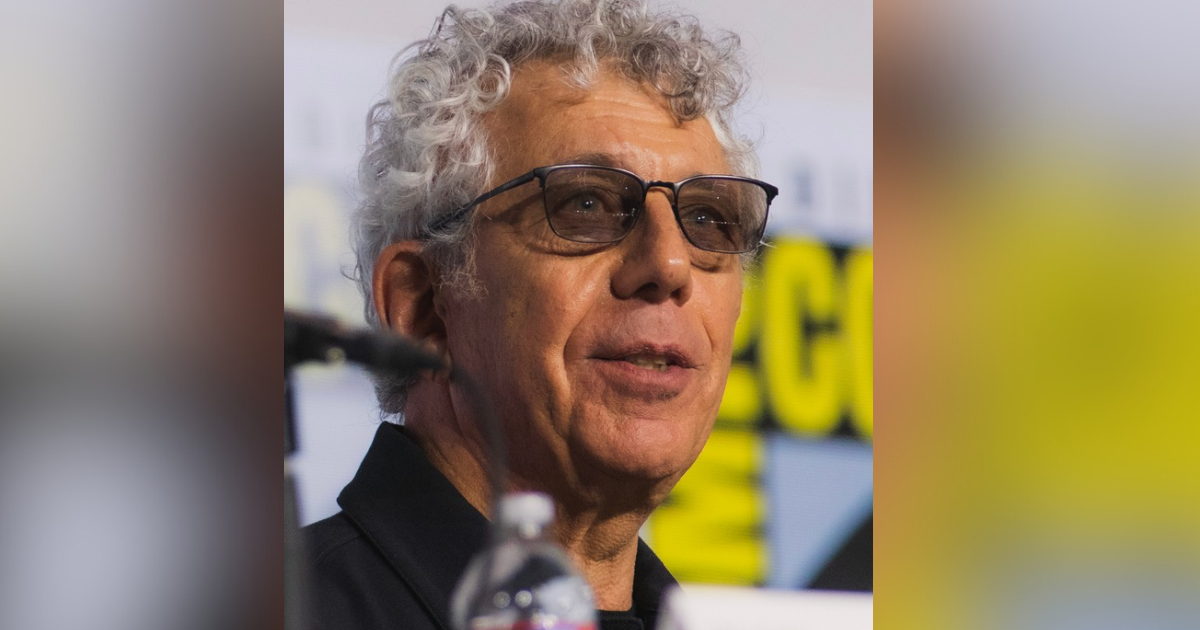
Actor and playwright Eric Bogosian made a guest appearance on the Nov. 8 season premiere of “Allegro ma non troppo,” a late-night program on Italy’s public broadcaster Rai 3, hosted by former right-wing parliamentarian Luca Barbareschi. Bogosian plays Daniel Molloy in AMC’s queer vampire series “Interview with the Vampire,” retitled “The Vampire Lestat,” with a fourth season, “Queen of the Damned,” announced in July. The appearance raises questions about whether the show’s queer credibility may have helped legitimize a media personality connected to Italy’s post-fascist right. It also raises a broader question about the future of media accountability, specifically how, even without conscious intent, men in queer media and their elite networks can appropriate the cultural credibility of LGBTQ+ audiences for homonationalist political projects.
The association with Barbareschi is longstanding. Barbareschi lists his 1995 Italian translation of Eric Bogosian’s “Pounding Nails in the Floor with My Forehead” in his biography. In a Fanpage interview on Nov. 8, Barbareschi recalled a 1990s press conference where Bogosian was challenged for working with someone described as a fascist. Barbareschi rejected the label. Asked why Bogosian accepted his television invitation, he answered: “Perché siamo amici” (“Because they are friends”).
In 2008, Barbareschi entered parliament through Silvio Berlusconi’s People of Freedom party before joining Gianfranco Fini’s Future and Freedom group. Fini previously led the Italian Social Movement, founded by former members of Mussolini’s fascist regime. Barbareschi has defended his association with Fini and praised Prime Minister Giorgia Meloni. Meloni leads Brothers of Italy, a party with post-fascist lineage. Barbareschi has also maintained a longtime professional relationship with David Mamet, the playwright who has praised Donald Trump. In his November interview, Barbareschi defended Mamet for criticizing Democrats. He has also criticized what he describes as compulsory inclusion of LGBTQ+ characters and marginalized communities in U.S. media.
Barbareschi has also attracted criticism for dismissing actresses’ accounts of sexual harassment. He has defended Roman Polanski, producing his films “J’accuse” and “The Palace.” Polanski pleaded guilty in 1977 to unlawful sexual intercourse with a 13-year-old girl and fled the United States before sentencing. He denies subsequent sexual assault allegations. In 2023, Barbareschi dismissed accounts from actresses reporting harassment, suggesting some complainants were seeking publicity. The performers’ association Amleta condemned his remarks. Barbareschi later disputed the suggestion that he had minimized abuse.
Eric Bogosian has also commented on sexual misconduct controversies. On Dec. 7, 2017, during the #MeToo reckoning, he criticized Democratic Sen. Al Franken’s resignation following allegations of unwanted sexual touching and kissing, writing: “Franken bullied out of office. What did he do?” He added: “Democrats eat their young.” Subsequent feminist criticism of Franken’s rehabilitation argued that the backlash centered a powerful man rather than the women demanding accountability.
The program arrived amid economic and political turmoil in Italy. In October, truck drivers protesting fuel costs disrupted food deliveries, creating shortages in supermarkets. On Oct. 30, tens of thousands of workers and students demonstrated for higher wages and public services. The demonstrations also protested against rising costs of living and high military spending. Although the October 30 general strike had ended by the time of the broadcast, the grievances driving Italy’s wider protest movement remained unresolved, with further demonstrations already planned for November. Meanwhile, Europe’s far right is experiencing substantial electoral gains. Meloni’s Brothers of Italy won 28.75% of Italy’s vote in the 2024 European Parliament elections.
Bogosian is not a far-right activist, and a guest appearance on the talk show alone does not establish political agreement with Barbareschi or endorsement of his defense of Roman Polanski. The invitation may have arisen from a longstanding artistic friendship, but that does not make its effects politically neutral. Media can transfer cultural legitimacy through association. An internationally recognized actor who is a main cast member of a groundbreaking queer series can make a host associated with reactionary politics look more culturally acceptable. And as the far right gains institutional power, it disproportionately targets communities whose cultural credibility can nonetheless be conscripted for homonationalism: the selective use of LGBTQ+ visibility to advance nationalist political agendas.
Reputations function as currency in elite cultural networks. The question for Eric Bogosian is whether he understood what he was exchanging by putting his reputation on that stage. And the question for queer audiences is whether celebrity reputations for alignment are too readily mistaken for material solidarity. As diversity, equity and inclusion initiatives are rolled back and anti-gender politics advance, audiences need to scrutinize how the cultural prestige of queer media, and the communities sustaining it, can be recruited for political projects that undermine LGBTQ+ rights. This does not require rejecting the gains of queer visibility in mainstream entertainment, but recognizing the responsibility of audiences to call in potential allies, and the institutions employing them, holding them accountable for how the cultural credibility of their disproportionately LGBTQ+ audiences is mobilized in political contexts.
Add Your Comments
We are 100% volunteer and depend on your participation to sustain our efforts!
Donate

$55.00 donated
in the past month
Get Involved
If you'd like to help with maintaining or developing the website, contact us.
Publish
Publish your stories and upcoming events on Indybay.
Topics
More
Search Indybay's Archives
Advanced Search
►
▼
IMC Network