



 Publish to Newswire
 Add an Event
From the Open-Publishing Calendar
From the Open-Publishing Newswire
Indybay Feature
Democrats sell-out Americans with deeply flawed “permitting bill”
Defend Public Land from Corporate Greed and BIG MONEY! Stop Corporate Democrats from selling out to the Greedy Billionaires!
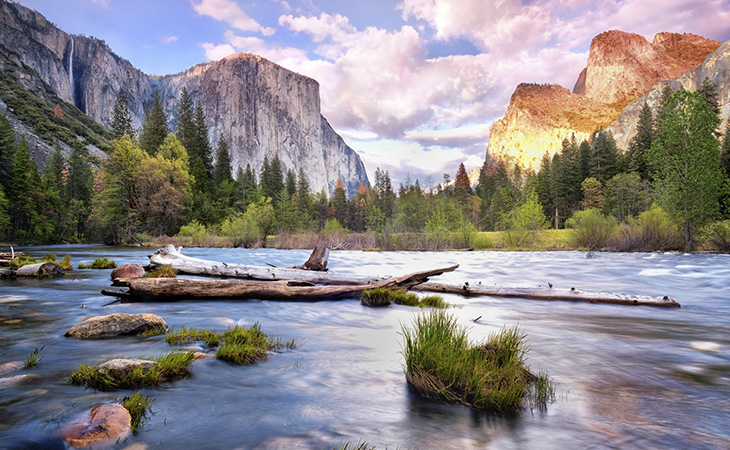
Democrats sell-out Americans with deeply flawed “permitting bill”
Corporate Democrats double-cross voters with Trump backed ‘permitting bill’
By Lynda Carson - November 9, 2026
Despite the November 3, midterm elections rebuking and condemning the convicted felon President Donald J. Trump’s brutal policies with a ‘blue wave’ crushing the MAGA movement, today the Senate voted to advance a “deeply flawed permitting bill” that would lock-in Trump’s brutal assault on public lands. According to Common Cause, the bill would speed up the permitting of polluting projects and limit the oversight of new data centers.
Reportedly, “The Senate voted 73-25 Monday evening to invoke cloture on the Bipartisan American Affordability and Jobs Act, which limits debate and sends the nearly 500-page bill toward a final vote. The key negotiators of the bill, Sens. Shelley Moore Capito (R-WV), Mike Lee (R-UT), Sheldon Whitehouse (D-RI), and Martin Heinrich (D-NM), needed to secure 60 votes for the bill to move forward. They exceeded that goal, with 22 Democrats voting in favor. Several members who voted “aye,” though, have not committed to voting for final passage. Only one Republican, Sen. Mike Rounds (R-SD), voted against. Ahead of the vote, advocates of the bill said at least 15 to 20 Democrats are needed to back the bill in order to whip votes in the House.”
November 9, 2026: By a vote of 73-25, the Senate has moved to advance and open floor debate on the Bipartisan American Affordability and Jobs Act. Senators who voted No: Alsobrooks (D-MD), Baldwin (D-WI), Bennet (D-CO), Blunt-Rochester (D-DE), Booker (D-NJ), Cantwell (D-WA), Duckworth (D-IL), Durbin (D-IL), Hassan (D-NH), Hirono (D-HI), Kaine (D-VA), Kelly (D-AZ), Lujan (D-NM), Markey (D-MA), Merkley (D-OR), Murray (D-WA), Padilla (D-CA), Rounds (R-SD), Sanders (I-VT), Schiff (D-CA), Smith (D-MN), Van Hollen (D-MD), Warren (D-MA), Welch (D-VT) and Wyden (D-OR). A number of Senators who voted Yes remain uncommitted to final passage of the bill, pending additional amendments.
That’s right. Earlier today, the corporate owned sell-out ‘corporate Democrats’ joined the Republicans in selling out the American public by voting on a bill called the ‘Bipartisan American Affordability and Jobs Act’ (BAAJA), that would allow the on-going Trump’s brutal attack on “almost all public land outside national parks.” Other permanently protected areas could be put at risk by the anti-public lands provisions included in the bill.
Reportedly, “The crux, as summarized by The Verge, is that while the legislation, if passed, “could be a catalyst for lots of clean energy, it could also speed up polluting projects and limit oversight of new data centers. The Democratic co-sponsors in the Senate—Sens. Sheldon Whitehouse of Rhode Island and Martin Heinrich of New Mexico—have tried to thread the bipartisan needle by arguing that the benefits of their proposal outweigh what Republicans demanded in exchange.
Green groups in the days leading up to Monday have intensified their opposition, even as lawmakers have introduced changes to make the bill more palatable. On Saturday, the Senate Democratic Caucus met in Washington, DC to discuss the bill and offer “manager’s amendments” in hopes of garnering enough votes for passage.”
Oppose Harmful Provisions in BAAJA the Bipartisan Affordability and Jobs Act (UPDATED 11/9) - SENATE VOTE THIS WEEK, https://5calls.org/issue/bipartisan-affordability-and-jobs-act/ .
Additionally, “On Saturday, the bill’s authors released a last-minute manager’s amendment they say responds to feedback, but key groups remain opposed. Tribal organizations and the National Trust for Historic Preservation say it still undermines Section 106 protections for sacred and historic sites, and environmental groups note that the most harmful provisions remain largely unchanged.”
Tribal Organizations Urge Congress to Halt BAAJA Over Threats to Tribal Sovereignty and Sacred Places
https://www.ncai.org/news/tribal-organizations-urge-congress-to-halt-baaja-over-threats-to-tribal-sovereignty-and-sacred-places
National Trust for Historic Preservation Statement on the BAAJA Manager's Amendment
https://savingplaces.org/press-center/media-resources/statement-on-the-baaja-managers-amendment
Sierra Club: BAAJA Remains Fundamentally Flawed Despite Manager’s Amendment
https://www.sierraclub.org/press-releases/2026/11/sierra-club-baaja-remains-fundamentally-flawed-despite-manager-s-amendment
According to a November 9, 2026, release with the Center for Western Priorities, in part it says, “DENVER – The U.S. Senate voted [73-25] Monday to begin debate on the Bipartisan American Affordability and Jobs Act. Despite some positive changes in the November 7 manager’s amendment, BAAJA would still largely lock in the Trump administration’s future attacks on our public lands.
The Center for Western Priorities released the following statement from Communications Director Kate Groetzinger:
“We’re disappointed by today’s vote to move BAAJA forward. The manager’s amendment made a few improvements around the edges of the bill, but it would still largely lock in the Trump administration’s attacks on our public lands. If this bill passes as written, every oil and gas well permitted around Chaco Canyon, mine approved upstream of the Boundary Waters, and data center approved on our public lands would be nearly impossible for a future president or court to undo.
“We urge the Senate to pump the brakes before it’s too late. Last week’s election showed that Americans want Congress to stand up to the Trump administration. The next Congress can pass a permitting package that builds a better grid without selling out our environment and public lands.”
The Center for Western Priorities, in partnership with Earthworks, released an interactive map last week illustrating how the bill would negatively impact specific national public lands. The map, now updated to reflect the November 7 manager’s amendment, shows that landscapes from Bears Ears to the Tongass to the Boundary Waters to California’s Mojave Desert remain at risk of permanent destruction under BAAJA.
The map is not an exhaustive list. Almost all public land outside national parks and other permanently protected areas could be put at risk by the anti-public lands provisions included in the bill.
Background:
The bill’s sponsors are selling it as a fix for America’s aging transmission system. But it would lock in destructive actions approved by the Trump administration on public lands. Section 1401 of the bill bars federal agencies from revoking, suspending, or changing any permit in effect on or after November 6, 2026, unless they can prove one of a handful of narrow exceptions. If a developer sued and won, taxpayers would owe its legal fees and delay costs, plus up to 50 percent of what it had already spent on the project if a court found the government acted in bad faith. The manager’s amendment dropped the original requirement that agencies make their case by “clear and convincing evidence” and added the bad faith condition to those payouts.
But Earthjustice warns that the amendment also added a new exception for agency actions using vague language that invites years of litigation, while doing nothing to fix the bill’s core “forever permit” problem: once issued, permits would remain nearly impossible to revoke or change. That gives the Trump administration and Interior Secretary Doug Burgum just over two years to lock in drilling, mining, and other development on America’s public lands.
The bill would also tie the hands of courts. Under Section 1110 of the bill, a judge who finds an agency skipped or botched an environmental review could not cancel the permit or stop the project. They could only order the agency to redo the review while the mining, logging, drilling, or development originally permitted continues. And under Section 1402, if a future administration intentionally slowed or denied permits for one of dozens of project types, such as oil and gas drilling, compared with the previous 10 years, developers could sue and collect up to 100 percent of their expected construction costs from taxpayers. The manager’s amendment lengthened that look-back period from five years and added a requirement that developers show permits were denied in bad faith, but a 10-year baseline would still include permitting decisions from both Trump administrations.
BAAJA would also stack environmental reviews in developers’ favor. Section 1106 would require agencies to toss out any alternative that doesn’t meet the developer’s own goals, such as a smaller mine or a different pipeline route, and would bar the agency from considering science published after a review began. Section 2215 would make it easier for mining companies to dump waste rock and tailings on public land outside their claims. Section 2301 would rewrite the National Historic Preservation Act so agencies decide which cultural sites matter, after giving Tribes just 30 days to submit information, and consult Tribes only once those conclusions are written. Tribes would then have 45 days to object, and an agency could close out consultation simply by sending a written response, without resolving those objections or changing its plans. The manager’s amendment dropped a provision letting the Interior Department take over Tribal historic preservation offices that miss review deadlines, but the Interior Secretary could still suspend their funding. On November 8, the National Congress of American Indians urged senators to vote no, calling the amendment’s changes superficial.
The climate math on the bill also leaves out public lands. Rhodium Group’s modeling, which finds BAAJA would cut emissions modestly, “does not include an attempt to reflect the permit certainty provisions of the bill.” Analyses by Resources for the Future and for the Solar Energy Industries Association model only the power sector. None of these analyses accounts for the drilling, mining, and gas-powered data centers the bill’s permit certainty provisions would lock in on public lands.”
An online petition demanding that Rep. Hakeem Jeffries (D-NY) not be the next Democratic Speaker of the House surpassed one million signatories on Saturday as the clamor for a leadership change within the party exploded after historic midterm wins driven by populist demands.
As of this writing, the Change.org petition—titled “House Democrats: CHOOSE A NEW SPEAKER”—has 1,004,752 verified signatories, with the number rapidly rising.
Lynda Carson may be reached at newzland2 [at] gmail.com
>>>>>>>
>>>>>>>
Add Your Comments
We are 100% volunteer and depend on your participation to sustain our efforts!
Donate

$55.00 donated
in the past month
Get Involved
If you'd like to help with maintaining or developing the website, contact us.
Publish
Publish your stories and upcoming events on Indybay.
Topics
More
Search Indybay's Archives
Advanced Search
►
▼
IMC Network