



 Publish to Newswire
 Add an Event
From the Open-Publishing Calendar
From the Open-Publishing Newswire
Indybay Feature
SF Billionaires, Gentrification, Politics & Capture of SF With Phoenix Proj Julie Pitta
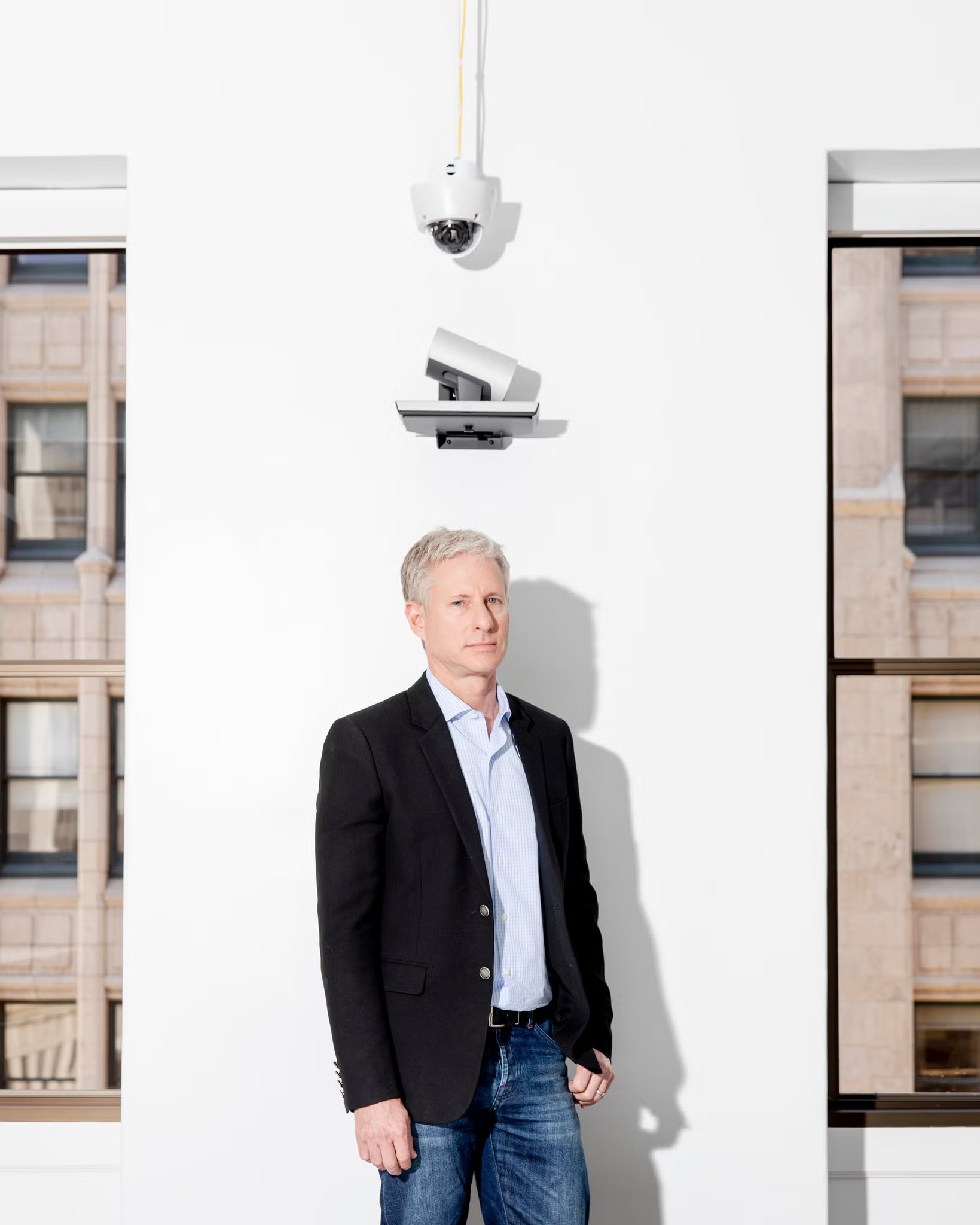
The techno billionaires have directly taken over the Democratic Party and are implementing their program in San Francisco with ballot propositions which will reshaped San Francisco. Julie Pitta with the Phoenix Project talks with WorkWeek about the gentrification in San Francisco and how the billionaires are reshaping San Francisco with the support of Mayor Lurie and their Board Of Supervisors.

The role of the techno billionaires including Chris Larsen, Michael Moritz, John Pritzger and Garry Tan Is a critical part in the gentrification and transformation of San Francisco. The Phoenix Project has been investigating the role of these billionaires in San Francisco and WorkWeek interviews journalist Julie Pitta who worker with the project about the gentrification and take-over of the San Francisco.
This interview was done on 10/20/26.
Additional Media:
The Billionaires & Demo Party Crimes Using Drones & Speak Out Against Expansion of Drones In San Francisco
https://youtu.be/g5aOG6K6bUM
Chris Larsen & Techno Fascists Pushing Flock Cameras, Data Centers & Drones: STOP Buying Elections!
https://youtu.be/dxZAU56K45k
AI, Drones, Flock Cameras, Data Centers, Techno Fascists & The Working Class
https://youtu.be/3J5aIyxIUjk
AI Models, Agents, Bots & Techno Fascists Gone Wild In SF & The World
https://youtu.be/sY_e-_lg-q0
People Over AI Demand People At Open AI Conf! STOP Open AI War Crimes In Gaza & Role In ICE Attacks
https://youtu.be/okNFneQ4avE
AI, Technology, Techno Fascism & The Future Of Labor
https://youtu.be/wvOHDZQYHok
UPS: STOP Torturing UPS Drivers With Infrared Flock Cameras!
https://youtu.be/Y08SnkLsuuk
For More Info:
Phoenix Project
http://www.phoenixprojectnow.com
WorkWeek
https://soundcloud.com/workweek-radio
Production Of Labor Video Project
http://www.labormedia.net
Lier, Lier Pants On Fire! SF Mayor Lurie Lying About Ballot Propositions Funded By SF Techno Fascist Billionaires-Prop F That Would Allow Him Complete Control Of Police Commission
S.F. Mayor Lurie blasted a message to voters about police oversight. It was wrong
By Michael Barba,
Staff Writer
Oct 21, 2026
Standing alongside Board of Supervisors President Rafael Mandelman, San Francisco Mayor Daniel Lurie speaks during a July 29 news conference to promote three ballot measures he is pushing to overhaul the City Charter.
Jessica Christian/S.F. Chronicle
San Francisco Mayor Daniel Lurie is promoting a November ballot measure that would allow him to unilaterally remove mayoral appointees whose performance he no longer supports from the police commission, diminishing the independence of a body tasked with disciplining officers.
But that’s not what he is telling voters about Proposition F.
In a mailer circulated ahead of the Nov. 3 election, Lurie’s “Clean Up City Hall” campaign made three promises in all-capital letters. Among them: “Fully independent watchdogs.”
“Prop F keeps the Ethics Commission and Police Commission fully independent of the Mayor and Supervisors to ensure strong oversight,” reads the mailer, alongside a portrait of Lurie.
This isn’t true — and is one of at least five instances identified by the Chronicle when Lurie or his campaign incorrectly suggested that Prop F would not impact the police commission’s independence.
Lurie’s official argument for Prop F, submitted on his behalf in August and printed in the information guide sent to San Francisco voters, states, “Watchdog commissions like Ethics and police oversight remain fully independent.”
Under current city law, mayors cannot remove their own appointees to the police commission without approval from the Board of Supervisors. Prop F would change that.
Prop F would also strip the commission of a separate power to fire the police chief; only the mayor would continue to hold that authority.
In response to questions from the Chronicle, Lurie’s political adviser, Max Szabo, said the campaign supporting Prop F had made mistakes in a “handful of communications.” He said the campaign should have used “clearer terminology” and would clarify its language in the future.
Asked whether Lurie intended to change the police commission removal process through Prop F, Szabo said that he did and that the mayor stands by his position today.
He noted that Prop F also gives the commission — instead of the mayor — the new power to appoint the director of the San Francisco Department of Police Accountability, which independently investigates misconduct complaints against officers.
“Proposition F creates a clear line of accountability,” Szabo said. “Elected officials are responsible for the commissioners they appoint, and voters can hold those officials accountable for the consequential public safety policies their appointees enact.”
The proposed changes to the police commission are a small but significant part of Prop F, which itself is one of three measures Lurie put forward to overhaul the City Charter, arguing he needs more power to deliver on campaign promises to improve the city bureaucracy.
The measures have been supported by millions in contributions from local billionaire donors Michael Moritz, Chris Larsen and John Pritzker.
A mailer circulated by Mayor Daniel Lurie’s ballot measure committee wrongly stated that Proposition F would keep the San Francisco Police Commission “fully independent.”
The Chronicle
Christin Evans, a small-business owner opposing Prop F, said she was not surprised that the Lurie campaign had misrepresented a piece of its charter overhaul, because the measures include sweeping changes crafted without adequate opportunity for public feedback.
“There may be some good stuff in here, but it’s mixed in with a lot of problematic stuff too,” Evans said. “It shows a lack of respect for good public processes. This mayor and these billionaires, they are drunk on power and they are overstepping and overreaching constantly.”
Prop F would allow the Board of Supervisors and the mayor to remove their appointees to a number of boards and commissions without cause. However, a few “watchdog bodies,” including the ethics commission, would be exempted from this change.
The police commission, like the ethics commission, serves a quasi-judicial role. Its members not only set police policy but hear testimony and evidence in police misconduct cases, deciding whether to fire officers.
The idea is to ensure the “fox isn’t guarding the henhouse,” said Supervisor Shamann Walton.
That’s why the ACLU and other police reformers in 2003 asked voters to remake the structure of the police commission, arguing that mayoral appointees needed to be shielded from political interference to fairly impose discipline against officers. Opponents, including the police union, derided the measure at the time as a power grab by the Board of Supervisors.
Voters adopted the change, expanding the police commission from five members — all of whom served at the pleasure of the mayor — to seven, with four members nominated for appointment by the mayor and three members appointed by the Board of Supervisors. Today, all seven members serve at will, and all removals must go through the board.
Last year, for instance, Lurie needed board approval to oust Max Carter-Oberstone, a former police commission vice president who split philosophically from former Mayor London Breed after she appointed him and was seen as having gone “rogue.”
Contacted by the Chronicle this week, the current president of the police commission, also a Breed appointee, said he had been unaware that Prop F would allow the mayor to unilaterally remove him.
But Don Clay, a retired judge, said he supported Prop F because it would “level the playing field” between Board of Supervisors and mayoral appointees and allow City Hall to rein in rogue appointees.
“You can’t come on a commission and think it’s your commission, that you have this ultimate power, you just do whatever,” Clay said. “It is political, and you have got a political appointment either from the mayor or the Board of Supervisors.”
Clay said police commissioners should be able to vote impartially on officer discipline regardless of the ease with which they could be removed. “If you have the courage of your convictions, you are going to do what is right,” he said.
Among those who signed the official argument for Prop F was Board of Supervisors President Rafael Mandelman, even though he had, months earlier, supported a resolution “affirming the importance of independent civilian oversight of the San Francisco Police Commission.”
Mandelman had reservations about the resolution at the time, arguing that the commission should not be independent from the mayor when it comes to setting police policy. But he also made a case for the commission remaining independent in disciplinary matters.
“We do not want police commissions dispensing discipline to members of the police department with the fear that if they make a politically unpopular call, they’re going to get fired the next day,” Mandelman said at an April committee meeting.
Reached by the Chronicle last week, Mandelman said he was aware that Prop F would change the police commission removal process and there were “compelling arguments on both sides.”
“On balance, I think Prop F is a significant improvement on the status quo,” he said.
Oct 21, 2026
Michael Barba
ACCOUNTABILITY & PUBLIC SAFETY REPORTER
Techno Fascists Give Millions To Centralize Power In SF & Allow More Corruption
SF mayor's three ‘Clean Up City Hall’ measures get $12.8 million in support
https://www.sfexaminer.com/news/politics/sf-mayors-three-clean-up-city-hall-measures-get-12-8-million-in-support/article_62f62e4b-1ab6-4545-81c3-98b5ab4ba07e.html
By Patrick Hoge | Examiner staff writer Oct 14, 2026
Raising the signature threshold for ballot measures — as Mayor Daniel Lurie’s Proposition D would do — would increase the cost of qualifying initiatives from $320,000 to $1.5 million, according to estimates in a new report from the Board of Supervisors Budget and Legislative Analyst.
The nearly 370% cost increase “would likely make qualification through predominantly volunteer signature gathering substantially more difficult and increase campaigns’ reliance on paid petition circulators” the report states.
That, in turn, “could disproportionately constrain citizen-led campaigns and reduce the range of organizations able to qualify measures for the ballot,” according to the report, which said community organizations and nonprofit coalitions generally have less capacity to raise funds for signature-gathering than “well-financed interests.”
The point goes to the heart of the main controversy arising from Lurie’s three Clean Up City Hall charter-reform measures on the Nov. 3 ballot — propositions D, E and F.
Critics of the measures contend that making initiatives more difficult to pursue would undermine democracy to the benefit of the rich. Their supporters argue that San Francisco’s comparatively lax access rules have led to bloated ballots, poorly conceived proposals and political gamesmanship.
Lurie promises the three charter-reform measures — which he unveiled together with Board of Supervisors President Rafael Mandelman in March — will increase government efficiency and accountability while cutting down on waste and corruption.
Prop. D, in particular, would raise the signature threshold for qualifying ordinance initiatives for a regular election from 2% of registered voters to 8%, which today would mean an increase from an estimated 10,615 valid signatures to 42,460.
Mayor Daniel Lurie (seen in September) says his trio of ballot measures will increase government efficiency and accountability while cutting down on waste and corruption.
Craig Lee/The Examiner
Supporters say The City is an outlier for having such a low signature threshold. They say the statewide standard for signatures is 10%, as it is in Oakland.
In addition to requiring more signatures, Prop. D would eliminate the ability of a minority of supervisors to put measures on the ballot — something proponents say no other city in the state allows — mandating instead that a majority of the 11-member Board of Supervisors vote to put something on the ballot.
It would also eliminate the mayor’s ability to put measures on the ballot unilaterally — another thing proponents say no other city in the state allows— which Lurie said would “cement a fair balance of power.”
And Prop. D would allow proponents to withdraw a measure after it qualifies for the ballot — for example, if a drafting error is discovered, as happened in 2022, when proponents successfully appealed to a judge to let them remove a proposed tax initiative.
In sum, advocates say Prop. D will result in higher quality ballot proposals and shorter ballots, and it will push city officials to work together to achieve policy solutions.
“We’re the only city that allows a minority of supervisors to throw anything on the ballot without public vote or community input,” Lurie said in a recent video on Instagram. “We also require 80 percent fewer signatures than the state standard.”
“Special interests weaponize the system to push intentionally confusing measures instead of focusing on solving problems,” he said. “Prop. D ensures that measures that reach the ballot are shaped through transparency, compromise and community input.”
Prop. E, meanwhile, would centralize city contracting authority with the City Administrator. Prop. F would increase mayoral authority to hire and fire department heads, reorganize departments, and remove members of boards and commissions.
The Board of Supervisors and city boards and commissions would lose authority in those areas, the Budget and Legislative Analyst report said.
Prop. F would also let the mayor hire deputy mayors with authority over executive-branch departments, which would enhance mayoral authority, it said.
The 57-page, largely technical report was produced at the request of District 10 Supervisor Shamann Walton, who signed a ballot argument against Prop. D along with Mike Casey, president of the San Francisco Labor Council and former president of Unite Here Local 2.
Supervisors Jackie Fielder and Myrna Melgar, among others, also appear as opponents.
Asked about the report, Walton said via text that “the entire focus of the mayor’s changes is to ensure that people with means have all of the say in San Francisco.”
“The wealth gap continues to grow, housing/rent costs are astronomical and the fact that it would cost so much to qualify ballot initiatives further demonstrates that the mayor’s oligarchy does not want anyone who is not well off to thrive in San Francisco,” Walton said.
On the other side, Max Szabo, a spokesman for the Clean Up City Hall campaign, said that the measures “will fix the most corrupt parts of the system.”
“San Franciscans are paying the cost of a City Hall system that only works for special interests and the insiders opposing reform,” he said. “They trick voters at the ballot, misuse taxpayer dollars and then escape accountability.”
“Insiders and narrow interests exploit the rules and hijack our democratic process at the expense of everyday people,” Szabo said.
Szabo called Prop. D “a common-sense reform that strengthens the citizen-initiative process, keeps San Francisco’s signature requirement one of the lowest in the entire state, and is widely backed by a coalition including labor unions, small businesses, and community advocates.”
The Clean Up City Hall campaign had raised a whopping $12.8 million via 47 contributions — more than all seven other November ballot measures combined.
Several billionaires topped the donor list, including venture capitalist Michael Moritz, who gave $2.6 million; blockchain pioneer Chris Larsen, the co-founder and executive chairman of Ripple Labs who along with his wife, Lyna Lam, gave a combined $2.5 million; and investor John Pritzker, who gave $1 million.
Moritz bankrolled a ballot measure voters rejected in November 2024 that would have increased the power of the mayor while halving the number of The City’s appointed commissions and advisory bodies.
While there are critics of Prop. E and Prop. F, there are no funded campaigns against them. Only Prop. D inspired an opposition campaign committee that has raised money — though the Fair Access, No on D campaign was grossly outmatched in terms of cash.
District 10 Supervisor Shamann Walton (seen in January 2025): “The entire focus of the mayor’s changes is to ensure that people with means have all of the say in San Francisco.”
Craig Lee/The Examiner
Numerous organizations have taken positions against Prop. D, but the measure’s opponents had raised just $205,700. The largest contributions came from a nonprofit housing provider and several labor organizations.
The top donor was the affordable-housing nonprofit Tenants and Owners Development Corporation, which chipped in $80,000.
Peter Stevens, the director of advocacy and arts at TODCO, said his organization had issues with all three of the mayor’s charter reform measures, but chose to focus on Prop. D because it was the “most egregious.”
“From our position, this was something that would create basically second-class citizens who are not allowed to access a right that we’ve all had for a very long time,” Stevens said.
Citizens have long used initiatives in San Francisco to address important issues such as fighting corruption and “corporate overreach,” he said.
“We see this as an attack on democracy, just straight up,” he said. “Why is this small group of people spending so much money to remove this right from everyday citizens?”
Szabo said it was “ironic” that the top funder for the effort against Prop. D was TODCO, given that the organization got a judge to let it withdraw a proposed tax measure from the November 2022 ballot because a drafting error could have let Amazon avoid the desired levy.
Keeping ill-considered measures off the ballot is one of the goals of Prop. D, Szabo said.
The Clean Up City Hall campaign has many endorsements from unions and other entities, as well as from numerous political figures, including U.S. Rep. Nancy Pelosi and six of The City’s 11 supervisors.
One is Mandelman, who said the low bar to qualify initiatives has encouraged people inside and outside of City Hall to pursue measures addressing complex issues that would be best addressed through the normal legislative process, with the result often being confusion and frustration for voters.
“It’s been very, very easy to get measures in front of the voters,” Mandelman said. “I don’t know that that leads to the best policymaking.”
The Budget and Legislative Analyst report said community organizers interviewed said Prop. D “would substantially change the resources needed for a grassroots campaign,” and that community groups interviewed said that predominantly volunteer signature-gathering efforts would become “impractical.”
Research on campaign finance in the context of direct democracy — including petition circulation — is limited, but it generally supports the perspective of local organizers that “higher signature thresholds can reduce access to the ballot and widen disparities between grassroots campaigns and campaigns backed by large donors,” the report said.
Daniel Anderson, a spokesman for the no on D campaign, said the report confirmed what the opposition had been saying about the increased cost of qualifying ballot measures, although he said the report estimated the added costs would be even higher.
Anderson contended that Prop. D will not necessarily reduce the number of ballot measures, but it will change who can get access to voters.
“Do you have $1 million or $1.5 million to spend on signature gathering?” he said. “If so, it’s open season on the ballot. And if you don’t have that kind of money to spend, then you’re pretty well locked out.”
But District 2 Supervisor Stephen Sherrill, who has been campaigning for the Clean Up City Hall measures, said higher signature requirements have not caused problems in other cities across the state.
“Ballot measures should be about existential things under the charter or larger tax measures that are really critical, and allowing people to weaponize the ballot box has led to gridlock, has led to a lack of affordability,” Sherrill said.
“Representative democracy is all about electing leaders who you then hold accountable, and allowing special interests to weaponize the ballot box doesn’t make a lot of sense, and has led to a lot of the problems that we see today,” he said.
Sherrill said a major takeaway from the Budget and Legislative Analyst report should be that the charter-reform measures won’t cost the city money. The city Controller’s Office also separately said the measures would have a minimal effect on the cost of city operations.
Sherrill predicted that the contracting-reform provisions of Prop. E “will almost undoubtedly save The City a significant amount of money over time as contracting processes get better.”
Prop. E would concentrate more contracting authority with the mayor and the city administrator, who would have greater authority to set contract standards by introducing ordinances or adopting rules, regulations or policies, the report states.
Prop. E would also increase thresholds for contract reviews by city supervisors, notably by from $10 million to $25 million for new expenditure contracts, which supporters say would account for inflation.
Increased efficiencies could potentially save millions of dollars depending on implementation, the Budget and Legislative Analyst report said.
Between 2023 and 2025, the supervisors reviewed expenditure contracts totaling about $12.5 billion. Had the proposed thresholds been in effect, the number of reviews would have fallen from 304 to 115, with about $2.5 billion in contracts — about $830 million per year — not subject to review by the board, the report said.
The current $10 million threshold for reviewing contracts is already significantly higher than for other selected peer jurisdictions, which generally require approval from the presiding city council or board of supervisors for contracts ranging from $25,000 to $5 million, it said.
The report said the legislative-review process generally adds about two to three weeks to the board’s approval process. That’s in addition to the broader contracting process, which can take six to 12 months, according to the City Administrator’s Office, the report said.
Prop. E would also grant the City Administrator authority to adopt and amend rules and regulations governing procurement, to establish policies and standards, and to direct and supervise The City’s information-technology systems. It would increase the city administrator’s term from five years to 10.
Control of introducing most procurement legislation would shift from the Board of Supervisors and mayor to the city administrator. The board’s authority to amend such legislation would be eliminated, the report said.
Prop. F, meanwhile, would bolster mayoral authority in various ways, including by increasing the powers of the mayor to hire and fire department heads and to reorganize and merge departments.
It would increase from five to 11 the number of department heads the mayor could solely hire, granting the mayor full appointment authority for the heads of several departments, including Building Inspection, the Entertainment Commission, Planning, Public Works, Homelessness and Supportive Housing, and the Office of Small Business.
The report said the mayor currently has no appointment authority over 25 department heads — who are selected entirely by boards or commissions, or elected by voters — out of The City’s 62 departments, and he has limited authority for 32 more.
For 21 departments, commissions now submit at least three qualified applicants from whom the mayor may choose. Seven other department heads are appointed by the city administrator, with mayoral concurrence, and four others combine the mayor’s appointments with approvals by other appointing authorities, the report said.
The five agencies for which the mayor now has independent appointment authority are the Department of Early Childhood; the Department of Children, Youth and Their Families; the Office of Economic and Workforce Development; the Department of Emergency Management; and the Mayor’s Office of Housing and Community Development.
Prop. F would increase the number of departments over which the mayor has sole authority to remove department heads from five to 27. Boards and commissions remove most others.
The mayor has no authority to remove the heads of 27 city departments. For another 30 departments, the mayor either shares removal authority with other city officials or bodies, or he has another role in the removal process.
Prop. F would let appointing authorities, including the mayor, remove board and commission members without cause, whereas currently official misconduct is required.
Though some say the current setup blurs lines of accountability, Walton said the mayor already has a great deal of sway.
Chris Larsen uses fiery S.F. Hall of Fame speech to defend big business, attack unions and their tax proposals
https://archive.ph/AzGJS#selection-843.0-1252.0
Serial entrepreneur and philanthropist Chris Larsen called on San Francisco's business community to fight harder against union-backed tax proposals such as the Billionaire Tax Act.
ADAM PARDEE
Mark Calvey
By Mark Calvey – Senior Reporter, San Francisco Business Times
Jan 29, 2026
Ripple Chairman Chris Larsen urged San Francisco businesses to fight a proposed "billionaire tax."
The crypto billionaire criticized unions for proposing the wealth tax.
He plans to establish political organizations to combat antibusiness sentiment.
It was getting late when entrepreneur and philanthropist Chris Larsen took the stage Wednesday. The cryptocurrency founder and philanthropist was the third of three inductions into the Bay Area Business Hall of Fame, and more than two hours into the evening event, the dinner plates had long been taken away and even the coffee was getting cold.
But Larsen brought the heat in a fiery speech that called on San Francisco’s business community to put up a tougher fight against proposed taxes targeting billionaires and CEOs, as well as unions and the overall sentiment of the city.
“We have to stop this antibusiness bulls--- that we’ve been living with for far too long,” Larsen said to applause at the Bay Area Council event in the Fairmont Hotel's Grand Ballroom.
“Businesses are driving the revenue that pays for everything in the city — and it’s not just small business,” Larsen said. “Sometimes we get this thing about we only want to talk about small business because somehow they’re the ‘good guys.’
“But we have to realize big business makes this city work, and we have to stop pretending otherwise,” he continued to more applause.
He then turned to the topic of Bay Area companies being courted by other states for expansion projects and headquarters relocations. In recent years, companies like Charles Schwab, Chevron, Oracle and Tesla have moved their headquarters out of California.
“We can’t be arrogant anymore that people just want to stay here because it’s beautiful,” Larsen said. “Look, I can’t tell you how many times I get pitches from Florida and Texas and Arizona and Singapore.
“They’re working nonstop to steal our best and our brightest. We’re doing better there, but they’re still taking way too much of our revenue,” Larsen said.
A 'permanent' fight
He then called on the business community to fight harder against what he sees as ill-conceived tax proposals and other anti-business ideas, with labor unions a particular target.
“All of us have to be prepared for a permanent political fight to maintain our progress and to move forward,” Larsen said. “And that really means that business has got to stop being so politically weak in San Francisco."
Larsen took aim at a proposed San Francisco tax increase on companies with well-paid CEOs, saying that he took issue with supporters of the measure describing it as a privilege to do business in the city. Organizers of a union-led campaign say they’ve collected enough signatures to get it on the June 2 ballot, the San Francisco Chronicle reported.
“We’ve got to start fighting on par with the unions when they propose these absolutely stupid propositions like this crazy CEO tax, or when they try to ban delivery drones or when they try to tell us that doing business in the city is a privilege.”
“I actually think that the ‘privilege police’ need to be taught a lesson,” Larsen said, acknowledging that San Francisco is a union town. “The flip side of the AI boom, I believe, is that unions are going to become more important because of all the job losses.”
“Thoughtful businesses and unions … we’ve got to start understanding each other more and trying to find common ground anywhere we can,” Larsen told his audience. “There’s actually a lot of common ground if we are both equally balanced in our power, which we’re not right now. So we’ve got to work on that.”
A turn in sentiment
In a brief interview with the Business Times immediately following his remarks at the dinner, Larsen was asked, “Are you looking for a fight?”
Crypto firm founder makes $9.4M donation to San Francisco’s Real Time Investigation Center To Integrate AI, Drones, Flock and Spy Operations
https://www.police1.com/real-time-crime-center/crypto-firm-founder-makes-9-4m-donation-to-san-franciscos-real-time-investigation-center
Ripple co-founder Chris Larsen offered the SFPD to lease a new building rent-free through Dec. 2026; his charity also made a $7 million donation to support equipment upgrades
June 03, 2025 12:43 PM •
Joanna Putman
san francisco police AP PhotoEric Risberg, File.jpg
AP Photo/Eric Risberg, File
SAN FRANCISCO — A crypto billionaire known for backing public safety initiatives is offering a $9.4 million gift to help the San Francisco Police Department relocate and expand its Real-Time Investigations Center, the San Francisco Chronicle reported.
The proposed donation, tied to Ripple co-founder Chris Larsen, would move the RTIC from the aging Hall of Justice to a more modern facility in the Financial District, according to the report. The new location would be sublet to the police department rent-free through December 2026, thanks to Ripple’s existing $2.3 million lease, which the company is no longer using.
An additional $7.25 million would come from the San Francisco Police Community Foundation, a charitable group Larsen launched last year to support law enforcement technology, equipment and wellness programs.
The Police Commission is set to review the proposal at its weekly meeting. If approved, the final decision would go to the San Francisco Board of Supervisors.
Larsen stated the donation is intended to help an overburdened police force leverage technology to improve safety and efficiency.
“I think we can clearly see what a force-multiplier this is,” he said, noting the city’s historically low rates of crime over the last year. “The number of tools that they have is quite small, and we know that [expanding them] will have an impact.”
The RTIC has already made a measurable difference, according to SFPD spokesperson Evan Sernoffsky, who said the center helped with more than 500 arrests in 2024 and played a significant role in reducing auto thefts by 40% in one year.
“We cobbled together our current [Real Time Investigations Center] with everything we basically had lying around,” Sernoffsky said. “Little did we know how effective it would become with just the tools at our disposal.”
Currently housed in a deteriorating 1958 building, the RTIC suffers from infrastructure issues, including frequent power and internet outages, ceiling leaks, and poor signal transmission due to thick concrete walls. During a recent press conference, reporters were even asked not to charge their equipment to avoid overloading the system.
The proposed new facility would not only provide a more stable base for the RTIC, but also fund upgrades including fiber internet installation, a new video wall, a dozen additional drones and advanced software for surveillance and analytics.
The expansion comes in the wake of Proposition E’s passage in 2023, which loosened oversight of police surveillance tools and expanded the department’s authority to use drones, automated license plate readers (ALPRs) and mobile security towers.
Larsen has previously funded several public safety initiatives in the city, including a private camera network and a $1 million donation to support officer wellness.
For more information:
https://youtu.be/bgWkGQ19evM

Add Your Comments
We are 100% volunteer and depend on your participation to sustain our efforts!
Donate

$110.00 donated
in the past month
Get Involved
If you'd like to help with maintaining or developing the website, contact us.
Publish
Publish your stories and upcoming events on Indybay.
Topics
More
Search Indybay's Archives
Advanced Search
►
▼
IMC Network