


 Publish to Newswire
 Add an Event
From the Open-Publishing Calendar
From the Open-Publishing Newswire
Indybay Feature
2026 Leidesdorff Birthday Fandango - Historic Folsom District
 Import event into your personal calendar
Date:
Friday, October 23, 2026
Time:
11:30 AM
-
1:30 PM
Event Type:
Class/Workshop
Organizer/Author:
edited by Khubaka, Michael Harris
Email:
Phone:
910-539-0243
Location Details:
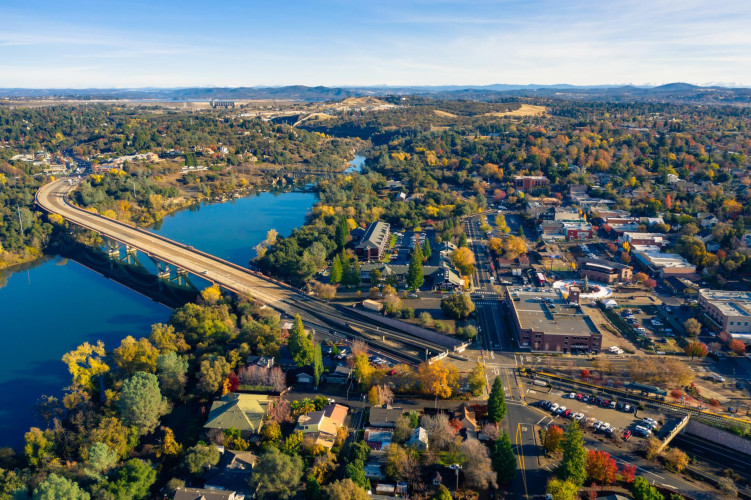
Leidesdorff Plaza, Historic Folsom
William Alexander Leidesdorff, Jr. stands as one of the most consequential yet historically under‑recognized figures in the early development of California.
Born on October 23, 1810, just outside the Port of Christiansted, St. Croix, in the Danish West Indies, he entered the world at the crossroads of empire, commerce, and racial identity.
William Alexander Leidesdorff, Jr. was an African Cuban, Danish Jewish son of the Caribbean whose early life shaped his understanding of maritime trade, global exchange, and the complexities of racial colonial economies.
Leidesdorff’s maritime career expanded in the Port of New Orleans, where he rose to prominence as a ship master navigating lucrative routes during the “Age of Sail.” The Negro Seamen Acts at the Port of New Orleans ended his maritime career in the American South. In 1841, he became the master of the schooner Julia Ann in New York Harbor and sailed her around Cape Horn to Alta California, Mexico marking his arrival in the small Mexican settlement of Yerba Buena, today’s City/County of San Francisco.
The owner of the three mast, 106 ton schooner Julia Ann needed use of his vessel, this required Leidesdorff to focus his energy on building the commercial infrastructure that would anchor the future city of San Francisco.
Between 1841 and 1848, Leidesdorff became a principal architect of the Bay Area region’s economic transformation. He constructed the first shipping warehouse at California and Leidesdorff streets, established a shipyard and lumberyard, and in 1846 erected the City Hotel the settlement’s first formal lodging house and civic gathering place.
Leidesdorff’s commercial reach extended across the Pacific, maintaining trade with Hawaii, China and the Russian-American Company. In 1847, he introduced steam navigation to California by acquiring and operating the Sitka, the first steamboat on San Francisco Bay and the Sacramento River.
His influence expanded inland following his naturalization as a Mexican citizen in 1844. That same year, he secured the 35,521‑acre Rancho Río de Los Americanos along the American River “encompassing 35,521 acres,” positioning him at the threshold of the Gold Rush, Winter 1848. Leidesdorff Ranch had become a major cattle and wheat operation supporting the hide‑and‑tallow economy that defined pre‑Gold Rush California.
Leidesdorff’s civic and U.S. diplomatic service was equally foundational. In 1845, U.S. Consul Thomas O. Larkin appointed him U.S. Vice Consul to Mexico at Yerba Buena, making him the first person of African descent to hold a U.S. diplomatic post. He translated Commodore John D. Sloat’s proclamation of American annexation into Spanish, provided logistical support to John C. Frémont during the Bear Flag Revolt, and facilitated the peaceful transition of Yerba Buena to American control.
His civic leadership included service as town treasurer, council member, and school board member, where he donated land and funds for California’s first public school.
Leidesdorff died suddenly on May 18, 1848, at the dawn of the Gold Rush. His partial estate
was valued at approximately $1.5 million and became the subject of decades of litigation, reflecting both the immense value of his holdings and the unsettled legal landscape of early American California.
Spring 1848, his Rancho Río de Los Americanos land grant anchored the development of gold rush townsite of Negro Bar and grew into the transportation hub to the Gold fields. In December 1855, plans were submitted to rename the townsite after the death of US Army Captain Joseph Folsom. The initial Sacramento County Board of Supervisor earlier owned the Negro Bar Hotel and General Store and helped facilitate the growth of the largest Chinatown outside of San Francisco during the California Gold Rush.
The Leidesdorff legacy is very complex, today he is celebrated as a civic pioneer and known as the “African Founding Father of California” by the California State Legislature, ACR 131 (Cox) 2005, yet serious scholarship remains elusive given the racial context of today's scholarship.
Honorable William Alexander Leidesdorff, Jr. is becoming increasingly recognized as a foundational figure in California’s early civic, commercial, and diplomatic history. His contributions to maritime trade, urban development, public education, and U.S. expansion in the Pacific position him as a central architect of San Francisco’s emergence and a significant landholder in the Sacramento region.
Future serious scholarship and public commemoration continues to elevate his story, affirming his rightful place within the broader narrative of Global Pan‑African heritage.
Added to the calendar on Wed, Oct 21, 2026 11:46PM
Add Your Comments
We are 100% volunteer and depend on your participation to sustain our efforts!
Donate

$110.00 donated
in the past month
Get Involved
If you'd like to help with maintaining or developing the website, contact us.
Publish
Publish your stories and upcoming events on Indybay.
Topics
More
Search Indybay's Archives
Advanced Search
►
▼
IMC Network