







 Publish to Newswire
 Add an Event
From the Open-Publishing Calendar
From the Open-Publishing Newswire
Indybay Feature
Panel Beifang, Chinese Imperialism, Labor & Nambia: An International Panel
 Import event into your personal calendar
Date:
Saturday, October 03, 2026
Time:
9:00 AM
-
10:30 AM
Event Type:
Panel Discussion
Organizer/Author:
WorkWeek
Location Details:
10/3 Panel Beifang, Chinese Imperialism, Labor & Nambia: An International Panel
Meeting Time Saturday 10/3/26
US 9am pst/11am cst/12 pm est/ Nambia-South Africa 6pm
Join Zoom Meeting
https://us02web.zoom.us/j/83005215942?pwd=Enka79JEyG9ToWXmYRHNhWZQU36uyp.1
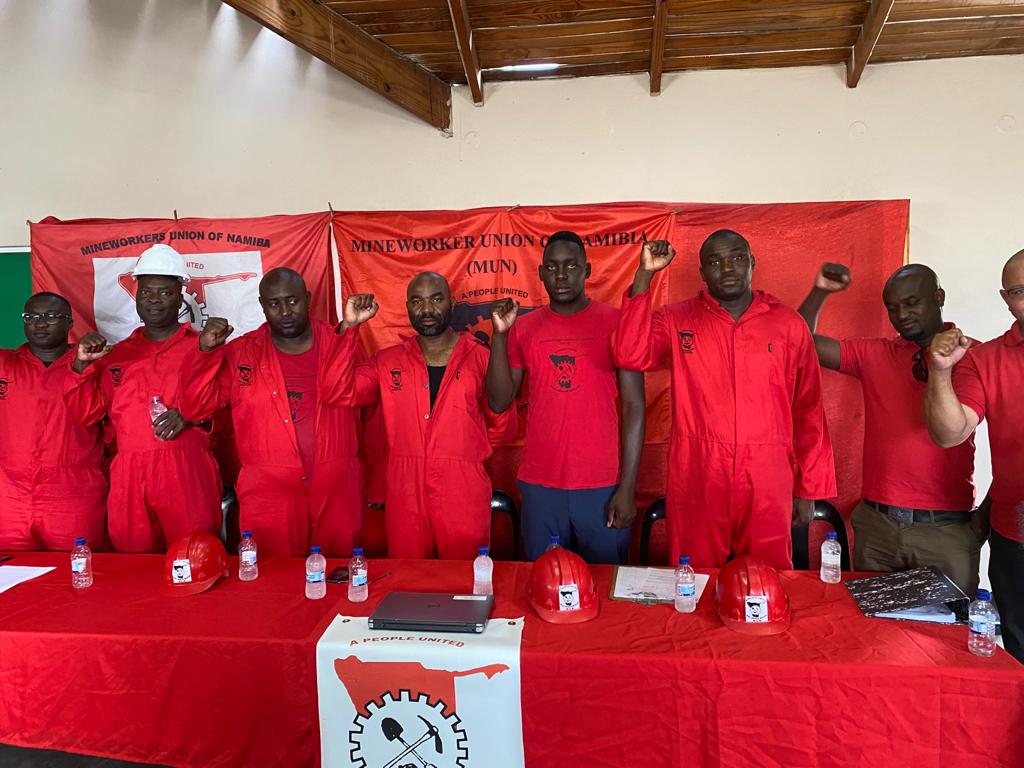
This panel examine the role the the Chinese owned company Beifang Mining Technology Services and building solidarity with Namibian workers. Beifang has a long record in Namibian of being used by the owners of the Chinese (CNUC) controlled Rossing Uranium Mine, Husab Uranium and other mines and companies in Namibia replacing permanent workers and and forcing these workers into contract labor positions without senority, proper healthcare and health and safety protection including PPE . This panel will also look at a recent labor arbitration in favor of The Revolutionary Union against Beifang. The arbitrator ruled that the company had sought to illegally prevent workers from being represented by the Revolutionary Union which was competing against the Mineworkers Workers Union of Nambia. Beifang is appealing the ruling in order to prevent the workers from being represented by the RU. There will also be a labor hearing on October 6 & 7th in Windhoek, Namibia for the fired Rossing miners after 6 years for struggle. The company China National Uranium Corporation (CNUC) has fighting the illegal discharges of the miners and continues to violate their labor and worker rights.
The connection between the attack on labor, contracting out and the role of Beifang and Chinese bosses will be examined including how it is effecting the entire labor movement.
Representatives From
Rossing Mine Fired Union Leaders who were members of MUN
Revolutionary Union
Husab Mine fired unionized workers
Other workers from Namibia
Sponsored by WorkWeek
UFCLP
For more info: labormedia1 [at] gmail.com
Join Zoom Meeting
https://us02web.zoom.us/j/83005215942?pwd=Enka79JEyG9ToWXmYRHNhWZQU36uyp.1
Meeting chat link
https://us02web.zoom.us/launch/jc/83005215942
Meeting ID: 830 0521 5942
Passcode: 695300
STATEMENT OF THE UNLAWFULLY DISMISSED MUN UNION LEADERS OF ROSSING URANIUM HIGH COURT HEARING
7–8 October 2026
The hearing scheduled for 7 and 8 October 2026 in the High Court of Namibia is an important stage in the long-running labour dispute involving thep nine dismissed Rossing Mineworkers Union leaders.
The case goes beyond the nine individuals involved. It raises important questions about trade-union rights, fair labour procedures, access to justice and the protection of workers who serve as union representatives.
Brief background
The nine union leaders were dismissed were unfairly dismissed by Rossing in September 2020 and subsequently pursued their labour dispute through the arbitration process.
In 2025, the nine applied for the recusal of the arbitrator, raising concerns about perceived bias and the way he conducted of the proceedings. The arbitrator ultimately recused himself and the matter was directed to start de novo, meaning that the arbitration would begin afresh.
Rossing challenged that position in the High Court and the Court ruled that the existing arbitrator should remain and that the matter should continue from where it had stopped.
Later in 2025, the arbitrator left his position after taking up a councillor position in the Kunene Region. A new arbitrator was subsequently appointed and he ruled that the matter should again proceed de novo.
Rossing has challenged this decision, resulting in the matter now being before the High Court on 7 and 8 October 2026.
The nine union leaders are expected to attend the hearing, listen to the arguments presented by the parties and await the Court's ruling.
Why this matters to Namibian workers
This hearing is important because the issues involved are bigger than one workplace.
Workers throughout Namibia rely on fair labour procedures and on the ability of trade unions and their representatives to perform their functions.
The case therefore raises important questions:
• Can union representatives carry out their responsibilities without fear?
• Are workers entitled to a fair and impartial dispute-resolution process?
• How should prolonged labour disputes be handled?
• What happens when an arbitrator leaves office before a matter is completed?
• When should a labour matter begin again, and when should it continue from where it stopped?
• How can workers have confidence that labour disputes will be resolved fairly and without unnecessary delay?
Namibia's Labour Act provides mechanisms for arbitration and judicial review of arbitration proceedings, including where there are alleged irregularities or excesses of an arbitrator's powers.
A matter for all workers
The Rossing case should therefore not be viewed simply as a dispute involving nine former employees, it is a matter that should interest MUN members, shop stewards, union leaders, permanent workers, contract workers and all trade unionists and all the workers in Namibia.
The outcome and the lessons from the case can contribute to the wider discussion about how workers' rights and trade-union rights are protected when serious labour disputes arise.
For the nine union leaders, the hearing represents another important step in a struggle that has continued since 2020 but for the Namibian workers, it is an opportunity to reflect on the importance of fairness, impartiality, accountability, effective trade-union representation and timely access to justice.
The lessons of the Rossing struggle must strengthen workers' understanding of their rights and contribute to a stronger and more accountable labour movement in Namibia.
In solidarity,
The Nine Rossing Union Leaders and Fellow Comrades
ninedismissedrulbec [at] gmail.com
Captured Namibian Mine Workers Union Of Nambia Signs Deal With Union Busting Contractor Beifang Mining Technology Services After Rossing Mines Layed Off Hundreds of Workers
https://www.facebook.com/watch/?v=2232560450420883
Beifang Mining Technology Services has officially recognized the [Mineworkers Union of Namibia](https://www.facebook.com/MUNNAMIBIA?__tn__=-]K) (MUN) as the sole bargaining agent for workers at Rössing Uranium Ltd and Swakop Uranium Pty Ltd.
MUN Secretary-General George Ampweya emphasizes the importance of this recognition.
Listen to his insights here:[https://www.eaglefm.com.na/.../on-the-radar-with.../](https://www.eaglefm.com.na/podcast/on-the-radar-with-fransina-10-july-2024/?fbclid=IwZXh0bgNhZW0CMTAAAR0tis-s4lCKYkvH1c2hfmQkQrjzb2G0PmP7sFfANsJ5HASP4A3Rt-LjIFQ_aem_vZ2KP9kAgFmdhmJ7Ss5V8A)
‘New mine owners trample on Namibian workers’ rights’ 15 April 2021
Abitter dispute between the Mineworkers Union of Namibia (MUN) and China National Nuclear Corporation Rössing Uranium Limited (CNNC RUL) is heading to arbitration in Swakopmund from 19 to 21 April 2021. CNNC RUL, which bought a 68.62% stake in the Rössing Uranium Mine from Anglo-Australian mining giant Rio Tinto Zinc in July 2019, has been heavily criticised for how it runs the mine – including its unfair labour practices. Rössing is one of the largest uranium mines in the world, and the MUN has spent decades negotiating excellent collective agreements and policies for its 780 members, says Johannes Hamutenya, the union’s Rössing branch chairperson.
…“The retrenchment policy is the best in Namibia. The Chinese and Namibian management wanted all these documents renegotiated so that they could have more power to do what they want,” says Hamutenya. The new managers also wanted to do away with pay scales. “They wanted to breach the Affirmative Action Act by paying employees as they see fit, whereas it says jobs of equal value must be compensated equally. Eventually they said they won’t give us a salary increase if we refuse to renegotiate. They threatened to nullify all the collective agreements, which is unlawful.”
…Two months ago they wrote to Namibia’s president Hage Geingob. They haven’t had a response from either president. The mine is also 10% owned by South Africa’s Industrial Development Corporation, which did not respond to questions. Similarly, the manager of corporate communication for CNNC RUL, Daylight Ekandjo, said: “This matter is sub-judice and being dealt with through the office of the Namibian Labour Commissioner, we can therefore unfortunately not address your related queries at this stage.” …Mutenya is hopeful, but recognises that the fight is much bigger than the individuals involved: “Our fight is so difficult because it is a political fight. The politicians are involved. It is the relationship between China and the Namibian government. So we workers on the floor, we mean nothing.”
BEIFANG MINE WORKERS ACCUSE EMPLOYER OF LABOUR VIOLATIONS
Employees of Beifang Mining Services have accused their employer of not adhering to labour laws and subjecting them to bad working conditions.
Employees spoke to the Windhoek Observer on condition of anonymity for fear of victimisation
“Things at Beifang are worse, victimisation, tribalism, racism, favouritism, discrimination, unfair dismissal, and underpayment are the order of the day. We are forced to work on weekends continuously with no overtime unless on a public holiday,” said one employee.
The employee added that the safety of the workers is their biggest concern.
The employee claims that those who speak up face suspension.
“The worst part is poor working conditions. Truck operators are forever complaining about backaches because of the poor roads in the pits and the dust. They don’t even have water dosers.” The only water dosers on site are for Swakop Uranium,” explained the employee.
According to the employees, several of them, especially operators who drive heavy-duty vehicles, are suffering from kidney problems caused by bad roads in the mine.
“The bosses covered up this story and gave the operator something to silence him. The workers don’t even get bonuses. All they get is cool drinks at the end of their work shifts,” alleged the employees.
Beifang Mining Services’ human resource manager, Anthony Wilson did not respond to questions sent to him by the time the article was published.
Safety concerns have persisted at the mine.
In 2019, the mine experienced a strike by disgruntled employees supported by the Mineworkers Union of Namibia (MUN), demanding the removal of Beifang Mining Services from the site.
At the time, Beifang, the drilling and blasting contractor, was accused of leaving detonators lying around on the site.
On 25 April The MUN and the management of Beifang Mining Services signed an agreement that saw employees within the drilling, loading, and hauling departments receive payment in full at double the employees’ hourly basic rate for “work on Sundays” (overtime).
MUN secretary-general, George Ampweya explained that despite the employer being exempted from paying overtime under Section 21 of the Namibian Labour Act 11-2007 due to being designated as a continuous operation, they reached this agreement.
“The parties further agreed that all employment contracts will be extended to align with the duration of the service level agreements between the company and its clients Rössing Uranium and Swakop Uranium, respectively,” he said.
The Windhoek Observer has learned that neither the MUN nor the Revolutionary Union RU have full bargaining power at the mine.
Workers are currently torn between MUN and RU.
RU and Beifang Mining Services, on 20 March signed a recognition agreement.
The agreement was reversed by Beifang Mining Services on 11 April.
The mine claimed that the union only had 49% worker representation.
“We have discovered that the application forms we have received as well as the total number of active employees on your list contain 274 employees out of the 598 employees at the end of March,” Wilson told RU in a letter dated 11 April.
RU’s central secretary, Julius Natangwe, refuted these claims, stating that they have 403 members because they submitted a list of 70 applications on 12 April.
He also alleged that the mine has delayed paying the workers’ membership money over to the union.
“Take note that any job losses or victimisation of our members while in the process of playing your dirty politics, will be considered a declaration of war against the RU. We are not shaken, and in fact, your dirty games will only make us stronger,” said Natangwe.
In the meantime, RU has called on Vice President Netumbo Nandi-Ndeitwah to visit Beifang Mining Services and the African Big Lion mine.
In a letter dated 30 April to Nandi-Ndeitwah, the union’s central secretary, Julius Natangwe, alleged unfair labour practices and unconducive working conditions by African Big Lion Mine and Beifang Mining Services.
“We respectfully request that you consider paying a courtesy visit to Beifang Mining Services and Africa Big Lion to witness firsthand the plight of the workers and to demonstrate your support for their rights. Your intervention could make a significant difference in improving the working conditions and livelihoods of these individuals,” said Natangwe.
Meeting Time Saturday 10/3/26
US 9am pst/11am cst/12 pm est/ Nambia-South Africa 6pm
Join Zoom Meeting
https://us02web.zoom.us/j/83005215942?pwd=Enka79JEyG9ToWXmYRHNhWZQU36uyp.1
This panel examine the role the the Chinese owned company Beifang Mining Technology Services and building solidarity with Namibian workers. Beifang has a long record in Namibian of being used by the owners of the Chinese (CNUC) controlled Rossing Uranium Mine, Husab Uranium and other mines and companies in Namibia replacing permanent workers and and forcing these workers into contract labor positions without senority, proper healthcare and health and safety protection including PPE . This panel will also look at a recent labor arbitration in favor of The Revolutionary Union against Beifang. The arbitrator ruled that the company had sought to illegally prevent workers from being represented by the Revolutionary Union which was competing against the Mineworkers Workers Union of Nambia. Beifang is appealing the ruling in order to prevent the workers from being represented by the RU. There will also be a labor hearing on October 6 & 7th in Windhoek, Namibia for the fired Rossing miners after 6 years for struggle. The company China National Uranium Corporation (CNUC) has fighting the illegal discharges of the miners and continues to violate their labor and worker rights.
The connection between the attack on labor, contracting out and the role of Beifang and Chinese bosses will be examined including how it is effecting the entire labor movement.
Representatives From
Rossing Mine Fired Union Leaders who were members of MUN
Revolutionary Union
Husab Mine fired unionized workers
Other workers from Namibia
Sponsored by WorkWeek
UFCLP
For more info: labormedia1 [at] gmail.com
Join Zoom Meeting
https://us02web.zoom.us/j/83005215942?pwd=Enka79JEyG9ToWXmYRHNhWZQU36uyp.1
Meeting chat link
https://us02web.zoom.us/launch/jc/83005215942
Meeting ID: 830 0521 5942
Passcode: 695300
STATEMENT OF THE UNLAWFULLY DISMISSED MUN UNION LEADERS OF ROSSING URANIUM HIGH COURT HEARING
7–8 October 2026
The hearing scheduled for 7 and 8 October 2026 in the High Court of Namibia is an important stage in the long-running labour dispute involving thep nine dismissed Rossing Mineworkers Union leaders.
The case goes beyond the nine individuals involved. It raises important questions about trade-union rights, fair labour procedures, access to justice and the protection of workers who serve as union representatives.
Brief background
The nine union leaders were dismissed were unfairly dismissed by Rossing in September 2020 and subsequently pursued their labour dispute through the arbitration process.
In 2025, the nine applied for the recusal of the arbitrator, raising concerns about perceived bias and the way he conducted of the proceedings. The arbitrator ultimately recused himself and the matter was directed to start de novo, meaning that the arbitration would begin afresh.
Rossing challenged that position in the High Court and the Court ruled that the existing arbitrator should remain and that the matter should continue from where it had stopped.
Later in 2025, the arbitrator left his position after taking up a councillor position in the Kunene Region. A new arbitrator was subsequently appointed and he ruled that the matter should again proceed de novo.
Rossing has challenged this decision, resulting in the matter now being before the High Court on 7 and 8 October 2026.
The nine union leaders are expected to attend the hearing, listen to the arguments presented by the parties and await the Court's ruling.
Why this matters to Namibian workers
This hearing is important because the issues involved are bigger than one workplace.
Workers throughout Namibia rely on fair labour procedures and on the ability of trade unions and their representatives to perform their functions.
The case therefore raises important questions:
• Can union representatives carry out their responsibilities without fear?
• Are workers entitled to a fair and impartial dispute-resolution process?
• How should prolonged labour disputes be handled?
• What happens when an arbitrator leaves office before a matter is completed?
• When should a labour matter begin again, and when should it continue from where it stopped?
• How can workers have confidence that labour disputes will be resolved fairly and without unnecessary delay?
Namibia's Labour Act provides mechanisms for arbitration and judicial review of arbitration proceedings, including where there are alleged irregularities or excesses of an arbitrator's powers.
A matter for all workers
The Rossing case should therefore not be viewed simply as a dispute involving nine former employees, it is a matter that should interest MUN members, shop stewards, union leaders, permanent workers, contract workers and all trade unionists and all the workers in Namibia.
The outcome and the lessons from the case can contribute to the wider discussion about how workers' rights and trade-union rights are protected when serious labour disputes arise.
For the nine union leaders, the hearing represents another important step in a struggle that has continued since 2020 but for the Namibian workers, it is an opportunity to reflect on the importance of fairness, impartiality, accountability, effective trade-union representation and timely access to justice.
The lessons of the Rossing struggle must strengthen workers' understanding of their rights and contribute to a stronger and more accountable labour movement in Namibia.
In solidarity,
The Nine Rossing Union Leaders and Fellow Comrades
ninedismissedrulbec [at] gmail.com
Captured Namibian Mine Workers Union Of Nambia Signs Deal With Union Busting Contractor Beifang Mining Technology Services After Rossing Mines Layed Off Hundreds of Workers
https://www.facebook.com/watch/?v=2232560450420883
Beifang Mining Technology Services has officially recognized the [Mineworkers Union of Namibia](https://www.facebook.com/MUNNAMIBIA?__tn__=-]K) (MUN) as the sole bargaining agent for workers at Rössing Uranium Ltd and Swakop Uranium Pty Ltd.
MUN Secretary-General George Ampweya emphasizes the importance of this recognition.
Listen to his insights here:[https://www.eaglefm.com.na/.../on-the-radar-with.../](https://www.eaglefm.com.na/podcast/on-the-radar-with-fransina-10-july-2024/?fbclid=IwZXh0bgNhZW0CMTAAAR0tis-s4lCKYkvH1c2hfmQkQrjzb2G0PmP7sFfANsJ5HASP4A3Rt-LjIFQ_aem_vZ2KP9kAgFmdhmJ7Ss5V8A)
‘New mine owners trample on Namibian workers’ rights’ 15 April 2021
Abitter dispute between the Mineworkers Union of Namibia (MUN) and China National Nuclear Corporation Rössing Uranium Limited (CNNC RUL) is heading to arbitration in Swakopmund from 19 to 21 April 2021. CNNC RUL, which bought a 68.62% stake in the Rössing Uranium Mine from Anglo-Australian mining giant Rio Tinto Zinc in July 2019, has been heavily criticised for how it runs the mine – including its unfair labour practices. Rössing is one of the largest uranium mines in the world, and the MUN has spent decades negotiating excellent collective agreements and policies for its 780 members, says Johannes Hamutenya, the union’s Rössing branch chairperson.
…“The retrenchment policy is the best in Namibia. The Chinese and Namibian management wanted all these documents renegotiated so that they could have more power to do what they want,” says Hamutenya. The new managers also wanted to do away with pay scales. “They wanted to breach the Affirmative Action Act by paying employees as they see fit, whereas it says jobs of equal value must be compensated equally. Eventually they said they won’t give us a salary increase if we refuse to renegotiate. They threatened to nullify all the collective agreements, which is unlawful.”
…Two months ago they wrote to Namibia’s president Hage Geingob. They haven’t had a response from either president. The mine is also 10% owned by South Africa’s Industrial Development Corporation, which did not respond to questions. Similarly, the manager of corporate communication for CNNC RUL, Daylight Ekandjo, said: “This matter is sub-judice and being dealt with through the office of the Namibian Labour Commissioner, we can therefore unfortunately not address your related queries at this stage.” …Mutenya is hopeful, but recognises that the fight is much bigger than the individuals involved: “Our fight is so difficult because it is a political fight. The politicians are involved. It is the relationship between China and the Namibian government. So we workers on the floor, we mean nothing.”
BEIFANG MINE WORKERS ACCUSE EMPLOYER OF LABOUR VIOLATIONS
Employees of Beifang Mining Services have accused their employer of not adhering to labour laws and subjecting them to bad working conditions.
Employees spoke to the Windhoek Observer on condition of anonymity for fear of victimisation
“Things at Beifang are worse, victimisation, tribalism, racism, favouritism, discrimination, unfair dismissal, and underpayment are the order of the day. We are forced to work on weekends continuously with no overtime unless on a public holiday,” said one employee.
The employee added that the safety of the workers is their biggest concern.
The employee claims that those who speak up face suspension.
“The worst part is poor working conditions. Truck operators are forever complaining about backaches because of the poor roads in the pits and the dust. They don’t even have water dosers.” The only water dosers on site are for Swakop Uranium,” explained the employee.
According to the employees, several of them, especially operators who drive heavy-duty vehicles, are suffering from kidney problems caused by bad roads in the mine.
“The bosses covered up this story and gave the operator something to silence him. The workers don’t even get bonuses. All they get is cool drinks at the end of their work shifts,” alleged the employees.
Beifang Mining Services’ human resource manager, Anthony Wilson did not respond to questions sent to him by the time the article was published.
Safety concerns have persisted at the mine.
In 2019, the mine experienced a strike by disgruntled employees supported by the Mineworkers Union of Namibia (MUN), demanding the removal of Beifang Mining Services from the site.
At the time, Beifang, the drilling and blasting contractor, was accused of leaving detonators lying around on the site.
On 25 April The MUN and the management of Beifang Mining Services signed an agreement that saw employees within the drilling, loading, and hauling departments receive payment in full at double the employees’ hourly basic rate for “work on Sundays” (overtime).
MUN secretary-general, George Ampweya explained that despite the employer being exempted from paying overtime under Section 21 of the Namibian Labour Act 11-2007 due to being designated as a continuous operation, they reached this agreement.
“The parties further agreed that all employment contracts will be extended to align with the duration of the service level agreements between the company and its clients Rössing Uranium and Swakop Uranium, respectively,” he said.
The Windhoek Observer has learned that neither the MUN nor the Revolutionary Union RU have full bargaining power at the mine.
Workers are currently torn between MUN and RU.
RU and Beifang Mining Services, on 20 March signed a recognition agreement.
The agreement was reversed by Beifang Mining Services on 11 April.
The mine claimed that the union only had 49% worker representation.
“We have discovered that the application forms we have received as well as the total number of active employees on your list contain 274 employees out of the 598 employees at the end of March,” Wilson told RU in a letter dated 11 April.
RU’s central secretary, Julius Natangwe, refuted these claims, stating that they have 403 members because they submitted a list of 70 applications on 12 April.
He also alleged that the mine has delayed paying the workers’ membership money over to the union.
“Take note that any job losses or victimisation of our members while in the process of playing your dirty politics, will be considered a declaration of war against the RU. We are not shaken, and in fact, your dirty games will only make us stronger,” said Natangwe.
In the meantime, RU has called on Vice President Netumbo Nandi-Ndeitwah to visit Beifang Mining Services and the African Big Lion mine.
In a letter dated 30 April to Nandi-Ndeitwah, the union’s central secretary, Julius Natangwe, alleged unfair labour practices and unconducive working conditions by African Big Lion Mine and Beifang Mining Services.
“We respectfully request that you consider paying a courtesy visit to Beifang Mining Services and Africa Big Lion to witness firsthand the plight of the workers and to demonstrate your support for their rights. Your intervention could make a significant difference in improving the working conditions and livelihoods of these individuals,” said Natangwe.
Added to the calendar on Fri, Oct 2, 2026 10:14PM

Add Your Comments
We are 100% volunteer and depend on your participation to sustain our efforts!
Donate

$110.00 donated
in the past month
Get Involved
If you'd like to help with maintaining or developing the website, contact us.
Publish
Publish your stories and upcoming events on Indybay.
Topics
More
Search Indybay's Archives
Advanced Search
►
▼
IMC Network