







 Publish to Newswire
 Add an Event
Combat the affordability crisis by strengthening distributed clean energy
“Despite rising affordability costs, the Trump administration is blocking and undermining the deployment of the most affordable energy options, including wind and solar, which protect public health and our security,” said Alex Cornell du Houx, former Maine State Representative, USMC combat veteran, President/Co-Founder ofElected Officials to Protect America (EOPA). “Distributed clean energy is secure, costs less, and creates prosperity. Clean energy powering America and our partners will stabilize prices, making the US a more affordable, secure place to live and raise a family. If Ukraine can lead the world in clean energy deployment during war, we can absolutely make America more secure and help our communities struggling with rising energy costs. The wars in Iran and Ukraine illustrate how the dependence on a single source of energy can devastate lives, destroy lands and create instability globally. Power systems built around a few large plants and a few worldwide chokepoints is a system built for a few targets. Every country whose infrastructure could be hit—by missile, by sabotage, by cyber intrusion—faces the same challenge with centralized dirty energy. A clean energy future is a secure and prosperous future.”
On his first day in office, President Trump signed executive orders that prioritized oil and gas extraction and production, claiming they were for economic and national energy. He declared a national energy emergency to pursue his “drill, baby, drill” initiatives. This tactic worsens the climate crisis and is making the US energy insecure.
EPA data shows alarming spikes in health-harming pollution levels in 2025, reversing decades of improvement. The USA is no longer leading the world in combating the climate crisis. Administration anti-clean energy policies contribute to it
“There are communities across America that have prospered from disturbed clean energy systems. When extreme heat threatens the grid these communities are secure knowing that they are independently powered. With battery storage, when they have excess energy, they can feed it back into the grid and get financial credit for doing so. In the military we deploy solar to power our systems during some deployments. America needs to deploy more distributed clean energy to keep our people safe and for our national security,” said Christian Brock, Elected Officials Senior Advisor, 20-year Air Force Veteran. “While this administration promotes fossil fuel energy local municipalities continue to protect their people with clean energy solutions and climate mitigation efforts.”
NERC’s 2026 Summer Reliability Assessment shows that the addition of solar energy and battery resources is strengthening grid reliability.
During his administration, federal clean energy investments, along with environmental protections, have been drastically cut. Since the start of 2025, funding cuts for clean energy and policy shifts have led to cancellations of $32 billion and more than 48,000 anticipated manufacturing jobs. While elected officials are stepping up to help mitigate the climate crisis and protect citizens, these federal policies have impeded their efforts.
The US-Israel war on Iran, which started on February 28, has compounded the situation. In March, the effective closure of the Strait of Hormuz happened. This only waterway out of the Gulf is where 20 percent of the world’s oil and liquefied natural gas supplies were shipped. Immediately, global oil and gas prices were sent soaring. As the war continues, oil and gas prices persist in fluctuating, that in turn continues to raise costs across the board with inflation creeping in.
Meanwhile oil companies are profiting from the situation.
Chevron reported net income of $12.2 billion for the second quarter of 2026, a more than fivefold increase on the same period last year. ExxonMobil reported a profit of $14.5 billion, double what it made in the same period a year ago and its highest quarterly profit since Russia’s 2022 invasion of Ukraine.
The administration’s policies, including the war, have forced families to struggle with rising utility bills, high gas prices, and worsening air quality. Research shows that about 1 out of 5 Americans die prematurely due to breathing pollution.
“In Niagara County, we have experienced firsthand the consequences of environmental challenges, from devastating lake-effect winter storms that scientists project will be intensified by a changing climate to the long legacy of industrial pollution that has affected our communities. I know these issues are personal. I grew up in the shadow of the Love Canal, one of our nation's most significant environmental disasters, and then right next to the Goodyear plant, where residents continue to advocate for cleaner air and stronger environmental protections. Those experiences have shaped my belief that every family deserves a safe, healthy place to live,” said Jeffrey Elder, Minority Leader Niagara County Legislator, New York, a 27-year United States Air Force veteran and former employee of the Pentagon, FEMA, the Department of Homeland Security, and the U.S. Department of State. I understand that energy security, environmental stewardship, and national security are inseparable. Investing in reliable, affordable clean energy, strengthening our infrastructure, and protecting our air and water are not only environmental priorities — they are investments in our economy, our public health, and our future.”
“'Liberty and justice for all' is more than a phrase; it is the promise of our democracy. Throughout my military and federal service, including my years aboard Air Force One serving presidents of both political parties, I learned that public service is about protecting the American people. That commitment should include ensuring that every American has the opportunity to breathe clean air, drink safe water, and raise their families in healthy communities. Those are not partisan ideals—they are fundamental American values. We must continue moving forward with practical solutions that strengthen our energy security, protect our environment, and leave a healthier, more resilient nation for future generations,” added Jeffrey Elder, Minority Leader Niagara County Legislator, New York.
People are facing extreme weather health issues that are only being compounded by the President’s policies that promote fossil fuels over clean energy and environmental protections. Working families and frontline environmental justice communities bear the brunt of these federal decisions.
A scientific report found the emissions from any one of the 14 biggest oil and gas companies were each enough to cause more than 50 heatwaves, which would otherwise have been virtually impossible.
“The climate crisis has made summertime too hot in Georgia and when it rains, it can pour—flooding areas. We need climate mitigation efforts, and more deployed clean energy, not federally backed incentives for fossil fuel corporations. Administration policies have increased everyone’s costs making household budgets skyrocket. Environmental justice communities that I serve are hit the hardest from gas and food cost increases as well as from more air pollution. The president’s anti-clean energy initiatives along with the weakening of environmental regulations have jeopardized our energy security, public health and have lost jobs,” said Tonya Anderson, Georgia State Senator, Air Force Reserve Veteran. “Achieving energy security depends on the deployment of more renewable energy, continued energy efficiencies, climate resilience measures and critical environmental protections — not deepening a dependency on fossil fuels.”
Over the last two years, wind and solar made up 95 percent and 90 percent, respectively, of the new energy added to our grid due to tax credits issued by the previous administration. Those tax benefits will end soon.
“The Biden Administration’s clean energy initiatives via the Inflation Reduction Act with $370 Billion, and the Bipartisan Infrastructure Law with $75 Billion through the National Labs have sustained this country's advancement and expansion of renewable and clean energy — despite all the Trump administration attacks on clean energy,” said Ron Pierce, Frm. Major U.S. Army, Director of the Office of Small Disadvantaged Business Utilization (OSDBU) for the Department of Energy (DOD), from Louisiana.
The cost of building fossil fuel infrastructure is far more expensive than deploying clean green energy. Ukraine’s experience shows that clearly. The World Bank's latest assessment puts Ukraine’s energy sector's reconstruction need at $91 billion, within a $588 billion national total. However, any reconstruction that defaults to fossil fuel rebuilds would lock in an estimated 741 million tons of CO₂ over the decade. That’s twice Ukraine's pre-war annual emissions, layered onto the more than 300 million tons the war has already generated. On the other hand, distributed clean energy helps Ukraine’s energy security and is faster, safer, and cheaper to deploy.
Since the war started, Ukraine ran an experiment in an alternative clean energy policy. In 2025, Ukraine added 1.5 gigawatts of solar energy, nearly double the previous year, taking cumulative capacity above 8.5 gigawatts. Wind energy added 324 megawatts, more than the entire 2022–2025 period combined. Importantly, battery storage reached 534 megawatts, anchored by a 200-megawatt wind farm. Only 62 miles from the frontline, all nineteen turbines of the Tyligulska wind farm remain operational. For Russia, wind turbines are hard to target and it’s not cost-effective to have a missile try to one out. Dirty power plants are easier flatter targets.
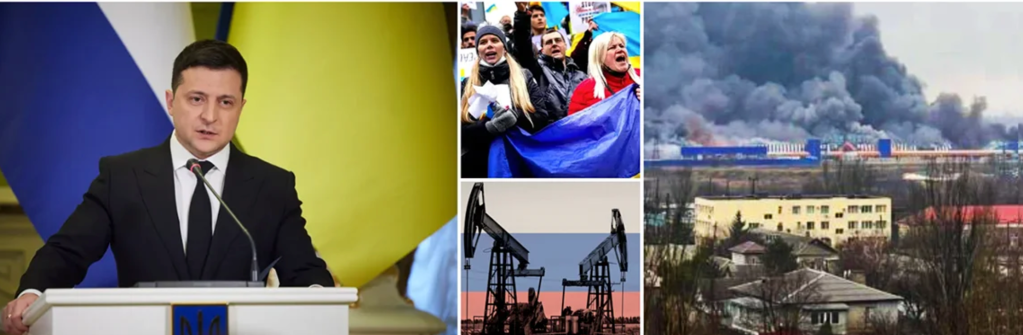
“Ukraine’s energy security depends on building a more decentralized and resilient system, city by city. Distributed generation, storage and local infrastructure help keep heat, water, hospitals and other essential services running when the grid is under attack. Delivering this resilience at scale requires a direct link between international capital and technology and projects that cities can implement now,” said .Alexander Romanishyn, Frm. Deputy Minister of Economy in Ukraine, Member of ISE Group. “We are putting this approach into practice at two levels. Nationally, UR³.gov.ua serves as a single point of entry where Ukraine’s recovery priorities and projects become visible to international partners and investors. Locally, the Kyiv Accelerator, launching this September with the support of the Kyiv City State Administration and powered by ISE Group, will give U.S. and global technology providers a fast track to pilot solutions directly with critical-infrastructure operators.”
“We are now forming the Kyiv Accelerator Innovation Council. Partners joining the Council will work with the City and infrastructure enterprises to evaluate and select solutions for implementation. Solutions proven in Kyiv can then be adapted and scaled across Ukraine, city by city,” added Frm. Deputy Minister Romanishyn.
Clean energy is making Ukraine energy secure, and investors have taken note. In April 2026, Ukraine’s largest private energy company, DTEK, committed approximately $1.4 billion to a 650-megawatt wind project in Poltava—just 38 miles from the frontline. Ukraine's electricity exports grew sixfold in 2025 to 2.1 terawatt-hours, which made the country a net exporter for four months during a full-scale war.
“Every gigawatt of solar and wind we build in Ukraine gives us more resilience and strength to win the war — and create future jobs for the more than one million veterans who will need a place in our economy once the guns fall silent. We didn't wait for peace to rebuild clean: under fire, Ukrainians have proven that distributed solar, wind, and storage are faster to deploy, cheaper to run, and far harder for Russia to destroy than the power plants it keeps bombing,” said Svitlana Romanko, Environmental Lawyer, Founder and Executive Director of Razom We Stand, Ukraine. “That is the winning practice that is behind the Ukraine Energy Security Marshall Plan, and it is the same lesson that can solve energy problems in America: resilient, affordable clean energy protects communities from the next crisis, whether it's a missile, or skyrocketing energy prices in monthly utility bills and at the gas pump,”
The Elected Officials to Protect America (EOPA) Ukraine Energy Security Marshall Plan (UESMP) recommends distributed clean energy solutions for implementation now, and after the war. Distributed energy systems will accelerate Ukraine's energy security, weakening Russia's war economy, and advancing global energy security in the process.
“We are honored and humbled to have Pryluky work on a sister-city project that was initiated by Elected Officials to Protect America. We hope the collaboration will bring relief in the form of clean energy to Pryluky, so our electricity does not rely on old power plants that are always bombed,” said Roman Hohol, Pryluky City Council Member, Ukraine, civil activist, and doctor. “Clean energy gives us a chance to survive in the winters, at our hospitals, and for children to go to school.”
UESMP will use an AI-powered modeling system that will enable municipalities to rapidly design, finance, and deploy resilient local clean energy systems. With integrated solar and wind arrays, storage, smart microgrids, and EV infrastructure—affordability, resilience, and security will be built into the city’s infrastructure.
Donate

$85.00 donated
in the past month
Get Involved
If you'd like to help with maintaining or developing the website, contact us.
Publish
Publish your stories and upcoming events on Indybay.