







 Publish to Newswire
 Add an Event
From the Open-Publishing Calendar
From the Open-Publishing Newswire
Indybay Feature
California Ratepayers Demand Lower Utility Rates at CPUC
Pacific Gas and Electric (PG&E), California’s largest investor-owned utility, is at it again by requesting the California Public Utilities Commission (CPUC) to grant a rate increase for its electrical and natural gas services. The Oil and Gas Network and the Affordable Energy Campaign, among other consumer groups and seniors, are pushing back against any new rate increases requested by the utility saying in part that
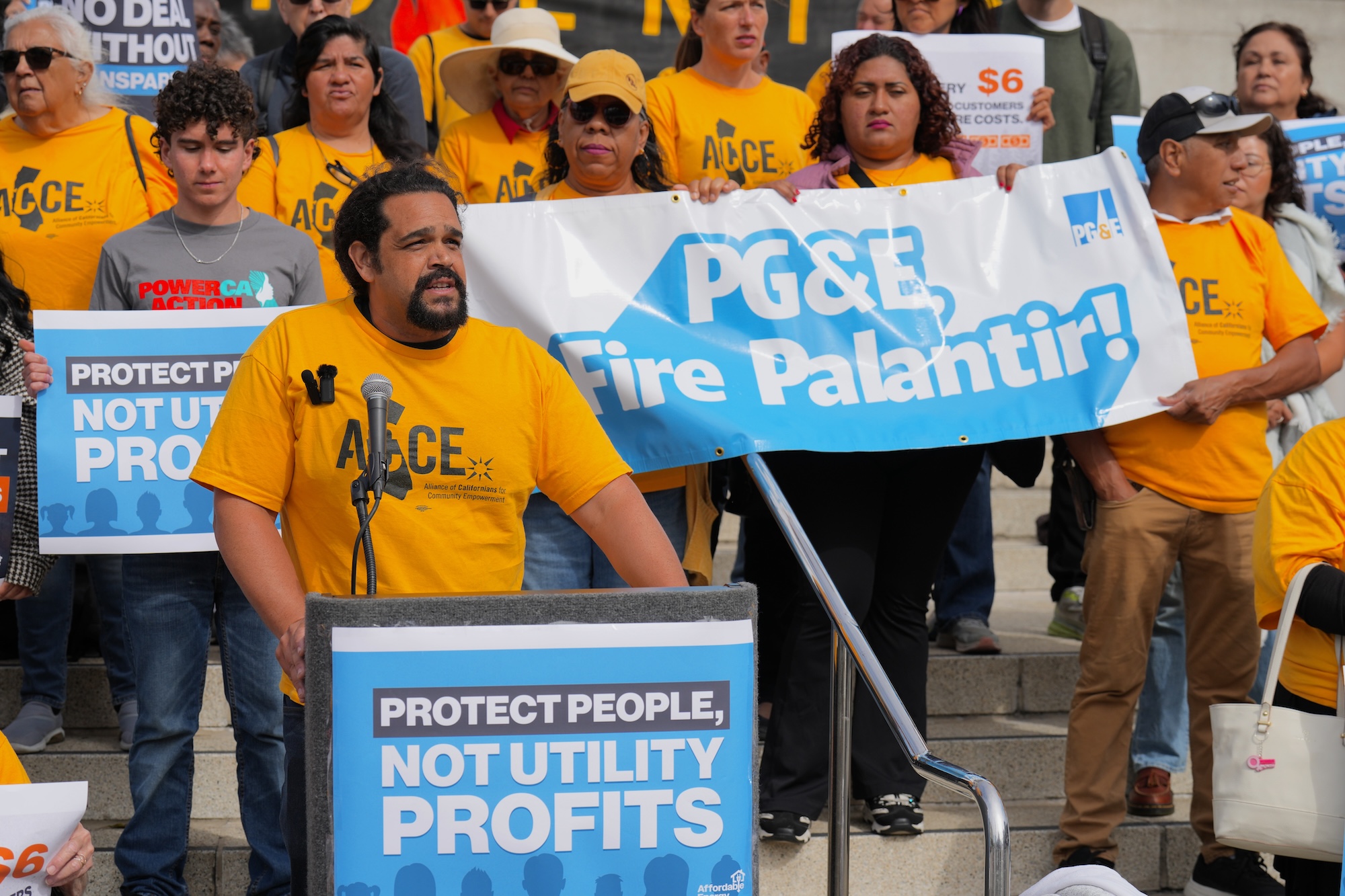
SAN FRANICSCO (08-13) – Pacific Gas and Electric (PG&E), California’s largest investor-owned utility, is at it again by requesting the California Public Utilities Commission (CPUC) to grant a rate increase for its electrical and natural gas services. The Oil and Gas Network and the Affordable Energy Campaign, among other consumer groups and seniors, are pushing back against any new rate increases requested by the utility saying in part that “since 2016 electrical rates at investor-owned utilities have nearly doubled for customers.”
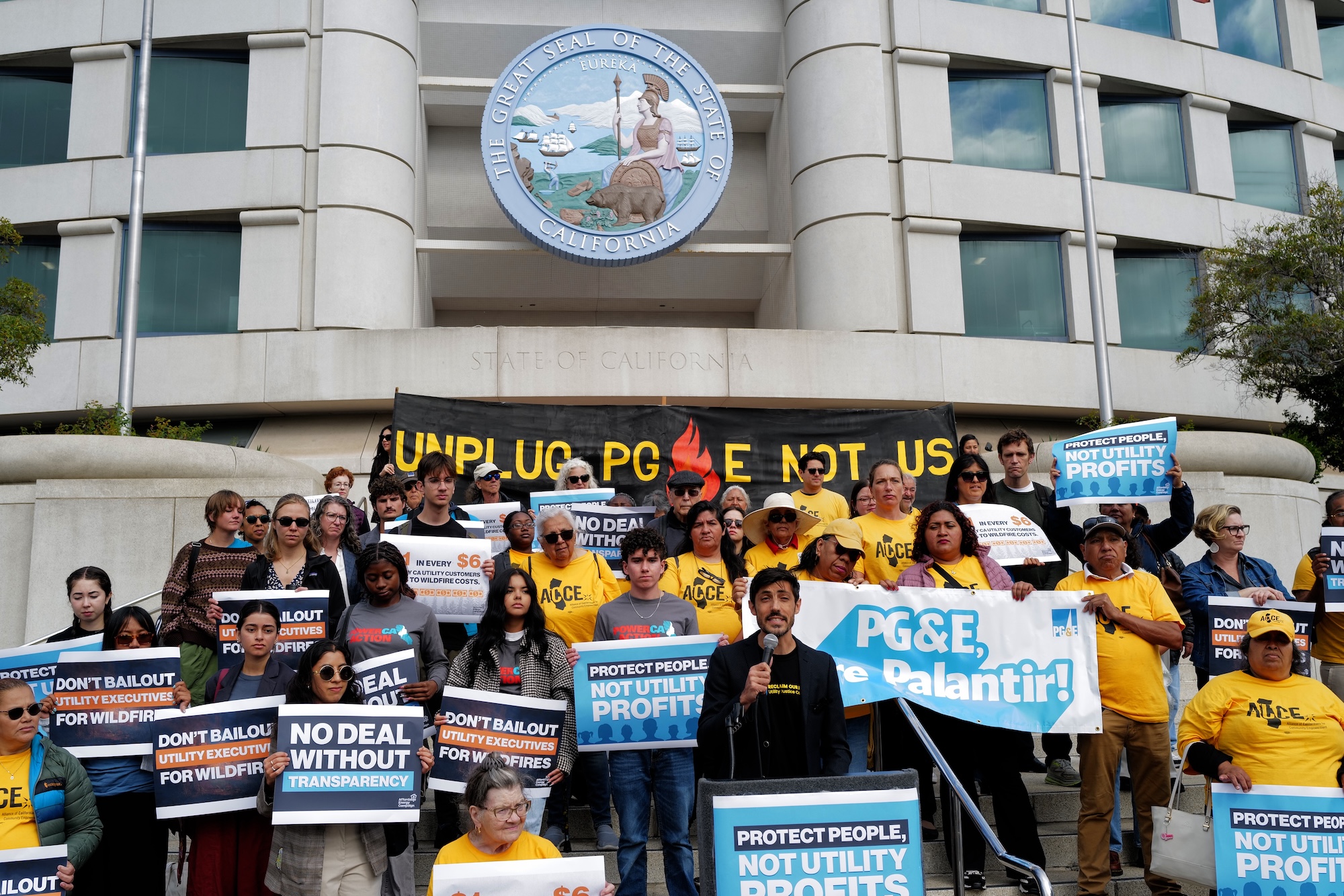
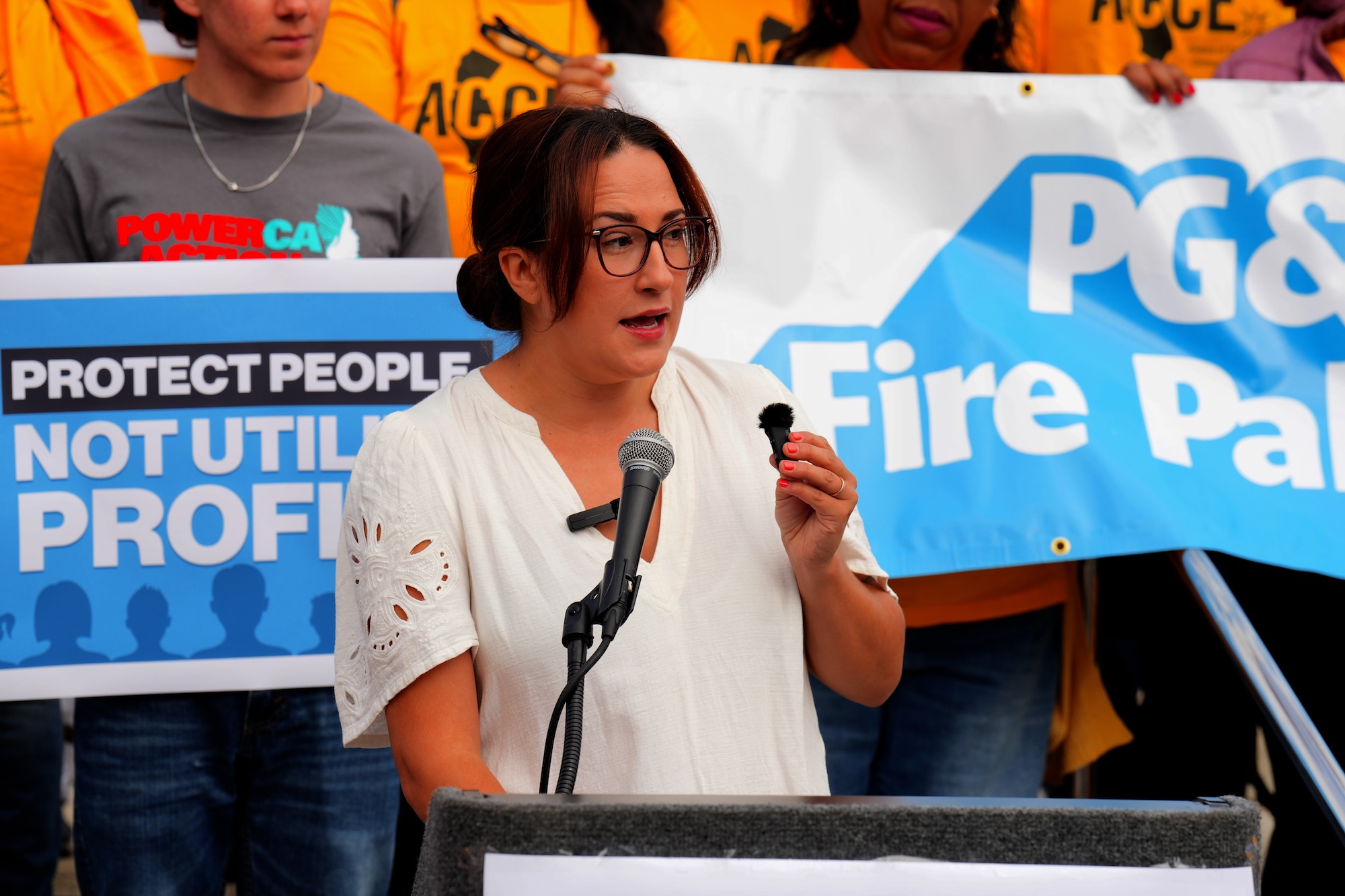
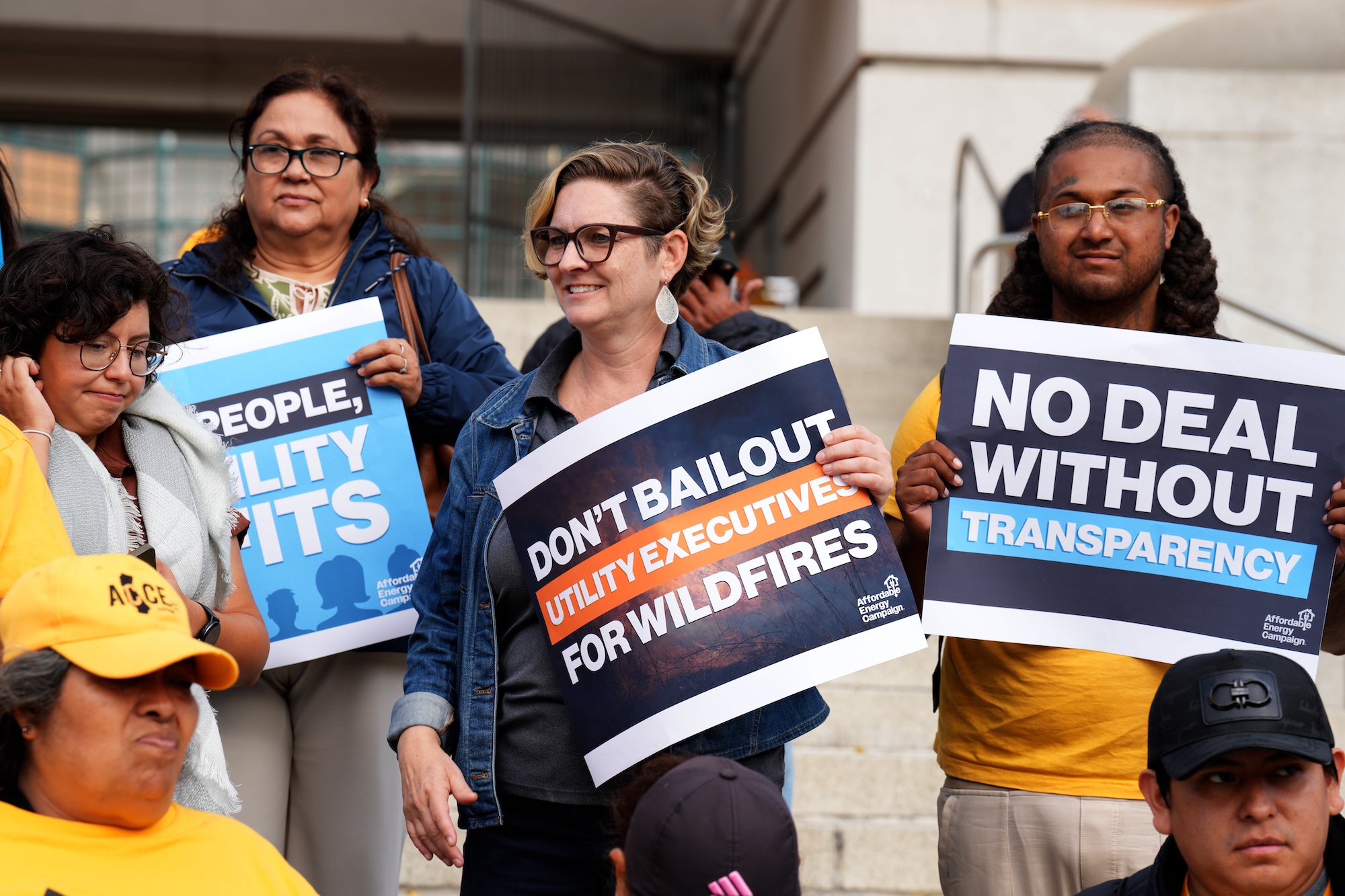
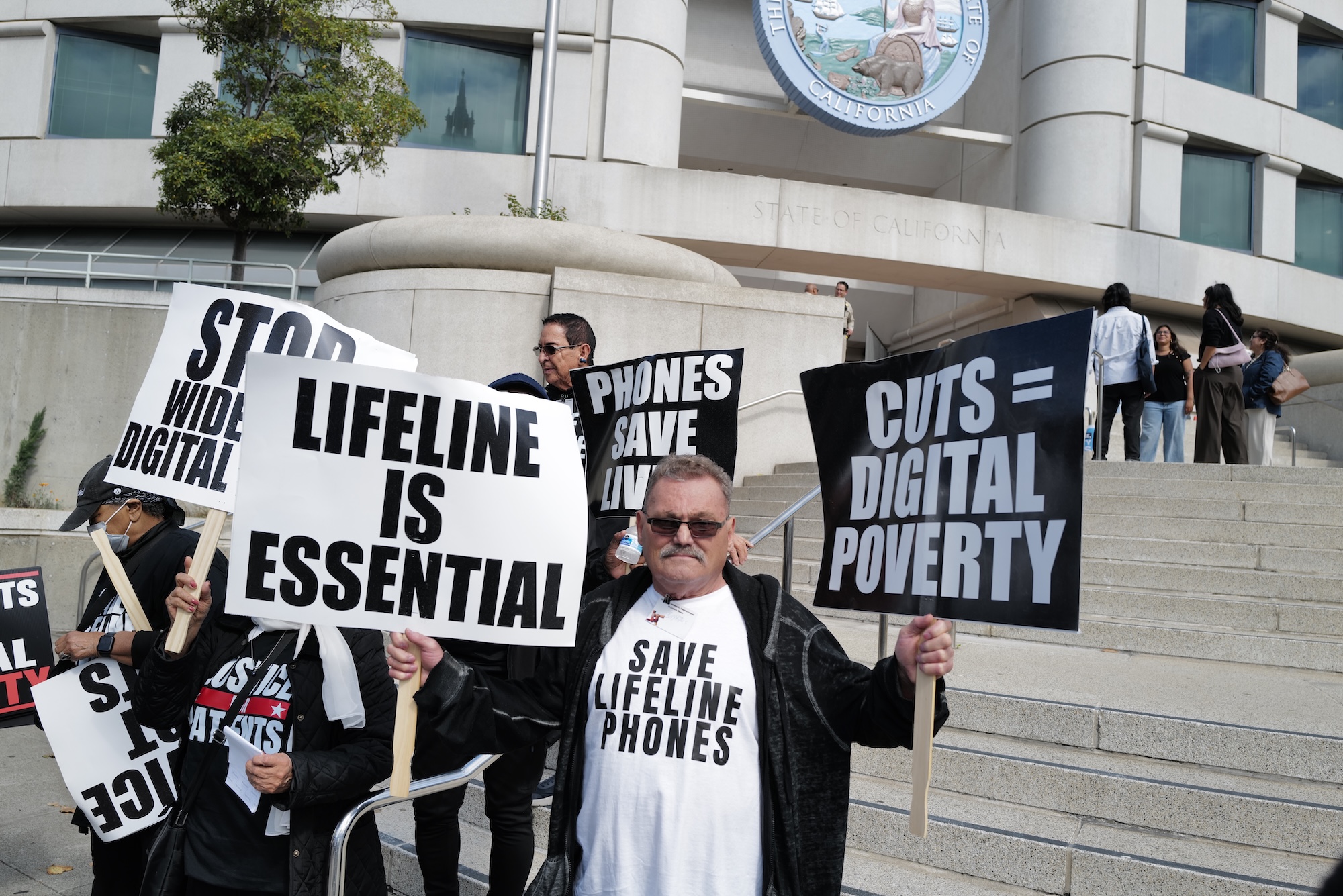
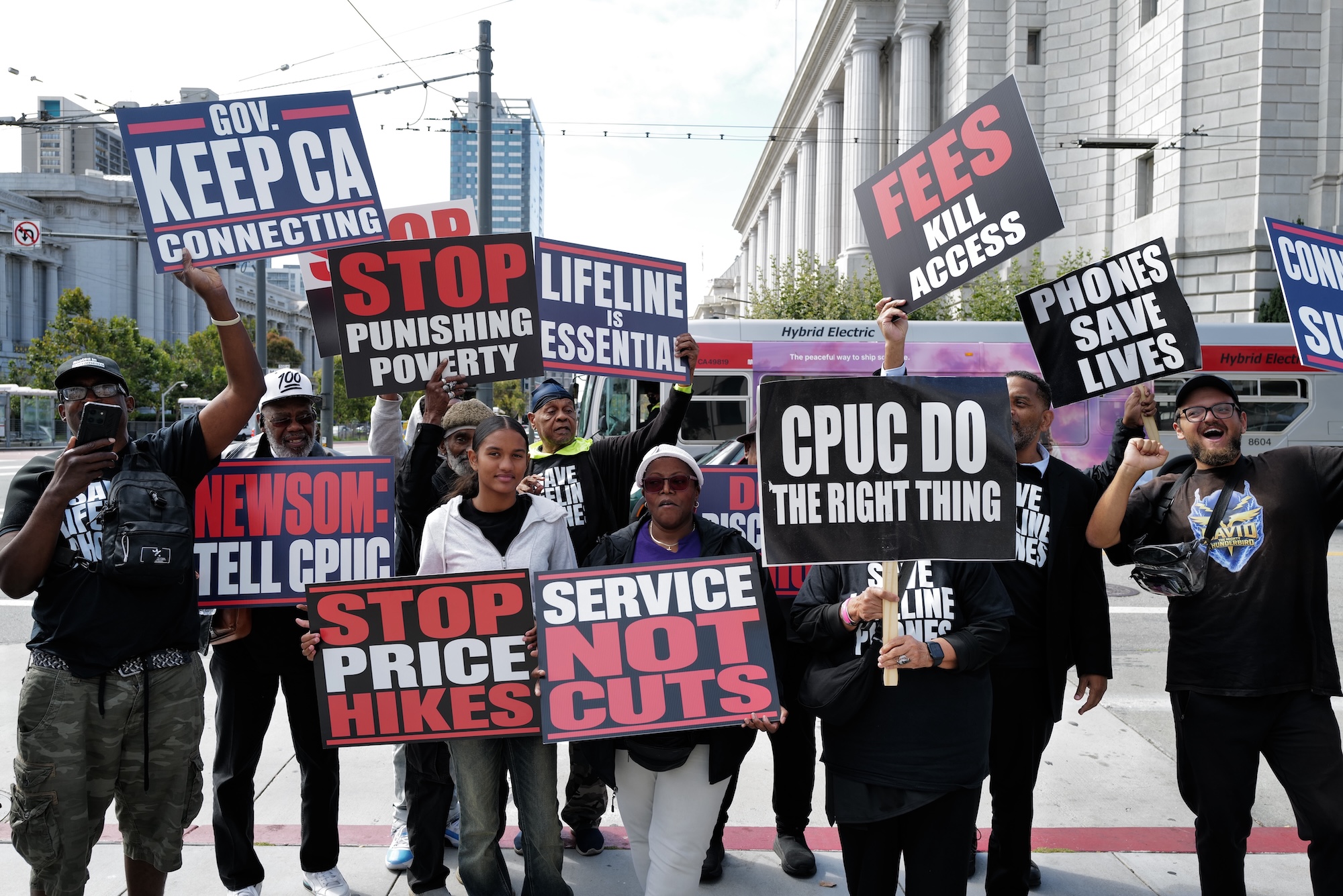
Activists opposing the increases rallied outside the CPUC office building before its regularly scheduled August 13 public meeting. Saying that ratepayers are being “gouged every month,” speakers from various coalitions noted that Californians are facing an unprecedented affordability crisis in which “residents are struggling with mounting utility debt and an increasing risk of power shutoffs as investor-owned utilities continue requesting major rate hikes.” The requested eight percent increase for 2027 by PG&E will amount to “a staggering $1.2 billion increase in just one year.”
The reasons for the increase are being attributed to the costs of “wildfire mitigation, recovery and insurance, underuse of lower-cost alternatives—like distributed energy resources and virtual power plants (VPP)—and to funding dirty energy, executive bonuses, and PG&E’s skyrocketing profits.”
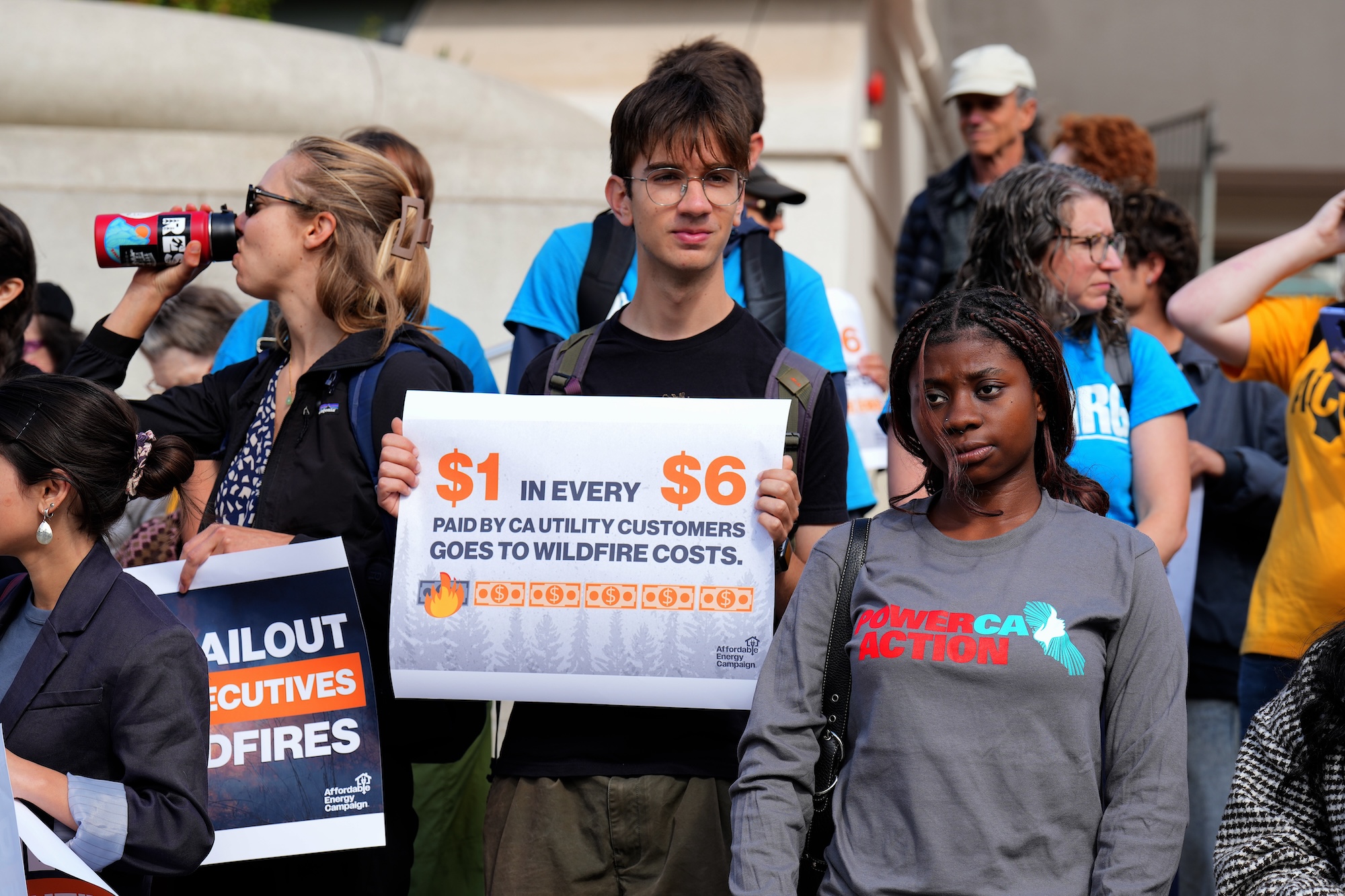
Julia Dowell, a senior campaign organizer with the Sierra Club, stated that “One of the biggest drivers of rising electricity bills is the cost of wildfires. Today, roughly one of every six dollars in our utility bills goes into wildfire-related costs. California families should not be forced to pay for utility failures.” The Sierra Club has advocated for several reforms to protect ratepayers from skyrocketing rates, she said, “including removing shareholder profits from wildfire spending and tying executive compensation to wildfire safety. We need our state leaders, including the California Public Utilities Commission, to step up and demand real accountability from the utilities.”
In the wake of the PG&E and Southern California Edison (SCE) wildfires, both utilities have contracted with Palantir, the AI data analytics firm. Through its Foundry platform, Palantir now supports wildfire modeling and risk mitigation, grid-data management, and maintenance planning to the utilities. The company, also known for its work with U.S. Immigration and Customs Enforcement (ICE), including its ImmigrationOS enforcement tool, which has been used to track and facilitate the deportation of immigrants, has become a cause of concern for many who suspect that their personal information at the utilities companies can be used by ICE in its deportation efforts.
Kimberly Galindo from Power California explained that “the utility should provide good service and not sell our information to companies like Palantir…a company that supports ICE and helps separate families and use them as targets. I worry constantly that Palantir has access to my personal data, including my home address, my energy usage, my personal information about my family and other immigrant families here in California.”
Enzo Martinez, with Power California Action from Los Angeles, spoke briefly, saying “The thought of my utility companies feeding data into systems that target families for deportation is terrifying. Our utilities are essentially using our own money to fund a company that facilitates deportations and harms our own communities…We deserve to know that our private data…is being protected.”
Regarding escalating costs of utilities in California, Anabel Marquez, speaking in Spanish, addressed the burden of poorer utility customers who must decide monthly whether they should “…pay for the lights or your food or your house.” Notably, at present rates, 20 percent of California utility customers are behind in their monthly bills. Any additional rate increases would disproportionally affect those who struggle to keep up with escalating costs including the poor and seniors many of whom struggle to get by on limited incomes.
Tyler “Dre” Andre of 350 San Diego reiterated the simple comparison between a public-owned utility and an investor-owned utility (IOU). “A publicly owned utility’s mission is to deliver safe and affordable power,” he said. “It serves the ratepayers. An investor-owned utilities’ mission is to maximize returns as much as they can get away with.”
Interestingly, the California legislature has the authority under the state Constitution to convert a for-profit utility into a publicly owned utility. Some of the advantages of doing so include greater local control through elected governing boards, lower utility rates by removing shareholder profits and reducing costs through municipal bonds while often improving reliability by aligning incentives with customer needs rather than investor returns.
Perhaps it’s time for a real and meaningful conversation about such a change, as the electric grid faces growing pressure and expansion from the transition to electric vehicles and data center developments—pressures that will drive higher, escalating costs for all ratepayers.
Report and photos by Phil Pasquini
© 2026 nuzeink all rights reserved worldwide
Activists opposing the increases rallied outside the CPUC office building before its regularly scheduled August 13 public meeting. Saying that ratepayers are being “gouged every month,” speakers from various coalitions noted that Californians are facing an unprecedented affordability crisis in which “residents are struggling with mounting utility debt and an increasing risk of power shutoffs as investor-owned utilities continue requesting major rate hikes.” The requested eight percent increase for 2027 by PG&E will amount to “a staggering $1.2 billion increase in just one year.”
The reasons for the increase are being attributed to the costs of “wildfire mitigation, recovery and insurance, underuse of lower-cost alternatives—like distributed energy resources and virtual power plants (VPP)—and to funding dirty energy, executive bonuses, and PG&E’s skyrocketing profits.”
Julia Dowell, a senior campaign organizer with the Sierra Club, stated that “One of the biggest drivers of rising electricity bills is the cost of wildfires. Today, roughly one of every six dollars in our utility bills goes into wildfire-related costs. California families should not be forced to pay for utility failures.” The Sierra Club has advocated for several reforms to protect ratepayers from skyrocketing rates, she said, “including removing shareholder profits from wildfire spending and tying executive compensation to wildfire safety. We need our state leaders, including the California Public Utilities Commission, to step up and demand real accountability from the utilities.”
In the wake of the PG&E and Southern California Edison (SCE) wildfires, both utilities have contracted with Palantir, the AI data analytics firm. Through its Foundry platform, Palantir now supports wildfire modeling and risk mitigation, grid-data management, and maintenance planning to the utilities. The company, also known for its work with U.S. Immigration and Customs Enforcement (ICE), including its ImmigrationOS enforcement tool, which has been used to track and facilitate the deportation of immigrants, has become a cause of concern for many who suspect that their personal information at the utilities companies can be used by ICE in its deportation efforts.
Kimberly Galindo from Power California explained that “the utility should provide good service and not sell our information to companies like Palantir…a company that supports ICE and helps separate families and use them as targets. I worry constantly that Palantir has access to my personal data, including my home address, my energy usage, my personal information about my family and other immigrant families here in California.”
Enzo Martinez, with Power California Action from Los Angeles, spoke briefly, saying “The thought of my utility companies feeding data into systems that target families for deportation is terrifying. Our utilities are essentially using our own money to fund a company that facilitates deportations and harms our own communities…We deserve to know that our private data…is being protected.”
Regarding escalating costs of utilities in California, Anabel Marquez, speaking in Spanish, addressed the burden of poorer utility customers who must decide monthly whether they should “…pay for the lights or your food or your house.” Notably, at present rates, 20 percent of California utility customers are behind in their monthly bills. Any additional rate increases would disproportionally affect those who struggle to keep up with escalating costs including the poor and seniors many of whom struggle to get by on limited incomes.
Tyler “Dre” Andre of 350 San Diego reiterated the simple comparison between a public-owned utility and an investor-owned utility (IOU). “A publicly owned utility’s mission is to deliver safe and affordable power,” he said. “It serves the ratepayers. An investor-owned utilities’ mission is to maximize returns as much as they can get away with.”
Interestingly, the California legislature has the authority under the state Constitution to convert a for-profit utility into a publicly owned utility. Some of the advantages of doing so include greater local control through elected governing boards, lower utility rates by removing shareholder profits and reducing costs through municipal bonds while often improving reliability by aligning incentives with customer needs rather than investor returns.
Perhaps it’s time for a real and meaningful conversation about such a change, as the electric grid faces growing pressure and expansion from the transition to electric vehicles and data center developments—pressures that will drive higher, escalating costs for all ratepayers.
Report and photos by Phil Pasquini
© 2026 nuzeink all rights reserved worldwide
For more information:
https://www.facebook.com/media/set/?vanity...


Add Your Comments
We are 100% volunteer and depend on your participation to sustain our efforts!
Donate

$85.00 donated
in the past month
Get Involved
If you'd like to help with maintaining or developing the website, contact us.
Publish
Publish your stories and upcoming events on Indybay.
Topics
More
Search Indybay's Archives
Advanced Search
►
▼
IMC Network