







 Publish to Newswire
 Add an Event
From the Open-Publishing Calendar
From the Open-Publishing Newswire
Indybay Feature
Activists Throw Wet Blanket on FERC’s “Blanket Certificate Policy” Changes
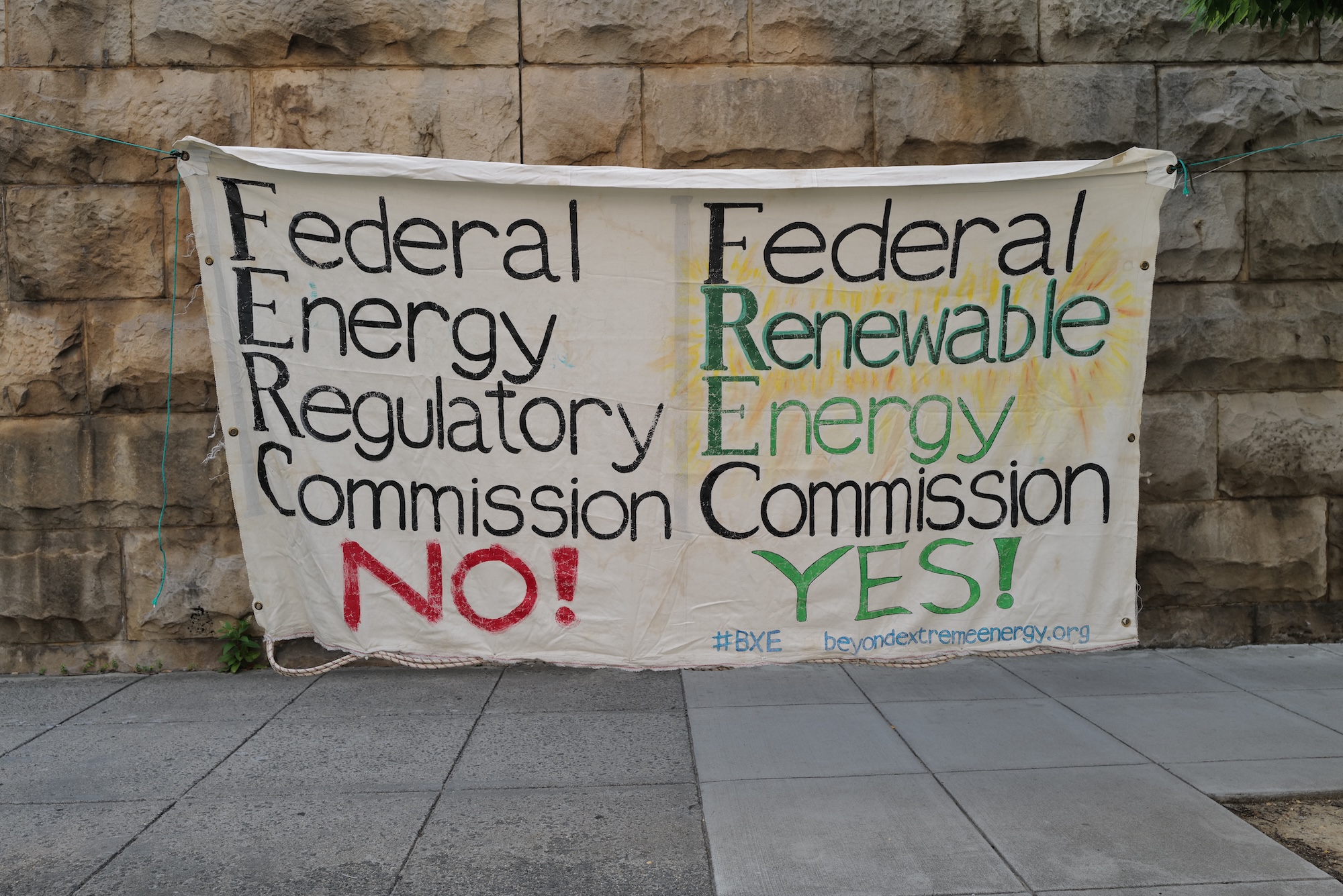
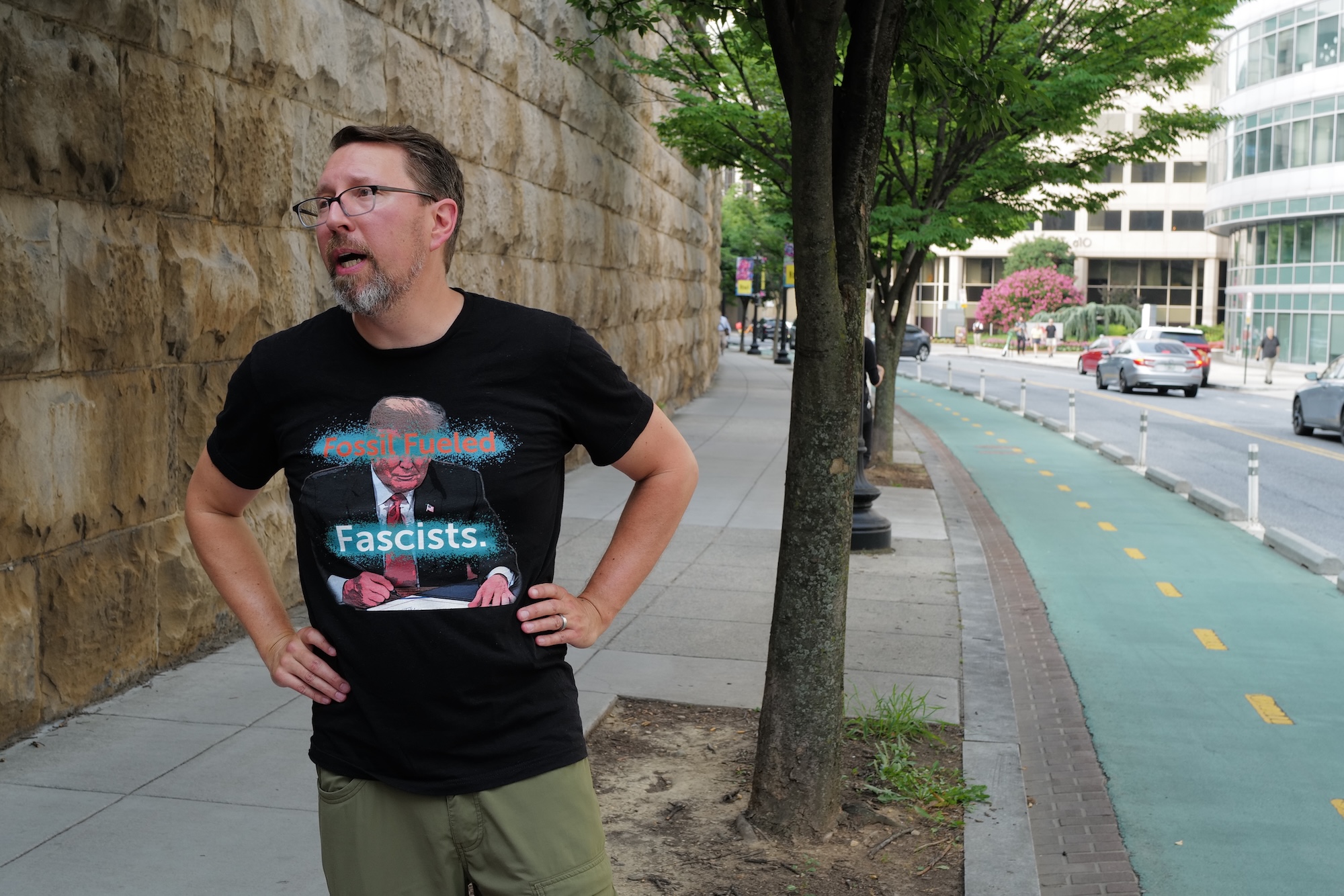
As they have for the past decade, the environmental activist group Beyond Extreme Energy (BXE), along with other frontline groups, has protested, demonstrated, and attended the Federal Energy Regulatory Commission (FERC) monthly public meetings to bring before the commission their concerns regarding an end to fossil fuel expansion.
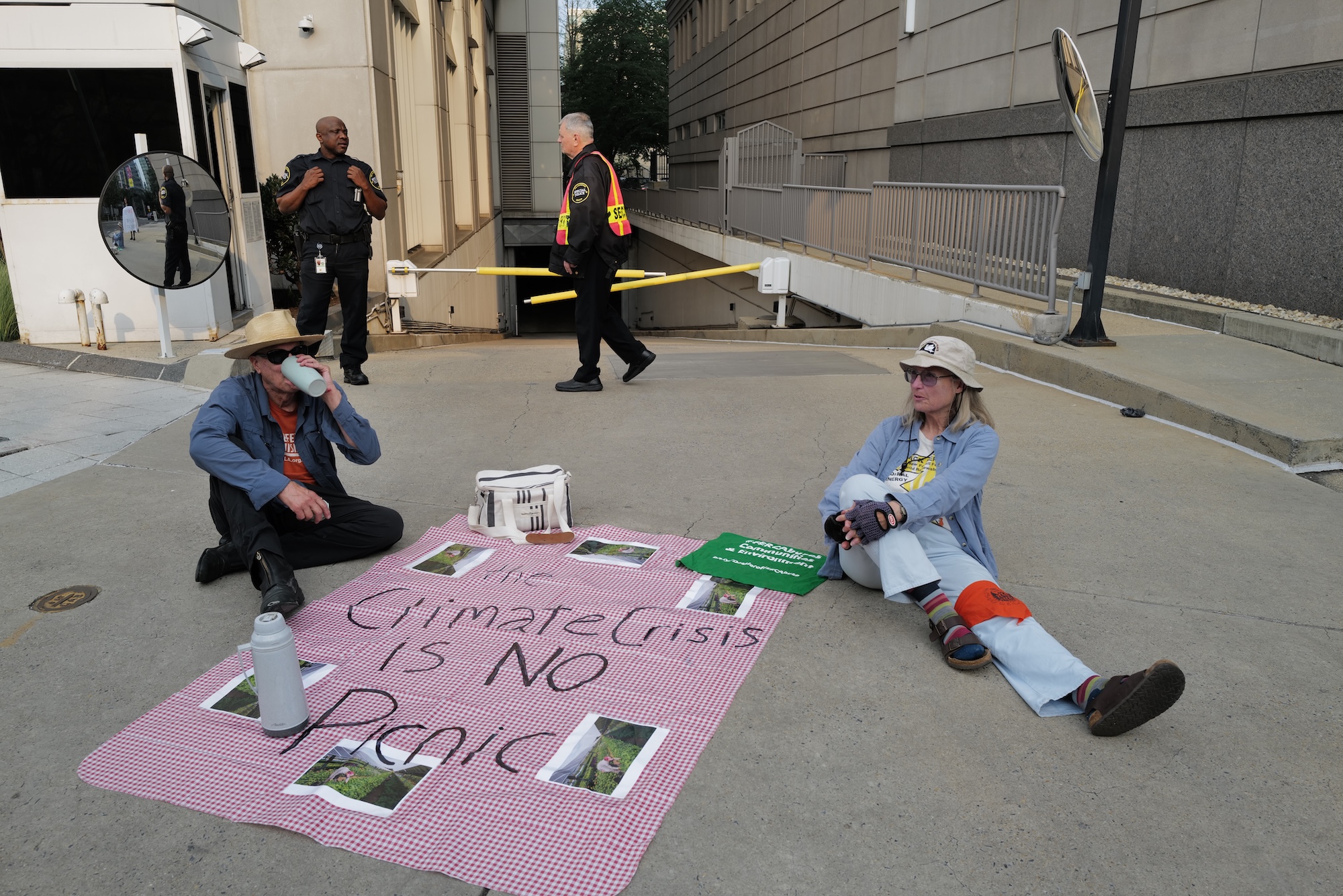
WASHINGTON (07-16) – As they have for the past decade, the environmental activist group Beyond Extreme Energy (BXE), along with other frontline groups, has protested, demonstrated, and attended the Federal Energy Regulatory Commission (FERC) monthly public meetings to bring before the commission their concerns regarding an end to fossil fuel expansion.
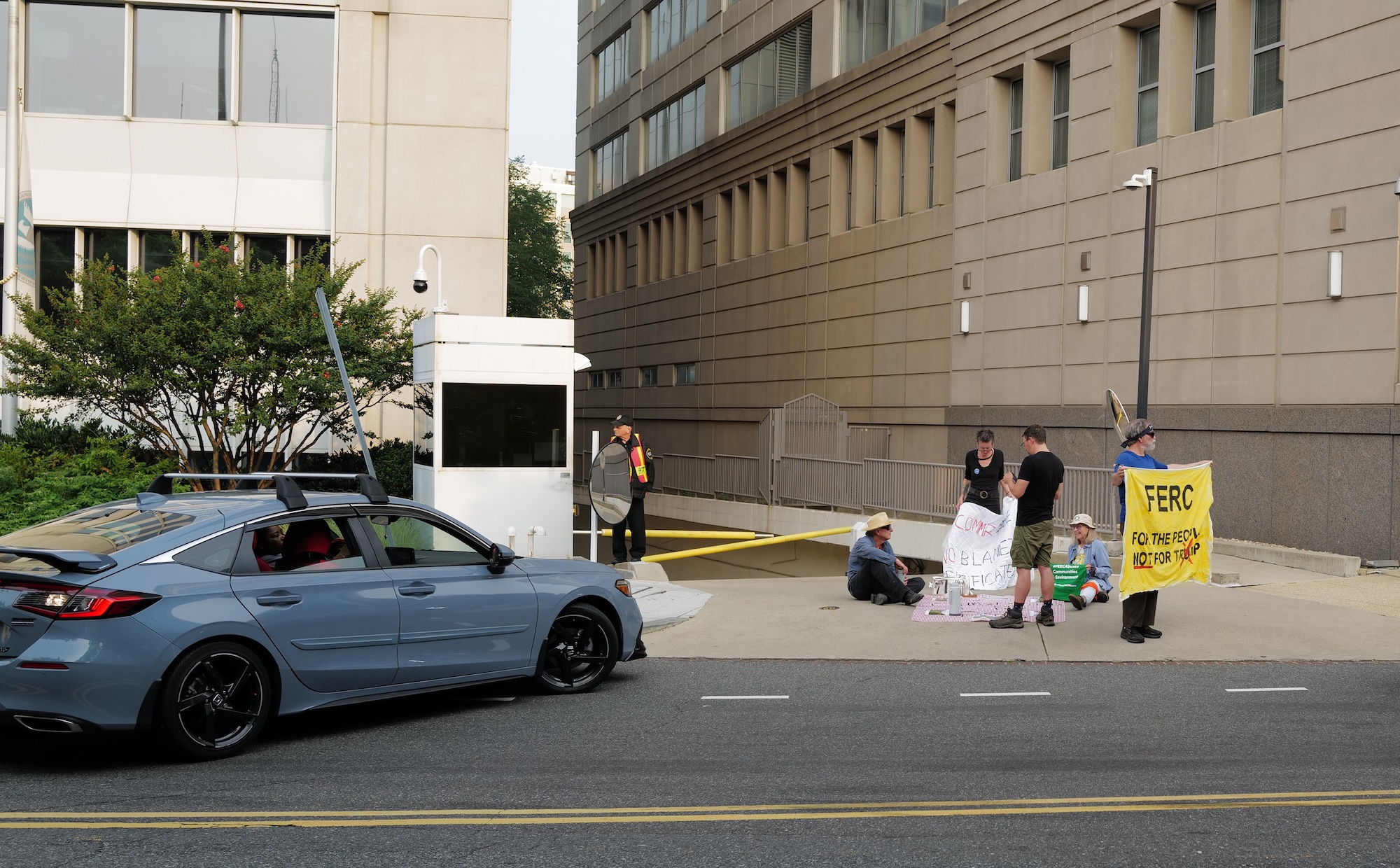
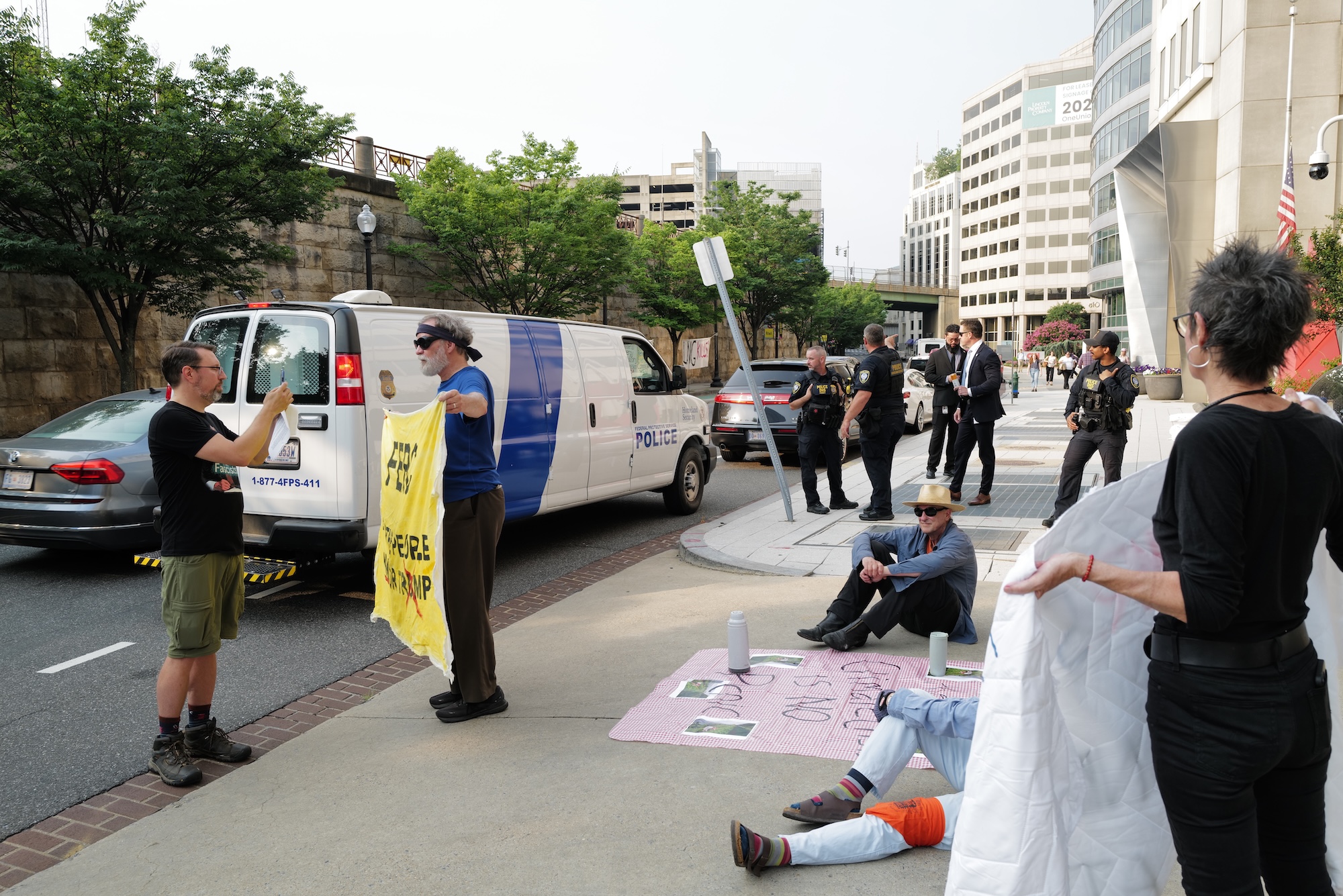
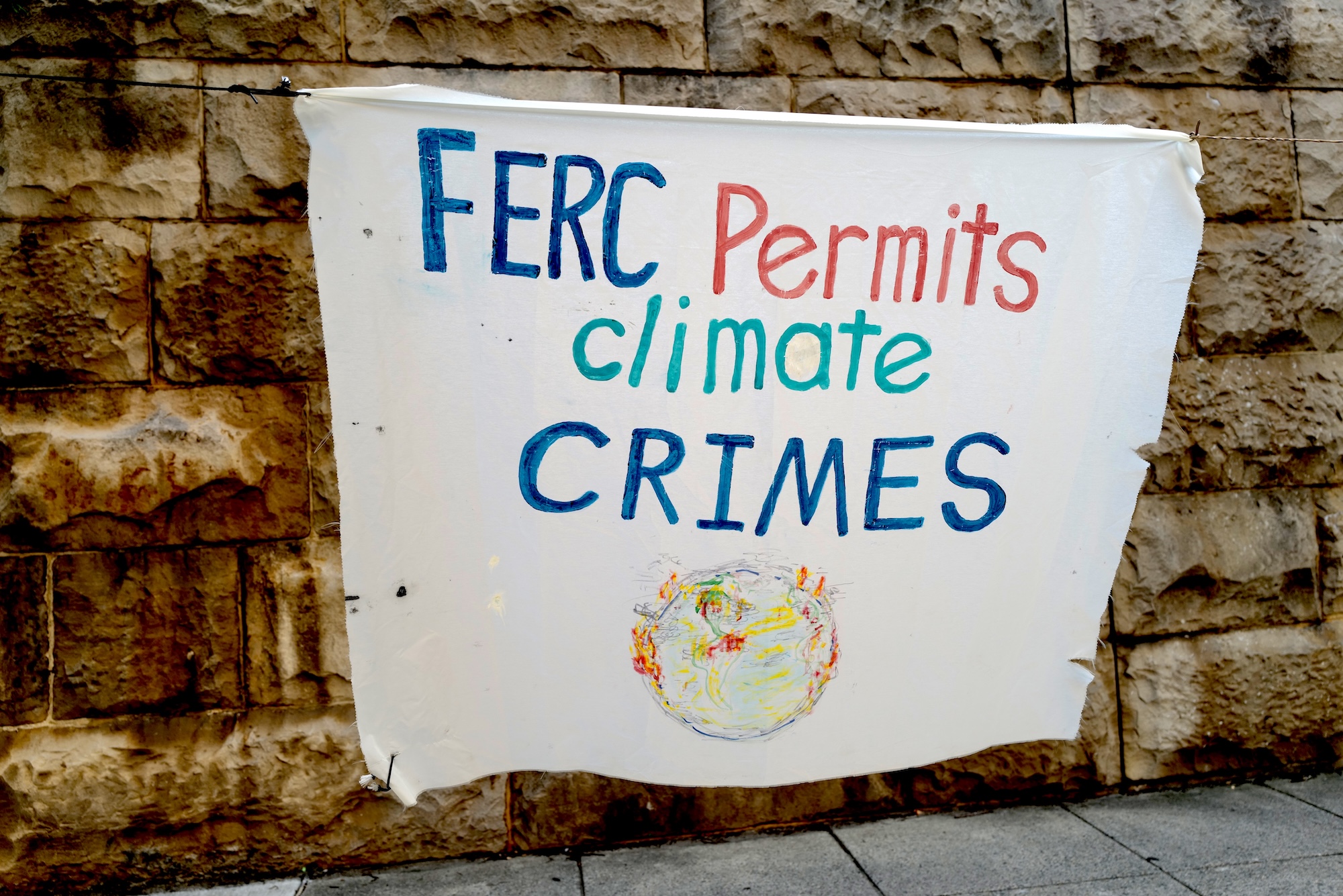
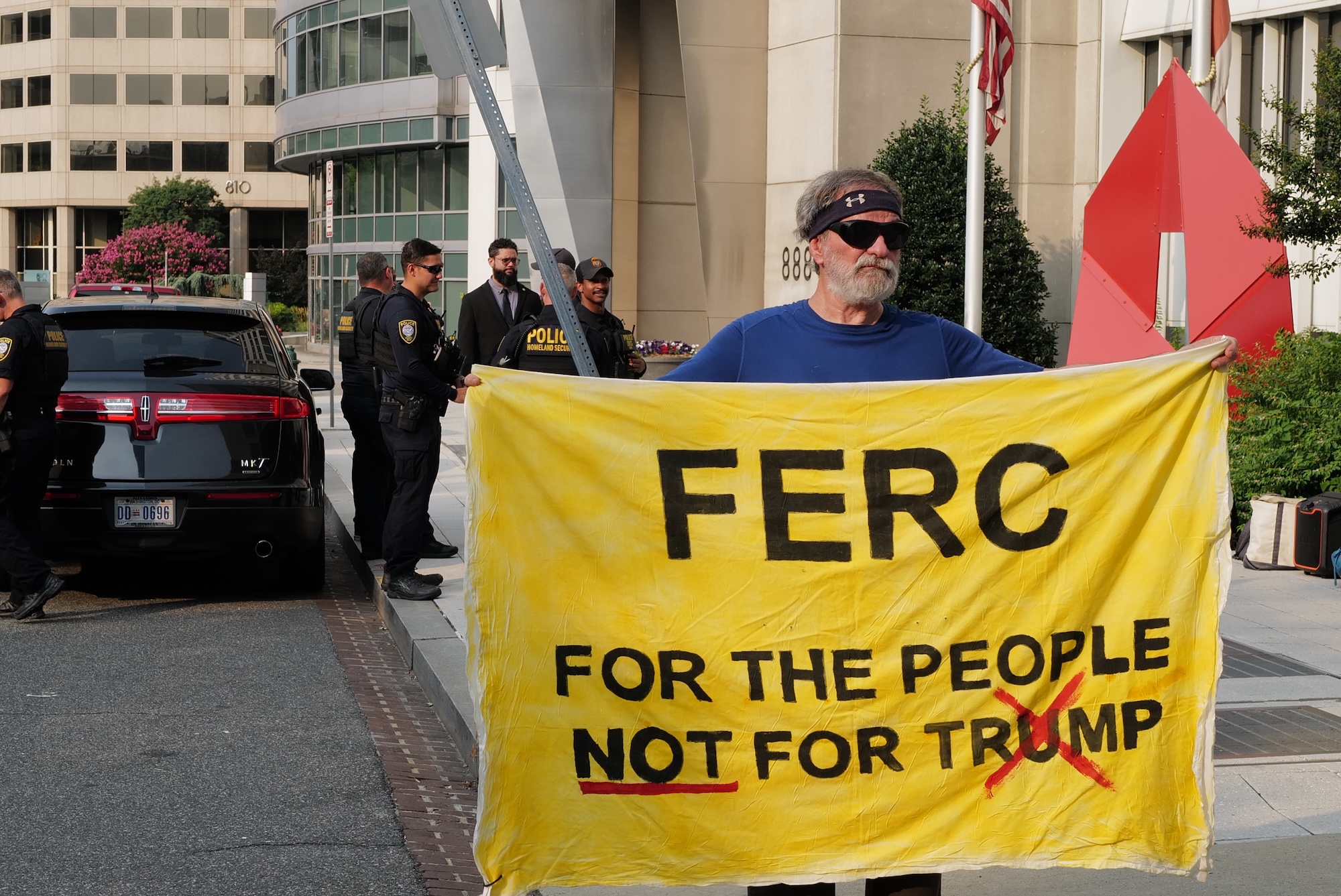
Before the July 16 meeting, BXE members began an early morning sit-in to protest FERC’s proposed blanket certificate policy changes. Activists blocked the building’s garage entrance where they disrupted access as arriving workers and commission members were turned away.
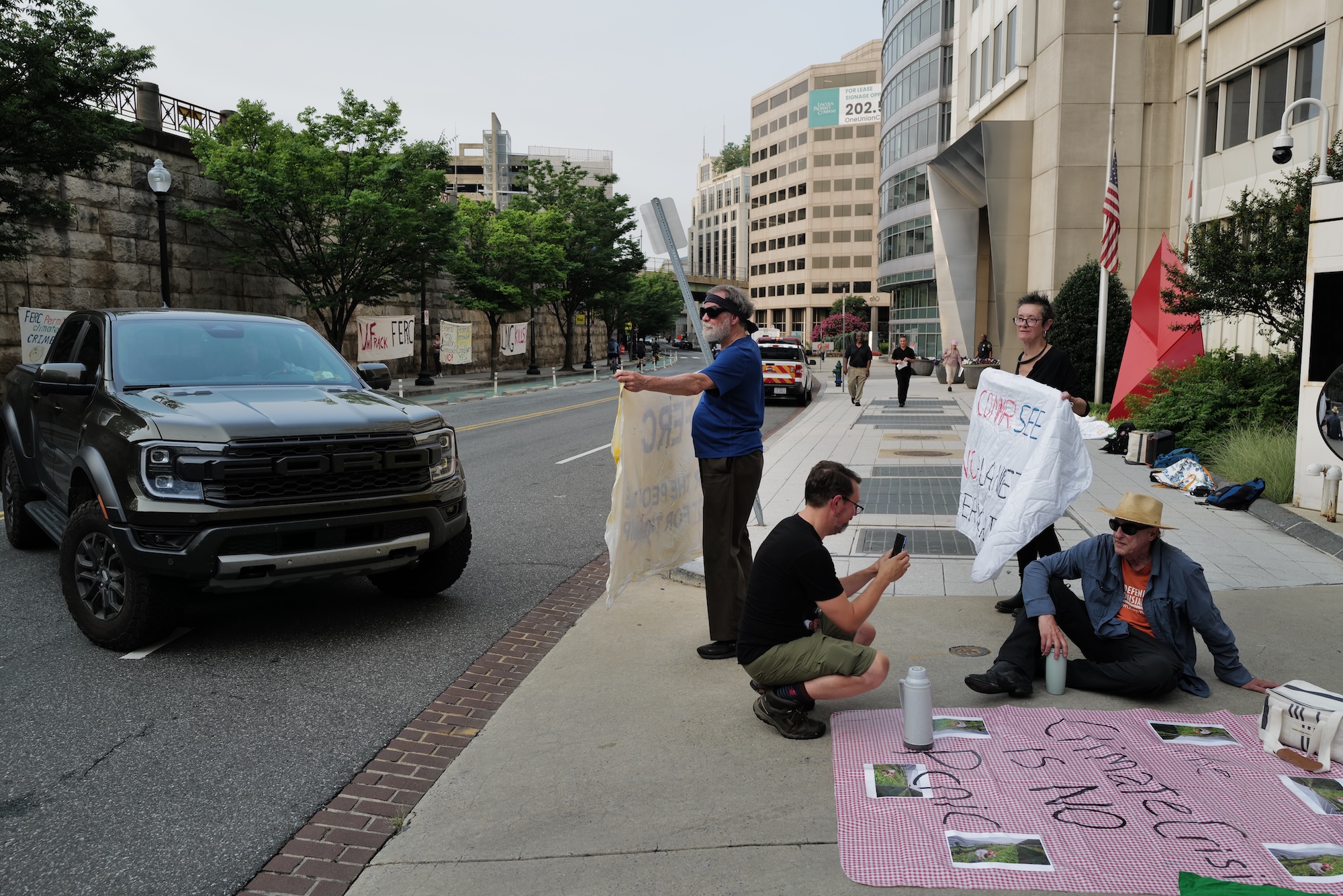
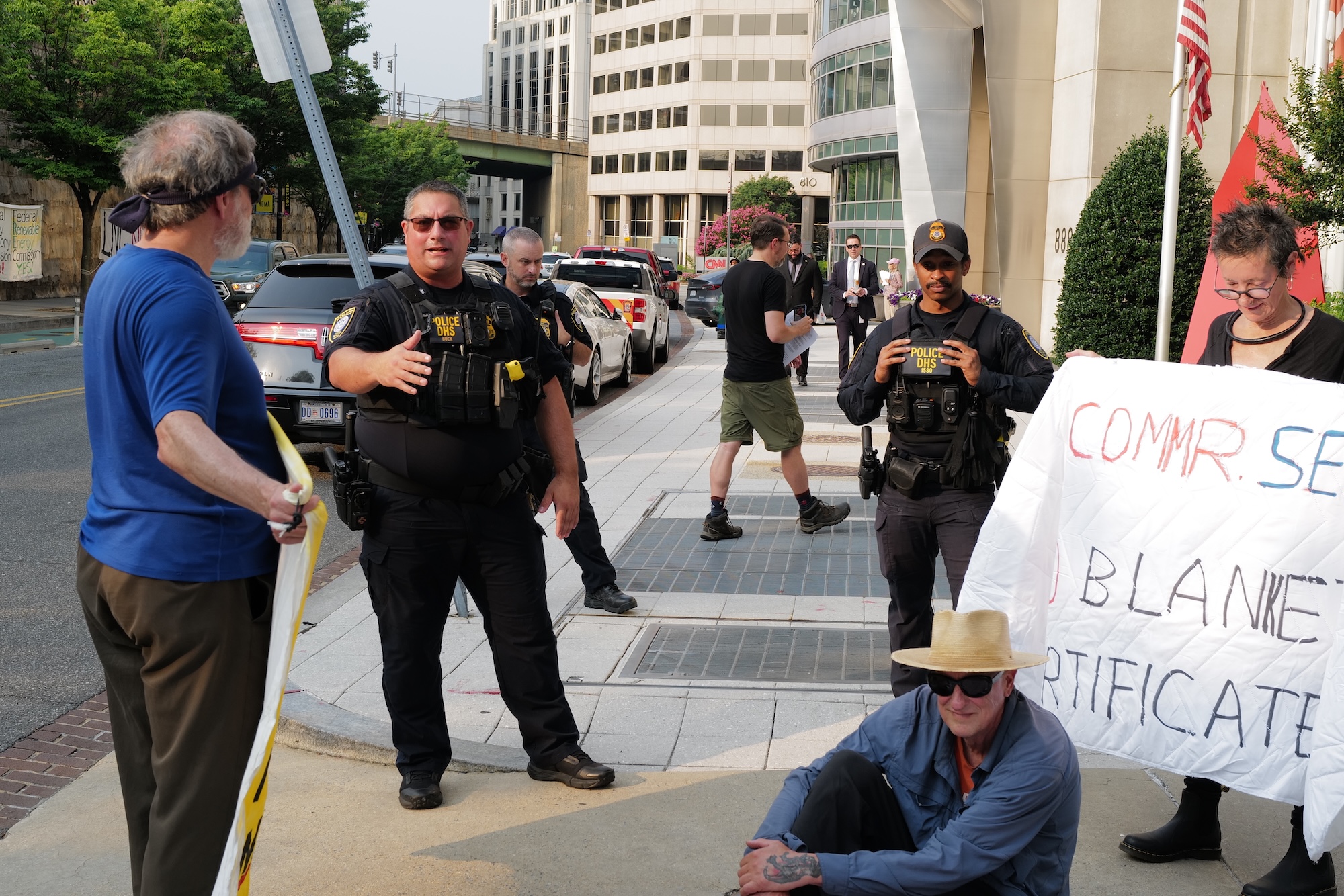
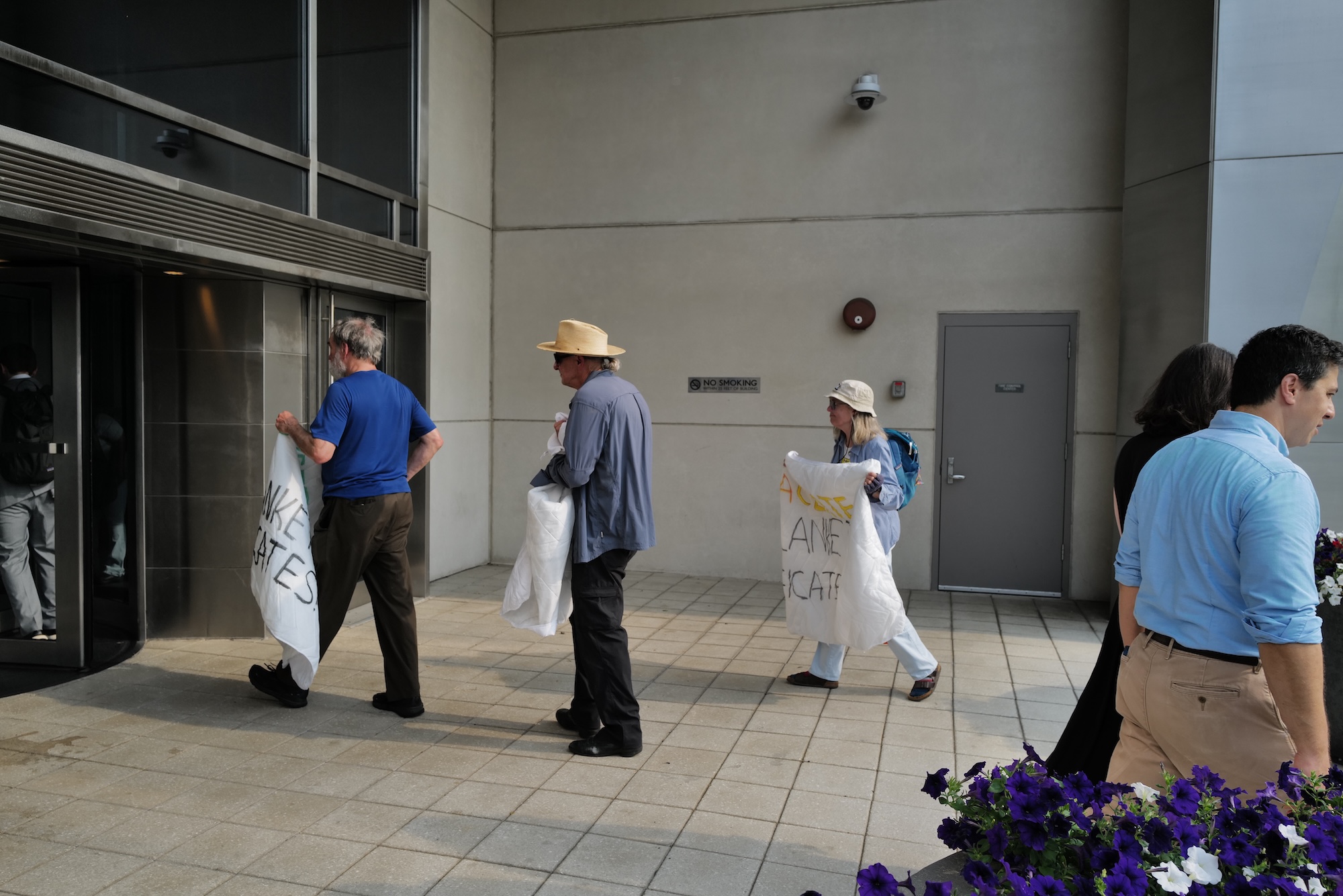
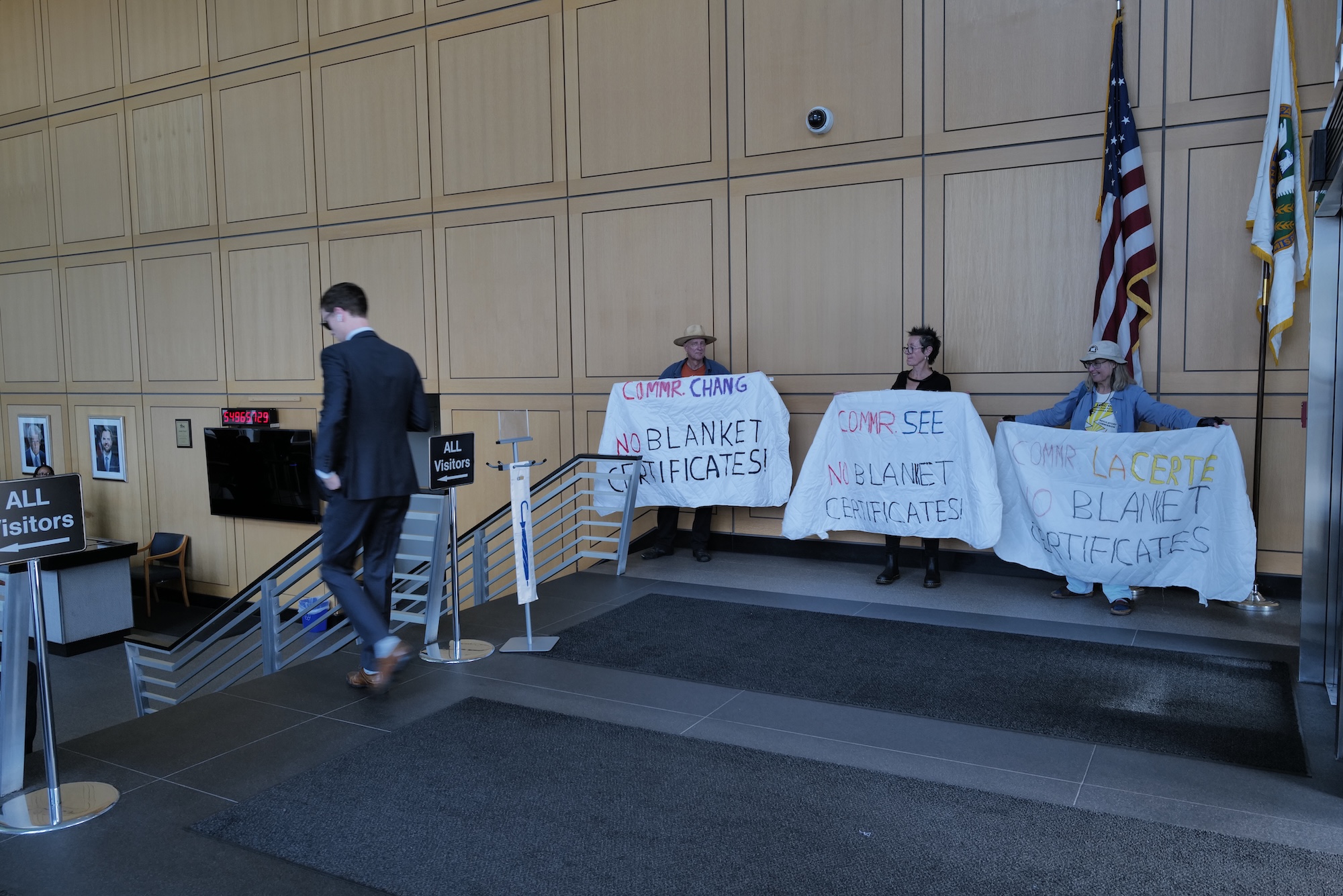
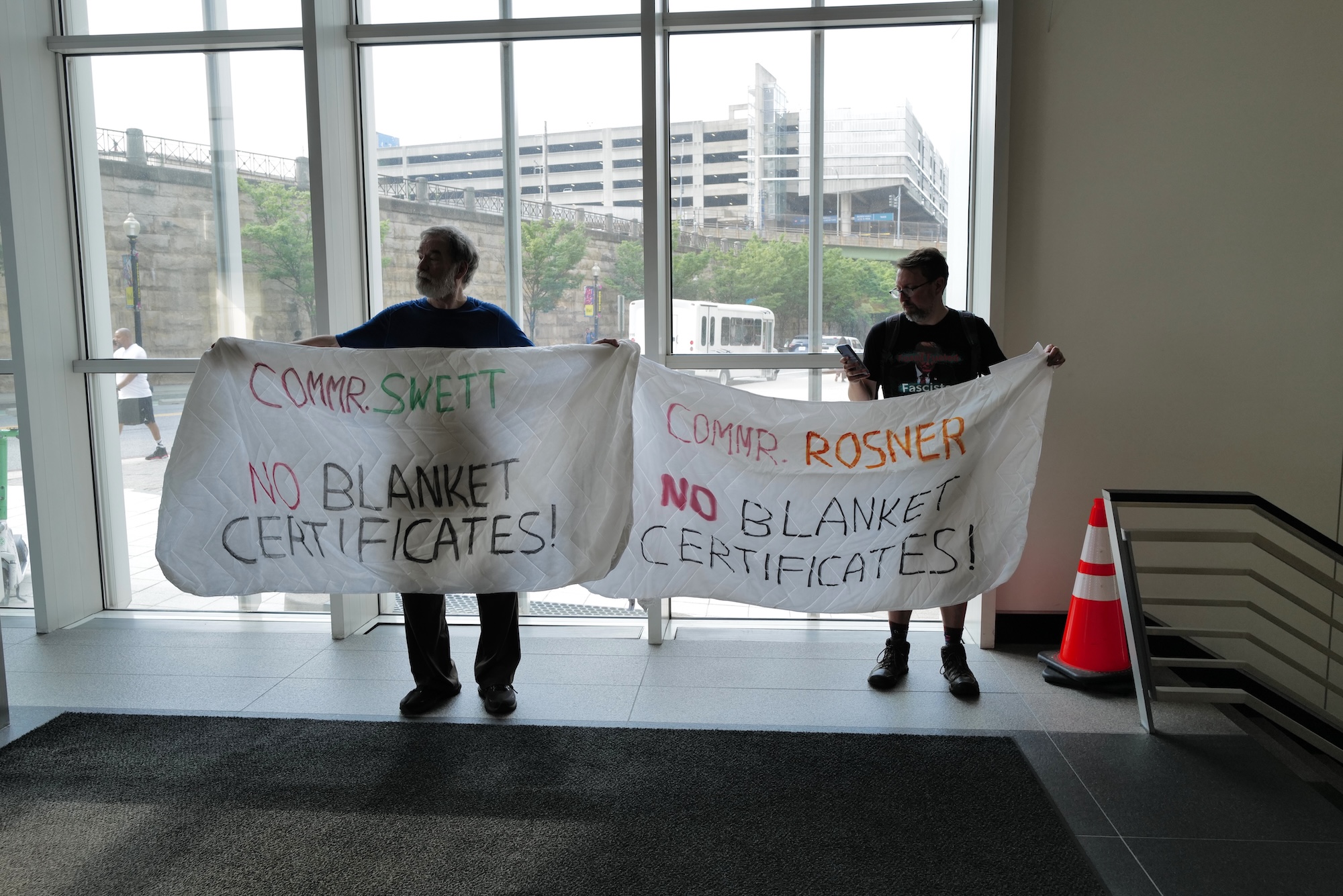
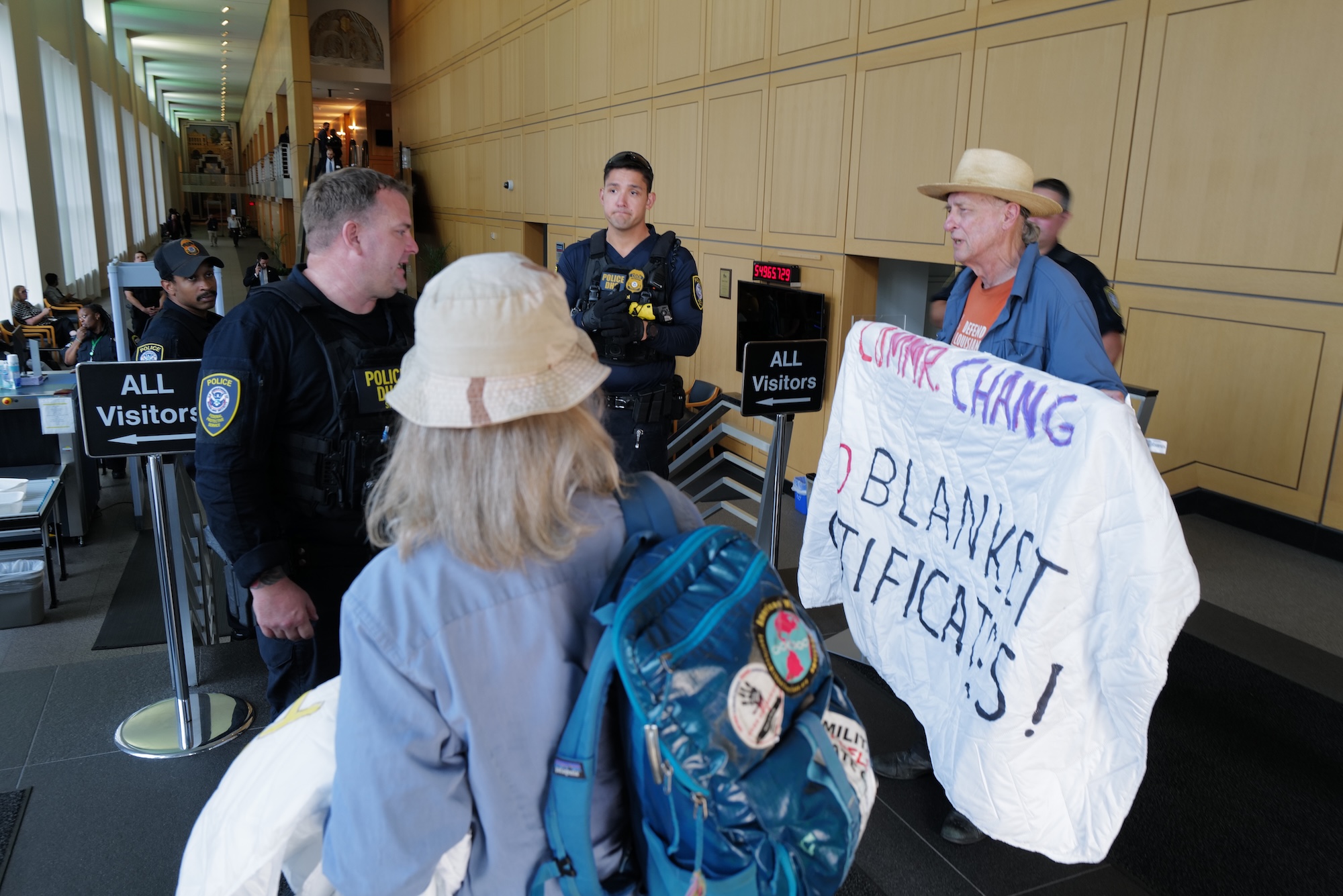
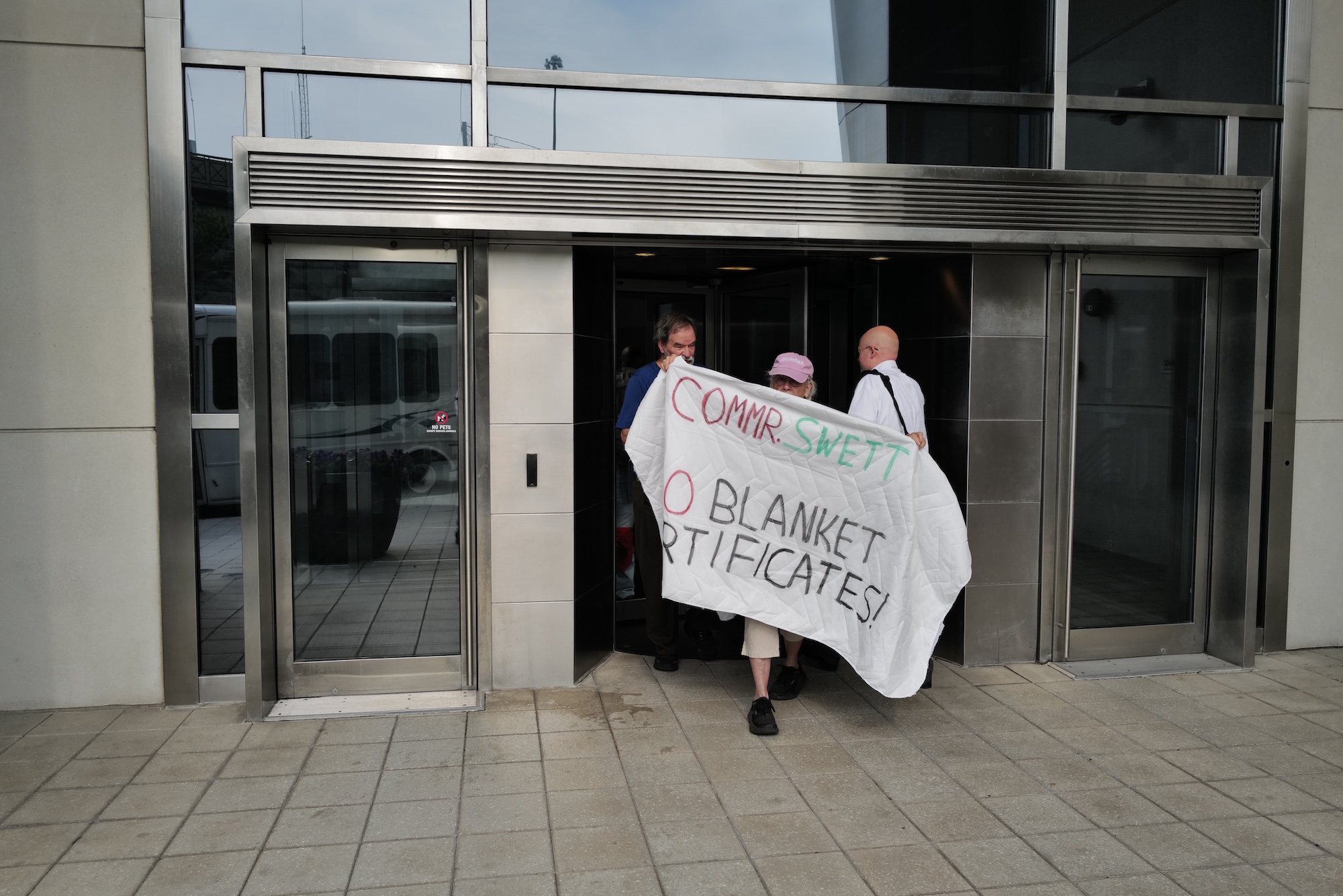
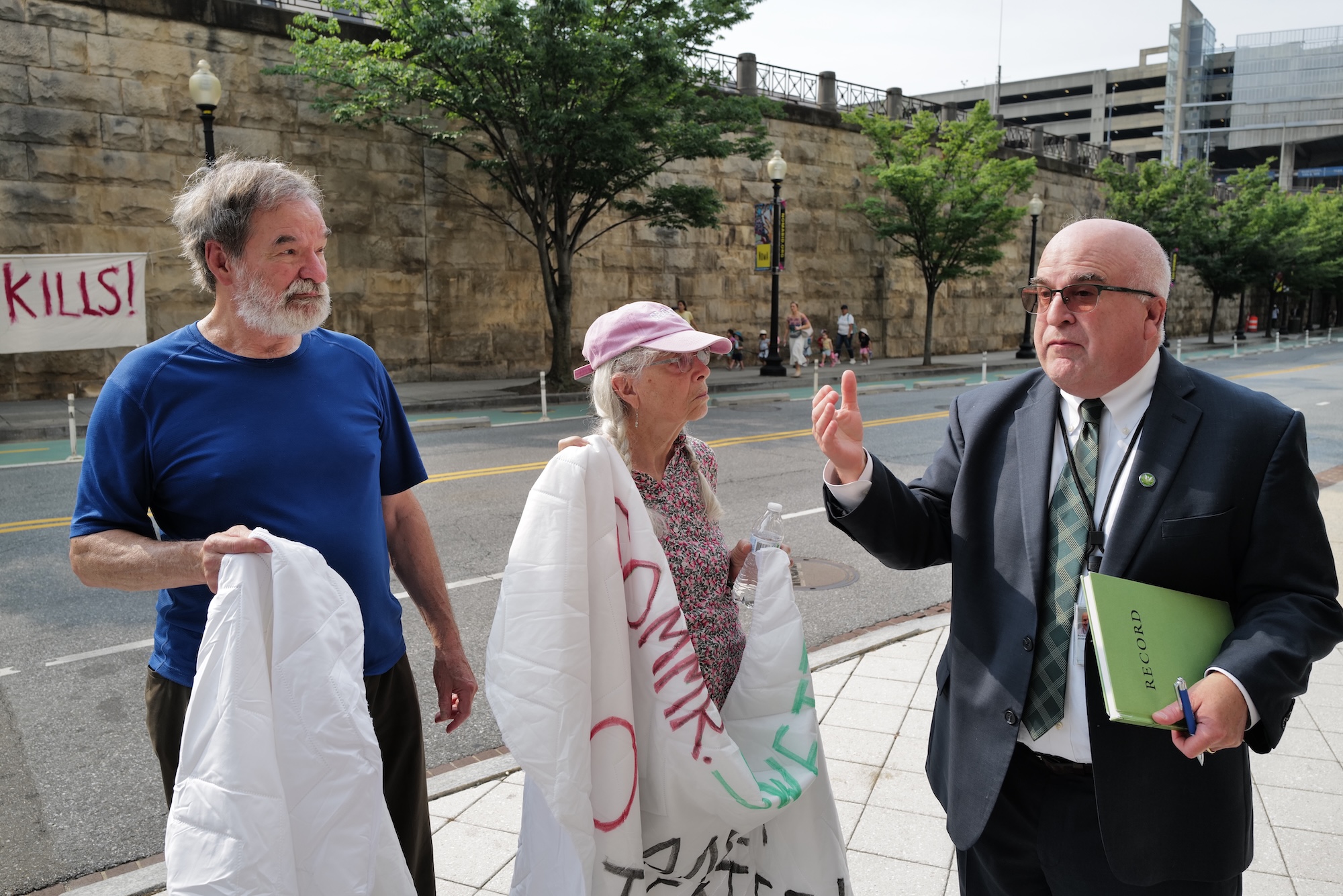
After being threatened with arrest for blocking the building’s garage, the group next entered the building’s lobby which they occupied while holding five blankets, one for each commissioner, bearing the message “No Blanket Certificates.” Being threatened again with arrest, they retreated to the sidewalk outside as a Homeland Police officer assured them that someone in the FERC Office of Public Participation (OPP) would speak with them.
That person was Joseph Rosenthal, Deputy Director of the OPP, who listened to their concerns, encouraging them to utilize the FERC online eComment docket, https://ferconline.ferc.gov/QuickComment.aspx. Rosenthal said that the commission had received comments from “a lot of people” regarding the proposed change.
When asked if he would accept the five blankets and present them to the commissioners Rosenthal said he had been advised by security that could not do so and instead encouraged the group to photograph the blankets and send the photos online through the eComment portal.
When asked if he had a professional opinion on how the proposed blanket certificate changes would “degrade public participation” on proposals if approved, Rosenthal stated that he did not but promised that his office would “help people navigate the docket or whatever the system is going forward.” Afterward the group prepared to re-enter the building for the monthly FERC meeting.
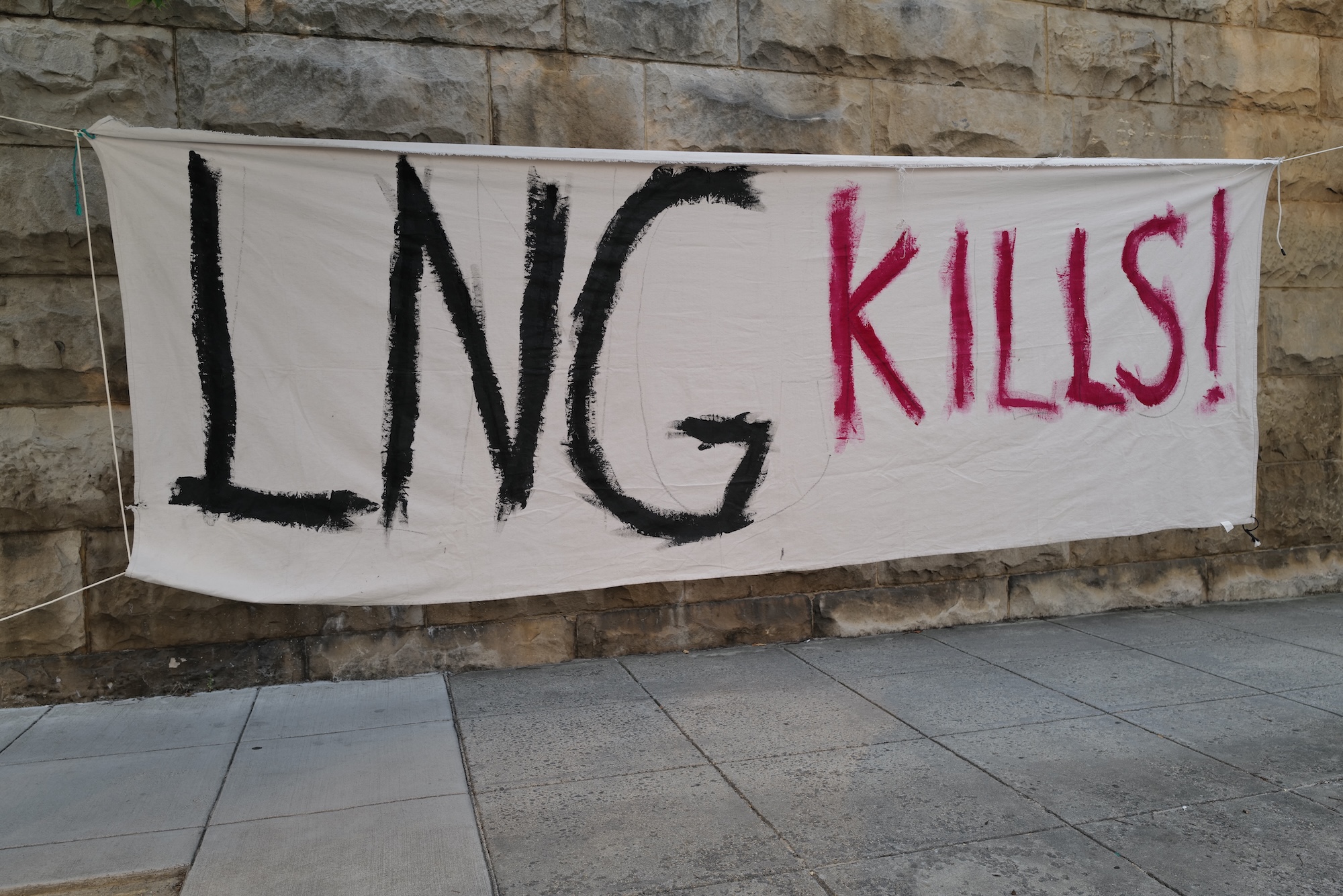
If adopted by FERC, the changes to the blanket certificate policy would expand small alterations presently allowed on previously permitted energy projects “to allow for major changes on larger projects such as Liquid Natural Gas (LNG) terminals that significantly alter the environmental and climate impact of a given project.”
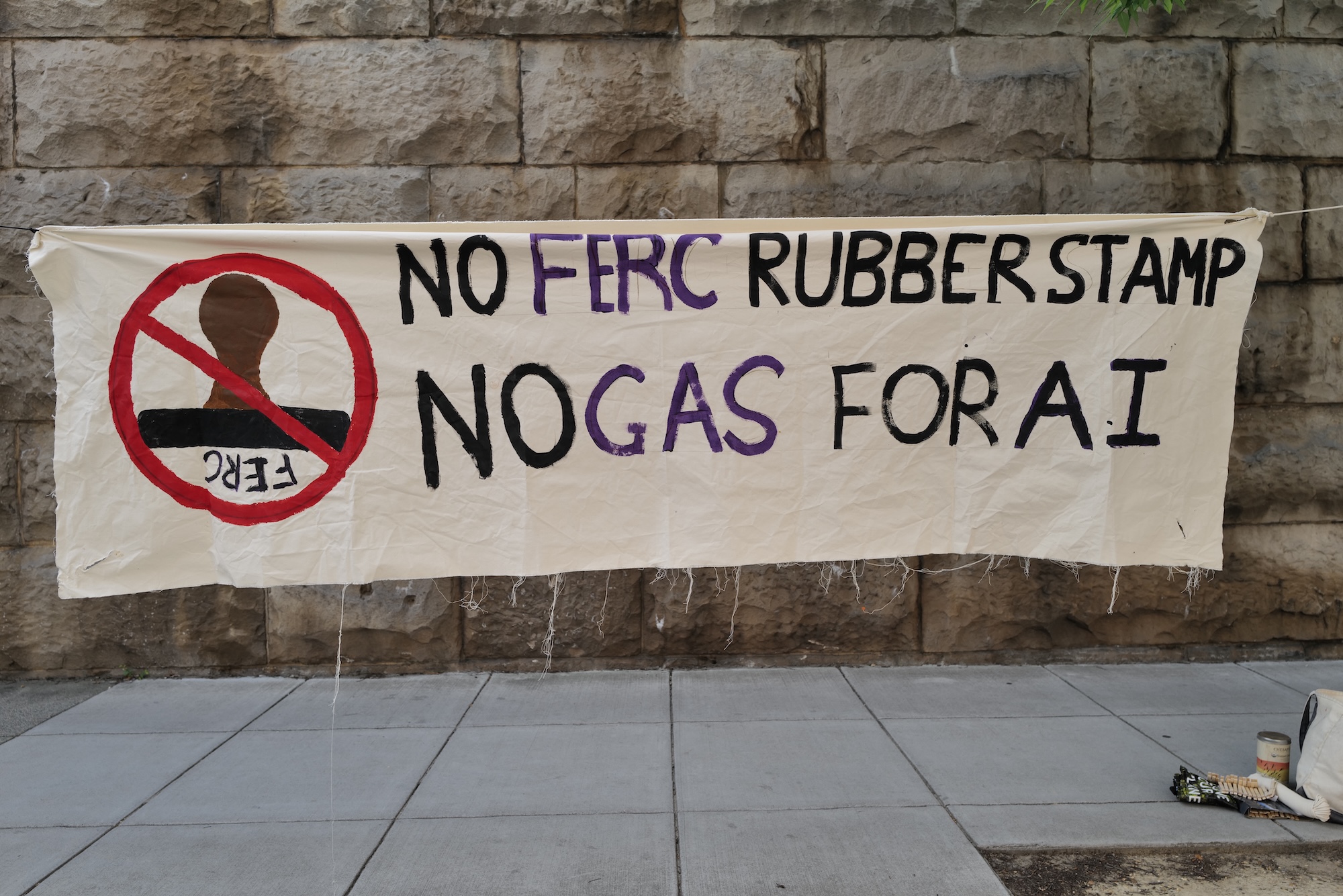
Activists charge that, if passed, the expanded policy would remove the necessity for “new rounds of regulatory work, appeals, and [being] slowed by community push back, these policies allow for companies to simply add new large-scale facets to their plans.” This would ultimately disengage community members and other stakeholders from having input on projects regarding environmental impact and other related concerns, effectively turning the commission, as BXE asserts, into “a rubber stamp for polluters to run roughshod over our climate and communities.”
FERC, however, characterizes the blanket certificate policy proposed changes as a “sweeping reform,” titling their Notice of Proposed Rulemaking (NOPR) document “Accelerating Infrastructure Upgrades for Affordable, Reliable Energy Nationwide.”
The commission considers the need for revision as necessary in saying the current framework “has become an obstacle to the infrastructure buildout the country needs.” These expansive approvals for such projects are precisely what environmental groups oppose, i.e. the continued growth of the fossil fuel industry and its associated environmental harms in a world increasingly strained by the climate crisis.
Activists pointed out two projects of concern that would benefit substantially from the proposed changes to the blanket certificate policy.
Specifically, if approved the proposed Argent LNG terminal project in Port Fourchon would create the second biggest LNG terminal in Louisiana. British Petroleum’s involvement in the project would allow them to “… be able to test its ‘ultra deepwater’ drilling for gas…because they’re re-using some old pipes and infrastructure for the project; they want the entire project to be covered by a blanket permit.”
British Petroleum is the same company that in 2010 caused the Deepwater Horizon accident, the largest marine oil spill in history that lasted 87 days, killed 11 workers and released 3.19 million barrels of oil into the Gulf of Mexico. The company eventually paid $20.8 billion, the largest environmental damage settlement in U.S. history.
A second project raising concern is the proposed Green Chile Pipeline, which Energy Transfer—known for its involvement in the Dakota Access Pipeline—is seeking to construct under the proposed blanket certificate policy. The pipeline project involves building an18-mile, 24-inch-diameter spur extending from an existing natural gas pipeline. According to the Bureau of Land Management, the new spur would cross public lands in Doña Ana County, New Mexico, transporting “400 million cubic feet per day of natural gas from an El Paso Natural Gas Company’s existing pipeline to serve a data center on private land in the county.”
The pipeline’s sole customer, Project Jupiter, is a $165 billion data center being developed by tech giants Open AI, Oracle and their partners. The hyper-scale data center that is 66 percent larger than New York’s Central Park will require “as much as two-and-a-half gigawatts of electricity, more than half of what New Mexico uses right now - all to be generated by its own private fleet of gas power plants.”
Food and Water Watch, an environmental and consumer-rights group, notes “Project Jupiter is anticipated to use enough electricity to power over two million homes and release extremely dangerous pollutants into surrounding communities. Further, the facility’s most recent air quality permit notice estimates Project Jupiter’s microgrid would emit 10 million tons of greenhouse gas emissions – equivalent to two million cars’ average annual mileage.”
This is all unfolding in Santa Teresa (population 6,500) a small, predominantly Latino border town where one in three residents lives below the poverty line, as two of the world’s largest and wealthiest corporations move in, taxing the area’s resources, degrading its natural environment, and worsening air quality through a sharp increase in air pollution.
The issue of environmental injustice also arises when low-income communities, both rural and urban, are disproportionately targeted for projects that primarily benefit wealthier populations in other regions, often at significant cost to the health and quality of life of local residents.
The downstream impacts are major contributors to greenhouse gas emissions as the broader climate crisis continues to be disregarded by corporations, government, and regulatory bodies, to our collective detriment.
The continuance of approving additional and expansive fossil fuel projects is precisely why BXE and Food and Water Watch, who vows to “protect people from the corporations and other destructive economic interests that put profit ahead of everything else,” work tirelessly along with many others in calling for a more sustainable clean, green, just and renewable energy future while phasing out fossil fuels before it’s too late.
Report and photos by Phil Pasquini
© 2026 nuzeink all rights reserved worldwide
Before the July 16 meeting, BXE members began an early morning sit-in to protest FERC’s proposed blanket certificate policy changes. Activists blocked the building’s garage entrance where they disrupted access as arriving workers and commission members were turned away.
After being threatened with arrest for blocking the building’s garage, the group next entered the building’s lobby which they occupied while holding five blankets, one for each commissioner, bearing the message “No Blanket Certificates.” Being threatened again with arrest, they retreated to the sidewalk outside as a Homeland Police officer assured them that someone in the FERC Office of Public Participation (OPP) would speak with them.
That person was Joseph Rosenthal, Deputy Director of the OPP, who listened to their concerns, encouraging them to utilize the FERC online eComment docket, https://ferconline.ferc.gov/QuickComment.aspx. Rosenthal said that the commission had received comments from “a lot of people” regarding the proposed change.
When asked if he would accept the five blankets and present them to the commissioners Rosenthal said he had been advised by security that could not do so and instead encouraged the group to photograph the blankets and send the photos online through the eComment portal.
When asked if he had a professional opinion on how the proposed blanket certificate changes would “degrade public participation” on proposals if approved, Rosenthal stated that he did not but promised that his office would “help people navigate the docket or whatever the system is going forward.” Afterward the group prepared to re-enter the building for the monthly FERC meeting.
If adopted by FERC, the changes to the blanket certificate policy would expand small alterations presently allowed on previously permitted energy projects “to allow for major changes on larger projects such as Liquid Natural Gas (LNG) terminals that significantly alter the environmental and climate impact of a given project.”
Activists charge that, if passed, the expanded policy would remove the necessity for “new rounds of regulatory work, appeals, and [being] slowed by community push back, these policies allow for companies to simply add new large-scale facets to their plans.” This would ultimately disengage community members and other stakeholders from having input on projects regarding environmental impact and other related concerns, effectively turning the commission, as BXE asserts, into “a rubber stamp for polluters to run roughshod over our climate and communities.”
FERC, however, characterizes the blanket certificate policy proposed changes as a “sweeping reform,” titling their Notice of Proposed Rulemaking (NOPR) document “Accelerating Infrastructure Upgrades for Affordable, Reliable Energy Nationwide.”
The commission considers the need for revision as necessary in saying the current framework “has become an obstacle to the infrastructure buildout the country needs.” These expansive approvals for such projects are precisely what environmental groups oppose, i.e. the continued growth of the fossil fuel industry and its associated environmental harms in a world increasingly strained by the climate crisis.
Activists pointed out two projects of concern that would benefit substantially from the proposed changes to the blanket certificate policy.
Specifically, if approved the proposed Argent LNG terminal project in Port Fourchon would create the second biggest LNG terminal in Louisiana. British Petroleum’s involvement in the project would allow them to “… be able to test its ‘ultra deepwater’ drilling for gas…because they’re re-using some old pipes and infrastructure for the project; they want the entire project to be covered by a blanket permit.”
British Petroleum is the same company that in 2010 caused the Deepwater Horizon accident, the largest marine oil spill in history that lasted 87 days, killed 11 workers and released 3.19 million barrels of oil into the Gulf of Mexico. The company eventually paid $20.8 billion, the largest environmental damage settlement in U.S. history.
A second project raising concern is the proposed Green Chile Pipeline, which Energy Transfer—known for its involvement in the Dakota Access Pipeline—is seeking to construct under the proposed blanket certificate policy. The pipeline project involves building an18-mile, 24-inch-diameter spur extending from an existing natural gas pipeline. According to the Bureau of Land Management, the new spur would cross public lands in Doña Ana County, New Mexico, transporting “400 million cubic feet per day of natural gas from an El Paso Natural Gas Company’s existing pipeline to serve a data center on private land in the county.”
The pipeline’s sole customer, Project Jupiter, is a $165 billion data center being developed by tech giants Open AI, Oracle and their partners. The hyper-scale data center that is 66 percent larger than New York’s Central Park will require “as much as two-and-a-half gigawatts of electricity, more than half of what New Mexico uses right now - all to be generated by its own private fleet of gas power plants.”
Food and Water Watch, an environmental and consumer-rights group, notes “Project Jupiter is anticipated to use enough electricity to power over two million homes and release extremely dangerous pollutants into surrounding communities. Further, the facility’s most recent air quality permit notice estimates Project Jupiter’s microgrid would emit 10 million tons of greenhouse gas emissions – equivalent to two million cars’ average annual mileage.”
This is all unfolding in Santa Teresa (population 6,500) a small, predominantly Latino border town where one in three residents lives below the poverty line, as two of the world’s largest and wealthiest corporations move in, taxing the area’s resources, degrading its natural environment, and worsening air quality through a sharp increase in air pollution.
The issue of environmental injustice also arises when low-income communities, both rural and urban, are disproportionately targeted for projects that primarily benefit wealthier populations in other regions, often at significant cost to the health and quality of life of local residents.
The downstream impacts are major contributors to greenhouse gas emissions as the broader climate crisis continues to be disregarded by corporations, government, and regulatory bodies, to our collective detriment.
The continuance of approving additional and expansive fossil fuel projects is precisely why BXE and Food and Water Watch, who vows to “protect people from the corporations and other destructive economic interests that put profit ahead of everything else,” work tirelessly along with many others in calling for a more sustainable clean, green, just and renewable energy future while phasing out fossil fuels before it’s too late.
Report and photos by Phil Pasquini
© 2026 nuzeink all rights reserved worldwide

Add Your Comments
We are 100% volunteer and depend on your participation to sustain our efforts!
Donate

$85.00 donated
in the past month
Get Involved
If you'd like to help with maintaining or developing the website, contact us.
Publish
Publish your stories and upcoming events on Indybay.
Topics
More
Search Indybay's Archives
Advanced Search
►
▼
IMC Network