







 Publish to Newswire
 Add an Event
From the Open-Publishing Calendar
From the Open-Publishing Newswire
Indybay Feature
The Great Railroad Strike of 1877 and St. Louis Commune & the 2027 Commemoration
The 150th anniversary of the 1877 national railway strike will be commemorated in St. Louis and other cities around the country.
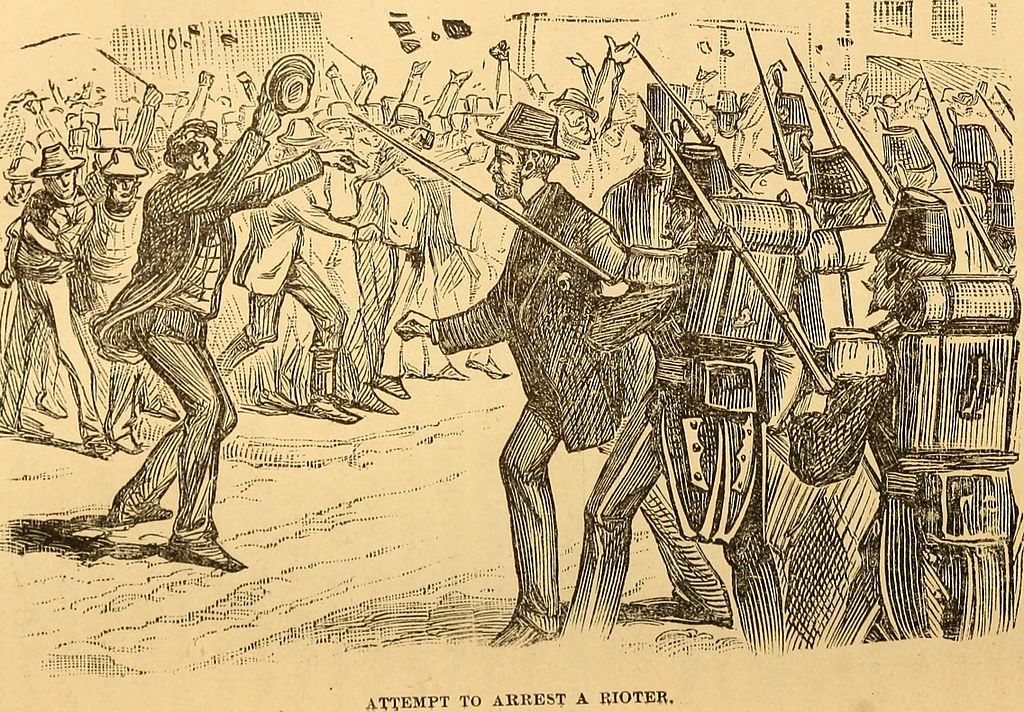
The Great Railroad Strike of 1877 and St. Louis Commune & the 2027 Commemoration On The 150th Anniversary
By Mark Kruger
“With a purpose of revolution, with organization and leadership, it was within the grasp of the railroad employees and other classes of laborers to have taken possession of every center of the nation; aye! Even to have overturned the Government itself.” A.J. Dacus, Annals of the Great Strikes in the United States
Following three wage cuts, an increased work load, and dangerous working conditions, members of the Trainmen’s Union struck in Martinsburg, West Virginia and Baltimore, Maryland on July 16, 1877. The state militias were called out, which were met by crowds which hurled stones at the soldiers. At Baltimore’s Camden Yards, the militia retreated to an armory and then to the railroad depot. Firefights ensued, and the militia was driven back and dispersed by angry crowds. Members of the West Virginia militia refused to fight the railroad workers in Martinsburg, and the state’s governor declared the situation to constitute a “domestic insurrection” and called for federal troops. Miners, canal workers, other workers, and even the unemployed joined the strike, which spread spontaneously, and soon all freight traffic was at a standstill.
On July 23, strikers stopped a troop train in Buffalo, New York. Following a battle, the soldiers fled, leaving their weapons behind. That same day a militia in Reading, Pennsylvania fired on a crowd of workers, killing 13. At Harrisburg, 23 soldiers were taken prisoner by an angry crowd of striking workers. In Pittsburgh, largely working-class militia members refused to fight the workers, threw down their guns, and mingled with the crowds. The governor ordered troops from Philadelphia to the city, which arrived bearing Gatling guns. Militia members fired on a crowd of protestors, killing 20, most of whom were women and children spectators. An enraged crowd which approached some 20,000 attacked the soldiers, who moved into the roundhouse for protection. A number of oil tank cars were set on fire and pushed into the roundhouse. Militia members threw down their guns, changed clothes, and attempted to escape. Over 2,000 railroad cars and 104 locomotives were destroyed in Pittsburgh, while 20 miles of railroad cars sat silently. Approximately 24 people were killed.
The strike spread to Chicago, which was a center for freight and passenger transportation. On July 23, almost 30,000 people gathered at 12th and Halsted streets to protest against the railroad companies and to demand work. Workers marched in the streets singing the French revolutionary “Marseillaise.” More than 6,000 attended a rally organized by the socialist Workingmen’s Party of the United States (WPUSA) and demanded the nationalization of the railroads. On July 26, a street battle at the Halsted Street viaduct between police and some 5,000 workers resulted in the deaths of 18, when police attacked with calvary, firing rifles and cannon at the striking workers. General Philip Sheridan was recalled from fighting Native Americans on the frontier in order to confront workers in the city.
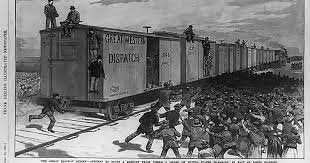
Following failed revolutions in Germany in 1848 and in France in 1871, many German and French socialists emigrated to St. Louis, a city with a strong German and French heritage. Many were members of the communist First International, which sought to unite workers internationally and of the socialist Workingmen’s Party. The WPUSA called for the nationalization of railroads, telegraphs, and other means of transportation and industry. On July 21, 1877, the railroad strike reached East St. Louis, Illinois and the next day St. Louis. Railroad workers in East St. Louis voted to join the strike and to stop all national East-West railroad traffic. They demanded increased wages, shorter hours, safer working conditions, and the end of child labor. By this time, over 1,000,000 workers were on strike, and the railroad strike had become national in scope. The Workingmen’s Party took over leadership of the strike in St. Louis and called for a general strike in the city. Rallies consisting of tens of thousands of workers met every night and paraded through the streets behind bands and the red and black flags of revolution. Speakers at the rallies addressed workers in English, German, French, and Bohemian languages and attacked railroad owners and capitalists and called for socialism. Workers all over St. Louis struck, the entire city was shut down, and even barbers, newsboys, and elevator operators were on strike. Fearing a violent revolution, the city’s elite sent their families out of the city for safety, slept in their clothes, and hoarded food and containers of water. The Workingmen’s Party established the St. Louis Commune, it ruled the city, and nothing operated without its permission. The events in St. Louis, led by railroad workers, constituted the first general strike in American history.
The strike was eventually crushed by police, Missouri’s state militia, and federal troops. But it was important for a number of reasons. Working people came together and cooperated in battling what they envisioned as a common enemy, Black and white workers united on a class basis in support of the strike at a time of extreme racism, workers showed that they were capable of leading and administering a major American city, and the American working class confronted its socialist heritage.
In July, 2027, events, including talks, films, and panel discussions are planned in St. Louis and other cities to both commemorate and to celebrate the Great Railroad Strike of 1877, the St. Louis Commune, and the struggles of working people.
Mark Kruger
Author of The St. Louis Commune of 1877: Communism in the Heartland
mkruger2727 [at] gmail.com
By Mark Kruger
“With a purpose of revolution, with organization and leadership, it was within the grasp of the railroad employees and other classes of laborers to have taken possession of every center of the nation; aye! Even to have overturned the Government itself.” A.J. Dacus, Annals of the Great Strikes in the United States
Following three wage cuts, an increased work load, and dangerous working conditions, members of the Trainmen’s Union struck in Martinsburg, West Virginia and Baltimore, Maryland on July 16, 1877. The state militias were called out, which were met by crowds which hurled stones at the soldiers. At Baltimore’s Camden Yards, the militia retreated to an armory and then to the railroad depot. Firefights ensued, and the militia was driven back and dispersed by angry crowds. Members of the West Virginia militia refused to fight the railroad workers in Martinsburg, and the state’s governor declared the situation to constitute a “domestic insurrection” and called for federal troops. Miners, canal workers, other workers, and even the unemployed joined the strike, which spread spontaneously, and soon all freight traffic was at a standstill.
On July 23, strikers stopped a troop train in Buffalo, New York. Following a battle, the soldiers fled, leaving their weapons behind. That same day a militia in Reading, Pennsylvania fired on a crowd of workers, killing 13. At Harrisburg, 23 soldiers were taken prisoner by an angry crowd of striking workers. In Pittsburgh, largely working-class militia members refused to fight the workers, threw down their guns, and mingled with the crowds. The governor ordered troops from Philadelphia to the city, which arrived bearing Gatling guns. Militia members fired on a crowd of protestors, killing 20, most of whom were women and children spectators. An enraged crowd which approached some 20,000 attacked the soldiers, who moved into the roundhouse for protection. A number of oil tank cars were set on fire and pushed into the roundhouse. Militia members threw down their guns, changed clothes, and attempted to escape. Over 2,000 railroad cars and 104 locomotives were destroyed in Pittsburgh, while 20 miles of railroad cars sat silently. Approximately 24 people were killed.
The strike spread to Chicago, which was a center for freight and passenger transportation. On July 23, almost 30,000 people gathered at 12th and Halsted streets to protest against the railroad companies and to demand work. Workers marched in the streets singing the French revolutionary “Marseillaise.” More than 6,000 attended a rally organized by the socialist Workingmen’s Party of the United States (WPUSA) and demanded the nationalization of the railroads. On July 26, a street battle at the Halsted Street viaduct between police and some 5,000 workers resulted in the deaths of 18, when police attacked with calvary, firing rifles and cannon at the striking workers. General Philip Sheridan was recalled from fighting Native Americans on the frontier in order to confront workers in the city.
Following failed revolutions in Germany in 1848 and in France in 1871, many German and French socialists emigrated to St. Louis, a city with a strong German and French heritage. Many were members of the communist First International, which sought to unite workers internationally and of the socialist Workingmen’s Party. The WPUSA called for the nationalization of railroads, telegraphs, and other means of transportation and industry. On July 21, 1877, the railroad strike reached East St. Louis, Illinois and the next day St. Louis. Railroad workers in East St. Louis voted to join the strike and to stop all national East-West railroad traffic. They demanded increased wages, shorter hours, safer working conditions, and the end of child labor. By this time, over 1,000,000 workers were on strike, and the railroad strike had become national in scope. The Workingmen’s Party took over leadership of the strike in St. Louis and called for a general strike in the city. Rallies consisting of tens of thousands of workers met every night and paraded through the streets behind bands and the red and black flags of revolution. Speakers at the rallies addressed workers in English, German, French, and Bohemian languages and attacked railroad owners and capitalists and called for socialism. Workers all over St. Louis struck, the entire city was shut down, and even barbers, newsboys, and elevator operators were on strike. Fearing a violent revolution, the city’s elite sent their families out of the city for safety, slept in their clothes, and hoarded food and containers of water. The Workingmen’s Party established the St. Louis Commune, it ruled the city, and nothing operated without its permission. The events in St. Louis, led by railroad workers, constituted the first general strike in American history.
The strike was eventually crushed by police, Missouri’s state militia, and federal troops. But it was important for a number of reasons. Working people came together and cooperated in battling what they envisioned as a common enemy, Black and white workers united on a class basis in support of the strike at a time of extreme racism, workers showed that they were capable of leading and administering a major American city, and the American working class confronted its socialist heritage.
In July, 2027, events, including talks, films, and panel discussions are planned in St. Louis and other cities to both commemorate and to celebrate the Great Railroad Strike of 1877, the St. Louis Commune, and the struggles of working people.
Mark Kruger
Author of The St. Louis Commune of 1877: Communism in the Heartland
mkruger2727 [at] gmail.com
Add Your Comments
We are 100% volunteer and depend on your participation to sustain our efforts!
Donate

$110.00 donated
in the past month
Get Involved
If you'd like to help with maintaining or developing the website, contact us.
Publish
Publish your stories and upcoming events on Indybay.
Topics
More
Search Indybay's Archives
Advanced Search
►
▼
IMC Network