







 Publish to Newswire
 Add an Event
From the Open-Publishing Calendar
From the Open-Publishing Newswire
Indybay Feature
Leidesdorff Plaza Diamond Jubilee, 2026 Folsom Cattle Drive - Historic Leidesdorff Ranch
 Import event into your personal calendar
Date:
Wednesday, July 01, 2026
Time:
8:00 PM
-
9:00 PM
Event Type:
Party/Street Party
Organizer/Author:
Khubaka, Michael Harris
Location Details:
Leidesdorff Plaza - RT Historic Folsom Station
Historic Sutter Street
Folsom, California
Historic Sutter Street
Folsom, California
As America approaches its 250th anniversary, we must confront a truth too often left outside the frame of our national story: the foundations of American finance were shaped not only in Philadelphia and New York, the Caribbean and Historic Folsom, California the economic logic of that world was built on enslaved Pan African labor.
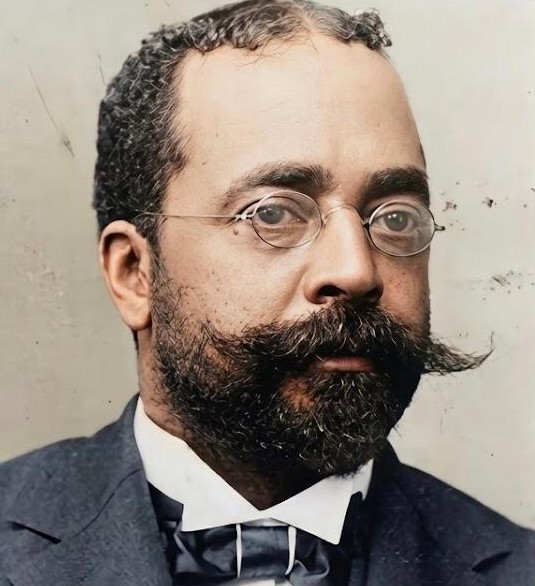
Two figures illuminate this hemispheric reality: Alexander Hamilton, whose youth on St. Croix formed the intellectual basis of the U.S. Treasury, and Honorable William Alexander Leidesdorff Jr., our African Cuban and Danish Jewish pioneer who carried Atlantic commercial knowledge into the City of San Francisco, establishing Yerba Buena Cove’s civic infrastructure as the “African Founding Father of California.”
Hamilton’s formative years in Christiansted, St. Croix, in the Danish West Indies placed him inside one of the most sophisticated financial systems of the 18th‑century Atlantic. At Nicholas Cruger’s mercantile firm, he learned to manage ledgers, cargo manifests, and credit accounts tied directly to plantation output. In both the Danish West Indies and New Amsterdam, enslaved Pan‑African people were treated as capital assets whose forced labor produced sugar, rum, and cotton, commodities that underwrote European and American bond markets and generational wealth.
Hamilton’s daily work involved calculating the value of enslaved labor, assessing maritime risk, and managing multi‑currency credit flows linking St. Croix to New York, London, and Copenhagen. This Caribbean education shaped the institutions Hamilton later built: the U.S. Customs Service, the Sinking Fund Commission, and the Treasury bond system. America’s financial architecture did not emerge from abstraction; it emerged from a Caribbean commercial model that relied on slave‑collateralized capital. As America 250 approaches, acknowledging this reality is not an act of condemnation it is an act of historical honesty that moves us toward restorative justice.
The Caribbean world also shaped another foundational figure: William Alexander Leidesdorff Jr. His father, a Danish Jewish merchant, operated within the same Atlantic networks that connected Copenhagen, St. Croix, and New Amsterdam. These networks specialized in maritime insurance, commodity finance, and bond underwriting, all tied to the productivity of enslaved labor.
Leidesdorff’s African Cuban mother added another dimension, linking him to the deep history of African diaspora movement carried westward by the Canary and North Equatorial Currents. In both free and enslaved eras, these ancient ocean currents during the Age of Sail offered a unique form of mobility and a very different notion of both slavery and freedom.
As a young maritime captain, Leidesdorff entered the Gulf Coast commercial system, where he eventually encountered the Negro Seamen Acts at the Port of New Orleans. These targeted laws were designed to restrict the mobility of free Black sailors. These racial regulations shaped his decision to clear his good name, solidify his reputation, and relocate to Mexican Alta California. On the other side of the world,
Leidesdorff helped build San Francisco and served as the first elected City Treasurer, U.S. Vice Consul to Mexico. He built the San Francisco City Hotel and Civic Center, developed of the Port of San Francisco at Yerba Buena Cove, and owner of the 35,521‑acre Rancho Rio de Los Americanos apart of today’s City of Rancho Cordova and all of Historic Sutter Street.
As the initial City Treasurer of San Francisco, Leidesdorff transformed commercial knowledge into California agricultural export innovation. His steam vessel on our California State Seal shares a vision of early transportation linking the Port of San Francisco to Sutter’s Fort Embarcadero to create the first inland‑to‑coastal commercial corridor, enabling agricultural exports, timber transport, and the earliest commodity supply chains at the dawn of the 1848 Gold Rush.
Our Greater Sacramento Valley and American River Basin became our Golden Harvest Gateway, where Afro‑Caribbean maritime expertise and Danish‑Jewish commercial heritage helped shape the economic foundations of the State of California along today's William Alexander Leidesdorff Memorial Highway, the cattle round-up near Leidesdorff Plaza is special.
Hamilton and Leidesdorff, intersect at today’s Millennium Monument near the historic Port of Christiansted, St. Croix and reveal that America’s financial and civic origins are hemispheric. Their intertwined stories remind us that the nation’s economic foundations stretch from Pan‑African currents to Caribbean ledgers, New York banks, New Orleans wharves, San Francisco’s cosmopolitan emergence, and the agricultural horizons of our California Gold Rush.
Today, as America marks 250 years, it is time to tell the whole story, here in California.
Established in 1844, along Historic Rancho Rio de Los Americanos, a new Golden AI Ecosystem rises along the William Alexander Leidesdorff Memorial Highway, guided in honor to the intellectual legacy of Dr. David Blackwell. Together, we have an amazing opportunity and obligation to do our part to form a more perfect union, in the tradition of world class excellence.
Two figures illuminate this hemispheric reality: Alexander Hamilton, whose youth on St. Croix formed the intellectual basis of the U.S. Treasury, and Honorable William Alexander Leidesdorff Jr., our African Cuban and Danish Jewish pioneer who carried Atlantic commercial knowledge into the City of San Francisco, establishing Yerba Buena Cove’s civic infrastructure as the “African Founding Father of California.”
Hamilton’s formative years in Christiansted, St. Croix, in the Danish West Indies placed him inside one of the most sophisticated financial systems of the 18th‑century Atlantic. At Nicholas Cruger’s mercantile firm, he learned to manage ledgers, cargo manifests, and credit accounts tied directly to plantation output. In both the Danish West Indies and New Amsterdam, enslaved Pan‑African people were treated as capital assets whose forced labor produced sugar, rum, and cotton, commodities that underwrote European and American bond markets and generational wealth.
Hamilton’s daily work involved calculating the value of enslaved labor, assessing maritime risk, and managing multi‑currency credit flows linking St. Croix to New York, London, and Copenhagen. This Caribbean education shaped the institutions Hamilton later built: the U.S. Customs Service, the Sinking Fund Commission, and the Treasury bond system. America’s financial architecture did not emerge from abstraction; it emerged from a Caribbean commercial model that relied on slave‑collateralized capital. As America 250 approaches, acknowledging this reality is not an act of condemnation it is an act of historical honesty that moves us toward restorative justice.
The Caribbean world also shaped another foundational figure: William Alexander Leidesdorff Jr. His father, a Danish Jewish merchant, operated within the same Atlantic networks that connected Copenhagen, St. Croix, and New Amsterdam. These networks specialized in maritime insurance, commodity finance, and bond underwriting, all tied to the productivity of enslaved labor.
Leidesdorff’s African Cuban mother added another dimension, linking him to the deep history of African diaspora movement carried westward by the Canary and North Equatorial Currents. In both free and enslaved eras, these ancient ocean currents during the Age of Sail offered a unique form of mobility and a very different notion of both slavery and freedom.
As a young maritime captain, Leidesdorff entered the Gulf Coast commercial system, where he eventually encountered the Negro Seamen Acts at the Port of New Orleans. These targeted laws were designed to restrict the mobility of free Black sailors. These racial regulations shaped his decision to clear his good name, solidify his reputation, and relocate to Mexican Alta California. On the other side of the world,
Leidesdorff helped build San Francisco and served as the first elected City Treasurer, U.S. Vice Consul to Mexico. He built the San Francisco City Hotel and Civic Center, developed of the Port of San Francisco at Yerba Buena Cove, and owner of the 35,521‑acre Rancho Rio de Los Americanos apart of today’s City of Rancho Cordova and all of Historic Sutter Street.
As the initial City Treasurer of San Francisco, Leidesdorff transformed commercial knowledge into California agricultural export innovation. His steam vessel on our California State Seal shares a vision of early transportation linking the Port of San Francisco to Sutter’s Fort Embarcadero to create the first inland‑to‑coastal commercial corridor, enabling agricultural exports, timber transport, and the earliest commodity supply chains at the dawn of the 1848 Gold Rush.
Our Greater Sacramento Valley and American River Basin became our Golden Harvest Gateway, where Afro‑Caribbean maritime expertise and Danish‑Jewish commercial heritage helped shape the economic foundations of the State of California along today's William Alexander Leidesdorff Memorial Highway, the cattle round-up near Leidesdorff Plaza is special.
Hamilton and Leidesdorff, intersect at today’s Millennium Monument near the historic Port of Christiansted, St. Croix and reveal that America’s financial and civic origins are hemispheric. Their intertwined stories remind us that the nation’s economic foundations stretch from Pan‑African currents to Caribbean ledgers, New York banks, New Orleans wharves, San Francisco’s cosmopolitan emergence, and the agricultural horizons of our California Gold Rush.
Today, as America marks 250 years, it is time to tell the whole story, here in California.
Established in 1844, along Historic Rancho Rio de Los Americanos, a new Golden AI Ecosystem rises along the William Alexander Leidesdorff Memorial Highway, guided in honor to the intellectual legacy of Dr. David Blackwell. Together, we have an amazing opportunity and obligation to do our part to form a more perfect union, in the tradition of world class excellence.
Added to the calendar on Tue, Jun 30, 2026 5:15PM
Add Your Comments
We are 100% volunteer and depend on your participation to sustain our efforts!
Donate

$85.00 donated
in the past month
Get Involved
If you'd like to help with maintaining or developing the website, contact us.
Publish
Publish your stories and upcoming events on Indybay.
Topics
More
Search Indybay's Archives
Advanced Search
►
▼
IMC Network