







 Publish to Newswire
 Add an Event
From the Open-Publishing Calendar
From the Open-Publishing Newswire
Indybay Feature
Beyond the Food Desert: How East Bay Communities are Fighting for Food Access
Food deserts continue to affect thousands of residents across Richmond and East Oakland, where access to affordable, nutritious food remains limited. This article explores how community-led initiatives, including community fridges, urban gardens, and mobile markets, are attempting to address food insecurity while confronting challenges such as funding shortages, regulatory barriers, and long-term sustainability. Through local examples and an interview with Homies Empowerment Food Justice Coordinator Rogelio, the piece examines both the promise and limitations of grassroots solutions in expanding food access throughout the East Bay.
Published by Alisa Higuera | higueraalisa [at] gmail.com
“Everyday, I don’t really eat what’s necessary for a day to day diet, like fruits and vegetables, because of how I am from any grocery stores,” recounts Kayla Velasquez, a sixteen year old high school sophomore living in Richmond, California. "The nearest place for any type of food is a liquor store, so I go there, but they just have chips, candy, and juice, which is pretty unhealthy.” Situations like Kayla’s reflect a broader issue of food insecurity, particularly prevalent across the Eastern Bay Area in cities like Oakland and Richmond.
The US Department of Agriculture defines a food desert as a low income area with limited access to affordable, nutritious food. In Richmond, more than 30,000 residents live in areas with limited access to healthy groceries, particularly in North Richmond and the Santa Fe neighborhoods, where many rely on fast food chains or corner stores. In East Oakland’s 94621 zip code, there’s only one supermarket, and 10 liquor stores.
When asked about food options near her, Velasquez pauses. “They have this market area, and there’s a McDonalds, and right across from it, a Jack-in-the-Box, and in the same area, a KFC. There’s three fast food joints, but only one grocery outlet there.”
Experts trace these disparities back to decades of white flight and economic disinvestment from the 50s to the 70s, which pushed major retailers and grocery chains into wealthier suburbs while many lower income neighborhoods were left with limited food access. Banks redlined certain neighborhoods as “risky” for investment, and many large retailers and grocery stores relocated to wealthier areas. This is why in many areas, the only options for food are liquor stores with shelves of ultra processed foods unsustainable for a healthy diet. Yet in recent years, community organizations across the East Bay have attempted to address the problem through urban gardens, food pantries, mobile markets, and community fridges, efforts that residents say provide relief, but may not fully solve the deeper structural issues surrounding food access.
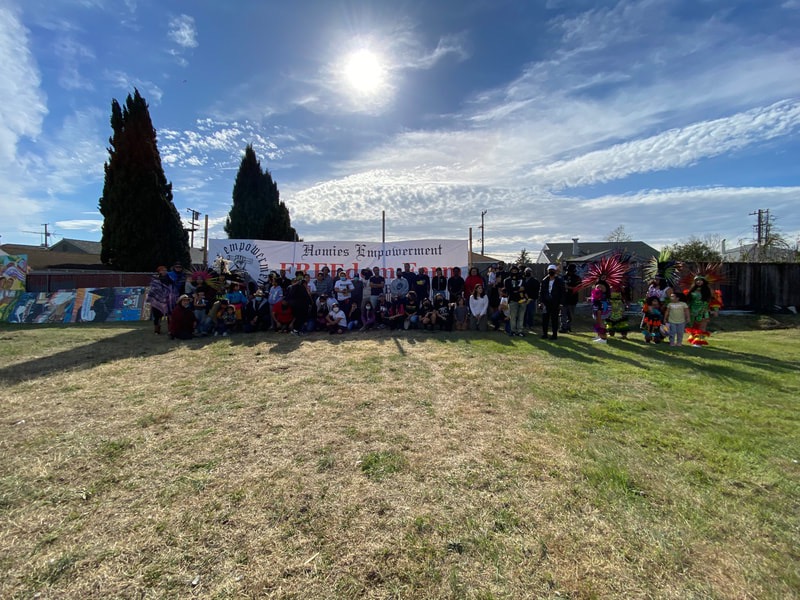
In response to all these disparities, volunteer led initiatives have sought to close food access gaps through community fridges. Often entirely run and supplied by community members or grassroots organizations, community fridges provide residents open access to free snacks, fresh fruits and vegetables, and packaged meals. Homies Empowerment in Oakland takes the community fridge model to the next level, with their FREEdom farm serving as a free small market to locals. The organization's programs aim to address these inequities by providing residents greater access to fresh and culturally relevant foods.The program is supported by volunteers and donations, building solidarity and expanding food access to lower income communities. They’re open every Wednesday morning from 10:00-11:45 am, and again in the afternoon from 1:00-3:00 pm. Organizations such as Homies Empowerment have attempted to move beyond traditional food distribution models. Rogelio, the organization's Food Justice Coordinator, prefers the term "food apartheid" over "food desert," arguing that unequal access to healthy food is the result of systemic decisions rather than a naturally occurring condition. According to Food Justice Coordinator Rogelio, the group originally operated a FREEdom Store, allowing residents to select food and supplies rather than simply receiving pre-packaged goods. More recently, the organization shifted toward a farm-based model and free farmers market. "The amount of people we're seeing and serving is the same amount of people as the pandemic, so the need is still there," Rogelio said.
Alternative solutions also include urban gardens, commonly run by volunteer groups, non profits, and even government departments. These gardens transform land into spaces where community members can grow their produce with shared gardening tools, paying a small annual fee for the soil and water. Some gardens provide access to free produce to the general public in addition to their active members. In the city of Richmond, Urban Tilth, a non profit organization, redesignated lands used for illegal dumping into the Greenway Community Gardens, an open harvesting space serving active members. The benefits to shared urban gardens are numerous, from improved mental and physical health, to strong community solidarity and involvement.
Mobile markets overcome the transportation barrier by carrying fresh produce, dairy, and pantry staples directly to low income neighborhoods and food deserts in refrigerated trucks, buses and vans. These markets often run on a rotating schedule, and typically accept a variety of payment methods, including EBT. Mobile food pantries provide free fresh food to food deserts. Fresh Approach is a network of Bay Area food assistance programs who work with regional farmers and organizations, and strive to bring locally-grown produce to neighborhoods with limited access. These mobile markets are especially helpful for low income residents who lack a means of transportation.
Though these community led programs are continuously growing and helping to provide fresh produce to food deserts, they are still constrained by structural barriers, and can fall short from fully replacing the need for local grocery stores. Rogelio cited funding as one of the organization's largest challenges, noting that grants are often difficult to access and that grassroots groups frequently lack the financial resources available to larger nonprofits.Community fridges are far too small to provide the full amount of inventory necessary to sustain larger neighborhoods. Urban gardens face a plethora of regulatory barriers including permits, food safety regulation, and building codes. Densely populated urban areas pose challenges of land scarcity and strict zoning laws, as well as health concerns from potential airborne, water and soil contamination. Their considerable overhead costs, significant time intensivity, complicated maintenance and development, and low profit margins limit their scalability. Mobile markets often struggle with staffing, and lack consistent funding. Their stock and inventory are inherently limited by the size of the vehicles they’re transported in.
Should the East Bay, then, give up on these community led solutions, given their scalability limits and burden on volunteers? While these approaches admittedly face significant challenges of unreliable funding, complex legislative barriers, and growth potential, they have proven their capability of improving access in food deserts. Urban Tilth’s gardens include acres of land, and provide employment and training to locals who wash, harvest, and bundle the crops. Their produce includes fresh vegetables like broccoli, kale, and collard greens, as well as orchard grown fruits like apples, pears, apricots, and Persimmon. They partner with local small Black and Indigenous farmers to provide free bags of produce to families in need. Their gardens also serve as vital community hubs, offering educational workshops and improving mental health through active civic engagement. These benefits shouldn’t be overlooked in assessing the veracity of community solutions; but they don’t negate the need for retail investment in food deserts. Combating the issue of disproportionate food access will likely involve systemic changes, such as state grants for full service grocery stores seeking to establish themselves in food deserts. Regardless, locals should recognize the opportunities presented by community led solutions, where they possess the agency to create direct, immediate change for themselves and their neighbors.
“Everyday, I don’t really eat what’s necessary for a day to day diet, like fruits and vegetables, because of how I am from any grocery stores,” recounts Kayla Velasquez, a sixteen year old high school sophomore living in Richmond, California. "The nearest place for any type of food is a liquor store, so I go there, but they just have chips, candy, and juice, which is pretty unhealthy.” Situations like Kayla’s reflect a broader issue of food insecurity, particularly prevalent across the Eastern Bay Area in cities like Oakland and Richmond.
The US Department of Agriculture defines a food desert as a low income area with limited access to affordable, nutritious food. In Richmond, more than 30,000 residents live in areas with limited access to healthy groceries, particularly in North Richmond and the Santa Fe neighborhoods, where many rely on fast food chains or corner stores. In East Oakland’s 94621 zip code, there’s only one supermarket, and 10 liquor stores.
When asked about food options near her, Velasquez pauses. “They have this market area, and there’s a McDonalds, and right across from it, a Jack-in-the-Box, and in the same area, a KFC. There’s three fast food joints, but only one grocery outlet there.”
Experts trace these disparities back to decades of white flight and economic disinvestment from the 50s to the 70s, which pushed major retailers and grocery chains into wealthier suburbs while many lower income neighborhoods were left with limited food access. Banks redlined certain neighborhoods as “risky” for investment, and many large retailers and grocery stores relocated to wealthier areas. This is why in many areas, the only options for food are liquor stores with shelves of ultra processed foods unsustainable for a healthy diet. Yet in recent years, community organizations across the East Bay have attempted to address the problem through urban gardens, food pantries, mobile markets, and community fridges, efforts that residents say provide relief, but may not fully solve the deeper structural issues surrounding food access.
In response to all these disparities, volunteer led initiatives have sought to close food access gaps through community fridges. Often entirely run and supplied by community members or grassroots organizations, community fridges provide residents open access to free snacks, fresh fruits and vegetables, and packaged meals. Homies Empowerment in Oakland takes the community fridge model to the next level, with their FREEdom farm serving as a free small market to locals. The organization's programs aim to address these inequities by providing residents greater access to fresh and culturally relevant foods.The program is supported by volunteers and donations, building solidarity and expanding food access to lower income communities. They’re open every Wednesday morning from 10:00-11:45 am, and again in the afternoon from 1:00-3:00 pm. Organizations such as Homies Empowerment have attempted to move beyond traditional food distribution models. Rogelio, the organization's Food Justice Coordinator, prefers the term "food apartheid" over "food desert," arguing that unequal access to healthy food is the result of systemic decisions rather than a naturally occurring condition. According to Food Justice Coordinator Rogelio, the group originally operated a FREEdom Store, allowing residents to select food and supplies rather than simply receiving pre-packaged goods. More recently, the organization shifted toward a farm-based model and free farmers market. "The amount of people we're seeing and serving is the same amount of people as the pandemic, so the need is still there," Rogelio said.
Alternative solutions also include urban gardens, commonly run by volunteer groups, non profits, and even government departments. These gardens transform land into spaces where community members can grow their produce with shared gardening tools, paying a small annual fee for the soil and water. Some gardens provide access to free produce to the general public in addition to their active members. In the city of Richmond, Urban Tilth, a non profit organization, redesignated lands used for illegal dumping into the Greenway Community Gardens, an open harvesting space serving active members. The benefits to shared urban gardens are numerous, from improved mental and physical health, to strong community solidarity and involvement.
Mobile markets overcome the transportation barrier by carrying fresh produce, dairy, and pantry staples directly to low income neighborhoods and food deserts in refrigerated trucks, buses and vans. These markets often run on a rotating schedule, and typically accept a variety of payment methods, including EBT. Mobile food pantries provide free fresh food to food deserts. Fresh Approach is a network of Bay Area food assistance programs who work with regional farmers and organizations, and strive to bring locally-grown produce to neighborhoods with limited access. These mobile markets are especially helpful for low income residents who lack a means of transportation.
Though these community led programs are continuously growing and helping to provide fresh produce to food deserts, they are still constrained by structural barriers, and can fall short from fully replacing the need for local grocery stores. Rogelio cited funding as one of the organization's largest challenges, noting that grants are often difficult to access and that grassroots groups frequently lack the financial resources available to larger nonprofits.Community fridges are far too small to provide the full amount of inventory necessary to sustain larger neighborhoods. Urban gardens face a plethora of regulatory barriers including permits, food safety regulation, and building codes. Densely populated urban areas pose challenges of land scarcity and strict zoning laws, as well as health concerns from potential airborne, water and soil contamination. Their considerable overhead costs, significant time intensivity, complicated maintenance and development, and low profit margins limit their scalability. Mobile markets often struggle with staffing, and lack consistent funding. Their stock and inventory are inherently limited by the size of the vehicles they’re transported in.
Should the East Bay, then, give up on these community led solutions, given their scalability limits and burden on volunteers? While these approaches admittedly face significant challenges of unreliable funding, complex legislative barriers, and growth potential, they have proven their capability of improving access in food deserts. Urban Tilth’s gardens include acres of land, and provide employment and training to locals who wash, harvest, and bundle the crops. Their produce includes fresh vegetables like broccoli, kale, and collard greens, as well as orchard grown fruits like apples, pears, apricots, and Persimmon. They partner with local small Black and Indigenous farmers to provide free bags of produce to families in need. Their gardens also serve as vital community hubs, offering educational workshops and improving mental health through active civic engagement. These benefits shouldn’t be overlooked in assessing the veracity of community solutions; but they don’t negate the need for retail investment in food deserts. Combating the issue of disproportionate food access will likely involve systemic changes, such as state grants for full service grocery stores seeking to establish themselves in food deserts. Regardless, locals should recognize the opportunities presented by community led solutions, where they possess the agency to create direct, immediate change for themselves and their neighbors.
For more information:
https://substack.com/@lizziegirll/note/p-2...
Add Your Comments
We are 100% volunteer and depend on your participation to sustain our efforts!
Donate

$85.00 donated
in the past month
Get Involved
If you'd like to help with maintaining or developing the website, contact us.
Publish
Publish your stories and upcoming events on Indybay.
Topics
More
Search Indybay's Archives
Advanced Search
►
▼
IMC Network