







 Publish to Newswire
 Add an Event
From the Open-Publishing Calendar
From the Open-Publishing Newswire
Indybay Feature
In SF New Opera "Echoes of Eureka", a seven-movement opera about Chinese Immigrants
 Import event into your personal calendar
Date:
Wednesday, June 17, 2026
Time:
4:00 PM
-
5:30 PM
Event Type:
Concert/Show
Organizer/Author:
repost
Location Details:
In San Francisco a New Opera "Echoes of Eureka", which is a powerful seven-movement opera about Chinese immigration to California by Artistic Director, Eric Tua will be presented at the Chinese Historical Society
July 17th In San Francisco New Opera "Echoes of Eureka", a powerful seven-movement opera about Chinese immigration to California by Artistic Director, Eric Tua
https://www.piedmontchoirs.org/spotlight-echoes-of-eureka
Golden Gate Festival: Spotlight Concert 5
PEBCC & Vox Aurea
In collaboration with the Chinese Historical Society of America
Friday, July 17, 2026
4 PM
ECHOES OF EUREKA
A NEW OPERA BRIDGING HISTORY AND HOPE
CLICK HERE FOR THE DIGITAL PROGRAM!
Piedmont East Bay Children’s Choir proudly presents Echoes of Eureka, a powerful seven-movement opera by Artistic Director, Eric Tuan. This inspiring new work brings to life a pivotal chapter of California’s history, shedding light on the struggles and resilience of Chinese immigrants in the 19th century. Echoes of Eureka emerges as a timely piece, resonating with contemporary conversations on justice, inclusion, and belonging.
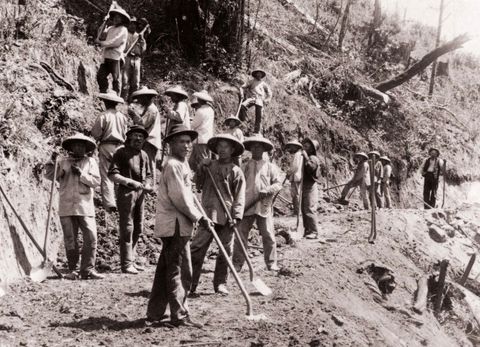
Echoes of Eureka follows the true story of Charley Wei Lum, a young Chinese immigrant who arrived in 1880s California and settled in Eureka, a thriving redwood logging town that housed the largest Chinese community in the state outside of San Francisco. During the height of the Gilded Age—a period of deep economic inequality and rising anti-immigrant sentiment—Charley and his community faced devastating violence. In 1885, an angry mob expelled Eureka’s 300 Chinese residents, forcing them onto a steamship bound for San Francisco. Charley narrowly escaped lynching thanks to a compassionate clergyman. In the aftermath, the exiled Chinese community took the unprecedented step of filing a federal lawsuit—the first known attempt at seeking reparations in U.S. history. The ways they fought back included several foundational Supreme Court cases, including Wong Kim Ark, which established the basis for birthright citizenship.
Composer Eric Tuan reflects, "I first heard this story in a book called Driven Out by historian Jean Pfaelzer, which documents the hundreds of anti-Chinese deportations and lynchings that took place in California. I composed the seven-movement opera, narrating the story in collaboration with Jean Pfaelzer, fellow historian Alex Service, and Humboldt Asians & Pacific Islanders in Solidarity. We’re very grateful to have received a grant from the National Endowment for the Arts to support the opera and presented the world premiere at our Making History Concert on April 12, 2025 followed by performances in Eureka itself in May 2025. The resonances with our national life are striking, and I hope you’ll attend one of our upcoming performances.”
ECHOES OF
EUREKA
A New Opera
Bridging History and Hope
Image: Courtesy of Cal Poly Humboldt Library Special CollectionsECHOES OF EUREKA
T A B L E O F C O N T E N T S
01
03
07
08
18
19
21
23
25
About the Opera
Welcome Letters
Program
Synopsis & Libretto
Singers
About the Artists
About the Choir
Leadership & Staff
AcknowledgementsABOUT THE OPERA
Echoes of Eureka is a new choral opera which sheds light
on the struggles and resilience of Chinese immigrants
to California during the 19th century. Commissioned by
Scott Ziegler and Shirley Pao in honor of their children
Zia and Veda, the opera was composed for the Piedmont
East Bay Children’s Choir by Artistic Director Eric Tuan.
Image: Courtesy Clarke Historical Museum
Echoes of Eureka follows the true story of “Charley” Wei
Lum, a young Chinese immigrant who arrived in 1880s
California and settled in Eureka, a thriving redwood log-
ging town that housed one of the largest Chinese com-
munities in the state outside of San Francisco. During
the height of the Gilded Age—a period of deep economic
inequality and rising anti-immigrant sentiment—Charley
and his community faced devastating violence. In 1885,
an angry mob expelled Eureka’s 300 Chinese residents,
forcing them onto a steamship bound for San Francisco.
Charley narrowly escaped lynching thanks to a compas-
sionate clergyman.In the aftermath, the exiled Chinese community took the
unprecedented step of filing a federal lawsuit—the first
known attempt at seeking reparations in U.S. history.
The Chinese communities of California continued their
resistance through several foundational Supreme Court
cases including Wong Kim Ark, which established the ba-
sis for birthright citizenship. Echoes of Eureka emerges as
a timely piece, resonating with contemporary conversa-
tions on justice, inclusion, and belonging.
Echoes of Eureka is a collaboration with Humboldt Asians
and Pacific Islanders in Solidarity and Cal Poly Humboldt;
poets Emily Jiang and Daryl Ngee Chinn; historians Jean
Pfaelzer (author of “Driven Out”) and Alex Service; part-
ner choir Vox Aurea, directed by Sanna Salminen; and
choreographer Daniel Raaflaub. We are deeply grateful
to be in community with these amazing artists, thinkers,
and creators.Welcome from PEBCC’s Artistic Director
Around ten years ago, I picked
up a copy of Jean Pfaelzer’s re-
markable work of history, Driven
Out. I was shocked to learn of the
hundreds of anti-Chinese depor-
tations and lynchings that had taken place across the
American West, alongside the heroic efforts of Chinese
communities to fight back through lawsuits and mass civ-
il disobedience. Despite being a lifelong California res-
ident of Chinese descent, I had never heard any of this
before.
I was particularly haunted by the story of one particu-
lar young man, “Charley” Wei Lum, who lived in the red-
wood logging town of Eureka on California’s foggy north-
ern coast. When an angry white mob expelled Eureka’s
Chinese community in 1885, Charley was nearly lynched
after trying to say goodbye to his white neighbors. Only
the timely intervention of a sympathetic minister saved
him from the scaffold.
Charley’s story echoes uncannily across the years into
our own time. Eureka’s Chinese community was accused
of bringing crime and taking away jobs from “real Amer-
icans”. They were deported en masse and fought back
in the courts to seek redress. And amid the chaos, their
neighbors made choices about whether to stand up or
stay silent.
This is an old story - but it is your story, too. When you
carry it away into the world, who will you be?
Artistic Director and ComposerWelcome from Jean Pfaelzer
Speak Memory
Professor Jean Pfaelzer is an interna-
tionally recognized scholar and public
intellectual in the fields of American
History, Asian American Studies, Cul-
tural & Literary Studies, Gender Studies, and Slavery. Writing
about multi-racial stories and hidden histories drawn from
buried archives, Jean is committed to finding and giving voice
to individuals and experiences that have been overlooked
or silenced for far too long in American history. Jean’s book
Driven Out was the inspiration for Echoes of Eureka.
The Chinese called it Pai Hua, or The Driven Out. My jour-
ney into this history began in the 1970s when I moved
with my six-year-old daughter into a cabin in the redwood
forest of remote Humboldt County to begin my career as
a temporary professor of American Studies. Each morning
I would drive south through a little community of beach
cottages, damp and empty in the chilled fog and gray
light of California’s north coast, past jagged rocks and
powerful crashing waves, where tall white egrets guard-
ed the fern prairies, finally climbing the hill to Humboldt
State University (now Cal Poly Humboldt)—my first aca-
demic job. I was living on Yurok land. That year President
Nixon resigned; the following spring the last American
soldier was killed in Vietnam. And Vietnamese refugees,
many “boat people,” slowly found their way to the United
States, many to California. The Civil Rights movement was
tracking victories of access to voting rights and education.
Our spirits were hopeful.
Humboldt State then had an unusual mix of white and
tribal students. But in my classes and in the hallways andat tense meetings demanding that Native American his-
tory and myths be taught, I noticed the complete ab-
sence of Asian American students. I was born and raised
in Los Angeles. This did not look like the California I
knew. When I asked about the absence of Asian kids, I
was told by a local poet that Chinese parents would not
send their kids to HSU because ninety years earlier, Chi-
nese immigrants—gardeners, domestic servants, fisher-
men, merchants, laundry workers, cooks—had been driv-
en out—purged—from the lumber town of Eureka.
For hundreds and hundreds of years before gold miners
and the lumber companies arrived in Humboldt, Yurok
people lived in small clans along the lagoons. They called
the land Oketo—“there where it is calm.” Within a year
I left Humboldt for a regular professorship at Univ. Cali-
fornia San Diego, but I had fallen in love with the coun-
ty and bought a share in a rustic cabin. As I returned to
Humboldt every year, I remained haunted by the missing
students. And as with other places of great beauty, I was
disturbed by the history of violence embedded in the
landscape.
Thirty years later I decided to find the story of the miss-
ing Asians. On the first day of my quest, sitting at a
cloudy microfilm reader at the UC Berkeley library, I dis-
covered a much larger story and I began to follow the
footsteps of thousands of Chinese people who were vi-
olently thrown onto rail cars, steams, or logging rafts,
marched out of town, expelled not just from Eureka but
from towns along the Pacific Coast to the rocky Moun-
tains, from Seattle and Portland, into the Siskiyou Moun-
tains, down through the arid Central valley to Los Ange-
les. Between 1850 and 1906 there were close to two
hundred rounds, designed to rid the United States of
Chinese people.
I also learned that the Chinese fought every effort to
expel them from the coast, from orchards and vine-
yards. In Wing Hing vs. the city of Eureka (1885-6) theyfiled the first lawsuit for reparations. In San Jose they
used trespass law to sue against police harassment. In
Truckee they bought rifles from China. The Chinese gar-
deners organized vegetable boycotts against hotels and
households that supported the anti-Chinese purges.
Kidnapped Chinese prostitutes fled. Elsewhere they re-
turned laundry, neatly folded but still dirty.
I believe that “tellings” knit communities together and let
healing begin. People on the run do not stop to tell their
stories. But in history, monuments, stories, and song—
“echoes” bring us to truth, and to justice that repairs.
Welcome from HAPI
Humboldt Asians & Pacific Islanders in Solidarity (HAPI)
builds and empowers our community by amplifying di-
verse voices and perspectives for a more engaged and
inclusive future. We are honored to have supported
Echoes of Eureka, a groundbreaking and transformative
work with special resonance with our community. HAPI
and our Eureka Chinatown Project deeply appreciate the
well-researched approach that Eric Tuan has taken to
depict vividly the historical events occurring around the
Eureka Chinatown expulsions. Eric’s ability to transform
historical facts into moving drama and dynamic lyricism
brings this story into contemporary meaning. It is a great
gift.
-Humboldt Asians & Pacific Islanders in Solidarity (HAPI)PROGRAM
Echoes of Eureka
Eric Tuan (b. 1990)
Commissioned by Scott Ziegler and Shirley Pao,
dedicated to Zia and Veda,
for the Piedmont East Bay Children’s Choir
I.
II.
III.
IV.
V.
VI.
VII.
This is the Story of Charley Wei
Wipe Out the Plague Spots (Text from The
Humboldt Times and the memoir of the Rev.
Charles Huntington, courtesy of Alex Service.)
Solidarity
Boarding the Boats
Interlude: Now Comes Wing Hing
Why Should I Leave?
Does the Land Forget? ( Text excerpted from “The
Water Book of Questions” by Daryl Ngee Chinn.
Used by permission of the poet.)
Echoes
Piedmont East Bay Children’s Choir
Eric Tuan, Conductor and Artistic Director
Kymry Esainko, Collaborative Pianist
Daniel Raaflaub, ChoreographerSYNOPSIS
Echoes of Eureka sets the scene with a narrative prologue
(“This is the Story of Charley Wei”) before depicting the
mob violence that drove the Chinese community from
Eureka in 1885 (“Wipe Out the Plague Spots”). A sym-
pathetic minister saves Charley from being lynched on
a scaffold, leading to a reflection on what it means to
stand together against violence (“Solidarity”). As the Chi-
nese community boards the ships that will carry them
to San Francisco, they protest by sharing their names
and stories (“Boarding the Boats”). Upon arriving in San
Francisco, they file suit for reparations (“Interlude: Now
Comes Wing Hing”) and fight back against their mass
deportation (“Why Should I Leave”). The opera con-
cludes by inviting us to reflect on the powerful ambigu-
ity of historical memory (“Does the Land Forget?”) and
insisting that while this is an old story, it is our story too
(“Echoes”).
Libretto
I. This is the Story of Charley Wei
This is the story of Charley Wei:
Eighteen years old, resident of Eureka, Gold Mountain,
Home to redwoods, sky, and sea.In eighteen hundred and eighty five,
Charley and his neighbors were expelled.
Packed onto ships, houses burned down,
Businesses looted, threatened with the noose, driven out
-
Because they were Chinese.
In San Francisco they regrouped, fought back, resisted in
the courts -
Made history.
This is an old story, but it is your story too.
When you carry it away into the world,
Who will you be?
II. Wipe Out the Plague Spots
Text: adapted from articles in the Humboldt Times, gra-
ciously shared by Humboldt County historian Alex Ser-
vice. Inspired by Jean Pfalezer’s book Driven Out and the
memoir of the Rev. Charles Huntington.
Wipe out the plague spots!
Did you hear the news?
Councilman Kendall’s been shot!
Caught in a shootout between two Chinese gangsters, up
from San Francisco.
Those Chinese. They’re always bringing crime - bloody
brawls, opium dens, and God knows what else.
This is the last straw. This leper’s colony is a curse to the
city. Goodbye to Chinatown - all three hundred of them.
They must go!
This leprous, pestilential hellhole - this leper’s colony is a
curse to the city.
What are you doing here? Can’t you read the sign?“Any Chinese seen on the street after three o’clock to-day
will be hung to this gallows.”
Grab your things and take them to the wharf. The boats for
San Francisco are sailing tonight, and you’d better be on
them.
Why? What have I done?
You are Chinese, and you must go.
You must leave today. No Chinese person can live in Hum-
boldt County.
Goodbye to Chinatown!
The Chinese must never return. They must go! Say good-
bye to Chinatown.
It’s nearly three o’clock. The Chinese should all be at the
wharf by now.
Look! There’s one we haven’t caught yet! And entering a
white man’s house.
Where’s that Chinese boy who just ran in?
Charley is here on his way to the wharf. He is a member of
our church, and just called to say goodbye and ask for our
prayers.
Out of the way! We want him now.
We want him now! Wipe out the plague spots! Hang the
Chinese!
Boys, take that rope off that boy’s neck! If you hang him
you’ll hang him over my dead body!III. Solidarity
Who will you be?
IV. Boarding the Boats
Text: Composer’s paraphrase of “Early Departure from
Baidi City” by Li Bai (701-762), and remembrances based
on Alex Service’s research on the plaintiffs of the court
case Wing Hing vs. The City of Eureka, census records
from Humboldt County, and newspaper advertisements
for Chinese businesses in Eureka.
I left at dawn amid the fog,
Four hundred miles in just one day.
The monkeys mock me on the way,
My boat sweeps on past rocky cliffs.
My name is Wong Hing. I’m forty-five years old and am a
merchant from Guangdong.
My name is Sam Lee. I’m twenty-four years old. I run the
“New Chinese Laundry” on the corner of 4th Street and E
Street.
My name is Yee Hop. I’m sixty years old and I’m a bookkeep-
er.
My name is Sieu Lin. I’m married to Yee Hop and I’m here
with my son.
My name is Yee Ban On. I’m twelve years old.
My name is Kang Hop. I’m sixty-two years old and married.
I run a store selling groceries, lacquerware, and clothing at
4th Street and F Street.My name is Hop Sing. I’m fifty-five years old and I’m a wash-
erman.
My name is Tom. I’m twenty-four years old and I’m a servant
in the house of a clergyman.
My name is Chan Woo. I’m twenty-five years old and I own
a laundry.
My name is Woc Ho. I’m thirty-five years old and I work on
the railroad.
My name is Charles. I’m twenty-two years old and I’m a ser-
vant for a local farmer.
My name is Jim. I’m thirty-eight years old and I’m a lumber-
man.
My name is Lung Mow. I’m twenty-nine years old and I’m a
cigar maker.
My name is Charlie Mok. I’m twenty-eight years old. I run a
grocery store and employment office on E Street, between
4th and 5th.
My name is Hin Yee. I’m thirty-nine years old and I’m a ped-
dler.
My name is Ah Cow. I’m sixty years old and I own a laundry.
I came to Eureka with my wife and five of my cousins.
My name is Leong Cook. I’m forty-five years old and I’m a
tailor.
My name is Ah Yung. I’m thirty-three years old and I’m a
cook for the Flanagan family.My name is Jow Lum. I’m twenty-nine years old and I clean
wool.
My name is Wong Chung Hai. I run a grocery and clothing
store on E Street, between 4th and 5th.
My name is Mong Ching. I’m forty years old. I’m a cook in a
shingle mill.
My name is Chong Quin. I’m thirty years old and I iron
clothes in a laundry.
My name is Fook Loui. I’m twenty-one years old and I’m a
cook.
My name is Sing Chung. I run the F Street Laundry between
4th and 5th Streets.
My name is Lun Kee. I sell fruits and confectionary.
My name is Mary. I’m thirty years old and I’m a housekeeper.
My name is Wong Tai Sing. I’m twenty-three years old and
I’m a cook. I have a scar on the left side of my forehead.
My name is Fong Chu. I’m forty-three years old and I was a
gold miner in the Sierra foothills.
My name is Yung King. I’m twenty-four years old and I’m
from a family of goldsmiths.
My name is Lum Poy. I’m twenty-three years old and I’m a
shoemaker.
My name is Jake. I’m thirty-two years old, and I’m a cook for
the family of a carpenter.My name is La Lung. I run a grocery store on the south side
of Chinatown.
My name is Ar Yung. I’m forty-seven years old and I’m a gold
miner in the Siskiyou Mountains.
My name is Sing Lee. I’m a painter and carpenter.
My name is Sun Sing Kee. I’m a butcher and run a grocery
store.
My name is Jim. I’m thirty four years old and I work at the
Vance Hotel.
My name is Chan Mon. I’m twenty-nine years old, and I’m a
fisherman.
My name is Ah How. I’m forty years old, and I run a laundry
with my husband Tam.
My name is Tung Sing. I run a washing and ironing business-
es on the northeast corner of 4th Street and E Street.
My name is Ah Chung. I’m thirty-one years old. I’m a cook in
a hotel.
My name is Suen Ying. I’m twenty-one years old and I was
born here in California.
Interlude: Now Comes Wing Hing
Now comes Wing Hing - plaintiff!
Versus the City of Eureka - defendant!
Now comes Wing Hing by his Attorney Thomas D. Riordan,
and complains of the defendant The City of Eureka:The said action is brought to recover thousands of dollars in
damages, due to a riot created by a mob of disorderly and
riotous persons.
On the 27th day of February 1885, the rioters broke into
the premises of Wing Hing and Company.
The said rioters destroyed their goods, and drove the mem-
bers, and clerks, and agents, and servants from their store
and from their city.
Therefore plaintiff demands judgment against the defendant
for the sum of one hundred and thirty two thousand eight
hundred and twenty dollars, together with his costs of suit.
V. Why Should I Leave?
Text: Emily Jiang
Why? Why should I leave?
I’ve toiled these fields,
I’ve worked this land.
I’ve sown so many
seeds by hand.
Why? Why should I leave?
I met my wife
While tending the land.
We’re raising children,
Taught them to stand.
Why must I leave at others’ command?
I’ve done nothing wrong.
I must take a stand.You may take away my house,
But you can’t take away my home.
You may take away my clothing,
But you can’t take away my dignity.
You may take away my money,
But I will always be rich in spirit.
You may take away my food,
But I will grow more.
I stand as long as I can
Against injustice,
Against tyranny.
I stand as long as I can
For my human rights,
For all human decency.
I stand as long as I can
Against fear and ignorance,
Against mobs of hate.
I stand as long as I can
For curiosity and understanding,
For empathy and love.
And when I can no longer stand,
When I must rest and sit a while,
Others will stand in my stead.
United, we stand.
Divided, we fall.
We stand for freedom
To choose our homes,To raise our families,
To live our dreams.
VI. Does The Land Forget?
Text: Excerpted from “The Water Book of Questions” by
Daryl Ngee Chinn. Used by permission of the poet.
Does the land forget?
Does the land deny?
Does the air remember?
How do we talk without words?
Do the animals and trees pass down memories,
like horses standing silently next to one another?
What is our language?
What is memory? Is it stories or rumors?
Is it in a book never opened,
a stone in rain?
VII. Echoes
This is the story of Charley Wei:
Eighteen years old, resident of Eureka, Gold Mountain.
This is an old story, but it is your story too.
When you carry it away into the world,
Who will you be?SINGERS
E N S E M B L E
C U R R E N T
Nicolas Adams
Roya Agarwal
Phoebe An
Nora Bell
Alexis Byrnes
Laura Caceres Spears
Emiko Critchlow
Joshua Daniel
Isaac Ets-Hokin
Anjali Falbo-Nicosia
Olivia Gamper
Zoe Grundy
Daniel Hinton
Violet Irie
Sarah Khan-Akselrod
Audrey Levin
Ember McCall
Ayla Montanez
Ainsley Mullane
Georgia Orcharton
Sophi Ouyang
Nora Pfister
Elodie Plauché
Josie Renaud
Michael Sidbury
Felix Sudat
Lisa Treichler
Matilda Trenkle
Murielle Vance
Aviram Vartanian
Beatrix Vartanian
Zofia Wang
Mignon La’Niyah Michelle
Williams
Zuri Zkiyah Nia Williams
Alexandria Wilson
Caroline Wolferson
Molly Wolferson
2 0 2 4 - 2 5
E N S E M B L E
Karena Che
Elana Cortes
Ilana Eustace-Shoham
Keira Lee
Maeve McMullen
Loki Olsen
Veda Pao-Ziegler
Carys Pligavko
Rafael Rajan
Laurna Sudat
Mei Takeuchi
Naomi WalkerABOUT THE ARTISTS
Eric Tuan—Artistic Director & Conductor—An alum and
longtime faculty member of PEBCC, Eric began as Artis-
tic Director of the organization in July 2019. Tuan cur-
rently serves as the director of the Stanford Early Music
Singers, and served for twelve years as founding Artistic
Director of the chamber chorus Convivium and Director
of Music at Christ Episcopal Church, Los Altos. In addi-
tion to his work as a professional singer, keyboardist, and
composer, his choral music has been widely performed
throughout the United States and Europe. Tuan received
his Master of Music degree at the University of Cam-
bridge with the support of a Gates Cambridge Scholar-
ship, and his undergraduate degree from Stanford Uni-
versity.
Kymry Esainko—Collaborative Pianist—Kymry Esainko is
principal pianist for the Santa Rosa Symphony and en-
joys playing chamber music with many of his orchestra
colleagues. He plays with Piedmont Community Church
and with the chorus at LOPC, and loves playing for both
his daughter Stella with Ensemble and his son Kai with
Pacific Boychoir. He also performs regularly at Flower
Piano every September in Golden Gate Park. An accom-
plished jazz and improvisatory pianist, Kymry plays with
Matt Small’s Crushing Spiral Ensemble and the silent film
ensemble Club Foot Orchestra. Kymry graduated from
Oberlin College and Conservatory of Music with degrees
in piano performance and American history. He lives in
Oakland with his vocalist/trombonist wife Becca, his son
Kai, daughter Stella, and a menagerie of cats and dogs.
Daniel Raaflaub—Choreographer— Daniel Raaflaub be-
gan his musical education at an early age in the choir
school of the Basel Boys Choir (Knabenkantorei Basel),
where he gained valuable experience as both a chorister
and soloist. In the cultural capital of Vienna, he studiedvoice, acting, and dance at the prestigious University of
Music and Performing Arts, and took part in various mas-
terclasses, including “Camera Acting.” Over the past 15
years, Daniel Raaflaub has performed on musical theatre,
drama, and concert stages across Switzerland, Germa-
ny, and Austria. With leading roles in productions such
as Chess, Godspell, Jesus Christ Superstar, and RENT, he
has established himself as a versatile artist. Today, Dan-
iel Raaflaub is a sought-after vocal pedagogue and guest
lecturer, working as a vocal coach for numerous projects
and choirs both nationally and internationally. As a cho-
ral stage director and choreographer in Switzerland (e.g.
Knabenkantorei Basel, OYENGA Gospel Choir Basel) as
well as internationally (e.g. Vox Aurea in Finland, Kristina
Academy Children’s Choir in Kenya), he creates compel-
ling and inspiring musical dramaturgy. His tireless ded-
ication has earned him multiple awards at international
choir festivals.ORGANIZATIONAL BIO
The internationally acclaimed Piedmont East Bay Chil-
dren’s Choir (PEBCC) offers children throughout San
Francisco’s East Bay an outstanding program of mu-
sic training and choral performance. Started in 1982 by
founding Executive Director Susan Rahl with Artistic Di-
rector Robert Geary, the Choir has performed with the
Barenaked Ladies, Berkeley Symphony, John Denver,
The Mark Morris Dance Group, Oakland Symphony, San
Francisco Choral Society, San Francisco Opera, San Fran-
cisco Symphony, Volti, San Francisco Choral Society, at
national and regional conventions of the American Cho-
ral Directors Association, Chorus America and Organi-
zation of American Kodaly Educators. In recent years,
they sang with Joyce di Donato in EDEN and premiered
Michael Gilbertson’s Denial with Volti and the San Fran-
cisco Chamber Orchestra. In addition to vigorous pro-
gramming of innovative new music commissions and pre-
mieres, the Choir is a leading force in international choral
activities, with far-reaching collaborations, high marks in
competitions world-wide, and the establishment of the
Golden Gate International Children’s and Youth Choral
Festival in 1991.
Ensemble from PEBCC has earned grand prizes, first priz-
es and gold medals at prestigious competitions across
Europe, Asia and the Americas. In 2024, the Choir
earned first prize in the senior children’s choir category
and the coveted “Young Choir of the World” title at the
Llangollen International Musical Eisteddfod in Wales,
after earning two second prizes at the same competi-
tion in 2017. In 2014, the Choir attended the Interna-
tional Youth Music Festival in Bratislava, Slovak Repub-
lic and won the Grand Prix Award for Choral Music and
four gold medals. In 2010, the Choir earned first prize in
Contemporary Music and second prize in the Children’s
Choir category at the 2010 Kathaumixw InternationalChoral Festival in British Columbia, Canada. In 2008, En-
semble was the only choir to win three gold medals at
the Grand Prix St. Petersburg (Russia) Choral Festival. In
2006, they earned two gold medals at the Hong Kong
International Children’s Choral Festival. In 2003, Geary
led the Choir to a special award for highest score among
equal voice choirs and a second prize in contemporary
music at the prestigious Guido D’Arezzo competition in
Gorizia, Italy and in 2000 Ensemble became the first and
only American children’s choir then to date to earn a first
prize at the Choral Olympics/ World Choir Games.
Recognizing that the creation of art is a forward-look-
ing and forward-thinking endeavor, the Choir has com-
missioned and premiered dozens of new works by living
composers including Sue Bohlin, Kui Dong, Stacy Garrop,
Anne Hege, Jacqueline Hairston, Olli Kortekangas, Pekka
Kostiainen, Kirke Mechem, Zae Munn, Melissa Dunphy,
Pablo Ortiz, Eric Tuan, Mark Winges, Robin Estrada, Jens
Ibsen, and many others.BOARD OF DIRECTORS
Amy Hillyard
Katherine Wolfe
Jim Trenkle
Tony Ouyang
President
Vice President,
Development
Committee Chair
Treasurer, Finance
Committee Chair
Secretary, Governance and
Nominating
Committee Chair
Yiting Jin
Poppy Crum
Yogeeta Gamper
Mia Atkinson
Fellow
COMMITTEE MEMBERS
Erica Orcharton
Balvinder (Val) Hansra
James Bell
Shirley Tong
Fei Ouyang
Amber McClure
Qali Vartanian
Governance
Audit
Finance
Audit Chair
Development
Finance
Development
STAFF
Eric Tuan
Jill Dineen
Artistic Director
Executive Director
Tate Bissinger
Anastasia Morris
Ron LeGaux
Natalie Titone
Jessica Rauf
Greg Rosas
Marina Zubareva
Linda McMullen
Mick Lim
Madeline Ashburn
Camp and Production
Director
Program Director
Finance Director
Development Manager
Office Manager
Registrar
Program Manager
Program Assistant PD
Program Assistant TD
Festival CoordinatorFOUNDERS
Susan Emmett Rahl
Robert Geary
Committed to innovative, socially relevant,
and cutting-edge programming, PEBCC fo-
cuses on amplifying marginalized voices
through its commissioning program and pro-
vides youth singers the opportunity to work
with living composers to premiere new music
and share it broadly with our communities.
With your support, you can help us continue
to provide and share our programs with your
donation today!
TAP TO DONATEACKNOWLEDGMENTS
We wish to share our heartfelt gratitude for all of the
partners who have made Echoes of Eureka possible.
Special thanks go to:
Our partner organizations in Humboldt County, who
have supported the project from the very beginning
and hosted us for an amazing weekend tour in Eureka
and Arcata.
Humboldt Asians and Pacific Islanders in Solidarity
Morris Graves Museum of Art
Eureka Chinatown Project
Cal Poly HumboldtPoets Emily Jiang and Daryl Ngee Chinn, who have
woven their powerful words into the fabric of Echoes
of Eureka.
Emily Jiang Daryl Ngee Chinn
Historians Jean Pfaelzer and Alex Service, who have
been so generous in sharing their stories, research,
and primary source materials during the creation of
the opera.
Jean Pfaelzer
Alex Service
Our partner choir Vox Aurea in Finland and their con-
ductor Sanna Salminen, who hosted us for the Eu-
ropean premiere and connected us to the amazing
Daniel Raaflaub, whose choreography has added an
entirely new layer of artistry to the opera.
Vox Aurea
Daniel Raaflaub
Thank you to the incredible Daniel Raaflaub who has
infused the opera with his choreography, shaping its
movement and storytelling with a depth and artistry
that has become truly integral.Thank you to the Oakland Asian Cultural Center
(OACC) for collaborating with PEBCC to hold an
Echoes of Eureka performance.
The Oakland Asian Cultural Center (OACC) builds
community through arts and culture in the heart of
Oakland’s Chinatown. For over 40 years, OACC has
presented performances, exhibitions, workshops, and
festivals that celebrate Asian American, Native Ha-
waiian, and Pacific Islander heritage while fostering
solidarity across Oakland’s diverse communities.
Thank you to the Chinese Historical and Cultural
Project (CHCP) for collaborating with PEBCC to hold
an Echoes of Eureka performance.
Founded in 1987, the Chinese Historical and Cultur-
al Project (CHCP) is a nonprofit based in Santa Clara
County, California, who promotes, educates, and pre-
serves Chinese and Chinese American history and
culture through community outreach activities.And the singers, parents, and staff of the Piedmont
East Bay Children’s Choir, who have worked so hard
to bring this piece to life.
Piedmont East Bay Children’s Choir
This project is supported in part by an award from the
National Endowment for the Arts.Echoes of Eureka tells a powerful and often-over-
looked story from California’s history — a story of
resilience, injustice, and the enduring fight for be-
longing. More than just a historical retelling, this op-
era invites us to reflect on the ways our past contin-
ues to shape the present.
We believe that music has the power to spark con-
versation, deepen understanding, and build empa-
thy across time and communities. Your reflections
help us understand how this story resonates with
you — what it made you feel, what it made you
question, and what it helped you see in a new light.
Thank you for sharing your experience with us. Your
response helps ensure these voices — once silenced
— are heard and remembered.
https://www.piedmontchoirs.org/spotlight-echoes-of-eureka
Golden Gate Festival: Spotlight Concert 5
PEBCC & Vox Aurea
In collaboration with the Chinese Historical Society of America
Friday, July 17, 2026
4 PM
ECHOES OF EUREKA
A NEW OPERA BRIDGING HISTORY AND HOPE
CLICK HERE FOR THE DIGITAL PROGRAM!
Piedmont East Bay Children’s Choir proudly presents Echoes of Eureka, a powerful seven-movement opera by Artistic Director, Eric Tuan. This inspiring new work brings to life a pivotal chapter of California’s history, shedding light on the struggles and resilience of Chinese immigrants in the 19th century. Echoes of Eureka emerges as a timely piece, resonating with contemporary conversations on justice, inclusion, and belonging.
Echoes of Eureka follows the true story of Charley Wei Lum, a young Chinese immigrant who arrived in 1880s California and settled in Eureka, a thriving redwood logging town that housed the largest Chinese community in the state outside of San Francisco. During the height of the Gilded Age—a period of deep economic inequality and rising anti-immigrant sentiment—Charley and his community faced devastating violence. In 1885, an angry mob expelled Eureka’s 300 Chinese residents, forcing them onto a steamship bound for San Francisco. Charley narrowly escaped lynching thanks to a compassionate clergyman. In the aftermath, the exiled Chinese community took the unprecedented step of filing a federal lawsuit—the first known attempt at seeking reparations in U.S. history. The ways they fought back included several foundational Supreme Court cases, including Wong Kim Ark, which established the basis for birthright citizenship.
Composer Eric Tuan reflects, "I first heard this story in a book called Driven Out by historian Jean Pfaelzer, which documents the hundreds of anti-Chinese deportations and lynchings that took place in California. I composed the seven-movement opera, narrating the story in collaboration with Jean Pfaelzer, fellow historian Alex Service, and Humboldt Asians & Pacific Islanders in Solidarity. We’re very grateful to have received a grant from the National Endowment for the Arts to support the opera and presented the world premiere at our Making History Concert on April 12, 2025 followed by performances in Eureka itself in May 2025. The resonances with our national life are striking, and I hope you’ll attend one of our upcoming performances.”
ECHOES OF
EUREKA
A New Opera
Bridging History and Hope
Image: Courtesy of Cal Poly Humboldt Library Special CollectionsECHOES OF EUREKA
T A B L E O F C O N T E N T S
01
03
07
08
18
19
21
23
25
About the Opera
Welcome Letters
Program
Synopsis & Libretto
Singers
About the Artists
About the Choir
Leadership & Staff
AcknowledgementsABOUT THE OPERA
Echoes of Eureka is a new choral opera which sheds light
on the struggles and resilience of Chinese immigrants
to California during the 19th century. Commissioned by
Scott Ziegler and Shirley Pao in honor of their children
Zia and Veda, the opera was composed for the Piedmont
East Bay Children’s Choir by Artistic Director Eric Tuan.
Image: Courtesy Clarke Historical Museum
Echoes of Eureka follows the true story of “Charley” Wei
Lum, a young Chinese immigrant who arrived in 1880s
California and settled in Eureka, a thriving redwood log-
ging town that housed one of the largest Chinese com-
munities in the state outside of San Francisco. During
the height of the Gilded Age—a period of deep economic
inequality and rising anti-immigrant sentiment—Charley
and his community faced devastating violence. In 1885,
an angry mob expelled Eureka’s 300 Chinese residents,
forcing them onto a steamship bound for San Francisco.
Charley narrowly escaped lynching thanks to a compas-
sionate clergyman.In the aftermath, the exiled Chinese community took the
unprecedented step of filing a federal lawsuit—the first
known attempt at seeking reparations in U.S. history.
The Chinese communities of California continued their
resistance through several foundational Supreme Court
cases including Wong Kim Ark, which established the ba-
sis for birthright citizenship. Echoes of Eureka emerges as
a timely piece, resonating with contemporary conversa-
tions on justice, inclusion, and belonging.
Echoes of Eureka is a collaboration with Humboldt Asians
and Pacific Islanders in Solidarity and Cal Poly Humboldt;
poets Emily Jiang and Daryl Ngee Chinn; historians Jean
Pfaelzer (author of “Driven Out”) and Alex Service; part-
ner choir Vox Aurea, directed by Sanna Salminen; and
choreographer Daniel Raaflaub. We are deeply grateful
to be in community with these amazing artists, thinkers,
and creators.Welcome from PEBCC’s Artistic Director
Around ten years ago, I picked
up a copy of Jean Pfaelzer’s re-
markable work of history, Driven
Out. I was shocked to learn of the
hundreds of anti-Chinese depor-
tations and lynchings that had taken place across the
American West, alongside the heroic efforts of Chinese
communities to fight back through lawsuits and mass civ-
il disobedience. Despite being a lifelong California res-
ident of Chinese descent, I had never heard any of this
before.
I was particularly haunted by the story of one particu-
lar young man, “Charley” Wei Lum, who lived in the red-
wood logging town of Eureka on California’s foggy north-
ern coast. When an angry white mob expelled Eureka’s
Chinese community in 1885, Charley was nearly lynched
after trying to say goodbye to his white neighbors. Only
the timely intervention of a sympathetic minister saved
him from the scaffold.
Charley’s story echoes uncannily across the years into
our own time. Eureka’s Chinese community was accused
of bringing crime and taking away jobs from “real Amer-
icans”. They were deported en masse and fought back
in the courts to seek redress. And amid the chaos, their
neighbors made choices about whether to stand up or
stay silent.
This is an old story - but it is your story, too. When you
carry it away into the world, who will you be?
Artistic Director and ComposerWelcome from Jean Pfaelzer
Speak Memory
Professor Jean Pfaelzer is an interna-
tionally recognized scholar and public
intellectual in the fields of American
History, Asian American Studies, Cul-
tural & Literary Studies, Gender Studies, and Slavery. Writing
about multi-racial stories and hidden histories drawn from
buried archives, Jean is committed to finding and giving voice
to individuals and experiences that have been overlooked
or silenced for far too long in American history. Jean’s book
Driven Out was the inspiration for Echoes of Eureka.
The Chinese called it Pai Hua, or The Driven Out. My jour-
ney into this history began in the 1970s when I moved
with my six-year-old daughter into a cabin in the redwood
forest of remote Humboldt County to begin my career as
a temporary professor of American Studies. Each morning
I would drive south through a little community of beach
cottages, damp and empty in the chilled fog and gray
light of California’s north coast, past jagged rocks and
powerful crashing waves, where tall white egrets guard-
ed the fern prairies, finally climbing the hill to Humboldt
State University (now Cal Poly Humboldt)—my first aca-
demic job. I was living on Yurok land. That year President
Nixon resigned; the following spring the last American
soldier was killed in Vietnam. And Vietnamese refugees,
many “boat people,” slowly found their way to the United
States, many to California. The Civil Rights movement was
tracking victories of access to voting rights and education.
Our spirits were hopeful.
Humboldt State then had an unusual mix of white and
tribal students. But in my classes and in the hallways andat tense meetings demanding that Native American his-
tory and myths be taught, I noticed the complete ab-
sence of Asian American students. I was born and raised
in Los Angeles. This did not look like the California I
knew. When I asked about the absence of Asian kids, I
was told by a local poet that Chinese parents would not
send their kids to HSU because ninety years earlier, Chi-
nese immigrants—gardeners, domestic servants, fisher-
men, merchants, laundry workers, cooks—had been driv-
en out—purged—from the lumber town of Eureka.
For hundreds and hundreds of years before gold miners
and the lumber companies arrived in Humboldt, Yurok
people lived in small clans along the lagoons. They called
the land Oketo—“there where it is calm.” Within a year
I left Humboldt for a regular professorship at Univ. Cali-
fornia San Diego, but I had fallen in love with the coun-
ty and bought a share in a rustic cabin. As I returned to
Humboldt every year, I remained haunted by the missing
students. And as with other places of great beauty, I was
disturbed by the history of violence embedded in the
landscape.
Thirty years later I decided to find the story of the miss-
ing Asians. On the first day of my quest, sitting at a
cloudy microfilm reader at the UC Berkeley library, I dis-
covered a much larger story and I began to follow the
footsteps of thousands of Chinese people who were vi-
olently thrown onto rail cars, steams, or logging rafts,
marched out of town, expelled not just from Eureka but
from towns along the Pacific Coast to the rocky Moun-
tains, from Seattle and Portland, into the Siskiyou Moun-
tains, down through the arid Central valley to Los Ange-
les. Between 1850 and 1906 there were close to two
hundred rounds, designed to rid the United States of
Chinese people.
I also learned that the Chinese fought every effort to
expel them from the coast, from orchards and vine-
yards. In Wing Hing vs. the city of Eureka (1885-6) theyfiled the first lawsuit for reparations. In San Jose they
used trespass law to sue against police harassment. In
Truckee they bought rifles from China. The Chinese gar-
deners organized vegetable boycotts against hotels and
households that supported the anti-Chinese purges.
Kidnapped Chinese prostitutes fled. Elsewhere they re-
turned laundry, neatly folded but still dirty.
I believe that “tellings” knit communities together and let
healing begin. People on the run do not stop to tell their
stories. But in history, monuments, stories, and song—
“echoes” bring us to truth, and to justice that repairs.
Welcome from HAPI
Humboldt Asians & Pacific Islanders in Solidarity (HAPI)
builds and empowers our community by amplifying di-
verse voices and perspectives for a more engaged and
inclusive future. We are honored to have supported
Echoes of Eureka, a groundbreaking and transformative
work with special resonance with our community. HAPI
and our Eureka Chinatown Project deeply appreciate the
well-researched approach that Eric Tuan has taken to
depict vividly the historical events occurring around the
Eureka Chinatown expulsions. Eric’s ability to transform
historical facts into moving drama and dynamic lyricism
brings this story into contemporary meaning. It is a great
gift.
-Humboldt Asians & Pacific Islanders in Solidarity (HAPI)PROGRAM
Echoes of Eureka
Eric Tuan (b. 1990)
Commissioned by Scott Ziegler and Shirley Pao,
dedicated to Zia and Veda,
for the Piedmont East Bay Children’s Choir
I.
II.
III.
IV.
V.
VI.
VII.
This is the Story of Charley Wei
Wipe Out the Plague Spots (Text from The
Humboldt Times and the memoir of the Rev.
Charles Huntington, courtesy of Alex Service.)
Solidarity
Boarding the Boats
Interlude: Now Comes Wing Hing
Why Should I Leave?
Does the Land Forget? ( Text excerpted from “The
Water Book of Questions” by Daryl Ngee Chinn.
Used by permission of the poet.)
Echoes
Piedmont East Bay Children’s Choir
Eric Tuan, Conductor and Artistic Director
Kymry Esainko, Collaborative Pianist
Daniel Raaflaub, ChoreographerSYNOPSIS
Echoes of Eureka sets the scene with a narrative prologue
(“This is the Story of Charley Wei”) before depicting the
mob violence that drove the Chinese community from
Eureka in 1885 (“Wipe Out the Plague Spots”). A sym-
pathetic minister saves Charley from being lynched on
a scaffold, leading to a reflection on what it means to
stand together against violence (“Solidarity”). As the Chi-
nese community boards the ships that will carry them
to San Francisco, they protest by sharing their names
and stories (“Boarding the Boats”). Upon arriving in San
Francisco, they file suit for reparations (“Interlude: Now
Comes Wing Hing”) and fight back against their mass
deportation (“Why Should I Leave”). The opera con-
cludes by inviting us to reflect on the powerful ambigu-
ity of historical memory (“Does the Land Forget?”) and
insisting that while this is an old story, it is our story too
(“Echoes”).
Libretto
I. This is the Story of Charley Wei
This is the story of Charley Wei:
Eighteen years old, resident of Eureka, Gold Mountain,
Home to redwoods, sky, and sea.In eighteen hundred and eighty five,
Charley and his neighbors were expelled.
Packed onto ships, houses burned down,
Businesses looted, threatened with the noose, driven out
-
Because they were Chinese.
In San Francisco they regrouped, fought back, resisted in
the courts -
Made history.
This is an old story, but it is your story too.
When you carry it away into the world,
Who will you be?
II. Wipe Out the Plague Spots
Text: adapted from articles in the Humboldt Times, gra-
ciously shared by Humboldt County historian Alex Ser-
vice. Inspired by Jean Pfalezer’s book Driven Out and the
memoir of the Rev. Charles Huntington.
Wipe out the plague spots!
Did you hear the news?
Councilman Kendall’s been shot!
Caught in a shootout between two Chinese gangsters, up
from San Francisco.
Those Chinese. They’re always bringing crime - bloody
brawls, opium dens, and God knows what else.
This is the last straw. This leper’s colony is a curse to the
city. Goodbye to Chinatown - all three hundred of them.
They must go!
This leprous, pestilential hellhole - this leper’s colony is a
curse to the city.
What are you doing here? Can’t you read the sign?“Any Chinese seen on the street after three o’clock to-day
will be hung to this gallows.”
Grab your things and take them to the wharf. The boats for
San Francisco are sailing tonight, and you’d better be on
them.
Why? What have I done?
You are Chinese, and you must go.
You must leave today. No Chinese person can live in Hum-
boldt County.
Goodbye to Chinatown!
The Chinese must never return. They must go! Say good-
bye to Chinatown.
It’s nearly three o’clock. The Chinese should all be at the
wharf by now.
Look! There’s one we haven’t caught yet! And entering a
white man’s house.
Where’s that Chinese boy who just ran in?
Charley is here on his way to the wharf. He is a member of
our church, and just called to say goodbye and ask for our
prayers.
Out of the way! We want him now.
We want him now! Wipe out the plague spots! Hang the
Chinese!
Boys, take that rope off that boy’s neck! If you hang him
you’ll hang him over my dead body!III. Solidarity
Who will you be?
IV. Boarding the Boats
Text: Composer’s paraphrase of “Early Departure from
Baidi City” by Li Bai (701-762), and remembrances based
on Alex Service’s research on the plaintiffs of the court
case Wing Hing vs. The City of Eureka, census records
from Humboldt County, and newspaper advertisements
for Chinese businesses in Eureka.
I left at dawn amid the fog,
Four hundred miles in just one day.
The monkeys mock me on the way,
My boat sweeps on past rocky cliffs.
My name is Wong Hing. I’m forty-five years old and am a
merchant from Guangdong.
My name is Sam Lee. I’m twenty-four years old. I run the
“New Chinese Laundry” on the corner of 4th Street and E
Street.
My name is Yee Hop. I’m sixty years old and I’m a bookkeep-
er.
My name is Sieu Lin. I’m married to Yee Hop and I’m here
with my son.
My name is Yee Ban On. I’m twelve years old.
My name is Kang Hop. I’m sixty-two years old and married.
I run a store selling groceries, lacquerware, and clothing at
4th Street and F Street.My name is Hop Sing. I’m fifty-five years old and I’m a wash-
erman.
My name is Tom. I’m twenty-four years old and I’m a servant
in the house of a clergyman.
My name is Chan Woo. I’m twenty-five years old and I own
a laundry.
My name is Woc Ho. I’m thirty-five years old and I work on
the railroad.
My name is Charles. I’m twenty-two years old and I’m a ser-
vant for a local farmer.
My name is Jim. I’m thirty-eight years old and I’m a lumber-
man.
My name is Lung Mow. I’m twenty-nine years old and I’m a
cigar maker.
My name is Charlie Mok. I’m twenty-eight years old. I run a
grocery store and employment office on E Street, between
4th and 5th.
My name is Hin Yee. I’m thirty-nine years old and I’m a ped-
dler.
My name is Ah Cow. I’m sixty years old and I own a laundry.
I came to Eureka with my wife and five of my cousins.
My name is Leong Cook. I’m forty-five years old and I’m a
tailor.
My name is Ah Yung. I’m thirty-three years old and I’m a
cook for the Flanagan family.My name is Jow Lum. I’m twenty-nine years old and I clean
wool.
My name is Wong Chung Hai. I run a grocery and clothing
store on E Street, between 4th and 5th.
My name is Mong Ching. I’m forty years old. I’m a cook in a
shingle mill.
My name is Chong Quin. I’m thirty years old and I iron
clothes in a laundry.
My name is Fook Loui. I’m twenty-one years old and I’m a
cook.
My name is Sing Chung. I run the F Street Laundry between
4th and 5th Streets.
My name is Lun Kee. I sell fruits and confectionary.
My name is Mary. I’m thirty years old and I’m a housekeeper.
My name is Wong Tai Sing. I’m twenty-three years old and
I’m a cook. I have a scar on the left side of my forehead.
My name is Fong Chu. I’m forty-three years old and I was a
gold miner in the Sierra foothills.
My name is Yung King. I’m twenty-four years old and I’m
from a family of goldsmiths.
My name is Lum Poy. I’m twenty-three years old and I’m a
shoemaker.
My name is Jake. I’m thirty-two years old, and I’m a cook for
the family of a carpenter.My name is La Lung. I run a grocery store on the south side
of Chinatown.
My name is Ar Yung. I’m forty-seven years old and I’m a gold
miner in the Siskiyou Mountains.
My name is Sing Lee. I’m a painter and carpenter.
My name is Sun Sing Kee. I’m a butcher and run a grocery
store.
My name is Jim. I’m thirty four years old and I work at the
Vance Hotel.
My name is Chan Mon. I’m twenty-nine years old, and I’m a
fisherman.
My name is Ah How. I’m forty years old, and I run a laundry
with my husband Tam.
My name is Tung Sing. I run a washing and ironing business-
es on the northeast corner of 4th Street and E Street.
My name is Ah Chung. I’m thirty-one years old. I’m a cook in
a hotel.
My name is Suen Ying. I’m twenty-one years old and I was
born here in California.
Interlude: Now Comes Wing Hing
Now comes Wing Hing - plaintiff!
Versus the City of Eureka - defendant!
Now comes Wing Hing by his Attorney Thomas D. Riordan,
and complains of the defendant The City of Eureka:The said action is brought to recover thousands of dollars in
damages, due to a riot created by a mob of disorderly and
riotous persons.
On the 27th day of February 1885, the rioters broke into
the premises of Wing Hing and Company.
The said rioters destroyed their goods, and drove the mem-
bers, and clerks, and agents, and servants from their store
and from their city.
Therefore plaintiff demands judgment against the defendant
for the sum of one hundred and thirty two thousand eight
hundred and twenty dollars, together with his costs of suit.
V. Why Should I Leave?
Text: Emily Jiang
Why? Why should I leave?
I’ve toiled these fields,
I’ve worked this land.
I’ve sown so many
seeds by hand.
Why? Why should I leave?
I met my wife
While tending the land.
We’re raising children,
Taught them to stand.
Why must I leave at others’ command?
I’ve done nothing wrong.
I must take a stand.You may take away my house,
But you can’t take away my home.
You may take away my clothing,
But you can’t take away my dignity.
You may take away my money,
But I will always be rich in spirit.
You may take away my food,
But I will grow more.
I stand as long as I can
Against injustice,
Against tyranny.
I stand as long as I can
For my human rights,
For all human decency.
I stand as long as I can
Against fear and ignorance,
Against mobs of hate.
I stand as long as I can
For curiosity and understanding,
For empathy and love.
And when I can no longer stand,
When I must rest and sit a while,
Others will stand in my stead.
United, we stand.
Divided, we fall.
We stand for freedom
To choose our homes,To raise our families,
To live our dreams.
VI. Does The Land Forget?
Text: Excerpted from “The Water Book of Questions” by
Daryl Ngee Chinn. Used by permission of the poet.
Does the land forget?
Does the land deny?
Does the air remember?
How do we talk without words?
Do the animals and trees pass down memories,
like horses standing silently next to one another?
What is our language?
What is memory? Is it stories or rumors?
Is it in a book never opened,
a stone in rain?
VII. Echoes
This is the story of Charley Wei:
Eighteen years old, resident of Eureka, Gold Mountain.
This is an old story, but it is your story too.
When you carry it away into the world,
Who will you be?SINGERS
E N S E M B L E
C U R R E N T
Nicolas Adams
Roya Agarwal
Phoebe An
Nora Bell
Alexis Byrnes
Laura Caceres Spears
Emiko Critchlow
Joshua Daniel
Isaac Ets-Hokin
Anjali Falbo-Nicosia
Olivia Gamper
Zoe Grundy
Daniel Hinton
Violet Irie
Sarah Khan-Akselrod
Audrey Levin
Ember McCall
Ayla Montanez
Ainsley Mullane
Georgia Orcharton
Sophi Ouyang
Nora Pfister
Elodie Plauché
Josie Renaud
Michael Sidbury
Felix Sudat
Lisa Treichler
Matilda Trenkle
Murielle Vance
Aviram Vartanian
Beatrix Vartanian
Zofia Wang
Mignon La’Niyah Michelle
Williams
Zuri Zkiyah Nia Williams
Alexandria Wilson
Caroline Wolferson
Molly Wolferson
2 0 2 4 - 2 5
E N S E M B L E
Karena Che
Elana Cortes
Ilana Eustace-Shoham
Keira Lee
Maeve McMullen
Loki Olsen
Veda Pao-Ziegler
Carys Pligavko
Rafael Rajan
Laurna Sudat
Mei Takeuchi
Naomi WalkerABOUT THE ARTISTS
Eric Tuan—Artistic Director & Conductor—An alum and
longtime faculty member of PEBCC, Eric began as Artis-
tic Director of the organization in July 2019. Tuan cur-
rently serves as the director of the Stanford Early Music
Singers, and served for twelve years as founding Artistic
Director of the chamber chorus Convivium and Director
of Music at Christ Episcopal Church, Los Altos. In addi-
tion to his work as a professional singer, keyboardist, and
composer, his choral music has been widely performed
throughout the United States and Europe. Tuan received
his Master of Music degree at the University of Cam-
bridge with the support of a Gates Cambridge Scholar-
ship, and his undergraduate degree from Stanford Uni-
versity.
Kymry Esainko—Collaborative Pianist—Kymry Esainko is
principal pianist for the Santa Rosa Symphony and en-
joys playing chamber music with many of his orchestra
colleagues. He plays with Piedmont Community Church
and with the chorus at LOPC, and loves playing for both
his daughter Stella with Ensemble and his son Kai with
Pacific Boychoir. He also performs regularly at Flower
Piano every September in Golden Gate Park. An accom-
plished jazz and improvisatory pianist, Kymry plays with
Matt Small’s Crushing Spiral Ensemble and the silent film
ensemble Club Foot Orchestra. Kymry graduated from
Oberlin College and Conservatory of Music with degrees
in piano performance and American history. He lives in
Oakland with his vocalist/trombonist wife Becca, his son
Kai, daughter Stella, and a menagerie of cats and dogs.
Daniel Raaflaub—Choreographer— Daniel Raaflaub be-
gan his musical education at an early age in the choir
school of the Basel Boys Choir (Knabenkantorei Basel),
where he gained valuable experience as both a chorister
and soloist. In the cultural capital of Vienna, he studiedvoice, acting, and dance at the prestigious University of
Music and Performing Arts, and took part in various mas-
terclasses, including “Camera Acting.” Over the past 15
years, Daniel Raaflaub has performed on musical theatre,
drama, and concert stages across Switzerland, Germa-
ny, and Austria. With leading roles in productions such
as Chess, Godspell, Jesus Christ Superstar, and RENT, he
has established himself as a versatile artist. Today, Dan-
iel Raaflaub is a sought-after vocal pedagogue and guest
lecturer, working as a vocal coach for numerous projects
and choirs both nationally and internationally. As a cho-
ral stage director and choreographer in Switzerland (e.g.
Knabenkantorei Basel, OYENGA Gospel Choir Basel) as
well as internationally (e.g. Vox Aurea in Finland, Kristina
Academy Children’s Choir in Kenya), he creates compel-
ling and inspiring musical dramaturgy. His tireless ded-
ication has earned him multiple awards at international
choir festivals.ORGANIZATIONAL BIO
The internationally acclaimed Piedmont East Bay Chil-
dren’s Choir (PEBCC) offers children throughout San
Francisco’s East Bay an outstanding program of mu-
sic training and choral performance. Started in 1982 by
founding Executive Director Susan Rahl with Artistic Di-
rector Robert Geary, the Choir has performed with the
Barenaked Ladies, Berkeley Symphony, John Denver,
The Mark Morris Dance Group, Oakland Symphony, San
Francisco Choral Society, San Francisco Opera, San Fran-
cisco Symphony, Volti, San Francisco Choral Society, at
national and regional conventions of the American Cho-
ral Directors Association, Chorus America and Organi-
zation of American Kodaly Educators. In recent years,
they sang with Joyce di Donato in EDEN and premiered
Michael Gilbertson’s Denial with Volti and the San Fran-
cisco Chamber Orchestra. In addition to vigorous pro-
gramming of innovative new music commissions and pre-
mieres, the Choir is a leading force in international choral
activities, with far-reaching collaborations, high marks in
competitions world-wide, and the establishment of the
Golden Gate International Children’s and Youth Choral
Festival in 1991.
Ensemble from PEBCC has earned grand prizes, first priz-
es and gold medals at prestigious competitions across
Europe, Asia and the Americas. In 2024, the Choir
earned first prize in the senior children’s choir category
and the coveted “Young Choir of the World” title at the
Llangollen International Musical Eisteddfod in Wales,
after earning two second prizes at the same competi-
tion in 2017. In 2014, the Choir attended the Interna-
tional Youth Music Festival in Bratislava, Slovak Repub-
lic and won the Grand Prix Award for Choral Music and
four gold medals. In 2010, the Choir earned first prize in
Contemporary Music and second prize in the Children’s
Choir category at the 2010 Kathaumixw InternationalChoral Festival in British Columbia, Canada. In 2008, En-
semble was the only choir to win three gold medals at
the Grand Prix St. Petersburg (Russia) Choral Festival. In
2006, they earned two gold medals at the Hong Kong
International Children’s Choral Festival. In 2003, Geary
led the Choir to a special award for highest score among
equal voice choirs and a second prize in contemporary
music at the prestigious Guido D’Arezzo competition in
Gorizia, Italy and in 2000 Ensemble became the first and
only American children’s choir then to date to earn a first
prize at the Choral Olympics/ World Choir Games.
Recognizing that the creation of art is a forward-look-
ing and forward-thinking endeavor, the Choir has com-
missioned and premiered dozens of new works by living
composers including Sue Bohlin, Kui Dong, Stacy Garrop,
Anne Hege, Jacqueline Hairston, Olli Kortekangas, Pekka
Kostiainen, Kirke Mechem, Zae Munn, Melissa Dunphy,
Pablo Ortiz, Eric Tuan, Mark Winges, Robin Estrada, Jens
Ibsen, and many others.BOARD OF DIRECTORS
Amy Hillyard
Katherine Wolfe
Jim Trenkle
Tony Ouyang
President
Vice President,
Development
Committee Chair
Treasurer, Finance
Committee Chair
Secretary, Governance and
Nominating
Committee Chair
Yiting Jin
Poppy Crum
Yogeeta Gamper
Mia Atkinson
Fellow
COMMITTEE MEMBERS
Erica Orcharton
Balvinder (Val) Hansra
James Bell
Shirley Tong
Fei Ouyang
Amber McClure
Qali Vartanian
Governance
Audit
Finance
Audit Chair
Development
Finance
Development
STAFF
Eric Tuan
Jill Dineen
Artistic Director
Executive Director
Tate Bissinger
Anastasia Morris
Ron LeGaux
Natalie Titone
Jessica Rauf
Greg Rosas
Marina Zubareva
Linda McMullen
Mick Lim
Madeline Ashburn
Camp and Production
Director
Program Director
Finance Director
Development Manager
Office Manager
Registrar
Program Manager
Program Assistant PD
Program Assistant TD
Festival CoordinatorFOUNDERS
Susan Emmett Rahl
Robert Geary
Committed to innovative, socially relevant,
and cutting-edge programming, PEBCC fo-
cuses on amplifying marginalized voices
through its commissioning program and pro-
vides youth singers the opportunity to work
with living composers to premiere new music
and share it broadly with our communities.
With your support, you can help us continue
to provide and share our programs with your
donation today!
TAP TO DONATEACKNOWLEDGMENTS
We wish to share our heartfelt gratitude for all of the
partners who have made Echoes of Eureka possible.
Special thanks go to:
Our partner organizations in Humboldt County, who
have supported the project from the very beginning
and hosted us for an amazing weekend tour in Eureka
and Arcata.
Humboldt Asians and Pacific Islanders in Solidarity
Morris Graves Museum of Art
Eureka Chinatown Project
Cal Poly HumboldtPoets Emily Jiang and Daryl Ngee Chinn, who have
woven their powerful words into the fabric of Echoes
of Eureka.
Emily Jiang Daryl Ngee Chinn
Historians Jean Pfaelzer and Alex Service, who have
been so generous in sharing their stories, research,
and primary source materials during the creation of
the opera.
Jean Pfaelzer
Alex Service
Our partner choir Vox Aurea in Finland and their con-
ductor Sanna Salminen, who hosted us for the Eu-
ropean premiere and connected us to the amazing
Daniel Raaflaub, whose choreography has added an
entirely new layer of artistry to the opera.
Vox Aurea
Daniel Raaflaub
Thank you to the incredible Daniel Raaflaub who has
infused the opera with his choreography, shaping its
movement and storytelling with a depth and artistry
that has become truly integral.Thank you to the Oakland Asian Cultural Center
(OACC) for collaborating with PEBCC to hold an
Echoes of Eureka performance.
The Oakland Asian Cultural Center (OACC) builds
community through arts and culture in the heart of
Oakland’s Chinatown. For over 40 years, OACC has
presented performances, exhibitions, workshops, and
festivals that celebrate Asian American, Native Ha-
waiian, and Pacific Islander heritage while fostering
solidarity across Oakland’s diverse communities.
Thank you to the Chinese Historical and Cultural
Project (CHCP) for collaborating with PEBCC to hold
an Echoes of Eureka performance.
Founded in 1987, the Chinese Historical and Cultur-
al Project (CHCP) is a nonprofit based in Santa Clara
County, California, who promotes, educates, and pre-
serves Chinese and Chinese American history and
culture through community outreach activities.And the singers, parents, and staff of the Piedmont
East Bay Children’s Choir, who have worked so hard
to bring this piece to life.
Piedmont East Bay Children’s Choir
This project is supported in part by an award from the
National Endowment for the Arts.Echoes of Eureka tells a powerful and often-over-
looked story from California’s history — a story of
resilience, injustice, and the enduring fight for be-
longing. More than just a historical retelling, this op-
era invites us to reflect on the ways our past contin-
ues to shape the present.
We believe that music has the power to spark con-
versation, deepen understanding, and build empa-
thy across time and communities. Your reflections
help us understand how this story resonates with
you — what it made you feel, what it made you
question, and what it helped you see in a new light.
Thank you for sharing your experience with us. Your
response helps ensure these voices — once silenced
— are heard and remembered.
For more information:
https://www.piedmontchoirs.org/spotlight-e...
Added to the calendar on Wed, Jun 3, 2026 8:53AM
Add Your Comments
We are 100% volunteer and depend on your participation to sustain our efforts!
Donate

$110.00 donated
in the past month
Get Involved
If you'd like to help with maintaining or developing the website, contact us.
Publish
Publish your stories and upcoming events on Indybay.
Topics
More
Search Indybay's Archives
Advanced Search
►
▼
IMC Network