







 Publish to Newswire
 Add an Event
From the Open-Publishing Calendar
From the Open-Publishing Newswire
Indybay Feature
Fear and Adaptation in Marin’s Canal Community Amid ICE Enforcement
This article examines the impact of increased ICE enforcement on immigrant communities in Marin County, particularly within San Rafael’s Canal neighborhood. Through interviews and local reporting, it explores how fear of detention affects daily life, education, work, and community trust. The piece highlights the experiences of residents and outreach workers who have witnessed growing anxiety among families. It also discusses the broader political and social climate surrounding immigration enforcement in the Bay Area. By focusing on personal stories alongside local context, the article aims to show the human effects of national immigration policy at the community level. The reporting centers on resilience, uncertainty, and the realities facing immigrant families in Marin today
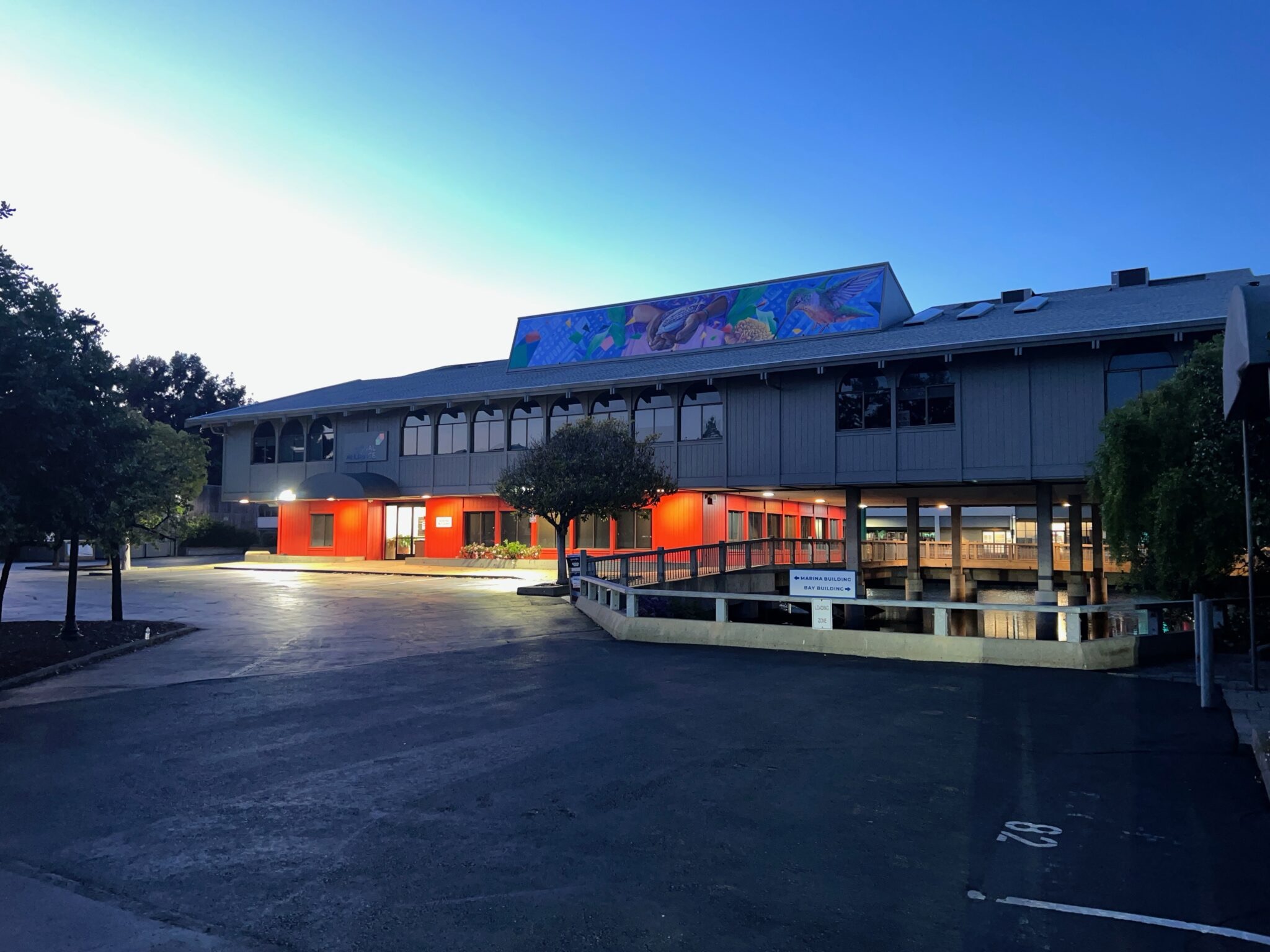
Fear and Adaptation in Marin’s Canal Community Amid ICE Enforcement
Alisa Higuera
For decades, the Canal has been home to immigrant and Latino families in Marin County; today, that vibrancy has disappeared.
In President Trump’s first year back in office, Immigration and Customs Enforcement (ICE) has removed nearly 3 million undocumented migrants, a 500% increase in comparison to Joe Biden’s first year of presidency, when 59,000 undocumented migrants were deported. Following policy changes in January of 2025, ICE can now legally conduct arrests and "at-large" removals directly at or near schools, medical facilities, and places of worship. Nationwide, protests against the mass deportation of undocumented migrants have taken place.
In areas with high populations of undocumented migrants, the effects of ICE’s crackdown are even clearer. The Bay Area is estimated to have nearly 300,000 undocumented residents. Marin County is home to an estimated 16,000 of these residents, who comprise 6% of the population.
Given the high population of undocumented residents, several organizations in Marin County have formed with goals that aim to provide immigrants with the necessary resources and assist in their pathway towards obtaining citizenship. One of these organizations is the Canal Alliance, a non-profit that provides free resources to the Canal community, including legal services, educational support, and basic amenities. Established in 1982, the Canal Alliance has supported Marin’s immigrant and Latino communities by aiding families. Anxiety has permeated so deeply into the community that these resources and people extending a helping hand often go underutilized.
For years, it was common to see groups of men gathered outside the San Rafael Home Depot in the early mornings, waiting for contractors to offer a day’s construction work. Lately, those same corners are noticeably emptier. Fear of ICE presence at known hiring spots has kept many from showing up at all, leaving what was once part of the neighborhood’s daily rhythm as a quiet reminder of danger. While Immigration and Customs Enforcement operates at a federal level, the effects of immigration enforcement are felt locally, in schools, clinics, and homes. For me, this was the first time I saw a federal policy have a tangible effect on my own life and on a community I’ve known for years.
Seeking to understand and bring awareness to these real-world effects, I’ve reached out to Sindy Guevara, the Outreach Coordinator at the Canal Alliance. I began by asking her how the community responded to the recent rise in immigration enforcement. Sindy, who worked at Canal Alliance before the Trump administration’s second term, said that the shift was immediately noticeable.
Widespread fear about confrontations with Immigration and Customs Enforcement has altered how community members interact with various institutions, creating avoidance with added stressors and inconveniences to an already strenuous life. Marin County has attempted to push back against the effects of federal immigration enforcement, namely by publicly declaring that ICE is prohibited from entering school campuses without a judicial warrant. Yet despite these efforts, worries persist. “Even if threats are not confirmed, parents will decide not to bring their kids that day. We’ve also had parents fill out paperwork arranging for someone else to pick up their kids from school for them. Some parents are also deciding ahead of time who would take care of their children if they were detained or deported,” Guevara explains.
There has also been a decline in community participation as a result of the spike in ICE activity in Marin, which has seen a sharp drop in in-person and outdoor events. Some choose to hold off on immigration applications until the end of President Trump’s term. Beyond this, she also describes a heavier emotional climate within the Canal Community, where people face the true possibility of losing their loved ones, friends, neighbors, and family to deportations. “There’s a lot of anxiety and fear,” she says. “Some community members isolate themselves. They keep to themselves if they don’t have a strong support system.” Despite all of this, Sindy explained how there is still a strong sense of solidarity. “Our biggest goal is to make resources available and to communicate,” she says. “There’s anger, too, from community members and allies, about how hard things feel right now.”
When asked what she wishes outsiders understood, Sindy pauses. “Immigration enforcement doesn’t just impact people in one way,” she says. “It touches everything: emotional health, finances, kids, education, and freedom. For families in the Canal, who have built their lives here from scratch decades ago, the story is not only one of fear, but of having the endurance and anger to continue surviving. Awareness, preparation, and community support have become quiet forms of resistance that fuel this anger against uncertainty. The policies may be national, but the consequences are deeply human, and therefore, so is the hope.
Alisa Higuera is a College of Marin student and writer focused on immigration and public policy.
In areas with high populations of undocumented migrants, the effects of ICE’s crackdown are even clearer. The Bay Area is estimated to have nearly 300,000 undocumented residents. Marin County is home to an estimated 16,000 of these residents, who comprise 6% of the population.
Given the high population of undocumented residents, several organizations in Marin County have formed with goals that aim to provide immigrants with the necessary resources and assist in their pathway towards obtaining citizenship. One of these organizations is the Canal Alliance, a non-profit that provides free resources to the Canal community, including legal services, educational support, and basic amenities. Established in 1982, the Canal Alliance has supported Marin’s immigrant and Latino communities by aiding families. Anxiety has permeated so deeply into the community that these resources and people extending a helping hand often go underutilized.
For years, it was common to see groups of men gathered outside the San Rafael Home Depot in the early mornings, waiting for contractors to offer a day’s construction work. Lately, those same corners are noticeably emptier. Fear of ICE presence at known hiring spots has kept many from showing up at all, leaving what was once part of the neighborhood’s daily rhythm as a quiet reminder of danger. While Immigration and Customs Enforcement operates at a federal level, the effects of immigration enforcement are felt locally, in schools, clinics, and homes. For me, this was the first time I saw a federal policy have a tangible effect on my own life and on a community I’ve known for years.
Seeking to understand and bring awareness to these real-world effects, I’ve reached out to Sindy Guevara, the Outreach Coordinator at the Canal Alliance. I began by asking her how the community responded to the recent rise in immigration enforcement. Sindy, who worked at Canal Alliance before the Trump administration’s second term, said that the shift was immediately noticeable.
Widespread fear about confrontations with Immigration and Customs Enforcement has altered how community members interact with various institutions, creating avoidance with added stressors and inconveniences to an already strenuous life. Marin County has attempted to push back against the effects of federal immigration enforcement, namely by publicly declaring that ICE is prohibited from entering school campuses without a judicial warrant. Yet despite these efforts, worries persist. “Even if threats are not confirmed, parents will decide not to bring their kids that day. We’ve also had parents fill out paperwork arranging for someone else to pick up their kids from school for them. Some parents are also deciding ahead of time who would take care of their children if they were detained or deported,” Guevara explains.
There has also been a decline in community participation as a result of the spike in ICE activity in Marin, which has seen a sharp drop in in-person and outdoor events. Some choose to hold off on immigration applications until the end of President Trump’s term. Beyond this, she also describes a heavier emotional climate within the Canal Community, where people face the true possibility of losing their loved ones, friends, neighbors, and family to deportations. “There’s a lot of anxiety and fear,” she says. “Some community members isolate themselves. They keep to themselves if they don’t have a strong support system.” Despite all of this, Sindy explained how there is still a strong sense of solidarity. “Our biggest goal is to make resources available and to communicate,” she says. “There’s anger, too, from community members and allies, about how hard things feel right now.”
When asked what she wishes outsiders understood, Sindy pauses. “Immigration enforcement doesn’t just impact people in one way,” she says. “It touches everything: emotional health, finances, kids, education, and freedom. For families in the Canal, who have built their lives here from scratch decades ago, the story is not only one of fear, but of having the endurance and anger to continue surviving. Awareness, preparation, and community support have become quiet forms of resistance that fuel this anger against uncertainty. The policies may be national, but the consequences are deeply human, and therefore, so is the hope.
Alisa Higuera is a College of Marin student and writer focused on immigration and public policy.
For more information:
https://themarinertimes.org/how-ice-is-aff...
Add Your Comments
We are 100% volunteer and depend on your participation to sustain our efforts!
Donate

$85.00 donated
in the past month
Get Involved
If you'd like to help with maintaining or developing the website, contact us.
Publish
Publish your stories and upcoming events on Indybay.
Topics
More
Search Indybay's Archives
Advanced Search
►
▼
IMC Network