







 Publish to Newswire
 Add an Event
From the Open-Publishing Calendar
From the Open-Publishing Newswire
Indybay Feature
USCT enlistees from California soon acknowledged and valued
1,918 USCT, enlisted from California soon validated and recognized. Colored soldiers served in artillery and infantry and performed all non-combat support functions that sustain an army as well. Colored carpenters, chaplains, cooks, guards, laborers, nurses, scouts, spies, steamboat pilots, surgeons, and teamsters also contributed to the war cause.
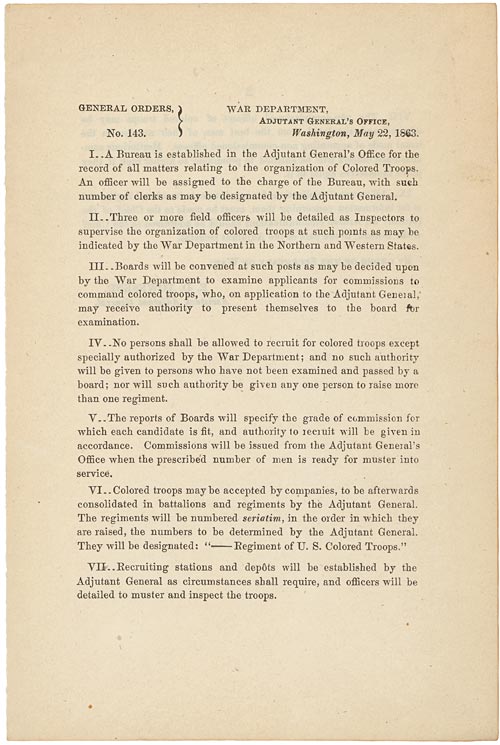
The War Department issued General Order 143 on May 22, 1863, creating the United States Colored Troops. By the end of the Civil War, roughly 179,000 Colored men (10 percent of the Union Army) served as soldiers in the U.S. Army, and another 19,000 served in the Navy.
The issues of emancipation and military service were intertwined from the onset of the Civil War. News that the Confederacy had attacked the U.S. garrison at Fort Sumter in Charleston, South Carolina – which began the Civil War in earnest – set off a rush by free Colored men to enlist in U.S. military units. They were turned away, however, because a 1792 federal law barred them from bearing arms for the U.S. Army. In Boston, disappointed would-be volunteers met and passed a resolution requesting that the government modify its laws to permit their enlistment.
President Lincoln's administration wrestled with the idea of authorizing the recruitment of Colored troops but was concerned that such a move would prompt the border states to secede.
When General John C. Frémont in Missouri and General David Hunter in South Carolina issued proclamations that emancipated enslaved people in their military regions and permitted them to enlist, their superiors sternly revoked their orders. By mid-1862, however, the government was pushed into reconsidering the ban because of the escalating number of formerly enslaved people coming over Union lines (referred to in the military as "contrabands"), the declining number of white volunteers, and the pressing personnel needs of the Union Army.
As a result, on July 17, 1862, Congress passed the Second Confiscation and Militia Act, freeing enslaved people whose enslavers were in the Confederate Army. Two days later, slavery was abolished in the territories of the United States; and on July 22, 1862, President Lincoln presented the preliminary draft of the Emancipation Proclamation to his Cabinet.
After the Union Army turned back Confederate General Robert E. Lee's first invasion of the North at Antietam, Maryland, and the Emancipation Proclamation was subsequently announced, Colored recruitment was pursued in earnest. Volunteers from South Carolina, Tennessee, and Massachusetts filled the first authorized Colored regiments. Recruitment was slow until Colored leaders such as Frederick Douglass encouraged Colored men to become soldiers to ensure eventual full citizenship. (Two of Douglass's own sons contributed to the war effort.) Volunteers began to respond; and in May 1863, the government established the Bureau of Colored Troops to manage the burgeoning numbers of Colored soldiers.
Nearly 40,000 Colored soldiers died over the course of the war—30,000 of infection or disease.
Colored soldiers served in artillery and infantry and performed all non-combat support functions that sustain an army as well. Colored carpenters, chaplains, cooks, guards, laborers, nurses, scouts, spies, steamboat pilots, surgeons, and teamsters also contributed to the war cause.
There were nearly 80 Colored commissioned officers. Colored women, who could not formally join the Army, nonetheless served as nurses, spies, and scouts, the most famous being
Harriet Tubman, who scouted for the 2nd South Carolina Volunteers.
The issues of emancipation and military service were intertwined from the onset of the Civil War. News that the Confederacy had attacked the U.S. garrison at Fort Sumter in Charleston, South Carolina – which began the Civil War in earnest – set off a rush by free Colored men to enlist in U.S. military units. They were turned away, however, because a 1792 federal law barred them from bearing arms for the U.S. Army. In Boston, disappointed would-be volunteers met and passed a resolution requesting that the government modify its laws to permit their enlistment.
President Lincoln's administration wrestled with the idea of authorizing the recruitment of Colored troops but was concerned that such a move would prompt the border states to secede.
When General John C. Frémont in Missouri and General David Hunter in South Carolina issued proclamations that emancipated enslaved people in their military regions and permitted them to enlist, their superiors sternly revoked their orders. By mid-1862, however, the government was pushed into reconsidering the ban because of the escalating number of formerly enslaved people coming over Union lines (referred to in the military as "contrabands"), the declining number of white volunteers, and the pressing personnel needs of the Union Army.
As a result, on July 17, 1862, Congress passed the Second Confiscation and Militia Act, freeing enslaved people whose enslavers were in the Confederate Army. Two days later, slavery was abolished in the territories of the United States; and on July 22, 1862, President Lincoln presented the preliminary draft of the Emancipation Proclamation to his Cabinet.
After the Union Army turned back Confederate General Robert E. Lee's first invasion of the North at Antietam, Maryland, and the Emancipation Proclamation was subsequently announced, Colored recruitment was pursued in earnest. Volunteers from South Carolina, Tennessee, and Massachusetts filled the first authorized Colored regiments. Recruitment was slow until Colored leaders such as Frederick Douglass encouraged Colored men to become soldiers to ensure eventual full citizenship. (Two of Douglass's own sons contributed to the war effort.) Volunteers began to respond; and in May 1863, the government established the Bureau of Colored Troops to manage the burgeoning numbers of Colored soldiers.
Nearly 40,000 Colored soldiers died over the course of the war—30,000 of infection or disease.
Colored soldiers served in artillery and infantry and performed all non-combat support functions that sustain an army as well. Colored carpenters, chaplains, cooks, guards, laborers, nurses, scouts, spies, steamboat pilots, surgeons, and teamsters also contributed to the war cause.
There were nearly 80 Colored commissioned officers. Colored women, who could not formally join the Army, nonetheless served as nurses, spies, and scouts, the most famous being
Harriet Tubman, who scouted for the 2nd South Carolina Volunteers.
For more information:
https://www.archives.gov/milestone-documen...
Add Your Comments
We are 100% volunteer and depend on your participation to sustain our efforts!
Donate

$110.00 donated
in the past month
Get Involved
If you'd like to help with maintaining or developing the website, contact us.
Publish
Publish your stories and upcoming events on Indybay.
Topics
More
Search Indybay's Archives
Advanced Search
►
▼
IMC Network