







 Publish to Newswire
 Add an Event
From the Open-Publishing Calendar
From the Open-Publishing Newswire
Indybay Feature
California
Central Valley
East Bay
North Coast
Environment & Forest Defense
Government & Elections
Racial Justice
CA Supreme Court denies review of appellate decision rejecting Delta Tunnel validation
The California Supreme Court’s denial of review of the Court of Appeal’s well-reasoned Opinion moves DWR even farther away from establishing a lawful means of financing its multi-billion dollar Delta Tunnel project than when it commenced its validation action nearly six years ago.
Attorneys Roger Moore and Thomas Keeling on April 20 reported a major legal victory in the battle by Tribes, fishing groups, family farmers, environmentalists, the City of Stockton, five Delta Counties in stopping the controversial Delta Tunnel from moving forward.
In a major milestone the prevailing attorneys described as a "victory for common sense, the Delta region, the environment, and ratepayers throughout California," the California Supreme Court has denied review of a landmark opinion issued by the Court of Appeal in the Sacramento-based Third Appellate District late last year.
The 45-mile underground tunnel - known as the Delta Conveyance Project by its advocates - would divert water from the Sacramento River near Clarksburg to facilitate the export of more water to Southern San Joaquin Valley agribusiness and Southern California water agencies. Tunnel opponents say the project would hasten the extinction of Sacramento River winter and spring-run Chinook salmon, Delta and longfin smelt, green sturgeon and other fish species, as well as imperil Delta, Tribal and environmental justice communities.
"That Court’s opinion, first issued on December 31, 2025 and finalized with minor modifications when rehearing was denied the next month, unanimously affirmed a trial court decision holding that the State Department of Water Resources (DWR) exceeded its authority when it approved bond resolutions to finance DWR’s proposed Delta tunnel," said Moore and Keeling in a press statement.
"The appellate decision was certified for publication except for a short section involving issues the Court of Appeal did not need to reach after invalidating DWR’s resolutions and revenue pledges" they continued. "That final decision is reported as Department of Water Resources v. Metropolitan Water District of So. Calif., et al. (2025) 117 Cal.App.5th 751 (Opinion)."
"Despite the title, Metropolitan Water District of Southern California was one of several water contractors unsuccessfully siding with DWR. The diverse array of agencies and groups that succeeded in opposing DWR included multiple counties, environmental, taxpayer, fisheries, and tribal organizations, and water contractors concerned about saddling ratepayers with escalating tunnel costs. When the California Supreme Court denied DWR’s petition for review on April 15, 2026, it also rejected DWR’s request to depublish the Third District’s comprehensive opinion, preserving it as preceden," Moore and Keeling stated.
The attorneys noted that this decision marks the third consecutive defeat for the Department of Water Resources to secure funding for the widely opposed project.
"The culmination of a legal battle spanning nearly six years, the decision of the state’s highest court to deny review is the third consecutive loss for DWR in this bond validation action for its conveyance-based 'Delta Program' first brought in August 2020. The state Supreme Court’s denial of review marks yet another major setback for DWR’s beleaguered multibillion dollar Delta Tunnel megaproject, known in its most recent version as the Delta Conveyance Project (DCP). The DCP still lacks an approved funding mechanism or any firm commitment of funding from the State Water Contractors,'' they stated.
In 2020, DWR unsuccessfully sought to validate detailed bond resolutions and pledges to collect revenue from water contractors, which would charge ratepayers for an uncapped amount of additional debt meant to finance DWR’s proposed Delta tunnel, according to the attorneys.
They noted that the DCP is the "latest in decades of unsuccessful attempts by DWR to build and finance a massive conveyance project to remove more freshwater from the water-scarce Sacramento-San Joaquin Delta, which California’s Legislature has described as “in crisis.” (Wat. Code, § 85001, subd. (a).)
Although California’s voters approved the original State Water Project in 1960, relying in part on state assurances of Delta protection, voters overwhelmingly rejected a predecessor Delta conveyance proposal, the Peripheral Canal, via statewide referendum in 1982. Other tunnel proposals also subsequently failed, Moore and Keeling pointed out.
''After two decades of disruptive construction, the DCP, if built, would divert up to half of the average flow of freshwater from the Sacramento River with massive new intakes near the town of Hood in the Sacramento-San Joaquin Delta, for export chiefly to portions of the South San Joaquin Valley and Southern California," they wrote. "DWR’s preliminary estimate of DCP costs was over $20 billion in 2023 dollars. Other expert testimony and reports, cited by tunnel critics in related proceedings, have warned that the DCP’s total costs could be far higher, with some estimates ranging up to $60 to 100 billion when predictable cost overruns and financing are included."
In late 2020, the Counties of San Joaquin, Contra Costa, Solano, Yolo, Butte, Plumas, and Sacramento, and related water agencies, answered DWR’s validation action and challenged DWR’s claimed authority to issue uncapped bonds to cover revenue bond debt for water conveyance facilities proposed for DWR’s amorphous “Delta Program.” Public agencies and public interest groups from throughout California, including the Howard Jarvis Taxpayers Association and prominent environmental organizations, also opposed DWR’s validation action, warning of major economic and environmental risk, Moore and Keeley continued.
In January 2024, following a four-day trial and extensive briefing, the Sacramento County Superior Court entered judgment against DWR, rejecting DWR’s claim to almost unlimited authority in such matters. Finding DWR exceeded its delegated authority, the court ruled that the Water Code "does not give DWR carte blanche to do as it wishes."
Because DWR’s case failed on this foundational defect, the court denied validation without even needing to reach more than ten other objections to validity, the attorneys noted.
'In its published opinion finalized in January 2026, the Court of Appeal rejected the appeal of DWR and several State Water Contractors supporting its positions, affirming the trial court’s judgment against DWR’s attempt to validate its bond resolutions and pledges of revenue for the Delta Tunnel. The California Supreme Court’s denial of review renders the Court of Appeal’s construction of California law final and binding, including its conclusion that even when DWR’s cited statutory powers are liberally construed, “DWR lacks the authority to approve a new State Water Project ‘unit’ under the guise of a ‘further modification’ of the Feather River Project.” (Opinion, p. 781.)
Attorneys for many of the Counties and agencies challenging DWR, Roger Moore and Thomas Keeling, drew on decades of experience addressing the interface between fiscal and environmental issues in state and federal water projects, including several prior unsuccessful isolated Delta conveyance proposals.
DWR “pulled out all the stops” in its gambit to pressure the state Supreme Court to take up its validation action, including the enlistment of high-profile outside counsel, said Keeling as he praised the appellate opinion as “clear, cogent and compelling." He described the state Supreme Court’s denial of review as a “wise rejection of a misguided attempt by DWR and other Delta tunnel proponents to acquire unchecked power exceeding the scope of DWR’s delegated authority.”
Noting that “the pivotal roles of the Delta and the watersheds supplying the State Water Project cannot be finessed away with clever nomenclature,” such as the vague “Delta Program” construct used in DWR’s failed bond resolutions, Moore described the outcome of DWR’s validation action as a “victory for transparency and accountability, which are needed now more than ever.”
In the end “the state’s highest court was not swayed by DWR’s misleading attempts in its Petition for Review to conflate the specific dangers posed by DWR’s bond resolutions with a virtual laundry list of other distinct issues surrounding the State Water Project," Moore stated.
Moore also noted that the Opinion "anticipated and debunked key claims later reworked unsuccessfully in DWR’s Petition for Review. Although DWR strained to portray the Opinion as an affront to its statutory role as manager of the State Water Project, the Opinion cited established precedent on that subject without revision."
Instead, the Court of Appeal properly focused on DWR’s self-inflicted errors which made its bond resolutions and revenue pledges incapable of validation. These included defining the “Delta Program” in its bond resolutions in a manner “so opaque and ill-defined as to afford DWR nearly unlimited discretion to specify the facilities for which the bonds will be issued.” (Opinion, p. 782.)
The Opinion left intact by the state Supreme Court identified several key problems with DWR’s assertion of virtually unlimited power to impose debt for new Delta conveyance facilities under the guise of a “modification” of the existing State Water Project, the attorneys observed.
First, the Opinion rejected DWR’s argument that it merely needed to demonstrate that its proposed Delta conveyance would serve a “primary” purpose of moving surplus water from north to south, regardless of whether it met other project objectives, such as those protecting the Delta. Rather, “the evidence shows that the project additionally was designed with the secondary objective of preserving and increasing water flows through the Delta to control salinity, protect fish and wildlife, and ‘firm’ the supply of surplus water available for export.” (Opinion, p. 782.)
Second, applying standard principles of statutory construction to Water Code 11260—the key provision from California’s Central Valley Project Act (CVPA) through which DWR claimed eligibility of its Delta conveyance for revenue bonds—the Opinion found that DWR’s amorphous, conveyance-based “Delta Program” failed as a “further modification” of the Feather River Project, the precursor to the current State Water Project which the Legislature had designated decades ago as a covered unit of the CVPA. The Court of Appeal agreed with the trial court that DWR’s “program” was “untethered” to that project’s “objectives, purposes, and effects.” (Opinion, pp. 783-785.)
Finally, the Opinion noted DWR’s avoidance of whether it even has authority to charge contractors “for the cost of the Delta program,” an ambiguity which left the primary method identified in its bond resolutions for repaying debt for a new conveyance mired in doubt. (Opinion, p. 786.) Because that authority was an “integral component” of DWR’s proposed bond financing, relegating it to separate and subsequent consideration would be at odds with central objectives of validation law. (Id.)
"In sum, the California Supreme Court’s denial of review of the Court of Appeal’s well-reasoned Opinion moves DWR even farther away from establishing a lawful means of financing its multi-billion dollar Delta Tunnel project than when it commenced its validation action nearly six years ago," Moore and Keeling concluded.
In a statement, Restore the Delta said the organization "is proud to have been part of the litigation, represented by attorney Robert Wright."
"The ruling reaffirms ongoing concerns about the environmental and financial risks of advancing the Delta Tunnel project without proper regulatory review, concerns shared by a broad coalition of counties, legislators, Tribes, community advocates, environmental organizations, and public interest groups," the group wrote.
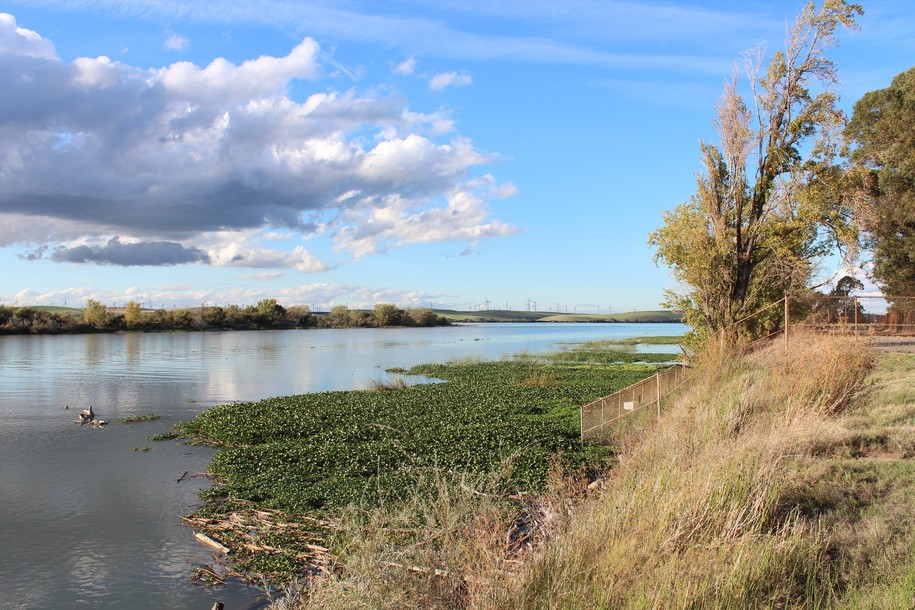
Photo: Sacramento River below Rio Vista. Photo by Dan Bacher.
In a major milestone the prevailing attorneys described as a "victory for common sense, the Delta region, the environment, and ratepayers throughout California," the California Supreme Court has denied review of a landmark opinion issued by the Court of Appeal in the Sacramento-based Third Appellate District late last year.
The 45-mile underground tunnel - known as the Delta Conveyance Project by its advocates - would divert water from the Sacramento River near Clarksburg to facilitate the export of more water to Southern San Joaquin Valley agribusiness and Southern California water agencies. Tunnel opponents say the project would hasten the extinction of Sacramento River winter and spring-run Chinook salmon, Delta and longfin smelt, green sturgeon and other fish species, as well as imperil Delta, Tribal and environmental justice communities.
"That Court’s opinion, first issued on December 31, 2025 and finalized with minor modifications when rehearing was denied the next month, unanimously affirmed a trial court decision holding that the State Department of Water Resources (DWR) exceeded its authority when it approved bond resolutions to finance DWR’s proposed Delta tunnel," said Moore and Keeling in a press statement.
"The appellate decision was certified for publication except for a short section involving issues the Court of Appeal did not need to reach after invalidating DWR’s resolutions and revenue pledges" they continued. "That final decision is reported as Department of Water Resources v. Metropolitan Water District of So. Calif., et al. (2025) 117 Cal.App.5th 751 (Opinion)."
"Despite the title, Metropolitan Water District of Southern California was one of several water contractors unsuccessfully siding with DWR. The diverse array of agencies and groups that succeeded in opposing DWR included multiple counties, environmental, taxpayer, fisheries, and tribal organizations, and water contractors concerned about saddling ratepayers with escalating tunnel costs. When the California Supreme Court denied DWR’s petition for review on April 15, 2026, it also rejected DWR’s request to depublish the Third District’s comprehensive opinion, preserving it as preceden," Moore and Keeling stated.
The attorneys noted that this decision marks the third consecutive defeat for the Department of Water Resources to secure funding for the widely opposed project.
"The culmination of a legal battle spanning nearly six years, the decision of the state’s highest court to deny review is the third consecutive loss for DWR in this bond validation action for its conveyance-based 'Delta Program' first brought in August 2020. The state Supreme Court’s denial of review marks yet another major setback for DWR’s beleaguered multibillion dollar Delta Tunnel megaproject, known in its most recent version as the Delta Conveyance Project (DCP). The DCP still lacks an approved funding mechanism or any firm commitment of funding from the State Water Contractors,'' they stated.
In 2020, DWR unsuccessfully sought to validate detailed bond resolutions and pledges to collect revenue from water contractors, which would charge ratepayers for an uncapped amount of additional debt meant to finance DWR’s proposed Delta tunnel, according to the attorneys.
They noted that the DCP is the "latest in decades of unsuccessful attempts by DWR to build and finance a massive conveyance project to remove more freshwater from the water-scarce Sacramento-San Joaquin Delta, which California’s Legislature has described as “in crisis.” (Wat. Code, § 85001, subd. (a).)
Although California’s voters approved the original State Water Project in 1960, relying in part on state assurances of Delta protection, voters overwhelmingly rejected a predecessor Delta conveyance proposal, the Peripheral Canal, via statewide referendum in 1982. Other tunnel proposals also subsequently failed, Moore and Keeling pointed out.
''After two decades of disruptive construction, the DCP, if built, would divert up to half of the average flow of freshwater from the Sacramento River with massive new intakes near the town of Hood in the Sacramento-San Joaquin Delta, for export chiefly to portions of the South San Joaquin Valley and Southern California," they wrote. "DWR’s preliminary estimate of DCP costs was over $20 billion in 2023 dollars. Other expert testimony and reports, cited by tunnel critics in related proceedings, have warned that the DCP’s total costs could be far higher, with some estimates ranging up to $60 to 100 billion when predictable cost overruns and financing are included."
In late 2020, the Counties of San Joaquin, Contra Costa, Solano, Yolo, Butte, Plumas, and Sacramento, and related water agencies, answered DWR’s validation action and challenged DWR’s claimed authority to issue uncapped bonds to cover revenue bond debt for water conveyance facilities proposed for DWR’s amorphous “Delta Program.” Public agencies and public interest groups from throughout California, including the Howard Jarvis Taxpayers Association and prominent environmental organizations, also opposed DWR’s validation action, warning of major economic and environmental risk, Moore and Keeley continued.
In January 2024, following a four-day trial and extensive briefing, the Sacramento County Superior Court entered judgment against DWR, rejecting DWR’s claim to almost unlimited authority in such matters. Finding DWR exceeded its delegated authority, the court ruled that the Water Code "does not give DWR carte blanche to do as it wishes."
Because DWR’s case failed on this foundational defect, the court denied validation without even needing to reach more than ten other objections to validity, the attorneys noted.
'In its published opinion finalized in January 2026, the Court of Appeal rejected the appeal of DWR and several State Water Contractors supporting its positions, affirming the trial court’s judgment against DWR’s attempt to validate its bond resolutions and pledges of revenue for the Delta Tunnel. The California Supreme Court’s denial of review renders the Court of Appeal’s construction of California law final and binding, including its conclusion that even when DWR’s cited statutory powers are liberally construed, “DWR lacks the authority to approve a new State Water Project ‘unit’ under the guise of a ‘further modification’ of the Feather River Project.” (Opinion, p. 781.)
Attorneys for many of the Counties and agencies challenging DWR, Roger Moore and Thomas Keeling, drew on decades of experience addressing the interface between fiscal and environmental issues in state and federal water projects, including several prior unsuccessful isolated Delta conveyance proposals.
DWR “pulled out all the stops” in its gambit to pressure the state Supreme Court to take up its validation action, including the enlistment of high-profile outside counsel, said Keeling as he praised the appellate opinion as “clear, cogent and compelling." He described the state Supreme Court’s denial of review as a “wise rejection of a misguided attempt by DWR and other Delta tunnel proponents to acquire unchecked power exceeding the scope of DWR’s delegated authority.”
Noting that “the pivotal roles of the Delta and the watersheds supplying the State Water Project cannot be finessed away with clever nomenclature,” such as the vague “Delta Program” construct used in DWR’s failed bond resolutions, Moore described the outcome of DWR’s validation action as a “victory for transparency and accountability, which are needed now more than ever.”
In the end “the state’s highest court was not swayed by DWR’s misleading attempts in its Petition for Review to conflate the specific dangers posed by DWR’s bond resolutions with a virtual laundry list of other distinct issues surrounding the State Water Project," Moore stated.
Moore also noted that the Opinion "anticipated and debunked key claims later reworked unsuccessfully in DWR’s Petition for Review. Although DWR strained to portray the Opinion as an affront to its statutory role as manager of the State Water Project, the Opinion cited established precedent on that subject without revision."
Instead, the Court of Appeal properly focused on DWR’s self-inflicted errors which made its bond resolutions and revenue pledges incapable of validation. These included defining the “Delta Program” in its bond resolutions in a manner “so opaque and ill-defined as to afford DWR nearly unlimited discretion to specify the facilities for which the bonds will be issued.” (Opinion, p. 782.)
The Opinion left intact by the state Supreme Court identified several key problems with DWR’s assertion of virtually unlimited power to impose debt for new Delta conveyance facilities under the guise of a “modification” of the existing State Water Project, the attorneys observed.
First, the Opinion rejected DWR’s argument that it merely needed to demonstrate that its proposed Delta conveyance would serve a “primary” purpose of moving surplus water from north to south, regardless of whether it met other project objectives, such as those protecting the Delta. Rather, “the evidence shows that the project additionally was designed with the secondary objective of preserving and increasing water flows through the Delta to control salinity, protect fish and wildlife, and ‘firm’ the supply of surplus water available for export.” (Opinion, p. 782.)
Second, applying standard principles of statutory construction to Water Code 11260—the key provision from California’s Central Valley Project Act (CVPA) through which DWR claimed eligibility of its Delta conveyance for revenue bonds—the Opinion found that DWR’s amorphous, conveyance-based “Delta Program” failed as a “further modification” of the Feather River Project, the precursor to the current State Water Project which the Legislature had designated decades ago as a covered unit of the CVPA. The Court of Appeal agreed with the trial court that DWR’s “program” was “untethered” to that project’s “objectives, purposes, and effects.” (Opinion, pp. 783-785.)
Finally, the Opinion noted DWR’s avoidance of whether it even has authority to charge contractors “for the cost of the Delta program,” an ambiguity which left the primary method identified in its bond resolutions for repaying debt for a new conveyance mired in doubt. (Opinion, p. 786.) Because that authority was an “integral component” of DWR’s proposed bond financing, relegating it to separate and subsequent consideration would be at odds with central objectives of validation law. (Id.)
"In sum, the California Supreme Court’s denial of review of the Court of Appeal’s well-reasoned Opinion moves DWR even farther away from establishing a lawful means of financing its multi-billion dollar Delta Tunnel project than when it commenced its validation action nearly six years ago," Moore and Keeling concluded.
In a statement, Restore the Delta said the organization "is proud to have been part of the litigation, represented by attorney Robert Wright."
"The ruling reaffirms ongoing concerns about the environmental and financial risks of advancing the Delta Tunnel project without proper regulatory review, concerns shared by a broad coalition of counties, legislators, Tribes, community advocates, environmental organizations, and public interest groups," the group wrote.
Photo: Sacramento River below Rio Vista. Photo by Dan Bacher.
Add Your Comments
We are 100% volunteer and depend on your participation to sustain our efforts!
Donate

$110.00 donated
in the past month
Get Involved
If you'd like to help with maintaining or developing the website, contact us.
Publish
Publish your stories and upcoming events on Indybay.
Topics
More
Search Indybay's Archives
Advanced Search
►
▼
IMC Network