







 Publish to Newswire
 Add an Event
From the Open-Publishing Calendar
From the Open-Publishing Newswire
Indybay Feature
Gaza: Is there light at the end of the tunnel for the West?
There will be no more life in the Gaza Strip: no more houses, schools, or hospitals rebuilt, because Israel cannot tolerate the memory of what it did. Equally brutal are the censorship and silence in the face of terror. Is there any redemption as long as Zionism exists?

Gaza: Is there light at the end of the tunnel for the West?
There will be no more life in the Gaza Strip: no more houses, schools, or hospitals rebuilt, because Israel cannot tolerate the memory of what it did. Equally brutal are the censorship and silence in the face of terror. Is there any redemption as long as Zionism exists?
By Wolfgang Streetk
March 25, 2026
//outraspalavras.net/
Books used by the author: Didier Fassin, Moral Abdication: How the World Failed to Stop the Destruction of Gaza, London, Verso, 2024, 128 pp. | Pankaj Mishra, The World After Gaza, London, Fern Press, 2025, 292 pp.
Will the destruction of Gaza and the extermination of its society end before it is fully completed? No, not if the Israeli government, the majority of its citizens, and the United States get what they want. Israel will never make peace with the Palestinian people, not in Gaza, not in Jerusalem, not in the West Bank.
As long as there are Palestinians between the river and the sea, they will be an obstacle for Israel, and the mission will not be accomplished. In fact, now, after two years of massacres and extermination, peace, whatever its terms, would be nothing less than a national catastrophe for Israel, a devastating defeat. Peace would have to end the blockade of Gaza, which has lasted for almost two decades, subsidized by four US presidents: Bush, Obama, Biden, and Trump. The inhabitants of the Gaza Strip would have to be freed from their open-air prison, and visitors would have to be allowed in. Many more images would emerge than have surfaced so far of a devastated landscape, where homes, schools, hospitals, churches, and universities suffered irreparable damage. Stories would be told of children without parents, of parents without children, of families without mothers or fathers, of emaciated, starving beings, crippled in body and soul.
Investigations would begin, and not just by the corrupt Palestinian Authority funded by Israel: witnesses would be heard, memories recorded, the facts reconstructed, the Israeli commanders responsible for the worst crimes identified, and genocide would cease to be a legal abstraction. The State of Israel would finally become a pariah state, as Germany would have been after 1945, had its American friends not needed a vassal ally against the Soviet Union, one that would also serve as a pretext for starting the Korean War. “Enjoy the war, peace will be terrible,” the Germans used to whisper to each other as the end of World War II approached.
There is no end in sight. The nightmare will continue, and will be allowed to continue, as long as there are Palestinians who refuse to be governed by individuals like Netanyahu. At the time of writing, Israel has captured more than half of the Gaza Strip, declaring it a “security zone” after depopulating it, under the auspices of the tacit agreement of the UN Security Council: the first installment of the Trump Organization’s real estate dream. What remained of the Strip was apparently divided in two by the Israeli army to keep it fragmented until the arrival of the Peace Council, led by Trump, with peace, in this case, being the objective of the ethnic cleansing carried out by various means. Meanwhile, the massacre in the West Bank continues with the support of a large majority of Israeli citizens, leaving thousands of Palestinians killed in the two years of the Gaza war by the army and the so-called free settlers, who act with total impunity, many of them American citizens, filled with nostalgia for having been born too late to participate in the wars against the Palestinian people.
In any case, if anything goes wrong, Israel is militarily invincible, thanks to the unwavering support of the United States and Germany, given that it has more than three hundred battle-ready fighter jets (Hamas: none), approximately fifty attack helicopters (Hamas: none), the air defense system known as Iron Dome (Hamas: nothing like it), two thousand two hundred battle tanks (Hamas: none), and at least one hundred and seventy Caterpillar D9 bulldozers (Hamas: none), transforming what is wrongly called war into a high-tech slaughter of a defenseless people, who are being bombed until they regress to the Stone Age. To this must be added the complete trinity of conventional nuclear warfare: land-based missiles, the entire array of fighter jets, bombers and surveillance aircraft, and nuclear submarines supplied by Germany, all complemented by the nuclear propaganda bomb consisting of accusations of anti-Semitism, which is truly effective, as Mishra and Fassin demonstrate in the books reviewed in this article, in the democracies of the northern hemisphere, where local supporters of Israel frequently use it.
With the unwavering support of the United States, the Israeli government can proceed with what most of its citizens consider its legitimate task: clearing Gaza of its own people. Two years after the start of the war, by the end of November 2025, according to Statista , 69,185 Gazans had been reported killed (according to information provided by the Hamas government in Gaza, which does not include the countless dead buried under the rubble of houses destroyed by Israeli bombers and bulldozers) and 170,698 wounded.[1] During the same period, information provided by the Israeli government indicates that, “following the start of ground operations in the Gaza Strip on October 27, 2023, 471 Israeli soldiers were killed in action,” representing fewer than twenty deaths per month and a casualty ratio of 1:147 relative to those inflicted on the Palestinian population—a very low price that makes the continuation of the war politically sustainable in Israel, even though its end is far off. According to various estimates, Hamas, which the German press stereotypically refers to as a “terrorist group,” still had a contingent of between 16,000 and 18,000 armed fighters when Trump’s peace plan was revealed, compared to the 20,000 or 30,000 it is believed to have had when the killings began.[2]
With or without Trump, Israel has no reason to accept any agreement short of the outright conquest of Palestine “from river to sea,” as long envisioned in Netanyahu’s party’s electoral platform. Unlike in the former Yugoslavia, the United States and its Western European allies see no “duty to protect” in Gaza—a celebrated American innovation introduced into international law in the 1990s—beyond the duty to protect Israel from being held accountable for its crimes. Should the situation become untenable for Israel, the Israeli elite knows that, to continue its killing spree, it could count on the world to be terrified by its “Samson Option”: the use of its nuclear arsenal to ensure that, if the Israeli state has to fall, all the other states surrounding it, particularly Iran and Lebanon, and perhaps also Egypt and Syria, Israel’s “gray zone,” will have to fall with it. In the unlikely event that its allies abandon it—for example, if continuing the war jeopardizes the fundamental interests of the class that finances American election campaigns—Israel might feel like the German government at the end of World War II, when it realized its only option was to cling to the hope of a miracle: “We have assumed such enormous guilt that we can only carry on; there is no turning back” (Heinrich Himmler, reportedly to a Norwegian diplomat in April 1945). The difference, of course, is that while Germany at that time did not have nuclear weapons, Israel did.
Thus, the destruction will continue—physically, institutionally, socially, and morally—in a scenario that, at this point, is almost irreparable. If this destruction ever ends, no one will know how to clear the rubble left by the bombings, nor how to rebuild the houses, hospitals, schools and universities, mosques and churches, streets and ports, sewers and water systems. (Trump's golf courses and country clubs could be reached by helicopter, while the Peace Board, in collaboration with the Gaza Humanitarian Foundation, could deliver water and food to a lucky few.) Where would the people of Gaza live in the meantime? Which country, in the name of the “international community,” would first organize the exodus and then the return, under the watchful eye of the Israel Defense Forces and their American allies? Who would pay for the orphanages, the homes for the disabled, the medical care for those who went mad in the bunkers and while searching for food for their families? The Germans will be busy for years financing their other war, in Ukraine, while their Israeli allies, and of course the United States, will surely not contribute a single penny to all these reparations resulting from the genocide.
After Gaza, therefore, Gaza will continue to exist, at least for the foreseeable future. Both Fassin and Mishra expect more massacres, more evictions, more famines, perhaps with occasional interruptions implemented as public relations stunts, punctuated by brief openings of the new, tighter borders imposed on Gaza to allow the entry of supplies just small enough to keep the population on the brink of starvation: all this cruel charade, feigning mercy, only to tighten the siege again, accompanied by the serial killings of farmers and herders by compulsive, murderous settlers in the West Bank and the construction of US-funded housing for Israeli settlers in East Jerusalem (not to mention the gleaming Trump hotels built in picturesque, heavily armed locations in Gaza, once cleared of their rough inhabitants), all this interspersed with occasional “humanitarian pauses” for the benefit of Western European governments, architects of airdrops of food from Bundeswehr planes, so that German news consumers can rest assured that the people of Gaza will not have to to die of hunger.
Although Fassin considers the Israeli left to be “crushed and inaudible” (pp. 89 ff.), that Western countries, trapped under the spell of antisemitic propaganda from their Israeli lobbies, will continue to “unconditionally support the Israeli government,” and that “the truly popular leader Marwan Barghouti, considered by many to be a possible negotiator and future president of the Palestinian Authority […] and sentenced to five life terms [served in Israeli concentration camps] will remain imprisoned, while no Israeli politician seems willing to consider the possibility of initiating talks” (p. 90), Fassin, even while aware of this grim panorama, ends his book, despite its admirable and sober realism, with a poem by a Palestinian poet written “shortly before his death, on December 7, 2023, in a targeted bombing of the apartment where he had taken refuge with his sister, who also died, as did his brother and four of his nephews and nieces” (p. 91)[3].
Of course, Gaza would not only need reparations after the Gaza tragedy, but Israel would also need them and, consequently, would have to learn to stop being a murderous state, although, unlike Germany in 1945, no one knows who could teach it to stop or how. In fact, for both Fassin and Mishra, the Israeli genocide, both in Gaza and in the Occupied Territories, is also a moral disaster for the West as a whole, which gave rise to Israel but has not known, nor does it know, how to educate it properly. Fassin's short book, brilliantly written and admirably concise (128 pages), documents and exposes everything necessary for readers to see beyond the double standards of Western governments and their political classes. Fassin focuses on this discourse, that is, on how this tortuous language was conceived to produce consent in the face of the quintessential crime against humanity of our time, and on how this discourse was constructed so that Western public opinion and citizens do not perceive or are aware of the slaughter taking place in Gaza, nor of the degree or manner in which this monstrous crime affects them.
Chapter 1 recaps the treatment given by Western narratives to Hamas’s attempt, on October 7, 2023, to end sixteen years of collective captivity; Chapter 2 deals with the strategic use of the concept of terrorism; Chapter 3 addresses the issue of genocide (“Words matter, especially when they have historical resonance, political significance, and legal implications,” p. 26); and Chapter 4 analyzes how the memory of murderous German antisemitism is “instrumentalized” to render unspeakable the indiscriminate killings and torture perpetrated by Israel. Chapter 5 details the rise of censorship in what used to be liberal democracies; Chapter 6 describes the silence of Western public voices on the effects of the multiple dehumanization to which the people of Gaza are subjected by a captivity that has lasted for decades; while Chapter 7 describes the systematic obfuscation in Western discourse of the ethnocolonialist purpose of the Israeli occupation of Gaza, East Jerusalem, and the West Bank. And Chapter 8 summarizes what Fassin means by “moral abdication”: the systematic corruption of words until they become insufficient to distinguish between good and evil. Here Fassin quotes (p. 88) Thucydides on the Peloponnesian War, who observed how, in the course of increasingly absurd destruction, “even the usual meaning of words in relation to actions was altered in the justifications to which these were subjected.” In the opinion of Fassin, an eminent social anthropologist and sociologist, it is precisely “these falsifications” that “justify [the imperative] for social scientists, with humility but with determination, to make their truth heard, however fragile it may be.”
As for Mishra, his book is also very well documented; see, in particular, the extensive chapters on Germany, “From Anti-Semitism to Philo-Semitism,” and on the United States, “The Americanization of the Holocaust.” But most relevantly, Mishra endeavors to explain to white Western opinion how Jews, long considered by whites to be profoundly non-white for all practical purposes, were invited to join their tormentors when, after 1945, they transformed Palestine into their nation-state, after these white exterminators had tried in vain to emulate whiteness in Western Europe by treating their Eastern European brethren as if they were people of color. Mishra situates the co-optation of Jews within the white Herrenrasse [dominant race] and the unprecedented economic and military support given by the latter to the State of Israel, not in a hypothetical sense of guilt on the part of white supremacists for what was done to the Jews for centuries, but in the decolonization politics of the 1950s and 1960s. Then, when white supremacy was on the verge of collapse, whites could use an ally to help stem the anti-colonial tide, especially in the Near East; an ally who, unlike the discredited settlers, could claim a historical and moral right, however fragile, to live and dominate where, as a people, they had been allowed to seek refuge after so much suffering.
Mishra’s book offers Western readers a glimpse into what observers in the Global South see and feel when contemplating the utter contempt with which Zionist settlers treated—and continue to treat—those whose lands they seized and continue to seize. For Mishra, this is indistinguishable from how European settlers in Africa kept local Africans behind apartheid fences and how they felt entitled, on the North American continent, to completely exterminate those who stood in their way and whom they considered Native Americans. From this perspective, any differences that may exist between Gaza and the Holocaust are less relevant, if any, than the identical role they play in legitimizing and defending white supremacy. In the final chapters of his book, Mishra, following in the footsteps of Edward Said, presents a remarkable outline of the worldview of what has been termed “postcolonial theory.” At its core lies the singular conquest and destruction of traditional non-white societies worldwide by white imperialism, armed with superior military technology and provided with well-known scientific evidence of the “racial” inferiority of their fellow humans of color, whom they had convinced were not human at all. (The author would have liked to find a few more references to capitalism, in addition to racism, as a driving force of Western expansion.) Mishra’s insistence on breaking with the narrow view of standard Western history is impressively scholarly, particularly regarding how the history and prehistory of antisemitism and pro-Israel stances fit into the modern era of violent, racist, and imperialist globalization. It is not necessary to accept all the controversial ramifications and exaggerations of postcolonial theory—although this reader, hitherto shamefully uninformed, has not found much to object to in Mishra's application of it to the case of Gaza—to recognize that social theory in the post-Gaza world will have to incorporate some of its central themes and ideas in order to be credible not only morally, but also academically.
Germany, Israel-s second most ardent supporter, might be, even more so than the United States, a prime location to investigate the post-1945 Western conversion from antisemitism to philosemitism. With its impassive equanimity in the face of rampant cruelty, its studied absence of moral emotion, the icy silence of its political and intellectual class—from journalists to professors, filmmakers and artists to writers, and even among students who grew up in Germany and wish to pursue their careers there—this country emerges once again as an extreme case of political imbalance. Both Mishra and I pay particular attention to the German version of state-sponsored “Israelmania.”[4]
However, what is happening in Germany today still requires profound understanding: the transition to a fanatical philosemitism identified as anti-Palestinian, which looks the other way with the same old moral indifference, the same opportunistic silence, the same ruthless cowardice. I will now address some of the factors I believe influence this situation, hoping that I may be forgiven for using Mishra and Fassin's excellent books as a pretext to speculate on some of the more terrifying peculiarities of my native country.
Notes on Gaza from Germany[5]
Germany is not the only place where traditional sources of social cohesion, collective identity, and political loyalty are weakening in the era of globalized neoliberalism, undermining institutions inherited from postwar democratic politics. Uncertainty about collective identity and economic security has been exacerbated by high levels of immigration, especially after the opening of Germany’s borders in 2015, the year Alternative for Germany (AfD) was founded . In response to immigration and the discontent it generated, center-right voices soon emerged advocating a more forceful insistence on and firmer enforcement of what, in the jargon of image consultants at the time, was called German Leitkultur —the “dominant culture” that defined Germanness, which immigrants were expected to respect, if not internalize, regardless of whether they wanted to be German or preferred not to be. The provisional lists of essentially German attitudes and practices kept changing, but they always included items that the Muslim community was expected to consider anti-Islamic, from children eating pork at school lunch to women walking the streets without a veil.
The increasingly authoritarian definitions of mainstream German culture also included the acceptance of a special, even intergenerational, responsibility for the Holocaust, which entailed a civic duty stemming from it, including support for the State of Israel’s “right to exist,” regardless of the borders it chose to establish. When, after October 7, 2023, young immigrants, particularly students, with Middle Eastern roots began to publicly express their solidarity with the victims of the Israeli occupation of Gaza, the German government, in line with the pro-Israel nationalist lobby , made it clear that mainstream German culture was binding not only on native Germans but also on immigrants, regardless of their origin, and that this would be enforced, if necessary, with the help of the police and the courts. As a precautionary measure, antisemitism, as defined in the “operational definition” of the International Holocaust Remembrance Association (IHRA), was effectively declared unconstitutional by a resolution of the Bundestag , which is not formally legislation and is therefore outside the jurisdiction of the Constitutional Court[6].
Subsequently, Israelkritik [criticism of Israel], which for a time was grudgingly tolerated as long as it was limited to the means and not the ends of the Israeli war, came to be generally redefined as antisemitic.[7] In effect, this turned anti-Islamism, and in particular anti-Palestinianism, into a welcome expression of anti-antisemitism, drawing a dividing line between good anti-antisemitic Germans and bad anti-German antisemitic Germans, whether or not they held a German passport. This not only established a near-canonical version of German civic culture, marked by the standard of the Staatsraison (State of the Nation), adherence to which can be, and indeed is, tested by questionnaires administered to those applying for German citizenship, but also fuels anti-Muslim and anti-immigrant sentiment among voters opposed to the arrival of migrant populations, as it promises to make Muslim immigration more difficult or less attractive, effectively instrumentalizing the Holocaust to reserve Deutschland den Deutschen (Germany for the Germans). While this version of German civic culture was designed to attract voters to Alternative for Germany , it actually helped this party replace the old anti-Semitism of the German right as a unifying social element of a German Volksgemeinschaft with a new anti-Muslimism, allowing this party, regardless of its ethnonationalist discourse, to present itself as a staunch supporter of Israel and of the German state's complicity with this country.
Alignment with a nationalist party like Alternative for Germany is not the only problem for German morality when defining support for Israel in Gaza as a fight against antisemitism. Deeper meanings and ambiguities come into play here, tormenting the German collective conscience in its struggle between memories of guilt and its yearning for redemption, which would be achieved through the institutionalization of the former. At the heart of all this lies the dogma of the uniqueness, the incomparability, of the Holocaust, which constitutes the most transcendent contribution of the philosopher Jürgen Habermas to German political culture. The idea arose during the so-called Historikerstreit (the “historians’ debate”), when in 1986 Habermas, a prominent figure before reunification, attacked the claim, then put forward by the historian Ernst Nolte, considered close to the bourgeois right and the new Chancellor Helmut Kohl, that the German Rassenmord [racial murder] of European Jews had somehow been a “causal reaction” of the German bourgeoisie to the Klassenmord [class murder] of the Bolsheviks during and after the October Revolution.[8] In Habermas’s view, by presenting the Holocaust as just another 20th-century state massacre, Nolte and those allied with him minimized and trivialized the German crime with the intention of diminishing or denying Germany’s persistent culpability as a nation, thereby paving the way for a more nationalistic and self-assured German foreign policy and abandoning its commitment to European integration. If the Holocaust were not considered categorically different from other extermination policies that various countries had practiced and continued to practice, the persistent German sense of guilt, which presumably served after World War II to delegitimize any claim to a German “national interest,” let alone German leadership in Europe, might vanish, and the “German question,” which had so destructively occupied the continent during the first half of the twentieth century, would once again become a reality.
Habermas’s prohibition against making comparisons soon became part of the set of informal and formal norms that regulate politically correct discourse in Germany.[9] Today, not only denying the Holocaust but also “disparaging” it ( verharmlosen ) is a crime in Germany, according to Section 130 of the Criminal Code, which deals with Volksverhetzung (public incitement to hatred). The language, repeatedly amended over the years, is so complex that it is virtually incomprehensible to non-lawyers and only intelligible to lawyers themselves. Essentially, Section 130 criminalizes (a) Holocaust denial, (b) lumping it together with other “normal” crimes, thereby denying its uniqueness, and (c) inciting hatred against someone by accusing them of committing a Holocaust-like act. As a result of this norm, any comparison in political rhetoric or professional historiography with, for example, the extermination of the two Japanese cities of Hiroshima and Nagasaki in 1945 (which were two to test competing models of nuclear bombs developed by the United States for their original use against Germany), with the prolonged napalm bombing of Vietnamese peasants, or with the bombing of Hamburg (“Operation Gomorrah”) in July 1943 by the British air force under “Bomber Harris”, is not only morally frivolous in Germany, which may well be the case, but also punishable by law, as it might reduce the Holocaust to a crime against humanity among others, perhaps because it is believed that this would somehow legitimize an alleged persistent German inclination towards racist mass murder[10]. Last but not least, this comparison may legally constitute defamation, with the defamed being those whose actions are compared to the Holocaust, if they are allies of Germany, and it may also constitute anti-Semitic defamation if the party compared and therefore defamed is the State of Israel[11].
In normal intellectual life, of course, comparison is the only way to empirically establish the nature of something, including its uniqueness. That which is forbidden to be compared is therefore assigned a priori to its own category, with N=1, governed by its own laws and principles, particular rather than universal, metaphysical in the sense that they are beyond the reach of the “physical” causalities and theories of this world, which makes their application a categorical error.[12] The taboo against what in current German legal and political jargon is called “relativization”[13] of the Holocaust, which consists of relating it to something else in order to understand it better—understanding in the sense of verstehende Soziologie [14]—also applies to the Hamas attack of October 7, 2023, which makes it blasphemous to causally relate this attack to a prehistory that includes, for example, sixteen years of blockade and hundreds of defenseless victims in the course of what in Israeli military jargon is called “mowing the lawn”[15], as Judith Butler discovered when, in response to her Relativierung , she was declared an anti-Semite in Germany[16].
The prohibition against “relativization” can also be used to justify the refusal to apply international law to the war waged by Israel against Gaza and the Palestinian population in general, and in fact, it is widely used for this purpose in Germany. If the Holocaust is unparalleled, then the Israeli-Likud claim to all of Palestine, which is ultimately a consequence of the Holocaust, must also be unparalleled. Consequently, the means employed by Israel to enforce this claim cannot be genocidal, since a state can only be accused of genocide if it is a state like all others, subject to the same rules. Israel, presented as the redemption of the Holocaust, cannot be subject to such rules, and demanding that it comply with them would amount to antisemitism. Therefore, an Israeli historian like Omer Bartov, who has dedicated his life to studying genocide in all its brutal forms, would risk being tried for anti-Semitism and going to prison in Germany if he were to publicly declare that his research has proven, as he himself states with horror, that Israel's war in Gaza is, in fact, a case of what he studied, namely, genocide.
An example of how, in the German mindset, the unique character of the Holocaust generates immunity for the State of Israel not only from German disapproval but also from international law, is the public statement issued by Jürgen Habermas, along with three others, entitled “Principles of Solidarity,” just over a month after October 7, 2023, when the Israeli destruction of Gaza was already well underway.[17] In it, Habermas speaks of a “Hamas attack that cannot be surpassed in cruelty” (“den an Grausamkeit nicht zu überbietenden Angriff der Hamas”; in his own English translation, the phrase is rendered, presumably for tactical reasons, as “Hamas’ unparalleled atrocity”), comparing this organization, albeit implicitly, to the Nazi sphere, so that what he calls “Israel’s response” cannot be as “cruel” as Hamas’s incitement. Habermas then declares that the “reprisal” is “justified in principle” without mentioning any international law that might limit it, immediately stating categorically that “despite all concern for the fate of the Palestinian population”—a concern nowhere to be found in his “principles of solidarity”—“the criteria for judgment vanish completely when genocidal intentions are attributed to Israel’s actions,” since these “in no way justify antisemitic reactions, especially in Germany” (let alone elsewhere?). Having identified the attribution of genocidal intentions as antisemitic, the statement concludes: “All those in our country who have cultivated antisemitic feelings and convictions under all sorts of pretexts and now see a propitious opportunity to express them without inhibition should pay attention to this.”
In fact, nowhere else have debates about whether the Israeli massacre in Gaza meets any legal definition of genocide been conducted with the same impassive sophistry as in Germany, as if it mattered much whether a massive, highly technological, and profoundly asymmetric killing of a defenseless population and the systematic destruction of its material living conditions is technically genocide or merely something bordering on it. Simple abductive reasoning—"if it looks like a duck, swims like a duck, and quacks like a duck, then it probably is a duck"—does not penetrate the fortifications of the German heart of stone, protected from emotion by a strange combination of Sachlichkeit [ objectivity] and cowardice. Especially when German raison d'état is at stake , there will always be a lawyer to issue a reassuring expert opinion, however odd; Germany has always had an abundance of compliant lawyers. One example of this is a prominent academic specializing in international law, co-director of an even more prestigious research institute specializing in this discipline. Along with other jurists, she represented Germany before the International Court of Justice, where the German state seemed to argue, unnecessarily, following Habermas's line of thought, that regardless of what was happening in Gaza, it was not and could not be genocide. One of the reasons why this should be the case was later argued by this scholar in an article published in the Frankfurter Allgemeine Zeitung , co-authored with an Israeli colleague.[18] The article stated that, while it was true that the main ministers of the Israeli government had publicly expressed their firm intention to exterminate the population of Gaza through bombing and starvation, it should be taken into account that the Israeli army, which after all insists on being “the most ethical army in the world,” was known for refusing orders that violated the humanitarian law of war. I quote verbatim: “In practice, Israel’s war tactics and specific operations are determined almost exclusively by the army. There are indications (!) that the army takes its obligation to comply with international humanitarian law very seriously. Moreover, the activities of the Israeli army are not determined solely by the orders of its generals. A characteristic element of the culture of the Israel Defense Forces (IDF) is the broad discretion granted to commanders and lower-ranking soldiers. An attack against civilian infrastructure is subject to a chain of approvals, but, in fact, the final decision rests with the soldiers on the ground”[19].
Israel’s war against the people of Gaza (for Habermas, simply a “population”) has left and continues to leave ruins everywhere, certainly in Gaza itself, where it is estimated that clearing the rubble alone will take a decade or more, but also in Israel, whose citizens have already begun to flee the country en masse. The same is true of the countries that continue to help Israel perpetrate and legitimize its genocide in Gaza, countries where it is urgent to restore a sense of public integrity and political morality, while it is still possible; and of the institutions of international law, which will be so necessary now that the world aspires to a new multipolar order.[20] Many more books will be written, and must be written, about the “world after Gaza.” But whatever that world may be, when it perhaps materializes, Gaza will always be part of it, like the colonies and the slave economy of the Enlightenment, like Auschwitz and Warsaw, like Hiroshima and Nagasaki, like Vietnam and all those other sites of large-scale mass murder that so often make us despair of ourselves.
Notes
[1] On November 25, 2025, the Max Planck Society, Germany’s leading non-university institutional network dedicated to basic research, published on its website a study conducted by its Institute for Demographic Research (“Gaza: A study reveals unprecedented loss of life and a fall in life expectancy”). Using sophisticated estimation techniques, the research team concluded that “the actual number of violent deaths [from the Gaza war] likely exceeds 100,000,” with estimates ranging from 100,000 to 112,000 (Gómez-Ugarte et al., 2025). The study, and the fact that the Max Planck Society obviously could not avoid publishing this report, are all the more relevant given that this institution dismissed an Australian visiting professor in October 2023 for privately expressing satisfaction with the escape from the Hamas-run open-air prison in Gaza.
[2] Given its remarkable resilience, it seems justifiable to conclude that Hamas continues to enjoy widespread support among the population of Gaza. On October 30, 2025, the Frankfurter Allgemeine Zeitung reported on a survey conducted among the inhabitants of Gaza, with impressive methodological sophistication, which found that popular support for Hamas increased during the two years of the Israeli genocidal campaign (“Hamas remains the strongest force among Palestinians,” p. 5). For example, the study found that 69 percent of the Palestinian population in Gaza and the West Bank opposed Hamas disarmament (87 percent in the West Bank and 55 percent in the Gaza Strip); only 29 percent overall were in favor of disarmament.
[3] Barghouti was not among the two thousand Palestinians released on October 13, 2015, from the “administrative detention” imposed by Israel—that is, from the indefinite imprisonment without trial stipulated in the first phase of Trump’s “Peace Plan.” Of course, the Plan does not foresee any role for the enemy, except that it surrender its weapons and thus allow the Israel Defense Forces to kill it.
[4] On the same topic, see Andersen et al. (2024), della Porta (2024; 2025a, 2025b), Friese (2024), Gysi (2016), Kundnani (2025) and Tübner-Hansen (2024a and 2025b).
[5] As I realized after finishing this manuscript, much of what I say here coincides with Omer Bartov's recent essay, “Wir haben nichts gewusst”, Berlin Review, October 10, 2025.
[6] A mere resolution of the Bundestag is, technically, nothing more than a declaration, meaning it is not legally binding on anyone. However, given the workings of German politics, particularly through the mechanism of pre-obedience, in practice it functions as if it were formal legislation, which is not subject to judicial review. On the German courts' "bureaucratic manufacturing of consent" (Chomsky), see my article on the Bundesamt für Verfassungsschutz [German Federal Office for the Protection of the Constitution] published in the London Review of Books (2024).
[7] Whether the IHRA definition confirms this is debatable, but irrelevant: German public institutions and private organizations interpret it this way and require citizens to do the same.
[8] For an English compilation of the central texts of the “historians’ debate”, see Knowlton and Cates (1993).
[9] For an interesting perspective on “Habermas as the quintessential ethnic thinker”, see Irfan Ahmad (2025). Also from a “postcolonial” perspective, see Saffari and Shabani (2025).
[10] Mentioning other victims of the Nazi-German extermination machine alongside the Holocaust is permitted by law, but it is not done in a civilized social setting. German memory culture, to this day, simply does not take into account the 2.8 million non-Jewish Polish civilians who were murdered under German occupation, in addition to the 3 million Polish Jews. (This is one of the reasons why relations between Germany and Poland remain so poor to this day, despite both countries being members of the European Union.) The situation is even worse with regard to the 13–15 million non-combatant citizens of the Soviet Union (of whom 2.7 million are considered Jewish) who were murdered by the Wehrmacht and SS behind the front lines, and the approximately 4 million Red Army soldiers who died in German POW camps (more than half of all Soviet POWs) and as slave labor employed in German factories. When Germany commemorates the Nazi genocide, something it does several times a year, it commemorates exclusively the Holocaust, which is the first thing that comes to mind for the public, a circumstance that, in a frankly strange way, ends up diminishing the unique and horrifying dimension of the indiscriminate killing perpetrated by the German Nazis.
[11] There is no data on how frequently Article 130 is invoked in criminal proceedings, but to serve its purpose, it may be sufficient for it to simply exist.
[12] Indeed, a sacrilege. The religious connotations are evident. When Moses asked God his name, the answer was “I am who I am,” meaning that God is unique. From this derives the prohibition against imitating God, that is, against doing anything that pretends to be like him, even though nothing can be. Failure to comply with this commandment constitutes a crime of lèse-majesté: “For I, the Lord your God, am a jealous God.” The German intellectual insists that the Holocaust is and will remain the supreme human crime par excellence, unparalleled.
[13] Relativierung, as in: “den Holocaust relativieren”: relativize as opposed to absolutize in the sense of separating from the context or singularizing, which is what is required.
[14] Commonly known as interpretive sociology.
[15] Technical term used by the Israeli army to refer to the systematic killing of people in Gaza suspected of being or becoming leaders of a future uprising, using precision missiles, drones or targeted bombings.
[16] However, it is not a punishable offense to place the Hamas prison break of October 7, 2023, in the same category as the Holocaust, something that Israeli and German politicians and journalists constantly do when they stereotypically describe October 7 as “the biggest mass murder of Jews since the Holocaust,” turning it into a Nazi-style killing of Jews simply because they were Jewish.
[17] “Principles of solidarity”, Frankfurter Allgemeine Zeitung, November 13, 2023.
[18] “Attack on Israel: What does genocide mean here?”, Frankfurter Allgemeine Zeitung, 30 de enero de 2024.
[19] My own translation. Compare this with the numerous international press reports on atrocities committed by the Israel Defense Forces, including the systematic torture of prisoners, some of which Fassin cites, chap. 4, pp. 37-45. More are appearing every day, including videos recorded by soldiers of their massacres and proudly displayed on TikTok. In this context, it is worth highlighting the article published in The New Yorker on April 25, 2025, about American military lawyers collaborating with the IDF legal department to learn how to lower current standards of international humanitarian law. See Colin Jones, “What’s Legally Permissible in War? How American Military Lawyers View Israel’s Invasion of Gaza—and the Public Reaction to It—As a Dress Rehearsal for a Potential Conflict with a Foreign Power Like China.” Apparently, the Americans intend to learn from the IDF how to argue “that the laws of war are far more permissive than many [lawyers] and the public seem to appreciate.” According to the article, “Gaza not only looks like a dress rehearsal for the kind of combat that US soldiers might face,” the successful execution of which would require less stringent legal standards, but it could also serve as “a test of the American public’s tolerance for the levels of death and destruction that this type of warfare entails.” What comes to mind here is not so much China as a country like Venezuela, the target of a US invasion launched to eradicate “narco-terrorists.”
[20] However, the UN's approval of Trump's "Peace Plan" for Palestine sets a terrible precedent.
Source: https://outraspalavras.net/crise-civilizatoria/gaza-luz-no-fim-do-tunel-para-o-ocidente/
https://redlatinasinfronteras.wordpress.com/2026/03/26/palestina-continuidad-de-las-masacres-y-el-terrorismo-gazasionista/
Forwarded by Red Latina sin fronteras
https://mastodon.bida.im/@RedLatinasinfronteras
enred_sinfronteras [at] riseup.net
There will be no more life in the Gaza Strip: no more houses, schools, or hospitals rebuilt, because Israel cannot tolerate the memory of what it did. Equally brutal are the censorship and silence in the face of terror. Is there any redemption as long as Zionism exists?
By Wolfgang Streetk
March 25, 2026
//outraspalavras.net/
Books used by the author: Didier Fassin, Moral Abdication: How the World Failed to Stop the Destruction of Gaza, London, Verso, 2024, 128 pp. | Pankaj Mishra, The World After Gaza, London, Fern Press, 2025, 292 pp.
Will the destruction of Gaza and the extermination of its society end before it is fully completed? No, not if the Israeli government, the majority of its citizens, and the United States get what they want. Israel will never make peace with the Palestinian people, not in Gaza, not in Jerusalem, not in the West Bank.
As long as there are Palestinians between the river and the sea, they will be an obstacle for Israel, and the mission will not be accomplished. In fact, now, after two years of massacres and extermination, peace, whatever its terms, would be nothing less than a national catastrophe for Israel, a devastating defeat. Peace would have to end the blockade of Gaza, which has lasted for almost two decades, subsidized by four US presidents: Bush, Obama, Biden, and Trump. The inhabitants of the Gaza Strip would have to be freed from their open-air prison, and visitors would have to be allowed in. Many more images would emerge than have surfaced so far of a devastated landscape, where homes, schools, hospitals, churches, and universities suffered irreparable damage. Stories would be told of children without parents, of parents without children, of families without mothers or fathers, of emaciated, starving beings, crippled in body and soul.
Investigations would begin, and not just by the corrupt Palestinian Authority funded by Israel: witnesses would be heard, memories recorded, the facts reconstructed, the Israeli commanders responsible for the worst crimes identified, and genocide would cease to be a legal abstraction. The State of Israel would finally become a pariah state, as Germany would have been after 1945, had its American friends not needed a vassal ally against the Soviet Union, one that would also serve as a pretext for starting the Korean War. “Enjoy the war, peace will be terrible,” the Germans used to whisper to each other as the end of World War II approached.
There is no end in sight. The nightmare will continue, and will be allowed to continue, as long as there are Palestinians who refuse to be governed by individuals like Netanyahu. At the time of writing, Israel has captured more than half of the Gaza Strip, declaring it a “security zone” after depopulating it, under the auspices of the tacit agreement of the UN Security Council: the first installment of the Trump Organization’s real estate dream. What remained of the Strip was apparently divided in two by the Israeli army to keep it fragmented until the arrival of the Peace Council, led by Trump, with peace, in this case, being the objective of the ethnic cleansing carried out by various means. Meanwhile, the massacre in the West Bank continues with the support of a large majority of Israeli citizens, leaving thousands of Palestinians killed in the two years of the Gaza war by the army and the so-called free settlers, who act with total impunity, many of them American citizens, filled with nostalgia for having been born too late to participate in the wars against the Palestinian people.
In any case, if anything goes wrong, Israel is militarily invincible, thanks to the unwavering support of the United States and Germany, given that it has more than three hundred battle-ready fighter jets (Hamas: none), approximately fifty attack helicopters (Hamas: none), the air defense system known as Iron Dome (Hamas: nothing like it), two thousand two hundred battle tanks (Hamas: none), and at least one hundred and seventy Caterpillar D9 bulldozers (Hamas: none), transforming what is wrongly called war into a high-tech slaughter of a defenseless people, who are being bombed until they regress to the Stone Age. To this must be added the complete trinity of conventional nuclear warfare: land-based missiles, the entire array of fighter jets, bombers and surveillance aircraft, and nuclear submarines supplied by Germany, all complemented by the nuclear propaganda bomb consisting of accusations of anti-Semitism, which is truly effective, as Mishra and Fassin demonstrate in the books reviewed in this article, in the democracies of the northern hemisphere, where local supporters of Israel frequently use it.
With the unwavering support of the United States, the Israeli government can proceed with what most of its citizens consider its legitimate task: clearing Gaza of its own people. Two years after the start of the war, by the end of November 2025, according to Statista , 69,185 Gazans had been reported killed (according to information provided by the Hamas government in Gaza, which does not include the countless dead buried under the rubble of houses destroyed by Israeli bombers and bulldozers) and 170,698 wounded.[1] During the same period, information provided by the Israeli government indicates that, “following the start of ground operations in the Gaza Strip on October 27, 2023, 471 Israeli soldiers were killed in action,” representing fewer than twenty deaths per month and a casualty ratio of 1:147 relative to those inflicted on the Palestinian population—a very low price that makes the continuation of the war politically sustainable in Israel, even though its end is far off. According to various estimates, Hamas, which the German press stereotypically refers to as a “terrorist group,” still had a contingent of between 16,000 and 18,000 armed fighters when Trump’s peace plan was revealed, compared to the 20,000 or 30,000 it is believed to have had when the killings began.[2]
With or without Trump, Israel has no reason to accept any agreement short of the outright conquest of Palestine “from river to sea,” as long envisioned in Netanyahu’s party’s electoral platform. Unlike in the former Yugoslavia, the United States and its Western European allies see no “duty to protect” in Gaza—a celebrated American innovation introduced into international law in the 1990s—beyond the duty to protect Israel from being held accountable for its crimes. Should the situation become untenable for Israel, the Israeli elite knows that, to continue its killing spree, it could count on the world to be terrified by its “Samson Option”: the use of its nuclear arsenal to ensure that, if the Israeli state has to fall, all the other states surrounding it, particularly Iran and Lebanon, and perhaps also Egypt and Syria, Israel’s “gray zone,” will have to fall with it. In the unlikely event that its allies abandon it—for example, if continuing the war jeopardizes the fundamental interests of the class that finances American election campaigns—Israel might feel like the German government at the end of World War II, when it realized its only option was to cling to the hope of a miracle: “We have assumed such enormous guilt that we can only carry on; there is no turning back” (Heinrich Himmler, reportedly to a Norwegian diplomat in April 1945). The difference, of course, is that while Germany at that time did not have nuclear weapons, Israel did.
Thus, the destruction will continue—physically, institutionally, socially, and morally—in a scenario that, at this point, is almost irreparable. If this destruction ever ends, no one will know how to clear the rubble left by the bombings, nor how to rebuild the houses, hospitals, schools and universities, mosques and churches, streets and ports, sewers and water systems. (Trump's golf courses and country clubs could be reached by helicopter, while the Peace Board, in collaboration with the Gaza Humanitarian Foundation, could deliver water and food to a lucky few.) Where would the people of Gaza live in the meantime? Which country, in the name of the “international community,” would first organize the exodus and then the return, under the watchful eye of the Israel Defense Forces and their American allies? Who would pay for the orphanages, the homes for the disabled, the medical care for those who went mad in the bunkers and while searching for food for their families? The Germans will be busy for years financing their other war, in Ukraine, while their Israeli allies, and of course the United States, will surely not contribute a single penny to all these reparations resulting from the genocide.
After Gaza, therefore, Gaza will continue to exist, at least for the foreseeable future. Both Fassin and Mishra expect more massacres, more evictions, more famines, perhaps with occasional interruptions implemented as public relations stunts, punctuated by brief openings of the new, tighter borders imposed on Gaza to allow the entry of supplies just small enough to keep the population on the brink of starvation: all this cruel charade, feigning mercy, only to tighten the siege again, accompanied by the serial killings of farmers and herders by compulsive, murderous settlers in the West Bank and the construction of US-funded housing for Israeli settlers in East Jerusalem (not to mention the gleaming Trump hotels built in picturesque, heavily armed locations in Gaza, once cleared of their rough inhabitants), all this interspersed with occasional “humanitarian pauses” for the benefit of Western European governments, architects of airdrops of food from Bundeswehr planes, so that German news consumers can rest assured that the people of Gaza will not have to to die of hunger.
Although Fassin considers the Israeli left to be “crushed and inaudible” (pp. 89 ff.), that Western countries, trapped under the spell of antisemitic propaganda from their Israeli lobbies, will continue to “unconditionally support the Israeli government,” and that “the truly popular leader Marwan Barghouti, considered by many to be a possible negotiator and future president of the Palestinian Authority […] and sentenced to five life terms [served in Israeli concentration camps] will remain imprisoned, while no Israeli politician seems willing to consider the possibility of initiating talks” (p. 90), Fassin, even while aware of this grim panorama, ends his book, despite its admirable and sober realism, with a poem by a Palestinian poet written “shortly before his death, on December 7, 2023, in a targeted bombing of the apartment where he had taken refuge with his sister, who also died, as did his brother and four of his nephews and nieces” (p. 91)[3].
Of course, Gaza would not only need reparations after the Gaza tragedy, but Israel would also need them and, consequently, would have to learn to stop being a murderous state, although, unlike Germany in 1945, no one knows who could teach it to stop or how. In fact, for both Fassin and Mishra, the Israeli genocide, both in Gaza and in the Occupied Territories, is also a moral disaster for the West as a whole, which gave rise to Israel but has not known, nor does it know, how to educate it properly. Fassin's short book, brilliantly written and admirably concise (128 pages), documents and exposes everything necessary for readers to see beyond the double standards of Western governments and their political classes. Fassin focuses on this discourse, that is, on how this tortuous language was conceived to produce consent in the face of the quintessential crime against humanity of our time, and on how this discourse was constructed so that Western public opinion and citizens do not perceive or are aware of the slaughter taking place in Gaza, nor of the degree or manner in which this monstrous crime affects them.
Chapter 1 recaps the treatment given by Western narratives to Hamas’s attempt, on October 7, 2023, to end sixteen years of collective captivity; Chapter 2 deals with the strategic use of the concept of terrorism; Chapter 3 addresses the issue of genocide (“Words matter, especially when they have historical resonance, political significance, and legal implications,” p. 26); and Chapter 4 analyzes how the memory of murderous German antisemitism is “instrumentalized” to render unspeakable the indiscriminate killings and torture perpetrated by Israel. Chapter 5 details the rise of censorship in what used to be liberal democracies; Chapter 6 describes the silence of Western public voices on the effects of the multiple dehumanization to which the people of Gaza are subjected by a captivity that has lasted for decades; while Chapter 7 describes the systematic obfuscation in Western discourse of the ethnocolonialist purpose of the Israeli occupation of Gaza, East Jerusalem, and the West Bank. And Chapter 8 summarizes what Fassin means by “moral abdication”: the systematic corruption of words until they become insufficient to distinguish between good and evil. Here Fassin quotes (p. 88) Thucydides on the Peloponnesian War, who observed how, in the course of increasingly absurd destruction, “even the usual meaning of words in relation to actions was altered in the justifications to which these were subjected.” In the opinion of Fassin, an eminent social anthropologist and sociologist, it is precisely “these falsifications” that “justify [the imperative] for social scientists, with humility but with determination, to make their truth heard, however fragile it may be.”
As for Mishra, his book is also very well documented; see, in particular, the extensive chapters on Germany, “From Anti-Semitism to Philo-Semitism,” and on the United States, “The Americanization of the Holocaust.” But most relevantly, Mishra endeavors to explain to white Western opinion how Jews, long considered by whites to be profoundly non-white for all practical purposes, were invited to join their tormentors when, after 1945, they transformed Palestine into their nation-state, after these white exterminators had tried in vain to emulate whiteness in Western Europe by treating their Eastern European brethren as if they were people of color. Mishra situates the co-optation of Jews within the white Herrenrasse [dominant race] and the unprecedented economic and military support given by the latter to the State of Israel, not in a hypothetical sense of guilt on the part of white supremacists for what was done to the Jews for centuries, but in the decolonization politics of the 1950s and 1960s. Then, when white supremacy was on the verge of collapse, whites could use an ally to help stem the anti-colonial tide, especially in the Near East; an ally who, unlike the discredited settlers, could claim a historical and moral right, however fragile, to live and dominate where, as a people, they had been allowed to seek refuge after so much suffering.
Mishra’s book offers Western readers a glimpse into what observers in the Global South see and feel when contemplating the utter contempt with which Zionist settlers treated—and continue to treat—those whose lands they seized and continue to seize. For Mishra, this is indistinguishable from how European settlers in Africa kept local Africans behind apartheid fences and how they felt entitled, on the North American continent, to completely exterminate those who stood in their way and whom they considered Native Americans. From this perspective, any differences that may exist between Gaza and the Holocaust are less relevant, if any, than the identical role they play in legitimizing and defending white supremacy. In the final chapters of his book, Mishra, following in the footsteps of Edward Said, presents a remarkable outline of the worldview of what has been termed “postcolonial theory.” At its core lies the singular conquest and destruction of traditional non-white societies worldwide by white imperialism, armed with superior military technology and provided with well-known scientific evidence of the “racial” inferiority of their fellow humans of color, whom they had convinced were not human at all. (The author would have liked to find a few more references to capitalism, in addition to racism, as a driving force of Western expansion.) Mishra’s insistence on breaking with the narrow view of standard Western history is impressively scholarly, particularly regarding how the history and prehistory of antisemitism and pro-Israel stances fit into the modern era of violent, racist, and imperialist globalization. It is not necessary to accept all the controversial ramifications and exaggerations of postcolonial theory—although this reader, hitherto shamefully uninformed, has not found much to object to in Mishra's application of it to the case of Gaza—to recognize that social theory in the post-Gaza world will have to incorporate some of its central themes and ideas in order to be credible not only morally, but also academically.
Germany, Israel-s second most ardent supporter, might be, even more so than the United States, a prime location to investigate the post-1945 Western conversion from antisemitism to philosemitism. With its impassive equanimity in the face of rampant cruelty, its studied absence of moral emotion, the icy silence of its political and intellectual class—from journalists to professors, filmmakers and artists to writers, and even among students who grew up in Germany and wish to pursue their careers there—this country emerges once again as an extreme case of political imbalance. Both Mishra and I pay particular attention to the German version of state-sponsored “Israelmania.”[4]
However, what is happening in Germany today still requires profound understanding: the transition to a fanatical philosemitism identified as anti-Palestinian, which looks the other way with the same old moral indifference, the same opportunistic silence, the same ruthless cowardice. I will now address some of the factors I believe influence this situation, hoping that I may be forgiven for using Mishra and Fassin's excellent books as a pretext to speculate on some of the more terrifying peculiarities of my native country.
Notes on Gaza from Germany[5]
Germany is not the only place where traditional sources of social cohesion, collective identity, and political loyalty are weakening in the era of globalized neoliberalism, undermining institutions inherited from postwar democratic politics. Uncertainty about collective identity and economic security has been exacerbated by high levels of immigration, especially after the opening of Germany’s borders in 2015, the year Alternative for Germany (AfD) was founded . In response to immigration and the discontent it generated, center-right voices soon emerged advocating a more forceful insistence on and firmer enforcement of what, in the jargon of image consultants at the time, was called German Leitkultur —the “dominant culture” that defined Germanness, which immigrants were expected to respect, if not internalize, regardless of whether they wanted to be German or preferred not to be. The provisional lists of essentially German attitudes and practices kept changing, but they always included items that the Muslim community was expected to consider anti-Islamic, from children eating pork at school lunch to women walking the streets without a veil.
The increasingly authoritarian definitions of mainstream German culture also included the acceptance of a special, even intergenerational, responsibility for the Holocaust, which entailed a civic duty stemming from it, including support for the State of Israel’s “right to exist,” regardless of the borders it chose to establish. When, after October 7, 2023, young immigrants, particularly students, with Middle Eastern roots began to publicly express their solidarity with the victims of the Israeli occupation of Gaza, the German government, in line with the pro-Israel nationalist lobby , made it clear that mainstream German culture was binding not only on native Germans but also on immigrants, regardless of their origin, and that this would be enforced, if necessary, with the help of the police and the courts. As a precautionary measure, antisemitism, as defined in the “operational definition” of the International Holocaust Remembrance Association (IHRA), was effectively declared unconstitutional by a resolution of the Bundestag , which is not formally legislation and is therefore outside the jurisdiction of the Constitutional Court[6].
Subsequently, Israelkritik [criticism of Israel], which for a time was grudgingly tolerated as long as it was limited to the means and not the ends of the Israeli war, came to be generally redefined as antisemitic.[7] In effect, this turned anti-Islamism, and in particular anti-Palestinianism, into a welcome expression of anti-antisemitism, drawing a dividing line between good anti-antisemitic Germans and bad anti-German antisemitic Germans, whether or not they held a German passport. This not only established a near-canonical version of German civic culture, marked by the standard of the Staatsraison (State of the Nation), adherence to which can be, and indeed is, tested by questionnaires administered to those applying for German citizenship, but also fuels anti-Muslim and anti-immigrant sentiment among voters opposed to the arrival of migrant populations, as it promises to make Muslim immigration more difficult or less attractive, effectively instrumentalizing the Holocaust to reserve Deutschland den Deutschen (Germany for the Germans). While this version of German civic culture was designed to attract voters to Alternative for Germany , it actually helped this party replace the old anti-Semitism of the German right as a unifying social element of a German Volksgemeinschaft with a new anti-Muslimism, allowing this party, regardless of its ethnonationalist discourse, to present itself as a staunch supporter of Israel and of the German state's complicity with this country.
Alignment with a nationalist party like Alternative for Germany is not the only problem for German morality when defining support for Israel in Gaza as a fight against antisemitism. Deeper meanings and ambiguities come into play here, tormenting the German collective conscience in its struggle between memories of guilt and its yearning for redemption, which would be achieved through the institutionalization of the former. At the heart of all this lies the dogma of the uniqueness, the incomparability, of the Holocaust, which constitutes the most transcendent contribution of the philosopher Jürgen Habermas to German political culture. The idea arose during the so-called Historikerstreit (the “historians’ debate”), when in 1986 Habermas, a prominent figure before reunification, attacked the claim, then put forward by the historian Ernst Nolte, considered close to the bourgeois right and the new Chancellor Helmut Kohl, that the German Rassenmord [racial murder] of European Jews had somehow been a “causal reaction” of the German bourgeoisie to the Klassenmord [class murder] of the Bolsheviks during and after the October Revolution.[8] In Habermas’s view, by presenting the Holocaust as just another 20th-century state massacre, Nolte and those allied with him minimized and trivialized the German crime with the intention of diminishing or denying Germany’s persistent culpability as a nation, thereby paving the way for a more nationalistic and self-assured German foreign policy and abandoning its commitment to European integration. If the Holocaust were not considered categorically different from other extermination policies that various countries had practiced and continued to practice, the persistent German sense of guilt, which presumably served after World War II to delegitimize any claim to a German “national interest,” let alone German leadership in Europe, might vanish, and the “German question,” which had so destructively occupied the continent during the first half of the twentieth century, would once again become a reality.
Habermas’s prohibition against making comparisons soon became part of the set of informal and formal norms that regulate politically correct discourse in Germany.[9] Today, not only denying the Holocaust but also “disparaging” it ( verharmlosen ) is a crime in Germany, according to Section 130 of the Criminal Code, which deals with Volksverhetzung (public incitement to hatred). The language, repeatedly amended over the years, is so complex that it is virtually incomprehensible to non-lawyers and only intelligible to lawyers themselves. Essentially, Section 130 criminalizes (a) Holocaust denial, (b) lumping it together with other “normal” crimes, thereby denying its uniqueness, and (c) inciting hatred against someone by accusing them of committing a Holocaust-like act. As a result of this norm, any comparison in political rhetoric or professional historiography with, for example, the extermination of the two Japanese cities of Hiroshima and Nagasaki in 1945 (which were two to test competing models of nuclear bombs developed by the United States for their original use against Germany), with the prolonged napalm bombing of Vietnamese peasants, or with the bombing of Hamburg (“Operation Gomorrah”) in July 1943 by the British air force under “Bomber Harris”, is not only morally frivolous in Germany, which may well be the case, but also punishable by law, as it might reduce the Holocaust to a crime against humanity among others, perhaps because it is believed that this would somehow legitimize an alleged persistent German inclination towards racist mass murder[10]. Last but not least, this comparison may legally constitute defamation, with the defamed being those whose actions are compared to the Holocaust, if they are allies of Germany, and it may also constitute anti-Semitic defamation if the party compared and therefore defamed is the State of Israel[11].
In normal intellectual life, of course, comparison is the only way to empirically establish the nature of something, including its uniqueness. That which is forbidden to be compared is therefore assigned a priori to its own category, with N=1, governed by its own laws and principles, particular rather than universal, metaphysical in the sense that they are beyond the reach of the “physical” causalities and theories of this world, which makes their application a categorical error.[12] The taboo against what in current German legal and political jargon is called “relativization”[13] of the Holocaust, which consists of relating it to something else in order to understand it better—understanding in the sense of verstehende Soziologie [14]—also applies to the Hamas attack of October 7, 2023, which makes it blasphemous to causally relate this attack to a prehistory that includes, for example, sixteen years of blockade and hundreds of defenseless victims in the course of what in Israeli military jargon is called “mowing the lawn”[15], as Judith Butler discovered when, in response to her Relativierung , she was declared an anti-Semite in Germany[16].
The prohibition against “relativization” can also be used to justify the refusal to apply international law to the war waged by Israel against Gaza and the Palestinian population in general, and in fact, it is widely used for this purpose in Germany. If the Holocaust is unparalleled, then the Israeli-Likud claim to all of Palestine, which is ultimately a consequence of the Holocaust, must also be unparalleled. Consequently, the means employed by Israel to enforce this claim cannot be genocidal, since a state can only be accused of genocide if it is a state like all others, subject to the same rules. Israel, presented as the redemption of the Holocaust, cannot be subject to such rules, and demanding that it comply with them would amount to antisemitism. Therefore, an Israeli historian like Omer Bartov, who has dedicated his life to studying genocide in all its brutal forms, would risk being tried for anti-Semitism and going to prison in Germany if he were to publicly declare that his research has proven, as he himself states with horror, that Israel's war in Gaza is, in fact, a case of what he studied, namely, genocide.
An example of how, in the German mindset, the unique character of the Holocaust generates immunity for the State of Israel not only from German disapproval but also from international law, is the public statement issued by Jürgen Habermas, along with three others, entitled “Principles of Solidarity,” just over a month after October 7, 2023, when the Israeli destruction of Gaza was already well underway.[17] In it, Habermas speaks of a “Hamas attack that cannot be surpassed in cruelty” (“den an Grausamkeit nicht zu überbietenden Angriff der Hamas”; in his own English translation, the phrase is rendered, presumably for tactical reasons, as “Hamas’ unparalleled atrocity”), comparing this organization, albeit implicitly, to the Nazi sphere, so that what he calls “Israel’s response” cannot be as “cruel” as Hamas’s incitement. Habermas then declares that the “reprisal” is “justified in principle” without mentioning any international law that might limit it, immediately stating categorically that “despite all concern for the fate of the Palestinian population”—a concern nowhere to be found in his “principles of solidarity”—“the criteria for judgment vanish completely when genocidal intentions are attributed to Israel’s actions,” since these “in no way justify antisemitic reactions, especially in Germany” (let alone elsewhere?). Having identified the attribution of genocidal intentions as antisemitic, the statement concludes: “All those in our country who have cultivated antisemitic feelings and convictions under all sorts of pretexts and now see a propitious opportunity to express them without inhibition should pay attention to this.”
In fact, nowhere else have debates about whether the Israeli massacre in Gaza meets any legal definition of genocide been conducted with the same impassive sophistry as in Germany, as if it mattered much whether a massive, highly technological, and profoundly asymmetric killing of a defenseless population and the systematic destruction of its material living conditions is technically genocide or merely something bordering on it. Simple abductive reasoning—"if it looks like a duck, swims like a duck, and quacks like a duck, then it probably is a duck"—does not penetrate the fortifications of the German heart of stone, protected from emotion by a strange combination of Sachlichkeit [ objectivity] and cowardice. Especially when German raison d'état is at stake , there will always be a lawyer to issue a reassuring expert opinion, however odd; Germany has always had an abundance of compliant lawyers. One example of this is a prominent academic specializing in international law, co-director of an even more prestigious research institute specializing in this discipline. Along with other jurists, she represented Germany before the International Court of Justice, where the German state seemed to argue, unnecessarily, following Habermas's line of thought, that regardless of what was happening in Gaza, it was not and could not be genocide. One of the reasons why this should be the case was later argued by this scholar in an article published in the Frankfurter Allgemeine Zeitung , co-authored with an Israeli colleague.[18] The article stated that, while it was true that the main ministers of the Israeli government had publicly expressed their firm intention to exterminate the population of Gaza through bombing and starvation, it should be taken into account that the Israeli army, which after all insists on being “the most ethical army in the world,” was known for refusing orders that violated the humanitarian law of war. I quote verbatim: “In practice, Israel’s war tactics and specific operations are determined almost exclusively by the army. There are indications (!) that the army takes its obligation to comply with international humanitarian law very seriously. Moreover, the activities of the Israeli army are not determined solely by the orders of its generals. A characteristic element of the culture of the Israel Defense Forces (IDF) is the broad discretion granted to commanders and lower-ranking soldiers. An attack against civilian infrastructure is subject to a chain of approvals, but, in fact, the final decision rests with the soldiers on the ground”[19].
Israel’s war against the people of Gaza (for Habermas, simply a “population”) has left and continues to leave ruins everywhere, certainly in Gaza itself, where it is estimated that clearing the rubble alone will take a decade or more, but also in Israel, whose citizens have already begun to flee the country en masse. The same is true of the countries that continue to help Israel perpetrate and legitimize its genocide in Gaza, countries where it is urgent to restore a sense of public integrity and political morality, while it is still possible; and of the institutions of international law, which will be so necessary now that the world aspires to a new multipolar order.[20] Many more books will be written, and must be written, about the “world after Gaza.” But whatever that world may be, when it perhaps materializes, Gaza will always be part of it, like the colonies and the slave economy of the Enlightenment, like Auschwitz and Warsaw, like Hiroshima and Nagasaki, like Vietnam and all those other sites of large-scale mass murder that so often make us despair of ourselves.
Notes
[1] On November 25, 2025, the Max Planck Society, Germany’s leading non-university institutional network dedicated to basic research, published on its website a study conducted by its Institute for Demographic Research (“Gaza: A study reveals unprecedented loss of life and a fall in life expectancy”). Using sophisticated estimation techniques, the research team concluded that “the actual number of violent deaths [from the Gaza war] likely exceeds 100,000,” with estimates ranging from 100,000 to 112,000 (Gómez-Ugarte et al., 2025). The study, and the fact that the Max Planck Society obviously could not avoid publishing this report, are all the more relevant given that this institution dismissed an Australian visiting professor in October 2023 for privately expressing satisfaction with the escape from the Hamas-run open-air prison in Gaza.
[2] Given its remarkable resilience, it seems justifiable to conclude that Hamas continues to enjoy widespread support among the population of Gaza. On October 30, 2025, the Frankfurter Allgemeine Zeitung reported on a survey conducted among the inhabitants of Gaza, with impressive methodological sophistication, which found that popular support for Hamas increased during the two years of the Israeli genocidal campaign (“Hamas remains the strongest force among Palestinians,” p. 5). For example, the study found that 69 percent of the Palestinian population in Gaza and the West Bank opposed Hamas disarmament (87 percent in the West Bank and 55 percent in the Gaza Strip); only 29 percent overall were in favor of disarmament.
[3] Barghouti was not among the two thousand Palestinians released on October 13, 2015, from the “administrative detention” imposed by Israel—that is, from the indefinite imprisonment without trial stipulated in the first phase of Trump’s “Peace Plan.” Of course, the Plan does not foresee any role for the enemy, except that it surrender its weapons and thus allow the Israel Defense Forces to kill it.
[4] On the same topic, see Andersen et al. (2024), della Porta (2024; 2025a, 2025b), Friese (2024), Gysi (2016), Kundnani (2025) and Tübner-Hansen (2024a and 2025b).
[5] As I realized after finishing this manuscript, much of what I say here coincides with Omer Bartov's recent essay, “Wir haben nichts gewusst”, Berlin Review, October 10, 2025.
[6] A mere resolution of the Bundestag is, technically, nothing more than a declaration, meaning it is not legally binding on anyone. However, given the workings of German politics, particularly through the mechanism of pre-obedience, in practice it functions as if it were formal legislation, which is not subject to judicial review. On the German courts' "bureaucratic manufacturing of consent" (Chomsky), see my article on the Bundesamt für Verfassungsschutz [German Federal Office for the Protection of the Constitution] published in the London Review of Books (2024).
[7] Whether the IHRA definition confirms this is debatable, but irrelevant: German public institutions and private organizations interpret it this way and require citizens to do the same.
[8] For an English compilation of the central texts of the “historians’ debate”, see Knowlton and Cates (1993).
[9] For an interesting perspective on “Habermas as the quintessential ethnic thinker”, see Irfan Ahmad (2025). Also from a “postcolonial” perspective, see Saffari and Shabani (2025).
[10] Mentioning other victims of the Nazi-German extermination machine alongside the Holocaust is permitted by law, but it is not done in a civilized social setting. German memory culture, to this day, simply does not take into account the 2.8 million non-Jewish Polish civilians who were murdered under German occupation, in addition to the 3 million Polish Jews. (This is one of the reasons why relations between Germany and Poland remain so poor to this day, despite both countries being members of the European Union.) The situation is even worse with regard to the 13–15 million non-combatant citizens of the Soviet Union (of whom 2.7 million are considered Jewish) who were murdered by the Wehrmacht and SS behind the front lines, and the approximately 4 million Red Army soldiers who died in German POW camps (more than half of all Soviet POWs) and as slave labor employed in German factories. When Germany commemorates the Nazi genocide, something it does several times a year, it commemorates exclusively the Holocaust, which is the first thing that comes to mind for the public, a circumstance that, in a frankly strange way, ends up diminishing the unique and horrifying dimension of the indiscriminate killing perpetrated by the German Nazis.
[11] There is no data on how frequently Article 130 is invoked in criminal proceedings, but to serve its purpose, it may be sufficient for it to simply exist.
[12] Indeed, a sacrilege. The religious connotations are evident. When Moses asked God his name, the answer was “I am who I am,” meaning that God is unique. From this derives the prohibition against imitating God, that is, against doing anything that pretends to be like him, even though nothing can be. Failure to comply with this commandment constitutes a crime of lèse-majesté: “For I, the Lord your God, am a jealous God.” The German intellectual insists that the Holocaust is and will remain the supreme human crime par excellence, unparalleled.
[13] Relativierung, as in: “den Holocaust relativieren”: relativize as opposed to absolutize in the sense of separating from the context or singularizing, which is what is required.
[14] Commonly known as interpretive sociology.
[15] Technical term used by the Israeli army to refer to the systematic killing of people in Gaza suspected of being or becoming leaders of a future uprising, using precision missiles, drones or targeted bombings.
[16] However, it is not a punishable offense to place the Hamas prison break of October 7, 2023, in the same category as the Holocaust, something that Israeli and German politicians and journalists constantly do when they stereotypically describe October 7 as “the biggest mass murder of Jews since the Holocaust,” turning it into a Nazi-style killing of Jews simply because they were Jewish.
[17] “Principles of solidarity”, Frankfurter Allgemeine Zeitung, November 13, 2023.
[18] “Attack on Israel: What does genocide mean here?”, Frankfurter Allgemeine Zeitung, 30 de enero de 2024.
[19] My own translation. Compare this with the numerous international press reports on atrocities committed by the Israel Defense Forces, including the systematic torture of prisoners, some of which Fassin cites, chap. 4, pp. 37-45. More are appearing every day, including videos recorded by soldiers of their massacres and proudly displayed on TikTok. In this context, it is worth highlighting the article published in The New Yorker on April 25, 2025, about American military lawyers collaborating with the IDF legal department to learn how to lower current standards of international humanitarian law. See Colin Jones, “What’s Legally Permissible in War? How American Military Lawyers View Israel’s Invasion of Gaza—and the Public Reaction to It—As a Dress Rehearsal for a Potential Conflict with a Foreign Power Like China.” Apparently, the Americans intend to learn from the IDF how to argue “that the laws of war are far more permissive than many [lawyers] and the public seem to appreciate.” According to the article, “Gaza not only looks like a dress rehearsal for the kind of combat that US soldiers might face,” the successful execution of which would require less stringent legal standards, but it could also serve as “a test of the American public’s tolerance for the levels of death and destruction that this type of warfare entails.” What comes to mind here is not so much China as a country like Venezuela, the target of a US invasion launched to eradicate “narco-terrorists.”
[20] However, the UN's approval of Trump's "Peace Plan" for Palestine sets a terrible precedent.
Source: https://outraspalavras.net/crise-civilizatoria/gaza-luz-no-fim-do-tunel-para-o-ocidente/
https://redlatinasinfronteras.wordpress.com/2026/03/26/palestina-continuidad-de-las-masacres-y-el-terrorismo-gazasionista/
Forwarded by Red Latina sin fronteras
https://mastodon.bida.im/@RedLatinasinfronteras
enred_sinfronteras [at] riseup.net
For more information:
https://outraspalavras.net/crise-civilizat...
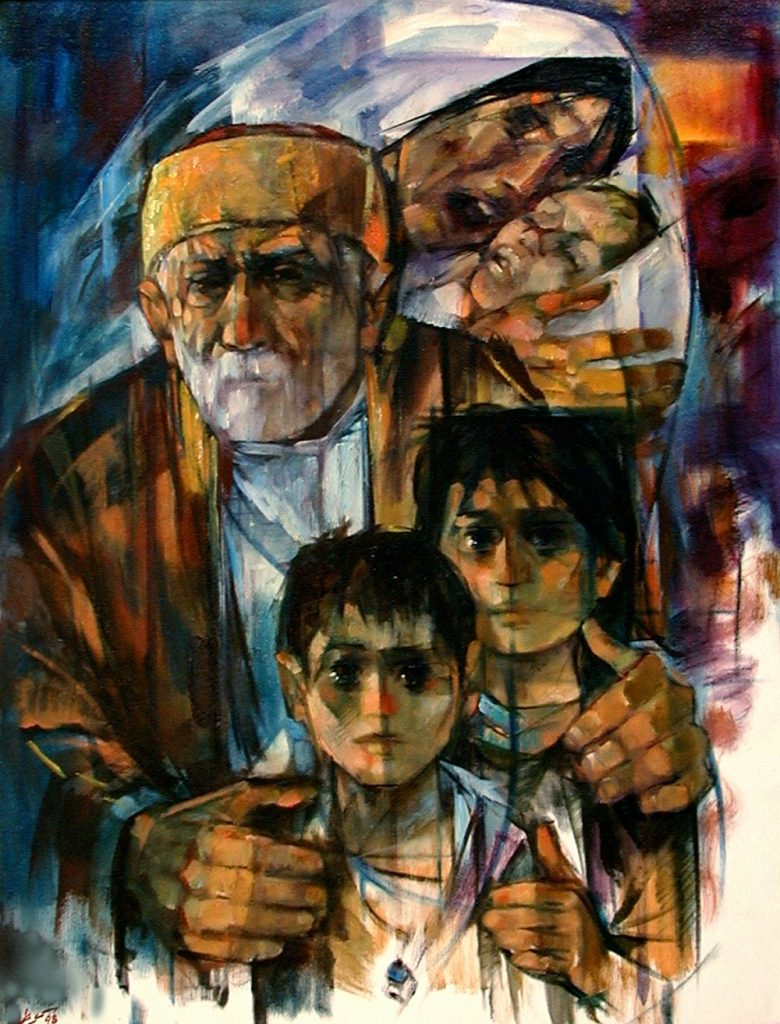
Add Your Comments
We are 100% volunteer and depend on your participation to sustain our efforts!
Donate

$85.00 donated
in the past month
Get Involved
If you'd like to help with maintaining or developing the website, contact us.
Publish
Publish your stories and upcoming events on Indybay.
Topics
More
Search Indybay's Archives
Advanced Search
►
▼
IMC Network