







 Publish to Newswire
 Add an Event
From the Open-Publishing Calendar
From the Open-Publishing Newswire
Indybay Feature
No More Nukes on 15th Anniversary of Fukushima: SF Rally at SF Japanese Consulate
 Import event into your personal calendar
Date:
Wednesday, March 11, 2026
Time:
1:00 PM
-
2:30 PM
Event Type:
Protest
Organizer/Author:
No Nukes Committee
Location Details:
San Francisco Japanese Consulate
275 Battery St/California St.
San Francisco
275 Battery St/California St.
San Francisco
No More Nukes On 15th Anniversary of Fukushima: SF Rally At SF Japanese Consulate -Stop Restarting Nuke Plants In Japan & Shutdown Nuke Plants Around The World
3/11 SF Rally At SF Japanese Consulate: On The 15th Anniversary Of Fukushima Nuclear Meltdowns-Stop Restarting Nuke Plants In Japan & Shutdown Nuke Plants Around The World
Wednesday November 11, 2026 1:00 PM
San Francisco Japanese Consulate
275 Battery St/California St.
San Francisco
Sponsored by No Nukes Action
On the 15th anniversary of the meltdown of 3 nuclear reactors in Fukushima, Japan the government and the operator TEPCO have still been unable to remove over 880 lbs. of melted radioactive waste. At the same time Japanese governments including the latest supporter of Nukes Japanese PM Sanae Takaichi who supports opening up all closed nuclear plants and is in full support of the expansion of nuclear power and weapons. She and her party also want to eliminate Article 9 and build a military force for military interventions around the world. She has also supported the export of weapons from Japan to other countries.
The fact that the supporters of nuclear power have still been unable to remove the radioactive waste from Fukushima is proof positive that this technology and nuclear development is a threat to not only Japan but the world. The continued operations of nuclear plants in Japan which has the largest number of earthquakes in the world is criminally negligent. Another major earthquake could result many more Fukushimas.
At the same time the US Biden and now Trump administration are pushing for more nuclear plants and mini-nuclear power plants to help power the expanding data centers. Governor Gavin Newsom also with the support of the super majority of Democrats in the legislatue and Republicans in California voted to spend billions of dollars in subsidies to keep the PG&E Diablo Canyon nuclear power plant open. This threat of an earthquake at this nuke pant is is real since it sits on an earthquake fault. It is also one of the reasons for the massive increase in electrical costs for rate payers in California.
We need to continue the international campaign to stop re-opening of Nuke plants and to stop the drive for nukes and war globally.
Stop Dumping Fukushima Radioactive Tritium Into The Pacific
Shutdown Diablo Canyon, No Subsidies to PG&E For Nuke Power
Defend of the Residents of Fukushima & No More Nukes In Japan and the World
Wednesday November 11, 2021 3PM
San Francisco Japanese Consulate
275 Battery St/California St.
San Francisco
No Nukes Action
http://nonukesaction.wordpress.com/
After 15 YearsTEPCO planning to send probe into Fukushima nuke reactor
https://www.asahi.com/ajw/articles/16341286
By TOMOYUKI SUZUKI/ Staff Writer
March 4, 2026 at 07:00 JST
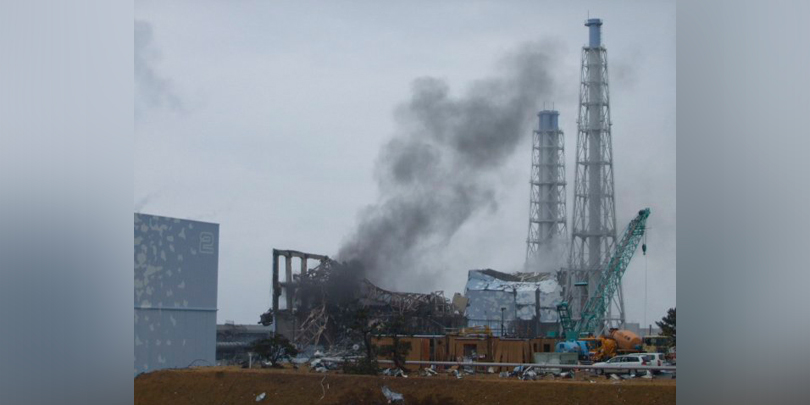
The Fukushima No. 1 nuclear power plant’s No. 2 reactor in Okuma, Fukushima Prefecture, as seen from an Asahi Shimbun helicopter in February 2025 (Asahi Shimbun file photo)
Photo_Illutration.jpeg
Tokyo Electric Power Co. will soon launch a probe, the first of its kind, into the pressure vessel at one of the hobbled reactors at its Fukushima No. 1 nuclear power plant to scope out the current conditions.
The effort is part of TEPCO's long-standing goal of retrieving melted nuclear fuel debris, left in the aftermath of the triple reactor meltdowns following the 2011 Great East Japan Earthquake and tsunami.
TEPCO officials said they are planning to insert a camera-equipped fiberscope into the plant’s No. 2 reactor to shoot footage and measure radiation levels during the first half of fiscal 2026 between April and September.
An estimated 880 tons of fuel debris remain inside the No. 1, 2 and 3 reactors at the Fukushima No. 1 plant.
TEPCO plans to approach the contaminated debris, which remains in the pressure vessels, from the tops of the reactor buildings and pulverize the debris to reduce the volume and collect it by sucking it from the side or by other means.
TEPCO officials are hoping, during the planned probe, to monitor the interior of the pressure vessel visually and ascertain the radiation levels on a location-by-location basis to help work out concrete methods for retrieving the fuel debris.
The fiberscope to be used in the probe, which resembles an endoscope, will be inserted into the pressure vessel from the side through piping.
The officials said they will be probing not the core part of the vessel but the outer side of a shroud of stainless steel, which has been installed to surround nuclear fuel, to determine, among other things, if the shroud has been deformed and if there is any debris in sight.
They said they will conduct mock-up drills in the days and months to come. They added that they will take measures to block air from leaking from the pressure vessel’s interior so workers will not be exposed to radiation.
The probe was initially scheduled to begin in fiscal 2024, but the work has been delayed because the development of a dosimeter-equipped fiberscope and other processes have turned out to be more time-consuming than expected.
“When the distribution of dose levels is known, that could, depending on the circumstances, help give an estimate of the amount of residual fuel (which has yet to turn into debris),” said Akira Ono, president of TEPCO’s Fukushima Daiichi Decontamination & Decommissioning Engineering Co., which is overseeing the corresponding processes at the Fukushima No. 1 nuclear plant.
TEPCO plans to start large-scale retrieval of the Fukushima No. 1 plant’s debris at its No. 3 reactor in fiscal 2037 or later.
The dose levels and circumstances of the areas surrounding the reactor buildings are not the same for the No. 1, 2 and 3 reactors.
TEPCO officials said they have set a target date of 2027 for studying the design of debris removal equipment and other specifics for those reactors.
MESSAGES FROM WOMEN IN FUKUSHIMA ON THE 15TH ANNIVERSARY OF FUKUSHIMA
https://sayonara-nukes-berlin.de/en/2026/03/03/messages-from-women-in-fukushima-on-the-15th-anniversary-of-fukushima/
2026-03-03 YU LEAVE A COMMENT
As we do every year, we are publishing messages from Ms. Ruiko Muto and Ms. Akiko Morimatsu on the anniversary of Fukushima, which we have translated into English(English translation by Nos Voisins Lointains 3.11). These messages are also available in Japanese (original), in German and in French.
A major nuclear accident fading from memory
Ruiko MUTO Resident of Fukushima Representative of the group of plaintiffs in the criminal trial against three ex-executives of TEPCO
Don’t dump radioactive water in the sea! (Ruiko on the left)
Fifteen years after the Fukushima Daiichi nuclear disaster, the narrative of “Reconstruction” attempts to obscure the multitude of problems caused by the accident. It is assumed that these actual problems
did not occur.
On March 5, 2025, the Supreme Court definitively acquitted the former TEPCO executives, rejecting the appeal of the criminal proceedings. No one will therefore bear criminal responsibility for the disaster that released enormous quantities of radioactive material into the environment, rendering land uninhabitable and preventing many evacuees from returning to their homes. This follows the Supreme Court’s 2022 decision, which set a legal precedent for all civil lawsuits, exonerating the State of all responsibility. Similarly, the appeal ruling in the lawsuit brought by TEPCO shareholders overturned the first-instance verdict ordering former executives to pay almost 83 billion USD. Since 2022, all rulings have therefore been unfavorable to the victims.
Meanwhile, along the coast, the acceleration of reconstruction is embodied by the “Fukushima Innovation Coast Plan.” Since 2015, a significant annual budget has been injected by the State into projects to develop cutting-edge technology companies. A research complex called “F-REI” is being built in the municipality of Namie, with a budget of around 637 million USD for the first seven years from 2023. F-REI plans to invite 50 teams of international researchers, and school facilities are being set up to host their families. However, some of the companies created on the site are already in financial difficulty. These projects, which could be described as “disaster capitalism,” are disconnected
from the real needs of the victims and do not seem to be providing any help to the disaster-stricken areas. Is this not disrespect for local democracy and the people of Fukushima?
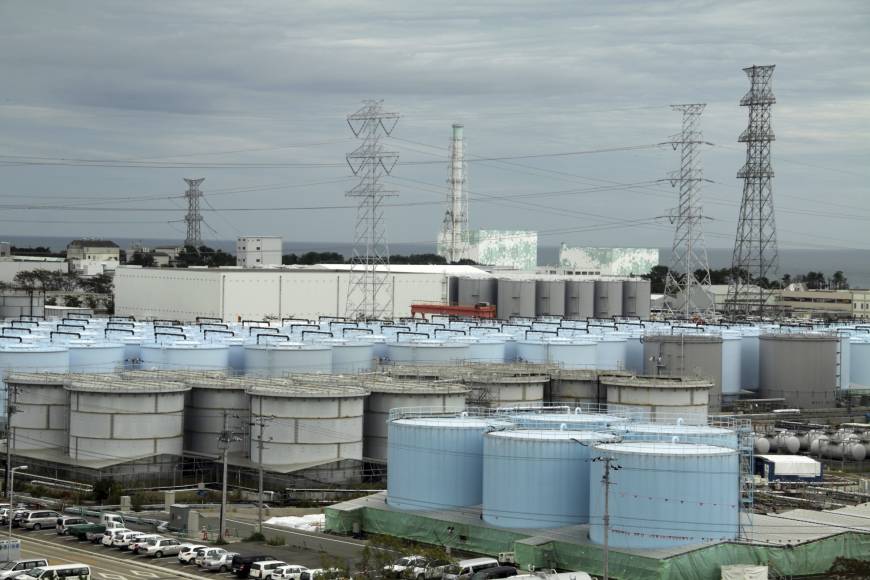
At the same time, the authorities have decided, in the name of dismantling the crippled nuclear power plant and the reconstruction of the region, to discharge radioactive water stocked on the site into the
sea, and to reuse contaminated soil**. In other words, to re-disperse radioactive materials in sea and on land. The various ministries and the Fukushima Prefecture are deploying national propaganda to try to reassure the population, the younger generations in particular.
Major media outlets and communication agencies are fully engaged in creating and spreading this propaganda. By suppressing the victims’ concerns and questions, the authorities are violating the people’s rights,
especially concerning their health. After the accident, many of us developed various illnesses, including mental health issues, and some have died. But the only disease that is recorded is pediatric thyroid cancer, which is detected through the periodic health checks offered by the Prefecture, but only to those who were 18 years old or younger at the time of the accident. Even so, the authorities keep denying any health link to the nuclear accident.
In 2025, the government revised its basic energy plan, and nuclear power once again became a major source of electricity generation. A schedule for restarting the shut-down power plants was thus put in
place. The Onagawa plant in the neighboring Miyagi Prefecture had already restarted in 2024, and in another prefecture, Niigata, the Kashiwazaki-Kariwa power plant restarted in January 2026 but was
immediately shut down due to a technical problem. However, the operator TEPCO wants to restart it at all costs. Our region is therefore once again at risk of radiation exposure if / when a nuclear accident
occurs at these neighboring plants.
However, citizens are not giving up on protesting. In 2024, an investigative journalist revealed the close ties between large law firms, certain Supreme Court judges, and electric power companies (such as TEPCO) and the Nuclear Regulatory Authority. In fact, some judges came from large law firms that counted TEPCO among their clients. Since then, numerous groups of plaintiffs and lawyers have organized “human chains around the Supreme Court” to demand judicial independence. Others are suing the State and TEPCO to stop the discharge of radioactive water into the ocean. Citizens’ meetings are being held to demand the safe decommissioning of the damaged plant. Last but not least, citizens of the municipality of Miharu have published a manual on the distribution of stable iodine in the event of another nuclear accident. Faced with the steamroller of the government and pro-nuclear forces and despite their overwhelming financial resources and power, we are resisting and continuing to move forward, step by step, toward a world free of nuclear power.
The Fukushima Institute for Research, Education and Innovation
** Three-quarters of the approximately 14 million cubic meters of soil resulting from decontamination work with levels below 8000 Bq/kg, will be reused as fill material topped by uncontaminated soil.
*** Miharu is one of only three municipalities that took the initiative to distribute iodine tablets to residents without
waiting for Fukushima Prefecture’s orders. The tablets saturate the thyroid with stable iodine so that it won’t
absorb radioactive iodine when it arrives from the accident.
Living free from exposure to radiation: a fundamental human right
Akiko MORIMATSU
Akiko, plaintiffs and supporters at the Osaka District Court
©Takezo Takahashi
In order to avoid exposure to radiation caused by the Fukushima Daiichi nuclear accident which occurred in 2011, I still continue living in Osaka today, as an “internally displaced person*” with my two minor children. Immediately after the accident, we, as ordinary citizens, were not informed about radioactive contamination and thus suffered otherwise avoidable radiation exposure. We had no choice but to live on contaminated soil, breathe contaminated air, and drink contaminated water. I was breastfeeding my five-month-old daughter at the time, and it was only later that I realized I had exposed my children to radiation.
The authorities, who had assured the public that there would never be an accident, relaxed radiation exposure standards after the disaster to suit their own interests. Applying their economic logic, they imposed arbitrary boundaries to decide who would be recognized as a victim, thereby dividing the victims among themselves. However, fifteen years after the accident, many victims continue to suffer from its consequences, regardless of their victim status as determined by administrative zoning. The reason is simple: radioactive contamination remains. And because I do not want my children to be exposed to even one additional micro-sievert of unnecessary radiation, I continue to live as an internally displaced person without compensation.
We believe these fundamental rights of existence being violated: “not to be exposed to radiation” and “to enjoy good health.” Yet the Japanese justice system has endorsed the “safety standards” that the State unilaterally relaxed after the nuclear accident. And since the Supreme Court ruling in 2022, it has become extremely difficult for displaced people to obtain compensation in the civil lawsuits they file. This means that our human right to “avoid unnecessary exposure to radiation” is not respected in the Japanese judicial system.
The nuclear issue is above all a question of fundamental human rights.
Eighty years after the end of World War II, and following the awarding of the 2024 Nobel Peace Prize to Nihon Hidankyō*, and the statements made by hibakusha that have drawn international attention to the issue of radiation exposure, I believe that Japan, drawing on the experiences of Hiroshima, Nagasaki, and Fukushima, must now take a leading role in working to establish a universal fundamental right for all people to be protected from radiation exposure.
Around the world, many people are speaking out against the damage caused by nuclear use – victims of nuclear testing, people exposed to radiation due to uranium mining, and those affected by environmental pollution caused by nuclear waste and contaminated water discharge into the ocean. All of these situations are, in a broad sense, examples of the spread of nuclear damage. Having lived through the Fukushima experience, we know that, whether for military or civil use, no one is safe from becoming a nuclear victim.
By establishing the right to live free from exposure to radiation as a universal human right, it becomes possible to diminish, as much as possible, nuclear damage on a global scale.
This is the future we must strive for. That is why we believe it is necessary to build bonds of solidarity with all victims of nuclear use around the world, so that we can work together to establish this universal right.
* According to the United Nations High Commissioner for Refugees, internally displaced people have been forced to flee their homes by conflict, violence, persecution or disasters, however, unlike refugees, they remain within their own country.
** Japan Confederation of A- and H-Bomb Sufferers Organizations, founded in August 1956.
Akiko Morimatsu is living as an internally displaced person since the accident, representing the group of plaintiffs in the civil lawsuit in Osaka. In 2018, she gave a speech at the United Nations Human Rights Council in Geneva about the lives of internally displaced persons from Fukushima. She is a representative of the plaintiffs’ group of the lawsuits filed by victims of the Fukushima accident in the Osaka metropolitan area.
English translation : Nos Voisins Lointains 3.11
3/11 SF Rally At SF Japanese Consulate: On The 15th Anniversary Of Fukushima Nuclear Meltdowns-Stop Restarting Nuke Plants In Japan & Shutdown Nuke Plants Around The World
Wednesday November 11, 2026 1:00 PM
San Francisco Japanese Consulate
275 Battery St/California St.
San Francisco
Sponsored by No Nukes Action
On the 15th anniversary of the meltdown of 3 nuclear reactors in Fukushima, Japan the government and the operator TEPCO have still been unable to remove over 880 lbs. of melted radioactive waste. At the same time Japanese governments including the latest supporter of Nukes Japanese PM Sanae Takaichi who supports opening up all closed nuclear plants and is in full support of the expansion of nuclear power and weapons. She and her party also want to eliminate Article 9 and build a military force for military interventions around the world. She has also supported the export of weapons from Japan to other countries.
The fact that the supporters of nuclear power have still been unable to remove the radioactive waste from Fukushima is proof positive that this technology and nuclear development is a threat to not only Japan but the world. The continued operations of nuclear plants in Japan which has the largest number of earthquakes in the world is criminally negligent. Another major earthquake could result many more Fukushimas.
At the same time the US Biden and now Trump administration are pushing for more nuclear plants and mini-nuclear power plants to help power the expanding data centers. Governor Gavin Newsom also with the support of the super majority of Democrats in the legislatue and Republicans in California voted to spend billions of dollars in subsidies to keep the PG&E Diablo Canyon nuclear power plant open. This threat of an earthquake at this nuke pant is is real since it sits on an earthquake fault. It is also one of the reasons for the massive increase in electrical costs for rate payers in California.
We need to continue the international campaign to stop re-opening of Nuke plants and to stop the drive for nukes and war globally.
Stop Dumping Fukushima Radioactive Tritium Into The Pacific
Shutdown Diablo Canyon, No Subsidies to PG&E For Nuke Power
Defend of the Residents of Fukushima & No More Nukes In Japan and the World
Wednesday November 11, 2021 3PM
San Francisco Japanese Consulate
275 Battery St/California St.
San Francisco
No Nukes Action
http://nonukesaction.wordpress.com/
After 15 YearsTEPCO planning to send probe into Fukushima nuke reactor
https://www.asahi.com/ajw/articles/16341286
By TOMOYUKI SUZUKI/ Staff Writer
March 4, 2026 at 07:00 JST
The Fukushima No. 1 nuclear power plant’s No. 2 reactor in Okuma, Fukushima Prefecture, as seen from an Asahi Shimbun helicopter in February 2025 (Asahi Shimbun file photo)
Photo_Illutration.jpeg
Tokyo Electric Power Co. will soon launch a probe, the first of its kind, into the pressure vessel at one of the hobbled reactors at its Fukushima No. 1 nuclear power plant to scope out the current conditions.
The effort is part of TEPCO's long-standing goal of retrieving melted nuclear fuel debris, left in the aftermath of the triple reactor meltdowns following the 2011 Great East Japan Earthquake and tsunami.
TEPCO officials said they are planning to insert a camera-equipped fiberscope into the plant’s No. 2 reactor to shoot footage and measure radiation levels during the first half of fiscal 2026 between April and September.
An estimated 880 tons of fuel debris remain inside the No. 1, 2 and 3 reactors at the Fukushima No. 1 plant.
TEPCO plans to approach the contaminated debris, which remains in the pressure vessels, from the tops of the reactor buildings and pulverize the debris to reduce the volume and collect it by sucking it from the side or by other means.
TEPCO officials are hoping, during the planned probe, to monitor the interior of the pressure vessel visually and ascertain the radiation levels on a location-by-location basis to help work out concrete methods for retrieving the fuel debris.
The fiberscope to be used in the probe, which resembles an endoscope, will be inserted into the pressure vessel from the side through piping.
The officials said they will be probing not the core part of the vessel but the outer side of a shroud of stainless steel, which has been installed to surround nuclear fuel, to determine, among other things, if the shroud has been deformed and if there is any debris in sight.
They said they will conduct mock-up drills in the days and months to come. They added that they will take measures to block air from leaking from the pressure vessel’s interior so workers will not be exposed to radiation.
The probe was initially scheduled to begin in fiscal 2024, but the work has been delayed because the development of a dosimeter-equipped fiberscope and other processes have turned out to be more time-consuming than expected.
“When the distribution of dose levels is known, that could, depending on the circumstances, help give an estimate of the amount of residual fuel (which has yet to turn into debris),” said Akira Ono, president of TEPCO’s Fukushima Daiichi Decontamination & Decommissioning Engineering Co., which is overseeing the corresponding processes at the Fukushima No. 1 nuclear plant.
TEPCO plans to start large-scale retrieval of the Fukushima No. 1 plant’s debris at its No. 3 reactor in fiscal 2037 or later.
The dose levels and circumstances of the areas surrounding the reactor buildings are not the same for the No. 1, 2 and 3 reactors.
TEPCO officials said they have set a target date of 2027 for studying the design of debris removal equipment and other specifics for those reactors.
MESSAGES FROM WOMEN IN FUKUSHIMA ON THE 15TH ANNIVERSARY OF FUKUSHIMA
https://sayonara-nukes-berlin.de/en/2026/03/03/messages-from-women-in-fukushima-on-the-15th-anniversary-of-fukushima/
2026-03-03 YU LEAVE A COMMENT
As we do every year, we are publishing messages from Ms. Ruiko Muto and Ms. Akiko Morimatsu on the anniversary of Fukushima, which we have translated into English(English translation by Nos Voisins Lointains 3.11). These messages are also available in Japanese (original), in German and in French.
A major nuclear accident fading from memory
Ruiko MUTO Resident of Fukushima Representative of the group of plaintiffs in the criminal trial against three ex-executives of TEPCO
Don’t dump radioactive water in the sea! (Ruiko on the left)
Fifteen years after the Fukushima Daiichi nuclear disaster, the narrative of “Reconstruction” attempts to obscure the multitude of problems caused by the accident. It is assumed that these actual problems
did not occur.
On March 5, 2025, the Supreme Court definitively acquitted the former TEPCO executives, rejecting the appeal of the criminal proceedings. No one will therefore bear criminal responsibility for the disaster that released enormous quantities of radioactive material into the environment, rendering land uninhabitable and preventing many evacuees from returning to their homes. This follows the Supreme Court’s 2022 decision, which set a legal precedent for all civil lawsuits, exonerating the State of all responsibility. Similarly, the appeal ruling in the lawsuit brought by TEPCO shareholders overturned the first-instance verdict ordering former executives to pay almost 83 billion USD. Since 2022, all rulings have therefore been unfavorable to the victims.
Meanwhile, along the coast, the acceleration of reconstruction is embodied by the “Fukushima Innovation Coast Plan.” Since 2015, a significant annual budget has been injected by the State into projects to develop cutting-edge technology companies. A research complex called “F-REI” is being built in the municipality of Namie, with a budget of around 637 million USD for the first seven years from 2023. F-REI plans to invite 50 teams of international researchers, and school facilities are being set up to host their families. However, some of the companies created on the site are already in financial difficulty. These projects, which could be described as “disaster capitalism,” are disconnected
from the real needs of the victims and do not seem to be providing any help to the disaster-stricken areas. Is this not disrespect for local democracy and the people of Fukushima?
At the same time, the authorities have decided, in the name of dismantling the crippled nuclear power plant and the reconstruction of the region, to discharge radioactive water stocked on the site into the
sea, and to reuse contaminated soil**. In other words, to re-disperse radioactive materials in sea and on land. The various ministries and the Fukushima Prefecture are deploying national propaganda to try to reassure the population, the younger generations in particular.
Major media outlets and communication agencies are fully engaged in creating and spreading this propaganda. By suppressing the victims’ concerns and questions, the authorities are violating the people’s rights,
especially concerning their health. After the accident, many of us developed various illnesses, including mental health issues, and some have died. But the only disease that is recorded is pediatric thyroid cancer, which is detected through the periodic health checks offered by the Prefecture, but only to those who were 18 years old or younger at the time of the accident. Even so, the authorities keep denying any health link to the nuclear accident.
In 2025, the government revised its basic energy plan, and nuclear power once again became a major source of electricity generation. A schedule for restarting the shut-down power plants was thus put in
place. The Onagawa plant in the neighboring Miyagi Prefecture had already restarted in 2024, and in another prefecture, Niigata, the Kashiwazaki-Kariwa power plant restarted in January 2026 but was
immediately shut down due to a technical problem. However, the operator TEPCO wants to restart it at all costs. Our region is therefore once again at risk of radiation exposure if / when a nuclear accident
occurs at these neighboring plants.
However, citizens are not giving up on protesting. In 2024, an investigative journalist revealed the close ties between large law firms, certain Supreme Court judges, and electric power companies (such as TEPCO) and the Nuclear Regulatory Authority. In fact, some judges came from large law firms that counted TEPCO among their clients. Since then, numerous groups of plaintiffs and lawyers have organized “human chains around the Supreme Court” to demand judicial independence. Others are suing the State and TEPCO to stop the discharge of radioactive water into the ocean. Citizens’ meetings are being held to demand the safe decommissioning of the damaged plant. Last but not least, citizens of the municipality of Miharu have published a manual on the distribution of stable iodine in the event of another nuclear accident. Faced with the steamroller of the government and pro-nuclear forces and despite their overwhelming financial resources and power, we are resisting and continuing to move forward, step by step, toward a world free of nuclear power.
The Fukushima Institute for Research, Education and Innovation
** Three-quarters of the approximately 14 million cubic meters of soil resulting from decontamination work with levels below 8000 Bq/kg, will be reused as fill material topped by uncontaminated soil.
*** Miharu is one of only three municipalities that took the initiative to distribute iodine tablets to residents without
waiting for Fukushima Prefecture’s orders. The tablets saturate the thyroid with stable iodine so that it won’t
absorb radioactive iodine when it arrives from the accident.
Living free from exposure to radiation: a fundamental human right
Akiko MORIMATSU
Akiko, plaintiffs and supporters at the Osaka District Court
©Takezo Takahashi
In order to avoid exposure to radiation caused by the Fukushima Daiichi nuclear accident which occurred in 2011, I still continue living in Osaka today, as an “internally displaced person*” with my two minor children. Immediately after the accident, we, as ordinary citizens, were not informed about radioactive contamination and thus suffered otherwise avoidable radiation exposure. We had no choice but to live on contaminated soil, breathe contaminated air, and drink contaminated water. I was breastfeeding my five-month-old daughter at the time, and it was only later that I realized I had exposed my children to radiation.
The authorities, who had assured the public that there would never be an accident, relaxed radiation exposure standards after the disaster to suit their own interests. Applying their economic logic, they imposed arbitrary boundaries to decide who would be recognized as a victim, thereby dividing the victims among themselves. However, fifteen years after the accident, many victims continue to suffer from its consequences, regardless of their victim status as determined by administrative zoning. The reason is simple: radioactive contamination remains. And because I do not want my children to be exposed to even one additional micro-sievert of unnecessary radiation, I continue to live as an internally displaced person without compensation.
We believe these fundamental rights of existence being violated: “not to be exposed to radiation” and “to enjoy good health.” Yet the Japanese justice system has endorsed the “safety standards” that the State unilaterally relaxed after the nuclear accident. And since the Supreme Court ruling in 2022, it has become extremely difficult for displaced people to obtain compensation in the civil lawsuits they file. This means that our human right to “avoid unnecessary exposure to radiation” is not respected in the Japanese judicial system.
The nuclear issue is above all a question of fundamental human rights.
Eighty years after the end of World War II, and following the awarding of the 2024 Nobel Peace Prize to Nihon Hidankyō*, and the statements made by hibakusha that have drawn international attention to the issue of radiation exposure, I believe that Japan, drawing on the experiences of Hiroshima, Nagasaki, and Fukushima, must now take a leading role in working to establish a universal fundamental right for all people to be protected from radiation exposure.
Around the world, many people are speaking out against the damage caused by nuclear use – victims of nuclear testing, people exposed to radiation due to uranium mining, and those affected by environmental pollution caused by nuclear waste and contaminated water discharge into the ocean. All of these situations are, in a broad sense, examples of the spread of nuclear damage. Having lived through the Fukushima experience, we know that, whether for military or civil use, no one is safe from becoming a nuclear victim.
By establishing the right to live free from exposure to radiation as a universal human right, it becomes possible to diminish, as much as possible, nuclear damage on a global scale.
This is the future we must strive for. That is why we believe it is necessary to build bonds of solidarity with all victims of nuclear use around the world, so that we can work together to establish this universal right.
* According to the United Nations High Commissioner for Refugees, internally displaced people have been forced to flee their homes by conflict, violence, persecution or disasters, however, unlike refugees, they remain within their own country.
** Japan Confederation of A- and H-Bomb Sufferers Organizations, founded in August 1956.
Akiko Morimatsu is living as an internally displaced person since the accident, representing the group of plaintiffs in the civil lawsuit in Osaka. In 2018, she gave a speech at the United Nations Human Rights Council in Geneva about the lives of internally displaced persons from Fukushima. She is a representative of the plaintiffs’ group of the lawsuits filed by victims of the Fukushima accident in the Osaka metropolitan area.
English translation : Nos Voisins Lointains 3.11
For more information:
http://nonukesaction.wordpress.com/
Added to the calendar on Wed, Mar 4, 2026 6:13PM
Add Your Comments
We are 100% volunteer and depend on your participation to sustain our efforts!
Donate

$85.00 donated
in the past month
Get Involved
If you'd like to help with maintaining or developing the website, contact us.
Publish
Publish your stories and upcoming events on Indybay.
Topics
More
Search Indybay's Archives
Advanced Search
►
▼
IMC Network