







 Publish to Newswire
 Add an Event
From the Open-Publishing Calendar
From the Open-Publishing Newswire
Indybay Feature
2026 Folsom Black History Tour - Kickoff for 60th Anniversary of Leidesdorff Plaza
 Import event into your personal calendar
Date:
Saturday, February 28, 2026
Time:
11:30 AM
-
1:30 PM
Event Type:
Vigil/Ritual
Organizer/Author:
Edited by Michael Harris
Email:
Phone:
910-539-0243
Location Details:
Leidesdorff Plaza
Sutter St. & Leodesdorff St:
Historic Folsom Station
Sutter St. & Leodesdorff St:
Historic Folsom Station
(Folsom, CA) Leidesdorff Plaza and Historic Negro Bar Cemetery were originally associated with the 1848 Negro Bar Gold Rush Era Mining Town, once California State Historical Preservation Site.
Today, on the North Shore across Lake Natoma, a newly developed 2022 project is called Black Miners Bar, is a modern Recreational Area creation managed by California State Parks with private agreements utilizing contracted land from the US Federal Government between two Federal Dams.
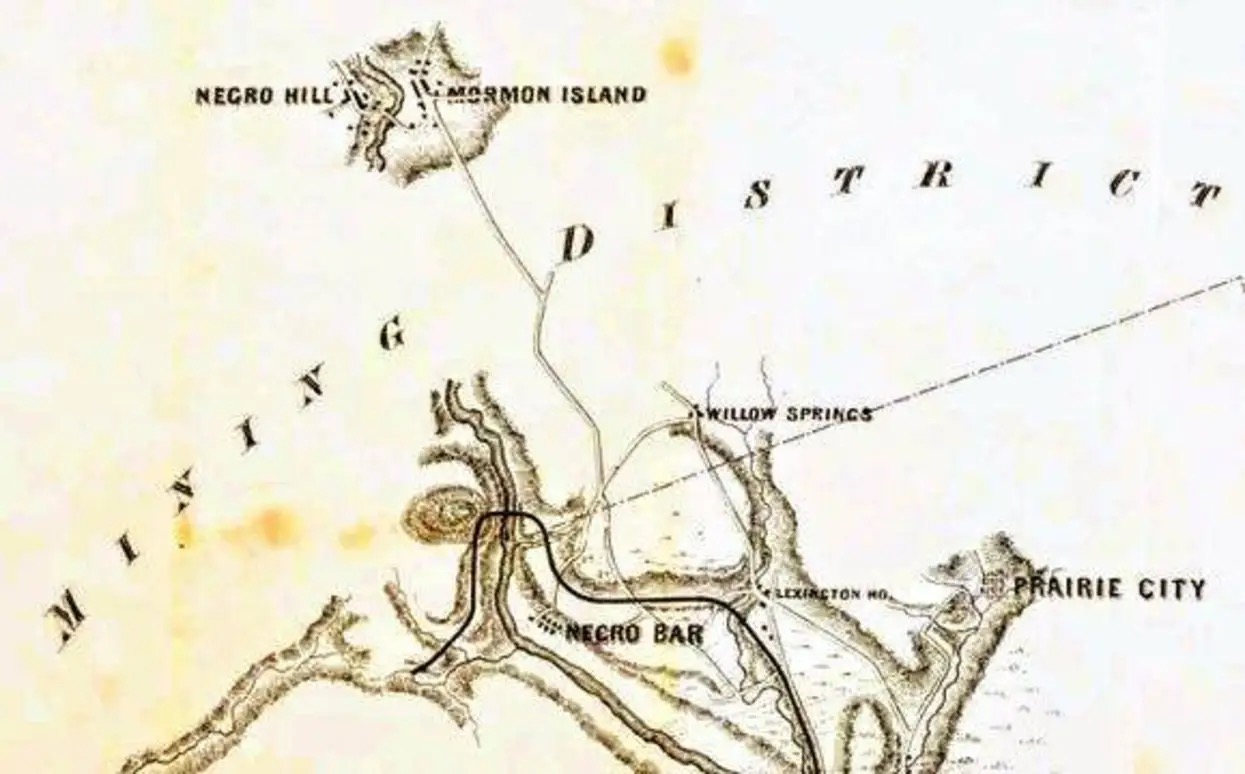
Multi-millions of dollars of State Tax Payer dollars continues to be spent specifically to fabricate a modern version of the 1848 Negro Bar; Mormon Island, Negro Hill California Gold Rush Era Mining District as seen here September 1854
The distortion, disparaging treatment and erasure culture has completely removed most of the regional early California Pioneers Pan African Descent legacy along today's American River Parkway during the California Gold Rush Era (1840-1875)
The records purged from library shelves, Federal Underground Railroad Network to Freedom status, State Historical Preservation records and much more.
The 1906 Antiquity Act and 2026 Trump Administration Officials may stop another round of cloaked California State led efforts to distort, destroy and/or disregard authentic California Gold Rush History.
Burials at Negro Bar Cemetery were originally associated with the Negro Bar Gold Mining Camp region that grew into the Gold Mining Mining Town of Folsom in late 1855.
California State Historical Preservation Site once was officially recognized, yet that documentation and Folsom General Plans of the Gold Rush (1840-1855) is hidden by design.
During COVID, and complete by Juneteenth 2022, Early California Pioneers of Pan African Descent along today's American River Parkway during the California Gold Rush Era (1840-1875) were erased from the historical record and modern history.
Lakeside Memorial Lawn Cemetery is located at 1201 Forrest Street in Folsom, California includes five historic burial grounds essential to preserve given the need to erase history.
Negro Bar Cemetery (later referred to as Citizens Cemetery); Cook’s or American Legion Cemetery (later referred to as the Citizens Cemetery as well); Jewish Cemetery (est about 1861); Odd Fellows Cemetery and The Masonic Cemetery are part of todays Lakeside Cemetery.
Negro Bar Cemetery was originally associated with 1848 Negro Bar Gold Rush Mining Town with burials at the cemetery site as early as 1846..
The original footprint of the townsite of Negro Bar, is a California State Historical Site, a portion of the initial town is still in use as City of Folsom Corporate Yard, formerly the Folsom City Dump.
This site also served as a key construction site during the construction and completion of Folsom Dam creating Lake Natoma.
Today, prime real estate along the south shore of Lake Natoma Waterfront, Historic Negro Bar is currently being considered for economic development. Imagine mutually beneficial cultural tourism develop in the tradition of Honorable WilliammAlexander Leidesdorff, Jr. adhering to global standards for historical preservation with a special set aside within the vast Folsom Lake Recreational Area managed by California State Parks that honors the 1844 Rancho Rio de Los Americanos agreements with the Native Nations.
Federal Laws utilizing the 1906 Antiquity Act may also be utilized to preserve the early pioneers and residents of the CalifornianGold Mining District to include Negro Bar, Negro Hill, Mormon Island and a plethora of smaller towns and townsites in the initial California Gold Mining District.
Established in 1844, Rancho Rio de Los Americanos, clearly anchored the vast development by Pioneers of Pan African Descent along today's American River Parkway.
Burials at Negro Bar Cemetery started as early as 1846-1852 and reflected the world rushing into the initial California Gold Mining District.
References to the Citizens Cemetery appear in many church records and newspaper obituaries until 1942.
In addition there is a Chinese Cemetery separate from the other five and closed to the public due to vandalism. A New Masonic Cemetery (est. about 1924) is recorded however there are currently no markers as to where it is located.
The original Odd Fellows and Masonic Cemeteries were purchased jointly by the Granite Lodge of Odd Fellows and the Natoma Lodge of Masons in 1862, some sources indicate burials for those lodges were already taking place in these cemeteries much earlier.
Huge old California Date Palms surround the Odd Fellows Cemetery and Cedar of Lebanon trees are planted within the Masonic Cemetery as new plans or historic cultural tourism, waterfront economic development and historic preservation for the early pioneers is poised to become an item this 175th Anniversary of the State of California.
US Armed Forces Service Members are buried throughout the Historic cemeteries and the nearby Folsom's VFW Post 6604 hosts a plethora of events honoring all who have served in a good way, including recognition (1840-1875)during the US Mexican War, US Civil War, United States Colored Troops and California Buffalo Soldiers of Pan African Ancestry in context of the historical timeline.
Today, on the North Shore across Lake Natoma, a newly developed 2022 project is called Black Miners Bar, is a modern Recreational Area creation managed by California State Parks with private agreements utilizing contracted land from the US Federal Government between two Federal Dams.
Multi-millions of dollars of State Tax Payer dollars continues to be spent specifically to fabricate a modern version of the 1848 Negro Bar; Mormon Island, Negro Hill California Gold Rush Era Mining District as seen here September 1854
The distortion, disparaging treatment and erasure culture has completely removed most of the regional early California Pioneers Pan African Descent legacy along today's American River Parkway during the California Gold Rush Era (1840-1875)
The records purged from library shelves, Federal Underground Railroad Network to Freedom status, State Historical Preservation records and much more.
The 1906 Antiquity Act and 2026 Trump Administration Officials may stop another round of cloaked California State led efforts to distort, destroy and/or disregard authentic California Gold Rush History.
Burials at Negro Bar Cemetery were originally associated with the Negro Bar Gold Mining Camp region that grew into the Gold Mining Mining Town of Folsom in late 1855.
California State Historical Preservation Site once was officially recognized, yet that documentation and Folsom General Plans of the Gold Rush (1840-1855) is hidden by design.
During COVID, and complete by Juneteenth 2022, Early California Pioneers of Pan African Descent along today's American River Parkway during the California Gold Rush Era (1840-1875) were erased from the historical record and modern history.
Lakeside Memorial Lawn Cemetery is located at 1201 Forrest Street in Folsom, California includes five historic burial grounds essential to preserve given the need to erase history.
Negro Bar Cemetery (later referred to as Citizens Cemetery); Cook’s or American Legion Cemetery (later referred to as the Citizens Cemetery as well); Jewish Cemetery (est about 1861); Odd Fellows Cemetery and The Masonic Cemetery are part of todays Lakeside Cemetery.
Negro Bar Cemetery was originally associated with 1848 Negro Bar Gold Rush Mining Town with burials at the cemetery site as early as 1846..
The original footprint of the townsite of Negro Bar, is a California State Historical Site, a portion of the initial town is still in use as City of Folsom Corporate Yard, formerly the Folsom City Dump.
This site also served as a key construction site during the construction and completion of Folsom Dam creating Lake Natoma.
Today, prime real estate along the south shore of Lake Natoma Waterfront, Historic Negro Bar is currently being considered for economic development. Imagine mutually beneficial cultural tourism develop in the tradition of Honorable WilliammAlexander Leidesdorff, Jr. adhering to global standards for historical preservation with a special set aside within the vast Folsom Lake Recreational Area managed by California State Parks that honors the 1844 Rancho Rio de Los Americanos agreements with the Native Nations.
Federal Laws utilizing the 1906 Antiquity Act may also be utilized to preserve the early pioneers and residents of the CalifornianGold Mining District to include Negro Bar, Negro Hill, Mormon Island and a plethora of smaller towns and townsites in the initial California Gold Mining District.
Established in 1844, Rancho Rio de Los Americanos, clearly anchored the vast development by Pioneers of Pan African Descent along today's American River Parkway.
Burials at Negro Bar Cemetery started as early as 1846-1852 and reflected the world rushing into the initial California Gold Mining District.
References to the Citizens Cemetery appear in many church records and newspaper obituaries until 1942.
In addition there is a Chinese Cemetery separate from the other five and closed to the public due to vandalism. A New Masonic Cemetery (est. about 1924) is recorded however there are currently no markers as to where it is located.
The original Odd Fellows and Masonic Cemeteries were purchased jointly by the Granite Lodge of Odd Fellows and the Natoma Lodge of Masons in 1862, some sources indicate burials for those lodges were already taking place in these cemeteries much earlier.
Huge old California Date Palms surround the Odd Fellows Cemetery and Cedar of Lebanon trees are planted within the Masonic Cemetery as new plans or historic cultural tourism, waterfront economic development and historic preservation for the early pioneers is poised to become an item this 175th Anniversary of the State of California.
US Armed Forces Service Members are buried throughout the Historic cemeteries and the nearby Folsom's VFW Post 6604 hosts a plethora of events honoring all who have served in a good way, including recognition (1840-1875)during the US Mexican War, US Civil War, United States Colored Troops and California Buffalo Soldiers of Pan African Ancestry in context of the historical timeline.
Added to the calendar on Thu, Feb 26, 2026 10:28PM
Add Your Comments
We are 100% volunteer and depend on your participation to sustain our efforts!
Donate

$85.00 donated
in the past month
Get Involved
If you'd like to help with maintaining or developing the website, contact us.
Publish
Publish your stories and upcoming events on Indybay.
Topics
More
Search Indybay's Archives
Advanced Search
►
▼
IMC Network