







 Publish to Newswire
 Add an Event
From the Open-Publishing Calendar
From the Open-Publishing Newswire
Indybay Feature
Aaron Bushnell Memorial Calls for “US and Israel Out of Palestine”
On the second anniversary of 25-year-old Air Force intelligence officer Aaron Bushnell’s death by self-immolation in front of the Israeli Embassy in Washington, D.C., activists gathered outside the Israeli Consulate in San Francisco to honor his February 25, 2024, sacrifice to protest the ongoing Israeli occupation of Palestine, and condemn US complicity in genocide...
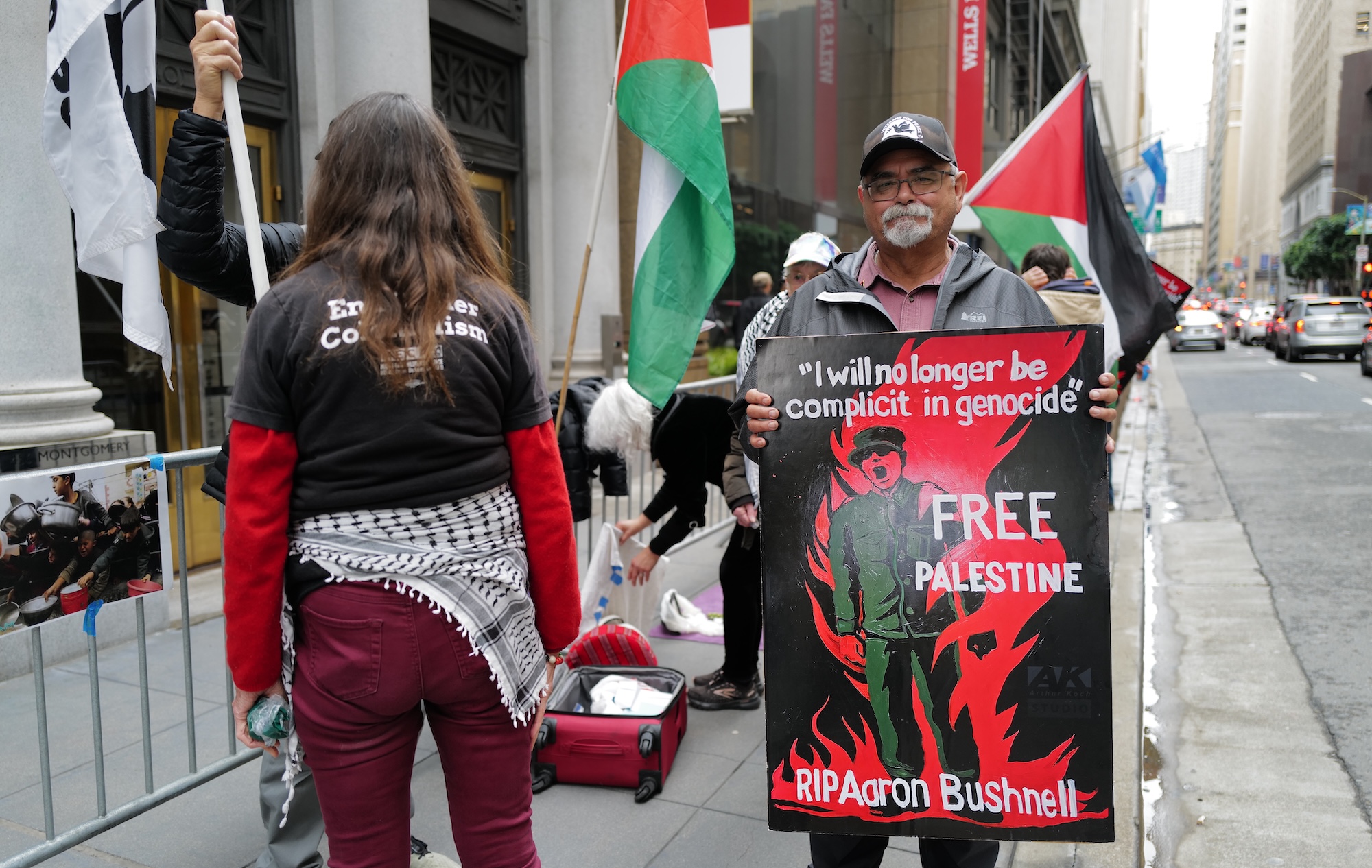
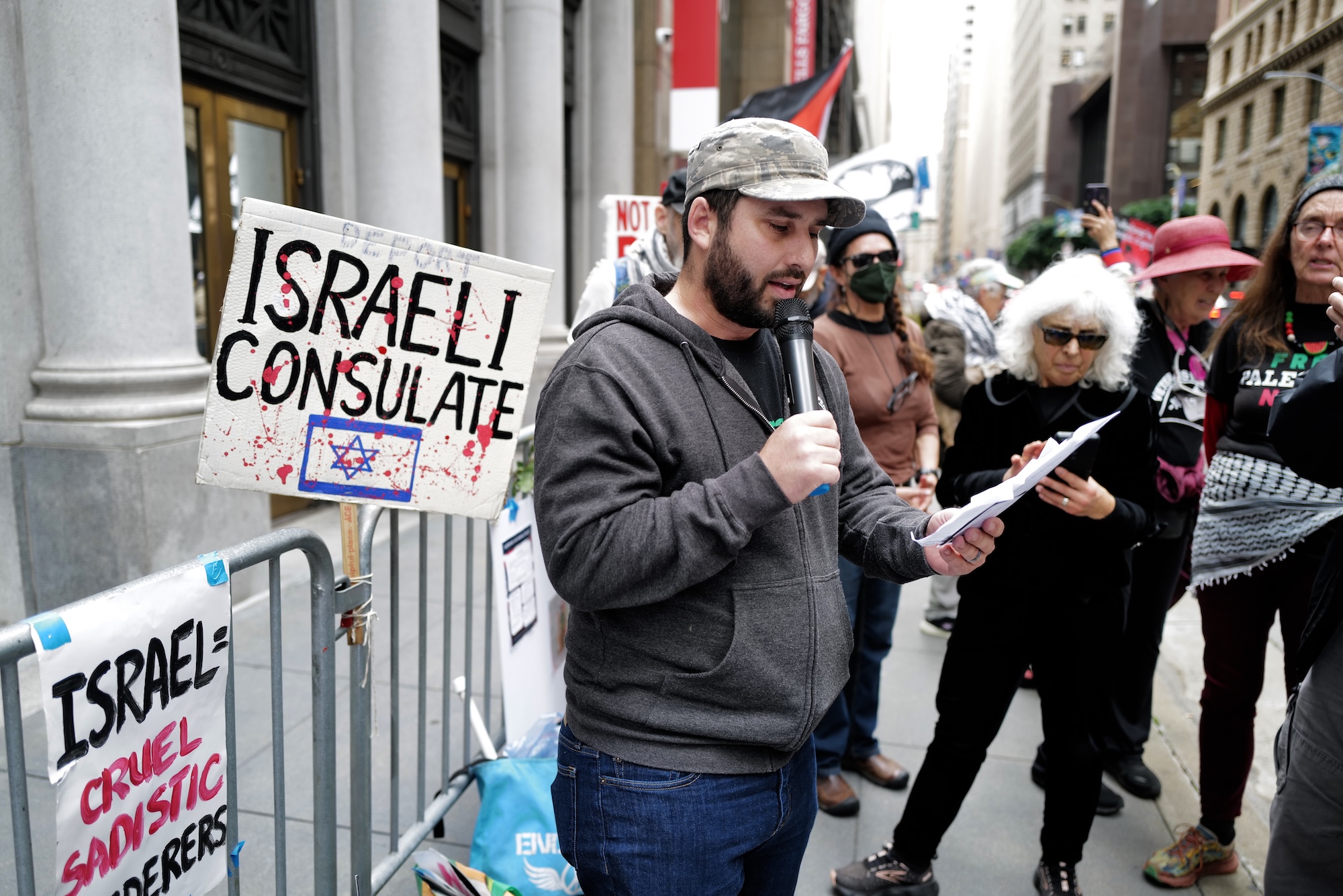
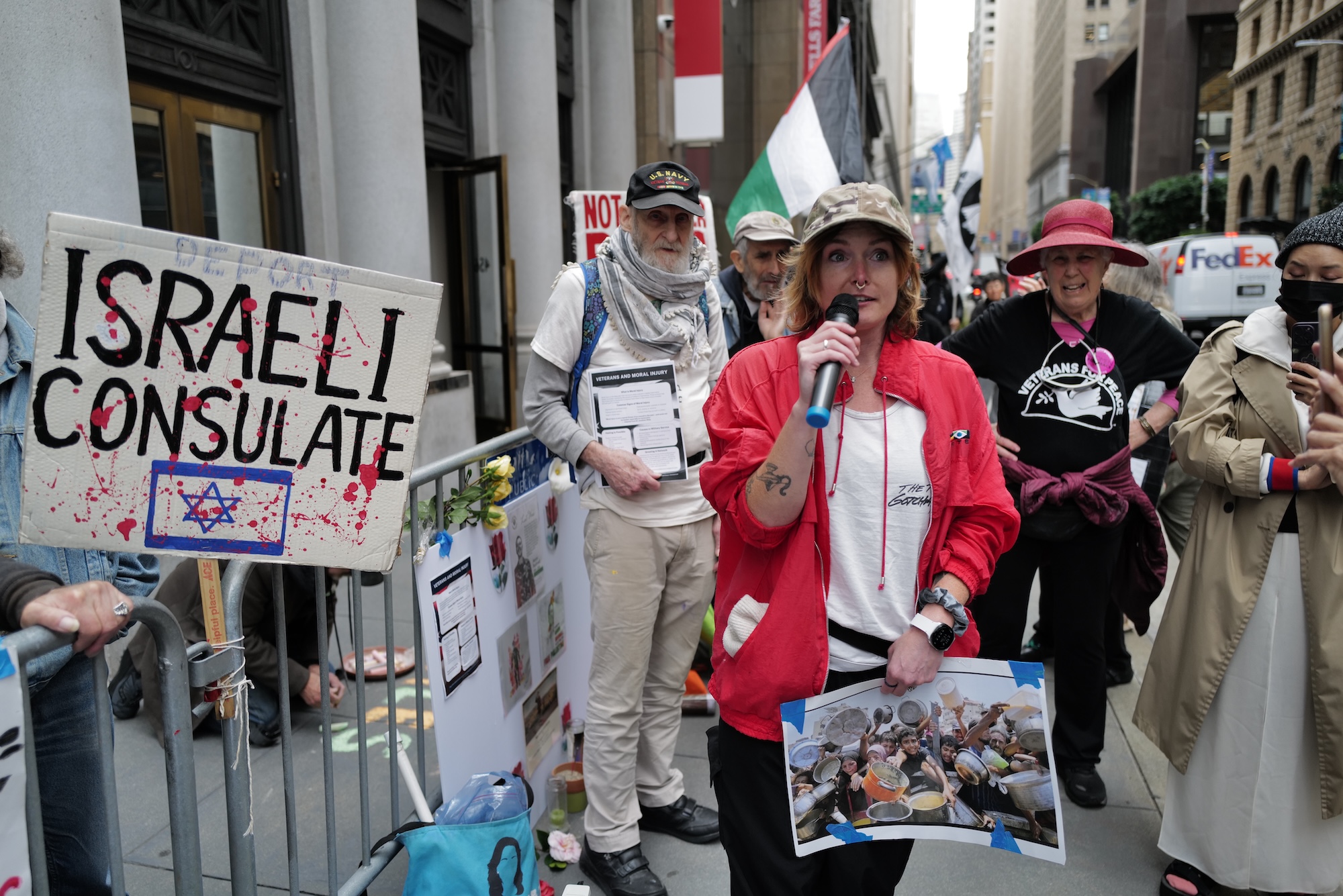
SAN FRANCISCO, California (02-25) – On the second anniversary of 25-year-old Air Force intelligence officer Aaron Bushnell’s death by self-immolation in front of the Israeli Embassy in Washington, D.C., activists gathered outside the Israeli Consulate in San Francisco to honor his February 25, 2024, sacrifice to protest the ongoing Israeli occupation of Palestine, and condemn US complicity in genocide.
While live-streaming in front of the embassy, Bushnell made a brief statement, before setting himself on fire, saying “My name is Aaron Bushnell, and I am an active-duty member of the United States Air Force. I will no longer be complicit in genocide. I’m about to engage in an extreme act of protest but, compared to what people have been experiencing in Palestine at the hands of their colonizers, it’s not extreme at all. This is what our ruling class has decided will be normal.”
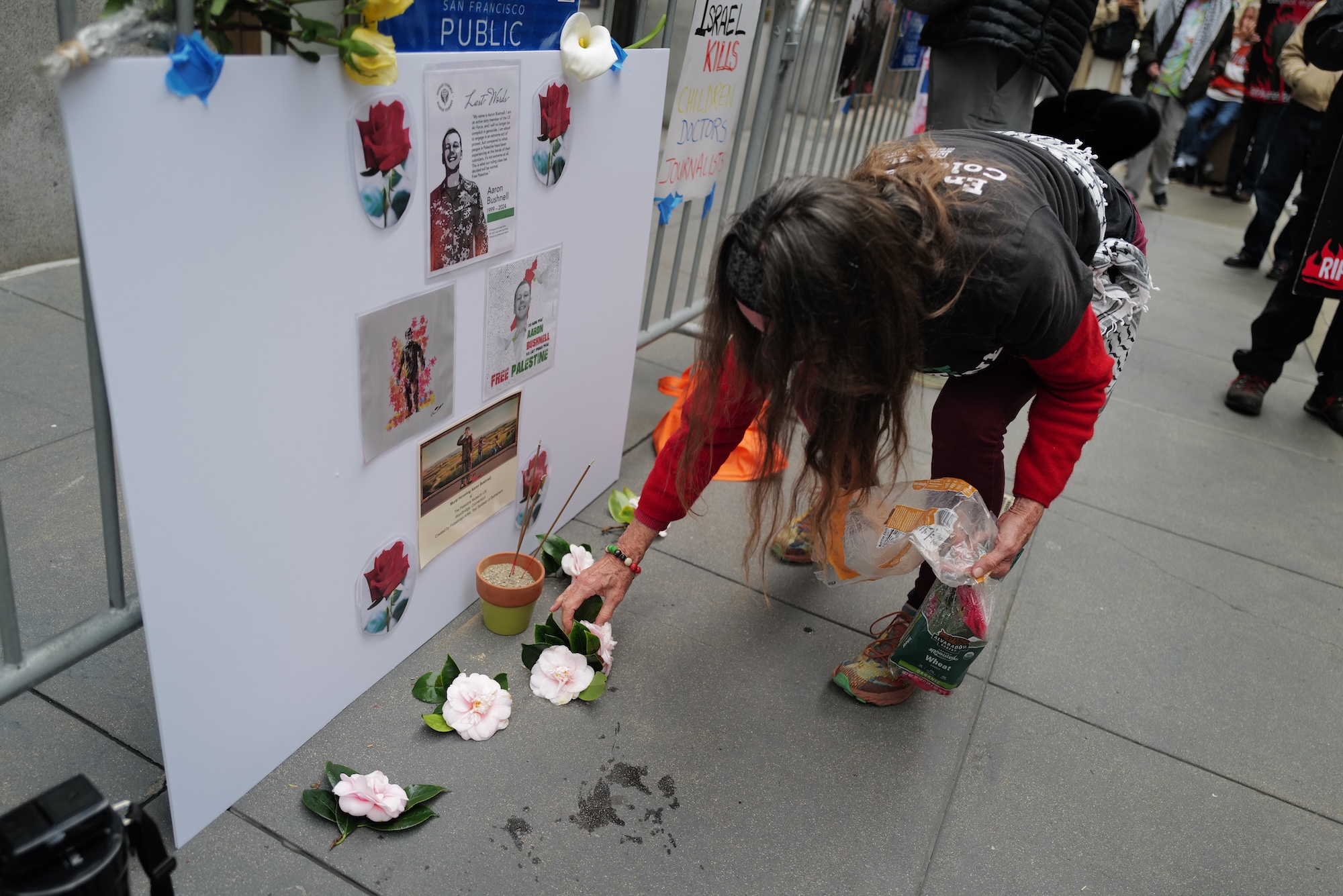
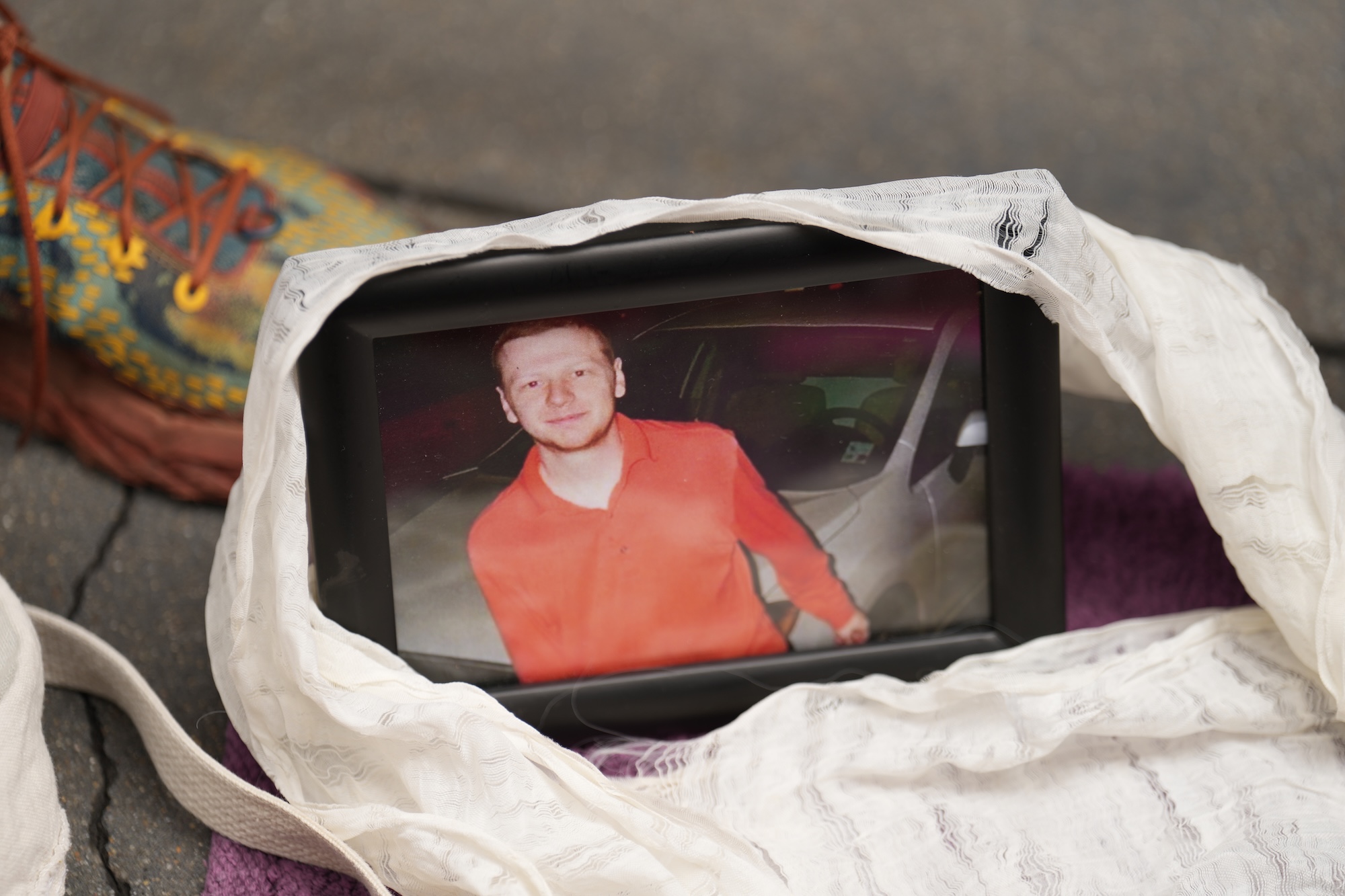
His last words, which were repeated several times as he was burning, were “Free Palestine!” Later that evening, in the aftermath of his death a curbside memorial where he died was erected in his memory by activists. Later that night the impromptu memorial was destroyed by unknown parties. The following day it was reconstructed as protesters descended on the area to honor Bushnell’s sacrifice. They then began an around the clock vigil to guard against future vandalism. That action in turn initiated a visual tug-of-war in front of the embassy between the protesters growing memorial and embassy staff, resulting in the creation of a field of Israeli flags behind the adjacent security fence.
After police threatened to arrest protesters for occupying the sidewalk, they recreated a larger more highly visible protest and memorial across the street from the embassy compound where it grew to encompass the entire street along the side of the embassy with the added benefit of no curb side parking allowing their presence to be seen unrestricted to passing traffic on the busy street.
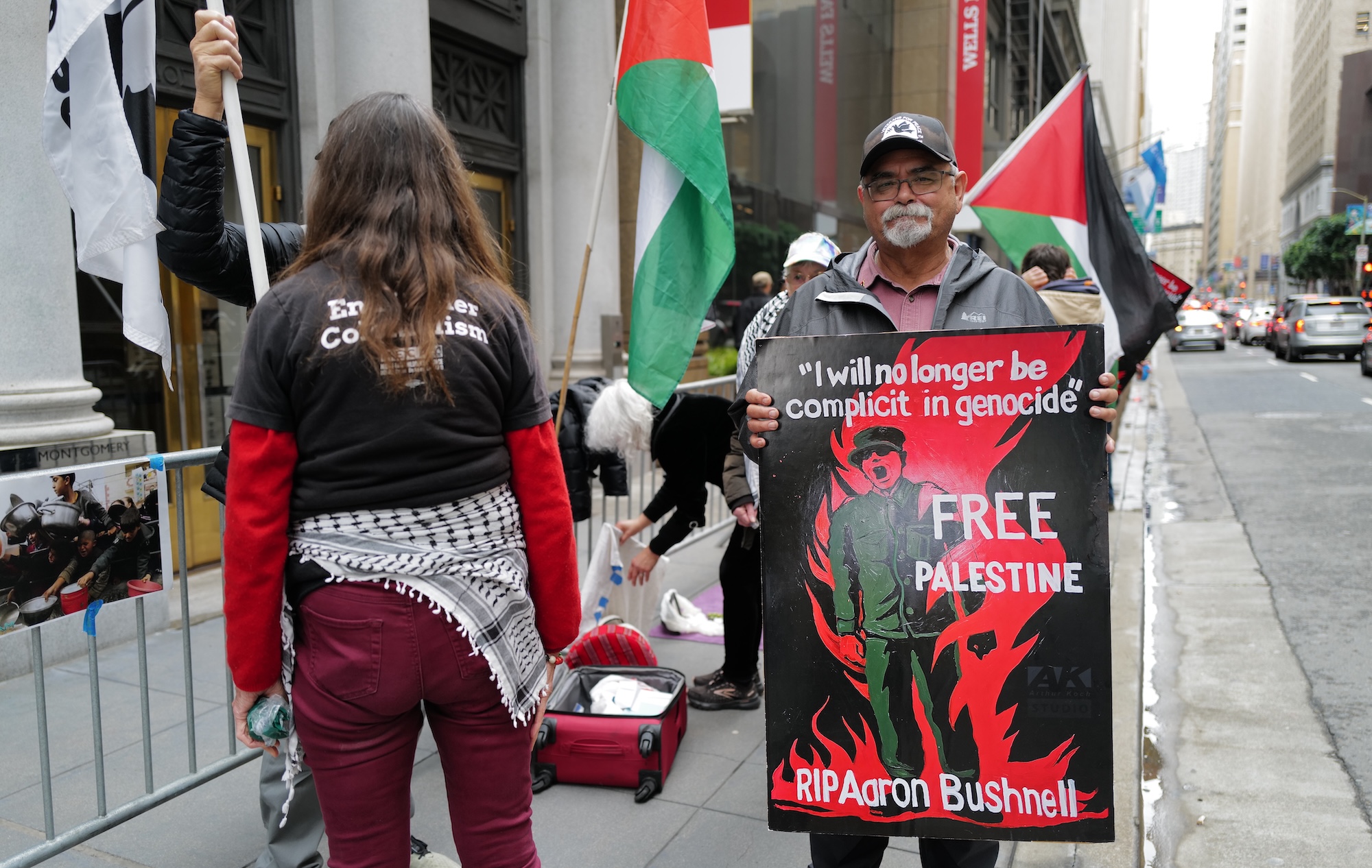
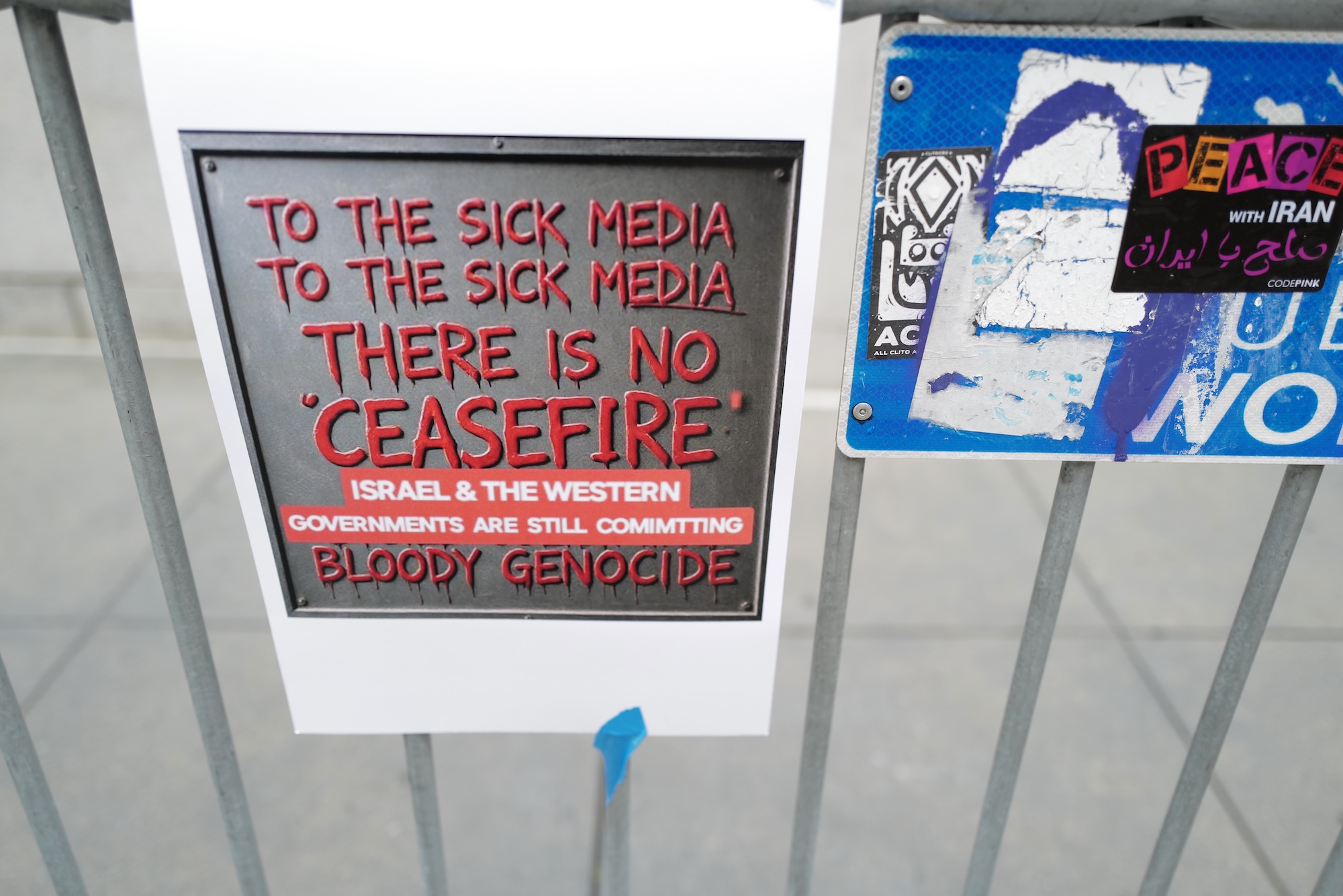
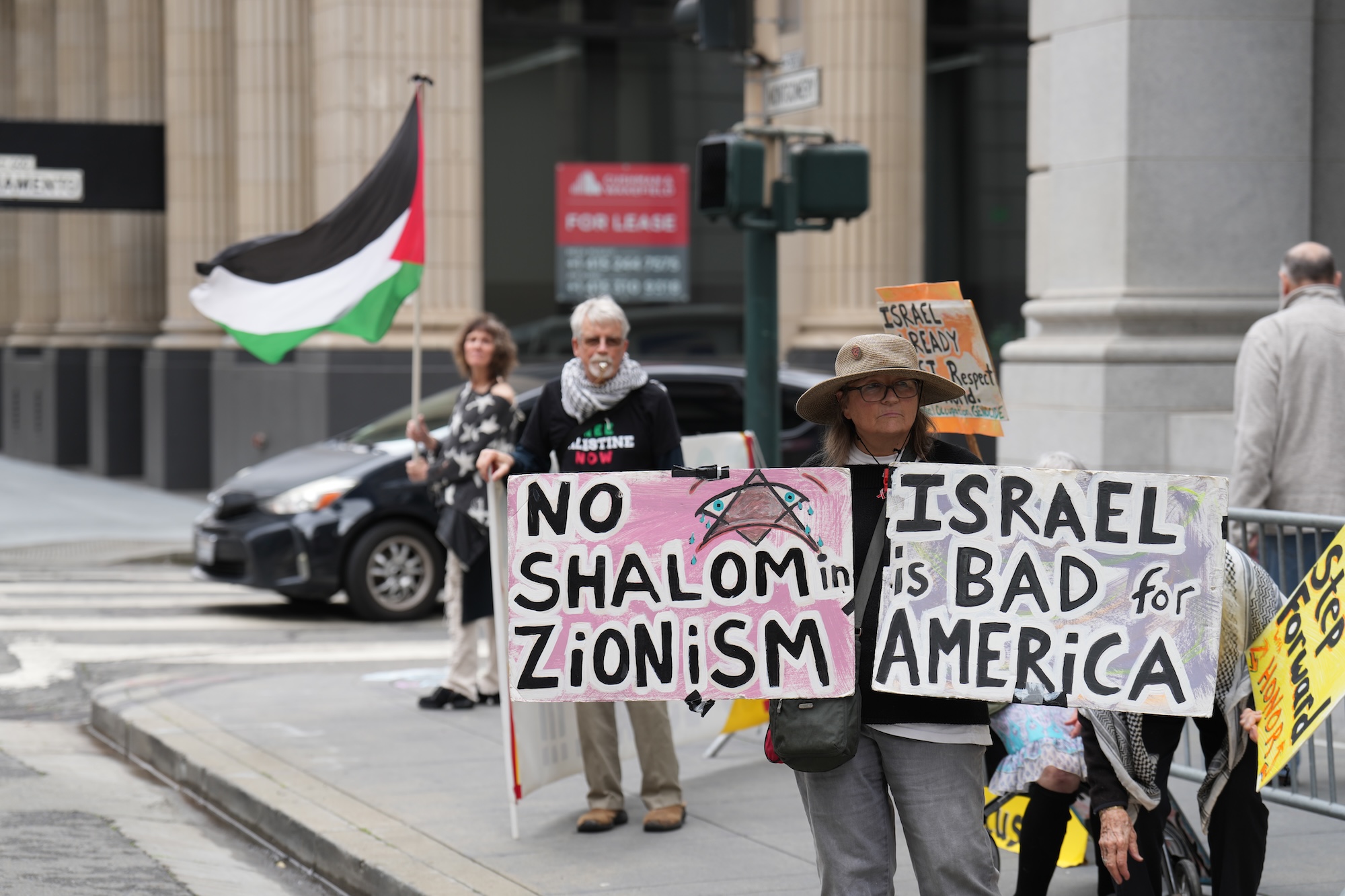
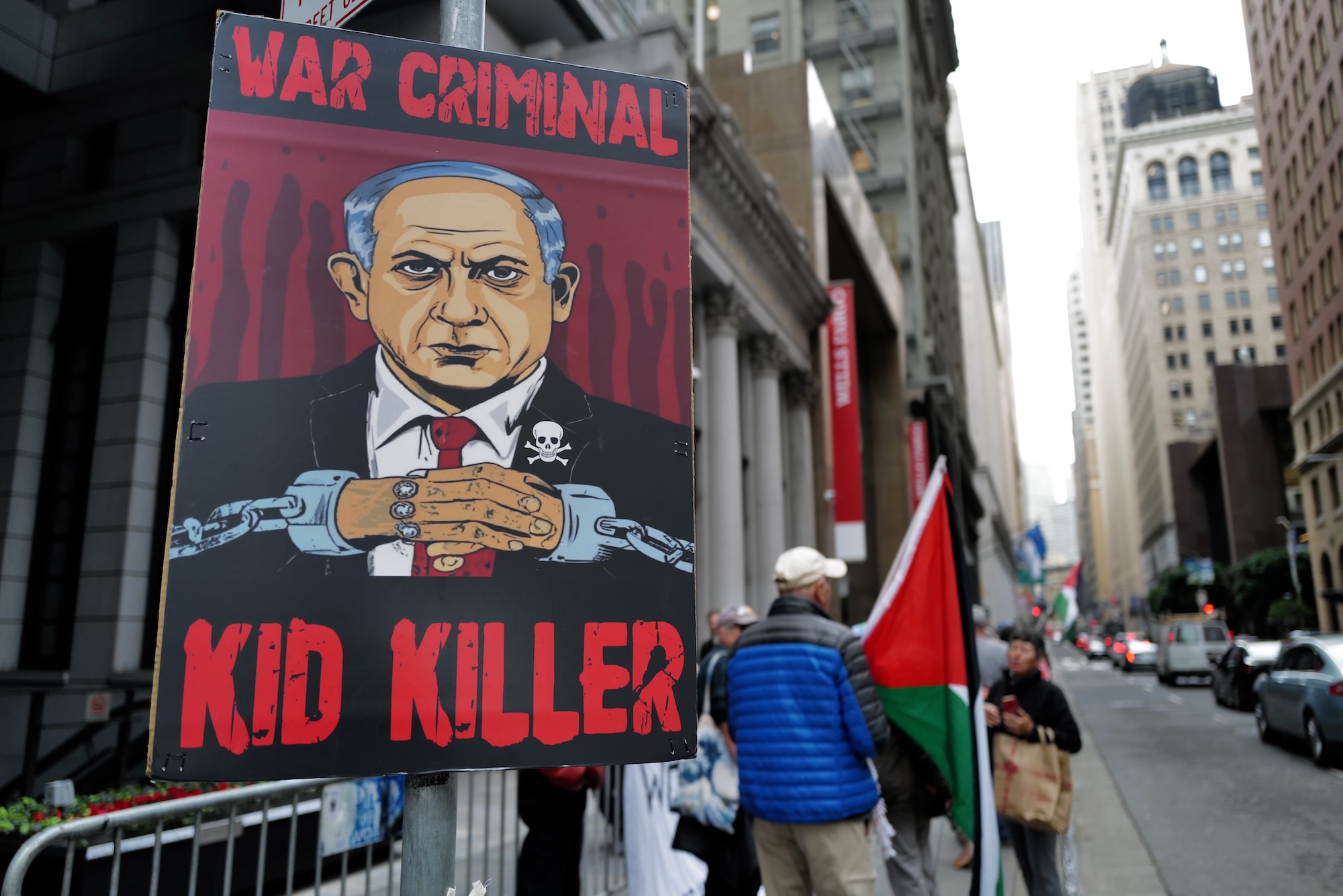
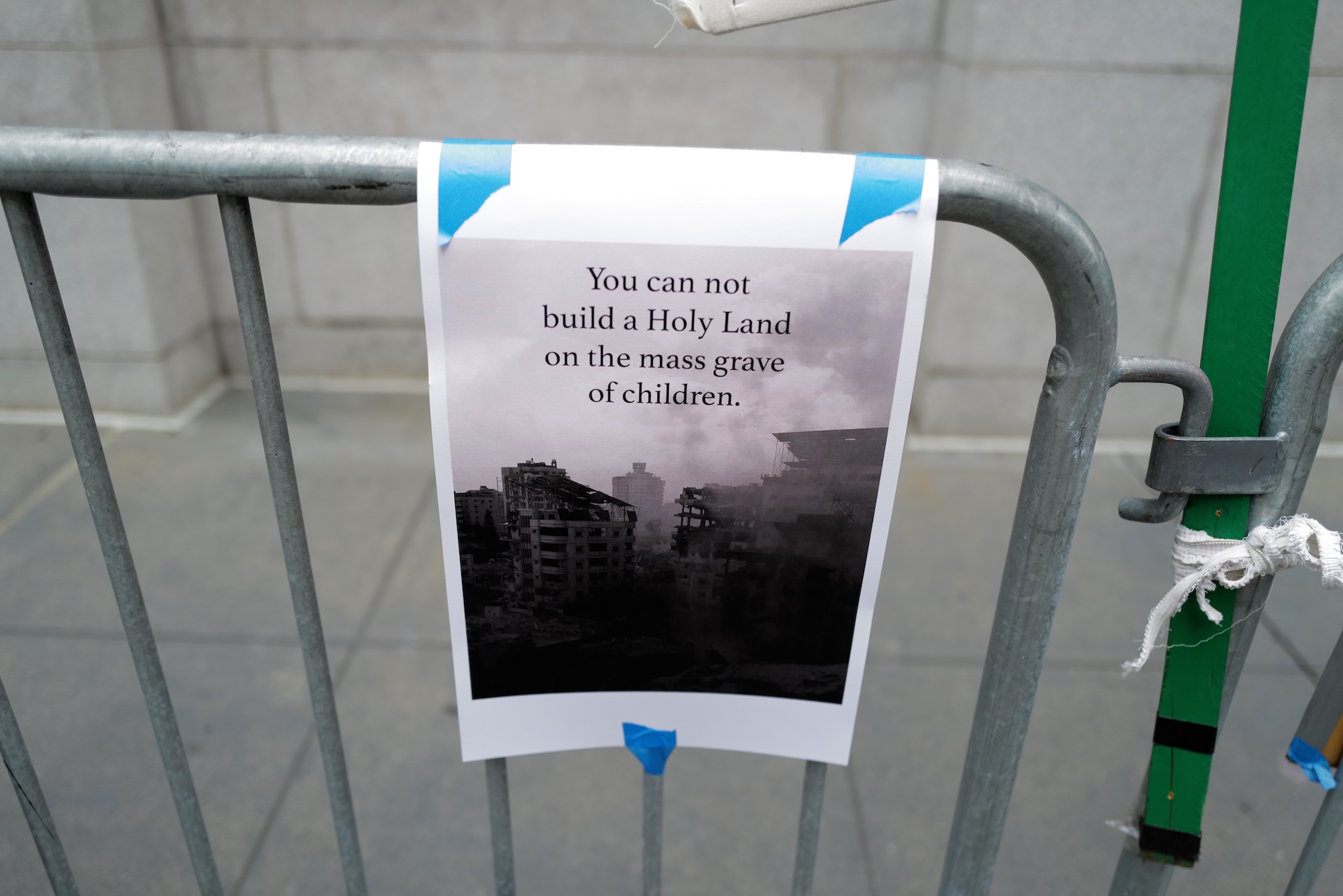
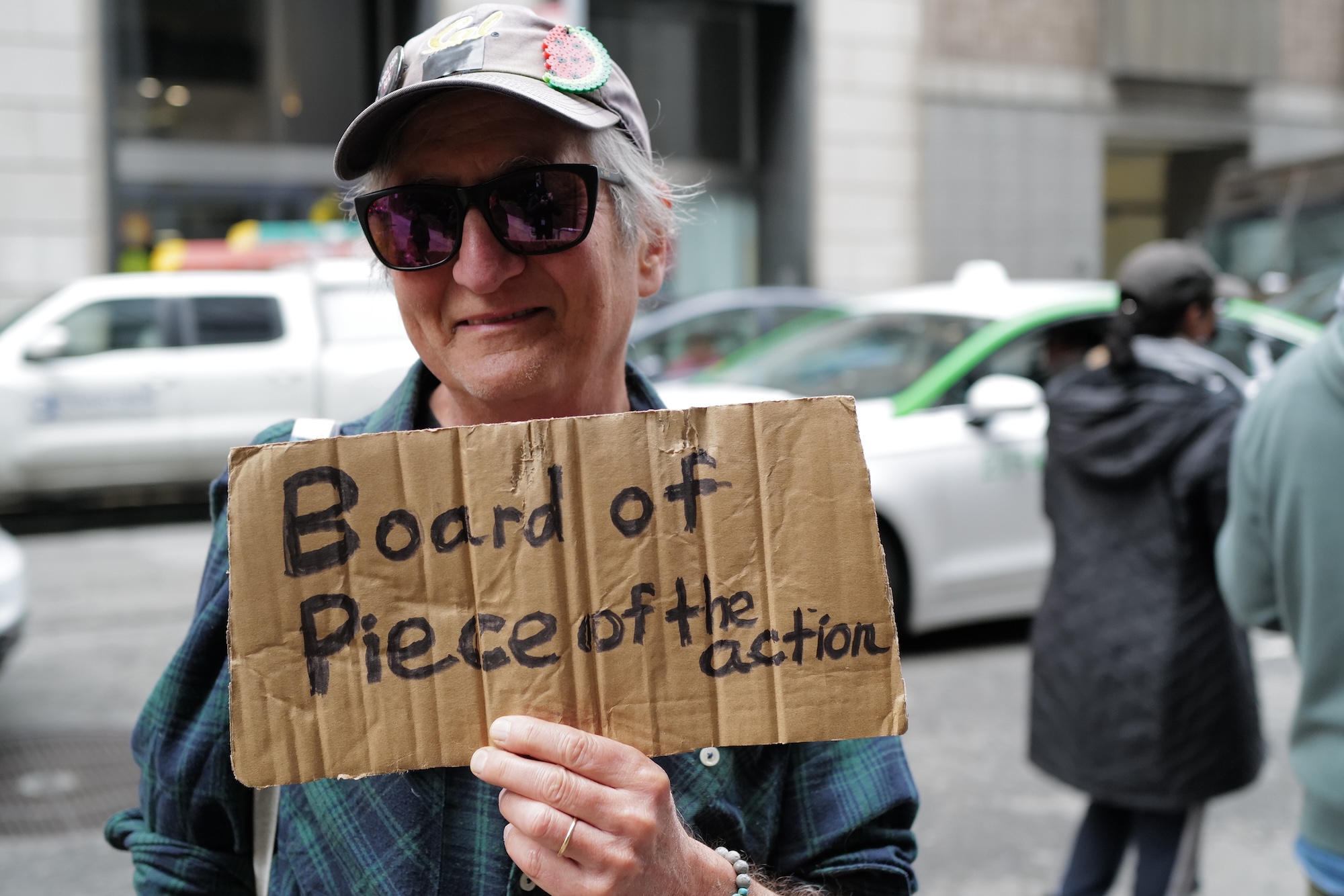
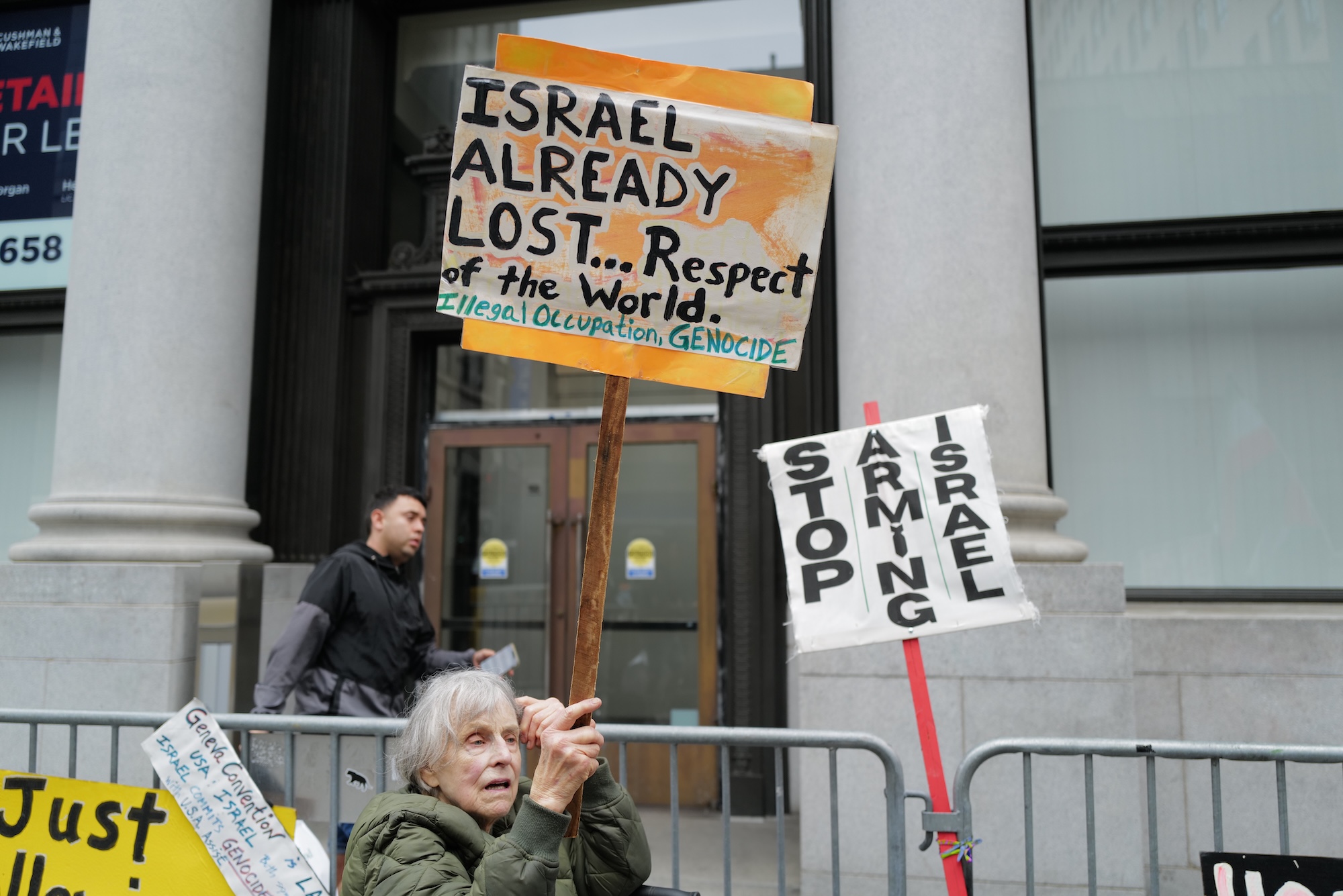
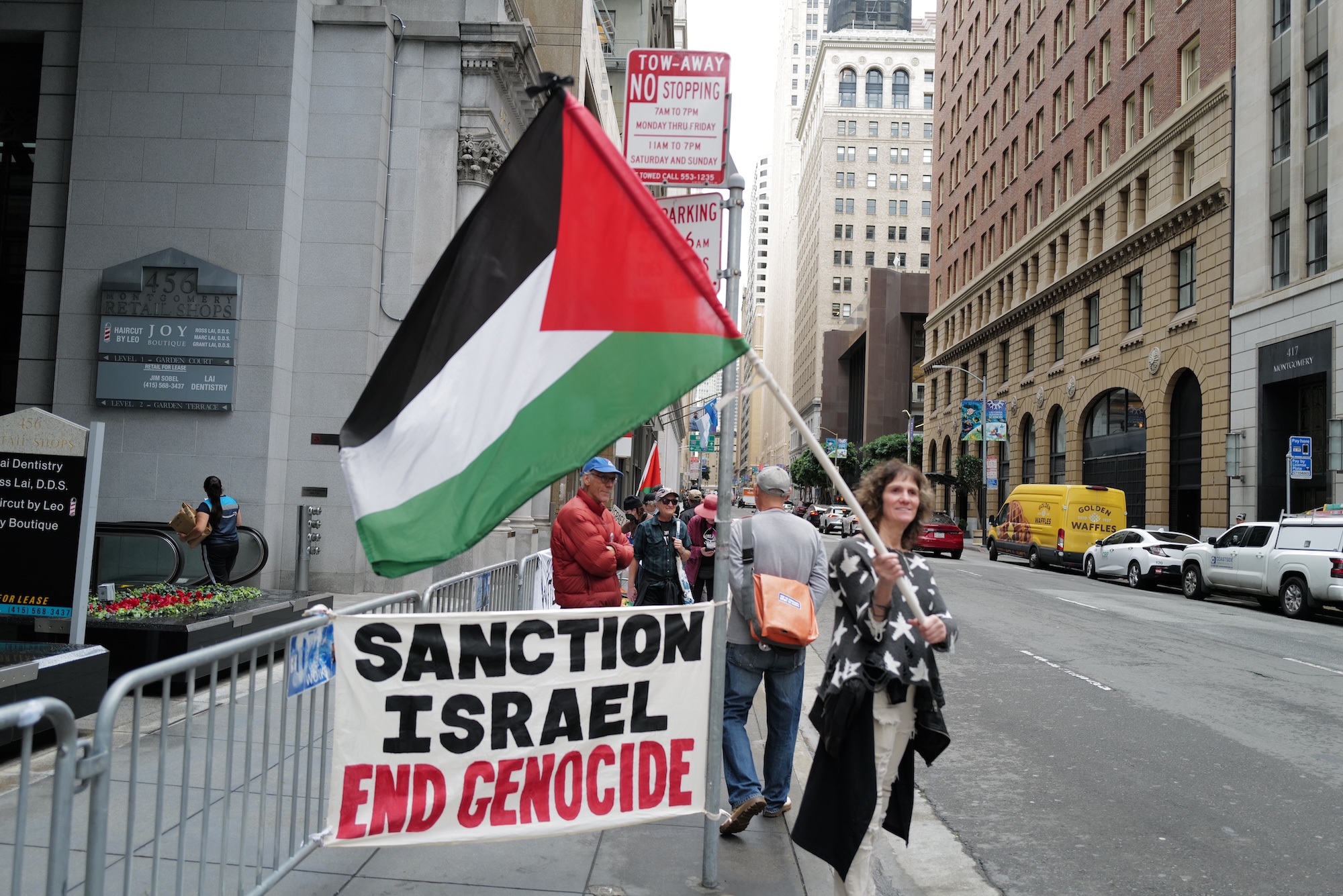
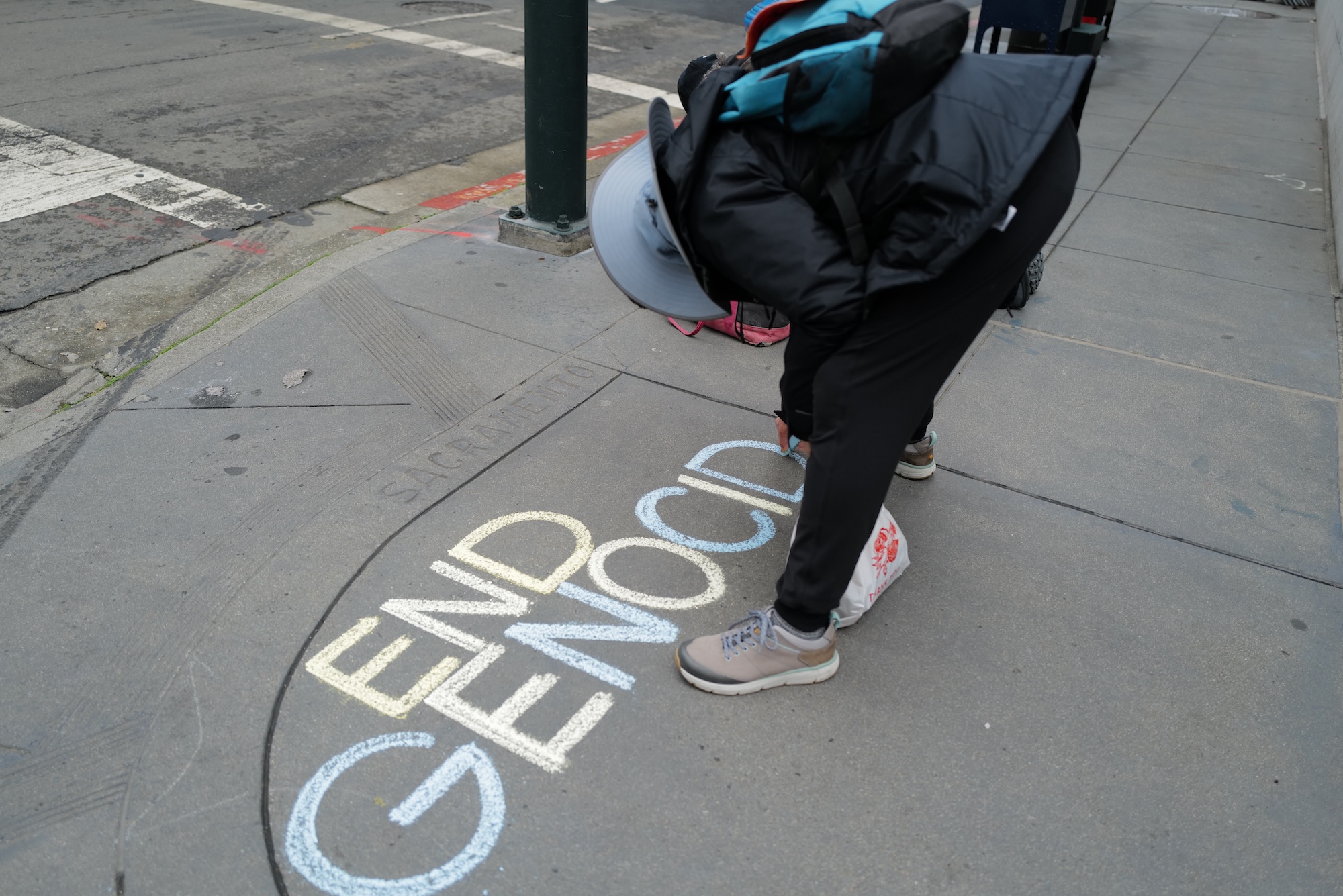
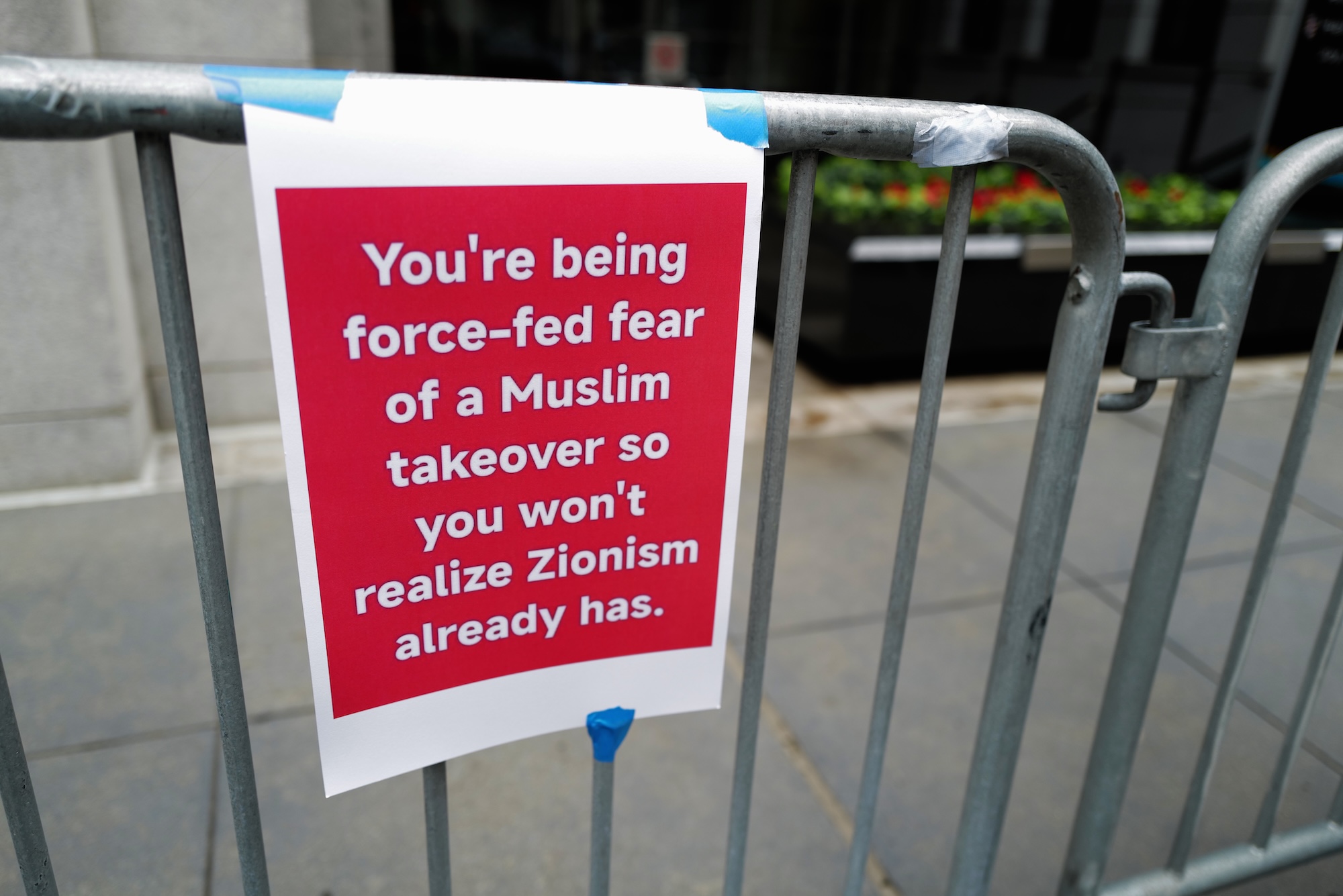
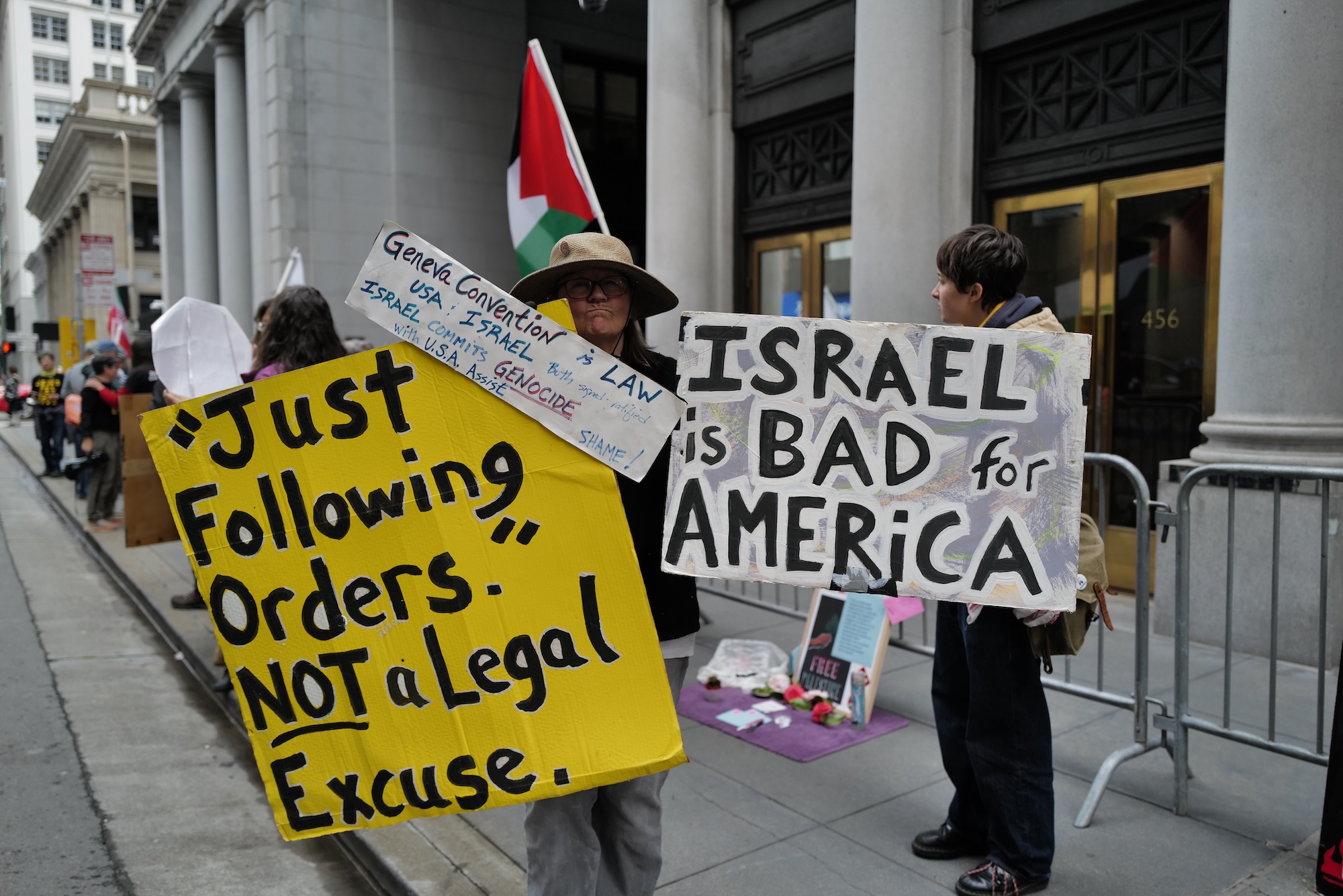
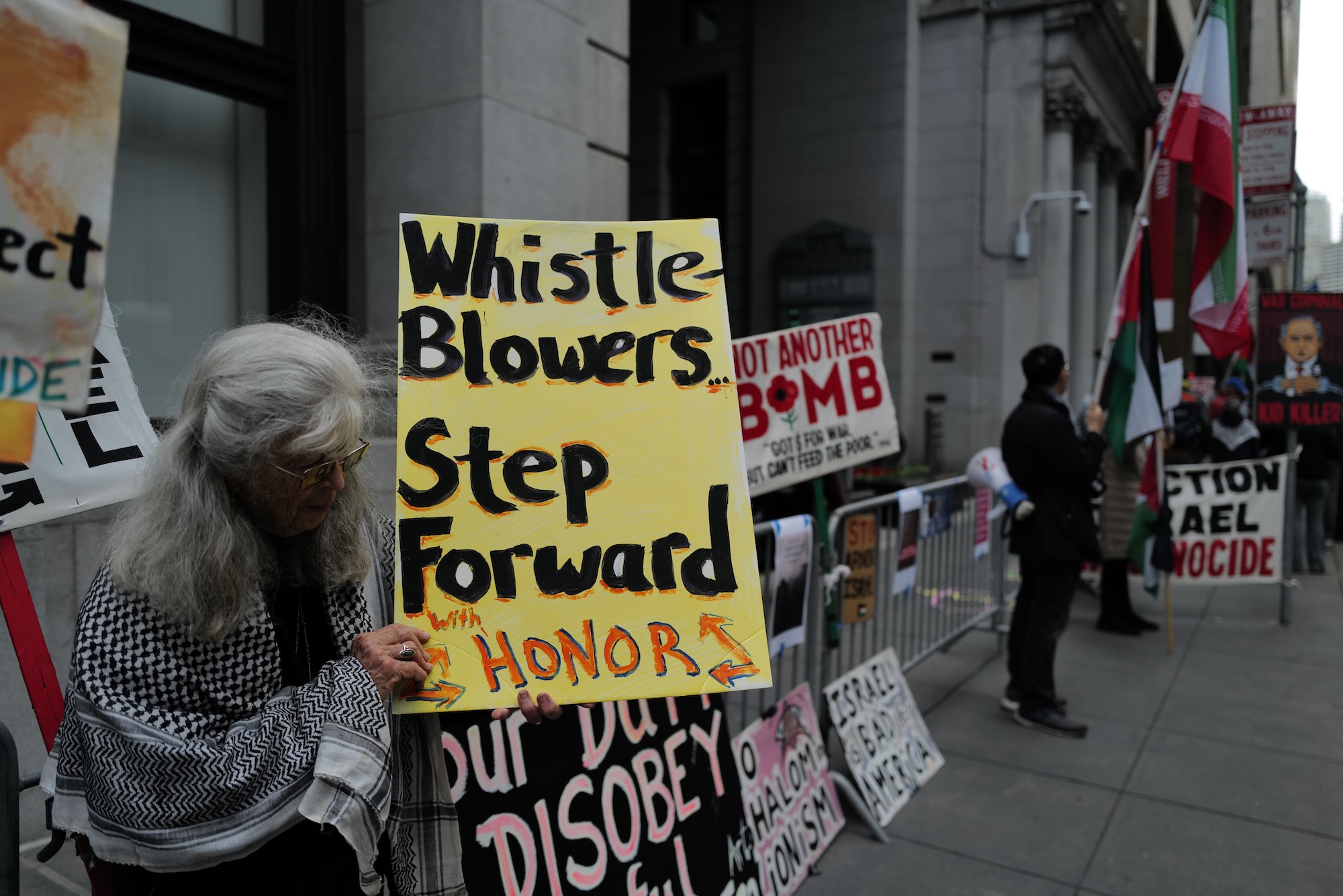
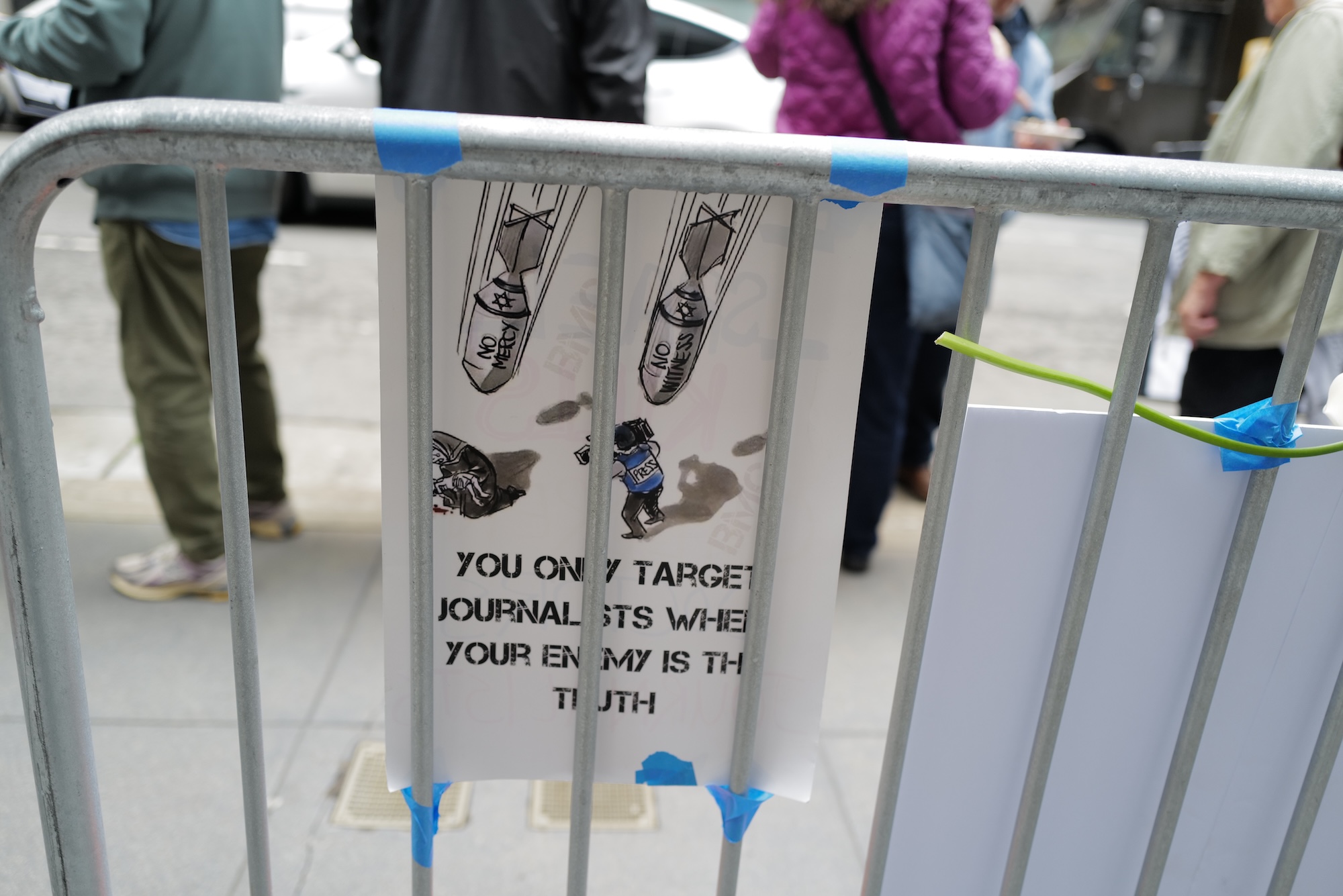
The need to remember Aaron Bushnell’s personal sacrifice in drawing attention to the ongoing Israeli genocide and US complicity was expressed using signs, banners and flags along with drums and whistles.
Saying that the Israeli consulate is NOT welcome in the Bay Area, protesters called for the “US & Israel out of Palestine!” Participants in the action and passersby heard messages conveyed by speakers from the groups hosting the protest and memorial.
Toby Blomé of Code Pink spoke at the memorial saying that in the aftermath of Bushnell’s death it is “sobering and troubling to think that two years later our government, the majority of Democrats and the vast majority of Republicans are still sending military aid to a country that is still slaughtering innocent people in Palestine.”
Reflecting on Arron Bushnell’s sacrifice, Mike Wong, Vice-President of the San Francisco chapter of Veterans for Peace, said that “When people feel so strongly that they are willing to die to stop a genocide…we should make a point of telling people what happened and how strongly this affects people and how serious that genocide is.”
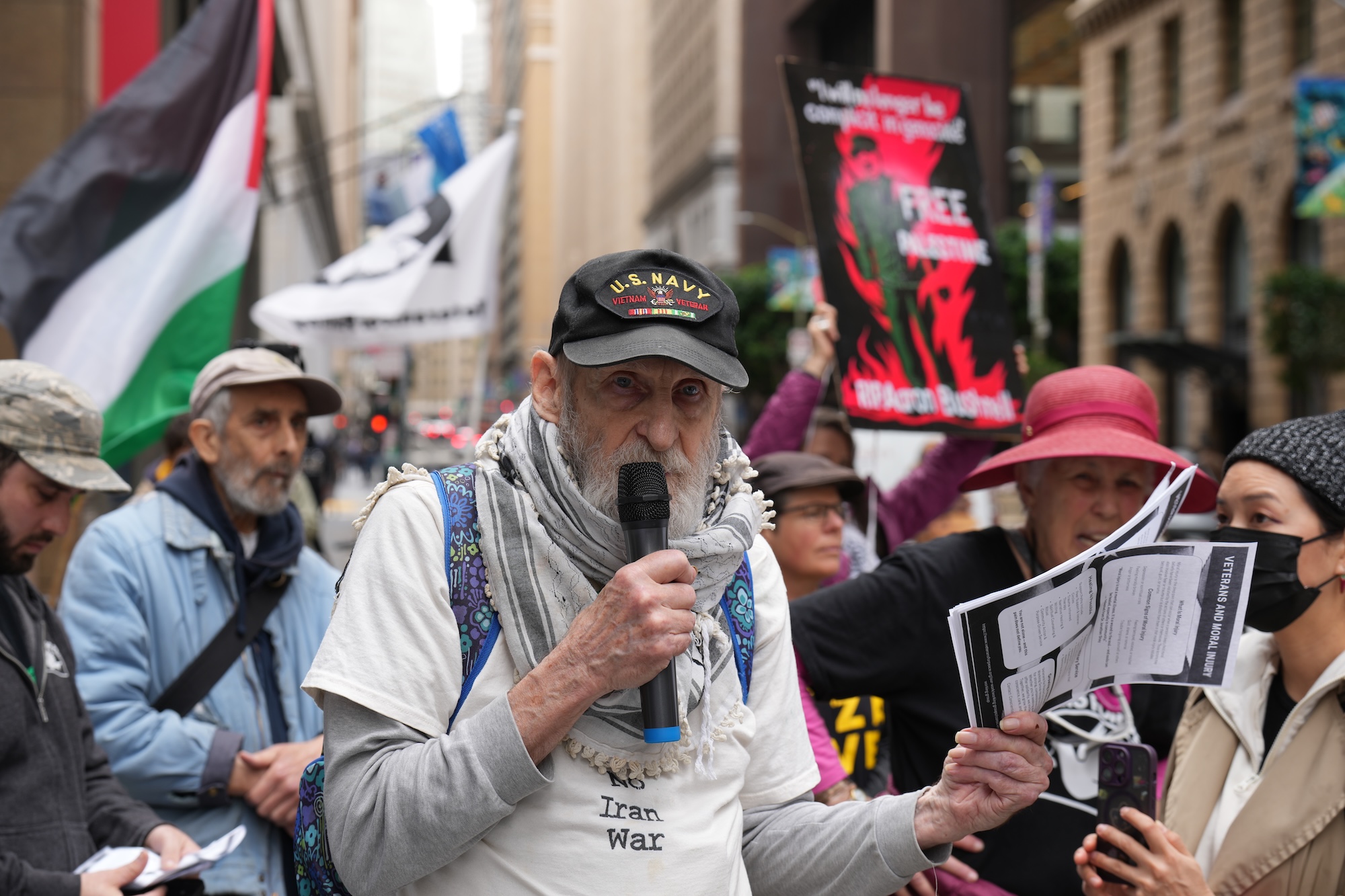
Justin Loza, a US Air Force veteran and President of Vets for Peace Monterey chapter, spoke briefly in memorializing Arron Bushnell’s extreme act of protest by describing it as “very inspiring for many veterans.” Going further by saying that “He had activated veterans that were probably not going to say much but are now speaking up.” He then followed by reading Aaron’s final statement. “I don’t think he was motived by suicide thoughts. His thoughts were elsewhere. They were on justice. That’s what this is all about. It wasn’t about his life it was about using his life to send a message.”
Janet from Code Pink reflected that “He refused to be complicit in genocide any longer. If our government had ended the humanitarian crisis in Palestine, if Palestine was free, Aaron would still be alive today. He made the reason for his protest abundantly clear. He could no longer contribute to a system based on death and destruction. He forced us to examine our own denial, our own apathy; our refusal to engage in the atrocities seen in Gaza.” She closed by saying that “I wish that Aaron could know what his actions sparked. But what we can do is make sure we carry on that message.”
Another veteran, who did not give his name, reflected on the term “Moral injury” saying that many veterans suffer from the condition including Aaron. “We thought we were the good guys and when we got in there we see just how messed up and how fucked up it is and we really don’t want to be a part of it. And I wish we had this group two years ago, because Aaron would still be alive and active as hell. God bless him.”
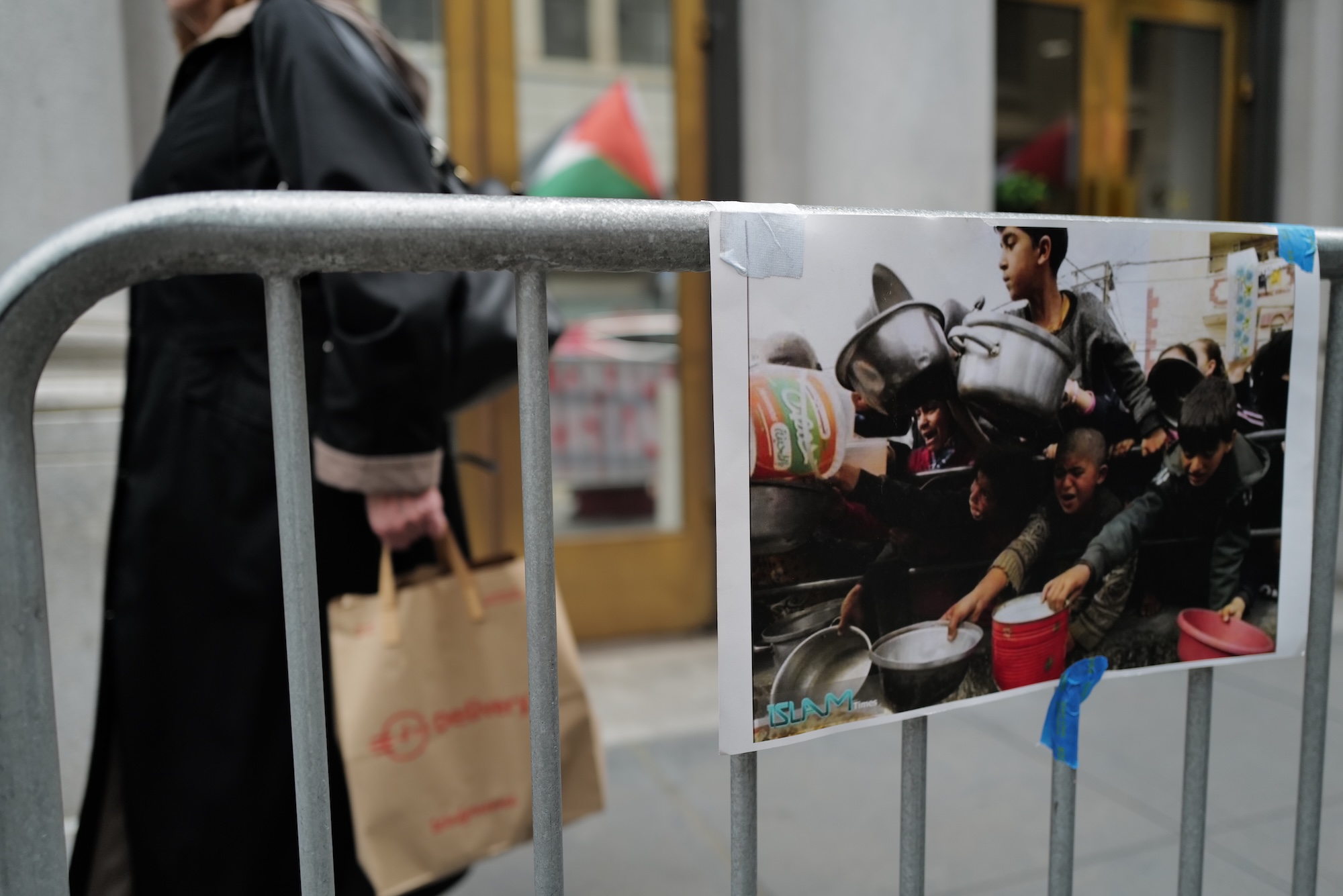
Sasha Stetler, Code Pink Bay Area coordinator, spoke about Aaron’s death saying it “was a direct reflection of the horrors we have been seeing in Palestine for two and a half years now. As he livestreamed his death his immense suffering was palpable. We have watched the immense suffering of the Palestinian people just as we watched Aaron’s. Starving children, people being shot in the head, mocked and tortured by Israeli forces.”
Turing to the history of self-immolation as the ultimate form of protest in an attempt to bring about social change, she referred first to anti-war activist Norman Morrison who in 1965 having been appalled and inspired by photos of Vietnamese children burned by US napalm and Buddhist monks self-immolating, set himself ablaze at the Pentagon below the office of then-Secretary of Defense Robert McNamara in protest to that war.
She moved on next to Tunisian street vendor, Mohamed Bouazizi, who in December of 2010 set himself on fire after his fruit and vegetables were confiscated in the wake of ongoing harassment, humiliation and paying bribes to authorities. His act sparked the Jasmin Revolution that in turn gave birth to the Arab Spring protests and uprisings across the Middle East. “This pattern of self-immolation throughout history forces us to recognize the idea that the oppression that communities and individuals suffer in the face of war and imperialism pushes them to such extreme acts.”
In referring to Aaron Bushnell’s immolation, she said, “There is nothing more painful than burning oneself. To say something while experiencing this kind of pain is to say it with the upmost courage, frankness, determination and sincerity and this is how we should remember Aaron. We must continue to hear and spread Aaron’s message that we refuse to be complicit in genocide…We must refuse to accept these conditions as normal.”
Report and photos by Phil Pasquini
© 2026 nuzeink all rights reserved worldwide
While live-streaming in front of the embassy, Bushnell made a brief statement, before setting himself on fire, saying “My name is Aaron Bushnell, and I am an active-duty member of the United States Air Force. I will no longer be complicit in genocide. I’m about to engage in an extreme act of protest but, compared to what people have been experiencing in Palestine at the hands of their colonizers, it’s not extreme at all. This is what our ruling class has decided will be normal.”
His last words, which were repeated several times as he was burning, were “Free Palestine!” Later that evening, in the aftermath of his death a curbside memorial where he died was erected in his memory by activists. Later that night the impromptu memorial was destroyed by unknown parties. The following day it was reconstructed as protesters descended on the area to honor Bushnell’s sacrifice. They then began an around the clock vigil to guard against future vandalism. That action in turn initiated a visual tug-of-war in front of the embassy between the protesters growing memorial and embassy staff, resulting in the creation of a field of Israeli flags behind the adjacent security fence.
After police threatened to arrest protesters for occupying the sidewalk, they recreated a larger more highly visible protest and memorial across the street from the embassy compound where it grew to encompass the entire street along the side of the embassy with the added benefit of no curb side parking allowing their presence to be seen unrestricted to passing traffic on the busy street.
The need to remember Aaron Bushnell’s personal sacrifice in drawing attention to the ongoing Israeli genocide and US complicity was expressed using signs, banners and flags along with drums and whistles.
Saying that the Israeli consulate is NOT welcome in the Bay Area, protesters called for the “US & Israel out of Palestine!” Participants in the action and passersby heard messages conveyed by speakers from the groups hosting the protest and memorial.
Toby Blomé of Code Pink spoke at the memorial saying that in the aftermath of Bushnell’s death it is “sobering and troubling to think that two years later our government, the majority of Democrats and the vast majority of Republicans are still sending military aid to a country that is still slaughtering innocent people in Palestine.”
Reflecting on Arron Bushnell’s sacrifice, Mike Wong, Vice-President of the San Francisco chapter of Veterans for Peace, said that “When people feel so strongly that they are willing to die to stop a genocide…we should make a point of telling people what happened and how strongly this affects people and how serious that genocide is.”
Justin Loza, a US Air Force veteran and President of Vets for Peace Monterey chapter, spoke briefly in memorializing Arron Bushnell’s extreme act of protest by describing it as “very inspiring for many veterans.” Going further by saying that “He had activated veterans that were probably not going to say much but are now speaking up.” He then followed by reading Aaron’s final statement. “I don’t think he was motived by suicide thoughts. His thoughts were elsewhere. They were on justice. That’s what this is all about. It wasn’t about his life it was about using his life to send a message.”
Janet from Code Pink reflected that “He refused to be complicit in genocide any longer. If our government had ended the humanitarian crisis in Palestine, if Palestine was free, Aaron would still be alive today. He made the reason for his protest abundantly clear. He could no longer contribute to a system based on death and destruction. He forced us to examine our own denial, our own apathy; our refusal to engage in the atrocities seen in Gaza.” She closed by saying that “I wish that Aaron could know what his actions sparked. But what we can do is make sure we carry on that message.”
Another veteran, who did not give his name, reflected on the term “Moral injury” saying that many veterans suffer from the condition including Aaron. “We thought we were the good guys and when we got in there we see just how messed up and how fucked up it is and we really don’t want to be a part of it. And I wish we had this group two years ago, because Aaron would still be alive and active as hell. God bless him.”
Sasha Stetler, Code Pink Bay Area coordinator, spoke about Aaron’s death saying it “was a direct reflection of the horrors we have been seeing in Palestine for two and a half years now. As he livestreamed his death his immense suffering was palpable. We have watched the immense suffering of the Palestinian people just as we watched Aaron’s. Starving children, people being shot in the head, mocked and tortured by Israeli forces.”
Turing to the history of self-immolation as the ultimate form of protest in an attempt to bring about social change, she referred first to anti-war activist Norman Morrison who in 1965 having been appalled and inspired by photos of Vietnamese children burned by US napalm and Buddhist monks self-immolating, set himself ablaze at the Pentagon below the office of then-Secretary of Defense Robert McNamara in protest to that war.
She moved on next to Tunisian street vendor, Mohamed Bouazizi, who in December of 2010 set himself on fire after his fruit and vegetables were confiscated in the wake of ongoing harassment, humiliation and paying bribes to authorities. His act sparked the Jasmin Revolution that in turn gave birth to the Arab Spring protests and uprisings across the Middle East. “This pattern of self-immolation throughout history forces us to recognize the idea that the oppression that communities and individuals suffer in the face of war and imperialism pushes them to such extreme acts.”
In referring to Aaron Bushnell’s immolation, she said, “There is nothing more painful than burning oneself. To say something while experiencing this kind of pain is to say it with the upmost courage, frankness, determination and sincerity and this is how we should remember Aaron. We must continue to hear and spread Aaron’s message that we refuse to be complicit in genocide…We must refuse to accept these conditions as normal.”
Report and photos by Phil Pasquini
© 2026 nuzeink all rights reserved worldwide
For more information:
https://www.facebook.com/media/set/?set=a....
Add Your Comments
We are 100% volunteer and depend on your participation to sustain our efforts!
Donate

$85.00 donated
in the past month
Get Involved
If you'd like to help with maintaining or developing the website, contact us.
Publish
Publish your stories and upcoming events on Indybay.
Topics
More
Search Indybay's Archives
Advanced Search
►
▼
IMC Network