







 Publish to Newswire
 Add an Event
From the Open-Publishing Calendar
From the Open-Publishing Newswire
Indybay Feature
Leidesdorff Plaza, est. 60 years ago by the Sacramento Negro Museum and Library, Inc.
100 year anniversary of Negro History Week and 50th year anniversary of Black History Month yet the origins of Negro Village, Negro Bar. Negro Hill, Mormon Island and a plethora of Gold Mining towns with early California Pioneers of Pan African Ancestry too offensive to preserve and appreciate an unsurpassed golden legacy.
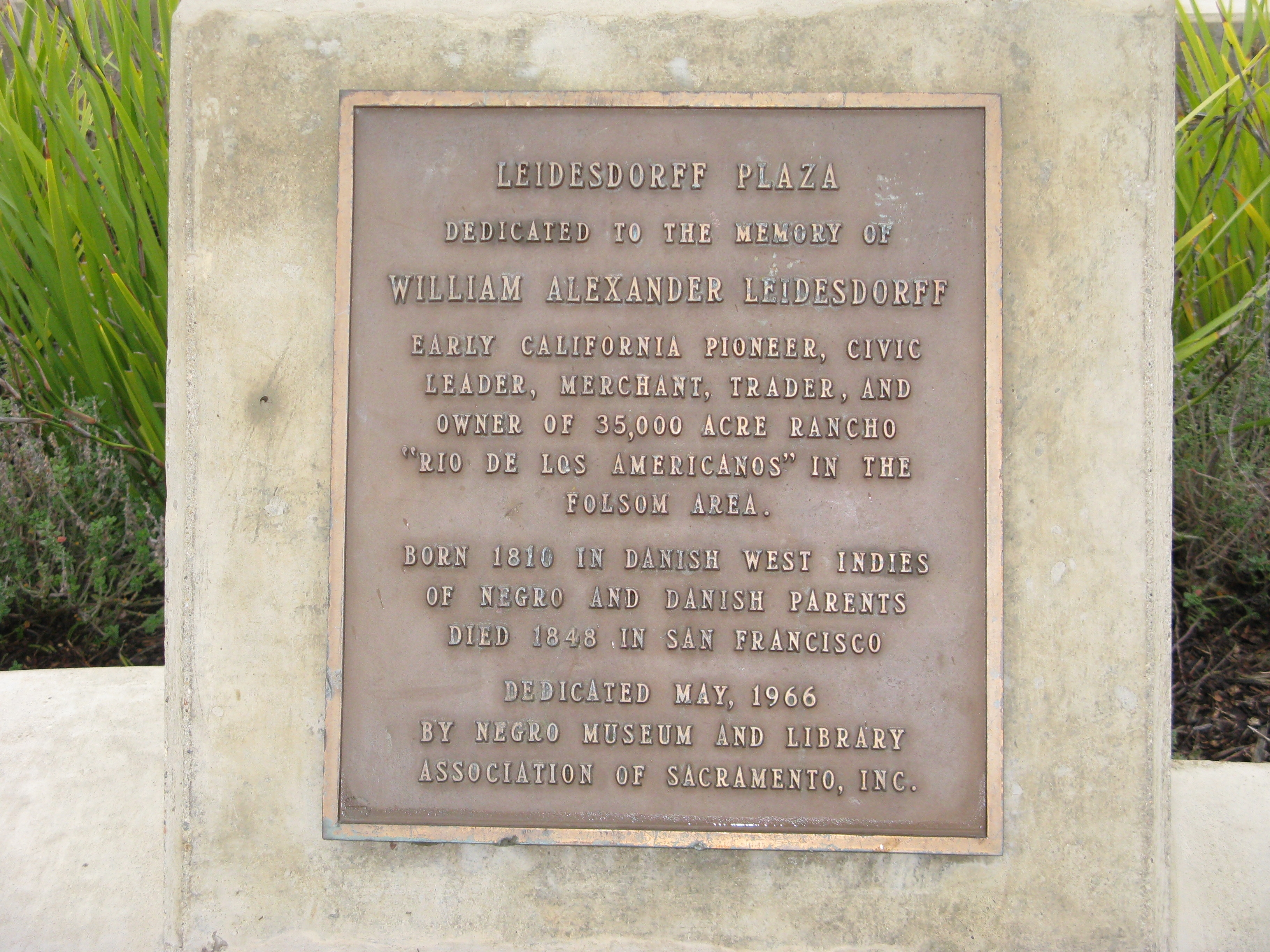
May 2026, we are excited to continue the journey towards researching, documenting, preserving and showcasing the salient contributions by people of African Descent in early California History, (1840-1875) for distant future generations.
Rancho Río de los Americanos was a Mexican land grant of 8 leagues or 35,521 acres in present-day Sacramento County, California entitled in 1844 by Governor Manuel Micheltorena to Honorable William Alexander Leidesdorff, Jr. (1810–1848).
The grant takes its name from Río de los Americanos, the name of the American River during the Mexican-rule era.
The grant extended from the eastern border of John Sutter's New Helvetia (east of Sacramento) 4 leagues along the south bank of the American River and included present-day cities of Rancho Cordova, Folsom, Mather AFB and extensive Sacramento County land today.
History
William Alexander Leidesdorff, Jr. U.S. Vice Consul at the Port of San Francisco, elected Treasurer of San Francisco hired a farm manager and financed construction of Leidesdorff cattle and wheat ranch.
Four adobe brick dwellings were constructed on the site of today's River Bend Park, near Bradshaw Road and Folsom Blvd, in the city of Rancho Cordova.
William Leidesdorff died suddenly three years later, on May 18, 1848, at the age of 38. after official reports of vast sums of gold on his river front property. He was not married and had no family in California. He died intestate, leaving a very large estate at the dawn of the California Gold Rush.
His death came around the signing of the Treaty of Guadalupe Hidalgo and the cession of Alta California to the United States following the Mexican-American War.
Leidesdorff's vast estate should have passed to his mother, Anna Marie Spark, and surviving siblings, who resided in and were citizens of St. Croix, Danish West Indies, today's U.S. Virgin Islands however new laws allowed only “white men” as citizens, prohibiting testimony of people of African ancestry.
US Army Captain Joseph Libbey Folsom (1817–1855), a graduate of West Point had come to California in 1847 as an Assistant Quartermaster of Jonathan D. Stevenson's 1st Regiment of New York Volunteers.
He became the first Collector of the Port of San Francisco under American rule since 1946. Folsom was familiar with Leidesdorff's vast holdings and learned about his family in St. Croix, then Danish Virgin Islands.
In 1849, Folsom took leave from the U.S. Army, stopping in New York to arrange financing, went to St. Croix, where he located some of Leidesdorff's relatives, including his mother.
Anna Sparks signed a note authorizing Folsom to purchase the title to her son's estate, including Leidesdorff's extensive real estate holdings in San Francisco as well as Rancho Río de los Americanos, for $75,000, with a $5,000 down payment and the remainder to be paid in two installments.
When Sparks realized the true value of the estate, she refused to accept further payments or to give title to Folsom. Folsom hired the top law firm of Halleck, Peachy & Billings to encourage Spark to accept the final payments.
The State of California Senate in 1854 made an attempt to control the estate, contending that, because Spark was not an American citizen, among other legal questions, she could not inherit property in California, and hence could not transfer it to Folsom.
In 1855, the California Supreme Court ruled that Spark could inherit the properties; and therefore, the title legally passed to Folsom.
The Treaty of Guadalupe Hidalgo, ending War with Mexico, provided that the land grants could be honored. As required by the Land Act of 1851, Folsom filed a claim for the grant with the Public Land Commission in 1852. The claim was confirmed by the Commission in 1855 and the District Court in 1857.
Although clear title was tied up in court, Folsom continued to develop the vast grant and extensive holdings in San Francisco.
In 1854, Folsom began to sell parcels of the Leidesdorff Ranch. He proposed to rename the Negro Bar townsite, today’s Historic Folsom, Granite City, and had lots were surveyed and sold as seen on the September 1854 Theodore Judah survey.
When Folsom also died suddenly at the age of 38, in 1855, one month after the Commission confirmed his title to the grant, the town was renamed Folsom.
Folsom's estate was handled by his executors, Halleck, Peachy & Billings. A survey of the grant, known as the Hays survey, was completed and approved by the Surveyor General of California. Folsom had been dead three years, when, in 1858, the Department of Interior disapproved the survey.
Jacob Thompson, the US Secretary of the Interior, determined that the survey did not conform to either the description of the land granted by the Mexican government, the land as shown on the Diseño, or to the decree of the Court.
The District Court ordered a new survey, known as the Mandeville survey; but in 1852, it reversed itself and approved the original Hays survey.
However, the United States appealed this ruling to the United States Supreme Court and President Lincoln utilized Executive authority during the IS Civil War to put the issue at rest.
Earlier In 1857, the Natoma Water and Mining Company, founded in 1851, engaged in granite quarrying, agriculture, gold mining and hydro-electric power, purchased 5,000 acres from the Folsom estate. Amos Catlin was the legal counsel for the Natoma Water and Mining Company.
In 1862, Horatio G. Livermore acquired the Natoma Water and Mining Company and began developing Rancho Río de los Americanos.
Today, the explosive growth south of William Alexander Leidesdorff Jr. Memorial Highway is a well planned 21st Century Gold Rush.
Rancho Río de los Americanos was a Mexican land grant of 8 leagues or 35,521 acres in present-day Sacramento County, California entitled in 1844 by Governor Manuel Micheltorena to Honorable William Alexander Leidesdorff, Jr. (1810–1848).
The grant takes its name from Río de los Americanos, the name of the American River during the Mexican-rule era.
The grant extended from the eastern border of John Sutter's New Helvetia (east of Sacramento) 4 leagues along the south bank of the American River and included present-day cities of Rancho Cordova, Folsom, Mather AFB and extensive Sacramento County land today.
History
William Alexander Leidesdorff, Jr. U.S. Vice Consul at the Port of San Francisco, elected Treasurer of San Francisco hired a farm manager and financed construction of Leidesdorff cattle and wheat ranch.
Four adobe brick dwellings were constructed on the site of today's River Bend Park, near Bradshaw Road and Folsom Blvd, in the city of Rancho Cordova.
William Leidesdorff died suddenly three years later, on May 18, 1848, at the age of 38. after official reports of vast sums of gold on his river front property. He was not married and had no family in California. He died intestate, leaving a very large estate at the dawn of the California Gold Rush.
His death came around the signing of the Treaty of Guadalupe Hidalgo and the cession of Alta California to the United States following the Mexican-American War.
Leidesdorff's vast estate should have passed to his mother, Anna Marie Spark, and surviving siblings, who resided in and were citizens of St. Croix, Danish West Indies, today's U.S. Virgin Islands however new laws allowed only “white men” as citizens, prohibiting testimony of people of African ancestry.
US Army Captain Joseph Libbey Folsom (1817–1855), a graduate of West Point had come to California in 1847 as an Assistant Quartermaster of Jonathan D. Stevenson's 1st Regiment of New York Volunteers.
He became the first Collector of the Port of San Francisco under American rule since 1946. Folsom was familiar with Leidesdorff's vast holdings and learned about his family in St. Croix, then Danish Virgin Islands.
In 1849, Folsom took leave from the U.S. Army, stopping in New York to arrange financing, went to St. Croix, where he located some of Leidesdorff's relatives, including his mother.
Anna Sparks signed a note authorizing Folsom to purchase the title to her son's estate, including Leidesdorff's extensive real estate holdings in San Francisco as well as Rancho Río de los Americanos, for $75,000, with a $5,000 down payment and the remainder to be paid in two installments.
When Sparks realized the true value of the estate, she refused to accept further payments or to give title to Folsom. Folsom hired the top law firm of Halleck, Peachy & Billings to encourage Spark to accept the final payments.
The State of California Senate in 1854 made an attempt to control the estate, contending that, because Spark was not an American citizen, among other legal questions, she could not inherit property in California, and hence could not transfer it to Folsom.
In 1855, the California Supreme Court ruled that Spark could inherit the properties; and therefore, the title legally passed to Folsom.
The Treaty of Guadalupe Hidalgo, ending War with Mexico, provided that the land grants could be honored. As required by the Land Act of 1851, Folsom filed a claim for the grant with the Public Land Commission in 1852. The claim was confirmed by the Commission in 1855 and the District Court in 1857.
Although clear title was tied up in court, Folsom continued to develop the vast grant and extensive holdings in San Francisco.
In 1854, Folsom began to sell parcels of the Leidesdorff Ranch. He proposed to rename the Negro Bar townsite, today’s Historic Folsom, Granite City, and had lots were surveyed and sold as seen on the September 1854 Theodore Judah survey.
When Folsom also died suddenly at the age of 38, in 1855, one month after the Commission confirmed his title to the grant, the town was renamed Folsom.
Folsom's estate was handled by his executors, Halleck, Peachy & Billings. A survey of the grant, known as the Hays survey, was completed and approved by the Surveyor General of California. Folsom had been dead three years, when, in 1858, the Department of Interior disapproved the survey.
Jacob Thompson, the US Secretary of the Interior, determined that the survey did not conform to either the description of the land granted by the Mexican government, the land as shown on the Diseño, or to the decree of the Court.
The District Court ordered a new survey, known as the Mandeville survey; but in 1852, it reversed itself and approved the original Hays survey.
However, the United States appealed this ruling to the United States Supreme Court and President Lincoln utilized Executive authority during the IS Civil War to put the issue at rest.
Earlier In 1857, the Natoma Water and Mining Company, founded in 1851, engaged in granite quarrying, agriculture, gold mining and hydro-electric power, purchased 5,000 acres from the Folsom estate. Amos Catlin was the legal counsel for the Natoma Water and Mining Company.
In 1862, Horatio G. Livermore acquired the Natoma Water and Mining Company and began developing Rancho Río de los Americanos.
Today, the explosive growth south of William Alexander Leidesdorff Jr. Memorial Highway is a well planned 21st Century Gold Rush.
Add Your Comments
We are 100% volunteer and depend on your participation to sustain our efforts!
Donate

$85.00 donated
in the past month
Get Involved
If you'd like to help with maintaining or developing the website, contact us.
Publish
Publish your stories and upcoming events on Indybay.
Topics
More
Search Indybay's Archives
Advanced Search
►
▼
IMC Network