







 Publish to Newswire
 Add an Event
From the Open-Publishing Calendar
From the Open-Publishing Newswire
Indybay Feature
US-Iran talks: A percentage assessment of the chances of success, failure and partial succ
Analytical estimates put the chances of success in the Muscat talks mediated by the Sultanate of Oman at around 60-70 percent, the chances of failure at 15-20 percent, and the chances of partial success at around 10-15 percent.
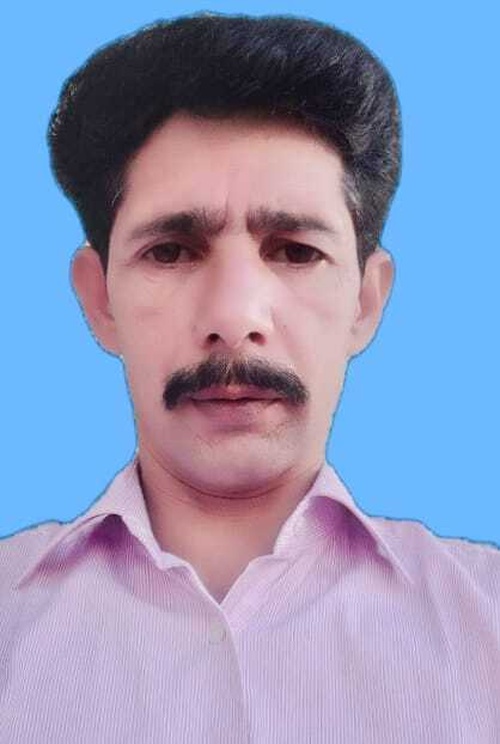
The high-level talks between the United States and Iran, held today in Muscat, the peaceful and beautiful capital of the Sultanate of Oman, are a very sensitive and historic stage in global diplomacy, where the eyes of the whole world are fixed on this table because these talks are not only for the relations between the two countries, but also for the Middle East and the entire international community to guarantee peace, security and economic stability. In the current delicate and complex geopolitical context, the increasing tension between the United States and Iran, economic sanctions, the risks of military conflict, and the balance of power in the region have ensured that a safe, neutral and credible place is needed for the talks, and the Sultanate of Oman, as always, has provided this platform under its historical traditions, high-level and impartial mediation policy, in which the Omani leadership not only highlighted its key role of hospitality but also implemented its consistent policy of finding a peaceful solution in the region. The calm atmosphere of Muscat and Omani mediation are extremely important in balancing the positions of the United States and Iran on Iran's nuclear program and economic sanctions. are playing a role, and analytically, this time, a clear “strategic flexibility” is expected from the US because Washington is preferring a de-escalation arrangement rather than a direct confrontation in the region, under which partial return of Iran’s frozen assets and some humanitarian relief of sanctions can be provided, while Iran is also showing potential flexibility to not exceed the 60% limit in uranium enrichment and limit international monitoring in view of public pressure, demands for economic improvement, and the internal policy of the new administration of President Masoud Pazishkian. As a result, the chances of success of the negotiations are appearing to be 60 to 70% in the current circumstances, because both countries have now run out of room to maintain the status quo, and in case of success, an interim deal is possible that will provide the basis for a permanent solution in the future. However, there are also risks of failure, because the internal political Pressure, regional adversaries, and the political demands of global power can affect it. Oman's foreign policy has always been based on goodwill, neutrality, and the promotion of world peace, which Sultan Qaboos bin Said established and the current Sultan Hisham bin Tariq has taken it to new heights, establishing the Sultanate of Oman as an exemplary diplomatic center on the global stage. Oman also played a key role in the process of the historic nuclear deal in 2013 and the same dedication to world peace remains today. Technical issues such as Iran's nuclear program, enrichment levels, cooperation with the International Atomic Energy Agency (IAEA), and complex issues of monitoring would not have been possible to resolve without Oman's mediation. These negotiations are also the focus of other powerful countries in the region, including Saudi Arabia, Israel, and the United Arab Emirates, where Saudi Arabia and the United Arab Emirates seek stability and see Oman's mediation in the wider interest of the region. While despite Israel's strategic concerns, the attention of the international community is focused on Muscat's peaceful corridors, the global politics of oil and Given the importance of the Strait of Hormuz, the success of these negotiations is essential for the entire world. Muscat's geographical importance and Oman's impartial mediation are like the backbone for the security of this waterway, the restoration of the global energy supply chain, and long-term stability in the region. The details of the delegations involved in the negotiations are also important; The US delegation is led by Brett McGurk, a highly experienced White House official and expert on Middle East affairs, and is accompanied by Acting Special Envoy Abram Paley. The Iranian delegation is led by Abbas Araghchi and Ali Bagheri Kani. All of these experienced diplomats are advancing the negotiations in light of global tensions, economic pressures, and security threats in the region. The impartial facilitation provided by Oman has been appreciated not only by Washington and Tehran, but also by the United Nations and the European Union. Oman has proven that it is not a country but a neutral and effective diplomatic institution for the international community that is capable of protecting human life and global security from threats. The success of the negotiations will provide solid support to Iran's economy and will also be a success in foreign policy for the United States, which will have a positive impact on the global energy market, investment opportunities, regional security, and international relations. There will be, while the failure of the negotiations could lead to military tension in the region, economic uncertainty, and global instability. In short, these negotiations held today in Muscat are not just talks between two countries, but the foundation of a new global diplomatic system, where wisdom, dialogue, and negotiations take precedence over the use of force. Oman's mediation has once again played its historic role in turning the tide of world history towards peace, and it is hoped that this process will provide new horizons of lasting peace, cooperation, and balance for the region and the international community. — Malik Sarfaraz Hussain Awan
For more information:
https://sites.google.com/view/sarfraz-huss...
Add Your Comments
We are 100% volunteer and depend on your participation to sustain our efforts!
Donate

$135.00 donated
in the past month
Get Involved
If you'd like to help with maintaining or developing the website, contact us.
Publish
Publish your stories and upcoming events on Indybay.
Topics
More
Search Indybay's Archives
Advanced Search
►
▼
IMC Network