







 Publish to Newswire
 Add an Event
From the Open-Publishing Calendar
From the Open-Publishing Newswire
Indybay Feature
Torture memo, war criminal John Yoo resides in Tiburon
Photo of War Criminal, John Yoo.
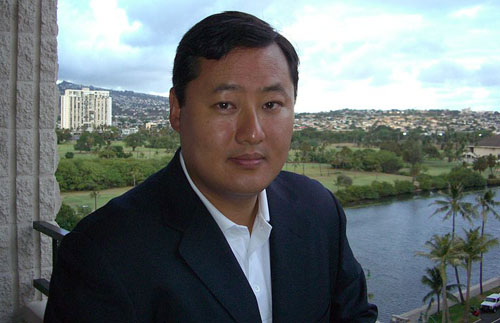
Torture memo, war criminal John Yoo resides in Tiburon
John Yoo resides in a $4.5 million dollar home instead of a prison cell in the U.S., or another country
By Lynda Carson - February 3, 2026
Reportedly, torture memo, war criminal John Yoo resides in a $4.5 million dollar home in Tiburon, instead of a prison cell in the U.S., or in Europe. The war criminal John Yoo, was never held accountable for his war crimes, or activities.
According to Wikipedia, “A set of legal memoranda known as the "Torture Memos" (officially the Memorandum Regarding Military Interrogation of Alien Unlawful Combatants Held Outside The United States) were drafted by John Yoo as Deputy Assistant Attorney General of the United States and signed in August 2002 by Assistant Attorney General Jay S. Bybee, head of the Office of Legal Counsel of the United States Department of Justice. They advised the Central Intelligence Agency, the United States Department of Defense, and the president on the use of enhanced interrogation techniques—mental and physical torment and coercion such as prolonged sleep deprivation, binding in stress positions, and waterboarding—and stated that such acts, widely regarded as torture, might be legally permissible under an expansive interpretation of presidential authority during the "war on terror". Additionally, John Yoo, of the Federalist Society, and the University of California, Berkeley, Wikipedia reports that, “John Choon Yoo (Korean: 유준; born July 10, 1967) is a South Korean-born American legal scholar and former government official who is the Emanuel S. Heller Professor of Law at the University of California, Berkeley. While serving in the George W. Bush administration, he became known for his legal opinions concerning executive power, warrantless wiretapping, and the Geneva Conventions.”
John Yoo, is a rabid supporter of the convicted felon President Donald J. Trump, supporting unlimited presidential powers for the convicted felon, white supremacist, racist, fascist Trump.
Presently, the convicted felon President Donald J. Trump, has been demanding that our elections should be nationalized, and controlled by the Republican Party, which is unconstitutional, and a direct threat to our state’s voting rights. The fascist convicted felon Trump has been falsely claiming that he won the 2020 election, and is claiming that the federal government should take control of our elections. No doubt, this may be something else that the war criminal John Yoo, may be supportive of.
Code Pink Peace Vigils Outside Of John Yoo Home In Berkeley, In 2009, Before He Moved To Tiburon.
Back in 2009, Code Pink used to hold a peace vigil outside the home of John Yoo on Sundays, when he used to reside in Berkeley. Reportedly, “A coalition of torture accountability, civil liberties, human rights, and anti-war groups will hold a weekly peace vigil outside of John Yoo’s Berkeley home with on-going activities including speakers and a Dick Cheney slogan contest. The contest takes place Sunday July 26th at 4pm. The UC Berkeley Professor and Linguist George Lakoff has been asked to judge the Dick Cheney slogan contest; selected entries include: Chain Cheney, Prosecute Cheney for Treason and more!” Additionally, “Invited speakers: Max Anderson, Berkeley City Councilmember; Medea Benjamin, Global Exchange and CODEPINK Co-Founder; Gray Brechin, UC Department of Geography; Brad deLong, UC Economics Professor; Cynthia Johnson, Berkeley Fellowship of Unitarian Universalists Social Justice Committee; Henry Norr, founding member of Act Against Torture; Louise Specht, Coordinator, Bay Area Religious Campaign Against Torture.”
John Yoo, Granted Legal Immunity. ( https://fedsoc.org/bio/john-yoo )
In 2012, the war criminal John Yoo was granted legal immunity. According to SCOTUS blog, “John Yoo, a former top Justice Department official and a key legal adviser on “harsh interrogation” techniques as a proper tool in the “war on terrorism,” gained legal immunity on Wednesday as the Ninth Circuit Court turned aside the torture claims of a U.S. citizen, Jose Padilla. In a 35-page opinion, the Circuit Court said it was not clear in 2001-2003, when Yoo was giving his advice, that what Padilla said happened to him did satisfy the legal definition of torture.
If the decision withstands a likely appeal to the Supreme Court, it may help insulate virtually all high officials from lawsuits claiming that they had a role in ordering or carrying out methods of detention or interrogation that cause pain and suffering. That’s because the government has insisted that it no longer uses the techniques approved during the George W. Bush Administration, so the timeline discussed by the Ninth Circuit would appear to rule out claims based on prior years’ actions. Moreover, the Circuit Court even commented that it is still not clear, as a legal or constitutional matter, that citizens detained in the status of enemies are protected against such techniques.”
According to a few reports that I dug up below from 2009, some Europeans have considered charging John Yoo, and other U.S. officials for war crimes. Reportedly, “The complaint asserts Spanish jurisdiction by claiming that the alleged crimes committed at Guantanamo violated the 1949 Geneva Convention and its Additional Protocols of 1977, the 1984 Convention Against Torture or Other Cruel, Unusual or Degrading Treatment or Punishment, and the 1998 Rome Statute.”
April 1, 2009, SPAIN: PROSECUTOR WEIGHS GTMO CRIMINAL CASE VS. FORMER USG OFFICIALS
SUMMARY: A Spanish NGO has requested that the
National Court indict six Bush Administration officials for
creating a legal framework that allegedly permitted torture.
The NGO is attempting to have the case heard by Investigating
Judge Baltasar Garzon, internationally known for his dogged
pursuit of "universal jurisdiction" cases. Garzon has passed
the complaint to the prosecutor's office for them to
determine if there is a legitimate case. Although he seemed
displeased to have this dropped in his lap, Chief Prosecutor
Javier Zaragoza told us that in all likelihood he would have
no option but to open a case. He said he did not envision
indictments or arrest warrants in the near future. He will
also argue against the case being assigned to Garzon. MFA
and MOJ contacts have told us they are concerned about the
case, but have stressed the independence of the Spanish
judiciary. They too have suggested the case will move
slowly. END SUMMARY.
The Accused
-----------
The six accused are: former Attorney General
Gonzales; David Addington, former chief of staff and legal
adviser to the Vice President; William Haynes, former DOD
General Counsel; Douglas Feith, former Under Secretary of
Defense for Policy; Jay Bybee, former head of the DOJ Office
of Legal Counsel; and John Yoo, a former member of Bybee's
staff.
The NGO that filed the criminal complaint is the
Association for the Dignity of Spanish Prisoners. According
to Spanish press reports, a team of four lawyers worked on
the complaint. This team also brought a case for a different
Spanish NGO in January 2009 against Ehud Barak and six senior
Israeli military officials for alleged war crimes in Gaza in
2002. (Note: In early 2009, the press reported that FM
Moratinos had told the GOI Spain would revise its universal
jurisdiction laws to prevent such cases; we cannot
corroborate this. End note.) Gonzalo Boye Tucet is one of
the four lawyers behind the current lawsuit and is taking the
lead with the media. Open source material identifies Boye as
a Chilean-born lawyer who is a former member of the
International Revolutionary Movement. He served eight years
in a Spanish prison as part of a 14-year sentence he received
for his role in the 1988 kidnapping of a Spanish businessman,
a plot which reportedly was financed in part by ETA.
The NGO is emphasizing that Spain has a duty to
investigate because five Guantanamo detainees are either
Spanish citizens or were/are Spanish residents. However, the
NGO does not claim to be representing these individuals.
Their names are: Hamed Abderrahman Ahmed (known in the media
as "The Spanish Taliban"); Lahcen Ikassrien (aka Chaj Hasan);
Reswad Abdulsam; Jamiel Abdul Latif al Bana (aka Abu Anas);
and Omar Deghayes.
The NGO has attempted to steer this case directly to
National Court Investigating Judge Baltasar Garzon. For two
decades, Garzon has generated international headlines with
high profile cases involving Spanish politicians, ETA,
radical Islamic terrorists, and crimes against humanity.
Perhaps his most famous case was his attempt to bring to
trial in Spain former Chilean ruler Augustin Pinochet.
Garzon has a reputation for being more interested in
publicity than detail in his cases. The NGO's argument for
Garzon taking the case is that he investigated some of the
individuals named in paragraph four as part of an
investigation of al Qaeda cell in Spain. Garzon has passed
the NGO's complaint to the prosecutor's office for them to
determine if there is a legitimate case.
The Complaint
-------------
Post has forwarded the 98-page complaint to L. In
sum, it alleges that the accused conspired with criminal
intent to construct a legal framework to permit interrogation
techniques and detentions in violation of international law.
The complaint describes a number of U.S. documents,
including: a December 28, 2001, memorandum regarding U.S.
courts' jurisdiction over Guantanamo detainees; a February 7,
2002, memorandum saying the detainees were not covered by the
Geneva Convention; a March 13, 2002, memorandum on new
interrogation techniques; an August 1, 2002, memorandum on
the definition of torture; a November 27, 2002, memorandum
recommending approval of 15 new interrogation techniques; and
a March 14, 2003, memorandum providing a legal justification
for new interrogation techniques. The complaint also cites a
2006 U.S. Supreme Court case which its says held the February
2002 memo violated international law and President Obama's
recent Executive Order on ensuring lawful interrogations.
The complaint asserts Spanish jurisdiction by claiming
that the alleged crimes committed at Guantanamo violated the
1949 Geneva Convention and its Additional Protocols of 1977,
the 1984 Convention Against Torture or Other Cruel, Unusual
or Degrading Treatment or Punishment, and the 1998 Rome
Statute. The GOS is a signatory to all three instruments.
The complaint cites Article 7 of the 1984 Convention Against
Torture, which states that if a person accused of torture is
not extradited to the nation that is bringing a case against
him or her, then the competent authorities in the country
where the person is should bring a case against him or her.
There is media speculation that one of the NGO's goals may be
to encourage the U.S. to begin judicial proceedings on this
matter.
The complaint does not specifically call for arrest
warrants. Rather, it ends with a call for the Spanish courts
to take statements from the accused and to request
information from the USG about the various internal documents
cited in the complaint (declassification dates and
authorities, an official report about the legal nature of
memoranda such as the ones cited in the complaint, and an
official report on the legal nature and binding force of
Executive Orders).
Contacts with Spanish Authorities
---------------------------------
On April 1, POLOFF and Embassy FSN Legal Adviser met
National Court Chief Prosecutor Javier Zaragoza, who said
that he personally will decide whether to open a criminal
case. There is no statutory timeframe for his decision.
Zaragoza said the complaint appears well-documented and in
all likelihood he will have no option but to open a case (the
evidence was on his desk in four red folders a foot tall).
Visibly displeased with this having been dropped in his lap,
Zaragoza said he was in no rush to proceed with the case and
in any event will argue that the case should not be assigned
to Garzon. Zaragoza acknowledged that Garzon has the "right
of first refusal," but said he will recommend that Garzon's
colleague, Investigating Judge Ismael Moreno, should be
assigned the case. Zaragoza said the case ties in with
Moreno's ongoing investigations into alleged illegal "CIA
flights" that have transited Spain carrying detainees to
Guantanamo. Zaragoza said that if Garzon disregards his
recommendation and takes the case, he will appeal. Zaragoza
added that Garzon's impartiality was very suspect, given his
public criticism of Guantanamo and the U.S. war on terror (we
note that, among other things, Garzon narrated a documentary
in 2008 that was extremely critical of the U.S. involvement
in Iraq and Afghanistan and its approach to fighting
terrorism) and his August 2008 public statements that former
President Bush should be tried for war crimes.
Zaragoza noted that Spain would not be able to claim
jurisdiction in the case if the USG opened its own
investigation, which he much preferred as the best way
forward and described as "the only way out" for the USG. He
cited the complaint against Israeli officials mentioned above
and said he would request the investigating judge close that
case once he had formal notice that the Israelis had opened
their own investigation.
On March 31 and April 1, the Acting DCM discussed the
case separately with FM Moratinos' Chief of Staff Agustin
Santos, and MOJ Director General for International Judicial
Cooperation Aurora Mejia. Santos said the case was
worrisome. He noted that the Spanish judiciary was
independent, but he opined that these universal jurisdiction
cases often sputtered out after the initial burst of
publicity. He also noted that they tended to move very
slowly through the system. Mejia also stressed that the
judiciary was independent, and added that the MOJ had no
official information regarding the case and knew nothing
about it beyond what the media had reported. She said
privately that the reaction to the complaint in the MOJ was
"horror." A/DCM stressed to both that this was a very
serious matter for the USG and asked that the Embassy be kept
informed of any developments.
Comment
-------
Given Spain's reputation for liberally invoking
universal jurisdiction, this may not be the last such case
brought here (nor is it the first -- in 2007, a different
Spanish NGO brought a complaint against former SECDEF
Rumsfeld for crimes against humanity based on the Iraq war
and Abu Ghraib. Zaragoza told us that case was quietly
dismissed although he could not recall the grounds). The
fact that this complaint targets former Administration legal
officials may reflect a "stepping-stone" strategy designed to
pave the way for complaints against even more senior
officials. Both the media and Post's FSN Legal Advisor
suspect the complaint was prepared with the assistance of
lawyers outside Spain, perhaps in the U.S., and perhaps in
collaboration with NGO's such as Human Rights Watch or
Reprieve. It appears to have been drafted by someone who
understands the U.S. legal system far better than the average
Spanish lawyer. For all the publicity universal jurisdiction
cases excite (Garzon's attempt to extradite Pinochet from the
UK comes to mind), we only know of one case ever tried here
(involving a former member of Argentina's military junta).
Based on what Zaragoza told us, we suspect the case will
eventually be referred to the National Court for
investigation, although that step may not come for some time.
Once it reaches the National Court, these cases seem to move
slowly, periodically generating publicity as new evidence is
taken (as with Moreno's investigation into so-called
Guantanamo flights). Whether this case will end up with
Garzon, Moreno, or some other judge, we cannot say. Garzon,
despite his penchant for publicity and criticism of certain
aspects of U.S. policy, has worked well with the U.S. on more
routine criminal matters (although we think a direct approach
to him on this case could well be counter-productive).
Moreno, while his reputation as a judge stands higher among
legal insiders, has been cooler in his dealings us. We
suspect the Spanish Government, whatever its disagreements
with the policies of the Bush Administration, will find this
case inconvenient. Despite the pro forma public comment of
First Vice President Fernandez de la Vega that the GOS would
respect whatever decision the courts make in this matter, the
timing could not be worse for President Zapatero as he tries
to improve ties with the U.S. and get the Spanish public
focused on the future of the relationship rather than the
past. That said, we do not know if the government would be
willing to take the risky step of trying behind the scenes to
influence the prosecutor's recommendation on this case or
what their reaction to such a request would be.”
>>>>>>
November 14, 2006, NGO FILES ANOTHER LEGAL COMPLAINT AGAINST SENIOR U.S. OFFICIALS
Summary. The Justice Ministry confirmed that a German
lawyer for the Center for Constitutional Rights (CCR), a New
York-based NGO, filed a 380 page legal complaint via email
November 14 with the German Federal Prosecutor General in
Karlsruhe. The complaint requests the Federal Prosecutor
indict Defense Secretary Rumsfeld, Attorney General Gonzales,
former DCI Tenet, and other senior U.S. officials for alleged
"war crimes" at Abu Ghraib and Guantanamo. The action by the
CCR, the International Federation for Human Rights (FIDH) and
the Republican Attorney's Association is, according to the
CCR release, being brought on behalf of 11 Iraqis reportedly
mistreated in Abu Ghraib prison and a Saudi detained in
Guantanamo. The Ministry of Justice official said the
length of the document, plus the additional materials a
German attorney filed in support of the complaint, mean that
it will take the Prosecutor General's office considerable
time to review it and that the Prosecutor is not likely to be
able to comment publicly on it for at least four weeks. As
reported in reftels, CCR has previously filed complaints with
the German Federal Prosecutor, who dismissed all of them.
Emboffs have spoken with Chancellery and Foreign Ministry
officials as well to alert them to the issue and to express
our concerns. End Summary.
----------------------------------
PROSECUTOR TO REVIEW CCR COMPLAINT
----------------------------------
Edgar Radziwill, Ministry of Justice Office Director
for Law Relating to Crimes against the State, Law of
Immunity, and Military Commission Law, confirmed to Emboff
November 14 that the Federal Prosecutor in Karlsruhe received
a 380-page legal complaint from CCR via email through CCR's
German attorney Wolfgang Kaleck. Radziwill said CCR informed
the Federal Prosecutor that CCR was sending via regular mail
a printed version of the legal complaint along with
additional supporting documents. Radziwill added Kaleck had
been involved in CCR's previous efforts to seek indictments
of senior U.S. military and government officials. Radziwill
said the Federal Prosecutor would have no public reaction to
the CCR filing for at least four weeks. He stated that
numerous factors account for the length of time the Federal
Prosecutor will require, including the number of pages CCR
submitted, the wait before the arrival of the supporting
documents, and the fact that some of the documents are in
English and will need to be translated. Commenting on the
issues CCR raises in its documents, Radziwill said the
allegations over possible actions in Abu Ghraib were not new
and that the Federal Prosecutor had already thoroughly
reviewed them in connection with the previous (and failed)
initial motions. Radziwill indicated it appeared CCR also had
made allegations regarding Guantanamo, but it was unclear
whether they were new.
--------------------------------------------- -----------------
CCR CLAIMS NEW INFORMATION, NEW CIRCUMSTANCES IN NEW COMPLAINT
--------------------------------------------- -----------------
According to the CCR's website, they will argue
several new developments merit the German Federal
Prosecutor's reconsideration of their request for an
indictment, notwithstanding the Federal Prosecutor's previous
rejection of CCR petitions (rejections which German courts
subsequently agreed were appropriate use of the Prosecutors'
discretion whether or not to proceed with an investigation
and indictment). The CCR claims the Military Commissions Act
of 2006 grants immunity to U.S. officials, thereby
undercutting the German Federal Prosecutor's previous
statement that the U.S. justice system was conducting
investigations. The CCR also claims they have new
defendants, new evidence -- including the testimony of former
U.S. Brigadier General Janis Karpinski -- and that Secretary
Rumsfeld's resignation announcement lifts his sovereign
immunity.
The CCR lists the following as "defendants in the case"
- Donald Rumsfeld, Secretary of Defense
- George Tenet, Former CIA Director
- Dr. Stephen Cambone, Undersecretary of Defense for
Intelligence
- Lieutenant General Ricardo Sanchez
- Major General Walter Wojdakowski
- Major General Geoffrey Miller
- Colonel Thomas Pappas
- Alberto R. Gonzales, Attorney General and Former Chief
White House Counsel
- General Jay Bybee, Former Assistant Attorney
- John Yoo, Former Deputy Assistant Attorney General
- William James Haynes, II, General Counsel of the Department
of Defense
- David S. Addington, Vice President Chief Counsel
The DCM spoke with the Chancellery's North America
Director, Geza von Geyr, to express concern over the
proceedings. EMIN also contacted the MFA's North America
Director to express concern. The MFA Director said he had
already been in contact with the MFA's legal department and
that they were aware of the issue. The initial MFA sense was
that, while "anyone can file," the U.S. has full rule of law
and an advanced legal system. The public prosecutor, he
continued, would likely find the group could file a complaint
and receive justice in the U.S and there is no need to file
in Germany. His informal sense was that the NGO, which has
connections to the U.S., was "court-shopping" in coming to
Germany. We noted, however, that while there was a body of
precedent, that did not guarantee that the judiciary would
proceed the same way this time and so we continued to see
reasons for concern.
----------
BACKGROUND
----------
The German Federal Code of Crimes against
International Criminal Law (CCAIL), enacted on June 30, 2002
is the German domestic legislation implementing the Rome
Statute establishing the International Criminal Court. The
CCAIL codifies genocide, crimes against humanity, and war
crimes in domestic German criminal law. It also permits
prosecutions in Germany for these crimes regardless of the
nationality of the accused and/or the place of the alleged
crime. German courts have invoked -- rarely -- the concept
of universality for crimes such as genocide, trafficking in
persons, drug trafficking, and forgery. The CCAIL expands
the category of offenses with no connection to Germany that
may be prosecuted in Germany. The Federal Prosecutor leads
investigations and decides whether or not to indict in cases
of alleged crimes under the CCAIL. Individuals or groups can
send legal complaints to the Federal Prosecutor to seek an
indictment. These complaints can trigger a preliminary
investigation. The "legality principle" requires the Federal
Prosecutor to conduct an objective investigation to fully
develop facts and evidence and to determine if sufficient
evidence exists to indict. The Federal Prosecutor has some
discretion in making a decision:
- The CCAIL allows the Prosecutor to decline to prosecute a
non-German national for an offense if the crime was committed
in a foreign country and if the accused is not residing, nor
expected to reside, in Germany. This measure is designed to
limit the broad universal jurisdiction of the CCAIL.
- The Federal Prosecutor can use discretion not to indict in
cases that affect German "national interests."
- The Federal Prosecutor, even if initially agreeing to
pursue the complaint, may decide to drop the complaint for
lack of evidence.
- The Federal Prosecutor may decide not to indict if the
accused is currently being tried by an international court,
by the state in which the offense was committed, or by the
state of citizenship of the accused, or if the transfer of
the case to an international court or extradition to the
prosecuting state is permissible and is intended.
The Federal Prosecutor formally is part of the
executive branch and under the general oversight of the
Federal Justice Minister. In reality, the Minister does not
direct the activities of the Federal Prosecutor and the
German public regards the Prosecutor as independent. Also,
even if the Federal Prosecutor chooses not to indict,
complainants can challenge the Federal Prosecutor's decision
in court.
Individuals and groups in past years have filed
numerous complaints under the CCAIL with the Federal
Prosecutor seeking the indictment of prominent U.S. and
German officials, including President Bush and former
Chancellor Schroeder and members of their cabinets. Recent
complaints against U.S. officials centered around the war in
Iraq; complainants also alleged German officials "aided and
abetted" U.S. actions. The Federal Prosecutor has dismissed
all these complaints. Complainants have gone to court to
force the Federal Prosecutor to open an indictment, but in
all cases German courts have upheld the Federal Prosecutor's
decision not to indict.
Mission will remain focused on the proceedings and
report any developments. The Ambassador is scheduled to meet
Justice Minister Zypries November 17 and the DCM will meet
Justice Ministry State Secretary Diwell November 22. We
intend to raise the legal complaint and ask how the German
Government will handle the situation.”
>>>>>>
April 17, 2009, SPAIN: ATTORNEY GENERAL RECOMMENDS COURT NOT PURSUE GTMO CRIMINAL CASE VS. FORMER USG OFFICIALS
SUMMARY. On April 16, Candido Conde Pumpido, Spain's
Attorney General (AG), publicly stated that prosecutors will
"undoubtedly" not support a criminal complaint, filed by a
Spanish NGO with the National Court, to investigate six
former USG officials, including former AG Alberto Gonzalez,
for creating a legal framework that allegedly permitted
torture. During a Q&A session of a previously scheduled
public address, Conde Pumpido responded to a question on the
issue by stating that he will not support the criminal
complaint because it is "fraudulent," and has been filed as a
political statement to attack past USG policies. The AG
noted that the GOS could not pursue a complaint that targeted
USG advisors while a similar suit against the Defense
Secretary Rumsfeld (see REF B) had failed. While Conde
Pumpido defended the GOS's investigation of universal
jurisdiction cases to defend human rights, he said that the
policy will not be used as a toy or a tool to force the GOS
into investigating the decisions of another government. The
AG added that if there is evidence of criminal activity by
USG officials, then a case should be filed in the United
States. Addressing next steps, the AG's press chief
subsequently told the media that the Prosecutor's office will
deliver the AG's recommendation to the National Court, where
it will be up to investigating judge Baltasar Garzon - an
outspoken critic of the Guantanamo detention facility who has
publicly stated that former President Bush should be tried
for war crimes - to decide whether to pursue the case or not.
As reported in REFTELs, Conde Pumpido's public announcement
follows outreach to GOS officials to raise USG deep concerns
on the implications of this case. END SUMMARY.
//BACKGROUND ON THE CASE//
As reported in REF B, a Spanish NGO - Association for
the Dignity of Spanish Prisoners - in March 2009 requested
that the National Court indict six former U.S. officials for
creating a legal framework that allegedly permitted torture.
The six accused are: former AG Alberto Gonzales; David
Addington, former chief of staff and legal adviser to the
Vice President; William Haynes, former DOD General Counsel;
Douglas Feith, former Under Secretary of Defense for Policy;
Jay Bybee, former head of the DOJ Office of Legal Counsel;
and John Yoo, a former member of Bybee's staff. The NGO
claimed that Spain had a duty to open a "universal
jurisdiction" case because five Guantanamo detainees are
either Spanish citizens or were/are Spanish residents.
Although he seemed displeased to have this dropped in his
lap, Chief Prosecutor Javier Zaragoza on April 1 privately
told Embassy officials the complaint - at first glance -
appeared well-documented and in all likelihood he would have
no option but to open a case.
//ANNOUNCEMENT FOLLOWS INTENSIVE USG OUTREACH//
Following revelations by the Spanish press that the
complaint had been filed, the Acting DCM on March 31 and
April 1 phoned FM Moratinos' Chief of Staff Agustin Santos,
and MOJ Director General for International Judicial
Cooperation Aurora Mejia about the matter. Both expressed
their concern at the case but stressed the independence of
the Spanish judiciary. The A/DCM stressed to both that this
was a very serious matter for the USG and asked that the
Embassy be kept informed of any developments.
As reported in REF A, Senator Judd Gregg, accompanied
by the Charge d'Affaires, raised the issue with Luis Felipe
Fernandez de la Pena, Director General Policy Director for
North America and Europe during a visit to the Spanish MFA on
April 13. Senator Gregg expressed his concern about the
case. Fernandez de la Pena lamented this development, adding
that judicial independence notwithstanding, the MFA disagreed
with efforts to apply universal jurisdiction in such cases.
Zaragoza on April 14 called Embassy Madrid's FSN Legal
Adviser and informed her that a more thorough study had
revealed that the complaint was targeted against legal
advisors with no executive authority and that it was legally
difficult to establish what type of offense the six had
committed and the degree to which they participated in the
alleged offenses. Zaragoza said the complaint lacked details
and was directed against USG policy rather than a specific
perpetrator. He said he would ask Conde Pumpido to review
whether Spain has jurisdiction in this case and indicated
that he hoped the Spanish AG would draft a clear set of rules
on how and when Spain should prosecute universal jurisdiction
complaints.
As reported in SEPTEL, Senator Mel Martinez,
accompanied by the Charge d'Affaires, met Acting FM Angel
Lossada during a visit to the Spanish MFA on April 15.
Martinez and the Charge underscored that the prosecutions
would not be understood or accepted in the U.S. and would
have an enormous impact on the bilateral relationship. The
Senator also asked if the GOS had thoroughly considered the
source of the material on which the allegations were based to
ensure the charges were not based on misinformation or
factually wrong statements. Lossada responded that the GOS
recognized all of the complications presented by universal
jurisdiction, but that the independence of the judiciary and
the process must be respected. The GOS would use all
appropriate legal tools in the matter. While it did not have
much margin to operate, the GOS would advise Conde Pumpido
that the official administration position was that the GOS
was "not in accord with the National Court." Lossada
reiterated to Martinez that the executive branch of
government could not close any judicial investigation and
urged that this case not affect the overall relationship,
adding that our interests were much broader, and that the
universal jurisdiction case should not be viewed as a
reflection of the GOS position.
Meanwhile, the Embassy has been involved in DOJ-led
talks to have Zaragoza - who attended the April 16 press
conference - lead a four-person team of GOS officials to
Washington for a possible meeting with U.S. Deputy AG David
Ogden or AG Eric Holder during the week of May 18.
Zaragoza's wife, who is Conde Pumpido's chief of staff, would
reportedly be one of the four.
//COMMENT//
Although not legally binding on the National Court,
Conde Pumpido's announcement puts pressure on crusading judge
Garzon, who has not yet accepted the case, not to proceed
with the investigation. As described in REF B, Zaragoza has
indicated to Post - and reconfirmed this in his April 14
phone call in Para 3 - that he would argue that the case
should not be assigned to Garzon and instead would recommend
that Garzon's colleague, Investigating Judge Ismael Moreno,
should be assigned the case. Zaragoza said the case ties in
with Moreno's ongoing investigations into alleged illegal
"CIA flights" that have transited Spain carrying detainees to
Guantanamo. Zaragoza acknowledges that Garzon has the "right
of first refusal," but has told Post that if Garzon
disregards his recommendation and takes the case, the
prosecutor will appeal. When a judge disagrees with the
prosecutor on how or what to investigate, then the prosecutor
has the right to appeal to a higher court, in this case the
National Court's Criminal Chamber, led by Javier Gomez
Bermudez. During this period in which the jurisdiction of
the case is in question, Garzon could still proceed with the
case, including preparing MLATs to question to the accused,
formally naming the accused as defendants, and issuing arrest
warrants against them. Investigating judges in Spain,
including and especially Garzon, have used this tactic
frequently, particularly when these actions are popular with
sizable segments of the Spanish population. This worst-case
scenario remains a possibility at this point. Zaragoza has
also told us that if a proceeding regarding this matter were
underway in the U.S., that would effectively bar proceedings
in Spain. We intend to further explore this option with him
informally (asking about format, timing, how much information
he would need, etc.) while making it clear that the USG has
not made a decision to follow this course of action.”
Torture and Human Right’s Violations.
Recently, Amnesty International reported torture and human rights violations at “Alligator Alcatraz.”
Additionally, Torture Report Summary Critical Step Forward for Justice. The Center for Justice and Accountability (CJA) today praised Senator Dianne Feinstein's (D - Calif.) leadership on the Senate Intelligence Committee for publishing a powerful executive summary of its findings based on a 6,000-page report on CIA interrogation and detention practices after 9/11. CJA's Executive Director, Dixon Osburn, said, "Justice requires truth and transparency. The publication of the Senate Intelligence Committee’s report executive summary will give Americans a better understanding of the extent to which the CIA engaged in torture, and cruel, inhuman or degrading treatment in violation of U.S. and international law. The Committee should release the entire report so that no doubts remain, and so that there can be a public and thorough consideration of next steps."
The Senate Torture Report - FOIA. What’s at stake. “The ACLU filed a Freedom of Information Act (FOIA) lawsuit demanding that the CIA, and the Departments of Defense, Justice, and State release a 6,900-page report of a comprehensive investigation into the CIA’s post-9/11 program of detention, torture, and other abuse of detainees. The investigative report was produced by the Senate Select Committee on Intelligence and describes horrific human rights abuses by the CIA. It also chronicles the agency’s evasions and lies to Congress, the White House, the media, and the public. In May 2015, a federal district court dismissed the case, finding that the full torture report is a congressional record and therefore not subject to FOIA, which applies only to executive branch records. The D.C. Circuit Court of Appeals affirmed the district court’s judgment in May 2016. In November 2016, we filed a petition for a writ of certiorari in the Supreme Court, asking it to hold that the full report is subject to FOIA — so it may be released to the public. In April 2017, the Supreme Court declined to hear the case. The outcome was a major setback for government transparency and accountability.”
U.S. Senate report on CIA torture - Wikipedia - https://en.wikipedia.org/wiki/U.S._Senate_report_on_CIA_torture .
Yoo has nothing to fear. Should we? - June 7, 2013
On Wednesday, June 5th, 2013, the ACLU of Southern California’s Ahilan Arulanantham took part in a public discussion concerning the Obama Administration’s targeted killing program. Speaking alongside Mr. Arulanantham was John Yoo, formerly with the Department of Justice’s Office of Legal Counsel during the Bush Administration.
Although we disagree with much of what Yoo said, his presence made for an engaging discussion, as those permitted to attend no doubt found. But there is an important lesson underlying the fact that he was there at all, and we should pause to consider it.
Yoo has been investigated for war crimes and his role in the institutionalization of torture and other violations of domestic and international law. In particular, Yoo was the defendant in Padilla v. Yoo, a lawsuit filed by an American citizen detained without trial and tortured by military officials acting under the legal authority provided by Yoo’s memos. Unfortunately, a federal appellate court recently ruled that Yoo was legally immune from being sued by the many victims of the policies he sanctioned.
https://www.aclusocal.org/news/yoo-has-nothing-fear-should-we/ -
Lynda Carson may be reached at newzland2 [at] gmail.com
>>>>>>
>>>>>>
John Yoo resides in a $4.5 million dollar home instead of a prison cell in the U.S., or another country
By Lynda Carson - February 3, 2026
Reportedly, torture memo, war criminal John Yoo resides in a $4.5 million dollar home in Tiburon, instead of a prison cell in the U.S., or in Europe. The war criminal John Yoo, was never held accountable for his war crimes, or activities.
According to Wikipedia, “A set of legal memoranda known as the "Torture Memos" (officially the Memorandum Regarding Military Interrogation of Alien Unlawful Combatants Held Outside The United States) were drafted by John Yoo as Deputy Assistant Attorney General of the United States and signed in August 2002 by Assistant Attorney General Jay S. Bybee, head of the Office of Legal Counsel of the United States Department of Justice. They advised the Central Intelligence Agency, the United States Department of Defense, and the president on the use of enhanced interrogation techniques—mental and physical torment and coercion such as prolonged sleep deprivation, binding in stress positions, and waterboarding—and stated that such acts, widely regarded as torture, might be legally permissible under an expansive interpretation of presidential authority during the "war on terror". Additionally, John Yoo, of the Federalist Society, and the University of California, Berkeley, Wikipedia reports that, “John Choon Yoo (Korean: 유준; born July 10, 1967) is a South Korean-born American legal scholar and former government official who is the Emanuel S. Heller Professor of Law at the University of California, Berkeley. While serving in the George W. Bush administration, he became known for his legal opinions concerning executive power, warrantless wiretapping, and the Geneva Conventions.”
John Yoo, is a rabid supporter of the convicted felon President Donald J. Trump, supporting unlimited presidential powers for the convicted felon, white supremacist, racist, fascist Trump.
Presently, the convicted felon President Donald J. Trump, has been demanding that our elections should be nationalized, and controlled by the Republican Party, which is unconstitutional, and a direct threat to our state’s voting rights. The fascist convicted felon Trump has been falsely claiming that he won the 2020 election, and is claiming that the federal government should take control of our elections. No doubt, this may be something else that the war criminal John Yoo, may be supportive of.
Code Pink Peace Vigils Outside Of John Yoo Home In Berkeley, In 2009, Before He Moved To Tiburon.
Back in 2009, Code Pink used to hold a peace vigil outside the home of John Yoo on Sundays, when he used to reside in Berkeley. Reportedly, “A coalition of torture accountability, civil liberties, human rights, and anti-war groups will hold a weekly peace vigil outside of John Yoo’s Berkeley home with on-going activities including speakers and a Dick Cheney slogan contest. The contest takes place Sunday July 26th at 4pm. The UC Berkeley Professor and Linguist George Lakoff has been asked to judge the Dick Cheney slogan contest; selected entries include: Chain Cheney, Prosecute Cheney for Treason and more!” Additionally, “Invited speakers: Max Anderson, Berkeley City Councilmember; Medea Benjamin, Global Exchange and CODEPINK Co-Founder; Gray Brechin, UC Department of Geography; Brad deLong, UC Economics Professor; Cynthia Johnson, Berkeley Fellowship of Unitarian Universalists Social Justice Committee; Henry Norr, founding member of Act Against Torture; Louise Specht, Coordinator, Bay Area Religious Campaign Against Torture.”
John Yoo, Granted Legal Immunity. ( https://fedsoc.org/bio/john-yoo )
In 2012, the war criminal John Yoo was granted legal immunity. According to SCOTUS blog, “John Yoo, a former top Justice Department official and a key legal adviser on “harsh interrogation” techniques as a proper tool in the “war on terrorism,” gained legal immunity on Wednesday as the Ninth Circuit Court turned aside the torture claims of a U.S. citizen, Jose Padilla. In a 35-page opinion, the Circuit Court said it was not clear in 2001-2003, when Yoo was giving his advice, that what Padilla said happened to him did satisfy the legal definition of torture.
If the decision withstands a likely appeal to the Supreme Court, it may help insulate virtually all high officials from lawsuits claiming that they had a role in ordering or carrying out methods of detention or interrogation that cause pain and suffering. That’s because the government has insisted that it no longer uses the techniques approved during the George W. Bush Administration, so the timeline discussed by the Ninth Circuit would appear to rule out claims based on prior years’ actions. Moreover, the Circuit Court even commented that it is still not clear, as a legal or constitutional matter, that citizens detained in the status of enemies are protected against such techniques.”
According to a few reports that I dug up below from 2009, some Europeans have considered charging John Yoo, and other U.S. officials for war crimes. Reportedly, “The complaint asserts Spanish jurisdiction by claiming that the alleged crimes committed at Guantanamo violated the 1949 Geneva Convention and its Additional Protocols of 1977, the 1984 Convention Against Torture or Other Cruel, Unusual or Degrading Treatment or Punishment, and the 1998 Rome Statute.”
April 1, 2009, SPAIN: PROSECUTOR WEIGHS GTMO CRIMINAL CASE VS. FORMER USG OFFICIALS
SUMMARY: A Spanish NGO has requested that the
National Court indict six Bush Administration officials for
creating a legal framework that allegedly permitted torture.
The NGO is attempting to have the case heard by Investigating
Judge Baltasar Garzon, internationally known for his dogged
pursuit of "universal jurisdiction" cases. Garzon has passed
the complaint to the prosecutor's office for them to
determine if there is a legitimate case. Although he seemed
displeased to have this dropped in his lap, Chief Prosecutor
Javier Zaragoza told us that in all likelihood he would have
no option but to open a case. He said he did not envision
indictments or arrest warrants in the near future. He will
also argue against the case being assigned to Garzon. MFA
and MOJ contacts have told us they are concerned about the
case, but have stressed the independence of the Spanish
judiciary. They too have suggested the case will move
slowly. END SUMMARY.
The Accused
-----------
The six accused are: former Attorney General
Gonzales; David Addington, former chief of staff and legal
adviser to the Vice President; William Haynes, former DOD
General Counsel; Douglas Feith, former Under Secretary of
Defense for Policy; Jay Bybee, former head of the DOJ Office
of Legal Counsel; and John Yoo, a former member of Bybee's
staff.
The NGO that filed the criminal complaint is the
Association for the Dignity of Spanish Prisoners. According
to Spanish press reports, a team of four lawyers worked on
the complaint. This team also brought a case for a different
Spanish NGO in January 2009 against Ehud Barak and six senior
Israeli military officials for alleged war crimes in Gaza in
2002. (Note: In early 2009, the press reported that FM
Moratinos had told the GOI Spain would revise its universal
jurisdiction laws to prevent such cases; we cannot
corroborate this. End note.) Gonzalo Boye Tucet is one of
the four lawyers behind the current lawsuit and is taking the
lead with the media. Open source material identifies Boye as
a Chilean-born lawyer who is a former member of the
International Revolutionary Movement. He served eight years
in a Spanish prison as part of a 14-year sentence he received
for his role in the 1988 kidnapping of a Spanish businessman,
a plot which reportedly was financed in part by ETA.
The NGO is emphasizing that Spain has a duty to
investigate because five Guantanamo detainees are either
Spanish citizens or were/are Spanish residents. However, the
NGO does not claim to be representing these individuals.
Their names are: Hamed Abderrahman Ahmed (known in the media
as "The Spanish Taliban"); Lahcen Ikassrien (aka Chaj Hasan);
Reswad Abdulsam; Jamiel Abdul Latif al Bana (aka Abu Anas);
and Omar Deghayes.
The NGO has attempted to steer this case directly to
National Court Investigating Judge Baltasar Garzon. For two
decades, Garzon has generated international headlines with
high profile cases involving Spanish politicians, ETA,
radical Islamic terrorists, and crimes against humanity.
Perhaps his most famous case was his attempt to bring to
trial in Spain former Chilean ruler Augustin Pinochet.
Garzon has a reputation for being more interested in
publicity than detail in his cases. The NGO's argument for
Garzon taking the case is that he investigated some of the
individuals named in paragraph four as part of an
investigation of al Qaeda cell in Spain. Garzon has passed
the NGO's complaint to the prosecutor's office for them to
determine if there is a legitimate case.
The Complaint
-------------
Post has forwarded the 98-page complaint to L. In
sum, it alleges that the accused conspired with criminal
intent to construct a legal framework to permit interrogation
techniques and detentions in violation of international law.
The complaint describes a number of U.S. documents,
including: a December 28, 2001, memorandum regarding U.S.
courts' jurisdiction over Guantanamo detainees; a February 7,
2002, memorandum saying the detainees were not covered by the
Geneva Convention; a March 13, 2002, memorandum on new
interrogation techniques; an August 1, 2002, memorandum on
the definition of torture; a November 27, 2002, memorandum
recommending approval of 15 new interrogation techniques; and
a March 14, 2003, memorandum providing a legal justification
for new interrogation techniques. The complaint also cites a
2006 U.S. Supreme Court case which its says held the February
2002 memo violated international law and President Obama's
recent Executive Order on ensuring lawful interrogations.
The complaint asserts Spanish jurisdiction by claiming
that the alleged crimes committed at Guantanamo violated the
1949 Geneva Convention and its Additional Protocols of 1977,
the 1984 Convention Against Torture or Other Cruel, Unusual
or Degrading Treatment or Punishment, and the 1998 Rome
Statute. The GOS is a signatory to all three instruments.
The complaint cites Article 7 of the 1984 Convention Against
Torture, which states that if a person accused of torture is
not extradited to the nation that is bringing a case against
him or her, then the competent authorities in the country
where the person is should bring a case against him or her.
There is media speculation that one of the NGO's goals may be
to encourage the U.S. to begin judicial proceedings on this
matter.
The complaint does not specifically call for arrest
warrants. Rather, it ends with a call for the Spanish courts
to take statements from the accused and to request
information from the USG about the various internal documents
cited in the complaint (declassification dates and
authorities, an official report about the legal nature of
memoranda such as the ones cited in the complaint, and an
official report on the legal nature and binding force of
Executive Orders).
Contacts with Spanish Authorities
---------------------------------
On April 1, POLOFF and Embassy FSN Legal Adviser met
National Court Chief Prosecutor Javier Zaragoza, who said
that he personally will decide whether to open a criminal
case. There is no statutory timeframe for his decision.
Zaragoza said the complaint appears well-documented and in
all likelihood he will have no option but to open a case (the
evidence was on his desk in four red folders a foot tall).
Visibly displeased with this having been dropped in his lap,
Zaragoza said he was in no rush to proceed with the case and
in any event will argue that the case should not be assigned
to Garzon. Zaragoza acknowledged that Garzon has the "right
of first refusal," but said he will recommend that Garzon's
colleague, Investigating Judge Ismael Moreno, should be
assigned the case. Zaragoza said the case ties in with
Moreno's ongoing investigations into alleged illegal "CIA
flights" that have transited Spain carrying detainees to
Guantanamo. Zaragoza said that if Garzon disregards his
recommendation and takes the case, he will appeal. Zaragoza
added that Garzon's impartiality was very suspect, given his
public criticism of Guantanamo and the U.S. war on terror (we
note that, among other things, Garzon narrated a documentary
in 2008 that was extremely critical of the U.S. involvement
in Iraq and Afghanistan and its approach to fighting
terrorism) and his August 2008 public statements that former
President Bush should be tried for war crimes.
Zaragoza noted that Spain would not be able to claim
jurisdiction in the case if the USG opened its own
investigation, which he much preferred as the best way
forward and described as "the only way out" for the USG. He
cited the complaint against Israeli officials mentioned above
and said he would request the investigating judge close that
case once he had formal notice that the Israelis had opened
their own investigation.
On March 31 and April 1, the Acting DCM discussed the
case separately with FM Moratinos' Chief of Staff Agustin
Santos, and MOJ Director General for International Judicial
Cooperation Aurora Mejia. Santos said the case was
worrisome. He noted that the Spanish judiciary was
independent, but he opined that these universal jurisdiction
cases often sputtered out after the initial burst of
publicity. He also noted that they tended to move very
slowly through the system. Mejia also stressed that the
judiciary was independent, and added that the MOJ had no
official information regarding the case and knew nothing
about it beyond what the media had reported. She said
privately that the reaction to the complaint in the MOJ was
"horror." A/DCM stressed to both that this was a very
serious matter for the USG and asked that the Embassy be kept
informed of any developments.
Comment
-------
Given Spain's reputation for liberally invoking
universal jurisdiction, this may not be the last such case
brought here (nor is it the first -- in 2007, a different
Spanish NGO brought a complaint against former SECDEF
Rumsfeld for crimes against humanity based on the Iraq war
and Abu Ghraib. Zaragoza told us that case was quietly
dismissed although he could not recall the grounds). The
fact that this complaint targets former Administration legal
officials may reflect a "stepping-stone" strategy designed to
pave the way for complaints against even more senior
officials. Both the media and Post's FSN Legal Advisor
suspect the complaint was prepared with the assistance of
lawyers outside Spain, perhaps in the U.S., and perhaps in
collaboration with NGO's such as Human Rights Watch or
Reprieve. It appears to have been drafted by someone who
understands the U.S. legal system far better than the average
Spanish lawyer. For all the publicity universal jurisdiction
cases excite (Garzon's attempt to extradite Pinochet from the
UK comes to mind), we only know of one case ever tried here
(involving a former member of Argentina's military junta).
Based on what Zaragoza told us, we suspect the case will
eventually be referred to the National Court for
investigation, although that step may not come for some time.
Once it reaches the National Court, these cases seem to move
slowly, periodically generating publicity as new evidence is
taken (as with Moreno's investigation into so-called
Guantanamo flights). Whether this case will end up with
Garzon, Moreno, or some other judge, we cannot say. Garzon,
despite his penchant for publicity and criticism of certain
aspects of U.S. policy, has worked well with the U.S. on more
routine criminal matters (although we think a direct approach
to him on this case could well be counter-productive).
Moreno, while his reputation as a judge stands higher among
legal insiders, has been cooler in his dealings us. We
suspect the Spanish Government, whatever its disagreements
with the policies of the Bush Administration, will find this
case inconvenient. Despite the pro forma public comment of
First Vice President Fernandez de la Vega that the GOS would
respect whatever decision the courts make in this matter, the
timing could not be worse for President Zapatero as he tries
to improve ties with the U.S. and get the Spanish public
focused on the future of the relationship rather than the
past. That said, we do not know if the government would be
willing to take the risky step of trying behind the scenes to
influence the prosecutor's recommendation on this case or
what their reaction to such a request would be.”
>>>>>>
November 14, 2006, NGO FILES ANOTHER LEGAL COMPLAINT AGAINST SENIOR U.S. OFFICIALS
Summary. The Justice Ministry confirmed that a German
lawyer for the Center for Constitutional Rights (CCR), a New
York-based NGO, filed a 380 page legal complaint via email
November 14 with the German Federal Prosecutor General in
Karlsruhe. The complaint requests the Federal Prosecutor
indict Defense Secretary Rumsfeld, Attorney General Gonzales,
former DCI Tenet, and other senior U.S. officials for alleged
"war crimes" at Abu Ghraib and Guantanamo. The action by the
CCR, the International Federation for Human Rights (FIDH) and
the Republican Attorney's Association is, according to the
CCR release, being brought on behalf of 11 Iraqis reportedly
mistreated in Abu Ghraib prison and a Saudi detained in
Guantanamo. The Ministry of Justice official said the
length of the document, plus the additional materials a
German attorney filed in support of the complaint, mean that
it will take the Prosecutor General's office considerable
time to review it and that the Prosecutor is not likely to be
able to comment publicly on it for at least four weeks. As
reported in reftels, CCR has previously filed complaints with
the German Federal Prosecutor, who dismissed all of them.
Emboffs have spoken with Chancellery and Foreign Ministry
officials as well to alert them to the issue and to express
our concerns. End Summary.
----------------------------------
PROSECUTOR TO REVIEW CCR COMPLAINT
----------------------------------
Edgar Radziwill, Ministry of Justice Office Director
for Law Relating to Crimes against the State, Law of
Immunity, and Military Commission Law, confirmed to Emboff
November 14 that the Federal Prosecutor in Karlsruhe received
a 380-page legal complaint from CCR via email through CCR's
German attorney Wolfgang Kaleck. Radziwill said CCR informed
the Federal Prosecutor that CCR was sending via regular mail
a printed version of the legal complaint along with
additional supporting documents. Radziwill added Kaleck had
been involved in CCR's previous efforts to seek indictments
of senior U.S. military and government officials. Radziwill
said the Federal Prosecutor would have no public reaction to
the CCR filing for at least four weeks. He stated that
numerous factors account for the length of time the Federal
Prosecutor will require, including the number of pages CCR
submitted, the wait before the arrival of the supporting
documents, and the fact that some of the documents are in
English and will need to be translated. Commenting on the
issues CCR raises in its documents, Radziwill said the
allegations over possible actions in Abu Ghraib were not new
and that the Federal Prosecutor had already thoroughly
reviewed them in connection with the previous (and failed)
initial motions. Radziwill indicated it appeared CCR also had
made allegations regarding Guantanamo, but it was unclear
whether they were new.
--------------------------------------------- -----------------
CCR CLAIMS NEW INFORMATION, NEW CIRCUMSTANCES IN NEW COMPLAINT
--------------------------------------------- -----------------
According to the CCR's website, they will argue
several new developments merit the German Federal
Prosecutor's reconsideration of their request for an
indictment, notwithstanding the Federal Prosecutor's previous
rejection of CCR petitions (rejections which German courts
subsequently agreed were appropriate use of the Prosecutors'
discretion whether or not to proceed with an investigation
and indictment). The CCR claims the Military Commissions Act
of 2006 grants immunity to U.S. officials, thereby
undercutting the German Federal Prosecutor's previous
statement that the U.S. justice system was conducting
investigations. The CCR also claims they have new
defendants, new evidence -- including the testimony of former
U.S. Brigadier General Janis Karpinski -- and that Secretary
Rumsfeld's resignation announcement lifts his sovereign
immunity.
The CCR lists the following as "defendants in the case"
- Donald Rumsfeld, Secretary of Defense
- George Tenet, Former CIA Director
- Dr. Stephen Cambone, Undersecretary of Defense for
Intelligence
- Lieutenant General Ricardo Sanchez
- Major General Walter Wojdakowski
- Major General Geoffrey Miller
- Colonel Thomas Pappas
- Alberto R. Gonzales, Attorney General and Former Chief
White House Counsel
- General Jay Bybee, Former Assistant Attorney
- John Yoo, Former Deputy Assistant Attorney General
- William James Haynes, II, General Counsel of the Department
of Defense
- David S. Addington, Vice President Chief Counsel
The DCM spoke with the Chancellery's North America
Director, Geza von Geyr, to express concern over the
proceedings. EMIN also contacted the MFA's North America
Director to express concern. The MFA Director said he had
already been in contact with the MFA's legal department and
that they were aware of the issue. The initial MFA sense was
that, while "anyone can file," the U.S. has full rule of law
and an advanced legal system. The public prosecutor, he
continued, would likely find the group could file a complaint
and receive justice in the U.S and there is no need to file
in Germany. His informal sense was that the NGO, which has
connections to the U.S., was "court-shopping" in coming to
Germany. We noted, however, that while there was a body of
precedent, that did not guarantee that the judiciary would
proceed the same way this time and so we continued to see
reasons for concern.
----------
BACKGROUND
----------
The German Federal Code of Crimes against
International Criminal Law (CCAIL), enacted on June 30, 2002
is the German domestic legislation implementing the Rome
Statute establishing the International Criminal Court. The
CCAIL codifies genocide, crimes against humanity, and war
crimes in domestic German criminal law. It also permits
prosecutions in Germany for these crimes regardless of the
nationality of the accused and/or the place of the alleged
crime. German courts have invoked -- rarely -- the concept
of universality for crimes such as genocide, trafficking in
persons, drug trafficking, and forgery. The CCAIL expands
the category of offenses with no connection to Germany that
may be prosecuted in Germany. The Federal Prosecutor leads
investigations and decides whether or not to indict in cases
of alleged crimes under the CCAIL. Individuals or groups can
send legal complaints to the Federal Prosecutor to seek an
indictment. These complaints can trigger a preliminary
investigation. The "legality principle" requires the Federal
Prosecutor to conduct an objective investigation to fully
develop facts and evidence and to determine if sufficient
evidence exists to indict. The Federal Prosecutor has some
discretion in making a decision:
- The CCAIL allows the Prosecutor to decline to prosecute a
non-German national for an offense if the crime was committed
in a foreign country and if the accused is not residing, nor
expected to reside, in Germany. This measure is designed to
limit the broad universal jurisdiction of the CCAIL.
- The Federal Prosecutor can use discretion not to indict in
cases that affect German "national interests."
- The Federal Prosecutor, even if initially agreeing to
pursue the complaint, may decide to drop the complaint for
lack of evidence.
- The Federal Prosecutor may decide not to indict if the
accused is currently being tried by an international court,
by the state in which the offense was committed, or by the
state of citizenship of the accused, or if the transfer of
the case to an international court or extradition to the
prosecuting state is permissible and is intended.
The Federal Prosecutor formally is part of the
executive branch and under the general oversight of the
Federal Justice Minister. In reality, the Minister does not
direct the activities of the Federal Prosecutor and the
German public regards the Prosecutor as independent. Also,
even if the Federal Prosecutor chooses not to indict,
complainants can challenge the Federal Prosecutor's decision
in court.
Individuals and groups in past years have filed
numerous complaints under the CCAIL with the Federal
Prosecutor seeking the indictment of prominent U.S. and
German officials, including President Bush and former
Chancellor Schroeder and members of their cabinets. Recent
complaints against U.S. officials centered around the war in
Iraq; complainants also alleged German officials "aided and
abetted" U.S. actions. The Federal Prosecutor has dismissed
all these complaints. Complainants have gone to court to
force the Federal Prosecutor to open an indictment, but in
all cases German courts have upheld the Federal Prosecutor's
decision not to indict.
Mission will remain focused on the proceedings and
report any developments. The Ambassador is scheduled to meet
Justice Minister Zypries November 17 and the DCM will meet
Justice Ministry State Secretary Diwell November 22. We
intend to raise the legal complaint and ask how the German
Government will handle the situation.”
>>>>>>
April 17, 2009, SPAIN: ATTORNEY GENERAL RECOMMENDS COURT NOT PURSUE GTMO CRIMINAL CASE VS. FORMER USG OFFICIALS
SUMMARY. On April 16, Candido Conde Pumpido, Spain's
Attorney General (AG), publicly stated that prosecutors will
"undoubtedly" not support a criminal complaint, filed by a
Spanish NGO with the National Court, to investigate six
former USG officials, including former AG Alberto Gonzalez,
for creating a legal framework that allegedly permitted
torture. During a Q&A session of a previously scheduled
public address, Conde Pumpido responded to a question on the
issue by stating that he will not support the criminal
complaint because it is "fraudulent," and has been filed as a
political statement to attack past USG policies. The AG
noted that the GOS could not pursue a complaint that targeted
USG advisors while a similar suit against the Defense
Secretary Rumsfeld (see REF B) had failed. While Conde
Pumpido defended the GOS's investigation of universal
jurisdiction cases to defend human rights, he said that the
policy will not be used as a toy or a tool to force the GOS
into investigating the decisions of another government. The
AG added that if there is evidence of criminal activity by
USG officials, then a case should be filed in the United
States. Addressing next steps, the AG's press chief
subsequently told the media that the Prosecutor's office will
deliver the AG's recommendation to the National Court, where
it will be up to investigating judge Baltasar Garzon - an
outspoken critic of the Guantanamo detention facility who has
publicly stated that former President Bush should be tried
for war crimes - to decide whether to pursue the case or not.
As reported in REFTELs, Conde Pumpido's public announcement
follows outreach to GOS officials to raise USG deep concerns
on the implications of this case. END SUMMARY.
//BACKGROUND ON THE CASE//
As reported in REF B, a Spanish NGO - Association for
the Dignity of Spanish Prisoners - in March 2009 requested
that the National Court indict six former U.S. officials for
creating a legal framework that allegedly permitted torture.
The six accused are: former AG Alberto Gonzales; David
Addington, former chief of staff and legal adviser to the
Vice President; William Haynes, former DOD General Counsel;
Douglas Feith, former Under Secretary of Defense for Policy;
Jay Bybee, former head of the DOJ Office of Legal Counsel;
and John Yoo, a former member of Bybee's staff. The NGO
claimed that Spain had a duty to open a "universal
jurisdiction" case because five Guantanamo detainees are
either Spanish citizens or were/are Spanish residents.
Although he seemed displeased to have this dropped in his
lap, Chief Prosecutor Javier Zaragoza on April 1 privately
told Embassy officials the complaint - at first glance -
appeared well-documented and in all likelihood he would have
no option but to open a case.
//ANNOUNCEMENT FOLLOWS INTENSIVE USG OUTREACH//
Following revelations by the Spanish press that the
complaint had been filed, the Acting DCM on March 31 and
April 1 phoned FM Moratinos' Chief of Staff Agustin Santos,
and MOJ Director General for International Judicial
Cooperation Aurora Mejia about the matter. Both expressed
their concern at the case but stressed the independence of
the Spanish judiciary. The A/DCM stressed to both that this
was a very serious matter for the USG and asked that the
Embassy be kept informed of any developments.
As reported in REF A, Senator Judd Gregg, accompanied
by the Charge d'Affaires, raised the issue with Luis Felipe
Fernandez de la Pena, Director General Policy Director for
North America and Europe during a visit to the Spanish MFA on
April 13. Senator Gregg expressed his concern about the
case. Fernandez de la Pena lamented this development, adding
that judicial independence notwithstanding, the MFA disagreed
with efforts to apply universal jurisdiction in such cases.
Zaragoza on April 14 called Embassy Madrid's FSN Legal
Adviser and informed her that a more thorough study had
revealed that the complaint was targeted against legal
advisors with no executive authority and that it was legally
difficult to establish what type of offense the six had
committed and the degree to which they participated in the
alleged offenses. Zaragoza said the complaint lacked details
and was directed against USG policy rather than a specific
perpetrator. He said he would ask Conde Pumpido to review
whether Spain has jurisdiction in this case and indicated
that he hoped the Spanish AG would draft a clear set of rules
on how and when Spain should prosecute universal jurisdiction
complaints.
As reported in SEPTEL, Senator Mel Martinez,
accompanied by the Charge d'Affaires, met Acting FM Angel
Lossada during a visit to the Spanish MFA on April 15.
Martinez and the Charge underscored that the prosecutions
would not be understood or accepted in the U.S. and would
have an enormous impact on the bilateral relationship. The
Senator also asked if the GOS had thoroughly considered the
source of the material on which the allegations were based to
ensure the charges were not based on misinformation or
factually wrong statements. Lossada responded that the GOS
recognized all of the complications presented by universal
jurisdiction, but that the independence of the judiciary and
the process must be respected. The GOS would use all
appropriate legal tools in the matter. While it did not have
much margin to operate, the GOS would advise Conde Pumpido
that the official administration position was that the GOS
was "not in accord with the National Court." Lossada
reiterated to Martinez that the executive branch of
government could not close any judicial investigation and
urged that this case not affect the overall relationship,
adding that our interests were much broader, and that the
universal jurisdiction case should not be viewed as a
reflection of the GOS position.
Meanwhile, the Embassy has been involved in DOJ-led
talks to have Zaragoza - who attended the April 16 press
conference - lead a four-person team of GOS officials to
Washington for a possible meeting with U.S. Deputy AG David
Ogden or AG Eric Holder during the week of May 18.
Zaragoza's wife, who is Conde Pumpido's chief of staff, would
reportedly be one of the four.
//COMMENT//
Although not legally binding on the National Court,
Conde Pumpido's announcement puts pressure on crusading judge
Garzon, who has not yet accepted the case, not to proceed
with the investigation. As described in REF B, Zaragoza has
indicated to Post - and reconfirmed this in his April 14
phone call in Para 3 - that he would argue that the case
should not be assigned to Garzon and instead would recommend
that Garzon's colleague, Investigating Judge Ismael Moreno,
should be assigned the case. Zaragoza said the case ties in
with Moreno's ongoing investigations into alleged illegal
"CIA flights" that have transited Spain carrying detainees to
Guantanamo. Zaragoza acknowledges that Garzon has the "right
of first refusal," but has told Post that if Garzon
disregards his recommendation and takes the case, the
prosecutor will appeal. When a judge disagrees with the
prosecutor on how or what to investigate, then the prosecutor
has the right to appeal to a higher court, in this case the
National Court's Criminal Chamber, led by Javier Gomez
Bermudez. During this period in which the jurisdiction of
the case is in question, Garzon could still proceed with the
case, including preparing MLATs to question to the accused,
formally naming the accused as defendants, and issuing arrest
warrants against them. Investigating judges in Spain,
including and especially Garzon, have used this tactic
frequently, particularly when these actions are popular with
sizable segments of the Spanish population. This worst-case
scenario remains a possibility at this point. Zaragoza has
also told us that if a proceeding regarding this matter were
underway in the U.S., that would effectively bar proceedings
in Spain. We intend to further explore this option with him
informally (asking about format, timing, how much information
he would need, etc.) while making it clear that the USG has
not made a decision to follow this course of action.”
Torture and Human Right’s Violations.
Recently, Amnesty International reported torture and human rights violations at “Alligator Alcatraz.”
Additionally, Torture Report Summary Critical Step Forward for Justice. The Center for Justice and Accountability (CJA) today praised Senator Dianne Feinstein's (D - Calif.) leadership on the Senate Intelligence Committee for publishing a powerful executive summary of its findings based on a 6,000-page report on CIA interrogation and detention practices after 9/11. CJA's Executive Director, Dixon Osburn, said, "Justice requires truth and transparency. The publication of the Senate Intelligence Committee’s report executive summary will give Americans a better understanding of the extent to which the CIA engaged in torture, and cruel, inhuman or degrading treatment in violation of U.S. and international law. The Committee should release the entire report so that no doubts remain, and so that there can be a public and thorough consideration of next steps."
The Senate Torture Report - FOIA. What’s at stake. “The ACLU filed a Freedom of Information Act (FOIA) lawsuit demanding that the CIA, and the Departments of Defense, Justice, and State release a 6,900-page report of a comprehensive investigation into the CIA’s post-9/11 program of detention, torture, and other abuse of detainees. The investigative report was produced by the Senate Select Committee on Intelligence and describes horrific human rights abuses by the CIA. It also chronicles the agency’s evasions and lies to Congress, the White House, the media, and the public. In May 2015, a federal district court dismissed the case, finding that the full torture report is a congressional record and therefore not subject to FOIA, which applies only to executive branch records. The D.C. Circuit Court of Appeals affirmed the district court’s judgment in May 2016. In November 2016, we filed a petition for a writ of certiorari in the Supreme Court, asking it to hold that the full report is subject to FOIA — so it may be released to the public. In April 2017, the Supreme Court declined to hear the case. The outcome was a major setback for government transparency and accountability.”
U.S. Senate report on CIA torture - Wikipedia - https://en.wikipedia.org/wiki/U.S._Senate_report_on_CIA_torture .
Yoo has nothing to fear. Should we? - June 7, 2013
On Wednesday, June 5th, 2013, the ACLU of Southern California’s Ahilan Arulanantham took part in a public discussion concerning the Obama Administration’s targeted killing program. Speaking alongside Mr. Arulanantham was John Yoo, formerly with the Department of Justice’s Office of Legal Counsel during the Bush Administration.
Although we disagree with much of what Yoo said, his presence made for an engaging discussion, as those permitted to attend no doubt found. But there is an important lesson underlying the fact that he was there at all, and we should pause to consider it.
Yoo has been investigated for war crimes and his role in the institutionalization of torture and other violations of domestic and international law. In particular, Yoo was the defendant in Padilla v. Yoo, a lawsuit filed by an American citizen detained without trial and tortured by military officials acting under the legal authority provided by Yoo’s memos. Unfortunately, a federal appellate court recently ruled that Yoo was legally immune from being sued by the many victims of the policies he sanctioned.
https://www.aclusocal.org/news/yoo-has-nothing-fear-should-we/ -
Lynda Carson may be reached at newzland2 [at] gmail.com
>>>>>>
>>>>>>
Add Your Comments
Latest Comments
Listed below are the latest comments about this post.
These comments are submitted anonymously by website visitors.
TITLE
AUTHOR
DATE
Thanks for this synopsis, Lynda. Bay Area activists remain committed to accountability
Sat, Feb 7, 2026 6:19PM
We are 100% volunteer and depend on your participation to sustain our efforts!
Donate

$110.00 donated
in the past month
Get Involved
If you'd like to help with maintaining or developing the website, contact us.
Publish
Publish your stories and upcoming events on Indybay.
Topics
More
Search Indybay's Archives
Advanced Search
►
▼
IMC Network