







 Publish to Newswire
 Add an Event
From the Open-Publishing Calendar
From the Open-Publishing Newswire
Indybay Feature
Climate Justice and the Moss Landing Battery Fire
 Import event into your personal calendar
Date:
Thursday, February 05, 2026
Time:
6:00 PM
-
7:30 PM
Event Type:
Panel Discussion
Organizer/Author:
Institute of the Arts and Sciences
Location Details:
Institute of the Arts and Sciences, 100 Panetta Avenue, Santa Cruz
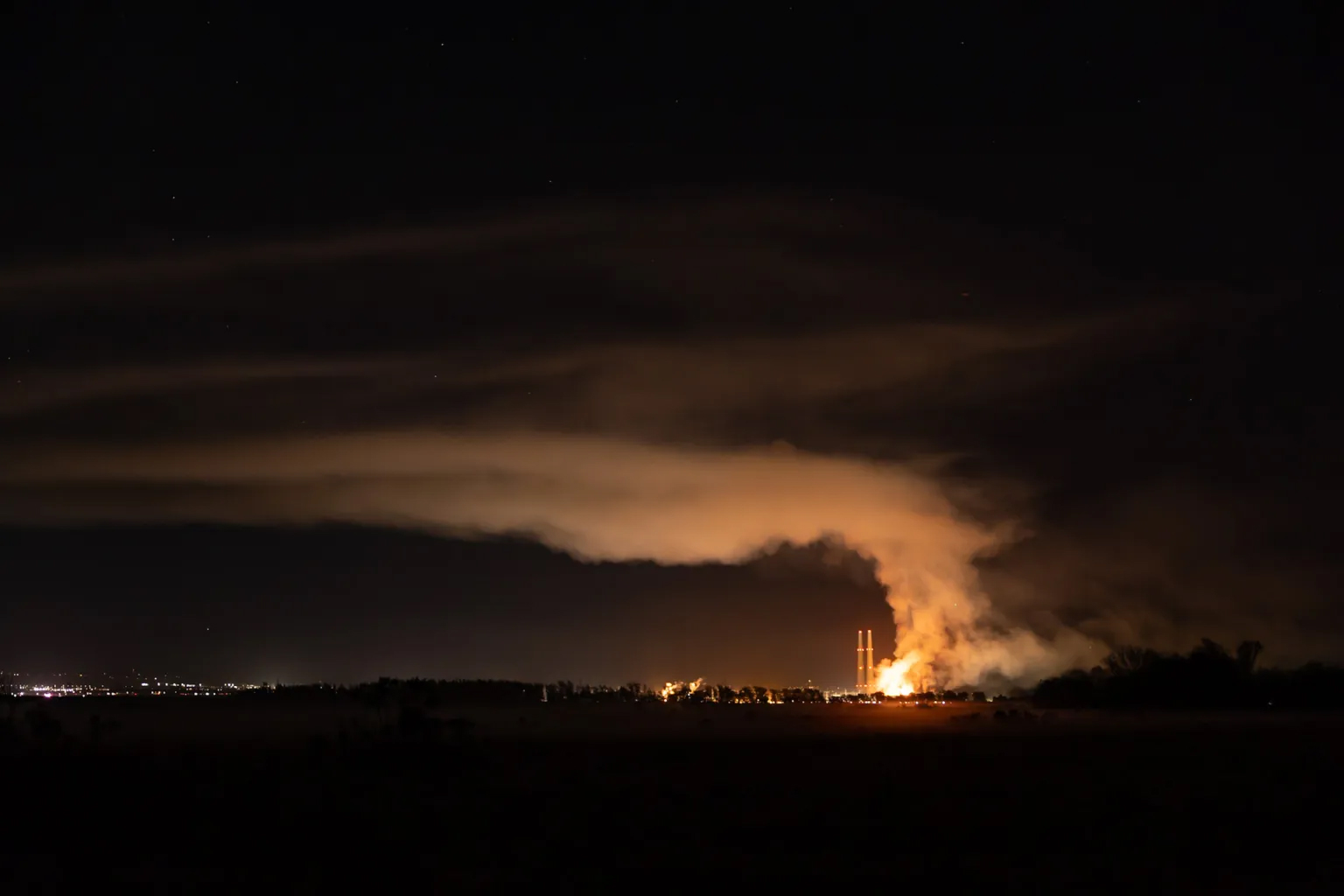
On January 16th, 2025, a fire started at the world’s largest Battery Energy Storage System (BESS) in Moss Landing, 20 miles from UC Santa Cruz. The fire burned for at least two days, creating a plume of smoke that drifted above the nearby estuary of Elkhorn Slough and the surrounding agricultural fields.
What were the impacts of this fire on the local ecosystem and communities? What can be learned about energy storage safety? And what is (or should be) the role of BESS technologies in moves towards a just transition? Join us for a panel discussion with marine geologist Dr Ivano Aiello and environmental studies scholars Dr. J. Mijin Cha and Dr. Dustin Mulvaney focused on the climate justice issues raised by the Moss Landing BESS fire.
Dr. Ivano Aiello is a marine geologist and Chair of Moss Landing Marine Laboratories, part of San José State University. He earned his Ph.D. in Sedimentology from the University of Bologna and conducted postdoctoral research at the University of California, Santa Cruz. Dr. Aiello’s research focuses on marine sediments, silica diagenesis, and the geological and chemical processes that shape both deep-sea and coastal environments. He has sailed on multiple international ocean-drilling expeditions (IODP) investigating subseafloor life and hydrothermal systems and has led studies on coastal sediment dynamics and environmental change in the Monterey Bay region. At MLML, he directs projects that integrate marine geology, geochemistry, and mapping technologies to understand how natural processes and industrial impacts affect seafloor and wetland ecosystems. His work bridges field observation, laboratory analysis, and data-driven environmental monitoring.
Following the Moss Landing battery fire in January 2025, Aiello and his team documented several-fold increase in soil concentrations of battery-derived metals (nickel, cobalt, and manganese) relative to pre-fire baseline levels in Elkhorn Slough wetlands, this study provides the first evidence of toxic metal fallout caused by a fire at one of the world’s largest battery energy storage systems. His findings point to an urgent need for baseline environmental monitoring before future energy storage projects break ground.
J. Mijin Cha is an assistant professor of environmental studies at the University of California, Santa Cruz. She is also a fellow at Cornell University’s Climate Jobs Institute, a faculty advisory board member for the UCSC Center for Labor and Community, and a fellow at the Climate and Community Institute. Her book, “A Just Transition for All: Workers and Communities for a Carbon-Free Future,” was published by MIT Press in Dec. 2024. Dr. Cha is on the board of Greenpeace Fund and a member of the California Bar.
Dustin Mulvaney is a Professor in the School of Policy, Planning, and Environmental Studies at San José State University (SJSU). He is a Fellow with the Payne Institute for Public Policy at the Colorado School of Mines, and also a Fellow with the Climate + Community Institute. His research includes work on just transitions, solar energy commodity chains, natural resource development, and circular economy. He is author of Solar Power: Innovation, Sustainability, Environmental Justice published by the University California Press in 2019 and Sustainable Energy Transitions: Socio-Ecological Dimensions of Decarbonization with Palgrave-MacMillan in 2020, and Energy, Society, and the Environment: A Critical Perspective, that will be out with Wiley-Blackwell in 2026. Dustin’s areas of expertise and research are on land use change, life cycle assessment, recycling & waste, and the environmental justice impacts of energy technologies, supply chains, and infrastructures, with extensive emphasis on the life cycle impacts of solar photovoltaics and lithium-ion batteries. Find more about that research here: http://www.dustinmulvaney.com
This event is presented as part of An Aesthetics of Resilience, a collaborative research initiative of the Institute of the Arts and Sciences and the Friedlaender Lab at UC Santa Cruz. The project brings scientists, artists, humanists, and activists together to examine multiple experiences of vulnerability in the face of climate change and is supported by a University of California Office of the President California Climate Action Seed Grant, with additional support from the Coha Nowark Art + Science Fund.
Image: Fire at Moss Landing Battery Energy Storage System (BESS), 2025. Photo by Mike Tataki
Free
What were the impacts of this fire on the local ecosystem and communities? What can be learned about energy storage safety? And what is (or should be) the role of BESS technologies in moves towards a just transition? Join us for a panel discussion with marine geologist Dr Ivano Aiello and environmental studies scholars Dr. J. Mijin Cha and Dr. Dustin Mulvaney focused on the climate justice issues raised by the Moss Landing BESS fire.
Dr. Ivano Aiello is a marine geologist and Chair of Moss Landing Marine Laboratories, part of San José State University. He earned his Ph.D. in Sedimentology from the University of Bologna and conducted postdoctoral research at the University of California, Santa Cruz. Dr. Aiello’s research focuses on marine sediments, silica diagenesis, and the geological and chemical processes that shape both deep-sea and coastal environments. He has sailed on multiple international ocean-drilling expeditions (IODP) investigating subseafloor life and hydrothermal systems and has led studies on coastal sediment dynamics and environmental change in the Monterey Bay region. At MLML, he directs projects that integrate marine geology, geochemistry, and mapping technologies to understand how natural processes and industrial impacts affect seafloor and wetland ecosystems. His work bridges field observation, laboratory analysis, and data-driven environmental monitoring.
Following the Moss Landing battery fire in January 2025, Aiello and his team documented several-fold increase in soil concentrations of battery-derived metals (nickel, cobalt, and manganese) relative to pre-fire baseline levels in Elkhorn Slough wetlands, this study provides the first evidence of toxic metal fallout caused by a fire at one of the world’s largest battery energy storage systems. His findings point to an urgent need for baseline environmental monitoring before future energy storage projects break ground.
J. Mijin Cha is an assistant professor of environmental studies at the University of California, Santa Cruz. She is also a fellow at Cornell University’s Climate Jobs Institute, a faculty advisory board member for the UCSC Center for Labor and Community, and a fellow at the Climate and Community Institute. Her book, “A Just Transition for All: Workers and Communities for a Carbon-Free Future,” was published by MIT Press in Dec. 2024. Dr. Cha is on the board of Greenpeace Fund and a member of the California Bar.
Dustin Mulvaney is a Professor in the School of Policy, Planning, and Environmental Studies at San José State University (SJSU). He is a Fellow with the Payne Institute for Public Policy at the Colorado School of Mines, and also a Fellow with the Climate + Community Institute. His research includes work on just transitions, solar energy commodity chains, natural resource development, and circular economy. He is author of Solar Power: Innovation, Sustainability, Environmental Justice published by the University California Press in 2019 and Sustainable Energy Transitions: Socio-Ecological Dimensions of Decarbonization with Palgrave-MacMillan in 2020, and Energy, Society, and the Environment: A Critical Perspective, that will be out with Wiley-Blackwell in 2026. Dustin’s areas of expertise and research are on land use change, life cycle assessment, recycling & waste, and the environmental justice impacts of energy technologies, supply chains, and infrastructures, with extensive emphasis on the life cycle impacts of solar photovoltaics and lithium-ion batteries. Find more about that research here: http://www.dustinmulvaney.com
This event is presented as part of An Aesthetics of Resilience, a collaborative research initiative of the Institute of the Arts and Sciences and the Friedlaender Lab at UC Santa Cruz. The project brings scientists, artists, humanists, and activists together to examine multiple experiences of vulnerability in the face of climate change and is supported by a University of California Office of the President California Climate Action Seed Grant, with additional support from the Coha Nowark Art + Science Fund.
Image: Fire at Moss Landing Battery Energy Storage System (BESS), 2025. Photo by Mike Tataki
Free
For more information:
https://ias.ucsc.edu/event/climate-justice...
Added to the calendar on Tue, Jan 13, 2026 10:44AM
Add Your Comments
We are 100% volunteer and depend on your participation to sustain our efforts!
Donate

$85.00 donated
in the past month
Get Involved
If you'd like to help with maintaining or developing the website, contact us.
Publish
Publish your stories and upcoming events on Indybay.
Topics
More
Search Indybay's Archives
Advanced Search
►
▼
IMC Network