







 Publish to Newswire
 Add an Event
From the Open-Publishing Calendar
From the Open-Publishing Newswire
Indybay Feature
Trump admin preferred people go hungry rather than pay SNAP food benefits
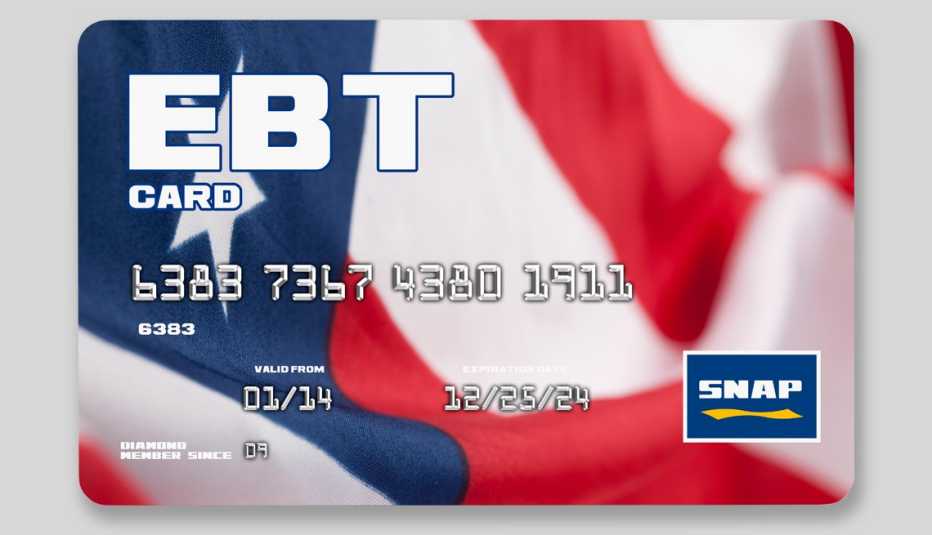
EBT - SNAP benefits card.
Trump admin preferred people go hungry rather than pay SNAP food benefits
By Lynda Carson - November 9, 2025
As crazy as it sounds, the Justice Department has been telling the courts that it would hurt the federal government more to comply with a judge's order requiring full food stamp payments in November, than it would hurt millions of low-income Americans to potentially starve.
One thing very clear about the government shutdown. It clearly revealed without a doubt, that the convicted felon President Donald J. Trump’s administration preferred that nearly 43 million poor, hungry Americans should go hungry, rather than pay the full SNAP food benefits to them during the month of November, 2025.
According to the US Senate, “The Supplemental Nutrition Assistance Program (SNAP) is our nation’s largest food assistance program, serving 42 million people, including 16 million children, 8 million seniors, and 4 million people with disabilities.”
Reportedly, on October 24, 2025, according to a news report, in part it says, “The U.S. Department of Agriculture said in a memo Friday the agency’s contingency fund cannot legally be used to provide food assistance benefits for more than 42 million people in November, as the government shutdown drags on.
The position is a reversal from the department’s earlier stance, according to a since-deleted copy of the USDA’s Sept. 30 shutdown plan that said the department would use its multi-year contingency fund to continue paying Supplemental Nutrition Assistance Program, or SNAP, benefits during the ongoing shutdown.
SNAP has about $6 billion in the contingency fund — short of the roughly $9 billion needed to cover a full month of the program, putting November benefits in jeopardy.”
On October 22, 2025, members of the US Senate sent a letter to USDA Secretary Brooke Rollins, that in part says, “We were deeply disturbed to hear that the USDA has instructed states to stop processing SNAP benefits for November and were surprised by your recent comments that the program will “run out of money in two weeks.” In fact, the USDA has several tools available which would enable SNAP benefits to be paid through or close to the end of November. First, the USDA must, at a minimum under the law, use the contingency funding that is available for SNAP, as noted by USDA officials. Second, the USDA has interchange authority under 7 U.S.C. 2257 that permits the transfer of funds from other USDA nutrition programs. In fact, this authority was recently used by the USDA when it transferred money from child nutrition programs to the WIC account to maintain WIC benefits during the shutdown. In the event that more resources are needed than what is available in contingency funding, the USDA should explore all legal means to augment funds to pay the full amount of SNAP benefits in November.
Americans are already struggling with the rising cost of groceries, and they cannot afford a sudden lapse in grocery assistance. We urge you to immediately communicate to states and committees of jurisdiction the USDA’s plans to disburse the contingency funding to state agencies and utilize all available legal authorities so that American families can get benefits without interruption. Democrats remain at the table and ready to negotiate reopening the government.”
Additionally, on October 27, 2025, a letter from the ‘United Food & Commercial Workers International Union’ to USDA Brooke Rollins implored her to immediately communicate the USDA’s plans to disburse the contingency funding to state agencies and utilize all available legal authorities so that American families can get benefits without interruption. There are clear steps the administration can and must take immediately to ensure that millions of families across the country can put food on their table in November.”
USDA Secretary Brooke Rollins, refused to comply with the request of the members of the US Senate, and ignored the pleas of the union.
On October 31, two federal courts ruled that USDA must, and likely must, utilize the SNAP Contingency Fund to provide SNAP benefits in November.
According to reports, “Additionally, on October 31, a federal judge in Massachusetts found the plaintiffs in a lawsuit from 26 states were likely to prevail in their claim that USDA is legally required to utilize the SNAP contingency funds. The judge also ordered USDA to outline their plan to distribute benefits by Monday, November 3.
In a separate lawsuit filed by a coalition of nonprofits, a federal judge in Rhode Island ordered USDA to release the contingency funds immediately. In response to the Rhode Island federal judge, on November 3, USDA stated that it would utilize the contingency funds for partial SNAP benefits.”
Reportedly, “Also on October 31, NACo (National Association of Counties), in partnership with the National League of Cities (NLC), sent a letter urging the U.S. Department of Agriculture (USDA) to release the Supplemental Nutrition Assistance Program (SNAP) contingency funds to minimize the disruption of November benefits during the ongoing federal government shutdown. According to USDA, the SNAP contingency fund has $4.65 billion for November benefits, falling short of the roughly $8 billion needed to cover the month’s expected benefit costs.”
The Trump administration appealed a federal judge's requirement to the US Supreme Court, to stop the court order that it make full November SNAP payments.
The Trump Administration Preferred People Go Hungry Rather Than Pay Full SNAP Food Benefits In November.
In the appeal, reportedly the Trump administration claimed, "the district court's order threatens significant and irreparable harm to the government which outweighs any claimed injury to plaintiffs."
Justice Ketanji Brown Jackson of the US Supreme Court issued a temporary pause that will remain in effect until the circuit court issues a judgment on the matter.
That’s right. Reportedly, “the Justice Department is telling the court that it would hurt the federal government more to comply with a judge's order requiring full food stamp payments than it would hurt millions of low-income Americans to potentially starve.”
According to the report, in part it says, “In a 40-page filing to the 1st Circuit Court of Appeals, the administration insisted that being forced to spend money Congress has already appropriated is a graver injury than the hunger and disruption that would follow from withholding it. Friday night, the administration filed a nearly identical emergency stay request with the Supreme Court, and Justice Ketanji Brown Jackson issued a temporary pause that will remain in effect until the circuit court issues a judgment on the matter.”
Additionally, in a November 9, 2025, USDA Memo, in part it says, “This memorandum is a follow up to the guidance shared on October 10, October 24, November 4, November 5, and November 7, 2025, regarding Supplemental Nutrition Assistance Program (SNAP) benefits for November 2025.
The U.S. Supreme Court granted the U.S. Department of Agriculture an administrative stay of the orders issued by the District Court of Rhode Island in Rhode Island State Council of Churches, et al. v. Rollins, 25-cv-569. Pending any explicit direction to the contrary from Food and Nutrition Service (FNS), States must not transmit full benefit issuance files to EBT processors. Instead, States must continue to process and load the partial issuance files that reflect the 35 percent reduction of maximum allotments detailed in the November 5 guidance.
To the extent States sent full SNAP payment files for November 2025, this was unauthorized. Accordingly, States must immediately undo any steps taken to issue full SNAP benefits for November 2025. Please advise the appropriate FNS Regional Office representative of steps taken to correct any actions taken that do not comply with this memorandum.
Per 7 CFR 271.7(h), failure to comply with this memorandum may result in USDA taking various actions, including cancellation of the Federal share of State administrative costs and holding States liable for any overissuances that result from the noncompliance.
We are committed to keeping you as up to date as possible and appreciate your continued partnership to serve program beneficiaries across the country. State agencies with questions should contact their FNS Regional Office representative.
Sincerely,
Patrick A. Penn Deputy Under Secretary Food, Nutrition, and Consumer Services
U.S. Department of Agriculture
Considering that New York, Massachusetts, California, Wisconsin, and Pennsylvania are among the states who had begun paying out the full amount of benefits to Snap recipients in their states, in the the above mentioned Memo it is not clear if the SNAP recipients who spent the full November amount of SNAP benefits that they received in their EBT cards, will be charged, or punished for their actions.
Lynda Carson may be reached at newzland2 [at] gmail.com
>>>>>>>
>>>>>>>
Add Your Comments
We are 100% volunteer and depend on your participation to sustain our efforts!
Donate

$160.00 donated
in the past month
Get Involved
If you'd like to help with maintaining or developing the website, contact us.
Publish
Publish your stories and upcoming events on Indybay.
Topics
More
Search Indybay's Archives
Advanced Search
►
▼
IMC Network