





top
US
US
Indybay
Indybay
Indybay
Regions
Indybay Regions North Coast Central Valley North Bay East Bay South Bay San Francisco Peninsula Santa Cruz IMC - Independent Media Center for the Monterey Bay Area North Coast Central Valley North Bay East Bay South Bay San Francisco Peninsula Santa Cruz IMC - Independent Media Center for the Monterey Bay Area California United States International Americas Haiti Iraq Palestine Afghanistan
Topics
Newswire
Features
From the Open-Publishing Calendar
From the Open-Publishing Newswire
Indybay Feature

Gov. shutdown effects on HUD’s low-income subsidized housing tenants

by Lynda Carson (newzland2 [at] gmail.com)
In a recent HUD website notice claiming that the "Radical Left" are going to shut down the government, HUD failed to mention who the radical left are that has enough power to shut down the federal government.
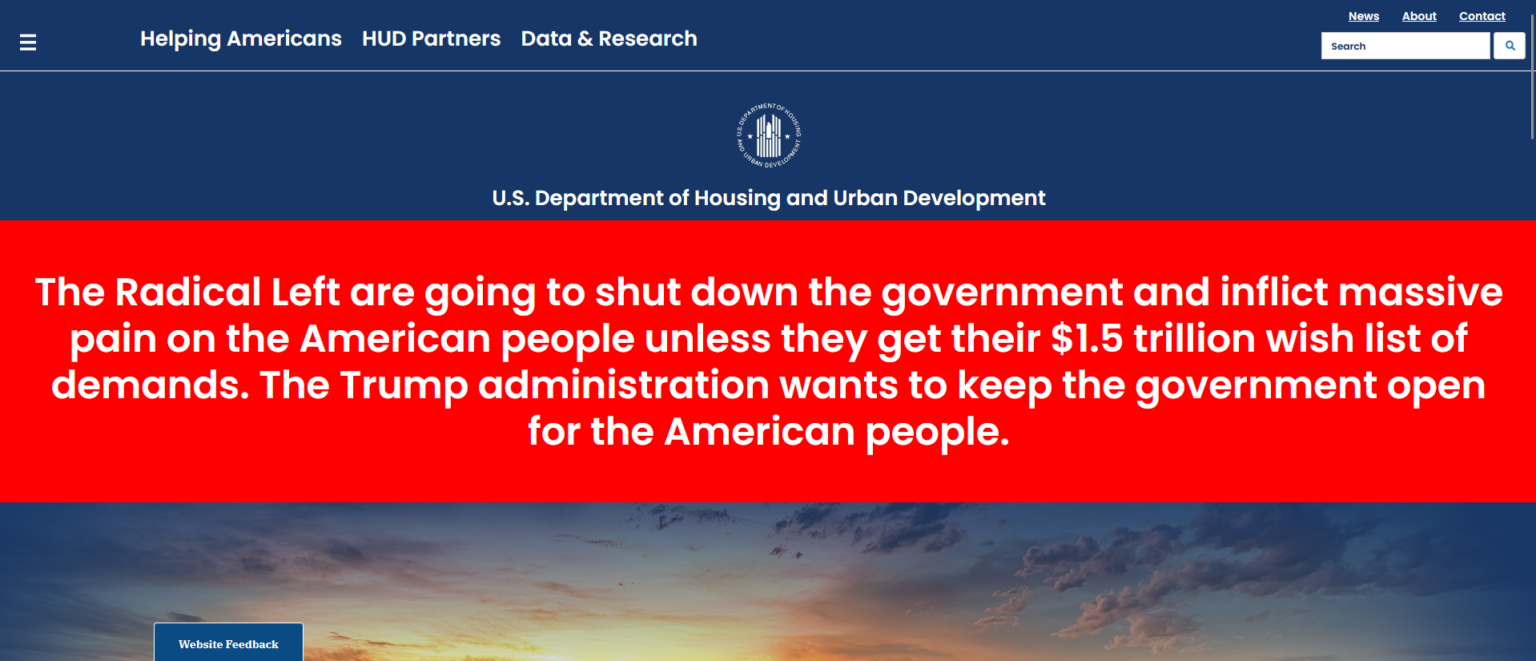
In a recent HUD website notice claiming that the "Radical Left" are going to shut down the government, HUD failed to mention who the radi...

Gov. shutdown effects on HUD’s low-income subsidized housing tenants

Plus: Information for HUD’s low-income subsidized housing tenants from NHLP

By Lynda Carson - October 1, 2025

On the website for the Public Housing Authorities Directors Association (PHADA), they are reporting that if a government shutdown occurs, HUD staff has assured them that agencies (Public Housing Authorities) should have sufficient public housing and Housing Choice Voucher funding to continue operations through mid-November.

For more detailed information about HUD, and the partial federal government shutdown, feel free to click here for information from the National Association of Housing Redevelopment Officials (NAHRO).

HUD’s Low-Income Subsidized Housing Tenants.

Reportedly, “More than 87,000 Section 8-subsidized units were funded by Bay Area housing agencies in 2024, including about 16,000 from the San Francisco Housing Authority, according to data from the U.S. Department of Housing and Urban Development, or HUD.”

According to the Center on Budget and Policy Priorities in September 2024, about the Housing Choice Voucher program a.k.a Section 8 voucher program. “Individuals and families with low incomes use vouchers to help pay for privately owned housing. The program is federally funded and run by the Department of Housing and Urban Development (HUD) and a network of about 2,200 state and local public housing agencies (PHAs). More than 5 million people in 2.3 million low-income families use vouchers.”

Additionally, according to the CBPP in September 2024, about Project-Based Vouchers. “Project-based vouchers, part of the Housing Choice Voucher program, provide place-based subsidies to help more than 530,000 people in nearly 290,000 households afford modest housing in the private market.”

Public Housing: In September of 2024, according to the CBPP. “The nation's 807,000 public housing units are located in all 50 states, the District of Columbia, and several territories, with 1 in 5 of them in rural areas. As of 2020, only 55 percent of public housing homes were in low- or moderate-poverty areas, or where less than 30 percent of people had low incomes.”

In a September 30, 2025, flyer released for HUD’s low-income subsidized housing tenants by the National Housing Law Project (NHLP), in part it states, If your landlord attempts to increase your rent or evict you during the government shutdown, contact an attorney as soon as possible. You can find free legal help through http://www.lsc.gov or at http://www.LawHelp.org. When meeting with an attorney, bring your lease (if you have it) and any previous notices from your landlord and/or management company.

Additionally, according to NHLP for Section 8 voucher holders.

“What's happening? Housing authorities will receive payments from HUD through November 2025. Additionally, housing authorities have access to reserves that they can use to continue running their voucher programs during a government shutdown. Voucher tenants should not experience any disruption because of the shutdown at this time.

Can my landlord charge more than my share of the rent during a government shutdown? Tenants should not receive a rent increase, voucher termination, or eviction notice because of the shutdown.

What should I do? Continue paying your portion of the rent. Immediately bring any new notices from your landlord or local Housing Authority to an attorney. Also bring your lease (if you have it) and any previous notices from your landlord and/or management company.

NHLP information for Public Housing tenants.

What's happening? Housing authorities will receive payments from HUD through November 2025. Additionally, housing authorities have access to reserves that they can use to continue running their public housing programs during a government shutdown. Public housing tenants should not experience any disruption because of the shutdown at this time.

Can my landlord charge more than my share of the rent during a government shutdown? Tenants should not receive a rent increase or eviction notice due to the shutdown.

What should I do? Continue paying your portion of the rent. Immediately bring any new notices from the Housing Authority to an attorney.

NHLP information for Project-Based tenants. Project-Based Section 8 (PPS8).

What's happening? Most PBS8 owners have active contracts with HUD that will not expire until the end of the year or later. Owners and managers of these properties should continue to receive on-time payments from HUD during a shutdown. Tenants in these properties should not experience any disruption because of the shutdown at this time. However, a very small number of PBS8 properties have contracts with HUD that will expire in the coming months. HUD expects to have staff on hand to renew and process all of these contracts.

How do I find out if my property’s contract is set to expire? The name and contact info for your PBS8 Contract Administrator should be on your lease. You can also look on HUD’s website to find contact information for your state’s PBS8 Contract Administrator. Navigate to https://www.hud.gov/program_offices/housing/mfh/residents and scroll down to the heading that reads “Find your state's Project-Based Contract Administrator (PBCA)”.

Can my landlord charge more than my share of the rent during a government shutdown? You are only required to pay your portion of the rent as a PBS8 tenant. Landlords may try to increase rents on tenants living in properties where the contract expired. If this happens to you, continue to pay your portion of the rent and immediately reach out to an attorney for help.

What should I do? Continue paying your portion of the rent. Immediately bring any new notices from your landlord and/or management company to an attorney. Also bring your lease (if you have it) and any previous notices from your landlord and/or management company.

For additional information on the NHLP flyer for HUD’s subsidized housing tenants, be sure to click here.

Making their housing situation much worse for HUD’s low-income subsidized housing tenants.

A September 29, 2025 news article by ProPublica, reveals that some changes presently being considered for HUD’s subsidized low-income housing programs include a host of restrictions long sought by conservatives. Reportedly, they include time limits on living in public housing, work requirements for many people receiving federal housing assistance and the stripping of aid from entire families if one member of the household is in the country illegally. The host of restrictions may result in 4 million or more people in HUD’s subsidized low-income housing programs facing eviction.

Lynda Carson may be reached at newzland2 [at] gmail.com

>>>>>>
>>>>>>
Gov. shutdown and HUD's low-income subsidized housing programs

HUD continues to accuse the so-called "radical left in Congress" for the convicted felon President Trump's government shutdown that he wanted to happen. I am not aware of the radical left in congress. This is part of the convicted felon Trump's propaganda campaign to destroy the Democratic Party.

Reportedly, in an email sent on Tuesday evening to U.S. Department of Housing and Urban Development (HUD) employees, their public affairs office warns them of a government shutdown.

The email reads in part “if the Radical Left in Congress continue to block a clean funding bill. HUD will be forced to close our doors (Wednesday). I take no delight in sending this email or the negative impact a shutdown will have for the millions of Americans seeking shelter, housing, and the American Dream of homeownership.”

The email directs “all HUD staff to pause external communications or actions as well a event participation.”

Kasey Lovett, is the Principal Deputy Assistant Secretary for Public Affairs

https://www.hud.gov/aboutus/leadership#paffair

Below is an update about the government shutdown, its effects on HUD's low-income subsidized housing programs, and millions of HUD's low-income subsidized housing tenants.

-Lynda Carson

>>>>>>>
(Oct 1, 2025 - National Low-Income Housing Coalition - (NLIHC)

NLIHC President and CEO Renee M. Willis Statement on the Harmful Impact of a Federal Government Shutdown on the Low-Income Housing Community

https://nlihc.org/news/nlihc-president-and-ceo-renee-m-willis-statement-harmful-impact-federal-government-shutdown

Washington, D.C. - "The federal government shutdown has begun, intensifying hardship for the country’s lowest-income and most vulnerable people. While shutdowns have occurred before, this one comes with unusually high uncertainty over its duration, and the impact mass layoffs of federal workers will have on federal housing programs. 

Before the shutdown and throughout this year, this administration has implemented ongoing assaults on affordable housing resources, effectively dismantling the core mission of the U.S. Department of Housing and Urban Development (HUD). The Trump administration pursued massive staffing cuts to federal agencies, including a proposal to eliminate 50% of the staff at HUD. While that proposal did not fully materialize, as of April, an estimated 2,300 staffers—roughly 23% of the workforce—had left the agency, including a 70% staffing reduction in HUD’s Office of Fair Housing.

This shutdown comes as HUD faces severe reductions, potentially hampering housing program administration and worsening issues like homelessness and the affordable housing crisis. In the short term, however, people who are living in HUD- or U.S. Department of Agriculture (USDA)-assisted housing, or who rely on HUD or USDA assistance will receive their rent payment on time through November, protecting tenants from eviction. These households also retain their rights regardless of federal funding status. Yet, with HUD staff furloughed and the White House directing agencies to target “non-essential” staff for layoffs, HUD’s capacity to process grants, provide assistance, inspect properties, and oversee core functions will suffer. The threat of mass layoffs risks crippling HUD beyond the shutdown.

Threatening more federal worker layoffs during a shutdown continues a troubling pattern for this White House. Since taking office, the Trump administration has undermined federal programs and services, especially anti-poverty initiatives like rental assistance, public housing, and civil rights enforcement.  

Earlier this year, President Trump’s budget requested major cuts and restrictions to rental and homelessness assistance. The administration has worked to weaken Fair Housing Act protections, threaten housing access for immigrants and LGBTQ individuals, and reject research showing that low-barrier housing with supportive services best addresses homelessness. The White House also withheld funding for programs approved by Congress, disrupting the fundamental balance of power between the Executive and Legislative branches of government. These actions are egregious, putting millions at risk of falling further through the housing affordability gap and destabilizing the broader housing economy.  

As shutdown negotiations loom, NLIHC will continue to advocate for funding to protect and support the resources that the lowest income and most marginalized households rely on. We will ensure that Congress hears its constituents' need for the White House to respect the balance of power, follow Congress’s will, and stop withholding funds and services intended for the people." 

 
>>>>>>
>>>>>>
(Public Housing Authorities Directors Association - PHADA)

Government Shutdown Begins Today

https://www.phada.org/Publications/Breaking-News-Administrator/View/ArticleId/18365/Government-Shutdown-Begins-Today

http://web.archive.org/web/20251003031708/https://www.phada.org/Publications/Breaking-News-Administrator/View/ArticleId/18365/Government-Shutdown-Begins-Today

Government Shutdown Begins Today

Parties Remain Divided on Healthcare Funding Issues

At midnight on October 1, the federal government began a complete shutdown. This marks the first complete government shutdown since late 2018, when appropriations lapsed from December 22, 2018, until January 25, 2019. That 35-day shutdown was the longest one the U.S. has ever experienced.

Members should continue normal operations during the shutdown. HAs may consider reaching out to key partners—such as Housing Choice Voucher landlords—to assure them that normal operations will continue for the time being. Members with questions about the impact of the shutdown should contact: policy [at] phada.org.
 
How We Got Here

As in many recent years, the FY 26 appropriations process has proven contentious. In May, the Administration released its budget request, which proposed deep cuts to HUD programs and a poorly conceived plan to block grant affordable housing funding to the states. 

In July, both the House and Senate released their respective Transportation, HUD, and Related Agencies (T-HUD) appropriations bills. While neither chamber included the President’s deep cuts in their T-HUD bills, both the House and Senate proposed unsustainable cuts to public housing funding. The House also proposed flat voucher renewal funding—which, given rental inflation, would result in currently-assisted families losing assistance.

Similar to past years, Congress was unable to pass all 12 appropriations bills before the end of the fiscal year, thus necessitating a Continuing Resolution (CR) to keep the government funded. On September 19, 2025, the Republican-led House narrowly passed a CR, which was then blocked by Democrats in the Senate. If enacted, the CR would maintain level funding for HUD programs while also allowing the Department to repurpose unobligated voucher admin fees, special purpose vouchers, and tenant protection voucher funding to address voucher shortfalls.
 
Shutdown May Be Lengthy

As of press time, it appears that the shutdown may be lengthy. Democrats have objected to Republicans not negotiating with them when writing the CR, and are also pushing to extend subsidies on Affordable Care Act health plans. Republicans have countered that they will only negotiate extending those subsidies when the government is open. As of press time, the parties are not publicly negotiating to break this impasse.

Of course, developments are fast-moving, and it is possible that the parties could come to an agreement to reopen the government sooner rather than later. PHADA staff have communicated with Congressional offices from both parties about the negative impacts of a shutdown on affordable housing programs. The Association also encourages members to contact their representatives about the negative impacts of a protracted shutdown.
 
HAs Should Have Sufficient Funding Through Mid-November

HUD staff have assured PHADA that agencies should have sufficient public housing and Housing Choice Voucher operating funding to ensure normal operations through mid-November. The Association understands that Field Office staff have been working with HAs in shortfall to avoid any current voucher families losing assistance.

Late on September 30, HUD published its shutdown contingency plan. That plan outlines which staff are required to work during the shutdown to ensure continued operations. It also discusses which Departmental activities will continue during the shutdown. As in prior shutdowns, the contingency plan notes that HUD will keep open eLOCCs and HUDCAPS to ensure that HAs can access obligated public housing and voucher funding.

PHADA understands that, should the Administration proceed with its proposed “Reductions in Force” layoffs that would coincide with a shutdown, HUD staff administering the public housing, HCV, and Multifamily programs are unlikely to be impacted. As of press time, the Department has not publicly commented on what, if any, Reductions in Force will occur during the shutdown.
While Republicans and Democrats are currently at an impasse on reopening the government, an agreement may come quickly. PHADA will continue to keep members updated regarding the latest on HUD funding through social media, eBlasts, and the Advocate. 

>>>>>>
>>>>>>
(Council of Large Public Housing Authorities - CLPHA)

Government shuts down after Congress and Trump fail to make a deal

https://clpha.org/news/2025/federal-government-shuts-down-after-congress-and-trump-fail-make-deal

http://web.archive.org/web/20251003025524/https://clpha.org/news/2025/federal-government-shuts-down-after-congress-and-trump-fail-make-deal

Date Published: 
October 1st, 2025

What PHAs Need to Know About the Shutdown

After unsuccessful negotiations between Congress and President Trump and the Senate’s failure to pass a House-passed continuing resolution, the federal government has shut down. Negotiations to reopen the government are unlikely to occur this week because House Republicans are out of town until October 7, and Congress will be out tomorrow for Yom Kippur.
 
CLPHA will continue to operate and will update our members with any additional information from HUD and Congress regarding the shutdown and how it may affect PHA operations. If you have any issues accessing funding, please reach out to CLPHA.
 
HUD’s 2025 Contingency Plan was published late on Tuesday night. Last week, the Office of Management and Budget (OMB) also notified government agencies to prepare for mass firings if the government shuts down. 

CLPHA has been informed that public housing funding was loaded into the line of credit control system to disburse previously obligated funds for public housing operating subsidies and capital funds through November 2025. HAP and Admin Fee payments have been loaded for October and two weeks of November. We have also been informed that October shortfall payments have been scheduled.  
 
Office of Public and Indian Housing

• Essential functions for the processing funds for the voucher and public housing programs will continue operating.  

• The eLOCCS system for distributing previously obligated funds for public housing as well as eVMS for disbursing previously obligated section 8 tenant-based rental assistance will remain open. 

• A PHA may also request their HUD-held HAP reserves be disbursed in the event of an emergency situation where families are at risk of termination, or where PHAs cannot afford to make HAP payments to property owners.  

• Funding action that requires the assistance of HUD-staff, such as additional frontload requests, budget revisions for the EHV program, Mainstream vouchers, etc. will not be processed, except for tenant protection vouchers where there is an imminent threat to tenant lives or property.   

• HUD PIH staff will be recalled intermittently to review disbursement requests as necessary.  

• Staff will be recalled to conduct closings on Mixed Finance and Choice Neighborhoods transactions where the failure to close by a set date would threaten the property and demands immediate response (e.g., loss of Low-Income Housing Tax Credits, New Markets Tax Credits and/or other critical financing commitments). 
Office of Community Planning and Development (CPD)

• CPD will continue to make previously obligated CDBG, HOME, HOPWA, Homeless Assistance Grants and other funds available for drawdown by CPD grantees.  

• Where further action or review by a HUD employee is required before a grantee may access previously obligated funds, CPD will recall employees intermittently to review and approve or deny disbursement requests as necessary.  

• Existing Technical Assistance and Capacity Building grants and cooperative agreement awards, where funds have been previously obligated and work plans have been approved, may continue performance.  

• Actions that require HUD staff review and approval, such as the review and approval of workplan amendments or the modification of workplans, will not take place during the shutdown. 
Office of Recapitalization

• Closings on Rental Assistance Demonstration (RAD) conversions where a RAD Conversion Commitment or a RAD Approval was issued will continue if the closing was scheduled prior to the shutdown.  

• RAD conversions where the failure to close or prepare to close would threaten the property and demand an immediate response (e.g. loss of tax credits) will continue. 
Regional and Field Offices

• All HUD regional and field offices and HUD Headquarters are closed.  
Inspections

• The REAC Technical Assistance Center (TAC) is available and operational, but responses requiring HUD staff review or approval may be delayed until the shutdown has ended.  

• Inspections will continue through the shutdown. 
CLPHA will continue to support members through this period of uncertainty and will continue to provide updates on developments from HUD and Congress related to the length of the government shutdown and funding for vital programs.

>>>>>>
>>>>>>


Add Your Comments
Listed below are the latest comments about this post.
These comments are submitted anonymously by website visitors.
TITLE
AUTHOR
DATE
Lynda Carson
Sun, Oct 12, 2025 11:20PM
Lynda Carson
Fri, Oct 3, 2025 4:49PM
We are 100% volunteer and depend on your participation to sustain our efforts!

Donate

$260.00 donated
in the past month

Get Involved

If you'd like to help with maintaining or developing the website, contact us.

Publish

Publish your stories and upcoming events on Indybay.

IMC Network