







 Publish to Newswire
 Add an Event
From the Open-Publishing Calendar
From the Open-Publishing Newswire
Indybay Feature
The dark side of the Department of War a.k.a. War Department
Chief Sitting Bull said white people broke every promise they made but one: “They promised to take our land, and they took it.”
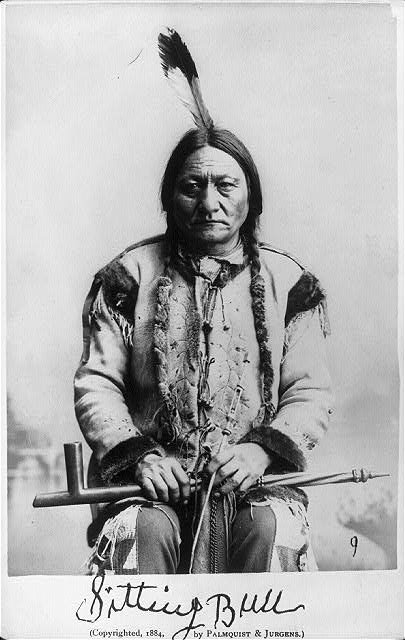
The dark side of the Department of War a.k.a. War Department
The Department of War has a dark, bloody, cruel, brutal history
By Lynda Carson - September 6, 2025
On September 5, 2025, the insane convicted felon President Trump declared that he renamed the Department of Defense, and is now calling it the Department of War a.k.a. War Department.
With little fanfare among the American public for such a disgusting horrific title for the Department of Defense, the fascist convicted felon President Trump intentionally steered clear of any controversy by failing to mention the history or bloody dark side of the Department of War, and its genocidal war against America’s Native Americans.
The Wild West Visits the War Department in War Paint.
Reportedly according to historians, https://codyarchive.org/item/wfc.nsp00546 , “Buffalo Bill, accompanied by Sitting Bull and fifteen Indians, called at the War Department and paid their respects to General Sheridan and Adjutant General Drum. The Indians wore their war costume. Their faces were embellished with red and yellow paint, on their heads they wore immense feathers. Sitting Bull's head was adorned by a number of feathers of large size.”
Sitting Bull fought back against the government and military https://en.wikipedia.org/wiki/Sitting_Bull .
Sitting Bull was murdered by Indian Agency Police https://en.wikipedia.org/wiki/Indian_agency_police , in 1890 because he was seen as a threat to the governments efforts to subdue Indigenous Americans. https://www.smithsonianmag.com/smart-news/why-sitting-bull-was-killed-by-indian-agency-police-at-his-cabin-on-the-standing-rock-reservation-180985611/ . Reportedly, six members of Standing Rock's Indian police force were killed while trying to apprehend Sitting Bull. Members of the Indian agency police were also responsible for the death of Sitting Bull and 12 other American Indians.
1824: U.S. establishes Office of Indian Affairs in War Department
Reportedly https://www.nlm.nih.gov/nativevoices/timeline/272.html , “Establishment of the Office of Indian Affairs within the War Department puts in place the bureaucracy that will administer the nation’s “manifest destiny” objectives—the idea that expansion to the Pacific is the young nation’s right. The government will make treaties with American Indian tribes as the U.S. military defeats them, after which the tribes will be moved to reservations.”
According to historians https://hmh.org/library/research/genocide-of-indigenous-peoples-guide/ , “When European settlers arrived in the Americas, historians estimate there were over 10 million Native Americans living there. By 1900, their estimated population was under 300,000. Native Americans were subjected to many different forms of violence, all with the intention of destroying the community. In the late 1800s, blankets from smallpox patients were distributed to Native Americans in order to spread disease. There were several wars, and violence was encouraged; for example, European settlers were paid for each Penobscot person they killed. In the 19th century, 4,000 Cherokee people died on the Trail of Tears, a forced march from the southern U.S. to Oklahoma. In the 20th century, civil rights violations were common, and discrimination continues to this day.”
Reportedly https://project1492.org/origin-of-the-scalp-act/ , “It’s not entirely clear where or when a bounty for scalps was first offered, but it wasn’t all that rare in New England by the early 1700s. In fact, most Americans seem to have accepted the validity of the practice at the time. In April of 1756, Pennsylvania Lieutenant Governor Robert Morris enacted the Scalp Act. Anyone who brought in a male scalp above age of 12 would be given 150 pieces of eight or the equivalent of $150. For females above age of 12 or males under the age of 12, they would be paid $130. The scalp of an Indian woman earned a payment of $50. The military effectiveness of a scalp bounty wasn’t tabulated based on the number of actual scalps. The mere announcement of a bounty transformed the settlers from passive observers to active participants.”
For many years, the Department of War conducted a bloody, cruel war of genocide against America’s ‘Native Americans’ https://tinyurl.com/5xxxdsaa , or here https://americanindian.si.edu/ . This is a part of our dark bloody history that the convicted felon President Trump wants to white-wash out of the Smithsonian Institution, along with records, history, and teachings of slavery.
History of Manifest Destiny and Indian Removal:
Reportedly, “The Trail of Tears However, removal was not met with gratitude or joy by the majority of American Indians forced to leave their homelands. American Indian participation in removal was meant to be voluntary, and the act required the U.S. government to negotiate fairly with the tribes, but this was not often the result. Many tribes were forcibly removed from their lands, in particular the Cherokee, Choctaw, Creek, Chickasaw, and Seminole. This series of forced migrations became known as the Trail of Tears.
In 1831 the Choctaw nation became the first tribe to be forcibly ousted from their lands in Mississippi. After a treaty was signed and agreed upon, approximately 17,000 Choctaw made the move, while 5,000 elected to stay. The Seminoles, located in modern-day Florida, put up a military resistance to removal but after two wars, they were removed in 1832. The Creek removal followed in 1834, the Chickasaw in 1837, and finally the Cherokee in 1838. In almost every case, the Indians were not provided with the adequate supplies they were promised, and as a result many perished on the forced migration due to disease and starvation. Of the 15,000 Creek who marched to their new home in Oklahoma, only 3,500 survived the journey. Similarly, of the 16,000 Cherokee who were forced to move from several south-eastern states to present-day Oklahoma, 4,000 died due to disease, starvation, and adverse weather conditions. In all, tens of thousands of American Indians, some estimates are close to 100,000, lost their lives and their homelands in the series of forced migrations which lasted through the 1840s.”
A 1987 letter to some Native Americans reveal the Indian Affairs seeking a treaty with some native Americans https://wardepartmentpapers.org/assets/IndigenousDiplomacy/DocumentA.pdf .
Indian Treaties and the Removal Act:
Reportedly https://history.state.gov/milestones/1830-1860/indian-treaties , “The U.S. Government used treaties as one means to displace Indians from their tribal lands, a mechanism that was strengthened with the Removal Act of 1830. In cases where this failed, the government sometimes violated both treaties and Supreme Court rulings to facilitate the spread of European Americans westward across the continent.”
A letter from 1792 to the Secretary of War, reveals that the Native Americans fought back at times in self defense https://wardepartmentpapers.org/assets/IndigenousDiplomacy/DocumentC.pdf .
A different letter from 1793 from some Native American Chiefs, reveals that the Native Americans wanted to live in peace, and did not want war. https://wardepartmentpapers.org/assets/IndigenousDiplomacy/DocumentE.pdf .
The War Department a.k.a. Department of War:
Reportedly https://en.wikipedia.org/wiki/United_States_Department_of_War , “The War Department existed for 158 years, from August 7, 1789, to September 18, 1947, when, under the National Security Act of 1947, it split into the Department of the Army and the Department of the Air Force (which, together with the Department of the Navy, formed the National Military Establishment). In 1949, the National Military Establishment was renamed the Department of Defense.”
According to public records and documents, https://wardepartmentpapers.org/s/home/page/indigenousdiplomacy , “One of the most important tasks assigned to the new War Department was the management of what it termed “Indian Affairs.”
“Using a variety of means, agents of the modest office attempted to shape relations between white Americans and indigenous nations. Given the staggering persecution that characterized white Americans’ relations with indigenous nations in the nineteenth century, it is easy to imagine that the power dynamic was always one-sided, exploitive, adversarial, and violent.”
Crazy Horse Successfully Fought Back Against The Department of War and US. Army:
Reportedly https://www.smithsonianmag.com/history/crazy-horse-see-legacy-180981017/ , “By the mid-1870s, Crazy Horse had been fighting for more than a decade for the Oglalas and the Lakota Nation. He had blocked railroad surveys, killed invading settlers and inspired his fellow warriors in the Battle of Red Buttes, the Fetterman Fight, the Wagon Box Fight and many other hostile encounters with the U.S. Army. In these confrontations, Crazy Horse designed big, idiosyncratic maneuvers using decoys and counterintuitive battle plans that confused soldiers, securing years of relative safety for his people.
The battle along the Little Bighorn River in June 1876 was Crazy Horse’s finest moment as a leader. He executed a singular tactical maneuver, riding hard nearly a mile downriver with his band of warriors to contain and devastate the American cavalrymen. Of the 700 or more U.S. troops at Little Bighorn, 263 died. George Armstrong Custer, commander of the Seventh Cavalry, perished with his men, utterly outnumbered.”
“In the United States’ first decades, the War Department a.k.a. Department of War, served as the primary government office mediating relations between white Americans and indigenous peoples. The U.S. government’s history with the indigenous nations of North America is a long and complex one, and the treatment of Native American peoples at the hands of the federal government constitutes a protracted and shameful chapter in American history. That history includes the 1830 Indian Removal Act under Andrew Jackson’s administration; the lengthy series of brutal military actions against the Plains Indians spanning decades in the mid- to late-nineteenth century; seizure of tribal lands and the forced relocation to reservations; and the establishment of the Carlisle Indian School in 1879, with its professed aim of stripping indigenous children of their tribal heritage and, in so doing, “Kill the Indian: Save the man.”
According to the Smithsonian Magazine, “The Indian Removal Act, signed by Andrew Jackson in 1830, became for American Indians one of the most detrimental laws in U.S. history. Nation to Nation looks at Removal’s historic and legal repercussions for the tribes. The upcoming exhibition Americans, opening in the fall, will ask us to think about what we, as a nation, have chosen to know and not know about the Trail of Tears.”
December 29, 1890: The Wounded Knee Massacre, Also Known as the Battle of Wounded Knee
https://constitutingamerica.org/december-29-1890-the-wounded-knee-massacre-also-known-as-the-battle-of-wounded-knee-guest-essayist-val-crofts/
Reportedly, “The Massacre at Wounded Knee, part of the Ghost Dance War, marked the last of the Indian Wars and the end of one of the bloodiest eras in American History, the systematic and deliberate slaughter of Native American peoples and their way of life. It was an American Holocaust. During a 500 year period, approximately 100,000,000 Native Americans were killed as citizens of the United States pushed West in the name of manifest destiny and destroyed the Native American territories that had been their home for thousands of years. These events will never take a place on the front of our history books, but they must never lose their place in our national memory.
Armed conflict was still prevalent in the American West in the 1880s between the U.S. Army and the Native American population, even after most of the tribes there had been displaced or had their populations reduced in great numbers. The Battle of Little Bighorn in 1876 had been the most fierce of the wars with the Sioux, which had started in the mid-1850s, when Chiefs Sitting Bull and Crazy Horse had gone to war to defend the Black Hills after the U.S. violated the treaty that they had signed stating the land was the property of the Sioux. After the Battle of Little Bighorn, a gradual depletion of Sioux forces occurred and Crazy Horse surrendered in 1877.”
“On This Day in 1890, the U.S. Army Killed Nearly 300 Lakota People in the Wounded Knee Massacre.”
Click below…
https://www.smithsonianmag.com/smart-news/on-this-day-in-1890-the-us-army-killed-nearly-300-lakota-people-in-the-wounded-knee-massacre-180985745/
Medals Wrongly Awarded At Wounded Knee:
The Department of War's award of twenty Medals of Honor for actions that occurred at the Wounded Knee Massacre was part of the government's coverup, lies and deceit. https://digitalcommons.law.ou.edu/cgi/viewcontent.cgi?article=1781&context=ailr .
The Trail of Tears, and the dark side of the Department of War a.k.a. War Department:
Reportedly, “Many Americans, and many people beyond the United States, know the story of removal—or part of the story. In the late 1830s, more than 20,000 Cherokee men, women, and children were removed from their homelands. Approximately one-fourth of these people died along the Trail of Tears—bayoneted, frozen to death, starved, or pushed beyond exhaustion. Less well known, perhaps, is that hundreds of other tribes shed tears as well as they were forced to leave their homes to make room for non-Indian settlement and ownership of their land. Through American expansion, every tribe lost land its people originally called home.”
The Indian Removal Act:
Reportedly https://www.smithsonianmag.com/smart-news/witness-document-set-trail-tears-motion-180963270/ , “Forced removal was not the only legacy of the Indian Removal Act. Stripped of their ancestral lands, Native Americans were left to build new lives in unfamiliar, unsettled territory. And though they persisted, the impacts of removal can still be felt today among Native Americans who still struggle with intergenerational trauma.”
Additionally, reportedly, Ulysses S. Grant launched an illegal war against the plains Indians, then lied about it.
According to the National Archives, in part it states, “In 1838 the War Department issued orders for General Winfield Scott to remove the remaining 2,000 Cherokees to the Indian Territory (Oklahoma). There is no comprehensive list of all persons involved in the movement of the Cherokee to Oklahoma (often referred to as the "Trail of Tears"). The following microfilm publications are a good place to begin an examination of the Cherokee disturbances and removal between 1836 and 1839.”
Sand Creek Massacre:
Additionally https://www.battlefields.org/learn/civil-war/battles/sand-creek , “By late 1864, mistrust between the Indians and white settlers on the plains of the western U. S. Territories had come to a head. Some tribal leaders proclaimed friendship with the white territorial government and were promised the protection of nearby forts. On November 29th, Colonel John Chivington, leading over 600 Colorado Territory Militia soldiers from nearby Fort Lyon, attacked the Sand Creek camp of over 500 Cheyenne and Arapaho without provocation. Ignoring the American and white flags flying from the camp, the sign of their supposed protected status, the Colorado troopers rode into the camp and opened fire. Many of the Indians took shelter in the high banks along the creek. As most of them fled, as many as 163 were killed or wounded, some by artillery fire. Many of the Indian bodies were mutilated and their jewelry stolen.
Some of the Indians put up a fight: Chivington lost 24 killed and 52 wounded. More than half of the Indian casualties were women and children. A handful of survivors fled north, hoping to reach a larger band of Cheyenne nearby. Most of the chiefs killed were those who had advocated peace with white settlers and the U.S. government. Many of the Cheyenne and others retaliated against white settlers in Colorado and Wyoming the next year. The controversial massacre profoundly influenced the U.S. -Indian relationship on the frontier for the rest of the century.”
Reportedly https://www.smithsonianmag.com/history/how-recovering-history-little-known-lakota-massacre-could-heal-generation-pain-180985226/ , “When the U.S. Army massacred a Lakota village at Blue Water, dozens of plundered artifacts ended up in the Smithsonian. The unraveling of this long-buried atrocity is forging a path toward reconciliation.”
The hidden history of slavery in California.
https://www.aclunc.org/sites/goldchains/explore/indian-boarding-schools.html
According to reports, Colonial America depended on the enslavement of Indigenous people.
How Native American Slaveholders Complicate the Trail of Tears Narrative
https://www.smithsonianmag.com/smithsonian-institution/how-native-american-slaveholders-complicate-trail-tears-narrative-180968339/
List_of_presidents_of_the_United_States_who_owned_slaves
https://en.wikipedia.org/wiki/List_of_presidents_of_the_United_States_who_owned_slaves
That’s right, on September 5, 2025, in a fit of madness, the convicted felon President Trump declared that he renamed the Department of Defense, and is now calling it the Department of War.
Lynda Carson may be reached at newzland2 [at] gmail.com
>>>>>>
>>>>>>
The Department of War has a dark, bloody, cruel, brutal history
By Lynda Carson - September 6, 2025
On September 5, 2025, the insane convicted felon President Trump declared that he renamed the Department of Defense, and is now calling it the Department of War a.k.a. War Department.
With little fanfare among the American public for such a disgusting horrific title for the Department of Defense, the fascist convicted felon President Trump intentionally steered clear of any controversy by failing to mention the history or bloody dark side of the Department of War, and its genocidal war against America’s Native Americans.
The Wild West Visits the War Department in War Paint.
Reportedly according to historians, https://codyarchive.org/item/wfc.nsp00546 , “Buffalo Bill, accompanied by Sitting Bull and fifteen Indians, called at the War Department and paid their respects to General Sheridan and Adjutant General Drum. The Indians wore their war costume. Their faces were embellished with red and yellow paint, on their heads they wore immense feathers. Sitting Bull's head was adorned by a number of feathers of large size.”
Sitting Bull fought back against the government and military https://en.wikipedia.org/wiki/Sitting_Bull .
Sitting Bull was murdered by Indian Agency Police https://en.wikipedia.org/wiki/Indian_agency_police , in 1890 because he was seen as a threat to the governments efforts to subdue Indigenous Americans. https://www.smithsonianmag.com/smart-news/why-sitting-bull-was-killed-by-indian-agency-police-at-his-cabin-on-the-standing-rock-reservation-180985611/ . Reportedly, six members of Standing Rock's Indian police force were killed while trying to apprehend Sitting Bull. Members of the Indian agency police were also responsible for the death of Sitting Bull and 12 other American Indians.
1824: U.S. establishes Office of Indian Affairs in War Department
Reportedly https://www.nlm.nih.gov/nativevoices/timeline/272.html , “Establishment of the Office of Indian Affairs within the War Department puts in place the bureaucracy that will administer the nation’s “manifest destiny” objectives—the idea that expansion to the Pacific is the young nation’s right. The government will make treaties with American Indian tribes as the U.S. military defeats them, after which the tribes will be moved to reservations.”
According to historians https://hmh.org/library/research/genocide-of-indigenous-peoples-guide/ , “When European settlers arrived in the Americas, historians estimate there were over 10 million Native Americans living there. By 1900, their estimated population was under 300,000. Native Americans were subjected to many different forms of violence, all with the intention of destroying the community. In the late 1800s, blankets from smallpox patients were distributed to Native Americans in order to spread disease. There were several wars, and violence was encouraged; for example, European settlers were paid for each Penobscot person they killed. In the 19th century, 4,000 Cherokee people died on the Trail of Tears, a forced march from the southern U.S. to Oklahoma. In the 20th century, civil rights violations were common, and discrimination continues to this day.”
Reportedly https://project1492.org/origin-of-the-scalp-act/ , “It’s not entirely clear where or when a bounty for scalps was first offered, but it wasn’t all that rare in New England by the early 1700s. In fact, most Americans seem to have accepted the validity of the practice at the time. In April of 1756, Pennsylvania Lieutenant Governor Robert Morris enacted the Scalp Act. Anyone who brought in a male scalp above age of 12 would be given 150 pieces of eight or the equivalent of $150. For females above age of 12 or males under the age of 12, they would be paid $130. The scalp of an Indian woman earned a payment of $50. The military effectiveness of a scalp bounty wasn’t tabulated based on the number of actual scalps. The mere announcement of a bounty transformed the settlers from passive observers to active participants.”
For many years, the Department of War conducted a bloody, cruel war of genocide against America’s ‘Native Americans’ https://tinyurl.com/5xxxdsaa , or here https://americanindian.si.edu/ . This is a part of our dark bloody history that the convicted felon President Trump wants to white-wash out of the Smithsonian Institution, along with records, history, and teachings of slavery.
History of Manifest Destiny and Indian Removal:
Reportedly, “The Trail of Tears However, removal was not met with gratitude or joy by the majority of American Indians forced to leave their homelands. American Indian participation in removal was meant to be voluntary, and the act required the U.S. government to negotiate fairly with the tribes, but this was not often the result. Many tribes were forcibly removed from their lands, in particular the Cherokee, Choctaw, Creek, Chickasaw, and Seminole. This series of forced migrations became known as the Trail of Tears.
In 1831 the Choctaw nation became the first tribe to be forcibly ousted from their lands in Mississippi. After a treaty was signed and agreed upon, approximately 17,000 Choctaw made the move, while 5,000 elected to stay. The Seminoles, located in modern-day Florida, put up a military resistance to removal but after two wars, they were removed in 1832. The Creek removal followed in 1834, the Chickasaw in 1837, and finally the Cherokee in 1838. In almost every case, the Indians were not provided with the adequate supplies they were promised, and as a result many perished on the forced migration due to disease and starvation. Of the 15,000 Creek who marched to their new home in Oklahoma, only 3,500 survived the journey. Similarly, of the 16,000 Cherokee who were forced to move from several south-eastern states to present-day Oklahoma, 4,000 died due to disease, starvation, and adverse weather conditions. In all, tens of thousands of American Indians, some estimates are close to 100,000, lost their lives and their homelands in the series of forced migrations which lasted through the 1840s.”
A 1987 letter to some Native Americans reveal the Indian Affairs seeking a treaty with some native Americans https://wardepartmentpapers.org/assets/IndigenousDiplomacy/DocumentA.pdf .
Indian Treaties and the Removal Act:
Reportedly https://history.state.gov/milestones/1830-1860/indian-treaties , “The U.S. Government used treaties as one means to displace Indians from their tribal lands, a mechanism that was strengthened with the Removal Act of 1830. In cases where this failed, the government sometimes violated both treaties and Supreme Court rulings to facilitate the spread of European Americans westward across the continent.”
A letter from 1792 to the Secretary of War, reveals that the Native Americans fought back at times in self defense https://wardepartmentpapers.org/assets/IndigenousDiplomacy/DocumentC.pdf .
A different letter from 1793 from some Native American Chiefs, reveals that the Native Americans wanted to live in peace, and did not want war. https://wardepartmentpapers.org/assets/IndigenousDiplomacy/DocumentE.pdf .
The War Department a.k.a. Department of War:
Reportedly https://en.wikipedia.org/wiki/United_States_Department_of_War , “The War Department existed for 158 years, from August 7, 1789, to September 18, 1947, when, under the National Security Act of 1947, it split into the Department of the Army and the Department of the Air Force (which, together with the Department of the Navy, formed the National Military Establishment). In 1949, the National Military Establishment was renamed the Department of Defense.”
According to public records and documents, https://wardepartmentpapers.org/s/home/page/indigenousdiplomacy , “One of the most important tasks assigned to the new War Department was the management of what it termed “Indian Affairs.”
“Using a variety of means, agents of the modest office attempted to shape relations between white Americans and indigenous nations. Given the staggering persecution that characterized white Americans’ relations with indigenous nations in the nineteenth century, it is easy to imagine that the power dynamic was always one-sided, exploitive, adversarial, and violent.”
Crazy Horse Successfully Fought Back Against The Department of War and US. Army:
Reportedly https://www.smithsonianmag.com/history/crazy-horse-see-legacy-180981017/ , “By the mid-1870s, Crazy Horse had been fighting for more than a decade for the Oglalas and the Lakota Nation. He had blocked railroad surveys, killed invading settlers and inspired his fellow warriors in the Battle of Red Buttes, the Fetterman Fight, the Wagon Box Fight and many other hostile encounters with the U.S. Army. In these confrontations, Crazy Horse designed big, idiosyncratic maneuvers using decoys and counterintuitive battle plans that confused soldiers, securing years of relative safety for his people.
The battle along the Little Bighorn River in June 1876 was Crazy Horse’s finest moment as a leader. He executed a singular tactical maneuver, riding hard nearly a mile downriver with his band of warriors to contain and devastate the American cavalrymen. Of the 700 or more U.S. troops at Little Bighorn, 263 died. George Armstrong Custer, commander of the Seventh Cavalry, perished with his men, utterly outnumbered.”
“In the United States’ first decades, the War Department a.k.a. Department of War, served as the primary government office mediating relations between white Americans and indigenous peoples. The U.S. government’s history with the indigenous nations of North America is a long and complex one, and the treatment of Native American peoples at the hands of the federal government constitutes a protracted and shameful chapter in American history. That history includes the 1830 Indian Removal Act under Andrew Jackson’s administration; the lengthy series of brutal military actions against the Plains Indians spanning decades in the mid- to late-nineteenth century; seizure of tribal lands and the forced relocation to reservations; and the establishment of the Carlisle Indian School in 1879, with its professed aim of stripping indigenous children of their tribal heritage and, in so doing, “Kill the Indian: Save the man.”
According to the Smithsonian Magazine, “The Indian Removal Act, signed by Andrew Jackson in 1830, became for American Indians one of the most detrimental laws in U.S. history. Nation to Nation looks at Removal’s historic and legal repercussions for the tribes. The upcoming exhibition Americans, opening in the fall, will ask us to think about what we, as a nation, have chosen to know and not know about the Trail of Tears.”
December 29, 1890: The Wounded Knee Massacre, Also Known as the Battle of Wounded Knee
https://constitutingamerica.org/december-29-1890-the-wounded-knee-massacre-also-known-as-the-battle-of-wounded-knee-guest-essayist-val-crofts/
Reportedly, “The Massacre at Wounded Knee, part of the Ghost Dance War, marked the last of the Indian Wars and the end of one of the bloodiest eras in American History, the systematic and deliberate slaughter of Native American peoples and their way of life. It was an American Holocaust. During a 500 year period, approximately 100,000,000 Native Americans were killed as citizens of the United States pushed West in the name of manifest destiny and destroyed the Native American territories that had been their home for thousands of years. These events will never take a place on the front of our history books, but they must never lose their place in our national memory.
Armed conflict was still prevalent in the American West in the 1880s between the U.S. Army and the Native American population, even after most of the tribes there had been displaced or had their populations reduced in great numbers. The Battle of Little Bighorn in 1876 had been the most fierce of the wars with the Sioux, which had started in the mid-1850s, when Chiefs Sitting Bull and Crazy Horse had gone to war to defend the Black Hills after the U.S. violated the treaty that they had signed stating the land was the property of the Sioux. After the Battle of Little Bighorn, a gradual depletion of Sioux forces occurred and Crazy Horse surrendered in 1877.”
“On This Day in 1890, the U.S. Army Killed Nearly 300 Lakota People in the Wounded Knee Massacre.”
Click below…
https://www.smithsonianmag.com/smart-news/on-this-day-in-1890-the-us-army-killed-nearly-300-lakota-people-in-the-wounded-knee-massacre-180985745/
Medals Wrongly Awarded At Wounded Knee:
The Department of War's award of twenty Medals of Honor for actions that occurred at the Wounded Knee Massacre was part of the government's coverup, lies and deceit. https://digitalcommons.law.ou.edu/cgi/viewcontent.cgi?article=1781&context=ailr .
The Trail of Tears, and the dark side of the Department of War a.k.a. War Department:
Reportedly, “Many Americans, and many people beyond the United States, know the story of removal—or part of the story. In the late 1830s, more than 20,000 Cherokee men, women, and children were removed from their homelands. Approximately one-fourth of these people died along the Trail of Tears—bayoneted, frozen to death, starved, or pushed beyond exhaustion. Less well known, perhaps, is that hundreds of other tribes shed tears as well as they were forced to leave their homes to make room for non-Indian settlement and ownership of their land. Through American expansion, every tribe lost land its people originally called home.”
The Indian Removal Act:
Reportedly https://www.smithsonianmag.com/smart-news/witness-document-set-trail-tears-motion-180963270/ , “Forced removal was not the only legacy of the Indian Removal Act. Stripped of their ancestral lands, Native Americans were left to build new lives in unfamiliar, unsettled territory. And though they persisted, the impacts of removal can still be felt today among Native Americans who still struggle with intergenerational trauma.”
Additionally, reportedly, Ulysses S. Grant launched an illegal war against the plains Indians, then lied about it.
According to the National Archives, in part it states, “In 1838 the War Department issued orders for General Winfield Scott to remove the remaining 2,000 Cherokees to the Indian Territory (Oklahoma). There is no comprehensive list of all persons involved in the movement of the Cherokee to Oklahoma (often referred to as the "Trail of Tears"). The following microfilm publications are a good place to begin an examination of the Cherokee disturbances and removal between 1836 and 1839.”
Sand Creek Massacre:
Additionally https://www.battlefields.org/learn/civil-war/battles/sand-creek , “By late 1864, mistrust between the Indians and white settlers on the plains of the western U. S. Territories had come to a head. Some tribal leaders proclaimed friendship with the white territorial government and were promised the protection of nearby forts. On November 29th, Colonel John Chivington, leading over 600 Colorado Territory Militia soldiers from nearby Fort Lyon, attacked the Sand Creek camp of over 500 Cheyenne and Arapaho without provocation. Ignoring the American and white flags flying from the camp, the sign of their supposed protected status, the Colorado troopers rode into the camp and opened fire. Many of the Indians took shelter in the high banks along the creek. As most of them fled, as many as 163 were killed or wounded, some by artillery fire. Many of the Indian bodies were mutilated and their jewelry stolen.
Some of the Indians put up a fight: Chivington lost 24 killed and 52 wounded. More than half of the Indian casualties were women and children. A handful of survivors fled north, hoping to reach a larger band of Cheyenne nearby. Most of the chiefs killed were those who had advocated peace with white settlers and the U.S. government. Many of the Cheyenne and others retaliated against white settlers in Colorado and Wyoming the next year. The controversial massacre profoundly influenced the U.S. -Indian relationship on the frontier for the rest of the century.”
Reportedly https://www.smithsonianmag.com/history/how-recovering-history-little-known-lakota-massacre-could-heal-generation-pain-180985226/ , “When the U.S. Army massacred a Lakota village at Blue Water, dozens of plundered artifacts ended up in the Smithsonian. The unraveling of this long-buried atrocity is forging a path toward reconciliation.”
The hidden history of slavery in California.
https://www.aclunc.org/sites/goldchains/explore/indian-boarding-schools.html
According to reports, Colonial America depended on the enslavement of Indigenous people.
How Native American Slaveholders Complicate the Trail of Tears Narrative
https://www.smithsonianmag.com/smithsonian-institution/how-native-american-slaveholders-complicate-trail-tears-narrative-180968339/
List_of_presidents_of_the_United_States_who_owned_slaves
https://en.wikipedia.org/wiki/List_of_presidents_of_the_United_States_who_owned_slaves
That’s right, on September 5, 2025, in a fit of madness, the convicted felon President Trump declared that he renamed the Department of Defense, and is now calling it the Department of War.
Lynda Carson may be reached at newzland2 [at] gmail.com
>>>>>>
>>>>>>
Add Your Comments
We are 100% volunteer and depend on your participation to sustain our efforts!
Donate

$110.00 donated
in the past month
Get Involved
If you'd like to help with maintaining or developing the website, contact us.
Publish
Publish your stories and upcoming events on Indybay.
Topics
More
Search Indybay's Archives
Advanced Search
►
▼
IMC Network