







 Publish to Newswire
 Add an Event
From the Open-Publishing Calendar
From the Open-Publishing Newswire
Indybay Feature
Palestine: Social Revolution Through Demonstration and Resistance
The social revolution in Palestine is also deeply intersectional. It connects with global movements against racial injustice, colonialism, and state violence. Many see the Palestinian cause not in isolation, but as part of a larger global struggle for liberation. Solidarity demonstrations in cities from New York to Cape Town are reflections of this interconnected fight for freedom and human rights.
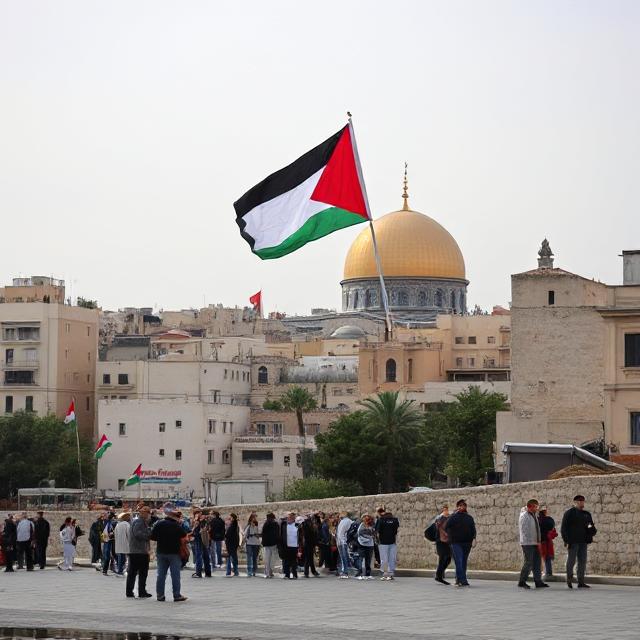
Palestine: Social Revolution Through Demonstration and Resistance
The history of Palestine is inseparable from resistance, struggle, and an enduring spirit of revolution. For over a century, the Palestinian people have faced colonization, displacement, and occupation. Yet, from the Nakba of 1948 to the present day, their resistance has not only taken the form of armed struggle or political maneuvering, but also widespread popular demonstrations and grassroots social movements. These forms of civil resistance—especially in the modern context—have come to represent a profound social revolution that extends beyond the borders of geography and nationalism, and into the global conscience.
At the core of Palestine’s social revolution is the belief in self-determination and dignity. This revolution is not only political but deeply social: it is the reclamation of identity, heritage, and voice in the face of systems designed to erase them. Demonstrations, whether in the streets of Ramallah or on university campuses around the world, serve as symbolic and literal stages where Palestinians and their supporters assert their existence and rights.
The first and second Intifadas (1987 and 2000) are notable historical moments when demonstrations and popular uprisings signaled mass participation in the revolutionary struggle. These were not merely political upheavals but expressions of deep-seated social change, where ordinary people—students, workers, families—demanded justice. In the absence of a unified leadership or a functioning state apparatus, these uprisings were grassroots by necessity, forging a culture of self-reliance and community-based resistance.
More recently, digital platforms have amplified Palestinian voices, turning demonstrations into global acts of solidarity. Hashtags like #SaveSheikhJarrah and #FreePalestine have transformed social media into a new arena of protest, challenging dominant narratives and mobilizing international awareness. This digital dimension of demonstration reflects a modern evolution of the social revolution—one that is decentralized, youth-driven, and transnational.
However, the cost of demonstration in Palestine is often met with brutal repression. Tear gas, imprisonment, live ammunition, and surveillance have been regular responses to peaceful protest. This makes every act of civil disobedience a revolutionary one—every march, sit-in, or banner a form of resistance against both occupation and the normalization of violence.
The social revolution in Palestine is also deeply intersectional. It connects with global movements against racial injustice, colonialism, and state violence. Many see the Palestinian cause not in isolation, but as part of a larger global struggle for liberation. Solidarity demonstrations in cities from New York to Cape Town are reflections of this interconnected fight for freedom and human rights.
In conclusion, the Palestinian struggle is a social revolution rooted in resistance, driven by mass mobilization and sustained by the enduring power of demonstration. It is a revolution not only against the physical occupation of land, but against the attempted occupation of memory, culture, and future. In every protester’s chant and every banner raised in solidarity, the world witnesses a people refusing to be erased.
Palestine: Social Revolution and the Role of Demonstration in Popular Resistance
Abstract
This paper examines the ongoing social revolution in Palestine through the lens of popular demonstrations and civil resistance. Drawing upon historical events such as the First and Second Intifadas and contemporary movements, it argues that Palestinian demonstrations are a key component of grassroots social transformation against occupation and systemic marginalization. The paper situates Palestinian resistance within global frameworks of social justice, highlighting the role of digital activism and international solidarity.
Introduction
The Palestinian struggle for self-determination has spanned more than a century and has manifested in numerous forms of resistance, ranging from armed conflict to diplomatic efforts. Among these, social revolution through popular demonstration plays a pivotal role in shaping political consciousness and mobilizing mass participation. This paper seeks to explore the nature of these demonstrations as expressions of social revolution, analyzing their historical roots, evolution, and significance in the contemporary era.
Historical Context: The Intifadas as Social Revolutions
The First Intifada (1987–1993) marked a turning point in Palestinian resistance, shifting from organized militant resistance to widespread grassroots civil disobedience. Demonstrations, strikes, and boycotts became central tools for Palestinians to challenge the Israeli occupation without relying solely on armed conflict (Smith, 2010). This uprising was notable for its broad social participation, including women, youth, and laborers, indicating a deep social transformation (Roy, 1995).
Similarly, the Second Intifada (2000–2005) saw a more militarized conflict but also significant popular protests and demonstrations that symbolized Palestinian resilience against ongoing occupation and settlement expansion (Farsakh, 2005). These uprisings contributed to the development of a collective Palestinian identity grounded in social solidarity and political activism.
Demonstrations as Tools of Social Revolution
Demonstrations in Palestine serve multiple social and political functions: they act as platforms for public expression, forms of collective resistance, and mechanisms for social cohesion. According to Tilly (2004), protests become revolutionary when they challenge existing power structures and mobilize ordinary people to demand systemic change. In Palestine, demonstrations reflect the population's rejection of occupation policies and a collective desire for justice and sovereignty.
The continuous repression faced by demonstrators, including arrests, physical violence, and surveillance, paradoxically reinforces the revolutionary nature of these protests. Every demonstration is not merely an act of defiance but an assertion of Palestinian existence and resilience (Khalili, 2007).
The Role of Digital Activism and International Solidarity
In recent years, digital platforms have amplified Palestinian demonstrations, allowing local protests to gain global visibility. Hashtags such as #SaveSheikhJarrah and #FreePalestine have mobilized international awareness and support, transforming social media into a new frontier of resistance (Abunimah, 2021). This digital dimension enables decentralized and youth-led activism that complements on-the-ground demonstrations.
International solidarity demonstrations, especially in Western capitals, have also become crucial in framing the Palestinian cause within global struggles against racial injustice and colonialism. This intersectionality broadens the social revolution in Palestine from a national issue to a global movement for human rights (Pappé, 2015).
Conclusion
The social revolution in Palestine, embodied in popular demonstrations, represents a multifaceted resistance against occupation and systemic oppression. These demonstrations are not isolated political events but integral to a broader social transformation that seeks justice, dignity, and self-determination. The ongoing evolution of protest tactics—from grassroots street actions to global digital campaigns—underscores the dynamic and resilient nature of Palestinian resistance.
Further research should explore the impact of international legal frameworks on the sustainability of these social revolutions and the role of gender and youth in shaping future demonstrations.
The history of Palestine is inseparable from resistance, struggle, and an enduring spirit of revolution. For over a century, the Palestinian people have faced colonization, displacement, and occupation. Yet, from the Nakba of 1948 to the present day, their resistance has not only taken the form of armed struggle or political maneuvering, but also widespread popular demonstrations and grassroots social movements. These forms of civil resistance—especially in the modern context—have come to represent a profound social revolution that extends beyond the borders of geography and nationalism, and into the global conscience.
At the core of Palestine’s social revolution is the belief in self-determination and dignity. This revolution is not only political but deeply social: it is the reclamation of identity, heritage, and voice in the face of systems designed to erase them. Demonstrations, whether in the streets of Ramallah or on university campuses around the world, serve as symbolic and literal stages where Palestinians and their supporters assert their existence and rights.
The first and second Intifadas (1987 and 2000) are notable historical moments when demonstrations and popular uprisings signaled mass participation in the revolutionary struggle. These were not merely political upheavals but expressions of deep-seated social change, where ordinary people—students, workers, families—demanded justice. In the absence of a unified leadership or a functioning state apparatus, these uprisings were grassroots by necessity, forging a culture of self-reliance and community-based resistance.
More recently, digital platforms have amplified Palestinian voices, turning demonstrations into global acts of solidarity. Hashtags like #SaveSheikhJarrah and #FreePalestine have transformed social media into a new arena of protest, challenging dominant narratives and mobilizing international awareness. This digital dimension of demonstration reflects a modern evolution of the social revolution—one that is decentralized, youth-driven, and transnational.
However, the cost of demonstration in Palestine is often met with brutal repression. Tear gas, imprisonment, live ammunition, and surveillance have been regular responses to peaceful protest. This makes every act of civil disobedience a revolutionary one—every march, sit-in, or banner a form of resistance against both occupation and the normalization of violence.
The social revolution in Palestine is also deeply intersectional. It connects with global movements against racial injustice, colonialism, and state violence. Many see the Palestinian cause not in isolation, but as part of a larger global struggle for liberation. Solidarity demonstrations in cities from New York to Cape Town are reflections of this interconnected fight for freedom and human rights.
In conclusion, the Palestinian struggle is a social revolution rooted in resistance, driven by mass mobilization and sustained by the enduring power of demonstration. It is a revolution not only against the physical occupation of land, but against the attempted occupation of memory, culture, and future. In every protester’s chant and every banner raised in solidarity, the world witnesses a people refusing to be erased.
Palestine: Social Revolution and the Role of Demonstration in Popular Resistance
Abstract
This paper examines the ongoing social revolution in Palestine through the lens of popular demonstrations and civil resistance. Drawing upon historical events such as the First and Second Intifadas and contemporary movements, it argues that Palestinian demonstrations are a key component of grassroots social transformation against occupation and systemic marginalization. The paper situates Palestinian resistance within global frameworks of social justice, highlighting the role of digital activism and international solidarity.
Introduction
The Palestinian struggle for self-determination has spanned more than a century and has manifested in numerous forms of resistance, ranging from armed conflict to diplomatic efforts. Among these, social revolution through popular demonstration plays a pivotal role in shaping political consciousness and mobilizing mass participation. This paper seeks to explore the nature of these demonstrations as expressions of social revolution, analyzing their historical roots, evolution, and significance in the contemporary era.
Historical Context: The Intifadas as Social Revolutions
The First Intifada (1987–1993) marked a turning point in Palestinian resistance, shifting from organized militant resistance to widespread grassroots civil disobedience. Demonstrations, strikes, and boycotts became central tools for Palestinians to challenge the Israeli occupation without relying solely on armed conflict (Smith, 2010). This uprising was notable for its broad social participation, including women, youth, and laborers, indicating a deep social transformation (Roy, 1995).
Similarly, the Second Intifada (2000–2005) saw a more militarized conflict but also significant popular protests and demonstrations that symbolized Palestinian resilience against ongoing occupation and settlement expansion (Farsakh, 2005). These uprisings contributed to the development of a collective Palestinian identity grounded in social solidarity and political activism.
Demonstrations as Tools of Social Revolution
Demonstrations in Palestine serve multiple social and political functions: they act as platforms for public expression, forms of collective resistance, and mechanisms for social cohesion. According to Tilly (2004), protests become revolutionary when they challenge existing power structures and mobilize ordinary people to demand systemic change. In Palestine, demonstrations reflect the population's rejection of occupation policies and a collective desire for justice and sovereignty.
The continuous repression faced by demonstrators, including arrests, physical violence, and surveillance, paradoxically reinforces the revolutionary nature of these protests. Every demonstration is not merely an act of defiance but an assertion of Palestinian existence and resilience (Khalili, 2007).
The Role of Digital Activism and International Solidarity
In recent years, digital platforms have amplified Palestinian demonstrations, allowing local protests to gain global visibility. Hashtags such as #SaveSheikhJarrah and #FreePalestine have mobilized international awareness and support, transforming social media into a new frontier of resistance (Abunimah, 2021). This digital dimension enables decentralized and youth-led activism that complements on-the-ground demonstrations.
International solidarity demonstrations, especially in Western capitals, have also become crucial in framing the Palestinian cause within global struggles against racial injustice and colonialism. This intersectionality broadens the social revolution in Palestine from a national issue to a global movement for human rights (Pappé, 2015).
Conclusion
The social revolution in Palestine, embodied in popular demonstrations, represents a multifaceted resistance against occupation and systemic oppression. These demonstrations are not isolated political events but integral to a broader social transformation that seeks justice, dignity, and self-determination. The ongoing evolution of protest tactics—from grassroots street actions to global digital campaigns—underscores the dynamic and resilient nature of Palestinian resistance.
Further research should explore the impact of international legal frameworks on the sustainability of these social revolutions and the role of gender and youth in shaping future demonstrations.
Add Your Comments
We are 100% volunteer and depend on your participation to sustain our efforts!
Donate

$115.00 donated
in the past month
Get Involved
If you'd like to help with maintaining or developing the website, contact us.
Publish
Publish your stories and upcoming events on Indybay.
Topics
More
Search Indybay's Archives
Advanced Search
►
▼
IMC Network