







 Publish to Newswire
 Add an Event
From the Open-Publishing Calendar
From the Open-Publishing Newswire
Indybay Feature
Study Links Pesticides to Monarch Butterfly Deaths in Pacific Grove
PORTLAND, Ore.; July 25, 2025 — A new study published in Environmental Toxicology and Chemistry documents a mass mortality event of monarch butterflies near one of California’s most iconic overwintering sites and links the deaths to pesticide contamination. In late January 2024, hundreds of monarchs were found dead or dying on a private property near the trees of Pacific Grove Monarch Sanctuary, where they typically cluster during the winter.
The study was conducted by scientists from the Xerces Society for Invertebrate Conservation, the U.S. Geological Survey, and the Pacific Grove Museum of Natural History. Tissue analysis revealed that dead butterflies collected at the site in January 2024 contained residues from multiple pesticides, including several at levels known to be lethal to insects.
“We found an average of seven different pesticides per butterfly, including multiple insecticides that are highly toxic to insects,” said Staci Cibotti, lead author and pesticide risk prevention specialist with the Xerces Society. “Although a review by Monterey County could not determine the source of the chemicals, the high levels detected suggest that insecticides were likely responsible for the monarch deaths.”
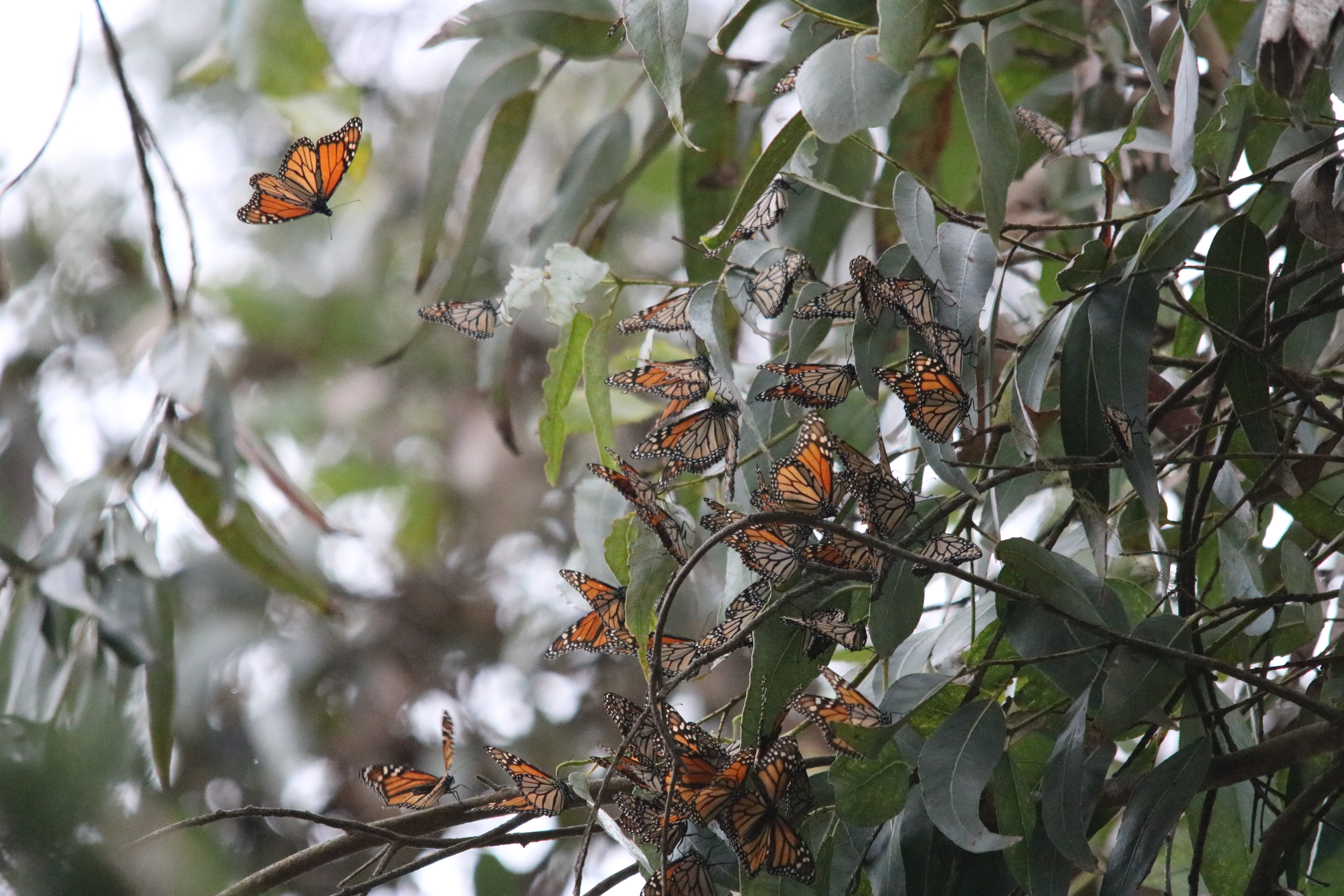
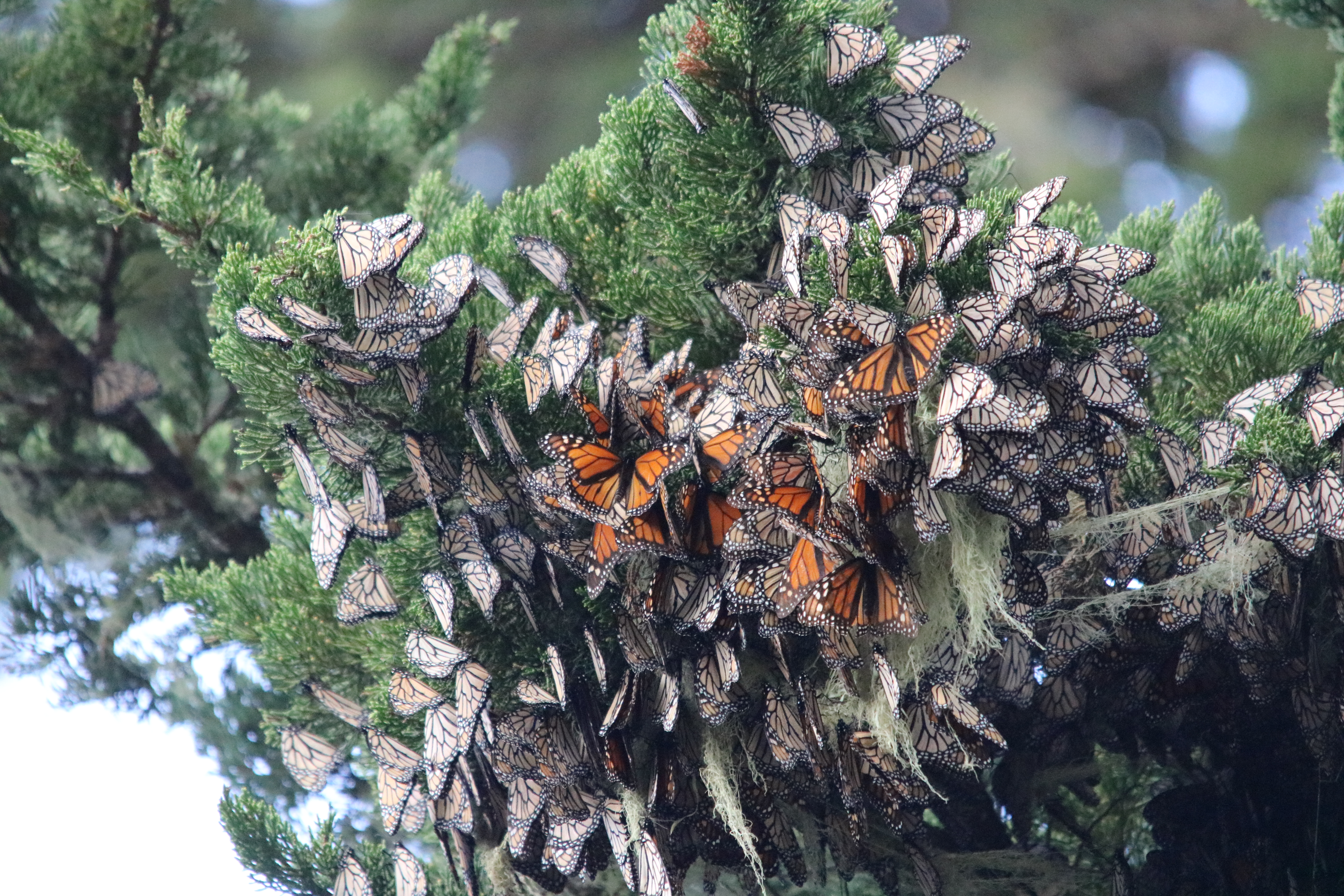
Cibotti says the monarch population is especially vulnerable to mass deaths from pesticides when they congregate for the winter – including pesticide residue or accidental drift from nearby applications. While monarchs can fly long distances in the warmer months, during the winter they retreat to small forested groves of trees, clustering together with hundreds or thousands of others at specific sites along the California coast.
The western monarch population has declined by nearly 95% since the 1980s, with fewer than 10,000 individuals counted in 2024, making losses of this magnitude particularly concerning. Approximately 200 of the 2,000 butterflies present at the Pacific Grove sanctuary in January 2024 were affected.
“It was devastating to arrive at the sanctuary and see so many butterflies on the ground, many still alive but convulsing and unable to fly,” said Natalie Johnston, who was conducting monarch counts at the site for the Pacific Grove Museum of Natural History. “They had survived the long migration only to die at a place that should have been a refuge.”
The pesticide testing was conducted at the U.S. Geological Survey Laboratory in Sacramento, CA. “The expertise and analytical capacity of USGS were essential to identifying the wide array of pesticide compounds in the monarchs,” said Cibotti. “These types of collaborations between conservation scientists and federal agencies are critical for understanding and responding to emerging threats in our environment.”
While habitat loss, climate change, and disease all contribute to the decline of monarchs and other butterflies, pesticide exposure is increasingly recognized as a significant and preventable threat.
“Protecting monarchs from pesticides will require both public education and policy change,” said Emily May, agricultural conservation lead at the Xerces Society and co-author on the paper. “We are committed to working with communities and decision-makers to ensure that overwintering sites are healthy refuges for these butterflies.”
Protecting Monarch Habitat
To help prevent future events like this one, the Xerces Society recommends the following actions:
* Individuals can learn more about the risks of pesticides in residential landscapes and safer, non-chemical alternatives for residential and municipal landscaping: https://xerces.org/blog/how-urban-pesticides-can-harm-monarch-butterflies-cautionary-tale-from-california
* Communities can establish pesticide-free buffer zones around overwintering sites and other areas where monarchs cluster.
* Conservation professionals can ensure that protections against pesticide exposure are included in monarch conservation and recovery plans at local, state, and federal levels.
* Public officials can strengthen coordination among agencies to track and address pesticide risks.
* The full paper, “Pyrethroid insecticides implicated in mass mortality of monarch butterflies at an overwintering site in California,” is available at Environmental Toxicology and Chemistry: https://academic.oup.com/etc/advance-article-abstract/doi/10.1093/etojnl/vgaf163/8177160
[Photo: Monarch Butterflies Overwintering in Pacific Grove, California. Monarch butterflies form new cluster on a nearby Eucalyptus tree after winds shift and disturb their original cluster formation in Pacific Grove, California. Photo by Joanna Gilkeson/USFWS.]
https://www.xerces.org/press/study-links-pesticides-to-monarch-butterfly-deaths-in-pacific-grove
“We found an average of seven different pesticides per butterfly, including multiple insecticides that are highly toxic to insects,” said Staci Cibotti, lead author and pesticide risk prevention specialist with the Xerces Society. “Although a review by Monterey County could not determine the source of the chemicals, the high levels detected suggest that insecticides were likely responsible for the monarch deaths.”
Cibotti says the monarch population is especially vulnerable to mass deaths from pesticides when they congregate for the winter – including pesticide residue or accidental drift from nearby applications. While monarchs can fly long distances in the warmer months, during the winter they retreat to small forested groves of trees, clustering together with hundreds or thousands of others at specific sites along the California coast.
The western monarch population has declined by nearly 95% since the 1980s, with fewer than 10,000 individuals counted in 2024, making losses of this magnitude particularly concerning. Approximately 200 of the 2,000 butterflies present at the Pacific Grove sanctuary in January 2024 were affected.
“It was devastating to arrive at the sanctuary and see so many butterflies on the ground, many still alive but convulsing and unable to fly,” said Natalie Johnston, who was conducting monarch counts at the site for the Pacific Grove Museum of Natural History. “They had survived the long migration only to die at a place that should have been a refuge.”
The pesticide testing was conducted at the U.S. Geological Survey Laboratory in Sacramento, CA. “The expertise and analytical capacity of USGS were essential to identifying the wide array of pesticide compounds in the monarchs,” said Cibotti. “These types of collaborations between conservation scientists and federal agencies are critical for understanding and responding to emerging threats in our environment.”
While habitat loss, climate change, and disease all contribute to the decline of monarchs and other butterflies, pesticide exposure is increasingly recognized as a significant and preventable threat.
“Protecting monarchs from pesticides will require both public education and policy change,” said Emily May, agricultural conservation lead at the Xerces Society and co-author on the paper. “We are committed to working with communities and decision-makers to ensure that overwintering sites are healthy refuges for these butterflies.”
Protecting Monarch Habitat
To help prevent future events like this one, the Xerces Society recommends the following actions:
* Individuals can learn more about the risks of pesticides in residential landscapes and safer, non-chemical alternatives for residential and municipal landscaping: https://xerces.org/blog/how-urban-pesticides-can-harm-monarch-butterflies-cautionary-tale-from-california
* Communities can establish pesticide-free buffer zones around overwintering sites and other areas where monarchs cluster.
* Conservation professionals can ensure that protections against pesticide exposure are included in monarch conservation and recovery plans at local, state, and federal levels.
* Public officials can strengthen coordination among agencies to track and address pesticide risks.
* The full paper, “Pyrethroid insecticides implicated in mass mortality of monarch butterflies at an overwintering site in California,” is available at Environmental Toxicology and Chemistry: https://academic.oup.com/etc/advance-article-abstract/doi/10.1093/etojnl/vgaf163/8177160
[Photo: Monarch Butterflies Overwintering in Pacific Grove, California. Monarch butterflies form new cluster on a nearby Eucalyptus tree after winds shift and disturb their original cluster formation in Pacific Grove, California. Photo by Joanna Gilkeson/USFWS.]
https://www.xerces.org/press/study-links-pesticides-to-monarch-butterfly-deaths-in-pacific-grove
For more information:
https://www.xerces.org/
Add Your Comments
We are 100% volunteer and depend on your participation to sustain our efforts!
Donate

$85.00 donated
in the past month
Get Involved
If you'd like to help with maintaining or developing the website, contact us.
Publish
Publish your stories and upcoming events on Indybay.
Topics
More
Search Indybay's Archives
Advanced Search
►
▼
IMC Network