







 Publish to Newswire
 Add an Event
From the Open-Publishing Calendar
From the Open-Publishing Newswire
Indybay Feature
ACLU Condemns Trump Executive Order Targeting Disabled and Unhoused People
Convicted Felon President Trump Attacks The Homeless & Disabled After Pushing For Massive Budget Cuts Passed By Congress Lately!
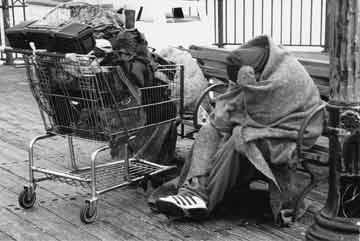
July 24, 2025 - ACLU condemns Trump executive order targeting disabled and unhoused people
https://www.aclu.org/press-releases/aclu-condemns-trump-executive-order-targeting-disabled-and-unhoused-people
>>>>>>>>
ACLU Condemns Trump Executive Order Targeting Disabled and Unhoused People
July 24, 2025 5:00 pm
WASHINGTON – President Trump signed an executive order today directing states to criminalize unhoused people and institutionalize people with mental health disabilities and substance use disorder.
The order, titled “Ending Crime and Disorder on American Streets,” directs the Justice Department to expand indefinite forced treatment for people with mental health disabilities or substance use disorder, and those living on the street who “cannot care for themselves.” The order also purports to eliminate federal funding for evidence-based programs, like harm reduction and housing first, that save lives, and directs federal funds toward cities and states that criminalize substance use disorder, punish people for sleeping outdoors, or enforce other laws targeting unhoused people.
The order also calls for sweeping federal data collection on unhoused people and those with mental health disabilities, raising serious concerns about surveillance, privacy, and how such data could be used to justify further criminalization. Instead of funding services or support, the administration is prioritizing profiling and control.
Scout Katovich, senior staff attorney with the American Civil Liberties Union’s Trone Center for Justice and Equality, issued the following statement in response to the executive order:
“From the so-called ‘Big Beautiful Bill’ that will strip health care from millions to this dangerous executive order, every action this administration takes displays remarkable disdain for the rights and dignity of vulnerable people.
“Pushing people into locked institutions and forcing treatment won’t solve homelessness or support people with disabilities. The exact opposite is true – institutions are dangerous and deadly, and forced treatment doesn’t work. We need safe, decent, and affordable housing as well as equal access to medical care and voluntary, community-based mental health and evidence-based substance use treatment from trusted providers. But instead of investing in these proven solutions, President Trump is blaming individuals for systemic failures and doubling down on policies that punish people with nowhere else to go – all after signing a law that decimates Medicaid, the number one payer for addiction and mental health services.
“Homelessness is a policy failure. Weaponizing federal funding to fuel cruel and ineffective approaches to homelessness won’t solve this crisis.”
>>>>>>>>
>>>>>>>>
https://www.aclu.org/press-releases/aclu-condemns-trump-executive-order-targeting-disabled-and-unhoused-people
>>>>>>>>
ACLU Condemns Trump Executive Order Targeting Disabled and Unhoused People
July 24, 2025 5:00 pm
WASHINGTON – President Trump signed an executive order today directing states to criminalize unhoused people and institutionalize people with mental health disabilities and substance use disorder.
The order, titled “Ending Crime and Disorder on American Streets,” directs the Justice Department to expand indefinite forced treatment for people with mental health disabilities or substance use disorder, and those living on the street who “cannot care for themselves.” The order also purports to eliminate federal funding for evidence-based programs, like harm reduction and housing first, that save lives, and directs federal funds toward cities and states that criminalize substance use disorder, punish people for sleeping outdoors, or enforce other laws targeting unhoused people.
The order also calls for sweeping federal data collection on unhoused people and those with mental health disabilities, raising serious concerns about surveillance, privacy, and how such data could be used to justify further criminalization. Instead of funding services or support, the administration is prioritizing profiling and control.
Scout Katovich, senior staff attorney with the American Civil Liberties Union’s Trone Center for Justice and Equality, issued the following statement in response to the executive order:
“From the so-called ‘Big Beautiful Bill’ that will strip health care from millions to this dangerous executive order, every action this administration takes displays remarkable disdain for the rights and dignity of vulnerable people.
“Pushing people into locked institutions and forcing treatment won’t solve homelessness or support people with disabilities. The exact opposite is true – institutions are dangerous and deadly, and forced treatment doesn’t work. We need safe, decent, and affordable housing as well as equal access to medical care and voluntary, community-based mental health and evidence-based substance use treatment from trusted providers. But instead of investing in these proven solutions, President Trump is blaming individuals for systemic failures and doubling down on policies that punish people with nowhere else to go – all after signing a law that decimates Medicaid, the number one payer for addiction and mental health services.
“Homelessness is a policy failure. Weaponizing federal funding to fuel cruel and ineffective approaches to homelessness won’t solve this crisis.”
>>>>>>>>
>>>>>>>>
Add Your Comments
Comments
(Hide Comments)
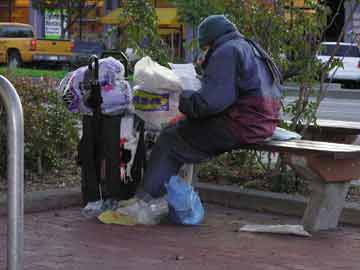
NLIHC Releases Out of Reach 2025: The High Cost of Housing
Jul 21, 2025
https://nlihc.org/resource/nlihc-releases-out-reach-2025-high-cost-housing
By Esther Y. Colon-Bermudez, NLIHC Research Analyst
NLIHC released Out of Reach 2025: The High Cost of Housing on July 17. Published annually, Out of Reach highlights the mismatch between the wages people earn and the price of decent rental housing in every state, metropolitan area, and county in the U.S. This year’s Out of Reach report highlights that amid increasing economic uncertainty and cuts to federal rental assistance, the lowest-income renters continue to struggle to afford housing.
According to the report, in no state, metropolitan area, or county can a worker earning the federal or prevailing state or local minimum wage afford a modest two-bedroom rental home at HUD’s Fair Market Rent (FMR) by working a standard 40-hour work week. Even after accounting for state and county minimum wages that are higher than the federal minimum wage, the average minimum-wage worker must work nearly 116 hours per week, nearly three full-time jobs, to afford a two-bedroom rental home at FMR, or 97 hours per week/2.4 full-time jobs, to afford a one-bedroom rental home at FMR.
The report’s central statistic, the Housing Wage, is an estimate of the hourly wage a full-time worker must earn to afford a modest rental home at HUD’s FMR without spending more than 30% of their income on housing costs—the accepted standard of affordability. Nationally, a full-time worker must earn $33.63 per hour to afford a modest two-bedroom rental home and $28.17 to afford a modest one-bedroom rental home at Fair Market Rent.
Even when we look beyond minimum wage and consider the broader workforce, affordable housing remains out of reach for many. More than half of all wage earners cannot afford a modest one-bedroom rental apartment, and more than 60% cannot afford a modest two-bedroom rental home while working full time. The median hourly wage for 18 of the 25 most common occupations in the country is lower than the two-bedroom housing wage. Workers in these 18 occupations make up 50% of the total U.S. workforce and include occupations like service industry workers, home health aides, and nursing assistants.
The report also highlights the huge pay disparities between Black and Latino households and white households, which poses a barrier to affording housing. The median wage for white workers is nearly enough to afford a one-bedroom apartment at Fair Market Rent. In contrast, the median wage for Black workers is 22% less than that of white workers, and the median wage for Latino workers is 26% less than that of white workers. The inequities are even greater for women of color. Black women earning the median wage for their race and gender earn $1.35 less than Black men, and Latina women earn $2.28 less than Latino men. While a white man earning the median wage can nearly afford a one-bedroom apartment at Fair Market Rent, Black and Latina women fall short of the one-bedroom housing wage by $6.92 and $8.22 per hour, respectively.
Amid widespread concerns about a potential recession and economic uncertainty on the rise, this year’s Out of Reach report includes a section on how renters, particularly low-income renters, are impacted by economic downturns. It examines how previous economic downturns, including the Great Recession and the COVID-19 recession, have deepened cost burdens for low-income renters by looking at cost burden data for extremely low-income (ELI) renters since 2007. This rise in cost burden leaves ELI renters increasingly vulnerable to housing and financial instability.
This year’s Out of Reach report shows clearly that what is out of reach is not just housing, but security and dignity for the nation’s lowest-income renters. In an uncertain economic climate, renters with the fewest resources too often struggle to pay rent, live in unsafe or substandard housing, and are forced to make impossible choices between housing and other basic needs.
People can work hard and still fall behind, knowing that one unexpected expense or missed paycheck could leave them homeless. Federal housing assistance would be a lifeline for all of these renters, yet it remains deeply underfunded and increasingly under threat. The American public must reject the harmful budget cuts proposed by the president and demand that Congress protect HUD and the programs it administers. Long-term investments in deeply targeted federal housing programs are needed to ensure the lowest-income renters have stable, safe, accessible, and affordable homes.
The Out of Reach 2025 interactive website includes data for each state, county, and metropolitan area, and an easy-to-use search function for identifying data by metropolitan-area ZIP code. Visit the website at https://nlihc.org/oor.
>>>>>>>>
>>>>>>>>
Jul 21, 2025
https://nlihc.org/resource/nlihc-releases-out-reach-2025-high-cost-housing
By Esther Y. Colon-Bermudez, NLIHC Research Analyst
NLIHC released Out of Reach 2025: The High Cost of Housing on July 17. Published annually, Out of Reach highlights the mismatch between the wages people earn and the price of decent rental housing in every state, metropolitan area, and county in the U.S. This year’s Out of Reach report highlights that amid increasing economic uncertainty and cuts to federal rental assistance, the lowest-income renters continue to struggle to afford housing.
According to the report, in no state, metropolitan area, or county can a worker earning the federal or prevailing state or local minimum wage afford a modest two-bedroom rental home at HUD’s Fair Market Rent (FMR) by working a standard 40-hour work week. Even after accounting for state and county minimum wages that are higher than the federal minimum wage, the average minimum-wage worker must work nearly 116 hours per week, nearly three full-time jobs, to afford a two-bedroom rental home at FMR, or 97 hours per week/2.4 full-time jobs, to afford a one-bedroom rental home at FMR.
The report’s central statistic, the Housing Wage, is an estimate of the hourly wage a full-time worker must earn to afford a modest rental home at HUD’s FMR without spending more than 30% of their income on housing costs—the accepted standard of affordability. Nationally, a full-time worker must earn $33.63 per hour to afford a modest two-bedroom rental home and $28.17 to afford a modest one-bedroom rental home at Fair Market Rent.
Even when we look beyond minimum wage and consider the broader workforce, affordable housing remains out of reach for many. More than half of all wage earners cannot afford a modest one-bedroom rental apartment, and more than 60% cannot afford a modest two-bedroom rental home while working full time. The median hourly wage for 18 of the 25 most common occupations in the country is lower than the two-bedroom housing wage. Workers in these 18 occupations make up 50% of the total U.S. workforce and include occupations like service industry workers, home health aides, and nursing assistants.
The report also highlights the huge pay disparities between Black and Latino households and white households, which poses a barrier to affording housing. The median wage for white workers is nearly enough to afford a one-bedroom apartment at Fair Market Rent. In contrast, the median wage for Black workers is 22% less than that of white workers, and the median wage for Latino workers is 26% less than that of white workers. The inequities are even greater for women of color. Black women earning the median wage for their race and gender earn $1.35 less than Black men, and Latina women earn $2.28 less than Latino men. While a white man earning the median wage can nearly afford a one-bedroom apartment at Fair Market Rent, Black and Latina women fall short of the one-bedroom housing wage by $6.92 and $8.22 per hour, respectively.
Amid widespread concerns about a potential recession and economic uncertainty on the rise, this year’s Out of Reach report includes a section on how renters, particularly low-income renters, are impacted by economic downturns. It examines how previous economic downturns, including the Great Recession and the COVID-19 recession, have deepened cost burdens for low-income renters by looking at cost burden data for extremely low-income (ELI) renters since 2007. This rise in cost burden leaves ELI renters increasingly vulnerable to housing and financial instability.
This year’s Out of Reach report shows clearly that what is out of reach is not just housing, but security and dignity for the nation’s lowest-income renters. In an uncertain economic climate, renters with the fewest resources too often struggle to pay rent, live in unsafe or substandard housing, and are forced to make impossible choices between housing and other basic needs.
People can work hard and still fall behind, knowing that one unexpected expense or missed paycheck could leave them homeless. Federal housing assistance would be a lifeline for all of these renters, yet it remains deeply underfunded and increasingly under threat. The American public must reject the harmful budget cuts proposed by the president and demand that Congress protect HUD and the programs it administers. Long-term investments in deeply targeted federal housing programs are needed to ensure the lowest-income renters have stable, safe, accessible, and affordable homes.
The Out of Reach 2025 interactive website includes data for each state, county, and metropolitan area, and an easy-to-use search function for identifying data by metropolitan-area ZIP code. Visit the website at https://nlihc.org/oor.
>>>>>>>>
>>>>>>>>
Was the Grant Pass decision ideological and not evidence-based since there were far more homeless than shelter spaces? It was cruel and unusual punishment!
The Roberts court is an extreme-right court worlds away from Black-Douglas-Frankfurter-Holmes-Ginsburg. Corruption, ideology and cruelty characterize the court and fealty to the widely hated dictator Trump! There was nothing "balanced" about 60 shelter beds for 200 homeless!!
Denying housing to the houseless and making them invisible is a mark of authoritarian regimes that replace the rule of law with tantrums and anti-human scapegoating! The US isolates itself when it chooses vindictiveness over compassion and corrupt money interests over true independence and reconciliation!
The Roberts court is an extreme-right court worlds away from Black-Douglas-Frankfurter-Holmes-Ginsburg. Corruption, ideology and cruelty characterize the court and fealty to the widely hated dictator Trump! There was nothing "balanced" about 60 shelter beds for 200 homeless!!
Denying housing to the houseless and making them invisible is a mark of authoritarian regimes that replace the rule of law with tantrums and anti-human scapegoating! The US isolates itself when it chooses vindictiveness over compassion and corrupt money interests over true independence and reconciliation!
For more information:
http://www.freetranslations.foundation
We are 100% volunteer and depend on your participation to sustain our efforts!
Donate

$65.00 donated
in the past month
Get Involved
If you'd like to help with maintaining or developing the website, contact us.
Publish
Publish your stories and upcoming events on Indybay.
Topics
More
Search Indybay's Archives
Advanced Search
►
▼
IMC Network