







 Publish to Newswire
 Add an Event
From the Open-Publishing Calendar
From the Open-Publishing Newswire
Indybay Feature
Following the police murders of five Latino men in Salinas, DOJ releases report on SPD
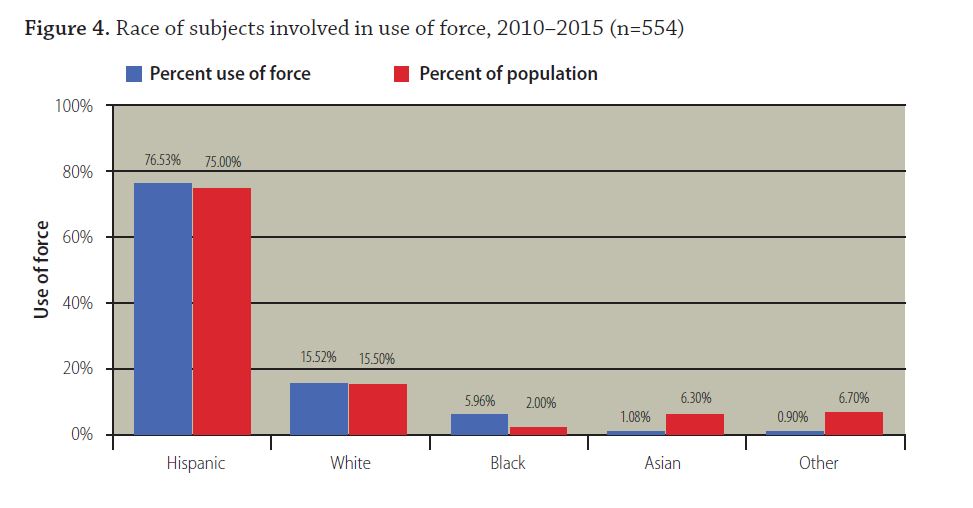
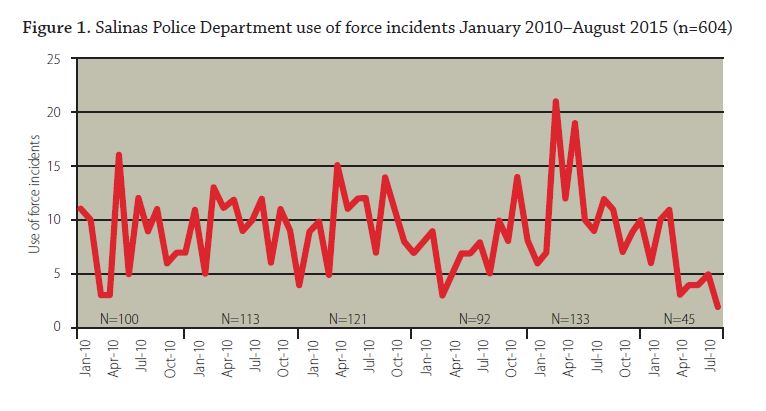
Following the murders of five Latino men by officers with the Salinas Police Department in 2014, the U.S. Department of Justice released its assessment of the department during a public press conference in Salinas on March 23. The DOJ report reveals that the overwhelming majority, 75%, of the occurrences of police "use of force" between 2010 and 2015 were against "Hispanics". Salinas police officers shot and killed four men in 2014: Angel Ruiz on March 20; Osmar Hernandez on May 9; Carlos Mejia-Gomez on May 20; Frank Alvarado on July 10; and Jaime Garcia died after being tased by Salinas Police on October 31. The DOJ claims over the next 12 months, the COPS Office will work with the SPD to assist the agency in the implementation of the recommendations and to monitor its progress. According to the report (see PDF file for the full report, below) the assessment showed, "deficiencies in policies, training, internal and external communications, accountability systems, and internal affairs and professional standards and a lack of community-police collaboration strategy." The assessment produced 61 findings and 110 recommendations.
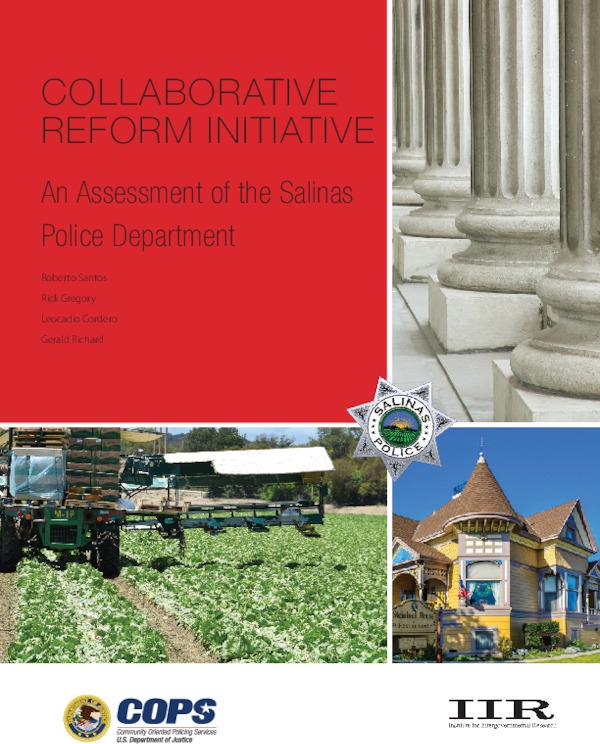
A short excerpt from the DOJ report:
Use of force
The SPD use of force (UOF) assessment conducted by the assessment team provides an analysis and recommendations for its UOF policies, procedures, and practices.
It includes an assessment of the SPD’s UOF policies, a descriptive analysis of five years of UOF investigative reports, and an in-depth analysis of a random sample of 47 UOF investigations. This effort allowed the team to provide a comprehensive review of the SPD’s UOF and is the basis for the team’s findings and recommendations.
The assessment team examined UOF policies and procedures including the investigation aspect of UOF from January 2010 through August 2015. They focused on not only the policy content but also on how policies aligned with best and emerging practices, case law, and internal SPD procedures. Through interviews, observations, and document reviews, the team analyzed how the SPD implemented its UOF policies, overall adherence to policies, and specific accountability mechanisms.
The SPD’s internal investigation process and complaint intake and investigation procedures were reviewed. This examination included random selection and analysis of officer-generated use of force reports to determine policy compliance, evaluate the review process, and determine how officers were held accountable for policy violations.
The following are key findings and recommendations from the report for UOF policies, procedures, and training.
Finding: The SPD’s policies 300 (Use of Force), 308 (Control Devices and Techniques), and 309 (Conducted Energy Device) are too vague in the description of use of force decision-making guidance, oversight, and accountability. (1)
Recommendation: Overall, the SPD should revise policies 300, 308, and 309 to be more specific and more in line with policing best practices. In doing so, the SPD should consider all of the following recommendations for this finding. (1.1)
Recommendation: The SPD should update and revise policies 300, 308, and 309 to describe the appropriate level of force to be applied under various circumstances. (1.4)
Recommendation: The SPD should include and emphasize the importance of de-escalation in its UOF policies. (1.5)
Recommendation: Specific de-escalation training should be administered, at a minimum, annually. (1.6)– 3 – Executive Summary
Recommendation: To maintain transparency with the community after a UOF incident, the UOF policies should clearly state what types of information will be released to the public, when, and in what situation in accordance with applicable state law.2 (1.7)
Finding: The SPD does not follow its own policy and practice for the use of written statements or recording of suspects and witnesses of UOF incidents. (18)
Recommendation: When possible, the SPD should include audio recordings of suspects, witnesses, and officers as part of the UOF investigation. (18.1)
Finding: The supervisor investigating the UOF incident is not consistently gathering all the facts from officers. (19)
Recommendation: SPD supervisors should interview all officers who were involved with or at the scene during a UOF incident or indicate why officers were not interviewed. (19.1)
Officer-involved shootings
The team’s review and assessment of the SPD’s investigations of OISs included three of the last four OISs—all occurring during 2014.3 The examination included a review of the case reports from the investigations to determine compliance with the department’s policies and procedures as well as its application of standard investigatory practices.
The team reviewed not only the investigative process but also the actions of all officers involved in the OIS incidents. The examination into these three OISs included reviews of available audio tapes of witness interviews, including interviews of the officers involved in the incidents. In addition, the team conducted interviews of the investigators who conducted the OIS investigations and gained an understanding of the response and investigation process.
The following are key findings and recommendations for the SPD’s OIS investigation process.
Finding: The SPD does not have a practice or policy to require all OISs and in-custody deaths to be investigated by an outside agency. (24)
Recommendation: The SPD should adopt the practice of retaining an outside independent agency to investigate all officer-involved shootings and in-custody deaths.4 (24.1)
Finding: The SPD is limited in its ability to use less lethal weapons. (26)
Recommendation: The SPD should train and outfit all first-line supervisors (sergeants) with less lethal shotguns. (26.1)
Finding: The administrative investigations (i.e., internal affairs investigations) of the OISs were not completed in a timely manner. (27)
Recommendation: The SPD should establish a 30-day timetable5 for all administrative reviews (i.e., internal affairs investigations) that are completed after an OIS incident has been reviewed and adjudicated by the Monterey County District Attorney’s Office. (27.1)
Use of force
The SPD use of force (UOF) assessment conducted by the assessment team provides an analysis and recommendations for its UOF policies, procedures, and practices.
It includes an assessment of the SPD’s UOF policies, a descriptive analysis of five years of UOF investigative reports, and an in-depth analysis of a random sample of 47 UOF investigations. This effort allowed the team to provide a comprehensive review of the SPD’s UOF and is the basis for the team’s findings and recommendations.
The assessment team examined UOF policies and procedures including the investigation aspect of UOF from January 2010 through August 2015. They focused on not only the policy content but also on how policies aligned with best and emerging practices, case law, and internal SPD procedures. Through interviews, observations, and document reviews, the team analyzed how the SPD implemented its UOF policies, overall adherence to policies, and specific accountability mechanisms.
The SPD’s internal investigation process and complaint intake and investigation procedures were reviewed. This examination included random selection and analysis of officer-generated use of force reports to determine policy compliance, evaluate the review process, and determine how officers were held accountable for policy violations.
The following are key findings and recommendations from the report for UOF policies, procedures, and training.
Finding: The SPD’s policies 300 (Use of Force), 308 (Control Devices and Techniques), and 309 (Conducted Energy Device) are too vague in the description of use of force decision-making guidance, oversight, and accountability. (1)
Recommendation: Overall, the SPD should revise policies 300, 308, and 309 to be more specific and more in line with policing best practices. In doing so, the SPD should consider all of the following recommendations for this finding. (1.1)
Recommendation: The SPD should update and revise policies 300, 308, and 309 to describe the appropriate level of force to be applied under various circumstances. (1.4)
Recommendation: The SPD should include and emphasize the importance of de-escalation in its UOF policies. (1.5)
Recommendation: Specific de-escalation training should be administered, at a minimum, annually. (1.6)– 3 – Executive Summary
Recommendation: To maintain transparency with the community after a UOF incident, the UOF policies should clearly state what types of information will be released to the public, when, and in what situation in accordance with applicable state law.2 (1.7)
Finding: The SPD does not follow its own policy and practice for the use of written statements or recording of suspects and witnesses of UOF incidents. (18)
Recommendation: When possible, the SPD should include audio recordings of suspects, witnesses, and officers as part of the UOF investigation. (18.1)
Finding: The supervisor investigating the UOF incident is not consistently gathering all the facts from officers. (19)
Recommendation: SPD supervisors should interview all officers who were involved with or at the scene during a UOF incident or indicate why officers were not interviewed. (19.1)
Officer-involved shootings
The team’s review and assessment of the SPD’s investigations of OISs included three of the last four OISs—all occurring during 2014.3 The examination included a review of the case reports from the investigations to determine compliance with the department’s policies and procedures as well as its application of standard investigatory practices.
The team reviewed not only the investigative process but also the actions of all officers involved in the OIS incidents. The examination into these three OISs included reviews of available audio tapes of witness interviews, including interviews of the officers involved in the incidents. In addition, the team conducted interviews of the investigators who conducted the OIS investigations and gained an understanding of the response and investigation process.
The following are key findings and recommendations for the SPD’s OIS investigation process.
Finding: The SPD does not have a practice or policy to require all OISs and in-custody deaths to be investigated by an outside agency. (24)
Recommendation: The SPD should adopt the practice of retaining an outside independent agency to investigate all officer-involved shootings and in-custody deaths.4 (24.1)
Finding: The SPD is limited in its ability to use less lethal weapons. (26)
Recommendation: The SPD should train and outfit all first-line supervisors (sergeants) with less lethal shotguns. (26.1)
Finding: The administrative investigations (i.e., internal affairs investigations) of the OISs were not completed in a timely manner. (27)
Recommendation: The SPD should establish a 30-day timetable5 for all administrative reviews (i.e., internal affairs investigations) that are completed after an OIS incident has been reviewed and adjudicated by the Monterey County District Attorney’s Office. (27.1)

Add Your Comments
Latest Comments
Listed below are the latest comments about this post.
These comments are submitted anonymously by website visitors.
TITLE
AUTHOR
DATE
They ought to know
Sun, Mar 27, 2016 10:25AM
We are 100% volunteer and depend on your participation to sustain our efforts!
Donate

$110.00 donated
in the past month
Get Involved
If you'd like to help with maintaining or developing the website, contact us.
Publish
Publish your stories and upcoming events on Indybay.
Topics
More
Search Indybay's Archives
Advanced Search
►
▼
IMC Network