







 Publish to Newswire
 Add an Event
From the Open-Publishing Calendar
From the Open-Publishing Newswire
Indybay Feature
Hatchery Salmon Counts Don’t Reflect High Ocean Abundance Estimates
“The drought has severely impacted the wild salmon populations,” said Dick Pool, President of Water for Fish. “A successful fishing outlook for 2016 and 2017 and maybe even 2018 is very much in question. Lethal egg temperatures in the rivers and tributaries destroyed 95% of the incubating eggs in 2014 and likely did the same in 2015 when mismanagement of the Shasta Reservoir let the temperatures again go lethal.”
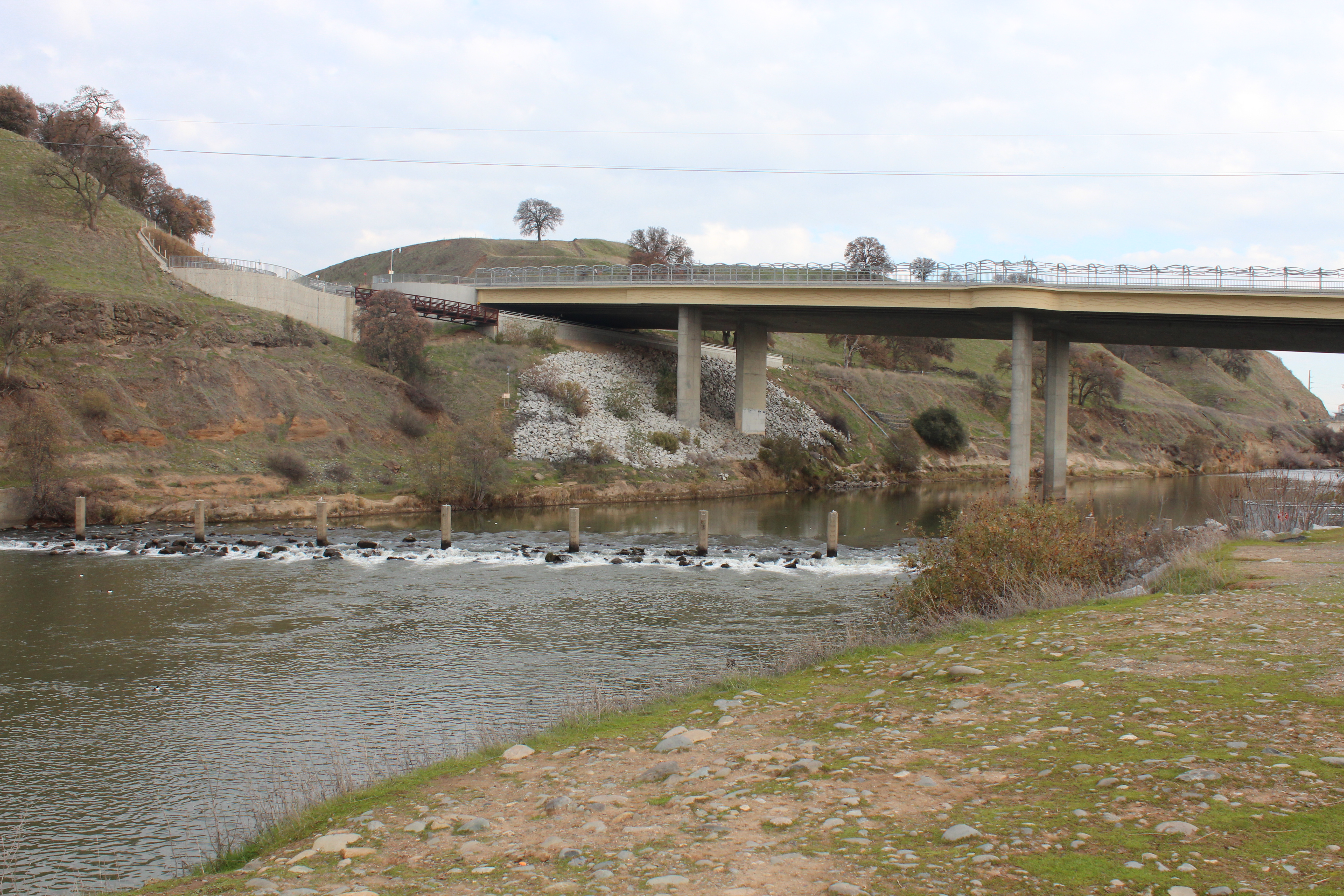
Photo of the American River below NImbus Fish Hatchery and the Hazel Avenue Bridge on January 1, 2016 by Dan Bacher.
Photo of the American River below NImbus Fish Hatchery and the Hazel Avenue Bridge on January 1, 2016 by Dan Bacher.
Hatchery Salmon Counts Don’t Reflect High Ocean Abundance Estimates
by Dan Bacher
National Marine Fisheries Service ocean abundance forecasts released in February, 2015 indicated there would be approximately 652,000 adult Sacramento River fall Chinook salmon and 423,800 adults from the Klamath River fall run in the ocean this season. That’s a total of 1,075,800 salmon.
Yet preliminary figures from Central Valley fish hatcheries reveal that the numbers of salmon that have returned to Sacramento River tributaries to date are below the large numbers projected by the federal government earlier this year.
The numbers of salmon that have been counted this fall dovetail with the spotty commercial and recreational fishing reported on the California coast this year.
In the coming two months, state and federal government fishery managers will be tallying up the data on spawning escapement in the Central Valley rivers and hatcheries to be used by the Pacific Fishery Management Council (PFMC) when it crafts the 2016 ocean and river seasons.
The good news is that the numbers of jacks and jills (two year old fish) that the fishery managers largely base their abundance on are larger than those counted last year on the Sacramento, Feather, American and Mokelumne rivers.
The Coleman National Fish Hatchery reported that the amount of salmon counted in Battle Creek is less than half of last year’s numbers. “This year a total of 17,328 salmon were counted in the creek, whereas last year a total of 45,000 salmon were counted,” said Brett Galyean, the hatchery’s acting project manager.
Fortunately, the jack and jill count this year, 1802, is above that of last year’s numbers, 831 fish. The hatchery has trapped 14,498 total fish total this season. In addition, the hatchery has enough eggs to meet its annual smolt production goal.
The Feather River Fish Hatchery trapped approximately 16,349 adult salmon and 7,763 jacks and jills, a total of 24,112 fish this season. That compares to 24,893 adults and 6,620 jacks, a total of 31,513 fish, in 2014. That puts the run 7401 fish below last season.
The hatchery has taken enough eyed eggs, 11-1/2 million, to produce their goal of 8 million smolts, according to Anna Kastener, hatchery manager.
“The fish were really healthy, although they appeared to be smaller than normal. We saw a lot of jacks and jills this season,” she observed.
The Nimbus Fish Hatchery on the American River has also finished spawning salmon for the season.
The numbers of fall-run Chinook salmon, including jacks and jills (two-year—old fish) showing at Nimbus are above those trapped last year. The facility has trapped 9,716 salmon, including 7,326 adults and 2390 jacks and jills this season.
Last year hatchery staff counted a total of 8,343 salmon, including 7,048 adults and 1,295 jacks and jills.
The hatchery has taken 8 million eyed salmon eggs. “Overall, the numbers of salmon are typical of those we’ve seen here in recent years,” said Gary Novak, hatchery manager.
“The water at the hatchery was warm in the beginning, but the cold snap we got cooled the water down and brought up fresh fish from the Sacramento,” he said.
The Mokelumne River Fish Hatchery in Clements has trapped a total of 6,199 fall-run Chinook salmon, including 3,822 adults and 2377 jacks and jills, according to the latest available data. The numbers for last year to date weren’t available at press time. The Mokelumne is a tributary of the San Joaquin River.
“We got all of the eggs we need for our production goal this year,” said Eric Barrow, office technician at the hatchery. “We’ve taken a total of 6 million eggs so far — and fresh fish keep coming into the hatchery. It’s a late run this year.”
The number of salmon counted in the river over Woodbridge Dam in Lodi in 2015 is 10,857 fish. That compares to around 12,000 fish last year at the same time
Fishing groups, Indian Tribes, environmentalists and public trust advocates have criticized the Bureau of Reclamation and Department of Water Resources for mismanaging Trinity, Shasta, Oroville and Folsom reservoirs during the drought. Over the past three years, the federal and state water agencies have drained the reservoirs to record low levels to divert water to corporate agribusiness, Southern California water agencies and oil companies conducting fracking and other extreme oil extraction methods.
The result is that over 95 percent of the winter-run Chinook salmon juveniles have perished over the past two years in lethally warm water conditions.
Fish advocates point out that the spring and fall runs of salmon have also suffered greatly, due to mismanagement by the state and federal water agencies.
“The drought has severely impacted the wild salmon populations,” said Dick Pool, President of Water for Fish. “A successful fishing outlook for 2016 and 2017 and maybe even 2018 is very much in question. Lethal egg temperatures in the rivers and tributaries destroyed 95% of the incubating eggs in 2014 and likely did the same in 2015 when mismanagement of the Shasta Reservoir let the temperatures again go lethal.”
“In addition, millions of fall-run eggs were dewatered in the mainstem Sacramento River when the flows were dramatically dropped by the Bureau of Reclamation after the fish had spawned along the edges of the river. There is plenty of blame to go around for these problems and the lack of responses. We will pay the price in 2016, 2017 and 2018,” Pool noted.
I will update you on the abundance estimates for the upcoming ocean and river salmon seasons as soon as the data comes in – and the CDFW holds their annual salmon fishery Informational meeting in Santa Rosa.
by Dan Bacher
National Marine Fisheries Service ocean abundance forecasts released in February, 2015 indicated there would be approximately 652,000 adult Sacramento River fall Chinook salmon and 423,800 adults from the Klamath River fall run in the ocean this season. That’s a total of 1,075,800 salmon.
Yet preliminary figures from Central Valley fish hatcheries reveal that the numbers of salmon that have returned to Sacramento River tributaries to date are below the large numbers projected by the federal government earlier this year.
The numbers of salmon that have been counted this fall dovetail with the spotty commercial and recreational fishing reported on the California coast this year.
In the coming two months, state and federal government fishery managers will be tallying up the data on spawning escapement in the Central Valley rivers and hatcheries to be used by the Pacific Fishery Management Council (PFMC) when it crafts the 2016 ocean and river seasons.
The good news is that the numbers of jacks and jills (two year old fish) that the fishery managers largely base their abundance on are larger than those counted last year on the Sacramento, Feather, American and Mokelumne rivers.
The Coleman National Fish Hatchery reported that the amount of salmon counted in Battle Creek is less than half of last year’s numbers. “This year a total of 17,328 salmon were counted in the creek, whereas last year a total of 45,000 salmon were counted,” said Brett Galyean, the hatchery’s acting project manager.
Fortunately, the jack and jill count this year, 1802, is above that of last year’s numbers, 831 fish. The hatchery has trapped 14,498 total fish total this season. In addition, the hatchery has enough eggs to meet its annual smolt production goal.
The Feather River Fish Hatchery trapped approximately 16,349 adult salmon and 7,763 jacks and jills, a total of 24,112 fish this season. That compares to 24,893 adults and 6,620 jacks, a total of 31,513 fish, in 2014. That puts the run 7401 fish below last season.
The hatchery has taken enough eyed eggs, 11-1/2 million, to produce their goal of 8 million smolts, according to Anna Kastener, hatchery manager.
“The fish were really healthy, although they appeared to be smaller than normal. We saw a lot of jacks and jills this season,” she observed.
The Nimbus Fish Hatchery on the American River has also finished spawning salmon for the season.
The numbers of fall-run Chinook salmon, including jacks and jills (two-year—old fish) showing at Nimbus are above those trapped last year. The facility has trapped 9,716 salmon, including 7,326 adults and 2390 jacks and jills this season.
Last year hatchery staff counted a total of 8,343 salmon, including 7,048 adults and 1,295 jacks and jills.
The hatchery has taken 8 million eyed salmon eggs. “Overall, the numbers of salmon are typical of those we’ve seen here in recent years,” said Gary Novak, hatchery manager.
“The water at the hatchery was warm in the beginning, but the cold snap we got cooled the water down and brought up fresh fish from the Sacramento,” he said.
The Mokelumne River Fish Hatchery in Clements has trapped a total of 6,199 fall-run Chinook salmon, including 3,822 adults and 2377 jacks and jills, according to the latest available data. The numbers for last year to date weren’t available at press time. The Mokelumne is a tributary of the San Joaquin River.
“We got all of the eggs we need for our production goal this year,” said Eric Barrow, office technician at the hatchery. “We’ve taken a total of 6 million eggs so far — and fresh fish keep coming into the hatchery. It’s a late run this year.”
The number of salmon counted in the river over Woodbridge Dam in Lodi in 2015 is 10,857 fish. That compares to around 12,000 fish last year at the same time
Fishing groups, Indian Tribes, environmentalists and public trust advocates have criticized the Bureau of Reclamation and Department of Water Resources for mismanaging Trinity, Shasta, Oroville and Folsom reservoirs during the drought. Over the past three years, the federal and state water agencies have drained the reservoirs to record low levels to divert water to corporate agribusiness, Southern California water agencies and oil companies conducting fracking and other extreme oil extraction methods.
The result is that over 95 percent of the winter-run Chinook salmon juveniles have perished over the past two years in lethally warm water conditions.
Fish advocates point out that the spring and fall runs of salmon have also suffered greatly, due to mismanagement by the state and federal water agencies.
“The drought has severely impacted the wild salmon populations,” said Dick Pool, President of Water for Fish. “A successful fishing outlook for 2016 and 2017 and maybe even 2018 is very much in question. Lethal egg temperatures in the rivers and tributaries destroyed 95% of the incubating eggs in 2014 and likely did the same in 2015 when mismanagement of the Shasta Reservoir let the temperatures again go lethal.”
“In addition, millions of fall-run eggs were dewatered in the mainstem Sacramento River when the flows were dramatically dropped by the Bureau of Reclamation after the fish had spawned along the edges of the river. There is plenty of blame to go around for these problems and the lack of responses. We will pay the price in 2016, 2017 and 2018,” Pool noted.
I will update you on the abundance estimates for the upcoming ocean and river salmon seasons as soon as the data comes in – and the CDFW holds their annual salmon fishery Informational meeting in Santa Rosa.
Add Your Comments
We are 100% volunteer and depend on your participation to sustain our efforts!
Donate

$110.00 donated
in the past month
Get Involved
If you'd like to help with maintaining or developing the website, contact us.
Publish
Publish your stories and upcoming events on Indybay.
Topics
More
Search Indybay's Archives
Advanced Search
►
▼
IMC Network