







 Publish to Newswire
 Add an Event
From the Open-Publishing Calendar
From the Open-Publishing Newswire
Indybay Feature
California
Central Valley
East Bay
San Francisco
Santa Cruz Indymedia
South Bay
Environment & Forest Defense
Crude Oil Train Rail Spur Extension Project Final EIR Released
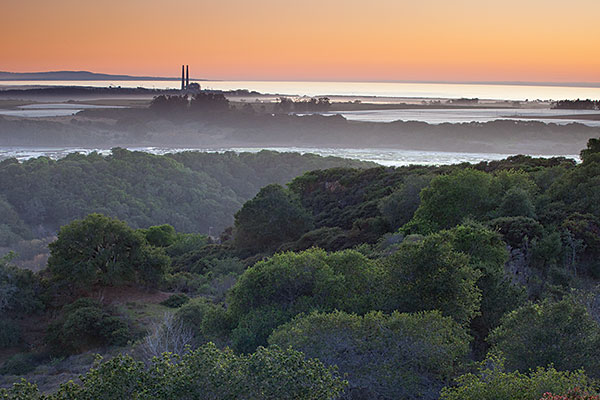
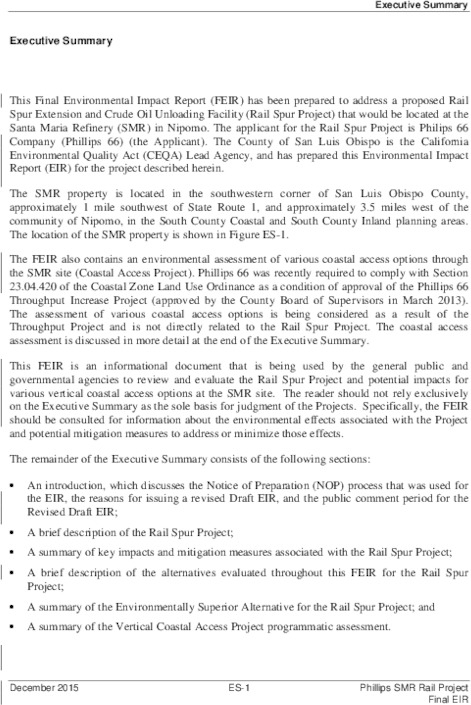
The final EIR for the Phillips 66 Company rail spur extension project proposal has been released (see Executive Summary, below). The Sierra Club and other environmental groups locally and statewide oppose the proposal, which could bring mile-long oil trains carrying 2.5 million gallons of Canadian tar sands crude nearly every day from San Francisco through Monterey County near Elkhorn Slough to San Luis Obispo County. Photo: The Elkhorn Slough National Estuarine Research Reserve, a 1700-acre Reserve of tidal creeks, freshwater marshes and verdant oak woodlands at Sunset. (Credit: Paul Zaretsky, courtesy of the Elkhorn Slough Foundation)
Statement from the Ventana Chapter of the Sierra Club in December:
Sierra Club and other environmental groups locally and statewide oppose this proposal which could bring mile-long oil trains carrying 2.5 million gallons of Canadian tar sands crude nearly every day from San Francisco through Monterey County near Elkhorn Slough to San Luis Obispo County. The Final Environmental Impact Report (FEIR) is expected to be released by the end of the year and hearings on the proposal will begin next year. The FEIR describes the project as "a 6,915-foot eastward extension of an existing rail spur off of the Union Pacific rail mainline, a crude oil railcar unloading facility, pipeline, emergency access road, and other support infrastructure at the Phillips 66 Santa Maria Refinery."
While the Monterey County Board of Supervisors led by Supervisor John Phillips whose district includes Elkhorn Slough voted to write a letter to the county officials in San Luis Obispo opposing the Phillips 66 project, the proposal is going forward.
With a 40-fold increase in crude-by-rail since 2008, derailments and spills have also been on a steep rise. In 2013 more crude oil was spilled from trains than in the previous four decades combined, and in 2014 there were more oil train accidents than in any other year on record.
In voting to oppose the Santa Maria Phillips 66 rail spur, Monterey County joined cities and counties all along the rail route that have passed resolutions and sent letters against the project, including San Jose, Davis, Berkeley, Oakland, Moorpark, Oxnard, Camarillo, Alameda County, Santa Cruz County and Ventura County.
To follow the proposal for the oil train, here is the link to the San Luis Obispo County website:
http://www.slocounty.ca.gov/planning/environmental/EnvironmentalNotices/Phillips_66_Company_Rail_Spur_Extension_Project.htm
http://www.ventanasierraclub.org/conservation/oildrilling/index.shtml
Sierra Club, Ventana Chapter
http://www.ventanasierraclub.org/
Sierra Club and other environmental groups locally and statewide oppose this proposal which could bring mile-long oil trains carrying 2.5 million gallons of Canadian tar sands crude nearly every day from San Francisco through Monterey County near Elkhorn Slough to San Luis Obispo County. The Final Environmental Impact Report (FEIR) is expected to be released by the end of the year and hearings on the proposal will begin next year. The FEIR describes the project as "a 6,915-foot eastward extension of an existing rail spur off of the Union Pacific rail mainline, a crude oil railcar unloading facility, pipeline, emergency access road, and other support infrastructure at the Phillips 66 Santa Maria Refinery."
While the Monterey County Board of Supervisors led by Supervisor John Phillips whose district includes Elkhorn Slough voted to write a letter to the county officials in San Luis Obispo opposing the Phillips 66 project, the proposal is going forward.
With a 40-fold increase in crude-by-rail since 2008, derailments and spills have also been on a steep rise. In 2013 more crude oil was spilled from trains than in the previous four decades combined, and in 2014 there were more oil train accidents than in any other year on record.
In voting to oppose the Santa Maria Phillips 66 rail spur, Monterey County joined cities and counties all along the rail route that have passed resolutions and sent letters against the project, including San Jose, Davis, Berkeley, Oakland, Moorpark, Oxnard, Camarillo, Alameda County, Santa Cruz County and Ventura County.
To follow the proposal for the oil train, here is the link to the San Luis Obispo County website:
http://www.slocounty.ca.gov/planning/environmental/EnvironmentalNotices/Phillips_66_Company_Rail_Spur_Extension_Project.htm
http://www.ventanasierraclub.org/conservation/oildrilling/index.shtml
Sierra Club, Ventana Chapter
http://www.ventanasierraclub.org/
Add Your Comments
Comments
(Hide Comments)
You always hear from the railroads that their payloads are delivered safely 99.997% of the time. Yet. Wisconsin recently saw two trains go off track in two days and two derailed in a week near Jaspar National Park in Canada.
The Canadian National railroad was mum after each occurrence, too busy moving a train in front of the tangled mess to hide it from the town’s view to let anyone know what the cargo was and whether there were injuries. A rail industry spokesman quickly assured the country that accident rates were low and that you’d believe him if you could get the data. He went on to say that things had gotten a lot better safetywise since 47 people died in Lac Megantic. He did not explain how that very assurance would not make a person wonder how things had been allowed to get so bad prior to that horrific event. He touted changes to make sure railroads were prepared to handle derailments (safer cars, advance notice to first responders) and boasted that other changes helped assure there would be no derailment in the first place (unspecified).
Whether pipelines would be safer than rails for transporting oil is a question fraught with statistical pitfalls. One study says it’s 4.5 times safer, which I’ll guess mean that if 1 in 100,000 trains fail to reach their destinations, 1 in 450,000 gallons of Bakken crude doesn’t make it from one end of a pipeline to another. Hopefully it’s not your water table the missing gallons are infusing. The rail industry quickly claimed it was 4.5 times safer than the oil industry said it was, in other words, it was just as safe.
Regardless of your stance on trains and pipelines, I believe you can get behind the idea that the Federal Railroad Administration, the railroads’ watchdog, can raise the bar on how often the rails. bridges, and cars are inspected. Demand that they do so and leave a comment so that someone other than the railroad lobby has their ear for once. Sign the petition at http://petitions.moveon.org/sign/enforce-railroad-health?source=s.fwd&r_by=1718159
The Canadian National railroad was mum after each occurrence, too busy moving a train in front of the tangled mess to hide it from the town’s view to let anyone know what the cargo was and whether there were injuries. A rail industry spokesman quickly assured the country that accident rates were low and that you’d believe him if you could get the data. He went on to say that things had gotten a lot better safetywise since 47 people died in Lac Megantic. He did not explain how that very assurance would not make a person wonder how things had been allowed to get so bad prior to that horrific event. He touted changes to make sure railroads were prepared to handle derailments (safer cars, advance notice to first responders) and boasted that other changes helped assure there would be no derailment in the first place (unspecified).
Whether pipelines would be safer than rails for transporting oil is a question fraught with statistical pitfalls. One study says it’s 4.5 times safer, which I’ll guess mean that if 1 in 100,000 trains fail to reach their destinations, 1 in 450,000 gallons of Bakken crude doesn’t make it from one end of a pipeline to another. Hopefully it’s not your water table the missing gallons are infusing. The rail industry quickly claimed it was 4.5 times safer than the oil industry said it was, in other words, it was just as safe.
Regardless of your stance on trains and pipelines, I believe you can get behind the idea that the Federal Railroad Administration, the railroads’ watchdog, can raise the bar on how often the rails. bridges, and cars are inspected. Demand that they do so and leave a comment so that someone other than the railroad lobby has their ear for once. Sign the petition at http://petitions.moveon.org/sign/enforce-railroad-health?source=s.fwd&r_by=1718159
We are 100% volunteer and depend on your participation to sustain our efforts!
Donate

$210.00 donated
in the past month
Get Involved
If you'd like to help with maintaining or developing the website, contact us.
Publish
Publish your stories and upcoming events on Indybay.
Topics
More
Search Indybay's Archives
Advanced Search
►
▼
IMC Network