







 Publish to Newswire
 Add an Event
From the Open-Publishing Calendar
From the Open-Publishing Newswire
Indybay Feature
Feds Reverse Course, Lift Ban on Fishing for Rare Pacific Bluefin Tuna
SAN FRANCISCO— The National Marine Fisheries Service today allowed large-scale commercial fishing for endangered Pacific bluefin tuna to continue, reversing a decision to close the fishery on Sept. 5, 2014. Pacific bluefin tuna are already in serious trouble; in July 2014, the catch exceeded limits intended to prevent international overfishing.
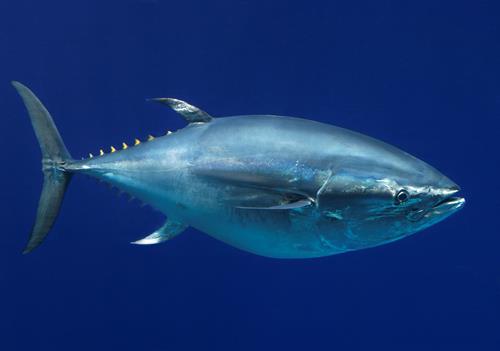
“Bluefin tuna have been decimated by overfishing, and the world has called in their Pacific bluefin tuna fleets — but California fishermen continue to catch endangered Pacific bluefin tuna,” said Catherine Kilduff with the Center for Biological Diversity. “The Fisheries Service is supposed to protect fish on the path to extinction, not push them deeper into crisis. Yet that’s exactly what they’ve done.”
Pacific bluefin tuna have suffered a 96 percent decline since large-scale fishing began. Mexico — the only other country that fishes for Pacific bluefin tuna in the eastern Pacific Ocean — took unilateral action on July 14, 2014, to close both its commercial and recreational fisheries, a move consistent with international fishing resolutions.
“Even when faced with the complete destruction of the fishery, the Gold Rush mentality remains an unstoppable force to create more opportunities to catch bluefin tuna,” Kilduff said. “This decision to allow commercial bluefin tuna fishing to continue shows a callousness driven by profit. The cost may well be one of the ocean’s beautiful top predators. Grassroots action, including boycotting bluefin tuna entirely, may be the best hope for its existence.”
Today’s emergency rule allows commercial vessels to keep 2,204 pounds of Pacific bluefin tuna each fishing trip. The rule allows the California drift gillnet fishery — which sets mile-long nets overnight and also entangles endangered sperm whales and other marine mammals — to sell bluefin tuna caught while fishing for swordfish.
In April the Center petitioned the Fisheries Service to completely prohibit fishing of Pacific bluefin tuna because it is being fished to extinction. On Friday the Pacific Fisheries Management Council will meet to consider new regulations for the recreational fishery, but the preferred regulation is too weak and won’t implement scientists’ recommendations to end overfishing of bluefin tuna.
To learn more, please visit http://www.bluefinboycott.org
The Center for Biological Diversity is a national, nonprofit conservation organization with more than 800,000 members and online activists dedicated to the protection of endangered species and wild places.
http://www.biologicaldiversity.org/news/press_releases/2014/pacific-bluefin-tuna-11-13-2014.html
Center for Biological Diversity
http://www.biologicaldiversity.org/
Pacific bluefin tuna have suffered a 96 percent decline since large-scale fishing began. Mexico — the only other country that fishes for Pacific bluefin tuna in the eastern Pacific Ocean — took unilateral action on July 14, 2014, to close both its commercial and recreational fisheries, a move consistent with international fishing resolutions.
“Even when faced with the complete destruction of the fishery, the Gold Rush mentality remains an unstoppable force to create more opportunities to catch bluefin tuna,” Kilduff said. “This decision to allow commercial bluefin tuna fishing to continue shows a callousness driven by profit. The cost may well be one of the ocean’s beautiful top predators. Grassroots action, including boycotting bluefin tuna entirely, may be the best hope for its existence.”
Today’s emergency rule allows commercial vessels to keep 2,204 pounds of Pacific bluefin tuna each fishing trip. The rule allows the California drift gillnet fishery — which sets mile-long nets overnight and also entangles endangered sperm whales and other marine mammals — to sell bluefin tuna caught while fishing for swordfish.
In April the Center petitioned the Fisheries Service to completely prohibit fishing of Pacific bluefin tuna because it is being fished to extinction. On Friday the Pacific Fisheries Management Council will meet to consider new regulations for the recreational fishery, but the preferred regulation is too weak and won’t implement scientists’ recommendations to end overfishing of bluefin tuna.
To learn more, please visit http://www.bluefinboycott.org
The Center for Biological Diversity is a national, nonprofit conservation organization with more than 800,000 members and online activists dedicated to the protection of endangered species and wild places.
http://www.biologicaldiversity.org/news/press_releases/2014/pacific-bluefin-tuna-11-13-2014.html
Center for Biological Diversity
http://www.biologicaldiversity.org/
Add Your Comments
Comments
(Hide Comments)
This was the press release the Monterey Bay Aquarium released on the subject on September 4, 2014:
Statement of Margaret Spring, Vice President of Conservation and Science and Chief Conservation Officer, Monterey Bay Aquarium:
Today in Japan, nations fishing in the North Pacific agreed on a set of first steps to help reverse the decline of the severely depleted Pacific bluefin tuna. The discussions made clear that additional actions will still be needed to ensure recovery of the species, which decades of heavy fishing has reduced to a mere 4% of its historic population level.
Countries and organizations with an interest in tuna fisheries of the North Pacific met this week as part of the Western and Central Pacific Fisheries Commission’s (WCPFC) Northern Committee meeting in Fukuoka, Japan, to review the status of Pacific bluefin tuna and decide on steps to recover this critical species and place it on a path to long-term sustainability.
The United States delegation, led by officials from the National Oceanic and Atmospheric Administration, pressed for adoption of strong conservation and management measures in 2015, including cuts to juvenile mortality and limits on adult catch levels, a 10-year plan to rebuild the stock to a sustainable level (124,000 tons), and tighter control and reporting on commercial mortality.
While scientists identified the need for substantial catch reductions to ensure long term recovery of Pacific bluefin tuna, the preliminary 10-year rebuilding target of 43,000 tons proposed by Japan and ultimately adopted at this meeting, still falls short of the measures needed to fully recover the population. Further steps will be needed to implement a rebuilding program and measures that can bring the population back to sustainable levels within the next ten years
“I commend Japan, the United States, Korea and other nations for agreeing to take action next year to reduce catch of juveniles to 50% below 2002-2004 levels, limit adult harvests to 2002-2004 levels, implement a provisional Multi-Annual Rebuilding Plan, and begin developing the first reference points and harvest control rules for this fishery,” said Margaret Spring.
“Unfortunately, the science tells us these actions will not be sufficient to end overfishing and recover Pacific bluefin within the next 10 years. While all federally managed fisheries on the U.S. west coast – including West Coast groundfish – have ended overfishing and are rebuilding, Pacific Bluefin tuna, under management of the WCPFC and Inter-American Tropical Tuna Commission, still fall far short of these important measures of progress. Given the severely depleted state of this population and its economic, cultural and ecological importance to all Pacific nations, an aggressive, precautionary, and science-based Pacific-wide rebuilding plan is warranted.
“We hope such a plan will be revisited at the Western and Central Pacific Fisheries Commission and the Inter-American Tropical Tuna Commission (IATTC) meetings in the coming months. We will only recover this species by working together to employ the wealth of scientific information and tools available to implement robust management measures with a high likelihood of success.”
At the Northern Committee meeting, participating nations did agree to other important recommendations, including measures to encourage data collection and monitoring of Pacific bluefin tuna that are caught commercially, reporting requirements related to the international trade in bluefin products, and the initiation of a catch-documentation scheme – a critical step toward more accurate tracking of Pacific bluefin tuna throughout the chain of commerce.
These improvements will enhance transparency and traceability and will discourage illegal, unreported and unregulated fishing activity. In addition, nations agreed to enhance communications and work toward more coordinated management of Pacific bluefin tuna between the WCPFC and the IATTC.
For more than 20 years, the Monterey Bay Aquarium has been a leader in research and conservation of bluefin tuna in the Atlantic and Pacific oceans. The Aquarium partners with leading scientists and has produced significant data sets from field tagging across the Pacific, as well as studies on tuna physiology and biology that serve as the basis for management decisions at national and international forums. It is the only U.S. aquarium to exhibit live bluefin tuna and, through its respected Seafood Watch program, brings significant seafood sustainability experience and a broad understanding of seafood markets to discussions about management of globally significant fisheries.
“As we move toward future international scientific and management meetings on Pacific bluefin tuna, we welcome opportunities to work with our colleagues in the U.S., Japan, Mexico, Korea and other interested nations to facilitate open exchange and consensus on scientific data, life history information, and analytical methods that can improve and expedite the recovery of this critical population,” said Margaret Spring. “I look forward to working with all interested parties to identify and apply scientifically rigorous approaches and tools to build a sustainable future for Pacific bluefin.”
http://newsroom.montereybayaquarium.org/News-Releases/Monterey-Bay-Aquarium-Statement-on-New-Steps-to-Reverse-Decline-of-Severely-Depleted-Pacific-Bluefin-f4.aspx
Statement of Margaret Spring, Vice President of Conservation and Science and Chief Conservation Officer, Monterey Bay Aquarium:
Today in Japan, nations fishing in the North Pacific agreed on a set of first steps to help reverse the decline of the severely depleted Pacific bluefin tuna. The discussions made clear that additional actions will still be needed to ensure recovery of the species, which decades of heavy fishing has reduced to a mere 4% of its historic population level.
Countries and organizations with an interest in tuna fisheries of the North Pacific met this week as part of the Western and Central Pacific Fisheries Commission’s (WCPFC) Northern Committee meeting in Fukuoka, Japan, to review the status of Pacific bluefin tuna and decide on steps to recover this critical species and place it on a path to long-term sustainability.
The United States delegation, led by officials from the National Oceanic and Atmospheric Administration, pressed for adoption of strong conservation and management measures in 2015, including cuts to juvenile mortality and limits on adult catch levels, a 10-year plan to rebuild the stock to a sustainable level (124,000 tons), and tighter control and reporting on commercial mortality.
While scientists identified the need for substantial catch reductions to ensure long term recovery of Pacific bluefin tuna, the preliminary 10-year rebuilding target of 43,000 tons proposed by Japan and ultimately adopted at this meeting, still falls short of the measures needed to fully recover the population. Further steps will be needed to implement a rebuilding program and measures that can bring the population back to sustainable levels within the next ten years
“I commend Japan, the United States, Korea and other nations for agreeing to take action next year to reduce catch of juveniles to 50% below 2002-2004 levels, limit adult harvests to 2002-2004 levels, implement a provisional Multi-Annual Rebuilding Plan, and begin developing the first reference points and harvest control rules for this fishery,” said Margaret Spring.
“Unfortunately, the science tells us these actions will not be sufficient to end overfishing and recover Pacific bluefin within the next 10 years. While all federally managed fisheries on the U.S. west coast – including West Coast groundfish – have ended overfishing and are rebuilding, Pacific Bluefin tuna, under management of the WCPFC and Inter-American Tropical Tuna Commission, still fall far short of these important measures of progress. Given the severely depleted state of this population and its economic, cultural and ecological importance to all Pacific nations, an aggressive, precautionary, and science-based Pacific-wide rebuilding plan is warranted.
“We hope such a plan will be revisited at the Western and Central Pacific Fisheries Commission and the Inter-American Tropical Tuna Commission (IATTC) meetings in the coming months. We will only recover this species by working together to employ the wealth of scientific information and tools available to implement robust management measures with a high likelihood of success.”
At the Northern Committee meeting, participating nations did agree to other important recommendations, including measures to encourage data collection and monitoring of Pacific bluefin tuna that are caught commercially, reporting requirements related to the international trade in bluefin products, and the initiation of a catch-documentation scheme – a critical step toward more accurate tracking of Pacific bluefin tuna throughout the chain of commerce.
These improvements will enhance transparency and traceability and will discourage illegal, unreported and unregulated fishing activity. In addition, nations agreed to enhance communications and work toward more coordinated management of Pacific bluefin tuna between the WCPFC and the IATTC.
For more than 20 years, the Monterey Bay Aquarium has been a leader in research and conservation of bluefin tuna in the Atlantic and Pacific oceans. The Aquarium partners with leading scientists and has produced significant data sets from field tagging across the Pacific, as well as studies on tuna physiology and biology that serve as the basis for management decisions at national and international forums. It is the only U.S. aquarium to exhibit live bluefin tuna and, through its respected Seafood Watch program, brings significant seafood sustainability experience and a broad understanding of seafood markets to discussions about management of globally significant fisheries.
“As we move toward future international scientific and management meetings on Pacific bluefin tuna, we welcome opportunities to work with our colleagues in the U.S., Japan, Mexico, Korea and other interested nations to facilitate open exchange and consensus on scientific data, life history information, and analytical methods that can improve and expedite the recovery of this critical population,” said Margaret Spring. “I look forward to working with all interested parties to identify and apply scientifically rigorous approaches and tools to build a sustainable future for Pacific bluefin.”
http://newsroom.montereybayaquarium.org/News-Releases/Monterey-Bay-Aquarium-Statement-on-New-Steps-to-Reverse-Decline-of-Severely-Depleted-Pacific-Bluefin-f4.aspx
Thanks for unfair portrayal the misinformation and continual demonization of American fisherman. If the author of this was honest, they would've indicated that the extremely meager quota that the west coast of the united states is allotted amounts to 500 tons and the US hadn't even begun Commercial fishing for Bluefin on a massive scale in July of 2014. At that time the the catch would've been no more than a few thousand pounds at most.. What's more is that NMFS decided to implement an emergency closure at 60% of the quota in mid to late august and eventually did at around 90% where it remains to this day. Therefore this made up figure of "limits intended to prevent international overfishing" has nothing to do with the Federally mandated quota designed for said purpose and to this day hasn't even been filled, let alone exceeded. So I don't know what the hell you're talking about.
The price of blue fin tuna has gone as high as $3,600 per pound which is the real motivation for catching what's left of them. Ironic that they are becoming increasingly radioactive due to the constant release of radio isotopes from Fukushima.
In fact I have sworn off eating any fish from the Pacific ocean. I do not wish to glow in the dark.
The feds are also under constant pressure to do the bidding of industry so I imagine they feel that even if the blue fins go extinct in the open ocean, industry can still profit by farming them in pens.
Of course it takes around 5 lbs of forage fish meal to get a pound of tuna and a lot of fuel to catch the forage fish but what the heck-that's business as usual.
In fact I have sworn off eating any fish from the Pacific ocean. I do not wish to glow in the dark.
The feds are also under constant pressure to do the bidding of industry so I imagine they feel that even if the blue fins go extinct in the open ocean, industry can still profit by farming them in pens.
Of course it takes around 5 lbs of forage fish meal to get a pound of tuna and a lot of fuel to catch the forage fish but what the heck-that's business as usual.
Lets correct some mis-truths here in your own story.
SAN FRANCISCO— The National Marine Fisheries Service today allowed large-scale commercial fishing for endangered Pacific bluefin tuna to continue, reversing a decision to close the fishery on Sept. 5, 2014.*** Large scale? Not hardly. Total allotment for US fishermen is 500 tons, Mexico 5,000 tons, Japan and South Korea, over 35,000+ tons.***
Pacific bluefin tuna are already in serious trouble; in July 2014, the catch exceeded limits intended to prevent international overfishing. *** I have been flying an airplane over the ocean for 30 years and this year I saw more Bluefin Tuna than I have ever seen before.***
“Bluefin tuna have been decimated by overfishing, and the world has called in their Pacific bluefin tuna fleets — but California fishermen continue to catch endangered Pacific bluefin tuna,” said Catherine Kilduff with the Center for Biological Diversity. “The Fisheries Service is supposed to protect fish on the path to extinction, not push them deeper into crisis. Yet that’s exactly what they’ve done.”*** It is not the US Fishermen's fault.***
Pacific bluefin tuna have suffered a 96 percent decline since large-scale fishing began. Mexico — the only other country that fishes for Pacific bluefin tuna in the eastern Pacific Ocean — took unilateral action on July 14, 2014, to close both its commercial and recreational fisheries, a move consistent with international fishing resolutions.*** Yes after they caught 5,000 tons yet you are worried about 90 tons left for the US fishermen. Which will amount to about 5 tons caught of this quota.***
“Even when faced with the complete destruction of the fishery, the Gold Rush mentality remains an unstoppable force to create more opportunities to catch bluefin tuna,” Kilduff said. “This decision to allow commercial bluefin tuna fishing to continue shows a callousness driven by profit. ***LOL at a few dollars a pound it sure seems like a Gold Rush!*** The cost may well be one of the ocean’s beautiful top predators. Grassroots action, including boycotting bluefin tuna entirely, may be the best hope for its existence.”
Today’s emergency rule allows commercial vessels to keep 2,204 pounds of Pacific bluefin tuna each fishing trip. The rule allows the California drift gillnet fishery — which sets mile-long nets overnight and also entangles endangered sperm whales and other marine mammals — to sell bluefin tuna caught while fishing for swordfish. *** I suppose the rest of the world catches fish without any incidental killing?***
In April the Center petitioned the Fisheries Service to completely prohibit fishing of Pacific bluefin tuna because it is being fished to extinction. On Friday the Pacific Fisheries Management Council will meet to consider new regulations for the recreational fishery, but the preferred regulation is too weak and won’t implement scientists’ recommendations to end overfishing of bluefin tuna. *** Like I said, I have seen more Bluefin Tuna this year than ever in my 30 years of flying. Where did you get your data, from a cubicle at you desk searching the internet?***
To learn more, please visit http://www.bluefinboycott.org
The Center for Biological Diversity is a national, nonprofit conservation organization with more than 800,000 members and online activists dedicated to the protection of endangered species and wild places.*** Buyout the US fishermen and this will end in the US. You will just have to buy your fish from another country where there are no laws.***
Why is the US fishermen always to blame? Why don't you take the money from your donations and buy out the US fisherman? Why don't you go after the rest of the world who have no rules.
SAN FRANCISCO— The National Marine Fisheries Service today allowed large-scale commercial fishing for endangered Pacific bluefin tuna to continue, reversing a decision to close the fishery on Sept. 5, 2014.*** Large scale? Not hardly. Total allotment for US fishermen is 500 tons, Mexico 5,000 tons, Japan and South Korea, over 35,000+ tons.***
Pacific bluefin tuna are already in serious trouble; in July 2014, the catch exceeded limits intended to prevent international overfishing. *** I have been flying an airplane over the ocean for 30 years and this year I saw more Bluefin Tuna than I have ever seen before.***
“Bluefin tuna have been decimated by overfishing, and the world has called in their Pacific bluefin tuna fleets — but California fishermen continue to catch endangered Pacific bluefin tuna,” said Catherine Kilduff with the Center for Biological Diversity. “The Fisheries Service is supposed to protect fish on the path to extinction, not push them deeper into crisis. Yet that’s exactly what they’ve done.”*** It is not the US Fishermen's fault.***
Pacific bluefin tuna have suffered a 96 percent decline since large-scale fishing began. Mexico — the only other country that fishes for Pacific bluefin tuna in the eastern Pacific Ocean — took unilateral action on July 14, 2014, to close both its commercial and recreational fisheries, a move consistent with international fishing resolutions.*** Yes after they caught 5,000 tons yet you are worried about 90 tons left for the US fishermen. Which will amount to about 5 tons caught of this quota.***
“Even when faced with the complete destruction of the fishery, the Gold Rush mentality remains an unstoppable force to create more opportunities to catch bluefin tuna,” Kilduff said. “This decision to allow commercial bluefin tuna fishing to continue shows a callousness driven by profit. ***LOL at a few dollars a pound it sure seems like a Gold Rush!*** The cost may well be one of the ocean’s beautiful top predators. Grassroots action, including boycotting bluefin tuna entirely, may be the best hope for its existence.”
Today’s emergency rule allows commercial vessels to keep 2,204 pounds of Pacific bluefin tuna each fishing trip. The rule allows the California drift gillnet fishery — which sets mile-long nets overnight and also entangles endangered sperm whales and other marine mammals — to sell bluefin tuna caught while fishing for swordfish. *** I suppose the rest of the world catches fish without any incidental killing?***
In April the Center petitioned the Fisheries Service to completely prohibit fishing of Pacific bluefin tuna because it is being fished to extinction. On Friday the Pacific Fisheries Management Council will meet to consider new regulations for the recreational fishery, but the preferred regulation is too weak and won’t implement scientists’ recommendations to end overfishing of bluefin tuna. *** Like I said, I have seen more Bluefin Tuna this year than ever in my 30 years of flying. Where did you get your data, from a cubicle at you desk searching the internet?***
To learn more, please visit http://www.bluefinboycott.org
The Center for Biological Diversity is a national, nonprofit conservation organization with more than 800,000 members and online activists dedicated to the protection of endangered species and wild places.*** Buyout the US fishermen and this will end in the US. You will just have to buy your fish from another country where there are no laws.***
Why is the US fishermen always to blame? Why don't you take the money from your donations and buy out the US fisherman? Why don't you go after the rest of the world who have no rules.
LOL If it was worth that much there wouldn't be 1 pound left in the ocean. Most BFT is sold for around $1 US dollar a pound to the fishing boat. What ever the markets do after that is their business.
We are 100% volunteer and depend on your participation to sustain our efforts!
Donate

$110.00 donated
in the past month
Get Involved
If you'd like to help with maintaining or developing the website, contact us.
Publish
Publish your stories and upcoming events on Indybay.
Topics
More
Search Indybay's Archives
Advanced Search
►
▼
IMC Network