







 Publish to Newswire
 Add an Event
From the Open-Publishing Calendar
From the Open-Publishing Newswire
Indybay Feature
Labeling Genetically Engineered Foods: Whose Side Are You On?
Proposition 37 ~ This November, California voters will have an opportunity to vote on a simple, yet important ballot initiative called Prop 37 –
the California Right to Know Act. If approved, it would require food sold in California supermarkets be clearly labeled if it has been genetically engineered.
the California Right to Know Act. If approved, it would require food sold in California supermarkets be clearly labeled if it has been genetically engineered.
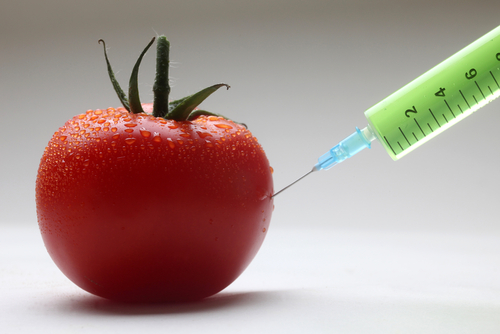
Labeling Genetically Engineered Foods: Whose Side Are You On?
This November, California voters will have an opportunity to vote on a simple, yet important ballot initiative called Prop 37 –
the California Right to Know Act. If approved, it would require food sold in California supermarkets be clearly labeled if it
has been genetically engineered.
(Photo: Anne Sewell / Digital Journal)
What many probably don’t yet know is there is no clearer David versus Goliath fight on this year’s ballot. On one side, is a
truly grassroots people’s movement that generated over a million signatures in just 10 weeks, easily qualifying for the November
ballot. On the other stands the largest anti-union, pro-pesticide, agrichemical interests in the world dedicated to saying and
spending whatever it takes to hide the fact that some of our most important crops are being genetically engineered in a lab
without our knowledge or consent.
As noted by Marc Lifsher in a recent story in the Los Angeles Times, “Proposition 37 promises to set up a big-money battle
pitting natural food businesses and activists against multinational companies including PepsiCo, Coca-Cola and Kellogg.”
But the most notable opposition to date comes from the Grocery Manufacturers Association (GMA), which has given $375,000 to the
cause already, and according to their spokesperson “Defeating the initiative is GMA’s single highest priority this year.” The
GMA’s membership reads like a virtual who’s who of anti-worker, anti-health, and anti-family farmer corporate interests,
including outsourcing trendsetter Bain and Company, notorious polluter Dow Chemical, anti-union heavyweights Safeway Inc. and
Bayer, and Monsanto, the world’s largest agrichemical corporation.
Consider:
* Bain and Company has been receiving its share of anti-worker press of late and rightly so. The company literally wrote the
book on outsourcing, making hundreds of millions of dollars by closing American factories, laying off its workers, then
sending those jobs overseas while hiding profits in offshore tax havens.
* Just this week news broke that Monsanto is being sued by a group of Texas farmers who say they were promised free housing
but instead were charged thousands and poisoned by pesticides.
* Safeway tried mightily to eliminate affordable health insurance for workers – forcing a well- known 137 day strike that
caused many employees to lose their homes, shareholders to lose hundreds of millions of dollars, and shoppers to lose the
reliable service of their grocery clerks.
* Dow Chemical bought Union Carbide, whose infamous pesticide plant in Bhopal leaked toxic gas into the community 28 years
ago, which killed up to 25,000 people. To this day Dow has fought against providing adequate restitution to its victims and
those still suffering from the impact of the disaster and other injuries caused by the chemicals it produces.
* Bayer recently closed a plant in Emeryville after receiving huge tax benefits from the Berkeley and Oakland City Councils.
Meanwhile, just a year earlier, the company laid off union workers in Berkeley. Less than a handful of Bayer´s fifty
factories in North America remain unionized thanks to its aggressive anti-worker campaigns.
These are the kinds of forces that have made defeating Prop 37 their top priority. And it’s their abysmal anti-worker record
that no doubt played a role in the California Labor Federation's endorsement of Prop 37 yesterday.
Don’t be fooled by the corporate front group posing as a consumer rights coalition calling themselves the misleading "Coalition
Against Costly Food Labeling Proposition" (CACFLP). Not a single legitimate consumer rights organization opposes Prop 37. It
costs nothing to print a few words on a label indicating if the food produced was genetically engineered.
And if that’s not enough, key opponent spokespeople have a long history of abetting anti-consumer campaigns:
* Kathy Fairbanks worked for the Californians for Fair Auto Insurance Rates - an auto insurance industry front group
bankrolled by billionaire Mercury Insurance executive George Joseph.
* Maryann Marino is the Southern California regional director of California Citizens Against Lawsuit Abuse (CALA) - which
according to Public Citizen “…masquerade as grassroots citizens groups spontaneously manifesting citizen anger against
so-called ‘lawsuit abuse.’
* And then there’s the man leading the opposition effort - Tom Hiltachk - a former tobacco industry lobbyist who was also the
lead proponent of Proposition 23, the oil-industry funded attempt to suspend California’s global warming law.
The question before voters could not be more stark: Do you side with anti-worker, pro-polluter forces epitomized by the GMA and
deceptive corporate front groups, or do you side with 90% of California voters, the California Labor Federation, family farmers,
the Consumer Federation of America, the United Farm Workers, California Certified Organic Farmers, Public Citizen, the
California League of Conservation Voters, the Union of Concerned Scientists, the Center for Food Safety, the Sierra Club -- and
our fundamental, democratic right to know what we are putting in our bodies?
Initiative Background: What is a GMO?
A genetically engineered food (also known as genetically modified organism, or GMO) is a plant or animal product that has had
its DNA artificially altered by genes from other plants, animals, viruses, or bacteria. A classic example is corn that contains
the pesticide Bt toxin inside the corn itself. In other words, we’re talking about food that has been created in a laboratory
and altered at the molecular level, and not found anywhere in nature.
Prop 37 would simply provide Californians with the right to know what we’re eating, what we feed our children, and whether we
have the ability to make informed choices about what we eat.
Overwhelming Public Support for the Right to Know
Before you get bombarded by tens of millions of dollars of misleading ads bankrolled by big business interests dedicated to
keeping consumers in the dark, consider this: an overwhelming majority of Californians want to know if their food is genetically
engineered.
Polls show nearly unanimous support across the political spectrum for such labeling. This is one of the few issues in America
that enjoys broad bipartisan support: 89% of Republicans and 90% of Democrats want genetically altered foods to be labeled
(Mellman 2012, Reuters 2010, Zogby 2012). An April poll by San Francisco TV station KCBS found that 91% of Californians back
labeling.
Nearly 50 Countries Already Label GMO Foods
Countries across the globe already require labeling of genetically engineered food – including all of Europe, Australia, Japan,
and even China and Russia. So the very same companies fighting our right to know what’s in our food in California provide this
same information to their customers in other countries. There hasn’t been any notable increase in food prices in those countries
– only a more informed public. Let’s be frank: every food product you purchase has labeling on it already. Does anyone really
believe adding one more line is going to hurt consumers?
But there are other reasons Californians deserve labeling and increased consumer choice:
GMO Health Concerns Rising: There is sufficient evidence – and an increasing number of studies - raising doubts and concerns
about the safety of genetically engineered foods. A growing body of science suggests that they may be contributing to rising
rates of allergies, especially among children.
Pesticide Use Increases, Food Supply Doesn’t: The latest data shows genetically engineered crops require more pesticides over
the past 15 years, not less – giving rise to superweeds and superbugs. These pesticides are manufactured by the same companies
that told us DDT or Agent Orange were safe. And there is no reason to believe genetically engineered foods are more productive.
Who Do You Trust: Public Interest Advocates or Big Business?
Opponents have built a business model that relies on a lack of food system transparency, the exploitation of workers, and the
avoidance of tax responsibilities. Prop 37 threatens their stranglehold on consumer choice – which prevents small farmers, the
organics industry, and truly natural food producers from competing on an equal playing field.
The debate over the efficacy of genetically engineered foods should and will continue. In the meantime, we should all have the
right to know what we’re eating and decide for ourselves what is best for our families. Vote Yes on Prop 37.
Zack Kaldveer is the assistant media director for the Yes on Prop 37 campaign.
This November, California voters will have an opportunity to vote on a simple, yet important ballot initiative called Prop 37 –
the California Right to Know Act. If approved, it would require food sold in California supermarkets be clearly labeled if it
has been genetically engineered.
(Photo: Anne Sewell / Digital Journal)
What many probably don’t yet know is there is no clearer David versus Goliath fight on this year’s ballot. On one side, is a
truly grassroots people’s movement that generated over a million signatures in just 10 weeks, easily qualifying for the November
ballot. On the other stands the largest anti-union, pro-pesticide, agrichemical interests in the world dedicated to saying and
spending whatever it takes to hide the fact that some of our most important crops are being genetically engineered in a lab
without our knowledge or consent.
As noted by Marc Lifsher in a recent story in the Los Angeles Times, “Proposition 37 promises to set up a big-money battle
pitting natural food businesses and activists against multinational companies including PepsiCo, Coca-Cola and Kellogg.”
But the most notable opposition to date comes from the Grocery Manufacturers Association (GMA), which has given $375,000 to the
cause already, and according to their spokesperson “Defeating the initiative is GMA’s single highest priority this year.” The
GMA’s membership reads like a virtual who’s who of anti-worker, anti-health, and anti-family farmer corporate interests,
including outsourcing trendsetter Bain and Company, notorious polluter Dow Chemical, anti-union heavyweights Safeway Inc. and
Bayer, and Monsanto, the world’s largest agrichemical corporation.
Consider:
* Bain and Company has been receiving its share of anti-worker press of late and rightly so. The company literally wrote the
book on outsourcing, making hundreds of millions of dollars by closing American factories, laying off its workers, then
sending those jobs overseas while hiding profits in offshore tax havens.
* Just this week news broke that Monsanto is being sued by a group of Texas farmers who say they were promised free housing
but instead were charged thousands and poisoned by pesticides.
* Safeway tried mightily to eliminate affordable health insurance for workers – forcing a well- known 137 day strike that
caused many employees to lose their homes, shareholders to lose hundreds of millions of dollars, and shoppers to lose the
reliable service of their grocery clerks.
* Dow Chemical bought Union Carbide, whose infamous pesticide plant in Bhopal leaked toxic gas into the community 28 years
ago, which killed up to 25,000 people. To this day Dow has fought against providing adequate restitution to its victims and
those still suffering from the impact of the disaster and other injuries caused by the chemicals it produces.
* Bayer recently closed a plant in Emeryville after receiving huge tax benefits from the Berkeley and Oakland City Councils.
Meanwhile, just a year earlier, the company laid off union workers in Berkeley. Less than a handful of Bayer´s fifty
factories in North America remain unionized thanks to its aggressive anti-worker campaigns.
These are the kinds of forces that have made defeating Prop 37 their top priority. And it’s their abysmal anti-worker record
that no doubt played a role in the California Labor Federation's endorsement of Prop 37 yesterday.
Don’t be fooled by the corporate front group posing as a consumer rights coalition calling themselves the misleading "Coalition
Against Costly Food Labeling Proposition" (CACFLP). Not a single legitimate consumer rights organization opposes Prop 37. It
costs nothing to print a few words on a label indicating if the food produced was genetically engineered.
And if that’s not enough, key opponent spokespeople have a long history of abetting anti-consumer campaigns:
* Kathy Fairbanks worked for the Californians for Fair Auto Insurance Rates - an auto insurance industry front group
bankrolled by billionaire Mercury Insurance executive George Joseph.
* Maryann Marino is the Southern California regional director of California Citizens Against Lawsuit Abuse (CALA) - which
according to Public Citizen “…masquerade as grassroots citizens groups spontaneously manifesting citizen anger against
so-called ‘lawsuit abuse.’
* And then there’s the man leading the opposition effort - Tom Hiltachk - a former tobacco industry lobbyist who was also the
lead proponent of Proposition 23, the oil-industry funded attempt to suspend California’s global warming law.
The question before voters could not be more stark: Do you side with anti-worker, pro-polluter forces epitomized by the GMA and
deceptive corporate front groups, or do you side with 90% of California voters, the California Labor Federation, family farmers,
the Consumer Federation of America, the United Farm Workers, California Certified Organic Farmers, Public Citizen, the
California League of Conservation Voters, the Union of Concerned Scientists, the Center for Food Safety, the Sierra Club -- and
our fundamental, democratic right to know what we are putting in our bodies?
Initiative Background: What is a GMO?
A genetically engineered food (also known as genetically modified organism, or GMO) is a plant or animal product that has had
its DNA artificially altered by genes from other plants, animals, viruses, or bacteria. A classic example is corn that contains
the pesticide Bt toxin inside the corn itself. In other words, we’re talking about food that has been created in a laboratory
and altered at the molecular level, and not found anywhere in nature.
Prop 37 would simply provide Californians with the right to know what we’re eating, what we feed our children, and whether we
have the ability to make informed choices about what we eat.
Overwhelming Public Support for the Right to Know
Before you get bombarded by tens of millions of dollars of misleading ads bankrolled by big business interests dedicated to
keeping consumers in the dark, consider this: an overwhelming majority of Californians want to know if their food is genetically
engineered.
Polls show nearly unanimous support across the political spectrum for such labeling. This is one of the few issues in America
that enjoys broad bipartisan support: 89% of Republicans and 90% of Democrats want genetically altered foods to be labeled
(Mellman 2012, Reuters 2010, Zogby 2012). An April poll by San Francisco TV station KCBS found that 91% of Californians back
labeling.
Nearly 50 Countries Already Label GMO Foods
Countries across the globe already require labeling of genetically engineered food – including all of Europe, Australia, Japan,
and even China and Russia. So the very same companies fighting our right to know what’s in our food in California provide this
same information to their customers in other countries. There hasn’t been any notable increase in food prices in those countries
– only a more informed public. Let’s be frank: every food product you purchase has labeling on it already. Does anyone really
believe adding one more line is going to hurt consumers?
But there are other reasons Californians deserve labeling and increased consumer choice:
GMO Health Concerns Rising: There is sufficient evidence – and an increasing number of studies - raising doubts and concerns
about the safety of genetically engineered foods. A growing body of science suggests that they may be contributing to rising
rates of allergies, especially among children.
Pesticide Use Increases, Food Supply Doesn’t: The latest data shows genetically engineered crops require more pesticides over
the past 15 years, not less – giving rise to superweeds and superbugs. These pesticides are manufactured by the same companies
that told us DDT or Agent Orange were safe. And there is no reason to believe genetically engineered foods are more productive.
Who Do You Trust: Public Interest Advocates or Big Business?
Opponents have built a business model that relies on a lack of food system transparency, the exploitation of workers, and the
avoidance of tax responsibilities. Prop 37 threatens their stranglehold on consumer choice – which prevents small farmers, the
organics industry, and truly natural food producers from competing on an equal playing field.
The debate over the efficacy of genetically engineered foods should and will continue. In the meantime, we should all have the
right to know what we’re eating and decide for ourselves what is best for our families. Vote Yes on Prop 37.
Zack Kaldveer is the assistant media director for the Yes on Prop 37 campaign.
Add Your Comments
Latest Comments
Listed below are the latest comments about this post.
These comments are submitted anonymously by website visitors.
TITLE
AUTHOR
DATE
Disclosure is Good -- Hiding info is Bad
Wed, Aug 1, 2012 8:40PM
California GMO labeling law: Bad science, crackpots and hucksters
Tue, Jul 31, 2012 10:22PM
Prop. 37 endorsers and the "official arguments"
Mon, Jul 30, 2012 10:36PM
We are 100% volunteer and depend on your participation to sustain our efforts!
Donate

$110.00 donated
in the past month
Get Involved
If you'd like to help with maintaining or developing the website, contact us.
Publish
Publish your stories and upcoming events on Indybay.
Topics
More
Search Indybay's Archives
Advanced Search
►
▼
IMC Network