







 Publish to Newswire
 Add an Event
From the Open-Publishing Calendar
From the Open-Publishing Newswire
Indybay Feature
CA Leg Analysts Fabricated "Facts" To Stop Ballot Initiative For Closure Of NUKE Plants
The California Legislative Analysts LAO apparently fabricated the facts to declare to the people of California that if Diablo Canyon and San Onofre aging nuclear plants were closed down it would cost the people of California billions of dollars. This was done to prevent people from signing an initiative to get on the ballot to close the plants. This is further evidence that the nuclear industry, PG&E and Southern California Edison are manipulating and controlling the LAO.
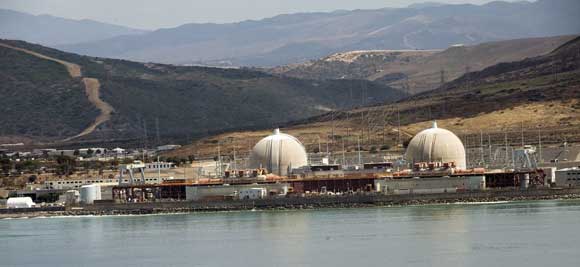
CA Legislative Analysts Fabricated "Facts" To Stop Ballot Initiative To Close Dangerous Nuclear Plants At San Onofre & Diablo Canyon
Nuclear Industry, PG&E & Southern California Edison Running CA Legislative Office?
http://californianuclearinitiative.com/2012/02/24/predictions-of-rolling-blackouts-has-not-occurred/
Predictions of rolling blackouts has not occurred
Posted on February 24, 2012
We have been receiving many questions concerning why the recent closure of the San Onofre Nuclear Generating Station (SONGS) has not resulted in the rolling blackouts predicted in the Legislative Analyst’s (LAO) fiscal analysis for the California Nuclear Initiative. We respond below.
The recent closure of SONGS shows that the LAO’s fiscal analysis for our initiative is incorrect to the extent that it predicts rolling blackouts costing the state tens of billions annually. These predicted blackouts have not occurred with the recent SONGS closure. Why? Because the LA Basin has ample energy without SONGS.
The Public Utility Commission (PUC) and Cal ISO, report “The LA Basin Local Area has 12,309 MW of capacity. It requires 10,600 MW to maintain reliability. SONGS, at 2,340 MW, is critically located in the southern part of this Local Area.” (Senate Energy, Utilities, and Communications Committee Informational Hearing: After Japan: Nuclear Power Plant Safety in California, April 14, 2011). Thus, without SONGS, there is still 9,969 MW of power available in the LA Basin, leaving only 631 MW to be replaced to “maintain reliability.” (12,309 MW current capacity – 2,340 MW generated by SONGS = 9,969 MW.) As the recent closure has shown, and as one might expect, the 631 MW has proved to be readily replaced, and the suggestion that SONGS is somehow critically positioned has been disproved, as well.
In response, the industry has changed its argument to say that blackouts would only be expected during a few peak days in the summer months.However, the LAO made no distinction for season (neither does the PUC report quoted above), and appears to have premised its conclusion of a tens of billions cost for rolling blackouts on year-round occurrences. The LAO also recognized in its analysis that the legislature would take emergency actions to bring new power sources on line, if necessary, to avoid blackouts.
It is also important to note that the LAO, in response to our Records Act request, could not produce one document from any state or industry source stating such rolling blackouts would result from closing our state’s nuclear power plants. In their letters to the LAO concerning the fiscal effect of this initiative, the California Energy Commission and CAISO specifically omitted any mention of rolling blackouts or the associated costs. Purportedly, the LAO based its conclusion that blackouts would occur on verbal sources from CAISO – sources whom refused to be named or make such statements on the record.
Clearly, the nuclear industry is changing their statistics as circumstances prove them incorrect. Had the industry initially reported to the LAO that grid instability would cause blackouts only during the peak hours of a few summer days, if at all, the fiscal analysis would have been significantly different.
Ben Davis, Jr
California Nuclear Initiative
http://californianuclearinitiative.com/
Nuclear Industry, PG&E & Southern California Edison Running CA Legislative Office?
http://californianuclearinitiative.com/2012/02/24/predictions-of-rolling-blackouts-has-not-occurred/
Predictions of rolling blackouts has not occurred
Posted on February 24, 2012
We have been receiving many questions concerning why the recent closure of the San Onofre Nuclear Generating Station (SONGS) has not resulted in the rolling blackouts predicted in the Legislative Analyst’s (LAO) fiscal analysis for the California Nuclear Initiative. We respond below.
The recent closure of SONGS shows that the LAO’s fiscal analysis for our initiative is incorrect to the extent that it predicts rolling blackouts costing the state tens of billions annually. These predicted blackouts have not occurred with the recent SONGS closure. Why? Because the LA Basin has ample energy without SONGS.
The Public Utility Commission (PUC) and Cal ISO, report “The LA Basin Local Area has 12,309 MW of capacity. It requires 10,600 MW to maintain reliability. SONGS, at 2,340 MW, is critically located in the southern part of this Local Area.” (Senate Energy, Utilities, and Communications Committee Informational Hearing: After Japan: Nuclear Power Plant Safety in California, April 14, 2011). Thus, without SONGS, there is still 9,969 MW of power available in the LA Basin, leaving only 631 MW to be replaced to “maintain reliability.” (12,309 MW current capacity – 2,340 MW generated by SONGS = 9,969 MW.) As the recent closure has shown, and as one might expect, the 631 MW has proved to be readily replaced, and the suggestion that SONGS is somehow critically positioned has been disproved, as well.
In response, the industry has changed its argument to say that blackouts would only be expected during a few peak days in the summer months.However, the LAO made no distinction for season (neither does the PUC report quoted above), and appears to have premised its conclusion of a tens of billions cost for rolling blackouts on year-round occurrences. The LAO also recognized in its analysis that the legislature would take emergency actions to bring new power sources on line, if necessary, to avoid blackouts.
It is also important to note that the LAO, in response to our Records Act request, could not produce one document from any state or industry source stating such rolling blackouts would result from closing our state’s nuclear power plants. In their letters to the LAO concerning the fiscal effect of this initiative, the California Energy Commission and CAISO specifically omitted any mention of rolling blackouts or the associated costs. Purportedly, the LAO based its conclusion that blackouts would occur on verbal sources from CAISO – sources whom refused to be named or make such statements on the record.
Clearly, the nuclear industry is changing their statistics as circumstances prove them incorrect. Had the industry initially reported to the LAO that grid instability would cause blackouts only during the peak hours of a few summer days, if at all, the fiscal analysis would have been significantly different.
Ben Davis, Jr
California Nuclear Initiative
http://californianuclearinitiative.com/
For more information:
http://californianuclearinitiative.com/
Add Your Comments
Comments
(Hide Comments)
Thanks for bringing attention to this issue. However, as the author of the initiative I do want to make one thing clear. I believe the LAO made an honest mistake. Though I strongly disagree with the LAO analysis, I believe the words "fabricated facts" as used in this piece could be viewed suggesting that the LAO purposely tried to mislead the public. I do not believe the LAO purposely fabricated facts. Instead I believe that the misinformation in their analysis was a result of poorly performed research. Ben Davis Jr. Initiative proponent
"Licensed to Kill: How the nuclear industry destroys endangered marine wildlife and ocean habitat to save money"
Brief Summary: SCE agreed to do a 14 years study at a cost of $48 million in exchange for letting San Onofre going online. At the end of the study it was found that the reactors were killing immense numbers of fish, eggs and other palagic life. The company originally agreed to go along with any mitigation requirements, however this was not to be the case as it took nearly 8 years to finally get the utility to finally act on a far reduced plan than scientists were demanding. Probably the most startling part of the story is that the CPUC agreed to extract over $105 million to cover the mitigation costs, but also allowed SCE to retain any unspent money, which which resulted in the company pocketing $103 million.
Since then the state has moved to force the closure of all "Once Through" cooling systems along California coastline. Both PG&E and SCE have threatened to abandon all renewable and efficiency programs if the state proceeds to enforce the law. An additional note, I have a fairly decent number of original news stories during the 1990's that covers various aspects of what happened, however, the below piece is pretty much the best piece around giving many of the key details. There is also a similar scandal of equal size around Diablo Canyon.
*********************
4-7. San Onofre Nuclear Generating Station
Southern California Edison Company, San Clemente, CA
Edison promises mitigation but reneges on pledge to protect marine environment.
Edison's San Onofre Nuclear Generating Station, on the Pacific coast north of San Diego, uses the once-through cooling system for all three of its reactor units. Unit 1, the oldest, is closed and set to be dismantled soon at an estimated cost of $460 million, although the utility is still using its water intake system to boost production at the plant. Units 2 and 3 were issued a construction license in 1973 but, due to construction delays, did not come on line until 1983 and 1984, respectively. The operating permits for these two units were conditional on Edison's submitting to a detailed study on the marine environmental effects of reactor operation.
The resulting study showed extensive damage. Nonetheless, and despite Edison's prior agreement to compensate for destruction of the surrounding marine environment, the company has delayed, avoided and ultimately negated the bulk of its mitigation requirement, with devastating results to the marine ecosystem around the plant.
Chronology
A finding of significant damage. San Onofre's 1974 permit required Edison to submit to a comprehensive environmental impact study of the operating effects of Units 2 and 3. The study was to be conducted by an independent panel of marine scientists, appointed by the California Coastal Commission. In 1989, the panel, the three-member Marine Review Committee (MRC), completed its 14-year examination at the cost of $48 million. Edison agreed to accept whatever mitigation the MRC
findings might require, a trade-off the utility made to convince the coastal commission to permit licensing of the reactors.
San Onofre was killing fish and the pulverized remains, inhibiting kelp growth by blocking light.
According to Nuclear Regulatory Commission (NRC) documentation, the MRC study found significant damage to the marine environment in the area of the reactors, including a reduction of up to 70 percent in several species of fish. Some species of sea urchin and snail were reduced by up to 90 percent.1 Other MRC findings included:
• The plant's cooling system, which sucks in about 1.7 million gallons of water a minute, kills 4-5 billion fish eggs and larvae and at least 21 tons offish a year—more than 100,000 fish a day.2
• The cloudy discharge water creates a shadow effect and inhibits the growth of young kelp.3 The study predicted entrainment and the shadow kills could reduce the offshore kelp forest by 6 percent.4
Damage repair ordered, and the wrangling begins. On July 16, 1991, based on the MRC study's findings, the commission ordered San Onofre to restore 150 acres of coastal wetland and build a 300-acre artificial reef north of the plant as a habitat for young fish and kelp. The mitigation package also committed Edison to maintaining an opening at the mouth of the San Dieguito Lagoon. These requirements came after a lawsuit brought by Earth Island Institute to force die mitigation had already put pressure on Edison. The suit alleged, as supported by the MRC findings, that San Onofre was killing fish and larvae and clouding the ocean floor through the discharge of the pulverized remains, inhibiting kelp growth by blocking light. Edison settled the suit on January 27, 1993, for $17 million and agreed to compensate for the environmental damage by restoring wetlands, funding research, expanding a park and creating an educational center.5
Restoration scaled back; damage scaled up. Instead, in 1995, Edison began to back out of the mitigation plans. The utility conducted its own "scientific" damage assessment study. In the meantime, and despite opposition from the state Department of Fish and Game and environmental groups, the state Regional Water Quality Control Board gave San Onofre permission to continue pumping water through its Unit 1 reactor, even though the reactor had been retired for three years. Thus, Edison avoided another opportunity to decrease environmental damage. Unit 1 intakes and discharges about 14 million gallons of water a day. "You are going to kill a lot offish and invertebrates that have become accustomed to that area," said William Paznokas, environmental specialist for the state Department of Fish and Game. "There isn't any written justification" for this permit.6
Ratepayer-funded environmental restoration becomes stockholders windfall. In 1996, Edison delivered die results of its study and argued that claims of marine damage had been exaggerated. The utility suggested a scaled back wedands restoration plan, eliminated die lagoon mouth maintenance project, and proposed a smaller, 17-acre reef. Edison alleged diat adherence to the original 1991 requirements would cost die company close to $ 160 million instead of the $30 million price tag estimated at die time.' According to V. John White, executive director of die Center for Energy Efficiency and Renewable Technologies, Edison had already collected $80 million from ratepayers earmarked for marine mitigation programs.8 Warner Chabot, Pacific Region director for die Center for Marine Conservation, put die estimate even higher. "To compound the insult, the [state approved for] Edison a price for electricity that included more dian $100 million to cover anticipated ocean mitigation costs for this power plant," Chabot said.9 The Public Utilities Commission (PUC) estimated die fund at $106 million.1 °A coastal commission staff report quoted die Public Utilities Commission Office of Ratepayer Advocates as stadng diat die utility's stockholders would be able to keep any of die mitigation funds collected from ratepayers diat were not spent on restoration work.11
Editorial opinion urges Edison to keep promises. On November 13, 1996, the San Diego Union Tribune ran an editorial entitled: "Stick to the deal/Edison should mitigate fish kill."12 It said:
The problem with Edison's reasoning is that it looks only at new scientific evidence supporting its position, while ignoring evidence against it ... It wants to scale back not only its kelp forest mitigation, but also it commitment to coastal wetlands that are nurseries for young fish . . . Now, Edison wants to scale back those mitigation plans, including its agreement to keep the mouth of the river open to the sea. Without the river moudi open, wetlands upstream are useless as fisheries ... The Coastal Commission should not let Edison pick and choose among the facts.13
While Edison continued to stall and delay, the San Diego Union Tribune again urged the utility to keep its word. "A deal is a deal," said a second editorial the following April. 14
We're too far along on diis mitigation plan to stop now. And there's no convincing scientific reason to do so, anyway... The sea water intake system at die San Onofre nuclear plant kills about 26 metric tons offish each year ... The Coastal Commission should tell SCE to stop delaying and get to work now.15
Commission bows to Edison's scheme to reduce environmental commitment. After numerous delays and postponed decisions, die coastal commission eventually agreed to Edison's scaled-down proposals. "We have set a world record in terms of studies and [delays]," lamented Rusty Areias, commission chairman -16 "Twenty years is long enough."17
The commission required Edison to spend $3.6 million on fish hatcheries and do the 150 acres of wetland enhancement. But by May 1997 Edison had persuaded the commission it would build mly the smaller 17-acre experimental reef, not the full 300 acres.'8 By November, Edison had whittleed down the wetands acreage as well—to 117 acres, instead of the required 150 acres.19
Hike in discharge temperatures allowed, despite conclusive beat damage. In a further move that allows San Onofre to increase instead of diminishing its degradation of the marine environment, the San Diego RWQCB, by a 6 to 3 vote in February 1998, gave Edison permission to raise the temperature Df its discharge water by 5 degrees above the allowable limit, to 25 degrees warmer than the normal temperature of the ocean. The State Water Resources Control Board adopted this decision on April 14, 1999.20 Edison argued that the temperature had to be raised to generate more power and that the increase would not harm the marine environment. This is contrary not only to the wealth of evidence contained in the MRC study but also to the findings at the Diablo Canyon plant where temperatures raised to 22 degrees above normal were shown to have caused severe damage to the marine environment. (See chapter 2, this report.) Dr. Rimmon Fay, a marine biologist, oceanographic chemist, and a coauthor of the MRC study, responded that Edison should be required to install cooling towers at San Onofre and not be permitted to raise the discharge temperatures.2' Edison officials reportedly considered the cooling tower option but again rejected it because of the high cost. 22
Scalding killed 4,800pounds offish in a single day. Hot water caused further problems in September 1999, when 4,800 pounds offish, predominantly yellow fin croaker, were killed in a single day at San Onofre.23 The fish were scalded "inadvertently," according to Steve Hansen, plant spokesman, during a heat treatment to clean barnacles at the plant.24 The NRC dismissed the event and said probably no action would be taken against the plant.25 "It is not a nuclear safety issue," said Breck Henderson, NRC spokesman. "No regulations were violated."26 A letter from Edison to NRC explained that "generally a heat treatment results in the loss of less than 1,000 pounds offish."27
Edison stockholder windfall off ratepayer fees could reach $103 million. On September 29, 1999, Edison announced that a 22.5 acre artificial reef had been completed at a cost of $2.7 million.2 8 To date, this is all Edison has spent on mitigation, and no other restoration efforts are reported to have been accomplished. If PUC calculations about unused mitigation fund profits are correct, Edison stockholders stand to pocket up to $ 103.3 million paid out by ratepayers for environmental restoration efforts but not used by Edison for that purpose. Moreover, on March 11, 2000, San Onofre received a license extension to 2022, nine years beyond the date the plant was to have shut down.
Seals and sea turtles—an on-going mystery. Although NMFS records show that San Onofre has been capturing sea turtles, seals, and sea lions, NRC Daily Event reports do not reflect these captures or mortalities. NMFS records show 136 marine mammal mortalities at San Onofre over a span of 13 years, although records are incomplete or missing for some years.29Joe Cordaro, NMFS Southwest biologist, told the authors his office has no direct dealings with NRC but does receive reports of seal captures at San Onofre directly from the plant biologist.3 ° NMFS has issued San Onofre a letter of permission to take seals and sea lions, but there is to date no official incidental take statement. No records could be found of mitigation attempts to address these issues, similar to those at Seabrook, and it is not known why NRC, which has liability for marine mammal deaths at its licensees' plants, has failed to oversee these captures under its regulatory obligations. Cordaro also provided records of three green sea turtle deaths and seven live green sea turde captures at San Onofre between 1983 and 1991, aldiough two of die interim years were missing so the records are incomplete.3' None of these records surfaced in Freedom of Information Act submittals to NRC.
Notes
1NRC, NUREGS/SR1437/V2/part 0.9.
2 Steve La Rue , "$17 Million Deal Resolves N-Plant Suit, San Diego Union—Tribune, January 27, 1993.
3 Rimmon Fay, marine biologist, Venice Beach, CA,telephone conversation with authors, November 1999.
4 Steve La Rue, "Nuclear Plant Owners Seek Environmental Break/Coastal Panel Asked to Relieve Artificial Reef Costs, San Diego Union—Tribune, August 20, 1996.
5 Ibid.
6 Steve LaRue, Pumping of sea water at Onofre reactor OK'd despite worries, San Diego Union-Tribune, February 10, 1995. Nuclear plant owners seek environmental break.
8 V. John White, executive director, Center for Energy Efficiency and Renewable Technologies. "What's at Stake in the Coastal Commission Flap," opinion-editorial, San Diego Union—Tribune, July 12, 1996.
9 Nuclear plant owners seek environmental break.
10 Steve La Rue, "N-plant Mitigation Plan in Spodight," San Diego Union—Tribune, April 8, 1997.
11 Ibid.
12 Editorial, "Stick to the Deal/Edison Should Mitigate Fish Kills," San Diego Union—Tribune, November 13, 1996.
13 Ibid.
14 Editorial, "Restore the Wedands/SCE Should Keep Its Promise on Lagoon, San Diego Union—Tribune, April 7, 1997.
15 Ibid.
16 Terry Rodgers, "Edison Told to Repair Damage From Onofre, San Diego Union—Tribune, April 10, 1997.
17 Ibid.
18 Terry Rodgers, "Utility Planning to Build Kelp Reef/Dredging of Lagoon Also Part of Coastal Reclamation Project, San Diego Union-Tribune, May 10, 1997.
"Terry Rodgers, "Edison Resolves Wetlands Expansion Dispute/Coastal Commission Approves Preliminary Plan with Utility, San Diego Union-Tribune, November 6, 1997.
20 State Water Resources Control Board resolution, April 14, 1999, http://www.swrcb.ca.gov
21 Terry Rodgers, "San Onofre Plant Permitted to Discharge Warmer Water," San Diego Union—Tribune, February 12, 1998.
22 Ibid.
23 John Berhman, "Onofre Nuclear Plant Cleanup Kills 4,800 Pounds of Fish," San Diego Union-Tribune, October 30, 1999.
24 Ibid.
25 Ibid.
26 Ibid.
27 R. Krieger, Letter to NRC, Special Report—Unusual Fish Kill, San Onofre, October 21, 1999. FOIA# 2000-0128, Appendix C3.
28 Terry Rodgers, "Kelp Forest Study Under Way on Artificial Reef, San Diego Union—Tribune, October 13,1999.
29 U.S. Department of Commerce, National Oceanic and Atmospheric Administration, NMFS, Southwest Region, California Marine Mammal Stranding (CMMS) Network Database, January 25, 2000.
30 Joe Cordaro, biologist, NMFS Southwest office, Long Beach, CA, telephone conversation with Linda Gunter, January 2000. 31 CMMS Network Database.
Brief Summary: SCE agreed to do a 14 years study at a cost of $48 million in exchange for letting San Onofre going online. At the end of the study it was found that the reactors were killing immense numbers of fish, eggs and other palagic life. The company originally agreed to go along with any mitigation requirements, however this was not to be the case as it took nearly 8 years to finally get the utility to finally act on a far reduced plan than scientists were demanding. Probably the most startling part of the story is that the CPUC agreed to extract over $105 million to cover the mitigation costs, but also allowed SCE to retain any unspent money, which which resulted in the company pocketing $103 million.
Since then the state has moved to force the closure of all "Once Through" cooling systems along California coastline. Both PG&E and SCE have threatened to abandon all renewable and efficiency programs if the state proceeds to enforce the law. An additional note, I have a fairly decent number of original news stories during the 1990's that covers various aspects of what happened, however, the below piece is pretty much the best piece around giving many of the key details. There is also a similar scandal of equal size around Diablo Canyon.
*********************
4-7. San Onofre Nuclear Generating Station
Southern California Edison Company, San Clemente, CA
Edison promises mitigation but reneges on pledge to protect marine environment.
Edison's San Onofre Nuclear Generating Station, on the Pacific coast north of San Diego, uses the once-through cooling system for all three of its reactor units. Unit 1, the oldest, is closed and set to be dismantled soon at an estimated cost of $460 million, although the utility is still using its water intake system to boost production at the plant. Units 2 and 3 were issued a construction license in 1973 but, due to construction delays, did not come on line until 1983 and 1984, respectively. The operating permits for these two units were conditional on Edison's submitting to a detailed study on the marine environmental effects of reactor operation.
The resulting study showed extensive damage. Nonetheless, and despite Edison's prior agreement to compensate for destruction of the surrounding marine environment, the company has delayed, avoided and ultimately negated the bulk of its mitigation requirement, with devastating results to the marine ecosystem around the plant.
Chronology
A finding of significant damage. San Onofre's 1974 permit required Edison to submit to a comprehensive environmental impact study of the operating effects of Units 2 and 3. The study was to be conducted by an independent panel of marine scientists, appointed by the California Coastal Commission. In 1989, the panel, the three-member Marine Review Committee (MRC), completed its 14-year examination at the cost of $48 million. Edison agreed to accept whatever mitigation the MRC
findings might require, a trade-off the utility made to convince the coastal commission to permit licensing of the reactors.
San Onofre was killing fish and the pulverized remains, inhibiting kelp growth by blocking light.
According to Nuclear Regulatory Commission (NRC) documentation, the MRC study found significant damage to the marine environment in the area of the reactors, including a reduction of up to 70 percent in several species of fish. Some species of sea urchin and snail were reduced by up to 90 percent.1 Other MRC findings included:
• The plant's cooling system, which sucks in about 1.7 million gallons of water a minute, kills 4-5 billion fish eggs and larvae and at least 21 tons offish a year—more than 100,000 fish a day.2
• The cloudy discharge water creates a shadow effect and inhibits the growth of young kelp.3 The study predicted entrainment and the shadow kills could reduce the offshore kelp forest by 6 percent.4
Damage repair ordered, and the wrangling begins. On July 16, 1991, based on the MRC study's findings, the commission ordered San Onofre to restore 150 acres of coastal wetland and build a 300-acre artificial reef north of the plant as a habitat for young fish and kelp. The mitigation package also committed Edison to maintaining an opening at the mouth of the San Dieguito Lagoon. These requirements came after a lawsuit brought by Earth Island Institute to force die mitigation had already put pressure on Edison. The suit alleged, as supported by the MRC findings, that San Onofre was killing fish and larvae and clouding the ocean floor through the discharge of the pulverized remains, inhibiting kelp growth by blocking light. Edison settled the suit on January 27, 1993, for $17 million and agreed to compensate for the environmental damage by restoring wetlands, funding research, expanding a park and creating an educational center.5
Restoration scaled back; damage scaled up. Instead, in 1995, Edison began to back out of the mitigation plans. The utility conducted its own "scientific" damage assessment study. In the meantime, and despite opposition from the state Department of Fish and Game and environmental groups, the state Regional Water Quality Control Board gave San Onofre permission to continue pumping water through its Unit 1 reactor, even though the reactor had been retired for three years. Thus, Edison avoided another opportunity to decrease environmental damage. Unit 1 intakes and discharges about 14 million gallons of water a day. "You are going to kill a lot offish and invertebrates that have become accustomed to that area," said William Paznokas, environmental specialist for the state Department of Fish and Game. "There isn't any written justification" for this permit.6
Ratepayer-funded environmental restoration becomes stockholders windfall. In 1996, Edison delivered die results of its study and argued that claims of marine damage had been exaggerated. The utility suggested a scaled back wedands restoration plan, eliminated die lagoon mouth maintenance project, and proposed a smaller, 17-acre reef. Edison alleged diat adherence to the original 1991 requirements would cost die company close to $ 160 million instead of the $30 million price tag estimated at die time.' According to V. John White, executive director of die Center for Energy Efficiency and Renewable Technologies, Edison had already collected $80 million from ratepayers earmarked for marine mitigation programs.8 Warner Chabot, Pacific Region director for die Center for Marine Conservation, put die estimate even higher. "To compound the insult, the [state approved for] Edison a price for electricity that included more dian $100 million to cover anticipated ocean mitigation costs for this power plant," Chabot said.9 The Public Utilities Commission (PUC) estimated die fund at $106 million.1 °A coastal commission staff report quoted die Public Utilities Commission Office of Ratepayer Advocates as stadng diat die utility's stockholders would be able to keep any of die mitigation funds collected from ratepayers diat were not spent on restoration work.11
Editorial opinion urges Edison to keep promises. On November 13, 1996, the San Diego Union Tribune ran an editorial entitled: "Stick to the deal/Edison should mitigate fish kill."12 It said:
The problem with Edison's reasoning is that it looks only at new scientific evidence supporting its position, while ignoring evidence against it ... It wants to scale back not only its kelp forest mitigation, but also it commitment to coastal wetlands that are nurseries for young fish . . . Now, Edison wants to scale back those mitigation plans, including its agreement to keep the mouth of the river open to the sea. Without the river moudi open, wetlands upstream are useless as fisheries ... The Coastal Commission should not let Edison pick and choose among the facts.13
While Edison continued to stall and delay, the San Diego Union Tribune again urged the utility to keep its word. "A deal is a deal," said a second editorial the following April. 14
We're too far along on diis mitigation plan to stop now. And there's no convincing scientific reason to do so, anyway... The sea water intake system at die San Onofre nuclear plant kills about 26 metric tons offish each year ... The Coastal Commission should tell SCE to stop delaying and get to work now.15
Commission bows to Edison's scheme to reduce environmental commitment. After numerous delays and postponed decisions, die coastal commission eventually agreed to Edison's scaled-down proposals. "We have set a world record in terms of studies and [delays]," lamented Rusty Areias, commission chairman -16 "Twenty years is long enough."17
The commission required Edison to spend $3.6 million on fish hatcheries and do the 150 acres of wetland enhancement. But by May 1997 Edison had persuaded the commission it would build mly the smaller 17-acre experimental reef, not the full 300 acres.'8 By November, Edison had whittleed down the wetands acreage as well—to 117 acres, instead of the required 150 acres.19
Hike in discharge temperatures allowed, despite conclusive beat damage. In a further move that allows San Onofre to increase instead of diminishing its degradation of the marine environment, the San Diego RWQCB, by a 6 to 3 vote in February 1998, gave Edison permission to raise the temperature Df its discharge water by 5 degrees above the allowable limit, to 25 degrees warmer than the normal temperature of the ocean. The State Water Resources Control Board adopted this decision on April 14, 1999.20 Edison argued that the temperature had to be raised to generate more power and that the increase would not harm the marine environment. This is contrary not only to the wealth of evidence contained in the MRC study but also to the findings at the Diablo Canyon plant where temperatures raised to 22 degrees above normal were shown to have caused severe damage to the marine environment. (See chapter 2, this report.) Dr. Rimmon Fay, a marine biologist, oceanographic chemist, and a coauthor of the MRC study, responded that Edison should be required to install cooling towers at San Onofre and not be permitted to raise the discharge temperatures.2' Edison officials reportedly considered the cooling tower option but again rejected it because of the high cost. 22
Scalding killed 4,800pounds offish in a single day. Hot water caused further problems in September 1999, when 4,800 pounds offish, predominantly yellow fin croaker, were killed in a single day at San Onofre.23 The fish were scalded "inadvertently," according to Steve Hansen, plant spokesman, during a heat treatment to clean barnacles at the plant.24 The NRC dismissed the event and said probably no action would be taken against the plant.25 "It is not a nuclear safety issue," said Breck Henderson, NRC spokesman. "No regulations were violated."26 A letter from Edison to NRC explained that "generally a heat treatment results in the loss of less than 1,000 pounds offish."27
Edison stockholder windfall off ratepayer fees could reach $103 million. On September 29, 1999, Edison announced that a 22.5 acre artificial reef had been completed at a cost of $2.7 million.2 8 To date, this is all Edison has spent on mitigation, and no other restoration efforts are reported to have been accomplished. If PUC calculations about unused mitigation fund profits are correct, Edison stockholders stand to pocket up to $ 103.3 million paid out by ratepayers for environmental restoration efforts but not used by Edison for that purpose. Moreover, on March 11, 2000, San Onofre received a license extension to 2022, nine years beyond the date the plant was to have shut down.
Seals and sea turtles—an on-going mystery. Although NMFS records show that San Onofre has been capturing sea turtles, seals, and sea lions, NRC Daily Event reports do not reflect these captures or mortalities. NMFS records show 136 marine mammal mortalities at San Onofre over a span of 13 years, although records are incomplete or missing for some years.29Joe Cordaro, NMFS Southwest biologist, told the authors his office has no direct dealings with NRC but does receive reports of seal captures at San Onofre directly from the plant biologist.3 ° NMFS has issued San Onofre a letter of permission to take seals and sea lions, but there is to date no official incidental take statement. No records could be found of mitigation attempts to address these issues, similar to those at Seabrook, and it is not known why NRC, which has liability for marine mammal deaths at its licensees' plants, has failed to oversee these captures under its regulatory obligations. Cordaro also provided records of three green sea turtle deaths and seven live green sea turde captures at San Onofre between 1983 and 1991, aldiough two of die interim years were missing so the records are incomplete.3' None of these records surfaced in Freedom of Information Act submittals to NRC.
Notes
1NRC, NUREGS/SR1437/V2/part 0.9.
2 Steve La Rue , "$17 Million Deal Resolves N-Plant Suit, San Diego Union—Tribune, January 27, 1993.
3 Rimmon Fay, marine biologist, Venice Beach, CA,telephone conversation with authors, November 1999.
4 Steve La Rue, "Nuclear Plant Owners Seek Environmental Break/Coastal Panel Asked to Relieve Artificial Reef Costs, San Diego Union—Tribune, August 20, 1996.
5 Ibid.
6 Steve LaRue, Pumping of sea water at Onofre reactor OK'd despite worries, San Diego Union-Tribune, February 10, 1995. Nuclear plant owners seek environmental break.
8 V. John White, executive director, Center for Energy Efficiency and Renewable Technologies. "What's at Stake in the Coastal Commission Flap," opinion-editorial, San Diego Union—Tribune, July 12, 1996.
9 Nuclear plant owners seek environmental break.
10 Steve La Rue, "N-plant Mitigation Plan in Spodight," San Diego Union—Tribune, April 8, 1997.
11 Ibid.
12 Editorial, "Stick to the Deal/Edison Should Mitigate Fish Kills," San Diego Union—Tribune, November 13, 1996.
13 Ibid.
14 Editorial, "Restore the Wedands/SCE Should Keep Its Promise on Lagoon, San Diego Union—Tribune, April 7, 1997.
15 Ibid.
16 Terry Rodgers, "Edison Told to Repair Damage From Onofre, San Diego Union—Tribune, April 10, 1997.
17 Ibid.
18 Terry Rodgers, "Utility Planning to Build Kelp Reef/Dredging of Lagoon Also Part of Coastal Reclamation Project, San Diego Union-Tribune, May 10, 1997.
"Terry Rodgers, "Edison Resolves Wetlands Expansion Dispute/Coastal Commission Approves Preliminary Plan with Utility, San Diego Union-Tribune, November 6, 1997.
20 State Water Resources Control Board resolution, April 14, 1999, http://www.swrcb.ca.gov
21 Terry Rodgers, "San Onofre Plant Permitted to Discharge Warmer Water," San Diego Union—Tribune, February 12, 1998.
22 Ibid.
23 John Berhman, "Onofre Nuclear Plant Cleanup Kills 4,800 Pounds of Fish," San Diego Union-Tribune, October 30, 1999.
24 Ibid.
25 Ibid.
26 Ibid.
27 R. Krieger, Letter to NRC, Special Report—Unusual Fish Kill, San Onofre, October 21, 1999. FOIA# 2000-0128, Appendix C3.
28 Terry Rodgers, "Kelp Forest Study Under Way on Artificial Reef, San Diego Union—Tribune, October 13,1999.
29 U.S. Department of Commerce, National Oceanic and Atmospheric Administration, NMFS, Southwest Region, California Marine Mammal Stranding (CMMS) Network Database, January 25, 2000.
30 Joe Cordaro, biologist, NMFS Southwest office, Long Beach, CA, telephone conversation with Linda Gunter, January 2000. 31 CMMS Network Database.
Apparently the author of the initiative to close San Onofre and Diablo Canyon doesn't believe that the Legislative Analyst has an axed to grind. Davis should question why false information was put out by the legislative office and why they didn't do proper vetting and instead listened to the utilities only?
We are 100% volunteer and depend on your participation to sustain our efforts!
Donate

$110.00 donated
in the past month
Get Involved
If you'd like to help with maintaining or developing the website, contact us.
Publish
Publish your stories and upcoming events on Indybay.
Topics
More
Search Indybay's Archives
Advanced Search
►
▼
IMC Network