







 Publish to Newswire
 Add an Event
From the Open-Publishing Calendar
From the Open-Publishing Newswire
Indybay Feature
J. Edgar Movie Review
The following is my review and critique of the movie "J Edgar."
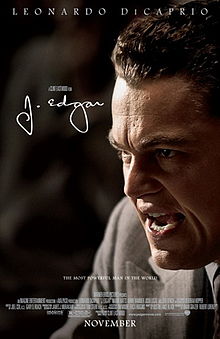
For Dr. Martin Luther King J.r, Malcolm X, Fred Hampton Sr., Viola Liuzzo, Jean Sebreg, Tupac Shakur and all fallen freedom fighters of the callous, corrupt and covert F.B.I. operation program known as COINTELPRO.
"I see right through you. You are a scared, heartless, horrible little man!"
Clyde Tolson screaming to J.Edgar Hoover during a fight scene in the film "J Edgar."
This movie was a great disappointment to me, and a waste of my money.
I sat through the entire film watching the life of, in my opinion, one of the most monstrous, maniacal mad men in human history. Only crumbs of his character "J Edgar" (played by Leonardo DiCaprio) was seen onscreen: Egotistical, selfish, vain, narcissistic, manipulative, cunning, callous, and corrupt.
All in one word that existed inside of John (J) Edgar Hoover that describes him as EVIL. This movie (directed by Clint Eastwood, screen written by Dustin Lance Black) appeared to portray him from a humanity standpoint, in the opposite from the said above.
Hypocritically, Hoover lectured to people throughout much of the movie surrounding the subjects of honesty, integrity, and loyalty.
The Hollywood Hoover makeup on DiCaprio's face looked like a partial werewolf transformation out of Michael Jackson's "Thriller" video. Di Caprio's voice, I give an "E" for effort, and his performance I give an "A"............despite the disappointments of disclosure from this movie.
Edgar, you will rise to be the most powerful man in this country!
The first (and longest running) F.B.I. Director, this film featured his influence and oversight of operations (often illegal) awkward approaches towards women, speech impediments, abuse of authority, confidential files on his superiors, close relationship with his mother, secretary, and long time friend/closest colleague, Clyde Tolson. (actor Armie Hammer)
Throughout much of the movie, Hoover had young agents write memoirs detailing his career.
Since Hoover fathered no children, nor was he married, he seemed like the perfect candidate, in the eyes of the U.S. Attorney General to head the Federal Bureau of Investigations. (F.B.I.) This film seesawed in showing Hoover's life, both in his early and golden years. Professionally, politically and on personal levels.
He was called "Edgar" throughout the film by his mom and his close friend, Tolson. (Hoover substituted his first name "John" with "J" following a mix-up at a clothing department store regarding his credit.)
The film graphically featured the 1919-1920 mail bombings, "Red Scare." Targeted were the homes of prominent politicians, judges, and businessmen. (including John D. Rockefeller) Bombs were set to explode hitting everyone in simultaneous manner by "Bolshevik radicals."
Incidents like the bombings increased Hoover's hatred of "communist" and "radical" groups to influence, and institutionalize the bureau to operate its agency, using illegal tactics. Similar to Adolf Hitler, J. Edgar Hoover seemingly shared the same ideas of organizing, based on ill founded feelings of a fuhrer: Dominance with dictatorship.
(Difference being, Hitler was often overt in his operations in seizing control, while Hoover was covert.)
In his early years, J. Edgar Hoover's F.B.I. agents were known in the 1930s era as "G(Government) Men." Clean-cut, college educated, properly dressed and physical fitness were Hoover's classifications and requirements for any male applicant to qualify for the F.B.I.
It has been widely rumored throughout (and after) his tumultuous tenure that Hoover was a homosexual, mainly because of his inseparable relationship with his close friend, Tolson. The film, however showed brief homosexuality coming from Tolson, not Hoover during a hotel fight scene.
Images of the Great Depression hit the screen where many banks were robbed, and people were killed. Scarce financial resources deterred the feds from cracking down on "communists" and "radicals." Gangsters were often glorified and admired by audiences in movies. At one point, Hoover was booed by audiences when he was featured, in a film preview address regarding his office's efforts to bring the criminals to justice.
His "G Men" however, would later become glorified themselves, in movies for going after gangsters.
The high profile kidnapping and killing of Charles Lindbergh's son called the "Crime of the Century led to the passage of the "Lindbergh's Law" making kidnapping a felony offense. When Hoover tried to aid the local authorities with his assistance in the abduction of the child, using his detective skills, he was refused by them. The F.B.I. was considered a joke back then.
After the remains of the child were found, Hoover took credit for the arrest of Bruno Hauptman, the man accused of the murder. (Although it was an agent of his that effected the arrest, as was indicated by Tolson to Hoover)
Imagine if every citizen in this country were uniquely identifiable by the pattern on their fingers, imagine how quickly we could find them, if they committed a crime.
It was pretty fascinating how Hoover, in his early years, single-handedly organized sections inside the "Library of Congress." He theorized to his secretary of this being a similar tool measure in tracking U.S. Citizens in the future. His idea, of course was later implemented and institutionalized. They were used through various U.S. Government agencies today, in forensic findings, and DNA determinations.
Consequently, even by "Big Brother" in tracking citizens.
Well, sometimes you need to bend the rules a little in order to keep your country safe.
Hoover's hatred and hounding of activists and group organizations he viewed as "communists" and radicals" was known publicly. However, it was only mildly expressed in the movie. Hoover argued a lot to his superiors about how the nation's "National Security" was always at risk for domestic terrorism, and steps needed to be taken to prevent any disasters.
This included even breaking the law and breaching civil liberties.
He used and abused his authority to function, in a fascist fashion in targeting activists, based on their political opinions. Anyone, in addition that dared to disagree with him would also find themselves targeted.
Whenever his superiors and/or people in political power (such as Robert Kennedy, played by actor Jeffrey Donovan) refused to allow him to utilize illegal acts in F.B.I. operations, Hoover was often outraged by their decisions. Like an inner temper tantrum child not getting his way. He sent agents to secretly surveillance them, in gathering any damaging information they uncovered.
Hoover would keep uncovered information in confidential files for future use as an insurance policy to maintain his position of power.
Even great men can be corrupted.
The greatest disappointment to me was this film's failure to feature in detail of how Hoover created, and operated its "counter intelligence" (corrupt) program:
Cointelpro!
The "dirty tricks" lies, forgery, falsifying documents, burglary, media manipulation, and wrongful convictions. Cointelpro was satanic in slaying opponents of the existing government. Some cases leading even to the murder of its targeted individuals.
“To expose, disrupt, misdirect, discredit, or otherwise neutralize" the activities of these movements and their leaders.” This was the mission statement of the "counter intelligence" F.B.I. program that was supposed to destroy domestic terrorism. Instead, it ended the innocent lives of many.
I scratched my head as to exactly why Dustin Lance Black would leave a major piece out of this movie. Even if he feared public scrutiny and controversy that was a particular piece that should’ve been included. It was like editing the Holocaust from a Hitler biography to me.
Great lengths and measures were undertaken by him to disrupt the activities of "communists" and "radicals" increased dramatically during the Civil Rights era. Hoover hardly ever pulled any punches to immobilize movements in the 60's. One scene greatly disturbed me was when Hoover invaded the privacy via planted listening device of a couple, then audio-recorded them making love.
Hoover used this audio information as insurance and leverage on Dr. Martin Luther King Jr. in an attempt to discourage him from receiving the "Nobel Peace Prize."
Apparently, this scene suggested that King was having an affair. Hoover earlier on had his secretary, Helen Gandy (actress Naomi Watts) write the infamous anonymous "suicide letter" to King, despite her hesitant reactions. Although it was vaguely displayed in the movie, this was after King gave his "I Have a Dream" speech in Washington.
It was immediately following this famous and historic speech by King when the F.B.I. considered him as "the most dangerous man in America."
Then came the slap to the face of anyone who lived through the 60’s era where the movie showed historic images of the Civil Rights movement. This included the famous image of Dr. King lying dead on the motel balcony where he was shot. Hoover cited these words:
“When morals decline and good men do nothing, evil flourishes. A society unwilling to learn from past is doomed. We must never forget our history.”
Of all the perilous political predecessors before and after him, John (J) Edgar Hoover invented an institutional system of savagery that arguably goes unmatched to this very day.
Seeing the scene where he was found lying dead, half-naked by Tolson didn’t shed a tear from my eye. The only tears I shed is that Dustin Lance Black soundly failed in featuring the in depth detail look into the immorality of man who though dead still lives the breaches of civil rights.
I cite the following fallen lives:
A young man awakens with two bullets to his brain as he lay peacefully with his pregnant wife, later left in a pool of his own blood. (Fred Hampton Sr.) A white woman killed while driving (one of them an F.B.I. informant) for helping blacks. (Viola Liuzzo) Similarly with movie actress, Jean Sebreg covertly hounded by the feds for supporting the Black Panther Party.
Malcolm X, Martin Luther King Jr. and Tupac Shakur felled by fascism from the F.B.I........followed by their bullets……..placed in the guns of others.
“If you tell a big enough lie and tell it frequently enough, it will be believed”
Nazi Dictator, Adolf Hitler
Add Your Comments
Comments
(Hide Comments)
I enjoyed this well written critique, even though I have not seen the movie. I have to admit that I had exactly these thoughts on my mind when I first saw a preview for this film, as I suspected it to be a shallow piece whcih will put this vile, and to the younger generation grossly unknown, character in a better light?
As I mentioned, I have not seen the film, but read in the critique how they mentioned fingerprinting, DNA and other forensic methods. I hope they did not suggest he invented that stuff...only because they have used fingerprints in forensics long before the 1900s.
As I mentioned, I have not seen the film, but read in the critique how they mentioned fingerprinting, DNA and other forensic methods. I hope they did not suggest he invented that stuff...only because they have used fingerprints in forensics long before the 1900s.
We are 100% volunteer and depend on your participation to sustain our efforts!
Donate

$140.00 donated
in the past month
Get Involved
If you'd like to help with maintaining or developing the website, contact us.
Publish
Publish your stories and upcoming events on Indybay.
Topics
More
Search Indybay's Archives
Advanced Search
►
▼
IMC Network