







 Publish to Newswire
 Add an Event
From the Open-Publishing Calendar
From the Open-Publishing Newswire
Indybay Feature
A Sea Change: Sylvia Earle and MPAs
As the idea of marine protected areas became the catch-all answer to saving the ocean and the planet, those with more knowledge and experience pointed out that it can also be a shortsighted panacea. And, the possibility of removing large areas of ocean from local control has been an attractive lure for competing interests in ocean resources – to co-opt the MPA movement for their own benefit.
http://noyonews.net - News and Views for the North Coast
A Sea Change: Sylvia Earle and MPAs
by David Gurney
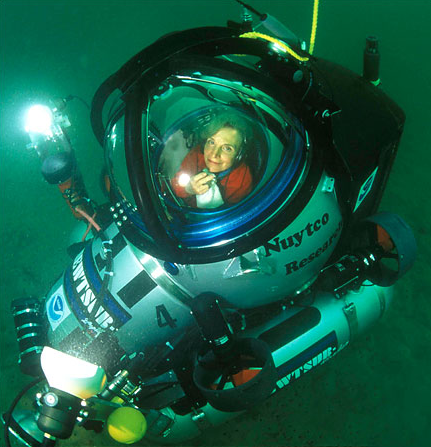
Perhaps no one has done more to popularize the idea of marine protected areas (MPAs) than famed oceanographer, undersea explorer, public official, and conservationist Sylvia Earle.
In her landmark book “Sea Change – A Message of the Oceans” she gave a global perspective on issues facing the world’s oceans through the lens of her own life experiences. The book passionately and eloquently recounts her love affair with the undersea world, that began with her first dives as a teenager off the Florida Coast. She has since logged more than 7,000 underwater hours. At times early in her epic career, she was the only woman on board some expeditions, in a field dominated by men. The book has inspired an entire generation of women to careers in oceanography and marine biology.
After a life in academia, with degrees and recognition, she wound up chief scientist for oceans and atmosphere at the powerful NOAA (National Oceanic and Atmospheric Administration) from 1990-92. As head of NOAA under George Bush the First, she personally witnessed the devastation caused by oil spills, after Saddam Hussein torched the Persian Gulf oil fields at the conclusion of “Operation Desert Storm” and the first Gulf War.
Her book tells of the many threats faced by the ocean today, and concludes with her recipe for a solution – the establishment of a network of marine protected areas (MPAs) throughout the world.
Since the book was published in 1995, the movement for marine protected areas gained momentum and across-the-board support. Big game fish were being relentlessly hunted to near extinction using modern technologies of sonar and aircraft.
Ideas that began as an effort to save these top predator species, soon took on other problems facing over exploited fisheries. People began to wake up to the need to protect from over fishing – all the way from localized third world villages with fleets of small skiffs, to trawlers, drag boats and factory ships, that rake the ocean clean of all life below, both near and far away.
Dr. Earle won the 2009 TED Prize for her inspiring multi-media presentation that advocates preserving areas of the ocean as “Hope Spots” – to be saved from over-fishing. As her ideas became popularized, many jumped on the bandwagon – so much so, that environmental organizations have taken the title of her book, and the Shakespearian line – as their own: “Start a Sea Change” is the slogan for Ocean Conservancy – one of the greatest advocates for blanket closures of the ocean to local food gathering, through the implementation of MPA’s.
However, as the idea of marine protected areas became the catch-all answer to saving the ocean and the planet, those with more knowledge and experience pointed out that it can also be a shortsighted panacea. And, the possibility of removing large areas of ocean from local control has been an attractive lure for competing interests in ocean resources – to co-opt the MPA movement for their own benefit.
More recently, other new threats to oceans besides over-fishing have been identified – so much so that, ironically, the title of an important new film is – “A Sea Change.” The award-winning film does not deal with over-fishing or MPAs, but instead with the over-arching threat of ocean acidification. It shows how changes in ocean chemistry are now a bigger threat to fish than over-fishing – and it’s a problem that MPAs do nothing to address.
Coming up: more on MPA’s – How they work, and don’t work on http://noyonews.net
A Sea Change: Sylvia Earle and MPAs
by David Gurney
Perhaps no one has done more to popularize the idea of marine protected areas (MPAs) than famed oceanographer, undersea explorer, public official, and conservationist Sylvia Earle.
In her landmark book “Sea Change – A Message of the Oceans” she gave a global perspective on issues facing the world’s oceans through the lens of her own life experiences. The book passionately and eloquently recounts her love affair with the undersea world, that began with her first dives as a teenager off the Florida Coast. She has since logged more than 7,000 underwater hours. At times early in her epic career, she was the only woman on board some expeditions, in a field dominated by men. The book has inspired an entire generation of women to careers in oceanography and marine biology.
After a life in academia, with degrees and recognition, she wound up chief scientist for oceans and atmosphere at the powerful NOAA (National Oceanic and Atmospheric Administration) from 1990-92. As head of NOAA under George Bush the First, she personally witnessed the devastation caused by oil spills, after Saddam Hussein torched the Persian Gulf oil fields at the conclusion of “Operation Desert Storm” and the first Gulf War.
Her book tells of the many threats faced by the ocean today, and concludes with her recipe for a solution – the establishment of a network of marine protected areas (MPAs) throughout the world.
Since the book was published in 1995, the movement for marine protected areas gained momentum and across-the-board support. Big game fish were being relentlessly hunted to near extinction using modern technologies of sonar and aircraft.
Ideas that began as an effort to save these top predator species, soon took on other problems facing over exploited fisheries. People began to wake up to the need to protect from over fishing – all the way from localized third world villages with fleets of small skiffs, to trawlers, drag boats and factory ships, that rake the ocean clean of all life below, both near and far away.
Dr. Earle won the 2009 TED Prize for her inspiring multi-media presentation that advocates preserving areas of the ocean as “Hope Spots” – to be saved from over-fishing. As her ideas became popularized, many jumped on the bandwagon – so much so, that environmental organizations have taken the title of her book, and the Shakespearian line – as their own: “Start a Sea Change” is the slogan for Ocean Conservancy – one of the greatest advocates for blanket closures of the ocean to local food gathering, through the implementation of MPA’s.
However, as the idea of marine protected areas became the catch-all answer to saving the ocean and the planet, those with more knowledge and experience pointed out that it can also be a shortsighted panacea. And, the possibility of removing large areas of ocean from local control has been an attractive lure for competing interests in ocean resources – to co-opt the MPA movement for their own benefit.
More recently, other new threats to oceans besides over-fishing have been identified – so much so that, ironically, the title of an important new film is – “A Sea Change.” The award-winning film does not deal with over-fishing or MPAs, but instead with the over-arching threat of ocean acidification. It shows how changes in ocean chemistry are now a bigger threat to fish than over-fishing – and it’s a problem that MPAs do nothing to address.
Coming up: more on MPA’s – How they work, and don’t work on http://noyonews.net
Add Your Comments
We are 100% volunteer and depend on your participation to sustain our efforts!
Donate

$110.00 donated
in the past month
Get Involved
If you'd like to help with maintaining or developing the website, contact us.
Publish
Publish your stories and upcoming events on Indybay.
Topics
More
Search Indybay's Archives
Advanced Search
►
▼
IMC Network