







 Publish to Newswire
 Add an Event
From the Open-Publishing Calendar
From the Open-Publishing Newswire
Indybay Feature
Marine Life Protection Act Update: benefits are worth the wait!
Southern California's new ocean parks, approved last December as part of the Marine Life Protection Act planning process, will be opening soon at hot spots like La Jolla, Laguna, and Malibu's Point Dume. The Department of Fish and Game announced yesterday that the Fish and Game Commission will announce a new opening date at their September 15 meeting.
After more than two years of planning, southern California residents are gearing up for the grand opening of the state's newest underwater parks! Originally, the marine protected areas were scheduled to open on October 1. However, the State is still working to make sure the final rules match up to the plans proposed by local stakeholders and approved by the Fish and Game Commission. So, south coast divers, surfers, scientists, students, and business leaders will have to wait a few more weeks to celebrate.
Ocean fans eagerly awaiting the opening of marine protected areas at south La Jolla, Laguna, Point Dume, and Naples Reef, can explore some of California’s existing ocean parks online. Virtual swim throughs of Point Lobos and Elkhorn Slough protected areas show how diverse the ocean landscape is off California's central coast, and a live dive tour of the Channel Islands marine reserve brings you up close and person with swell sharks and garibaldi.
Anyone that has experienced Anacapa Island’s lush kelp forests knows the Channel Islands marine reserves, created in 2002, have produced great results in just nine years: the protected areas are teeming with life. And that’s just one success story among many! A new study from Scripps Institution of Oceanography documented record-breaking benefits from a Baja California marine reserve.
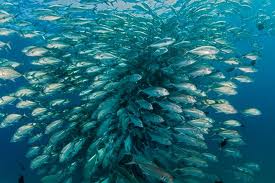
The Scripps report showed the number of fish in Mexico's Cabo Pulmo marine reserve soared 463 percent in a decade. This jewel of Baja was once depleted, but the local community banded together to secure its protection, and now both fishing and tourism are booming in the area.
Marine ecologist Enric Sala said in National Geographic,“[the study] shows that protecting an area brings the fish back, and creates jobs and increases economic revenue for the local communities. I have seen it with my own eyes and, believe me, it is like a miracle, only that it is not–it’s just common business sense.”
The Cabo Pulmo results are extraordinary, but Scripps fisheries ecologist Brad Erisman said in the San Diego Union-Tribune that a similar turnaround is possible in southern California.
The tens of thousands of coastal residents that helped to shape the state's new marine protected areas certainly believe in their potential to restore ocean health and provide both economic and environmental benefits, and all are eagerly awaiting the September 15 Fish and Game Commission meeting at which a new opening date will be announced.
Ocean fans eagerly awaiting the opening of marine protected areas at south La Jolla, Laguna, Point Dume, and Naples Reef, can explore some of California’s existing ocean parks online. Virtual swim throughs of Point Lobos and Elkhorn Slough protected areas show how diverse the ocean landscape is off California's central coast, and a live dive tour of the Channel Islands marine reserve brings you up close and person with swell sharks and garibaldi.
Anyone that has experienced Anacapa Island’s lush kelp forests knows the Channel Islands marine reserves, created in 2002, have produced great results in just nine years: the protected areas are teeming with life. And that’s just one success story among many! A new study from Scripps Institution of Oceanography documented record-breaking benefits from a Baja California marine reserve.
The Scripps report showed the number of fish in Mexico's Cabo Pulmo marine reserve soared 463 percent in a decade. This jewel of Baja was once depleted, but the local community banded together to secure its protection, and now both fishing and tourism are booming in the area.
Marine ecologist Enric Sala said in National Geographic,“[the study] shows that protecting an area brings the fish back, and creates jobs and increases economic revenue for the local communities. I have seen it with my own eyes and, believe me, it is like a miracle, only that it is not–it’s just common business sense.”
The Cabo Pulmo results are extraordinary, but Scripps fisheries ecologist Brad Erisman said in the San Diego Union-Tribune that a similar turnaround is possible in southern California.
The tens of thousands of coastal residents that helped to shape the state's new marine protected areas certainly believe in their potential to restore ocean health and provide both economic and environmental benefits, and all are eagerly awaiting the September 15 Fish and Game Commission meeting at which a new opening date will be announced.
Add Your Comments
We are 100% volunteer and depend on your participation to sustain our efforts!
Donate

$110.00 donated
in the past month
Get Involved
If you'd like to help with maintaining or developing the website, contact us.
Publish
Publish your stories and upcoming events on Indybay.
Topics
More
Search Indybay's Archives
Advanced Search
►
▼
IMC Network