







 Publish to Newswire
 Add an Event
From the Open-Publishing Calendar
From the Open-Publishing Newswire
Indybay Feature
Big decision day for Marine Life Protection Act
The California Fish and Game Commission will meet today in Stockton to continue work on the state's landmark ocean protection law, the Marine Life Protection Act. Several recent scientific studies have warned that the world's oceans, and the California Current specifically, are under serious strain from habitat loss, climate change, and overfishing. In order to preserve this vital resource for the benefit of current and future generations, urgent action, including timely implementation of the Marine Life Protection Act, is required.
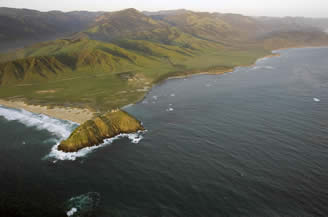
Today, California’s Fish and Game Commission will meet to continue its review of proposed protections for California’s far north coast as part of the Marine Life Protection Act (MLPA) implementation process. A final marine protected area plan for the north coast will be approved early next year.
At the top of the Commission’s agenda, and top of mind for many following the process, is a series of options to allow ongoing traditional tribal harvest in protected areas. From the Regional Stakeholder Group to the Blue Ribbon Task Force, everyone involved in MLPA planning on the north coast has been unanimous on the importance of respecting tribal cultural practices, and Resources Secretary Laird has made this matter a priority, directing staff to present options that will both allow important ocean protections to go forward and also to protect traditional tribal harvest.
The Commission will consider three possible solutions, all of which would provide for ongoing tribal harvest.
The unified community marine protected area plan north coast stakeholders produced, which has earned support from fishing groups, conservationists, and local government, was designed to allow ongoing tribal harvest and minimize impacts to fishing fleets. It would preserve key areas like Ten-Mile Beach, South Cape Mendocino, and Pyramid Point while leaving all north coast harbors open.
Also on the Commission’s agenda is the timeline for implementation of southern California protected areas approved last December. The south coast network will connect with existing ocean parks along California’s central coast, and provide critically needed protections for hot spots like south La Jolla, Laguna, Point Dume and Naples Reef. Recent reports by the IUCN, Scripps and NOAA highlight the global importance and the fragility of the California Current, and the value of marine protected areas to buffer ocean life against growing environmental and man-made pressures. The IUCN report warns of a possible mass extinction if preventative measures are not put into place. These studies underscore the urgent need for a comprehensive system of protected ocean areas like the one California is creating through the Marine Life Protection Act. The message from scientists is clear: marine protected areas work, and we need them now.
For more information on the MLPA process, visit http://www.dfg.ca.gov/mlpa. Today's meeting agenda and the tribal harvest options for the north coast are available for download at http://www.fgc.ca.gov/meetings/2011/2011mtgs.asp.
At the top of the Commission’s agenda, and top of mind for many following the process, is a series of options to allow ongoing traditional tribal harvest in protected areas. From the Regional Stakeholder Group to the Blue Ribbon Task Force, everyone involved in MLPA planning on the north coast has been unanimous on the importance of respecting tribal cultural practices, and Resources Secretary Laird has made this matter a priority, directing staff to present options that will both allow important ocean protections to go forward and also to protect traditional tribal harvest.
The Commission will consider three possible solutions, all of which would provide for ongoing tribal harvest.
The unified community marine protected area plan north coast stakeholders produced, which has earned support from fishing groups, conservationists, and local government, was designed to allow ongoing tribal harvest and minimize impacts to fishing fleets. It would preserve key areas like Ten-Mile Beach, South Cape Mendocino, and Pyramid Point while leaving all north coast harbors open.
Also on the Commission’s agenda is the timeline for implementation of southern California protected areas approved last December. The south coast network will connect with existing ocean parks along California’s central coast, and provide critically needed protections for hot spots like south La Jolla, Laguna, Point Dume and Naples Reef. Recent reports by the IUCN, Scripps and NOAA highlight the global importance and the fragility of the California Current, and the value of marine protected areas to buffer ocean life against growing environmental and man-made pressures. The IUCN report warns of a possible mass extinction if preventative measures are not put into place. These studies underscore the urgent need for a comprehensive system of protected ocean areas like the one California is creating through the Marine Life Protection Act. The message from scientists is clear: marine protected areas work, and we need them now.
For more information on the MLPA process, visit http://www.dfg.ca.gov/mlpa. Today's meeting agenda and the tribal harvest options for the north coast are available for download at http://www.fgc.ca.gov/meetings/2011/2011mtgs.asp.
Add Your Comments
We are 100% volunteer and depend on your participation to sustain our efforts!
Donate

$110.00 donated
in the past month
Get Involved
If you'd like to help with maintaining or developing the website, contact us.
Publish
Publish your stories and upcoming events on Indybay.
Topics
More
Search Indybay's Archives
Advanced Search
►
▼
IMC Network