







 Publish to Newswire
 Add an Event
From the Open-Publishing Calendar
From the Open-Publishing Newswire
Indybay Feature
World Oceans Day - 7 Ways to Save the Seas
Virtually none of the crucial issues mentioned in this article were addressed in the so-called Marine Life Protection Act "Initiative."
World Oceans Day - 7 Ways to Save the Seas
see: http://noyonews.net
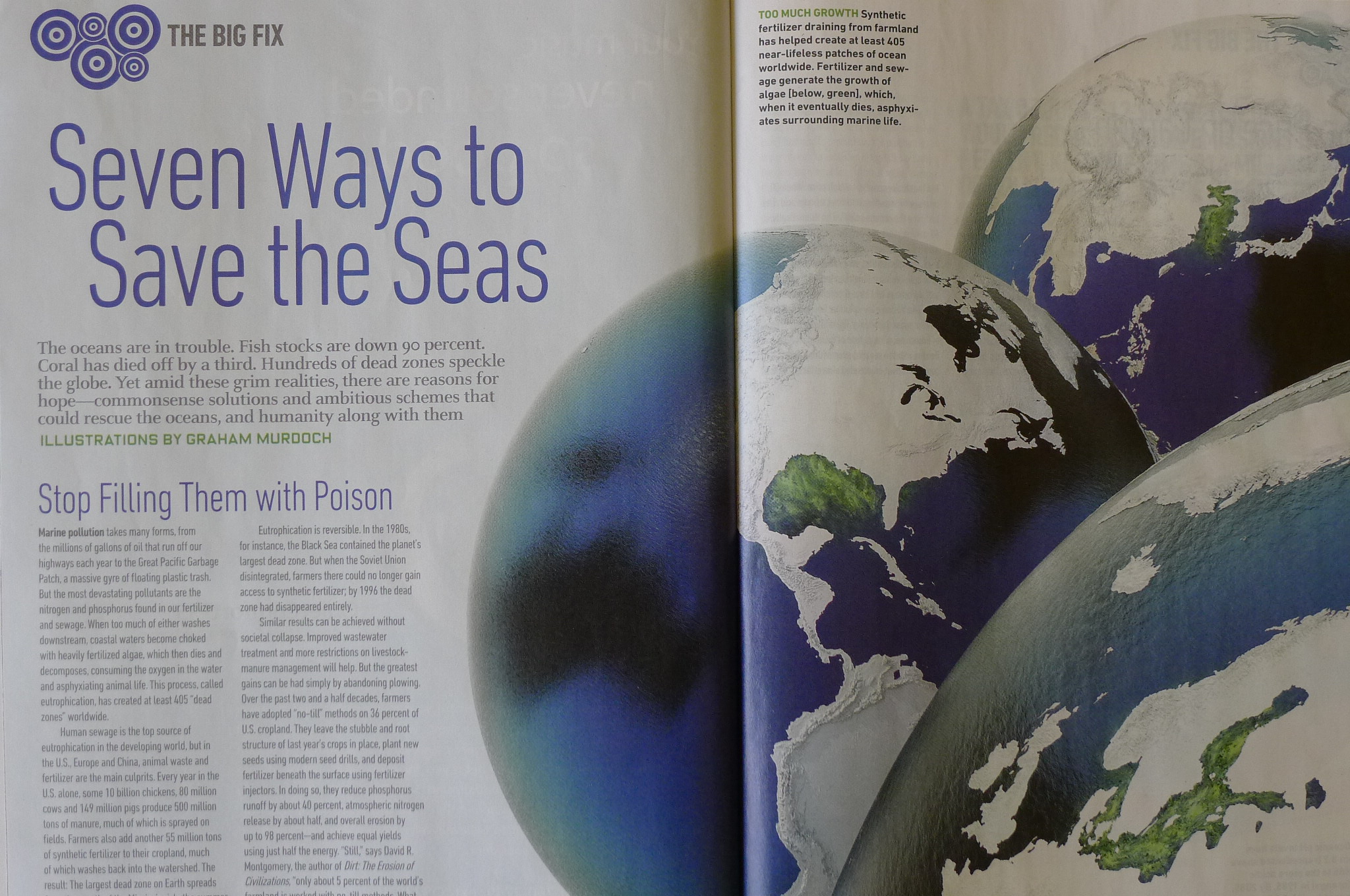
The May 2011 issue of Popular Science Magazine featured an 11-page spread "Seven Ways to Save the Seas." It provided a list of major threats to the ocean, and the things we can do about them. (LINK to PS Magazine)
Left out of the article, either by oversight or intention, is any mention at all about Marine Protected Areas.
Virtually none of the crucial issues mentioned in this article were addressed in the so-called Marine Life Protection Act "Initiative."
The problems and solutions identified in the article are:
1. Stop Polluting. The authors identify human pollution from farming, industry, and sewage as causing eutrophication, the oxygen deprived dead zones that are asphyxiating marine life on ever expanding zones worldwide. Also mentioned are the huge plastic garbage patches of the Atlantic & Pacific Oceans.
2. Ocean Acidification. Mankind's burning of coal and petroleum is causing increasing levels of CO2 in the atmosphere. When the CO2 mixes with seawater, it forms carbonic acid, making the entire ocean more acidic. The last time the ocean's Ph fell so dramatically was 65 million years ago. Mass extinction resulted, even when occurring over a much longer timespan.
3. Climate Change. The article calls this "Repair the Water Cycle," identifying higher rates of water evaporation over the oceans, which causes stronger storms and floods. It also results in the oceans becoming saltier overall. The solution? Possibly pulling colder water from the deep ocean to the surface. This they call "Repairing the Water Cycle."
The North Coast its own natural version of this process: Upwellings.
4. Invasive Species. Ecosystems around the planet are being affected by humankind's travel and commerce, as we spread alien species into environments where they don't belong. They mainly travel in the ballast of large ships. When the water is pumped out of bilges in foreign ports, the organisms have a new home, and destroy native populations.
5. Disappearing Coral Reefs. Coral reefs are in peril in nearly three quarters of the world's tropical zones. Though they cover less than 0.2 percent of the ocean floor, these planetary jewels hold some 25 percent of the Ocean's biodiversity. They have been threatened by overfishing, and destructive fishing practices.
But now the chief threat is rising ocean temperatures, that cause the corals to bleach and die. (There's also a good article on this in last week's NY Times - HERE)
6. Better Fishing Practices. The article overlooks the recent fad to view Marine Protected Areas as the panacea and fix-all to our ocean's problems. In fact, MPA's are not mentioned at all.
They instead talk about the problems of by-catch, collateral damage and other wasteful and destructive fishing practices. According to the article, human beings on this planet consume an average of 37.5 pounds of fish per person annually.
7. Increasing Our Knowledge. The article cites the scientific efforts to monitor and explore the ocean with modern technology. They mention the $760 million Ocean Observatories Initiative that is a network of cables, remotely operated vehicles (ROV) and other data collecting devices to stream back information via fiber optic cables.
They also mention that NASA's budget to explore space is some 900 times more than the money allocated for NOAA to explore the oceans.
*************
The article concludes with two pages of quotes from a list of ocean experts, including Sylvia Earle, Ted Danson, Paul Watson and Susan Avery. All judge commercial fishing and destructive fishing practices as a chief culprit, but none mention marine protected areas as the solution.
Paul Watson advocates the complete shut-down of all commercial fishing, and becoming a vegan vegetarian.
Coming Up on Noyo News: the hows and whys of the Marine Protected Area Movement.
http://noyonews.net
***
see: http://noyonews.net
The May 2011 issue of Popular Science Magazine featured an 11-page spread "Seven Ways to Save the Seas." It provided a list of major threats to the ocean, and the things we can do about them. (LINK to PS Magazine)
Left out of the article, either by oversight or intention, is any mention at all about Marine Protected Areas.
Virtually none of the crucial issues mentioned in this article were addressed in the so-called Marine Life Protection Act "Initiative."
The problems and solutions identified in the article are:
1. Stop Polluting. The authors identify human pollution from farming, industry, and sewage as causing eutrophication, the oxygen deprived dead zones that are asphyxiating marine life on ever expanding zones worldwide. Also mentioned are the huge plastic garbage patches of the Atlantic & Pacific Oceans.
2. Ocean Acidification. Mankind's burning of coal and petroleum is causing increasing levels of CO2 in the atmosphere. When the CO2 mixes with seawater, it forms carbonic acid, making the entire ocean more acidic. The last time the ocean's Ph fell so dramatically was 65 million years ago. Mass extinction resulted, even when occurring over a much longer timespan.
3. Climate Change. The article calls this "Repair the Water Cycle," identifying higher rates of water evaporation over the oceans, which causes stronger storms and floods. It also results in the oceans becoming saltier overall. The solution? Possibly pulling colder water from the deep ocean to the surface. This they call "Repairing the Water Cycle."
The North Coast its own natural version of this process: Upwellings.
4. Invasive Species. Ecosystems around the planet are being affected by humankind's travel and commerce, as we spread alien species into environments where they don't belong. They mainly travel in the ballast of large ships. When the water is pumped out of bilges in foreign ports, the organisms have a new home, and destroy native populations.
5. Disappearing Coral Reefs. Coral reefs are in peril in nearly three quarters of the world's tropical zones. Though they cover less than 0.2 percent of the ocean floor, these planetary jewels hold some 25 percent of the Ocean's biodiversity. They have been threatened by overfishing, and destructive fishing practices.
But now the chief threat is rising ocean temperatures, that cause the corals to bleach and die. (There's also a good article on this in last week's NY Times - HERE)
6. Better Fishing Practices. The article overlooks the recent fad to view Marine Protected Areas as the panacea and fix-all to our ocean's problems. In fact, MPA's are not mentioned at all.
They instead talk about the problems of by-catch, collateral damage and other wasteful and destructive fishing practices. According to the article, human beings on this planet consume an average of 37.5 pounds of fish per person annually.
7. Increasing Our Knowledge. The article cites the scientific efforts to monitor and explore the ocean with modern technology. They mention the $760 million Ocean Observatories Initiative that is a network of cables, remotely operated vehicles (ROV) and other data collecting devices to stream back information via fiber optic cables.
They also mention that NASA's budget to explore space is some 900 times more than the money allocated for NOAA to explore the oceans.
*************
The article concludes with two pages of quotes from a list of ocean experts, including Sylvia Earle, Ted Danson, Paul Watson and Susan Avery. All judge commercial fishing and destructive fishing practices as a chief culprit, but none mention marine protected areas as the solution.
Paul Watson advocates the complete shut-down of all commercial fishing, and becoming a vegan vegetarian.
Coming Up on Noyo News: the hows and whys of the Marine Protected Area Movement.
http://noyonews.net
***
For more information:
http://jugglestone@comcast.net
Add Your Comments
We are 100% volunteer and depend on your participation to sustain our efforts!
Donate

$110.00 donated
in the past month
Get Involved
If you'd like to help with maintaining or developing the website, contact us.
Publish
Publish your stories and upcoming events on Indybay.
Topics
More
Search Indybay's Archives
Advanced Search
►
▼
IMC Network