







 Publish to Newswire
 Add an Event
From the Open-Publishing Calendar
From the Open-Publishing Newswire
Indybay Feature
Mark Leno Bill AB 1163 Sells Out Consumer To Health Insurance Industry
San Francisco Democratic Party Assemblyman Mark Leno sold out people fighting the insurance industry when he supported AB 1163 which takes away the rights of the Insurance Commissioner to regulate the insurance industry.
Mark Leno, Democratic Assemblyman in San Francisco sold out to the insurance industry in supporting AB 1163 which takes away power from the California Insurance Commissioner. This is reported at 46.46 into the KPFA program.
Health Access representative Anthony Wright tries to do damage control for Leno but apparently lies or doesn't know what he is talking about.
Also CNA representative Michael Lighty pleads for people to support Privatizer Jerry Brown against Meg Whitman and calls on people not to put pressure on Brown to support single payer. Is it any surprise the Democratic politicians shit on these unions and the people of California in the legislature?
Health Access representative Anthony Wright tries to do damage control for Leno but apparently lies or doesn't know what he is talking about.
Also CNA representative Michael Lighty pleads for people to support Privatizer Jerry Brown against Meg Whitman and calls on people not to put pressure on Brown to support single payer. Is it any surprise the Democratic politicians shit on these unions and the people of California in the legislature?
For more information:
http://www.kpfa.org/archive/id/63733
Add Your Comments
Comments
(Hide Comments)
CA Labor Fed And SEIU Endorsed Candidate Jerry Brown 'have to "do things that labor doesn't like," including cutting pension benefits for public employees'
http://www.sfgate.com/cgi-bin/article.cgi?file=/c/a/2010/09/04/MNAM1F8CBV.DTL
Jerry Brown says he'd be a frugal governor
Carla Marinucci, Chronicle Political Writer
Saturday, September 4, 2010
Jerry Brown, Democratic candidate for governor, discusses his campaign with The Chronicle's editorial board.
(09-03) 19:33 PDT SAN FRANCISCO --Jerry Brown said Friday that if elected governor he would have to "do things that labor doesn't like," including cutting pension benefits for public employees and asking labor leaders to "put everything on the table" to get California's bloated budget under control.
"If you're looking for frugality, I'm your man," the California attorney general and former two-term governor said in a meeting with The Chronicle's editorial board. When he was governor from 1975 to 1983, he said, "I vetoed the pay raises for the state employees not once, but twice. I was overridden by 23 Republican votes.
"I called for the two-tier pension system in 1982," added Brown, 72. "Of course, the next four governors didn't do anything. I'm willing to get in the battle."
To deal with the state's budget mess, he said, "everybody's going to be in a big room" and make some compromises. "You're going to have to do some things that organized labor doesn't like. Everybody's got to get outside their comfort zone."
Served his apprenticeship
He added: "The next governor has to be somebody that people feel is being straight, is talking to them in a real way. I don't go there as an apprentice governor. This is something I understand."
Brown, a Democrat who also served as Oakland's mayor from 1999 to 2007, sidestepped questions about his specific plans on the budget, as well as where he stands on the Democratic-controlled Legislature's proposals to resolve the budget impasse, which include raising $1.5 billion by increasing vehicle license fees, $600 million by taxing oil wells and $2 billion by suspending corporate tax breaks.
Instead, he reiterated his off-repeated stance on revenues: "No new taxes unless the people vote for them," he said.
Brown, who is in a virtual dead heat with Republican Meg Whitman two months before the Nov. 2 election, made the comments during a lively and wide-ranging hourlong meeting with editors and reporters at the newspaper. Whitman, the former CEO of eBay, has been invited to meet with The Chronicle's editorial board before the general election.
Brown kicked off a new stage in his campaign this week with the airing of his first TV ads to compete with those of billionaire Whitman - who has deluged the airwaves for months and put a record-breaking $104 million of her own money into the race.
His campaign push comes as an independent expenditure group, California Working Families, said it would cut back on its pro-Brown advertising. The independent effort, which has spent more than $10 million on Brown's behalf, gave Whitman's team the ammunition to suggest that Brown would be a governor beholden to labor interests.
Budgetary gridlock
Brown strongly challenged that assumption Friday, saying that as a governor and mayor he went up against strong labor interests to attract development and business and achieve fiscal discipline.
He repeatedly portrayed himself as the only candidate with the skills to navigate budgetary gridlock in Sacramento. As a governor-elect, he said, he would lead a round-the-clock effort beginning in November to force competing special interests - including legislators and labor leaders - to hammer out consensus.
Brown said he would start the process right after the election and go as many as six days a week "until it's finished," he said. "I'll have those people locked up in my own chamber and put my own cot out there if I have to."
Brown said the state's next governor must "get to a point of consensus - or if we can't, to take it to a vote of the people."
"I'm aiming for consensus somewhere around March," he said. "If I can get to March 15, I can call a special election and have a vote - to key up some key decisions in time for the June 15 (ballot) deadline. ... I think that is the only path forward.
"What is needed is the knowledge, and the skills and the diplomacy and the determination to push the process," said Brown. "I don't think a governor has ever been involved in the budget in the way that I'm proposing to do. .... I'm not going to sit there passively. I'm going to be the most aggressive, imaginative, engaged governor that this state has ever seen."
By contrast, Brown portrayed Whitman as a first-time political candidate who offers flashy but unrealistic plans that he predicted would be stalled - and ultimately shredded - by the special interests and the Legislature in Sacramento.
"Meg Whitman says, 'I want $17 billion in tax cuts,' promises to lay off 40,000 people in state government and says, 'We will cut capital gains taxes by $5 billion,' " he said. "That's not going to go anywhere. She has no more chance of that than flying to the moon."
The remarks prompted Whitman spokesman Tucker Bounds to quip about the candidate that critics dubbed "Gov. Moonbeam" a quarter-century ago.
"I would have thought that Jerry Brown would have lost his moon travel references years ago."
Bounds said that if Brown "were the collaborator and the skilled elected official he claims to be, Sacramento would not be mired in gridlock and the job market would not be destitute and he would have a record of collaborative accomplishments to base his campaign on. But he doesn't."
"He has experience in doing exactly what Sacramento's been doing for the last 40 years, which is increasing taxes, increasing spending and increasing the regulations that have damaged our state's economy," Bounds said. "There's probably no truer indication that Jerry Brown is a lifelong politician than that he's running around trying to claim he's a conservative. It's laughable."
Jerry Brown on the issues
Here's what gubernatorial candidate Jerry Brown had to say about key topics in his visit Friday with The Chronicle's editorial board:
On pension reform: "You need a two-tier (pension system). The contributions are going to have to be increased and we have to put everything on the table. Because ... the defined benefits only work if it's actuarially sound. If the employees don't contribute, then you have to either reduce salaries or lay people off to pay for it."
On how he'll get a budget: "The path forward is an honest, time-on task which has never been done in the history of California. ... No governor has ever opened his budget in November. They keep it secret. ... And they release it in January. ... I'm saying (starting in November), intensity and nothing else. ... I'll have those people locked up in my own chamber and put my own cot out there if I have to."
On how he'll get beyond partisanship: "Every one of those people, whether they're Democrats or Republicans or business, will have to get out of their comfort zone. ... There is no way forward except leadership and building consensus. ... I don't go there as an apprentice governor. This is something I understand."
On new taxes: "I stand on no new taxes unless the people vote for them."
On his record as Oakland mayor: "I'm the guy who went to the state Legislature and said, 'Can we exempt 30 blocks in downtown Oakland from (the California Environmental Quality Act) for three years?' I saw, as mayor of Oakland, that you have to make changes. I said, 'Inclusionary zoning (which requires some housing for low-income people) is a tax on builders. ... We need money and we don't need criminals.' You may think that's obvious. But it was not obvious to the mayor before or the mayor afterward."
On whether he would stand up to labor unions: "To get a consensus ... a two-thirds vote, you're going to have to get some Republicans. To get some Republicans, you're going to have to get some business people. Business people have their agenda. ... At some point, everybody's going to be in a big room and we're going to have to be making some compromises. You're going to have to do some things that organized labor doesn't like."
E-mail Carla Marinucci at cmarinucci [at] sfchronicle.com.
Read more: http://www.sfgate.com/cgi-bin/article.cgi?file=/c/a/2010/09/04/MNAM1F8CBV.DTL#ixzz0yZPGVdGO
http://www.sfgate.com/cgi-bin/article.cgi?file=/c/a/2010/09/04/MNAM1F8CBV.DTL
Jerry Brown says he'd be a frugal governor
Carla Marinucci, Chronicle Political Writer
Saturday, September 4, 2010
Jerry Brown, Democratic candidate for governor, discusses his campaign with The Chronicle's editorial board.
(09-03) 19:33 PDT SAN FRANCISCO --Jerry Brown said Friday that if elected governor he would have to "do things that labor doesn't like," including cutting pension benefits for public employees and asking labor leaders to "put everything on the table" to get California's bloated budget under control.
"If you're looking for frugality, I'm your man," the California attorney general and former two-term governor said in a meeting with The Chronicle's editorial board. When he was governor from 1975 to 1983, he said, "I vetoed the pay raises for the state employees not once, but twice. I was overridden by 23 Republican votes.
"I called for the two-tier pension system in 1982," added Brown, 72. "Of course, the next four governors didn't do anything. I'm willing to get in the battle."
To deal with the state's budget mess, he said, "everybody's going to be in a big room" and make some compromises. "You're going to have to do some things that organized labor doesn't like. Everybody's got to get outside their comfort zone."
Served his apprenticeship
He added: "The next governor has to be somebody that people feel is being straight, is talking to them in a real way. I don't go there as an apprentice governor. This is something I understand."
Brown, a Democrat who also served as Oakland's mayor from 1999 to 2007, sidestepped questions about his specific plans on the budget, as well as where he stands on the Democratic-controlled Legislature's proposals to resolve the budget impasse, which include raising $1.5 billion by increasing vehicle license fees, $600 million by taxing oil wells and $2 billion by suspending corporate tax breaks.
Instead, he reiterated his off-repeated stance on revenues: "No new taxes unless the people vote for them," he said.
Brown, who is in a virtual dead heat with Republican Meg Whitman two months before the Nov. 2 election, made the comments during a lively and wide-ranging hourlong meeting with editors and reporters at the newspaper. Whitman, the former CEO of eBay, has been invited to meet with The Chronicle's editorial board before the general election.
Brown kicked off a new stage in his campaign this week with the airing of his first TV ads to compete with those of billionaire Whitman - who has deluged the airwaves for months and put a record-breaking $104 million of her own money into the race.
His campaign push comes as an independent expenditure group, California Working Families, said it would cut back on its pro-Brown advertising. The independent effort, which has spent more than $10 million on Brown's behalf, gave Whitman's team the ammunition to suggest that Brown would be a governor beholden to labor interests.
Budgetary gridlock
Brown strongly challenged that assumption Friday, saying that as a governor and mayor he went up against strong labor interests to attract development and business and achieve fiscal discipline.
He repeatedly portrayed himself as the only candidate with the skills to navigate budgetary gridlock in Sacramento. As a governor-elect, he said, he would lead a round-the-clock effort beginning in November to force competing special interests - including legislators and labor leaders - to hammer out consensus.
Brown said he would start the process right after the election and go as many as six days a week "until it's finished," he said. "I'll have those people locked up in my own chamber and put my own cot out there if I have to."
Brown said the state's next governor must "get to a point of consensus - or if we can't, to take it to a vote of the people."
"I'm aiming for consensus somewhere around March," he said. "If I can get to March 15, I can call a special election and have a vote - to key up some key decisions in time for the June 15 (ballot) deadline. ... I think that is the only path forward.
"What is needed is the knowledge, and the skills and the diplomacy and the determination to push the process," said Brown. "I don't think a governor has ever been involved in the budget in the way that I'm proposing to do. .... I'm not going to sit there passively. I'm going to be the most aggressive, imaginative, engaged governor that this state has ever seen."
By contrast, Brown portrayed Whitman as a first-time political candidate who offers flashy but unrealistic plans that he predicted would be stalled - and ultimately shredded - by the special interests and the Legislature in Sacramento.
"Meg Whitman says, 'I want $17 billion in tax cuts,' promises to lay off 40,000 people in state government and says, 'We will cut capital gains taxes by $5 billion,' " he said. "That's not going to go anywhere. She has no more chance of that than flying to the moon."
The remarks prompted Whitman spokesman Tucker Bounds to quip about the candidate that critics dubbed "Gov. Moonbeam" a quarter-century ago.
"I would have thought that Jerry Brown would have lost his moon travel references years ago."
Bounds said that if Brown "were the collaborator and the skilled elected official he claims to be, Sacramento would not be mired in gridlock and the job market would not be destitute and he would have a record of collaborative accomplishments to base his campaign on. But he doesn't."
"He has experience in doing exactly what Sacramento's been doing for the last 40 years, which is increasing taxes, increasing spending and increasing the regulations that have damaged our state's economy," Bounds said. "There's probably no truer indication that Jerry Brown is a lifelong politician than that he's running around trying to claim he's a conservative. It's laughable."
Jerry Brown on the issues
Here's what gubernatorial candidate Jerry Brown had to say about key topics in his visit Friday with The Chronicle's editorial board:
On pension reform: "You need a two-tier (pension system). The contributions are going to have to be increased and we have to put everything on the table. Because ... the defined benefits only work if it's actuarially sound. If the employees don't contribute, then you have to either reduce salaries or lay people off to pay for it."
On how he'll get a budget: "The path forward is an honest, time-on task which has never been done in the history of California. ... No governor has ever opened his budget in November. They keep it secret. ... And they release it in January. ... I'm saying (starting in November), intensity and nothing else. ... I'll have those people locked up in my own chamber and put my own cot out there if I have to."
On how he'll get beyond partisanship: "Every one of those people, whether they're Democrats or Republicans or business, will have to get out of their comfort zone. ... There is no way forward except leadership and building consensus. ... I don't go there as an apprentice governor. This is something I understand."
On new taxes: "I stand on no new taxes unless the people vote for them."
On his record as Oakland mayor: "I'm the guy who went to the state Legislature and said, 'Can we exempt 30 blocks in downtown Oakland from (the California Environmental Quality Act) for three years?' I saw, as mayor of Oakland, that you have to make changes. I said, 'Inclusionary zoning (which requires some housing for low-income people) is a tax on builders. ... We need money and we don't need criminals.' You may think that's obvious. But it was not obvious to the mayor before or the mayor afterward."
On whether he would stand up to labor unions: "To get a consensus ... a two-thirds vote, you're going to have to get some Republicans. To get some Republicans, you're going to have to get some business people. Business people have their agenda. ... At some point, everybody's going to be in a big room and we're going to have to be making some compromises. You're going to have to do some things that organized labor doesn't like."
E-mail Carla Marinucci at cmarinucci [at] sfchronicle.com.
Read more: http://www.sfgate.com/cgi-bin/article.cgi?file=/c/a/2010/09/04/MNAM1F8CBV.DTL#ixzz0yZPGVdGO
For more information:
http://www.sfgate.com/cgi-bin/article.cgi?...
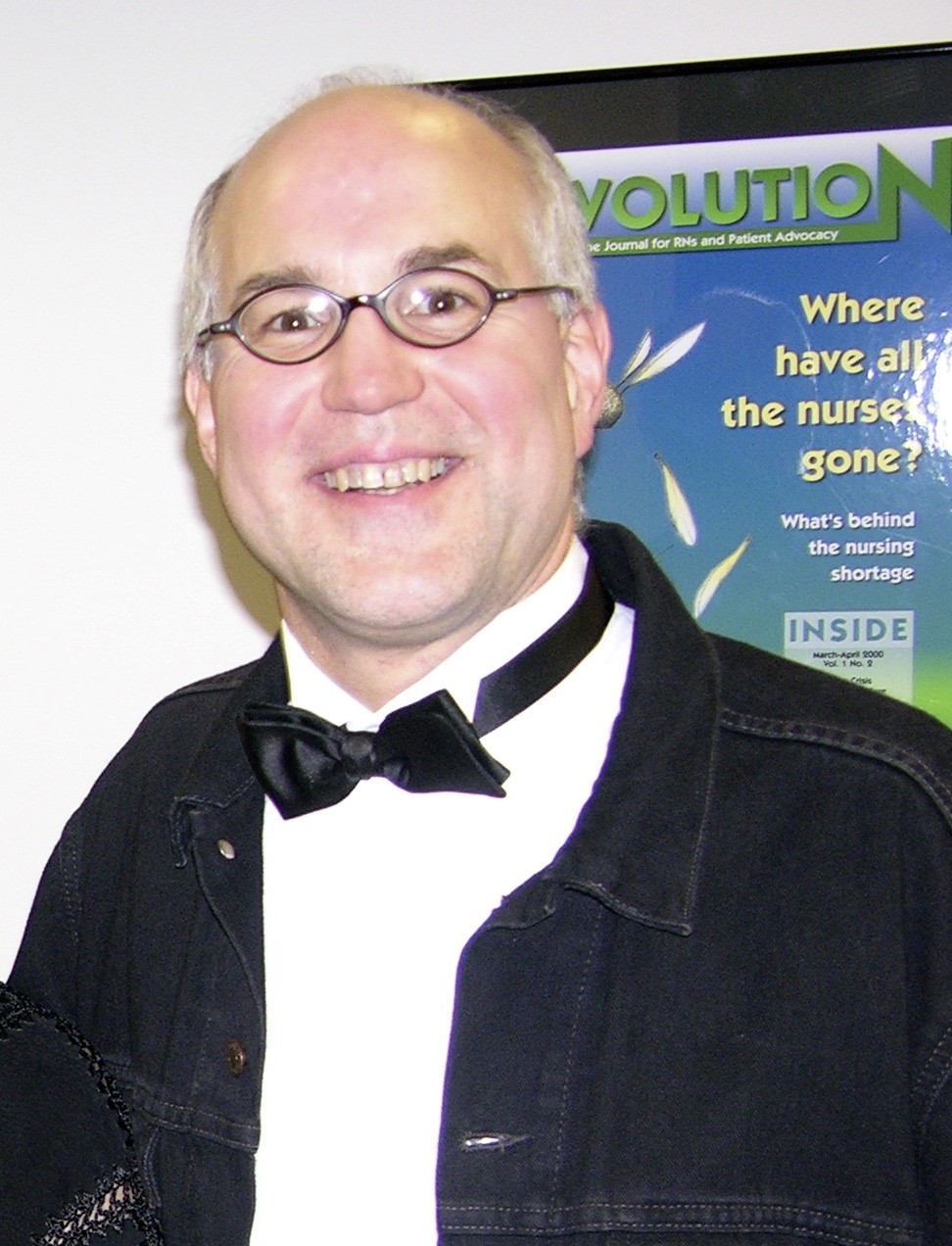
Michael Lighty Worked For Mayor Jerry Brown In Oakland Gentrifying the City-No Wonder He Doesn't Want To Pressure Brown
http://www.rebuildcpmc.org/blue_ribbon/bluepanel_bios/
MICHAEL LIGHTY, Director of Public Policy, California Nurses Association
Michael Lighty has more than twenty years of experience in political, community and union organizing.
Lighty is currently the Director of Administration and Public Policy for the California Nurses Association. He currently manages CNA's national effort for healthcare reform on the single-payer model, an issue he has worked on since 1991. Last year he was campaign manager for the clean money initiative, Prop 89, which won a prestigious Pollie award for its phone campaign. In 2006, he coordinated CNA's successful effort to reverse California Governor Arnold Schwarzenegger's roll-back of CNA's landmark hospital nurse to patient staffing law. CNA was a leader in the electoral rejection of Schwarzenegger's special election ballot measures in November, 2005.
Lighty joined the CNA in 1994 as a Labor Representative and served as Political Director, coordinating a state-wide ballot initiative campaign for HMO reform in 1996, a campaign that launched the national HMO patient rights movement, and coordinated the field effort to win the safe staffing ratio law.
Lighty began his career as a Business Agent/Organizer for an association of film and video technicians in San Francisco, becoming the director of the association in Los Angeles and then New York City, where he negotiated agreements with independent film and television producers, including Spike Lee and the TV series, "Law & Order."
Lighty was then Mayor Jerry Brown's first appointee to the Oakland Planning Commission where he served for more than seven years. He has served on the Board of the independent Park Day School in Oakland. He has been active with non-profit organizations devoted to health care reform, voter registration, urban planning and lesbian and gay equality.
Lighty received his BA and MA from Stanford University in the Humanities, where he graduated with Honors. At Stanford, Lighty was the co-director of the Stanford Workshops on Political and Social Issues (SWOPSI). He grew up in Eugene, Oregon, where he was an honors student and high school student body president.
http://www.rebuildcpmc.org/blue_ribbon/bluepanel_bios/
MICHAEL LIGHTY, Director of Public Policy, California Nurses Association
Michael Lighty has more than twenty years of experience in political, community and union organizing.
Lighty is currently the Director of Administration and Public Policy for the California Nurses Association. He currently manages CNA's national effort for healthcare reform on the single-payer model, an issue he has worked on since 1991. Last year he was campaign manager for the clean money initiative, Prop 89, which won a prestigious Pollie award for its phone campaign. In 2006, he coordinated CNA's successful effort to reverse California Governor Arnold Schwarzenegger's roll-back of CNA's landmark hospital nurse to patient staffing law. CNA was a leader in the electoral rejection of Schwarzenegger's special election ballot measures in November, 2005.
Lighty joined the CNA in 1994 as a Labor Representative and served as Political Director, coordinating a state-wide ballot initiative campaign for HMO reform in 1996, a campaign that launched the national HMO patient rights movement, and coordinated the field effort to win the safe staffing ratio law.
Lighty began his career as a Business Agent/Organizer for an association of film and video technicians in San Francisco, becoming the director of the association in Los Angeles and then New York City, where he negotiated agreements with independent film and television producers, including Spike Lee and the TV series, "Law & Order."
Lighty was then Mayor Jerry Brown's first appointee to the Oakland Planning Commission where he served for more than seven years. He has served on the Board of the independent Park Day School in Oakland. He has been active with non-profit organizations devoted to health care reform, voter registration, urban planning and lesbian and gay equality.
Lighty received his BA and MA from Stanford University in the Humanities, where he graduated with Honors. At Stanford, Lighty was the co-director of the Stanford Workshops on Political and Social Issues (SWOPSI). He grew up in Eugene, Oregon, where he was an honors student and high school student body president.
For more information:
http://www.rebuildcpmc.org/blue_ribbon/blu...
CA Single Payer SB810 Dies On Assembly Floor With Demos In Charge Of Legislature: Single Payer Campaign Strategy Goes Bust-Demos Betray Them Again
SB810 Dies On Assembly Floor: The Movement Goes On! – PNHP California
http://pnhpcalifornia.org/2010/09/sb810-dies-on-assembly-floor-the-movement-goes-on/
SB810 Dies On Assembly Floor: The Movement Goes On!
SB810 DIES ON THE FLOOR OF THE CALIFORNIA ASSEMBLY:
THE MOVEMENT GOES ON!
Dear PNHP California Activists,
I write to all of you who have ever tried to convince a stranger, friend, family member or colleague that improved Medicare for All is the right solution for this country’s health care crisis.
The California single-payer bill SB810, which had passed the state legislature twice before, died on the floor of the State Assembly two nights ago without coming to a final vote. This year’s bill, which had once again passed the State Senate and all necessary Assembly committees, needed only one more vote before going to the Governor’s desk. It never got the chance. Instead, the Democratic leadership made the decision to kill the bill through non-action, rather than risk perceived political repercussions in the upcoming November elections. Kudos to Senator Mark Leno for immediately promising to re-introduce the bill in next year’s legislative session.
The fear of political repercussions, real or imagined, says a lot about the success of the disinformation campaign that has been mounted against health care reform in this country. It also says a lot about the amount of work that lies before us to build the movement for single-payer here in California and nationwide.
PNHP California is already focused on the future. It is up to us to get the message across to hundreds of millions of Americans that truly universal, comprehensive and affordable health care can be available to us all through single-payer. We have to carry this message to every corner of California, and to every state legislator and to the next Governor of this great state, which so often leads the way for the rest of the nation.
That’s why I am asking you to take one simple, yet highly important next step – please convince one person you know to join PNHP California before the end of this year. Just visit http://www.pnhpcalifornia.org and click on Join.
Through PNHP California, you can learn how to effectively make meet face-to-face with your legislators, or speak to the media, or give effective presentations to your colleagues and the public, work in coalition, participate in rallies and lobby days, and do the vital work to help us grow the single-payer movement.
One thing is for sure in politics – the squeaky wheel gets the grease. Let’s see if together we can’t create a roar that will echo from Sacramento to Washington, DC.
Yours in the struggle,
Bill Skeen, MD/MPH
Executive Director
PNHP California
SB810 Dies On Assembly Floor: The Movement Goes On! – PNHP California
http://pnhpcalifornia.org/2010/09/sb810-dies-on-assembly-floor-the-movement-goes-on/
SB810 Dies On Assembly Floor: The Movement Goes On!
SB810 DIES ON THE FLOOR OF THE CALIFORNIA ASSEMBLY:
THE MOVEMENT GOES ON!
Dear PNHP California Activists,
I write to all of you who have ever tried to convince a stranger, friend, family member or colleague that improved Medicare for All is the right solution for this country’s health care crisis.
The California single-payer bill SB810, which had passed the state legislature twice before, died on the floor of the State Assembly two nights ago without coming to a final vote. This year’s bill, which had once again passed the State Senate and all necessary Assembly committees, needed only one more vote before going to the Governor’s desk. It never got the chance. Instead, the Democratic leadership made the decision to kill the bill through non-action, rather than risk perceived political repercussions in the upcoming November elections. Kudos to Senator Mark Leno for immediately promising to re-introduce the bill in next year’s legislative session.
The fear of political repercussions, real or imagined, says a lot about the success of the disinformation campaign that has been mounted against health care reform in this country. It also says a lot about the amount of work that lies before us to build the movement for single-payer here in California and nationwide.
PNHP California is already focused on the future. It is up to us to get the message across to hundreds of millions of Americans that truly universal, comprehensive and affordable health care can be available to us all through single-payer. We have to carry this message to every corner of California, and to every state legislator and to the next Governor of this great state, which so often leads the way for the rest of the nation.
That’s why I am asking you to take one simple, yet highly important next step – please convince one person you know to join PNHP California before the end of this year. Just visit http://www.pnhpcalifornia.org and click on Join.
Through PNHP California, you can learn how to effectively make meet face-to-face with your legislators, or speak to the media, or give effective presentations to your colleagues and the public, work in coalition, participate in rallies and lobby days, and do the vital work to help us grow the single-payer movement.
One thing is for sure in politics – the squeaky wheel gets the grease. Let’s see if together we can’t create a roar that will echo from Sacramento to Washington, DC.
Yours in the struggle,
Bill Skeen, MD/MPH
Executive Director
PNHP California
For more information:
http://pnhpcalifornia.org/2010/09/sb810-di...
Corrupt Labor Supported CA Demo Speaker Perez Clamp Down On Recording Of CA Assembly Meetings-Assembly limits media recording of sessions
http://www.mercurynews.com/politics-government/ci_15988410?nclick_check=1
Assembly limits media recording of sessions
By Don Thompson
Associated Press
Posted: 09/03/2010 07:45:30 PM PDT
Updated: 09/03/2010 09:59:19 PM PDT
SACRAMENTO -- The state Assembly this week began enforcing a long-forgotten rule that constrains media coverage of legislative debates by prohibiting audio or video recorders without permission.
The rule requires reporters, television stations -- and even lawmakers themselves -- to receive advance permission from the Assembly speaker's office before recording or videotaping Assembly sessions. The state Senate does not have a similar rule.
The rule dates to the days when Democrat Willie Brown served as Assembly speaker, a 15-year reign that ended in 1995.
Media organizations and public policy groups objected Friday that the rule is outdated and that its enforcement comes at a time when lawmakers need to be open about their deliberations. The Assembly speaker's office then said it would back off its enforcement.
"Listen, those legislators were elected by the public; they're doing business on behalf of the public. Why would you want to cut access to what they're doing?" said Anzio Williams, news director at KCRA-TV in Sacramento. "Our job is to get access for the public. If there's something they don't want us to see or hear, it probably shouldn't be done."
The revival of the recording restriction was contained in eight pages of rules distributed to Assembly members in a July 29 memorandum from Speaker John Perez, D-Los Angeles, and other Assembly leaders of both parties.
The enforcement of the rule came to light Friday when The Sacramento Bee published a story saying reporters had been confronted recently about having recording devices while covering the Legislature. The story did not cite specific examples of those confrontations.
Reporters often use digital recorders to ensure their quotes of lawmakers and other public officials are accurate. A spokesman for the Assembly speaker's office, John Vigna, said enforcement of the rule was suspended Friday as media groups began to question it.
http://www.mercurynews.com/politics-government/ci_15988410?nclick_check=1
Assembly limits media recording of sessions
By Don Thompson
Associated Press
Posted: 09/03/2010 07:45:30 PM PDT
Updated: 09/03/2010 09:59:19 PM PDT
SACRAMENTO -- The state Assembly this week began enforcing a long-forgotten rule that constrains media coverage of legislative debates by prohibiting audio or video recorders without permission.
The rule requires reporters, television stations -- and even lawmakers themselves -- to receive advance permission from the Assembly speaker's office before recording or videotaping Assembly sessions. The state Senate does not have a similar rule.
The rule dates to the days when Democrat Willie Brown served as Assembly speaker, a 15-year reign that ended in 1995.
Media organizations and public policy groups objected Friday that the rule is outdated and that its enforcement comes at a time when lawmakers need to be open about their deliberations. The Assembly speaker's office then said it would back off its enforcement.
"Listen, those legislators were elected by the public; they're doing business on behalf of the public. Why would you want to cut access to what they're doing?" said Anzio Williams, news director at KCRA-TV in Sacramento. "Our job is to get access for the public. If there's something they don't want us to see or hear, it probably shouldn't be done."
The revival of the recording restriction was contained in eight pages of rules distributed to Assembly members in a July 29 memorandum from Speaker John Perez, D-Los Angeles, and other Assembly leaders of both parties.
The enforcement of the rule came to light Friday when The Sacramento Bee published a story saying reporters had been confronted recently about having recording devices while covering the Legislature. The story did not cite specific examples of those confrontations.
Reporters often use digital recorders to ensure their quotes of lawmakers and other public officials are accurate. A spokesman for the Assembly speaker's office, John Vigna, said enforcement of the rule was suspended Friday as media groups began to question it.
For more information:
http://www.mercurynews.com/politics-govern...
We are 100% volunteer and depend on your participation to sustain our efforts!
Donate

$115.00 donated
in the past month
Get Involved
If you'd like to help with maintaining or developing the website, contact us.
Publish
Publish your stories and upcoming events on Indybay.
Topics
More
Search Indybay's Archives
Advanced Search
►
▼
IMC Network