







 Publish to Newswire
 Add an Event
From the Open-Publishing Calendar
From the Open-Publishing Newswire
Indybay Feature
California
North Bay / Marin
North Coast
U.S.
Environment & Forest Defense
Government & Elections
Labor & Workers
MLPA Initiative will do nothing to stop a big oil spill off California
John Lewallen, a well-respected North Coast environmental leader and co-founder of the Ocean Protection Coalition and the grassroots Seaweed Rebellion, has been a staunch opponent of offshore oil drilling for decades. He said that Schwarzenegger's MLPA Initiative not only fails to protect the California Coast from offshore oil drilling, but “paves the way for new offshore oil rigs.”
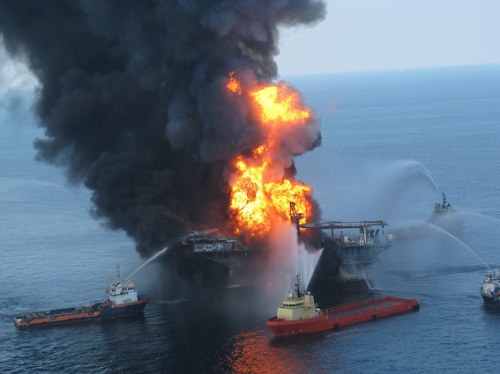
MLPA Initiative will do nothing to stop a big oil spill off California
by Dan Bacher
The BP Oil Spill, the largest environmental disaster in U.S. history, continues to devastate the fish and wildlife populations and coastal fishing communities of the Gulf of Mexico.
A federal government panel on Thursday doubled its estimate of how much oil has been flowing into the Gulf from the Horizon Deepwater spill, according to the New York Times on June 10.
“The new estimate is 25,000 to 30,000 barrels of oil a day,” said reporters Justin Gillis and Henry Fountain. "That range, still preliminary, is far above the previous estimate of 12,000 to 19,000 barrels a day.”
The panel suggests that the same amount of oil that was spilled in the Exxon Valdez disaster could have been spewing into the Gulf every 8-10 days during the unprecedented catastrophe.
The spill occurs at a time when Arnold Schwarzenegger, the worst ever Governor for fish and the environment in California history, and his collaborators continue to tout his fast-track Marine Life ‘"Protection" Act (MLPA) Initiative as a “model” of marine “protection.”
The Marine Life Protection Act (MLPA), a landmark law passed by the California Legislature and signed by Governor Davis in 1999, was supported by both Democrats and Republicans and a coalition of environmental and fishing groups.
However, oil industry, marina development and other corporate interests, in a bizarre parody of marine “protection,” have hijacked the implementation of the MLPA under the Schwarzenegger administration. There is no doubt that Schwarzenegger's MLPA Initiative will do little or nothing to stop a disaster like that of the BP or the Exxon Valdez oil spills from taking place in California waters.
“These marine protected areas, as currently designed, don’t protect against oil spills,” said Sara Randall, program director of the Institute for Fishery Resources and Commercial Fishermen of America. “What’s the point of developing marine protected areas if they don’t protect the resources?”
The MLPA, as amended in 2004, is very broad in its scope. The law was intended to not only restrict or prohibit fishing in a network of “marine protected areas,” but to restrict or prohibit other human activities including coastal development and water pollution.
“Coastal development, water pollution, and other human activities threaten the health of marine habitat and the biological diversity found in California’s ocean waters,” the law states in Fish and Game Code Section 2851, section c.
The law also broadly defines a “marine protected area” (MPA) as “a named, discrete geographic marine or estuarine area seaward of the mean high tide line or the mouth of a coastal river, including any area of inertial or sub tidal terrain, together with its overlying water and associated flora and fauna that has been designated by law, administrative action, or voter initiative to protect or conserve marine life and habitat” (Fish and Game Code 2852, section c).
Furthermore, the law also defines a "Marine life reserve," as “a marine protected area in which all extractive activities, including the taking of marine species, and, at the discretion of the commission and within the authority of the commission, other activities that upset the natural ecological functions of the area, are prohibited. While, to the extent feasible, the area shall be open to the public for managed enjoyment and study, the area shall be maintained to the extent practicable in an undisturbed and unpolluted state” (Fish and Game Code 2852, section d).
Schwarzenegger eviscerates the MLPA
Unfortunately, the Schwarzenegger administration has taken all other “human uses” and “extractive activities” other than fishing and seaweed harvesting off the table in the implementation of the MLPA process. The MLPA fiasco does nothing to stop water pollution, oil drilling, and wave energy projects or other activities from destroying fish and other marine life populations in California’s coastal waters.
A group of fisherman and conservationists exposed the Governor for doing nothing to stop pollution and other activities other than fishing in a protest they held at the Global Climate Summit in Los Angeles on September 30, 2009.
“Ironically, Governor Schwarzenegger is trying to build his legacy as a green governor while he simultaneously ignores all the ocean pollution plaguing California’s beaches and coastal waters,” said protest organizer Wendy Tochihara. “As anyone in Southern California who enjoys the ocean knows, poor water-quality and resulting beach closures are all too common, especially during the rainy season.”
She emphasized, “The Marine Life Protection Act currently being implemented in Southern California by the administration was supposed to be comprehensive, addressing all aspects that affect the ocean, like pollution, coastal development and fishing. However, the Governor has abandoned sound science and is instead only duplicating existing fishing ban laws.”
Environmental groups have also criticized the evisceration of the MLPA under Schwarzenegger. Robert Ovetz, then the executive director of the conservation group Seaflow, in http://www.counterpunch.org in April 2008, pointed out that Schwarzenegger’s so-called “marine protected areas” would not protect the ocean from the “Next Cosco Busan” spill.
Although Ovetz said that “Vessel No Traffic” areas designated by the MLPA Blue Ribbon Task Force were a good “first step,” he noted they were “far too small to adequately protect the Farallon Islands, Fitzgerald and Pt. Reyes from the approximately 3,600 large cargo vessels and oil supertankers entering San Francisco Bay every year virtually unregulated by the US Coast Guard.”
“There is more than just fish in the sea,” said Ovetz. “It would be hard to know it from observing the progress of the Marine Life Protection Act in Northern California. Otherwise known as the MLPA, it is a multi-year process to redesign California’s nearly 100 state Marine Protected Areas (MPAs) into networks of protected marine habitats. But those working to implement the MLPA along the North Central coast are so narrowly focused on fish they are missing the proverbial forest for the trees.”
John Stephens-Lewallen: MLPA paves the way for new offshore drilling
John Stephens-Lewallen, a well-respected North Coast environmental leader and co-founder of the Ocean Protection Coalition and the grassroots Seaweed Rebellion, has been a staunch opponent of offshore oil drilling for decades. He said that the MLPAI not only fails to protect the California Coast from offshore oil drilling, but “paves the way for new offshore oil rigs.”
“The MLPAI divides coastal communities so we’re fighting against each over fisheries closures whereas we should working together to phase out offshore drilling and to put in place a massive conversion to sustainable energy,” emphasized Stephens-Lewallen. “The people running the process, privately funded by the Resources Legacy Fund Foundation, are interested in procuring ports and eliminating food providers so they can industrialize the ocean.”
“The corporate interests have allied with some preservationists in following a bogus theory of ecosystem management that says that people should be eliminated from the ocean ecosystem,” noted Stephens-Lewallen. “This paves the way for offshore drilling, since many of these preservationist organizations secure their funding from the ocean industrialists through the big foundations.”
Stephens-Lewallen and other opponents of the MLPAI have criticized Schwarzenegger for appointing Catherine Reheis-Boyd, the president of the Western States Petroleum Association, as the chair of the MLPA Initiative Blue Ribbon Task Force for the South Coast. She also now serves on the North Central Coast task force and served on the North Coast task force charged with implementation of the MLPA in one of the most overt examples of corporate greenwashing in California history.
“In March, Reheis-Boyd assured the Fort Bragg City Council that setting up marine reserves had nothing to do with opening offshore oil drilling up,” he said. “But at same time, Reheis-Boyd and other members of the task force toured port facilities at the Albion and Noyo harbors where we suspect the oil industry could eventually install onshore facilities to be used in tandem with offshore rigs. The North Coast Marine Protected Areas (MPAs) seem designed to eliminate the fishing industry in the Point Area area, since they bracket the harbor.”
Stephens-Lewallen questions whether the placement of these marine reserves has been designed to facilitate the development of offshore oil in the Point Arena Basin in Mendocino County. This is one of the areas the oil industry is most interested in exploring for oil – and is one of the greatest marine ecosystems, sustained by upwelling, on the West Coast.
Giving credence to his contention that the MLPA Initiative paves the way for new oil drilling, Catherine Reheis-Boyd recently affirmed her support for new offshore oil rigs in spite of the BP spill’s devastation, in her commentary, “Gulf Oil Spill Comments,” on the association’s website, http://www.wspa.org.
“The tragic Deepwater Horizon accident in the Gulf of Mexico has resulted in California Governor Schwarzenegger’s withdrawal of his support for limited offshore oil development near Santa Barbara,” said Reheis-Boyd. “WSPA has not taken a position on specific offshore projects. But we have been vocal about our views that California businesses and consumers would benefit from development of the huge reserves of petroleum off the California coast, in both state and federal waters.”
Other corporate interests who preside over the MLPA Blue Ribbon Task Force include members Gregory F. Schem and William (Bill) Anderson.
Schem is president and chief executive officer of Harbor Real Estate Group, specializing in marina and waterfront real estate investments, including a marina, fuel dock, and boat yard in Marina del Rey, in addition to other California assets.
Anderson has been president and chief operating officer of Westrec Marinas since 1989. Westrec Marinas is the nation's largest owner and operator of waterfront marinas.
How can anybody possibly claim that the MLPAI “protects” the oceans when the Governor has appointed oil company, real estate and marina development interests – all of whom all have a direct stake in how marine reserves are implemented and designated – to decision making positions on MLPA panels?
Besides failing to protect California coastal waters from other human uses than fishing in waters that already feature the largest marine protected area in the United States (the Rockcod Conservation Area), the MLPA Initiative has openly violated numerous state, federal and international laws. These include the California Public Records Act, Bagley-Keene Open Meetings Act, First Amendment of the U.S. Constitution, American Indian Religious Freedom Act, and UN Declaration on the Rights of Indigenous Peoples.
For more information about the violation of indigenous subsistence, cultural and religious rights under the MLPA, go to: Violet Wilder's facebook page, "KEEP THE NORTHERN CALIFORNIA BEACHES ACCESSIBLE FOR THE COASTAL TRIBES" (http://www.facebook.com/group.php?gid=105945012781743).
by Dan Bacher
The BP Oil Spill, the largest environmental disaster in U.S. history, continues to devastate the fish and wildlife populations and coastal fishing communities of the Gulf of Mexico.
A federal government panel on Thursday doubled its estimate of how much oil has been flowing into the Gulf from the Horizon Deepwater spill, according to the New York Times on June 10.
“The new estimate is 25,000 to 30,000 barrels of oil a day,” said reporters Justin Gillis and Henry Fountain. "That range, still preliminary, is far above the previous estimate of 12,000 to 19,000 barrels a day.”
The panel suggests that the same amount of oil that was spilled in the Exxon Valdez disaster could have been spewing into the Gulf every 8-10 days during the unprecedented catastrophe.
The spill occurs at a time when Arnold Schwarzenegger, the worst ever Governor for fish and the environment in California history, and his collaborators continue to tout his fast-track Marine Life ‘"Protection" Act (MLPA) Initiative as a “model” of marine “protection.”
The Marine Life Protection Act (MLPA), a landmark law passed by the California Legislature and signed by Governor Davis in 1999, was supported by both Democrats and Republicans and a coalition of environmental and fishing groups.
However, oil industry, marina development and other corporate interests, in a bizarre parody of marine “protection,” have hijacked the implementation of the MLPA under the Schwarzenegger administration. There is no doubt that Schwarzenegger's MLPA Initiative will do little or nothing to stop a disaster like that of the BP or the Exxon Valdez oil spills from taking place in California waters.
“These marine protected areas, as currently designed, don’t protect against oil spills,” said Sara Randall, program director of the Institute for Fishery Resources and Commercial Fishermen of America. “What’s the point of developing marine protected areas if they don’t protect the resources?”
The MLPA, as amended in 2004, is very broad in its scope. The law was intended to not only restrict or prohibit fishing in a network of “marine protected areas,” but to restrict or prohibit other human activities including coastal development and water pollution.
“Coastal development, water pollution, and other human activities threaten the health of marine habitat and the biological diversity found in California’s ocean waters,” the law states in Fish and Game Code Section 2851, section c.
The law also broadly defines a “marine protected area” (MPA) as “a named, discrete geographic marine or estuarine area seaward of the mean high tide line or the mouth of a coastal river, including any area of inertial or sub tidal terrain, together with its overlying water and associated flora and fauna that has been designated by law, administrative action, or voter initiative to protect or conserve marine life and habitat” (Fish and Game Code 2852, section c).
Furthermore, the law also defines a "Marine life reserve," as “a marine protected area in which all extractive activities, including the taking of marine species, and, at the discretion of the commission and within the authority of the commission, other activities that upset the natural ecological functions of the area, are prohibited. While, to the extent feasible, the area shall be open to the public for managed enjoyment and study, the area shall be maintained to the extent practicable in an undisturbed and unpolluted state” (Fish and Game Code 2852, section d).
Schwarzenegger eviscerates the MLPA
Unfortunately, the Schwarzenegger administration has taken all other “human uses” and “extractive activities” other than fishing and seaweed harvesting off the table in the implementation of the MLPA process. The MLPA fiasco does nothing to stop water pollution, oil drilling, and wave energy projects or other activities from destroying fish and other marine life populations in California’s coastal waters.
A group of fisherman and conservationists exposed the Governor for doing nothing to stop pollution and other activities other than fishing in a protest they held at the Global Climate Summit in Los Angeles on September 30, 2009.
“Ironically, Governor Schwarzenegger is trying to build his legacy as a green governor while he simultaneously ignores all the ocean pollution plaguing California’s beaches and coastal waters,” said protest organizer Wendy Tochihara. “As anyone in Southern California who enjoys the ocean knows, poor water-quality and resulting beach closures are all too common, especially during the rainy season.”
She emphasized, “The Marine Life Protection Act currently being implemented in Southern California by the administration was supposed to be comprehensive, addressing all aspects that affect the ocean, like pollution, coastal development and fishing. However, the Governor has abandoned sound science and is instead only duplicating existing fishing ban laws.”
Environmental groups have also criticized the evisceration of the MLPA under Schwarzenegger. Robert Ovetz, then the executive director of the conservation group Seaflow, in http://www.counterpunch.org in April 2008, pointed out that Schwarzenegger’s so-called “marine protected areas” would not protect the ocean from the “Next Cosco Busan” spill.
Although Ovetz said that “Vessel No Traffic” areas designated by the MLPA Blue Ribbon Task Force were a good “first step,” he noted they were “far too small to adequately protect the Farallon Islands, Fitzgerald and Pt. Reyes from the approximately 3,600 large cargo vessels and oil supertankers entering San Francisco Bay every year virtually unregulated by the US Coast Guard.”
“There is more than just fish in the sea,” said Ovetz. “It would be hard to know it from observing the progress of the Marine Life Protection Act in Northern California. Otherwise known as the MLPA, it is a multi-year process to redesign California’s nearly 100 state Marine Protected Areas (MPAs) into networks of protected marine habitats. But those working to implement the MLPA along the North Central coast are so narrowly focused on fish they are missing the proverbial forest for the trees.”
John Stephens-Lewallen: MLPA paves the way for new offshore drilling
John Stephens-Lewallen, a well-respected North Coast environmental leader and co-founder of the Ocean Protection Coalition and the grassroots Seaweed Rebellion, has been a staunch opponent of offshore oil drilling for decades. He said that the MLPAI not only fails to protect the California Coast from offshore oil drilling, but “paves the way for new offshore oil rigs.”
“The MLPAI divides coastal communities so we’re fighting against each over fisheries closures whereas we should working together to phase out offshore drilling and to put in place a massive conversion to sustainable energy,” emphasized Stephens-Lewallen. “The people running the process, privately funded by the Resources Legacy Fund Foundation, are interested in procuring ports and eliminating food providers so they can industrialize the ocean.”
“The corporate interests have allied with some preservationists in following a bogus theory of ecosystem management that says that people should be eliminated from the ocean ecosystem,” noted Stephens-Lewallen. “This paves the way for offshore drilling, since many of these preservationist organizations secure their funding from the ocean industrialists through the big foundations.”
Stephens-Lewallen and other opponents of the MLPAI have criticized Schwarzenegger for appointing Catherine Reheis-Boyd, the president of the Western States Petroleum Association, as the chair of the MLPA Initiative Blue Ribbon Task Force for the South Coast. She also now serves on the North Central Coast task force and served on the North Coast task force charged with implementation of the MLPA in one of the most overt examples of corporate greenwashing in California history.
“In March, Reheis-Boyd assured the Fort Bragg City Council that setting up marine reserves had nothing to do with opening offshore oil drilling up,” he said. “But at same time, Reheis-Boyd and other members of the task force toured port facilities at the Albion and Noyo harbors where we suspect the oil industry could eventually install onshore facilities to be used in tandem with offshore rigs. The North Coast Marine Protected Areas (MPAs) seem designed to eliminate the fishing industry in the Point Area area, since they bracket the harbor.”
Stephens-Lewallen questions whether the placement of these marine reserves has been designed to facilitate the development of offshore oil in the Point Arena Basin in Mendocino County. This is one of the areas the oil industry is most interested in exploring for oil – and is one of the greatest marine ecosystems, sustained by upwelling, on the West Coast.
Giving credence to his contention that the MLPA Initiative paves the way for new oil drilling, Catherine Reheis-Boyd recently affirmed her support for new offshore oil rigs in spite of the BP spill’s devastation, in her commentary, “Gulf Oil Spill Comments,” on the association’s website, http://www.wspa.org.
“The tragic Deepwater Horizon accident in the Gulf of Mexico has resulted in California Governor Schwarzenegger’s withdrawal of his support for limited offshore oil development near Santa Barbara,” said Reheis-Boyd. “WSPA has not taken a position on specific offshore projects. But we have been vocal about our views that California businesses and consumers would benefit from development of the huge reserves of petroleum off the California coast, in both state and federal waters.”
Other corporate interests who preside over the MLPA Blue Ribbon Task Force include members Gregory F. Schem and William (Bill) Anderson.
Schem is president and chief executive officer of Harbor Real Estate Group, specializing in marina and waterfront real estate investments, including a marina, fuel dock, and boat yard in Marina del Rey, in addition to other California assets.
Anderson has been president and chief operating officer of Westrec Marinas since 1989. Westrec Marinas is the nation's largest owner and operator of waterfront marinas.
How can anybody possibly claim that the MLPAI “protects” the oceans when the Governor has appointed oil company, real estate and marina development interests – all of whom all have a direct stake in how marine reserves are implemented and designated – to decision making positions on MLPA panels?
Besides failing to protect California coastal waters from other human uses than fishing in waters that already feature the largest marine protected area in the United States (the Rockcod Conservation Area), the MLPA Initiative has openly violated numerous state, federal and international laws. These include the California Public Records Act, Bagley-Keene Open Meetings Act, First Amendment of the U.S. Constitution, American Indian Religious Freedom Act, and UN Declaration on the Rights of Indigenous Peoples.
For more information about the violation of indigenous subsistence, cultural and religious rights under the MLPA, go to: Violet Wilder's facebook page, "KEEP THE NORTHERN CALIFORNIA BEACHES ACCESSIBLE FOR THE COASTAL TRIBES" (http://www.facebook.com/group.php?gid=105945012781743).
Add Your Comments
Comments
(Hide Comments)
Dan is absolutely correct in his analysis of the MLPA. In fact, the funder he refers to is funding both the enviro NGOs and the state MLPA planning process itself and is essentially a front for even larger corporate foundations.
The history of marine reserves across the the ocean has a consistent outcome: when fisherpeople are remove, no matter how unsustainable their own practices, the last remaining local constituency for the ocean is removed. This too is happening in California.
The history of marine reserves across the the ocean has a consistent outcome: when fisherpeople are remove, no matter how unsustainable their own practices, the last remaining local constituency for the ocean is removed. This too is happening in California.
The concept was supposed to be establishing reserves on 1/6 of the area which would help protect some of the oldest invertebrates and fish from harvest. These large individuals are expected to generate higher quality and higher abundance juveniles which spill over into the rest of the coastline which are left open to fishing. They tried it here:
---------------------------------
ScienceDaily (Dec. 7, 2009) — Studies conducted in California and elsewhere provide support for the use of marine reserves as a tool for managing fisheries and protecting marine habitats, according to biologists at the University of California, Santa Cruz.
A recent study in the Gulf of California, for example, confirmed the validity of a key concept behind marine reserves--the idea that offspring produced in a protected area can replenish the stocks of harvested species outside the reserve.
"It seems really obvious, but it had never been tested," said Peter Raimondi, professor and chair of ecology and evolutionary biology at UCSC and coauthor of a paper describing the findings in the journal PLoS One.
"We created a model to predict the dispersal of larvae outside the reserves, and the results were completely consistent with our predictions," he said.
Raimondi is involved in a collaborative project (called PANGAS) in which researchers are working with Mexican fishing communities to study and manage fisheries in the northern Gulf of California. Local fishermen in the area of Puerto Peñasco set up a network of marine reserves as part of a community-based effort to manage their resources. Ecological and social studies conducted before, during, and after the establishment of those reserves enabled the researchers to track the results.
Raimondi emphasized that resource managers have a wide range of tools at their disposal and must take into account both biological and social factors in choosing the best approach. Many species, such as tuna and squid, move around too much to be protected by setting aside certain areas. For species that tend to stay put, marine protected areas can range from no-take reserves to various levels of limited harvesting, and sometimes involve restrictions on who can harvest fish in an area rather than how much can be taken.
The establishment of marine protected areas along the California coast, as called for in the 1999 Marine Life Protection Act (MLPA), has been controversial. A network of protected areas was established on the Central Coast in 2006, and a plan for the North-Central Coast was adopted in August 2009. In Southern California, a task force will soon make recommendations to the state Fish and Game Commission, while on the North Coast the planning process is just getting started.
Raimondi and Mark Carr, also a professor of ecology and evolutionary biology at UCSC, have been actively involved in this initiative. In addition to serving on science advisory teams, they are engaged in an intensive monitoring program to track the effects of the reserves that have already been established.
"We are monitoring those areas at unprecedented levels. It's a comprehensive effort to characterize the populations and the ecosystems so that we can compare the responses to different types of protection," Carr said. "Monitoring studies around the globe systematically show positive responses within protected areas. We want to really identify what aspects of reserve design are important in influencing those benefits."
According to Carr, it will take a few more years of monitoring to see the effects of the Central Coast reserves. In the Channel Islands, however, where reserves were established in 2003 (separately from the MLPA process), surveys have yielded the kinds of results scientists expect to see in protected areas. For example, fish species targeted by fishermen tend to be bigger and more plentiful within the reserves.
This effect is important, because studies have shown that larger, older females are much more important than younger fish in maintaining healthy populations of species such as West Coast rockfish.
"When you have a protected population, you not only get spillover effects when fish swim out of the reserve and get caught, you also have major effects on larval production," Carr said. "The bigger, older fish in the reserve produce a lot of larvae that replenish the fished populations outside."
Carr, who contributed to a report on the first five years of monitoring in the Channel Islands, said that the conclusions are limited by a lack of data collected before the reserves were created. It is possible that some of the observed differences existed before the areas were protected, but such doubts will be erased if current population trends continue, he said.
In Puerto Peñasco, the shellfish harvested by local fishermen grow and reproduce quickly. As a result, the fishermen saw beneficial effects within a year after they had established a network of reserves. Subsequent events, however, underscored the role of social factors in the success of fishery management efforts. A second paper, published in PLoS ONE in July, describes how, after its initial success, the local reserve system collapsed due to poaching by outsiders.
"The whole thing got wiped out due to disruption of the social structure that had supported it," Raimondi said. "Scientifically it was really interesting, but for the people who experienced it on the ground, it was terrible."
Richard Cudney-Bueno, a research associate at UCSC's Institute of Marine Sciences and cofounder of the PANGAS project, is the lead author of both papers. "Here was a group of fishermen that had already seen some declines in the shellfish they harvested. This led to the implementation of community-based efforts to manage their resources, including the establishment of marine reserves," he said. "We found that local control of community resources can work, but there has to be broader government support to back up the local efforts."
A native of Mexico City, Cudney-Bueno has been working with Mexican fishing communities and conducting ecological and social research in the Gulf of California since the mid-1990s. He now has a joint position with UCSC, the University of Arizona, and the David and Lucile Packard Foundation.
The first reserve in the Puerto Peñasco area was established in 2001 around an island. Cudney-Bueno and other researchers, working with a Mexican nonprofit organization (Centro Intercultural de Estudios de Desiertos y Océanos), trained the fishermen to monitor shellfish populations in and around the reserve. "The response was really quick, so they could see a classic reserve effect one year later," Cudney-Bueno said. "That led to more areas being closed, and the first paper shows the effects of the network of reserves."
The cooperative was so successful it was recognized by the Mexican government with a Presidential Conservation Award. But word spread quickly along the coast about the thriving shellfish populations in Puerto Peñasco, and other fishermen from outside the community began to move in and poach from the reserves. After poaching began, the system of cooperation that had established and protected the reserves broke down.
Now, the situation is beginning to improve again, Cudney-Bueno said. The Mexican government has created one of a handful of exclusive fishing zones in the Gulf of California, giving the local cooperative the exclusive legal right to harvest shellfish in the Puerto Peñasco area.
"They now have a strong management plan with legal rights and government support, so I think they will be able to get back to where they were before the poaching started," Cudney-Bueno said. "I see it as part of the evolution of a management system. Social change takes time, and it really hasn't been that long. A lot is happening now in Mexico and around the world as local people are increasingly asking for control over their resources. Various fishing communities in Mexico, including lobster and abalone fishermen in Baja California, have moved forward with the establishment of their own marine reserves and government-backed forms of territorial-use rights."
The PANGAS project, which brings together experts from UCSC, the University of Arizona, and several collaborating academic institutions and nonprofit organizations in Mexico, is working with other fishing communities in the Gulf of California to develop management plans for the region's marine resources.
"PANGAS is now working with the Mexican government to build management plans for a series of species in the northern Gulf of California," Raimondi said. "It's interesting to compare that with the MLPA process in California. The approaches are very different, and it has to do with differences in government and social structures."
According to Carr, the California MLPA process is now being used as a model in other parts of the world, most notably in the United Kingdom.
---------------------------------
ScienceDaily (Dec. 7, 2009) — Studies conducted in California and elsewhere provide support for the use of marine reserves as a tool for managing fisheries and protecting marine habitats, according to biologists at the University of California, Santa Cruz.
A recent study in the Gulf of California, for example, confirmed the validity of a key concept behind marine reserves--the idea that offspring produced in a protected area can replenish the stocks of harvested species outside the reserve.
"It seems really obvious, but it had never been tested," said Peter Raimondi, professor and chair of ecology and evolutionary biology at UCSC and coauthor of a paper describing the findings in the journal PLoS One.
"We created a model to predict the dispersal of larvae outside the reserves, and the results were completely consistent with our predictions," he said.
Raimondi is involved in a collaborative project (called PANGAS) in which researchers are working with Mexican fishing communities to study and manage fisheries in the northern Gulf of California. Local fishermen in the area of Puerto Peñasco set up a network of marine reserves as part of a community-based effort to manage their resources. Ecological and social studies conducted before, during, and after the establishment of those reserves enabled the researchers to track the results.
Raimondi emphasized that resource managers have a wide range of tools at their disposal and must take into account both biological and social factors in choosing the best approach. Many species, such as tuna and squid, move around too much to be protected by setting aside certain areas. For species that tend to stay put, marine protected areas can range from no-take reserves to various levels of limited harvesting, and sometimes involve restrictions on who can harvest fish in an area rather than how much can be taken.
The establishment of marine protected areas along the California coast, as called for in the 1999 Marine Life Protection Act (MLPA), has been controversial. A network of protected areas was established on the Central Coast in 2006, and a plan for the North-Central Coast was adopted in August 2009. In Southern California, a task force will soon make recommendations to the state Fish and Game Commission, while on the North Coast the planning process is just getting started.
Raimondi and Mark Carr, also a professor of ecology and evolutionary biology at UCSC, have been actively involved in this initiative. In addition to serving on science advisory teams, they are engaged in an intensive monitoring program to track the effects of the reserves that have already been established.
"We are monitoring those areas at unprecedented levels. It's a comprehensive effort to characterize the populations and the ecosystems so that we can compare the responses to different types of protection," Carr said. "Monitoring studies around the globe systematically show positive responses within protected areas. We want to really identify what aspects of reserve design are important in influencing those benefits."
According to Carr, it will take a few more years of monitoring to see the effects of the Central Coast reserves. In the Channel Islands, however, where reserves were established in 2003 (separately from the MLPA process), surveys have yielded the kinds of results scientists expect to see in protected areas. For example, fish species targeted by fishermen tend to be bigger and more plentiful within the reserves.
This effect is important, because studies have shown that larger, older females are much more important than younger fish in maintaining healthy populations of species such as West Coast rockfish.
"When you have a protected population, you not only get spillover effects when fish swim out of the reserve and get caught, you also have major effects on larval production," Carr said. "The bigger, older fish in the reserve produce a lot of larvae that replenish the fished populations outside."
Carr, who contributed to a report on the first five years of monitoring in the Channel Islands, said that the conclusions are limited by a lack of data collected before the reserves were created. It is possible that some of the observed differences existed before the areas were protected, but such doubts will be erased if current population trends continue, he said.
In Puerto Peñasco, the shellfish harvested by local fishermen grow and reproduce quickly. As a result, the fishermen saw beneficial effects within a year after they had established a network of reserves. Subsequent events, however, underscored the role of social factors in the success of fishery management efforts. A second paper, published in PLoS ONE in July, describes how, after its initial success, the local reserve system collapsed due to poaching by outsiders.
"The whole thing got wiped out due to disruption of the social structure that had supported it," Raimondi said. "Scientifically it was really interesting, but for the people who experienced it on the ground, it was terrible."
Richard Cudney-Bueno, a research associate at UCSC's Institute of Marine Sciences and cofounder of the PANGAS project, is the lead author of both papers. "Here was a group of fishermen that had already seen some declines in the shellfish they harvested. This led to the implementation of community-based efforts to manage their resources, including the establishment of marine reserves," he said. "We found that local control of community resources can work, but there has to be broader government support to back up the local efforts."
A native of Mexico City, Cudney-Bueno has been working with Mexican fishing communities and conducting ecological and social research in the Gulf of California since the mid-1990s. He now has a joint position with UCSC, the University of Arizona, and the David and Lucile Packard Foundation.
The first reserve in the Puerto Peñasco area was established in 2001 around an island. Cudney-Bueno and other researchers, working with a Mexican nonprofit organization (Centro Intercultural de Estudios de Desiertos y Océanos), trained the fishermen to monitor shellfish populations in and around the reserve. "The response was really quick, so they could see a classic reserve effect one year later," Cudney-Bueno said. "That led to more areas being closed, and the first paper shows the effects of the network of reserves."
The cooperative was so successful it was recognized by the Mexican government with a Presidential Conservation Award. But word spread quickly along the coast about the thriving shellfish populations in Puerto Peñasco, and other fishermen from outside the community began to move in and poach from the reserves. After poaching began, the system of cooperation that had established and protected the reserves broke down.
Now, the situation is beginning to improve again, Cudney-Bueno said. The Mexican government has created one of a handful of exclusive fishing zones in the Gulf of California, giving the local cooperative the exclusive legal right to harvest shellfish in the Puerto Peñasco area.
"They now have a strong management plan with legal rights and government support, so I think they will be able to get back to where they were before the poaching started," Cudney-Bueno said. "I see it as part of the evolution of a management system. Social change takes time, and it really hasn't been that long. A lot is happening now in Mexico and around the world as local people are increasingly asking for control over their resources. Various fishing communities in Mexico, including lobster and abalone fishermen in Baja California, have moved forward with the establishment of their own marine reserves and government-backed forms of territorial-use rights."
The PANGAS project, which brings together experts from UCSC, the University of Arizona, and several collaborating academic institutions and nonprofit organizations in Mexico, is working with other fishing communities in the Gulf of California to develop management plans for the region's marine resources.
"PANGAS is now working with the Mexican government to build management plans for a series of species in the northern Gulf of California," Raimondi said. "It's interesting to compare that with the MLPA process in California. The approaches are very different, and it has to do with differences in government and social structures."
According to Carr, the California MLPA process is now being used as a model in other parts of the world, most notably in the United Kingdom.
http://www.truthout.org/1027094
Cultural Genocide Disguised As Marine ‘Protection’ – from the Colorado Delta to the North Coast
by Dan Bacher
I wrote the following article for Counterpunch in April 2007 when I covered La Otra Campana (the Other Campaign) of the Zapatistas in Mexico. Subcomandante Marcos and the Zapatistas organized a “peace camp” from February to May of 2007 to defend Cucapa Tribe members on the Colorado River Delta against a Marine Protected Area (MPA) like the ones Governor Arnold Schwarzenegger, California’s head oil industry lobbyist and corporate “environmentalists” are installing on California’s North Coast through the corrupt Marine Life Protection Act (MLPA) process.
In the nearly 3 years since the article was published, an alliance of Schwarzenegger, corporate environmentalists and the Resource Legacy Foundation have pressured the California Fish and Game Commission to ban the Kashia Pomo and other Indian Tribes in Sonoma and Mendocino counties from sustainably harvesting seaweed, abalone and mussels from inter-tidal zones as they have done for centuries. The advocates of “no take” marine zones under the MLPA never showed any respect or consideration for the fishing rights of federally recognized tribes including the Kashia Pomo.
The process has now moved to the section of the North Coast from Point Arena to the Oregon border. Fortunately, a broad coalition of grassroots environmentalists, Indian Tribes, recreational anglers, commercial fishermen, divers and cities and counties has formed to resist the fast-track MLPA process of Schwarzenegger, the worst Governor for fish and the environment in California history.
We must resist the gross injustice already imposed upon the Kashia Tribe, as well as upon all of the seaweed harvesters, fishermen and abalone divers that were removed from their traditional harvesting areas in Sonoma and Mendocino counties by the politically stacked August vote of the Fish and Game Commission. At the same time, we must prevent the MLPA initiative’s plans for cultural genocide from succeeding on the North Coast north of Point Arena.
Like the indigenous and non-indigenous activists from all over the U.S., Mexico, Latin America and around the world that successfully defended the Cucapa Tribe against attacks by the Mexican government in 2007 and helped assert their right to fish for corvina on the Colorado Delta, we must resist plans by Schwarzenegger and corporate interests to impose no fishing zones without any respect for the people and cultures of the North Coast.
As Lester Pinola, past chairman of the Kashia Rancheria, said in a public hearing prior to the Commission August 5 vote, “What you are doing to us is taking the food out of our mouths. When the first settlers came to the coast, they didn’t how to feed themselves. Our people showed them how to eat out of the ocean. In my opinion, this was a big mistake.”
Ironically, the same Governor that is riding the out-of-control bulldozer of the MLPA process over the fishermen, tribes and communities of the North Coast has presided over the unprecedented collapse of Central Valley salmon, Delta smelt, longfin smelt, green sturgeon and other fish species on the California Delta. While claiming he is “protecting” the marine ecosystem while removing seaweed harvesters and fishermen from the water in traditional areas, he is constantly campaigning for a peripheral canal and more dams that will push salmon and other imperiled fish species over the abyss of extinction.
Even more ironically, Schwarzenegger has installed Kathy Reheis-Boyd, the executive director of the Western States Petroleum Association, as the chairman of the MLPA Ribbon Task Force that is now developing the no take zones for Southern California. She has also been named to the panel that is developing marine protected areas (MPAs) for the North Coast. What the heck is an oil industry lobbyist doing on the head of the state body that aims to remove fishermen and seaweed harvesters, the strongest opponents of oil drilling, from our coastal waters?
There is nothing “green” or “environmental” about Schwarzenegger’s fast-track MLPA process, since its proponents have gone out of their way to take water pollution, oil drilling, proposed wave energy projects and water diversions, the primary threats to fishery restoration, off the table when developing so-called “marine protected areas.”
However, this conscious decision by the Governor to allow other human activities in “marine protected areas” and to prohibit only fishing may change soon, due to “informal legal advice” regarding the MLPA provided by State Attorney General Jerry Brown (http://www.dfg.ca.gov/mlpa/pdfs/memo_100109.pdf).
The Governor’s MLPA process is nothing other than classic corporate greenwashing, a bad substitute for desperately needed fish restoration measures imposed at the expense of Indian Tribes, seaweed harvesters, fishermen and divers.
Weekend Edition: April 21 / 22, 2007
Defending the Fishing Rights of the Cucapa Tribe
Zapatistas in the Colorado Delta
By DAN BACHER
Since February 26, the Cucapa Tribe in El Mayor, Baja California has organized an historic Zapatista peace camp to defend their fishing rights against harassment and intimidation by the Mexican government on the Colorado River Delta.
The idea for the camp originated during a visit by Subcomandante Marcos, spokesman for the EZLN (Zapatista Army of National Liberation), to El Mayor during the Zapatista “Otra Campana” (Other Campaign) in October 2006.
“We have decided to send an urgent message to the Mexicans and Chicanos north of the Rio Grande to come in order to maximize the number of people here, create a safe space, and protect the Cucapa and Kiliwa community during the fishing season,” said Marcos, also known as “delegado zero,” in announcing the initiation of the camp after a meeting with the Cucapa and Kiliwa community leaders.
In February, the Cucapa community issued its call to action. “You are no longer being asked to stand in solidarity with the indigenous people of Mexico. Now you are being asked to stand to play an integral role in a bi-national effort that will no longer consist of only resisting but also helping these communities exist and live as they have for thousands of years,” said the tribe.
The 304 member Cucapa Tribe said the camp aimed to “help reestablish the networks and relations that existed before borders separated families and communities, and to help expose these atrocities to a world that has avoided looking at the price of its excess, comfort and luxury.”
Although the peace camp got off to a slow start, the momentum built in March as the Cucapa and supporters constructed a fishing camp, secured buyers for the fish (corvina), purchased a refrigerated trailer and netted fish in defiance of federal fishing regulations that require permits in a “marine protected area.”
By the end of April, the camp had achieved its goals. “The camp is almost over, but it has been extremely successful,” explained Cesar Soriano from the Banda Martes in Los Angeles. “The main goal of the Cucapa to fish without government harassment – was achieved.”
“The camp also achieved its second goal, to organize direct support from people from both sides of the border,” said Soriano. At different points during the camp, activists from Mexico City, Australia, El Salvador, and American Indian nations, as well as from San Diego and Los Angeles, showed their solidarity with the Cucapa. Many Zapatista solidarity groups from throughout California and the Southwest organized fundraisers for the Cucapa struggle.
Subcomandante Marcos and 10 Comandantes from Chiapas, en route to the Cucapa Camp in April, were also welcomed by the O’odham Tribe and friends in the state of Sonora.
“The Cucapa are doing the same thing they have been doing for 9,000 years,” said Marcos, as quoted by Brenda Norrell in Narco News on April 10. “The Cucapa and other Indian people called for this camp in defense of nature so they can fish without detentions or being put in jail.”
Caravans from Los Angeles, San Diego, Oakland and other California cities have gone to the camp to support the Cucapa when they fish during the high tides. While some accompanied the fishermen and fisherwomen on their boats, the others stayed on shore to watch out for federal soliders coming to cite or harass the Cucapa. The last high tide that the Cucapa will fish during will be from May 10-May 16, 2007.
For over thousands of years, the Cucapa people lived on land surrounding the Colorado River and its Delta where it empties into the Sea of Cortez. The tribe, in what is now the southwestern United States and north end of Baja California, lived off harvesting the native fish and plants of the river and Delta.
However, fish catches by the Cucapa and other tribes plummeted in recent decades as agribusiness in California and Arizona and thirsty Southern California cities diverted the entire flow of the Colorado without regard for the indigenous people below the U.S.-Mexico border. With only a trickle of the river ever reaching the once fertile Delta, catches of corvina, totuava (a giant seabass like fish that is now protected) and other species of fish declined dramatically.
Rather than addressing the problems of massive water diversions and fishing by corporate commercial fishing fleets that caused the fishery and ecosystem to decline, the Mexican government, under urging by corporate-funded U.S. conservation groups like Conservation International and the World Wildlife Fund, declared the traditional area of the Cucapa and Kiliwa people “an ecological reserve.”
They transformed the waters that for thousands of years sustained indigenous people into the “Biosphere Reserve of the Upper Gulf of California” on June, 10, 1993, because it was “in the public interest,” according to the government’s National Commission of Protected Natural Areas website.
“The website also noted that 77 percent of the people who live and around the reserve rely on fishing for their livelihoods, so it is unclear which public interest the fishing ban in the protected area serves,” said Kristin Brucker, in the Narco News Bulletin, October 22.
According to Brucker, “The problem isn’t that the Cucapa and Killiwa don’t want to preserve endangered fish and dolphins. They point out that it is in their very best interest to protect the species they rely upon for their livelihood and they want very much to be custodians of the river and its fish as they have for generations.”
Hilda Hurtado Valenzuela, the secretary of the Cucapa fishing cooperative, stressed that the Cucapa was not responsible for the overfishing, even though they bear the brunt of its consequences.
Armed federal soldiers (federales) have patrolled the reserve and accosted the fishermen since the marine protected area was established. In October, the community had approximately thirty outstanding warrants for “illegal” fishing in their attempt to survive, practicing the same traditions as their ancestors.
Hopefully, the success of this camp will send a strong message to the Mexican government and U.S. “conservation” groups that so called “bio-reserves” and “marine protected areas” cannot be imposed upon indigenous people and other family fishermen without resistance.
The problems that the Cucapa Tribe faces in Mexico parallel the situation in California where well funded “conservation” groups, in collusion with Governor Arnold Schwarzenegger, are attempting to kick recreational anglers and family commercial fishermen off the water through the institution of “marine protected areas,” even though massive de-facto reserves and some of the strictest fishing regulations in the world are already in place.
The “marine protected areas” constitute a major case of “green washing” where the main problems responsible for fishery declines in California – habitat destruction, water quality decline and global warming are avoided because to address these problems would require dealing with major corporate interests responsible for fishery declines.
Just like the ecosystem of the Colorado River Delta has been destroyed by water diversions and pollution, the California Delta, a nursery sustaining a wide variety of species along the California Coast, is threatened by a food chain collapse caused by massive increases in water diversions by the state and federal governments.
For more information about the Cucapa Camp go to http://detodos-paratodos.blogspot.com/
Dan Bacher can be reached at: danielbacher [at] fishsniffer.com
Cultural Genocide Disguised As Marine ‘Protection’ – from the Colorado Delta to the North Coast
by Dan Bacher
I wrote the following article for Counterpunch in April 2007 when I covered La Otra Campana (the Other Campaign) of the Zapatistas in Mexico. Subcomandante Marcos and the Zapatistas organized a “peace camp” from February to May of 2007 to defend Cucapa Tribe members on the Colorado River Delta against a Marine Protected Area (MPA) like the ones Governor Arnold Schwarzenegger, California’s head oil industry lobbyist and corporate “environmentalists” are installing on California’s North Coast through the corrupt Marine Life Protection Act (MLPA) process.
In the nearly 3 years since the article was published, an alliance of Schwarzenegger, corporate environmentalists and the Resource Legacy Foundation have pressured the California Fish and Game Commission to ban the Kashia Pomo and other Indian Tribes in Sonoma and Mendocino counties from sustainably harvesting seaweed, abalone and mussels from inter-tidal zones as they have done for centuries. The advocates of “no take” marine zones under the MLPA never showed any respect or consideration for the fishing rights of federally recognized tribes including the Kashia Pomo.
The process has now moved to the section of the North Coast from Point Arena to the Oregon border. Fortunately, a broad coalition of grassroots environmentalists, Indian Tribes, recreational anglers, commercial fishermen, divers and cities and counties has formed to resist the fast-track MLPA process of Schwarzenegger, the worst Governor for fish and the environment in California history.
We must resist the gross injustice already imposed upon the Kashia Tribe, as well as upon all of the seaweed harvesters, fishermen and abalone divers that were removed from their traditional harvesting areas in Sonoma and Mendocino counties by the politically stacked August vote of the Fish and Game Commission. At the same time, we must prevent the MLPA initiative’s plans for cultural genocide from succeeding on the North Coast north of Point Arena.
Like the indigenous and non-indigenous activists from all over the U.S., Mexico, Latin America and around the world that successfully defended the Cucapa Tribe against attacks by the Mexican government in 2007 and helped assert their right to fish for corvina on the Colorado Delta, we must resist plans by Schwarzenegger and corporate interests to impose no fishing zones without any respect for the people and cultures of the North Coast.
As Lester Pinola, past chairman of the Kashia Rancheria, said in a public hearing prior to the Commission August 5 vote, “What you are doing to us is taking the food out of our mouths. When the first settlers came to the coast, they didn’t how to feed themselves. Our people showed them how to eat out of the ocean. In my opinion, this was a big mistake.”
Ironically, the same Governor that is riding the out-of-control bulldozer of the MLPA process over the fishermen, tribes and communities of the North Coast has presided over the unprecedented collapse of Central Valley salmon, Delta smelt, longfin smelt, green sturgeon and other fish species on the California Delta. While claiming he is “protecting” the marine ecosystem while removing seaweed harvesters and fishermen from the water in traditional areas, he is constantly campaigning for a peripheral canal and more dams that will push salmon and other imperiled fish species over the abyss of extinction.
Even more ironically, Schwarzenegger has installed Kathy Reheis-Boyd, the executive director of the Western States Petroleum Association, as the chairman of the MLPA Ribbon Task Force that is now developing the no take zones for Southern California. She has also been named to the panel that is developing marine protected areas (MPAs) for the North Coast. What the heck is an oil industry lobbyist doing on the head of the state body that aims to remove fishermen and seaweed harvesters, the strongest opponents of oil drilling, from our coastal waters?
There is nothing “green” or “environmental” about Schwarzenegger’s fast-track MLPA process, since its proponents have gone out of their way to take water pollution, oil drilling, proposed wave energy projects and water diversions, the primary threats to fishery restoration, off the table when developing so-called “marine protected areas.”
However, this conscious decision by the Governor to allow other human activities in “marine protected areas” and to prohibit only fishing may change soon, due to “informal legal advice” regarding the MLPA provided by State Attorney General Jerry Brown (http://www.dfg.ca.gov/mlpa/pdfs/memo_100109.pdf).
The Governor’s MLPA process is nothing other than classic corporate greenwashing, a bad substitute for desperately needed fish restoration measures imposed at the expense of Indian Tribes, seaweed harvesters, fishermen and divers.
Weekend Edition: April 21 / 22, 2007
Defending the Fishing Rights of the Cucapa Tribe
Zapatistas in the Colorado Delta
By DAN BACHER
Since February 26, the Cucapa Tribe in El Mayor, Baja California has organized an historic Zapatista peace camp to defend their fishing rights against harassment and intimidation by the Mexican government on the Colorado River Delta.
The idea for the camp originated during a visit by Subcomandante Marcos, spokesman for the EZLN (Zapatista Army of National Liberation), to El Mayor during the Zapatista “Otra Campana” (Other Campaign) in October 2006.
“We have decided to send an urgent message to the Mexicans and Chicanos north of the Rio Grande to come in order to maximize the number of people here, create a safe space, and protect the Cucapa and Kiliwa community during the fishing season,” said Marcos, also known as “delegado zero,” in announcing the initiation of the camp after a meeting with the Cucapa and Kiliwa community leaders.
In February, the Cucapa community issued its call to action. “You are no longer being asked to stand in solidarity with the indigenous people of Mexico. Now you are being asked to stand to play an integral role in a bi-national effort that will no longer consist of only resisting but also helping these communities exist and live as they have for thousands of years,” said the tribe.
The 304 member Cucapa Tribe said the camp aimed to “help reestablish the networks and relations that existed before borders separated families and communities, and to help expose these atrocities to a world that has avoided looking at the price of its excess, comfort and luxury.”
Although the peace camp got off to a slow start, the momentum built in March as the Cucapa and supporters constructed a fishing camp, secured buyers for the fish (corvina), purchased a refrigerated trailer and netted fish in defiance of federal fishing regulations that require permits in a “marine protected area.”
By the end of April, the camp had achieved its goals. “The camp is almost over, but it has been extremely successful,” explained Cesar Soriano from the Banda Martes in Los Angeles. “The main goal of the Cucapa to fish without government harassment – was achieved.”
“The camp also achieved its second goal, to organize direct support from people from both sides of the border,” said Soriano. At different points during the camp, activists from Mexico City, Australia, El Salvador, and American Indian nations, as well as from San Diego and Los Angeles, showed their solidarity with the Cucapa. Many Zapatista solidarity groups from throughout California and the Southwest organized fundraisers for the Cucapa struggle.
Subcomandante Marcos and 10 Comandantes from Chiapas, en route to the Cucapa Camp in April, were also welcomed by the O’odham Tribe and friends in the state of Sonora.
“The Cucapa are doing the same thing they have been doing for 9,000 years,” said Marcos, as quoted by Brenda Norrell in Narco News on April 10. “The Cucapa and other Indian people called for this camp in defense of nature so they can fish without detentions or being put in jail.”
Caravans from Los Angeles, San Diego, Oakland and other California cities have gone to the camp to support the Cucapa when they fish during the high tides. While some accompanied the fishermen and fisherwomen on their boats, the others stayed on shore to watch out for federal soliders coming to cite or harass the Cucapa. The last high tide that the Cucapa will fish during will be from May 10-May 16, 2007.
For over thousands of years, the Cucapa people lived on land surrounding the Colorado River and its Delta where it empties into the Sea of Cortez. The tribe, in what is now the southwestern United States and north end of Baja California, lived off harvesting the native fish and plants of the river and Delta.
However, fish catches by the Cucapa and other tribes plummeted in recent decades as agribusiness in California and Arizona and thirsty Southern California cities diverted the entire flow of the Colorado without regard for the indigenous people below the U.S.-Mexico border. With only a trickle of the river ever reaching the once fertile Delta, catches of corvina, totuava (a giant seabass like fish that is now protected) and other species of fish declined dramatically.
Rather than addressing the problems of massive water diversions and fishing by corporate commercial fishing fleets that caused the fishery and ecosystem to decline, the Mexican government, under urging by corporate-funded U.S. conservation groups like Conservation International and the World Wildlife Fund, declared the traditional area of the Cucapa and Kiliwa people “an ecological reserve.”
They transformed the waters that for thousands of years sustained indigenous people into the “Biosphere Reserve of the Upper Gulf of California” on June, 10, 1993, because it was “in the public interest,” according to the government’s National Commission of Protected Natural Areas website.
“The website also noted that 77 percent of the people who live and around the reserve rely on fishing for their livelihoods, so it is unclear which public interest the fishing ban in the protected area serves,” said Kristin Brucker, in the Narco News Bulletin, October 22.
According to Brucker, “The problem isn’t that the Cucapa and Killiwa don’t want to preserve endangered fish and dolphins. They point out that it is in their very best interest to protect the species they rely upon for their livelihood and they want very much to be custodians of the river and its fish as they have for generations.”
Hilda Hurtado Valenzuela, the secretary of the Cucapa fishing cooperative, stressed that the Cucapa was not responsible for the overfishing, even though they bear the brunt of its consequences.
Armed federal soldiers (federales) have patrolled the reserve and accosted the fishermen since the marine protected area was established. In October, the community had approximately thirty outstanding warrants for “illegal” fishing in their attempt to survive, practicing the same traditions as their ancestors.
Hopefully, the success of this camp will send a strong message to the Mexican government and U.S. “conservation” groups that so called “bio-reserves” and “marine protected areas” cannot be imposed upon indigenous people and other family fishermen without resistance.
The problems that the Cucapa Tribe faces in Mexico parallel the situation in California where well funded “conservation” groups, in collusion with Governor Arnold Schwarzenegger, are attempting to kick recreational anglers and family commercial fishermen off the water through the institution of “marine protected areas,” even though massive de-facto reserves and some of the strictest fishing regulations in the world are already in place.
The “marine protected areas” constitute a major case of “green washing” where the main problems responsible for fishery declines in California – habitat destruction, water quality decline and global warming are avoided because to address these problems would require dealing with major corporate interests responsible for fishery declines.
Just like the ecosystem of the Colorado River Delta has been destroyed by water diversions and pollution, the California Delta, a nursery sustaining a wide variety of species along the California Coast, is threatened by a food chain collapse caused by massive increases in water diversions by the state and federal governments.
For more information about the Cucapa Camp go to http://detodos-paratodos.blogspot.com/
Dan Bacher can be reached at: danielbacher [at] fishsniffer.com
We are 100% volunteer and depend on your participation to sustain our efforts!
Donate

$110.00 donated
in the past month
Get Involved
If you'd like to help with maintaining or developing the website, contact us.
Publish
Publish your stories and upcoming events on Indybay.
Topics
More
Search Indybay's Archives
Advanced Search
►
▼
IMC Network