







 Publish to Newswire
 Add an Event
From the Open-Publishing Calendar
From the Open-Publishing Newswire
Indybay Feature
Marine Parks Work –-in Honduras--and California with the Marine Life Protection Act (MLPA)
Protecting the ocean makes economic and environmental sense
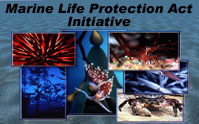
It’s no secret that California’s fisheries are in decline http://www.universityofcalifornia.edu/news/article/19540. That’s why the Marine Life Protection Act (MLPA) was enacted by an overwhelming bipartisan majority and signed by Gov. Gray Davis in 1999. Yet foreign fishing interests are spending millions of dollars trying to unravel the Act http://www.somethingsfishyaboutpso.com as local communities move to define the boundaries of marine protected areas along the coast.
The idea of marine parks http://en.wikipedia.org/wiki/Marine_Protected_Area to enable fisheries to recover is nothing new. Florida, for example, is a stunning example of how successful they are, and other nations around the world have long employed them.
I recently had the opportunity to spend a week in the Cayos Cochinos http://www.cayoscochinos.com/aboutus.html, a handful of small islands off the coast of Honduras in the Caribbean, as well as the larger island of Roatan. These islands are a divers and snorkelers paradise. Magnificent corral reefs surround them, and they’ve become a popular destination for fishermen, divers, and snorklers.
For good reason. During the days we were there, we saw teeming schools of electric-colored fish, sea turtles, squid, barracuda, kingfish, and lobster. It was as if we were dumped into an aquarium.
A key reason for this spectacular abundance of marine life is the designation of these areas as marine parks by the Honduran government five years ago. Controversial at the time, the designation of ocean areas around the island has proven to be boon to the local economy and to marine life.
“The fishermen hated it at first,” says long-time island resident Roger Remington of the Plantation Beach Resort. “They said it was going to put them out of business, ruin the sportfishing industry, and kill tourism.
“But now – five years later – they think it’s the best thing ever. The fish are bigger, we’re drawing more and more tourists both to fish and dive, and it has been the best thing they could have done to help our local economy.”
In California, ocean protection advocates, Indian tribes, and small businesses are making the same argument for Marine Life Protection Act designations in their communities. However, special interests -- backed by foreign fishing equipment manufacturers – are putting up a fight. Unsatisfied with years of stakeholder decision making on area designation, they are making a last-minute attempts to suspend the Marine Life Protection Act.
The state Fish & Game Commission will be making decisions throughout the year about MLPA’s. For more information about the process, visit http://www.dfg.ca.gov/mlpa/
The idea of marine parks http://en.wikipedia.org/wiki/Marine_Protected_Area to enable fisheries to recover is nothing new. Florida, for example, is a stunning example of how successful they are, and other nations around the world have long employed them.
I recently had the opportunity to spend a week in the Cayos Cochinos http://www.cayoscochinos.com/aboutus.html, a handful of small islands off the coast of Honduras in the Caribbean, as well as the larger island of Roatan. These islands are a divers and snorkelers paradise. Magnificent corral reefs surround them, and they’ve become a popular destination for fishermen, divers, and snorklers.
For good reason. During the days we were there, we saw teeming schools of electric-colored fish, sea turtles, squid, barracuda, kingfish, and lobster. It was as if we were dumped into an aquarium.
A key reason for this spectacular abundance of marine life is the designation of these areas as marine parks by the Honduran government five years ago. Controversial at the time, the designation of ocean areas around the island has proven to be boon to the local economy and to marine life.
“The fishermen hated it at first,” says long-time island resident Roger Remington of the Plantation Beach Resort. “They said it was going to put them out of business, ruin the sportfishing industry, and kill tourism.
“But now – five years later – they think it’s the best thing ever. The fish are bigger, we’re drawing more and more tourists both to fish and dive, and it has been the best thing they could have done to help our local economy.”
In California, ocean protection advocates, Indian tribes, and small businesses are making the same argument for Marine Life Protection Act designations in their communities. However, special interests -- backed by foreign fishing equipment manufacturers – are putting up a fight. Unsatisfied with years of stakeholder decision making on area designation, they are making a last-minute attempts to suspend the Marine Life Protection Act.
The state Fish & Game Commission will be making decisions throughout the year about MLPA’s. For more information about the process, visit http://www.dfg.ca.gov/mlpa/
Add Your Comments
Comments
(Hide Comments)
For the truth about the MLPA Initiative, read this article: http://www.indybay.org/newsitems/2010/01/10/18634867.php
Marine Life Protection Act Initiative: Genocidal Attack on North Coast Tribal Culture and Sovereignty
by John Lewallen, member, Public Ocean Access Network
The Marine Life Protection Act Initiative (MLPAI) is a genocidal attack on the tribal nations and native cultures who are surrounded, and sometimes overwhelmed by, the State of California.
Here in Mendocino County, California, are eight sovereign tribal nations. Many more federally-recognized tribal nations live in Sonoma, Humboldt and Del Norte counties. Their cultural survival is dependent on being part of the intertidal and ocean ecosystem in an annual migration to the coast to camp, talk to the spirits, play, and harvest essential food for human and cultural health.
“Cultural Genocide” is a crime under international law, and a morally reprehensible act when done with full knowledge. I am sure the genocidal MLPAI will stop as soon as most Californians see its true nature.
Northern California Tribes Demand Sovereign Negotiations
In October, 2009, the National Congress of American Indians passed a Resolution titled, “Supporting the Demand of the Tribes of Northern California that the State of California Enter into Government-to-Government Consultations with these Tribes in Order to Ensure the Protection of Tribal Subsistence, Ceremonial and Cultural rights in the Implementation of the State Marine Life Protection Act.”
“Our tribal members rely upon fishing and gathering seaweed to feed themselves and their families, and the continuance of these practices are essential to maintain our identities as tribal people,” the Resolution declared.
“There has been no formal recognition of tribal subsistence, ceremonial or cultural rights in the MLPA process."
In addition to demanding Sovereign negotiations, the Resolution demanded that “the State of California ensure the protection of tribal subsistence, ceremonial and cultural rights in the implementation of the Marine Life Protection Act. “
Del Norte County Backs Sovereignty of Smith River Rancheria
On December 28, 2009, Gerry Hemmingsen, Chair of the Del Norte County Board of Supervisors, sent a letter to Ken Wiseman, Director of the MLPAI.
“By way of this letter, the Board of Supervisors expresses its support of the Smith River Rancheria regarding the MLPA Initiative,” the official Del Norte County letter read, in part.
“This Board finds it important that you engage the Smith River Rancheria in discussions in order to address those issues that the Smith River Rancheria has outlined in the 11/19/09 letter asserting their status as a Sovereign Nation.”
A Truly Eloquent Tribal Letter to the MLPAI
The Nov. 19 letter endorsed in full by Del Norte County was fired off by Smith River Tribal Council leaders to MLPAI Director Wiseman the day after the Smith River Tribal Council leaders attended the MLPAI Blue Ribbon Task Force meeting in Eureka. This Letter Regarding the MLPA, signed by Kara Brundin Miller, Tribal Chair, was posted on the Smith River Rancheria website.
“Our first observation,” the letter opens, “was the very limited timeframe provided to tribes and tribal leaders, which was not reflective of their unique status as leaders of Sovereign Nations. It was stated numerous times during the meeting that Tribes have a unique connection with the ecosystem and have been practicing stewardship of the aquatic environment and lands since time immemorial. These inherent responsibilities to the marine resources by tribal peoples are not being validated or given their justified consideration.
“It is our strong held belief,” wrote Tribal Council Chair Miller, “that if true voluntary government-to-government consultation is to take place without other state agencies forced to the table, then just consideration and time for valid dialogue must be provided to tribal leaders and their representatives. Nowhere, should it be or the position taken that these two minutes of public comment is adequate or shows proper respect for tribal positions regarding a state mandate initiative on tribes. In addition, never should the Blue Ribbon Task Force continue to view tribal leaders as simply the ‘general public.’ The BRTF will find that North Coast Tribes are well organized and will stand together to protect our inalienable rights to gathering, subsistence, and ceremonal customary uses of offshore and near-shore marine resources.”
The letter closed by “requesting that each tribal government directly affected by these regulations in the North Coast District have a positon on the Regional Stakeholder Group. “
“We are acutely aware of this process,” declared the Smith River Nation, “and we will engage by any means available to us to ensure tribal rights are honored and protected.”
The Blue Ribbon Task Force directed MLPAI Director Wiseman to prepare a full briefing on impacted tribal interests and rights, and how these interests and rights can be addressed during the process. This briefing on tribal interests is due to be presented at the coming Blue Ribbon Task Force meeting on January 14 in Crescent City.
MLPAI Genocide on the North Central Coast
When my wife Barbara and I became aware in October, 2008, that the MLPAI was in process of closing public access to ocean food in the North Central Coast--from Pigeon Point to Alder Creek, just north of Point Arena--Barbara immediately asked Director Wiseman if tribal ocean food gathering was being considered. Director Wiseman replied that tribal representatives were not part of the MLPAI process, because they would not disclose the locations of their intertidal and ocean food-gathering.
Sonoma and Mendocino County tribal nations and people, in my experience, have a deep reluctance to disclose ocean food-gathering locations to the State of California. Certainly in justice and probably in law, these ancient locations essential to tribal survival are not ruled by state law over sovereign tribal rights. The state has no right to force tribal people to disclose their sacred ocean and intertidal harvest locations.
At the August 5, 2009 California Fish & Game Commission meeting, Lester Pinola, representing the Kashaya Nation, asked the Commission not to close Stewart’s Point to tribal harvest that had sustained the Kashaya and other tribes for centuries. Lester Pinola said that ocean and intertidal harvest is necessary for Kashaya cultural survival. “Our children are getting diabetes,” Pinola said. “We need food from the ocean. We wouldn’t take food out of your mouths. Don’t take food out of our mouths.”
The California Fish & Game Commission then enacted the North Central Coast Integrated Preferred Alternative, outlawing ancient tribal ocean harvesting relationships in places disclosed and undisclosed, seen and unseen. There was no mention of the presence, or even existence, of tribal representatives or interests. “I defy you,” Commissioner Richard Rogers taunted the crowd, in his closing remarks (dvd available from ).
Genocidal Words Make a Genocidal MLPAI Process
Words have always been the basic instrument of genocide against American Indians, and can be applied with similar effect on Californians in general.
The Marine Life Protection Act Initiative is focused on obscuring the fact that everyone being regulated is really an ocean food provider, a person exercising their sovereign right to sustainably take food from California ocean waters (to three miles out) and intertidal zone.
Until recent assertion of tribal rights, unique tribal ocean harveting rights and practices were not mentioned by the MLPAI. All ocean food providers were, and still are (see MLPAI North Coast Draft Profile), categorized as either “commercial” or “recreational” “extractors.”
Tribal people, as I know them, are personally sovereign and interdependent with the intertidal locations. Tribal people harvest for subsistence and much more than mere subsistence: to participate in world-creation as a beautiful and essential element of the ecosystem.
The basic act of MLPAI genocide, which I believe is a genocidal attack not only on North Coast tribal sovereignty, but also an attack on the food sovereignty of all Californians, is the newly-minted definition of “Ecosystem Management” which mandates that all human beings must be removed from the ecosystem. This genocidal theory, now enjoying marine biology orthodoxy among foundation-funded biologists, denies the fact that people have been part of the North Coast ocean ecosystem food chain since time immemorial.
The whole MLPAI concept of ocean and intertidal areas, free of human take, where the ocean can recover and be like it was, is a fallacy that may cause a lot of ecosystem and human damage before it is corrected. People are a necessary and legitimate part of the North Coast ocean ecosystem and intertidal zone.
Roberta Reyes Cordero and Tribal Marine Protected Areas
“Tribal Marine Protected Areas: Protecting Maritime Ways and Cultural Practices” (Wishtoyo Foundation/Ventura Coastkeeper, 2004), is a foundation-funded white paper that came out as the Central Coast MLPAI was starting up.
My blood froze when I read this conclusion in the Wishtoyo paper :
“Promotion of Sustainable Fishery Practices. Future tribal MPAs within the region should be designated as no-take reserves given the general decline in the health of the south coast marine ecosystems and the general decline in the health of south coast marine ecosystems and the general lack of resource use by Chumash people of marine resources.”
There are an estimated five thousand Chumash people in the Central Coast, and I do not believe they never go fishing in the ocean, or collecting mussels. The Wishtoyo paper advises the Chumash to participate by helping archaeologists study signs of ancient Chumash culture in these new no-take tribal marine reserves.
Roberta Reyes Cordero, JD, wrote a brilliant and sensitive study of aspects of Chumash traditional culture for “Tribal Marine Protected Areas.” Now Dr. Cordero is a member of the MLPAI Blue Ribbon Task Force for the North Coast, focused on bringing North Coast tribal members into the MLPAI process.
To me, nothing could be more genocidal than getting North Coast tribes to disclose their traditional ocean harvest locations so they can be closed as “Tribal Marine Reserves." “Tribal Marine Reserves” have no place on the North Coast.
Tribal Sovereignty and Californian Food Sovereignty
North Coast Tribal Nations are uniting and becoming stronger under this latest genocidal assault from the MLPAI. As wild seaweed harvesters, my wife Barbara and I are struggling in concert with the Tribal Nations to assert Californian food sovereignty, our legitimate and ancient right to be a harmonious part of the North Coast ocean food chain.
I felt sorry for us when the MLPAI closed our traditional sea palm trimming site at Point Arena. Depressed, I felt hopeless, defeated, and organically ripped away from a part of myself.
Now I see our tribal neighbors, who have lived through the most vicious genocide ever seen, extensively documented in “A Little Matter of Genocide” by Ward Churchill. The Northern California genocide has involved state-financed bounty hunting, thrill-killing, relocation marches driven by federal troops, and other genocidal atrocities. Few treaty settlements have been made.
More recently, “Termination” broke up all tribal holdings. Through legal action and raw persistence, North Coast tribal nations have been reassembled and federally recognized.
It is unconscionable for true environmentalists to participate in the MLPAI process of cultural genocide. May we Californians put a stop to the genocidal MLPAI, support Tribal Sovereignty, and emulate the sense of personal and cultural sovereignty of the tribal peoples of Northern California.
Marine Life Protection Act Initiative: Genocidal Attack on North Coast Tribal Culture and Sovereignty
by John Lewallen, member, Public Ocean Access Network
The Marine Life Protection Act Initiative (MLPAI) is a genocidal attack on the tribal nations and native cultures who are surrounded, and sometimes overwhelmed by, the State of California.
Here in Mendocino County, California, are eight sovereign tribal nations. Many more federally-recognized tribal nations live in Sonoma, Humboldt and Del Norte counties. Their cultural survival is dependent on being part of the intertidal and ocean ecosystem in an annual migration to the coast to camp, talk to the spirits, play, and harvest essential food for human and cultural health.
“Cultural Genocide” is a crime under international law, and a morally reprehensible act when done with full knowledge. I am sure the genocidal MLPAI will stop as soon as most Californians see its true nature.
Northern California Tribes Demand Sovereign Negotiations
In October, 2009, the National Congress of American Indians passed a Resolution titled, “Supporting the Demand of the Tribes of Northern California that the State of California Enter into Government-to-Government Consultations with these Tribes in Order to Ensure the Protection of Tribal Subsistence, Ceremonial and Cultural rights in the Implementation of the State Marine Life Protection Act.”
“Our tribal members rely upon fishing and gathering seaweed to feed themselves and their families, and the continuance of these practices are essential to maintain our identities as tribal people,” the Resolution declared.
“There has been no formal recognition of tribal subsistence, ceremonial or cultural rights in the MLPA process."
In addition to demanding Sovereign negotiations, the Resolution demanded that “the State of California ensure the protection of tribal subsistence, ceremonial and cultural rights in the implementation of the Marine Life Protection Act. “
Del Norte County Backs Sovereignty of Smith River Rancheria
On December 28, 2009, Gerry Hemmingsen, Chair of the Del Norte County Board of Supervisors, sent a letter to Ken Wiseman, Director of the MLPAI.
“By way of this letter, the Board of Supervisors expresses its support of the Smith River Rancheria regarding the MLPA Initiative,” the official Del Norte County letter read, in part.
“This Board finds it important that you engage the Smith River Rancheria in discussions in order to address those issues that the Smith River Rancheria has outlined in the 11/19/09 letter asserting their status as a Sovereign Nation.”
A Truly Eloquent Tribal Letter to the MLPAI
The Nov. 19 letter endorsed in full by Del Norte County was fired off by Smith River Tribal Council leaders to MLPAI Director Wiseman the day after the Smith River Tribal Council leaders attended the MLPAI Blue Ribbon Task Force meeting in Eureka. This Letter Regarding the MLPA, signed by Kara Brundin Miller, Tribal Chair, was posted on the Smith River Rancheria website.
“Our first observation,” the letter opens, “was the very limited timeframe provided to tribes and tribal leaders, which was not reflective of their unique status as leaders of Sovereign Nations. It was stated numerous times during the meeting that Tribes have a unique connection with the ecosystem and have been practicing stewardship of the aquatic environment and lands since time immemorial. These inherent responsibilities to the marine resources by tribal peoples are not being validated or given their justified consideration.
“It is our strong held belief,” wrote Tribal Council Chair Miller, “that if true voluntary government-to-government consultation is to take place without other state agencies forced to the table, then just consideration and time for valid dialogue must be provided to tribal leaders and their representatives. Nowhere, should it be or the position taken that these two minutes of public comment is adequate or shows proper respect for tribal positions regarding a state mandate initiative on tribes. In addition, never should the Blue Ribbon Task Force continue to view tribal leaders as simply the ‘general public.’ The BRTF will find that North Coast Tribes are well organized and will stand together to protect our inalienable rights to gathering, subsistence, and ceremonal customary uses of offshore and near-shore marine resources.”
The letter closed by “requesting that each tribal government directly affected by these regulations in the North Coast District have a positon on the Regional Stakeholder Group. “
“We are acutely aware of this process,” declared the Smith River Nation, “and we will engage by any means available to us to ensure tribal rights are honored and protected.”
The Blue Ribbon Task Force directed MLPAI Director Wiseman to prepare a full briefing on impacted tribal interests and rights, and how these interests and rights can be addressed during the process. This briefing on tribal interests is due to be presented at the coming Blue Ribbon Task Force meeting on January 14 in Crescent City.
MLPAI Genocide on the North Central Coast
When my wife Barbara and I became aware in October, 2008, that the MLPAI was in process of closing public access to ocean food in the North Central Coast--from Pigeon Point to Alder Creek, just north of Point Arena--Barbara immediately asked Director Wiseman if tribal ocean food gathering was being considered. Director Wiseman replied that tribal representatives were not part of the MLPAI process, because they would not disclose the locations of their intertidal and ocean food-gathering.
Sonoma and Mendocino County tribal nations and people, in my experience, have a deep reluctance to disclose ocean food-gathering locations to the State of California. Certainly in justice and probably in law, these ancient locations essential to tribal survival are not ruled by state law over sovereign tribal rights. The state has no right to force tribal people to disclose their sacred ocean and intertidal harvest locations.
At the August 5, 2009 California Fish & Game Commission meeting, Lester Pinola, representing the Kashaya Nation, asked the Commission not to close Stewart’s Point to tribal harvest that had sustained the Kashaya and other tribes for centuries. Lester Pinola said that ocean and intertidal harvest is necessary for Kashaya cultural survival. “Our children are getting diabetes,” Pinola said. “We need food from the ocean. We wouldn’t take food out of your mouths. Don’t take food out of our mouths.”
The California Fish & Game Commission then enacted the North Central Coast Integrated Preferred Alternative, outlawing ancient tribal ocean harvesting relationships in places disclosed and undisclosed, seen and unseen. There was no mention of the presence, or even existence, of tribal representatives or interests. “I defy you,” Commissioner Richard Rogers taunted the crowd, in his closing remarks (dvd available from ).
Genocidal Words Make a Genocidal MLPAI Process
Words have always been the basic instrument of genocide against American Indians, and can be applied with similar effect on Californians in general.
The Marine Life Protection Act Initiative is focused on obscuring the fact that everyone being regulated is really an ocean food provider, a person exercising their sovereign right to sustainably take food from California ocean waters (to three miles out) and intertidal zone.
Until recent assertion of tribal rights, unique tribal ocean harveting rights and practices were not mentioned by the MLPAI. All ocean food providers were, and still are (see MLPAI North Coast Draft Profile), categorized as either “commercial” or “recreational” “extractors.”
Tribal people, as I know them, are personally sovereign and interdependent with the intertidal locations. Tribal people harvest for subsistence and much more than mere subsistence: to participate in world-creation as a beautiful and essential element of the ecosystem.
The basic act of MLPAI genocide, which I believe is a genocidal attack not only on North Coast tribal sovereignty, but also an attack on the food sovereignty of all Californians, is the newly-minted definition of “Ecosystem Management” which mandates that all human beings must be removed from the ecosystem. This genocidal theory, now enjoying marine biology orthodoxy among foundation-funded biologists, denies the fact that people have been part of the North Coast ocean ecosystem food chain since time immemorial.
The whole MLPAI concept of ocean and intertidal areas, free of human take, where the ocean can recover and be like it was, is a fallacy that may cause a lot of ecosystem and human damage before it is corrected. People are a necessary and legitimate part of the North Coast ocean ecosystem and intertidal zone.
Roberta Reyes Cordero and Tribal Marine Protected Areas
“Tribal Marine Protected Areas: Protecting Maritime Ways and Cultural Practices” (Wishtoyo Foundation/Ventura Coastkeeper, 2004), is a foundation-funded white paper that came out as the Central Coast MLPAI was starting up.
My blood froze when I read this conclusion in the Wishtoyo paper :
“Promotion of Sustainable Fishery Practices. Future tribal MPAs within the region should be designated as no-take reserves given the general decline in the health of the south coast marine ecosystems and the general decline in the health of south coast marine ecosystems and the general lack of resource use by Chumash people of marine resources.”
There are an estimated five thousand Chumash people in the Central Coast, and I do not believe they never go fishing in the ocean, or collecting mussels. The Wishtoyo paper advises the Chumash to participate by helping archaeologists study signs of ancient Chumash culture in these new no-take tribal marine reserves.
Roberta Reyes Cordero, JD, wrote a brilliant and sensitive study of aspects of Chumash traditional culture for “Tribal Marine Protected Areas.” Now Dr. Cordero is a member of the MLPAI Blue Ribbon Task Force for the North Coast, focused on bringing North Coast tribal members into the MLPAI process.
To me, nothing could be more genocidal than getting North Coast tribes to disclose their traditional ocean harvest locations so they can be closed as “Tribal Marine Reserves." “Tribal Marine Reserves” have no place on the North Coast.
Tribal Sovereignty and Californian Food Sovereignty
North Coast Tribal Nations are uniting and becoming stronger under this latest genocidal assault from the MLPAI. As wild seaweed harvesters, my wife Barbara and I are struggling in concert with the Tribal Nations to assert Californian food sovereignty, our legitimate and ancient right to be a harmonious part of the North Coast ocean food chain.
I felt sorry for us when the MLPAI closed our traditional sea palm trimming site at Point Arena. Depressed, I felt hopeless, defeated, and organically ripped away from a part of myself.
Now I see our tribal neighbors, who have lived through the most vicious genocide ever seen, extensively documented in “A Little Matter of Genocide” by Ward Churchill. The Northern California genocide has involved state-financed bounty hunting, thrill-killing, relocation marches driven by federal troops, and other genocidal atrocities. Few treaty settlements have been made.
More recently, “Termination” broke up all tribal holdings. Through legal action and raw persistence, North Coast tribal nations have been reassembled and federally recognized.
It is unconscionable for true environmentalists to participate in the MLPAI process of cultural genocide. May we Californians put a stop to the genocidal MLPAI, support Tribal Sovereignty, and emulate the sense of personal and cultural sovereignty of the tribal peoples of Northern California.
That's total fiction, not the real truth. After hundreds of meetings up and down the coast, the sports fishing industry and those who profit off short-term overharvesting of ocean resources now are fabricating material just like this "real truth."
If this is the "real truth," why is Shimano and fishing gear manufacturers bankrolling the anti-MLPA campaign?
If this is the "real truth," why is Shimano and fishing gear manufacturers bankrolling the anti-MLPA campaign?
It's pretty true.
I can see the situation with the sustainable seaweed harvesters and families with centuries old traditional use of certain spots... but I don't think it's accurate to say that the current marine reserve process is shutting out all public input, or is just motivated to kick fishers out so they can conduct oil drilling in the same spots. That just isn't how it has proceeded so far. Maybe the sovereign indigenous groups should try to claim a special intergovernmental relationship, just like in the Washington/Oregon areas where tribes fought to keep their treaty right to fish in traditional areas, and in high abundance.
Also - California fisheries are relatively well managed compared to the global situation, but there are some overfished stocks, and some species that are in trouble. People go crazy fishing for crab, but luckily that is a species that can rebound quickly. Canary rockfish starts to breed when it is 8 years old, and you can't keep the fish from biting your line or just throw it back.
I can see the situation with the sustainable seaweed harvesters and families with centuries old traditional use of certain spots... but I don't think it's accurate to say that the current marine reserve process is shutting out all public input, or is just motivated to kick fishers out so they can conduct oil drilling in the same spots. That just isn't how it has proceeded so far. Maybe the sovereign indigenous groups should try to claim a special intergovernmental relationship, just like in the Washington/Oregon areas where tribes fought to keep their treaty right to fish in traditional areas, and in high abundance.
Also - California fisheries are relatively well managed compared to the global situation, but there are some overfished stocks, and some species that are in trouble. People go crazy fishing for crab, but luckily that is a species that can rebound quickly. Canary rockfish starts to breed when it is 8 years old, and you can't keep the fish from biting your line or just throw it back.
Steve - are you out of your mind?
You claim,"After hundreds of meetings up and down the coast, the sports fishing industry and those who profit off short-term overharvesting of ocean resources now are fabricating material just like this 'real truth.'"
John Lewallen is not a member of the "sports fishing (sic) industry," although he works in environmental coalitions with grassroots recreational and commercial fishermen. He and his wife, Barbara, are sustainable seaweed harvesters. He is a highly respected environmental leader who was engaging in direct action against clear cutting of North Coast forests when you were the spokesman for Gray "Clear Cut" Davis.
He has been a key organizer in the fight to stop offshore oil drilling off the North Coast. He has been a long time opponent of the alliance between corporate environmental groups and Big Oil: http://www.indybay.org/newsitems/2010/01/06/18634484.php
Lewallen is the co-founder of the Ocean Protection Coalition of Mendocino County and the grassroots Seaweed Rebellion. His environmental credentials are impeccable.
He is also a greatly respected environmental author. His published writings include the book Ecology of Devastation: Indochina" (Penguin Books, 1971), and he is co-author with James Robertson of "The Grass Roots Primer" (Sierra Club Books, 1975), a manual for local-level environmental action containing the story of Wes Chesbro, leader of a group that stopped the Butler Valley Dam on the Mad River in Humboldt County.
You claim,"After hundreds of meetings up and down the coast, the sports fishing industry and those who profit off short-term overharvesting of ocean resources now are fabricating material just like this 'real truth.'"
John Lewallen is not a member of the "sports fishing (sic) industry," although he works in environmental coalitions with grassroots recreational and commercial fishermen. He and his wife, Barbara, are sustainable seaweed harvesters. He is a highly respected environmental leader who was engaging in direct action against clear cutting of North Coast forests when you were the spokesman for Gray "Clear Cut" Davis.
He has been a key organizer in the fight to stop offshore oil drilling off the North Coast. He has been a long time opponent of the alliance between corporate environmental groups and Big Oil: http://www.indybay.org/newsitems/2010/01/06/18634484.php
Lewallen is the co-founder of the Ocean Protection Coalition of Mendocino County and the grassroots Seaweed Rebellion. His environmental credentials are impeccable.
He is also a greatly respected environmental author. His published writings include the book Ecology of Devastation: Indochina" (Penguin Books, 1971), and he is co-author with James Robertson of "The Grass Roots Primer" (Sierra Club Books, 1975), a manual for local-level environmental action containing the story of Wes Chesbro, leader of a group that stopped the Butler Valley Dam on the Mad River in Humboldt County.
"Yet foreign fishing interests are spending millions of dollars trying to unravel the Act"
The only foreign matter in the mix is your article which cites far away successes under different ocean conditions, governments, EEZs, and cultural history.
So can you hook me up? I'm just a working class guy, seaweed harvester, baker, intellectual, environmental activist, and I could use some dough. Non-wheat preferably.
You know, this lame attempt of yours comes round every 3 months or so. It last appeared as an 'article' which was actually a 'hit piece and personal interview' by Frank Hartzell of the Fort Bragg Advocate of Richard Charter, Defenders of Wildlife, Marine Program; who currently serves on NOAA’s Gulf of the Farallones National Marine Sanctuary Advisory Council, and who was a RSG member on the North Central Coast.
1) Restoring Our North Coast: We Owe it to Future Generations
by Richard Charter
Wednesday Aug 5th, 2009 6:53 AM
same sorry story
2) Besides:
Much of the hype surrounding the need for protection results from Worm etal. an often cited work. And what of peer review?
"Ecosystems examined in this paper account for less than a quarter of the world's fisheries area and catch, and lightly to moderately fished and rebuilding ecosystems comprise less than half of those. They may be best interpreted as large-scale restoration experiments that demonstrate opportunities for successfully rebuilding marine resources elsewhere."
http://www.cafisheriescoalition.org/docs/Final_HPW_Review.pdf
3) Richard's Charter's next (bogus) article speaks of how we (Stakeholders in the MLPA Initiative Process? people of the State of Calif, subsistence food gatherers, commercial fishers, preservationists, conservationists, who?) suddenly find a small contingent of naysayers, funded by large amounts of mysterious overseas money, and these professional skeptics claim, “Oops, we somehow forgot and missed the numerous public meetings.”
And I do mean BOGUS article: The Frank Hartzell article (interview) misses entirely the concerns of locals.
And... "Hartzell's Soft Sell of Privatization of the Public Commons Held in Trust"
"Because MLPAI real estate is in the ocean, it seems to lack opportunities for insiders to cash in or get rid of polluted property. MLPAI is simply a plan to partially or totally close roughly 20 percent of the ocean offshore to fishing, seaweed gathering or abalone diving." Frank Hartzell Advocate News
So here is a worthwhile query:
If MPA's really do protect fish(habitat);
1) The Magnuson-Stevens Fishery Conservation and Management Act, Public Law 94-265 as amended (Magnuson-Stevens Act), provides for the conservation and management of fishery resources within the U.S. Exclusive Economic Zone (EEZ). It also provides for fishery management authority over continental shelf resources and anadromous species beyond the EEZ, except when they are found within a foreign nation’s territorial sea or fishery conservation zone (or equivalent), to the extent that such sea or zone is recognized by the United States.
2) NMFS continues to maintain certain regulations pertaining to foreign fishing should there be a situation in the future in which allowing limited foreign fishing in an underutilized fishery would be of advantage to the U.S. fishing industry.
From: Summary of Maritime Literacy Planning Meeting
6-7 February 2006
I know lots of fisher people, who is the 'fishing industry'?
And what foreign corporations make the gear you use? (computers, cars, all electronic gear for that matter, your cell phone, tv, pen, how about your shoes?)
Tomas DiFiore
ORCA
Ocean Resources Care and Awareness
Commercial Seaweed Harvester
Astral Arts Mendocino
Seaweed Rebellion
visit: http://www.albionharbor.org
And get real!
The only foreign matter in the mix is your article which cites far away successes under different ocean conditions, governments, EEZs, and cultural history.
So can you hook me up? I'm just a working class guy, seaweed harvester, baker, intellectual, environmental activist, and I could use some dough. Non-wheat preferably.
You know, this lame attempt of yours comes round every 3 months or so. It last appeared as an 'article' which was actually a 'hit piece and personal interview' by Frank Hartzell of the Fort Bragg Advocate of Richard Charter, Defenders of Wildlife, Marine Program; who currently serves on NOAA’s Gulf of the Farallones National Marine Sanctuary Advisory Council, and who was a RSG member on the North Central Coast.
1) Restoring Our North Coast: We Owe it to Future Generations
by Richard Charter
Wednesday Aug 5th, 2009 6:53 AM
same sorry story
2) Besides:
Much of the hype surrounding the need for protection results from Worm etal. an often cited work. And what of peer review?
"Ecosystems examined in this paper account for less than a quarter of the world's fisheries area and catch, and lightly to moderately fished and rebuilding ecosystems comprise less than half of those. They may be best interpreted as large-scale restoration experiments that demonstrate opportunities for successfully rebuilding marine resources elsewhere."
http://www.cafisheriescoalition.org/docs/Final_HPW_Review.pdf
3) Richard's Charter's next (bogus) article speaks of how we (Stakeholders in the MLPA Initiative Process? people of the State of Calif, subsistence food gatherers, commercial fishers, preservationists, conservationists, who?) suddenly find a small contingent of naysayers, funded by large amounts of mysterious overseas money, and these professional skeptics claim, “Oops, we somehow forgot and missed the numerous public meetings.”
And I do mean BOGUS article: The Frank Hartzell article (interview) misses entirely the concerns of locals.
And... "Hartzell's Soft Sell of Privatization of the Public Commons Held in Trust"
"Because MLPAI real estate is in the ocean, it seems to lack opportunities for insiders to cash in or get rid of polluted property. MLPAI is simply a plan to partially or totally close roughly 20 percent of the ocean offshore to fishing, seaweed gathering or abalone diving." Frank Hartzell Advocate News
So here is a worthwhile query:
If MPA's really do protect fish(habitat);
1) The Magnuson-Stevens Fishery Conservation and Management Act, Public Law 94-265 as amended (Magnuson-Stevens Act), provides for the conservation and management of fishery resources within the U.S. Exclusive Economic Zone (EEZ). It also provides for fishery management authority over continental shelf resources and anadromous species beyond the EEZ, except when they are found within a foreign nation’s territorial sea or fishery conservation zone (or equivalent), to the extent that such sea or zone is recognized by the United States.
2) NMFS continues to maintain certain regulations pertaining to foreign fishing should there be a situation in the future in which allowing limited foreign fishing in an underutilized fishery would be of advantage to the U.S. fishing industry.
From: Summary of Maritime Literacy Planning Meeting
6-7 February 2006
I know lots of fisher people, who is the 'fishing industry'?
And what foreign corporations make the gear you use? (computers, cars, all electronic gear for that matter, your cell phone, tv, pen, how about your shoes?)
Tomas DiFiore
ORCA
Ocean Resources Care and Awareness
Commercial Seaweed Harvester
Astral Arts Mendocino
Seaweed Rebellion
visit: http://www.albionharbor.org
And get real!
For more information:
http://astral-arts.com
Steve
Isn't Honduras being governed by a military coup? Are you trying to use the example of Honduran marine protected areas - zones that are enforced by an illegal, right wing government that is assassinating and torturing labor leaders, teachers, students and fishermen - as a guide to the way marine resources should be governed in California? Are you now doing P.R. for the Honduran junta to greenwash the regime?
Isn't Honduras being governed by a military coup? Are you trying to use the example of Honduran marine protected areas - zones that are enforced by an illegal, right wing government that is assassinating and torturing labor leaders, teachers, students and fishermen - as a guide to the way marine resources should be governed in California? Are you now doing P.R. for the Honduran junta to greenwash the regime?
We are 100% volunteer and depend on your participation to sustain our efforts!
Donate

$125.00 donated
in the past month
Get Involved
If you'd like to help with maintaining or developing the website, contact us.
Publish
Publish your stories and upcoming events on Indybay.
Topics
More
Search Indybay's Archives
Advanced Search
►
▼
IMC Network