







 Publish to Newswire
 Add an Event
From the Open-Publishing Calendar
From the Open-Publishing Newswire
Indybay Feature
Economic Impact of the word 'Negro' and a little worse...
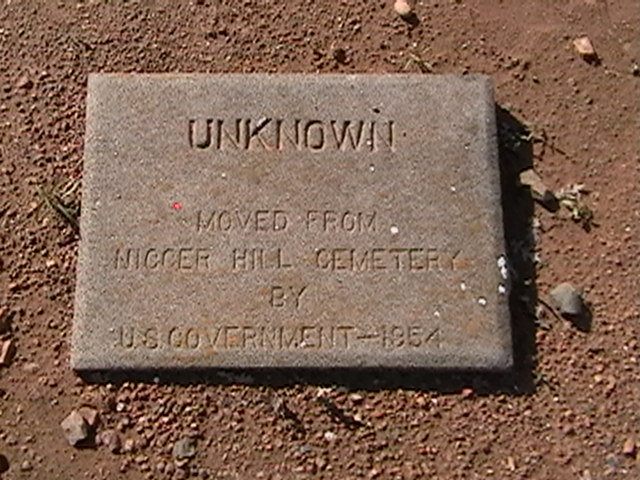
The U.S. Government changed the name of Historic Negro Hill to an even far worse word than ‘Negro’ in Mormon Island Relocation Cemetery in El Dorado Hills, CA. Today, no public process to correct the mistake has been considered by regional Sacramento Area Council of Governments those continue to benefit economically. Black, African American and Negro community leaders seem not to care much about the earliest Black California pioneers.
Sacramento, CA ~ The U.S. Commerce Department through the Census Bureau announced it would explore eliminating the term "Negro" from future surveys, what will be the economic impact?
We can quantify the economic impact of missed opportunity in the 2000 census when the Russian translation of 'Negro' reflected the 1954 effort to establish grave markers from the community of Negro Hill, CA.
The U.S. Government changed the name of Historic Negro Hill to an even far worse word than ‘Negro.’ Today, no public process to correct the mistake has been considered by Sacramento Area Council of Government officials (SACOG) and the broader regional Black, African American and Negro community seem not to care about the historical legacy of early Black California pioneers.
The economic impact of the word Negro will be studied by think tanks and policy makers for the next 10 years in the allocation of billions of dollars of tax payer resources.
The Spanish word for “Black” and the racial hatred of the legal enslavement and the transition toward Jim Crow leaves the debate on the word remains part of a question about race in the 2010 census.
Question 9 on the census, which asks for a person's race, lists as one of the options: "Black, African American or Negro."
Controversy arose earlier this week as the Census Bureau started its road tour in New York and U.S. Senate leader Harry Reid earlier comments in reference to President Barack Obama.
The term "Negro" has been on the survey for at least 100 years. He said the form is reviewed and analyzed thoroughly by different offices and advisory groups before being finalized.
The decision to keep the term "Negro" on the form was due principally to the fact some still identify themselves by that term and in the 2000 census, more than 50,000 people chose to write down word explicitly to identify themselves.
The conversation about the word ‘Negro’ is very interesting, the Sacramento Bee has eliminated the word from use from time to time as a form of censorship we have come a long way since the days of advertising “enslaved human beings for sale” in the McClatchy New flagship newspaper.
On Friday, the Census Bureau issued a release stating it will gather research from the 2010 census to analyze the effects of removing the term "Negro" on future surveys and the 2020 census.
What is clear in 2020, the Spanish language will be heard widely throughout the nation and Negro I think is the word for black and millions of Negro immigrants will continue to arrive legal and illegally, what is the economic impact of the word Negro?
Ask the offspring from the Historic Negro Bar, Negro Hill and Negro Bluff along the American River in the Sacramento River Basin.
For over 50 years the County of El Dorado, California has maintained custody of an ongoing egregious civil rights violation in Mormon Island Relocation Cemetery and many people believe “honestly, there are more important things going on in the world right now than this."
We can quantify the economic impact of missed opportunity in the 2000 census when the Russian translation of 'Negro' reflected the 1954 effort to establish grave markers from the community of Negro Hill, CA.
The U.S. Government changed the name of Historic Negro Hill to an even far worse word than ‘Negro.’ Today, no public process to correct the mistake has been considered by Sacramento Area Council of Government officials (SACOG) and the broader regional Black, African American and Negro community seem not to care about the historical legacy of early Black California pioneers.
The economic impact of the word Negro will be studied by think tanks and policy makers for the next 10 years in the allocation of billions of dollars of tax payer resources.
The Spanish word for “Black” and the racial hatred of the legal enslavement and the transition toward Jim Crow leaves the debate on the word remains part of a question about race in the 2010 census.
Question 9 on the census, which asks for a person's race, lists as one of the options: "Black, African American or Negro."
Controversy arose earlier this week as the Census Bureau started its road tour in New York and U.S. Senate leader Harry Reid earlier comments in reference to President Barack Obama.
The term "Negro" has been on the survey for at least 100 years. He said the form is reviewed and analyzed thoroughly by different offices and advisory groups before being finalized.
The decision to keep the term "Negro" on the form was due principally to the fact some still identify themselves by that term and in the 2000 census, more than 50,000 people chose to write down word explicitly to identify themselves.
The conversation about the word ‘Negro’ is very interesting, the Sacramento Bee has eliminated the word from use from time to time as a form of censorship we have come a long way since the days of advertising “enslaved human beings for sale” in the McClatchy New flagship newspaper.
On Friday, the Census Bureau issued a release stating it will gather research from the 2010 census to analyze the effects of removing the term "Negro" on future surveys and the 2020 census.
What is clear in 2020, the Spanish language will be heard widely throughout the nation and Negro I think is the word for black and millions of Negro immigrants will continue to arrive legal and illegally, what is the economic impact of the word Negro?
Ask the offspring from the Historic Negro Bar, Negro Hill and Negro Bluff along the American River in the Sacramento River Basin.
For over 50 years the County of El Dorado, California has maintained custody of an ongoing egregious civil rights violation in Mormon Island Relocation Cemetery and many people believe “honestly, there are more important things going on in the world right now than this."
Add Your Comments
Comments
(Hide Comments)
Recently, I found the 2010 Census form hanging on my door. As I began filling it out, I came across a dilemma. The U.S. government wants to know if my children are adopted or not and it wants to know what our races are. Being adopted myself, I had to put “Other” and “Don’t Know Adopted” for my race and “Other” and “Don’t Know” for my kids’ races.
Can you imagine not knowing your ethnicity, your race? Now imagine walking into a vital records office and asking the clerk for your original birth certificate only to be told “No, you can’t have it, it’s sealed.”
How about being presented with a “family history form” to fill out at every single doctor’s office visit and having to put “N/A Adopted” where life saving information should be?
Imagine being asked what your nationality is and having to respond with “I don’t know”.
It is time that the archaic practice of sealing and altering birth certificates of adopted persons stops.
Adoption is a 5 billion dollar, unregulated industry that profits from the sale and redistribution of children. It turns children into chattel who are re-labeled and sold as “blank slates”.
Genealogy, a modern-day fascination, cannot be enjoyed by adopted persons with sealed identities. Family trees are exclusive to the non-adopted persons in our society.
If adoption is truly to return to what is best for a child, then the rights of children to their biological identities should NEVER be violated. Every single judge that finalizes an adoption and orders a child’s birth certificate to be sealed should be ashamed of him/herself.
I challenge all readers: Ask the adopted persons that you know if their original birth certificates are sealed.
Can you imagine not knowing your ethnicity, your race? Now imagine walking into a vital records office and asking the clerk for your original birth certificate only to be told “No, you can’t have it, it’s sealed.”
How about being presented with a “family history form” to fill out at every single doctor’s office visit and having to put “N/A Adopted” where life saving information should be?
Imagine being asked what your nationality is and having to respond with “I don’t know”.
It is time that the archaic practice of sealing and altering birth certificates of adopted persons stops.
Adoption is a 5 billion dollar, unregulated industry that profits from the sale and redistribution of children. It turns children into chattel who are re-labeled and sold as “blank slates”.
Genealogy, a modern-day fascination, cannot be enjoyed by adopted persons with sealed identities. Family trees are exclusive to the non-adopted persons in our society.
If adoption is truly to return to what is best for a child, then the rights of children to their biological identities should NEVER be violated. Every single judge that finalizes an adoption and orders a child’s birth certificate to be sealed should be ashamed of him/herself.
I challenge all readers: Ask the adopted persons that you know if their original birth certificates are sealed.
We are 100% volunteer and depend on your participation to sustain our efforts!
Donate

$95.00 donated
in the past month
Get Involved
If you'd like to help with maintaining or developing the website, contact us.
Publish
Publish your stories and upcoming events on Indybay.
Topics
More
Search Indybay's Archives
Advanced Search
►
▼
IMC Network