







 Publish to Newswire
 Add an Event
From the Open-Publishing Calendar
From the Open-Publishing Newswire
Indybay Feature
The Canyon, LBNL
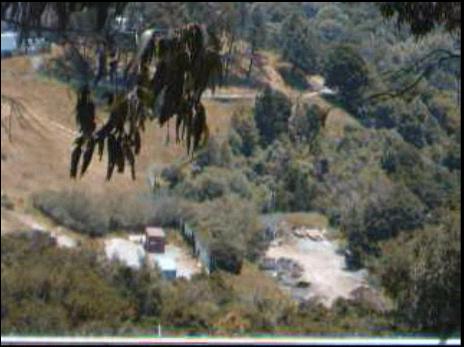
A 1 and half minute sweep of the Canyon to give an impression of what is at stake. The Regent's LRDP calls for 980,000 gross square feet of new buildings, as well as the demolition of 320,000 gsf of current buildings. The labs sit on an important environmental corridor and watershed. The lab complex is already an eco-disaster with tritium plumes, mass erosion of the hill side, and pollution of the stream and creeks.
Stephen Chu
The.Secretary [at] hq.doe.gov
1-202-586-5000
http://www.youtube.com/watch?v=Hh4l1ddOslA
A 1 and half minute sweep of the Canyon to give an impression of what is at stake. The Regent's LRDP calls for 980,000 gross square feet of new buildings, as well as the demolition of 320,000 gsf of current buildings. The labs sit on an important environmental corridor and watershed. The lab complex is already an eco-disaster with tritium plumes, mass erosion of the hill side, and pollution of the stream and creeks.
The first new structure, and the one of tallest, will be the CRT - Computational Research and Theory - a 144,000 gsf structure. The site of the CRT is at the North Fork of Strawberry Creek. Save Strawberry Canyon is challenging this building at a Federal level.
Helios, which has nothing to do with Solar Power, is the UC Berkeley-BP joint venture. It is to do new petroleum research, as well as research for switchgrass biofuel - areas of South American rainforest will be clearcut to grow the swtichgrass. Helios is 160,000 gsf, and is also being challenged due to lack of environmental impact studies.
These are just two of the many labs and related projects which are being created without public comment, without releasing impact reports, nor complete development plans.
And with Stephen Chu now operating in a Federal position, the stakes are higher and the cause is more urgent.
The.Secretary [at] hq.doe.gov
1-202-586-5000
http://www.youtube.com/watch?v=Hh4l1ddOslA
A 1 and half minute sweep of the Canyon to give an impression of what is at stake. The Regent's LRDP calls for 980,000 gross square feet of new buildings, as well as the demolition of 320,000 gsf of current buildings. The labs sit on an important environmental corridor and watershed. The lab complex is already an eco-disaster with tritium plumes, mass erosion of the hill side, and pollution of the stream and creeks.
The first new structure, and the one of tallest, will be the CRT - Computational Research and Theory - a 144,000 gsf structure. The site of the CRT is at the North Fork of Strawberry Creek. Save Strawberry Canyon is challenging this building at a Federal level.
Helios, which has nothing to do with Solar Power, is the UC Berkeley-BP joint venture. It is to do new petroleum research, as well as research for switchgrass biofuel - areas of South American rainforest will be clearcut to grow the swtichgrass. Helios is 160,000 gsf, and is also being challenged due to lack of environmental impact studies.
These are just two of the many labs and related projects which are being created without public comment, without releasing impact reports, nor complete development plans.
And with Stephen Chu now operating in a Federal position, the stakes are higher and the cause is more urgent.
For more information:
http://savestrawberrycanyon.org/legal.html
Add Your Comments
Comments
(Hide Comments)
While UC Employees face layoffs or furloughs and students face tuition / fee hikes, building at UC Berkeley goes on UNCHECKED by city, state or Federal officials:
Mark Yudof has a history in building Universities:
http://www.citypages.com/2002-06-19/news/if-they-build-it-u-will-pay/
Regent Richard Blum appears to be making off like a bandit, according to the following article, both URS and Perini benefited from construction contracts awarded by the Regents.
http://www.bohemian.com/bohemian/02.21.07/byrne-0708.html
There are several large scale construction projects under way in the Berkeley Hills:
Memorial Stadium (on the Hayward fault). $100 - $125 Million
http://findarticles.com/p/articles/mi_qn4176/is_20051111/ai_n15803254/
Boalt Hall (on the Hayward fault): $90 Million
http://www.dailycal.org/article/100978/budget_approved_for_new_boalt_hall_building
Clark Kerr Campus (on the Hayward fault): $13 Million
http://www.cp.berkeley.edu/RFQ_12316B_CKC_InfrsRnwl.pdf
http://www.ucop.edu/budget/nonstate/0304NRApp/BK-ClarkKerr-building10renewal.pdf
Bevatron Dismantling (on a watershed to the San Francisco Bay) $72 million
http://www.lbl.gov/Community/construction/b51.html
Naval Architecture Building (Regent Richard Blum's Gift) $16 Million
http://www.indybay.org/newsitems/2008/11/18/18552071.php
If you don't like what's going on KEEP QUIET! UC Regents have a standing army of police at their disposal.
http://www.indybay.org/newsitems/2008/08/27/18530389.php
Mark Yudof has a history in building Universities:
http://www.citypages.com/2002-06-19/news/if-they-build-it-u-will-pay/
Regent Richard Blum appears to be making off like a bandit, according to the following article, both URS and Perini benefited from construction contracts awarded by the Regents.
http://www.bohemian.com/bohemian/02.21.07/byrne-0708.html
There are several large scale construction projects under way in the Berkeley Hills:
Memorial Stadium (on the Hayward fault). $100 - $125 Million
http://findarticles.com/p/articles/mi_qn4176/is_20051111/ai_n15803254/
Boalt Hall (on the Hayward fault): $90 Million
http://www.dailycal.org/article/100978/budget_approved_for_new_boalt_hall_building
Clark Kerr Campus (on the Hayward fault): $13 Million
http://www.cp.berkeley.edu/RFQ_12316B_CKC_InfrsRnwl.pdf
http://www.ucop.edu/budget/nonstate/0304NRApp/BK-ClarkKerr-building10renewal.pdf
Bevatron Dismantling (on a watershed to the San Francisco Bay) $72 million
http://www.lbl.gov/Community/construction/b51.html
Naval Architecture Building (Regent Richard Blum's Gift) $16 Million
http://www.indybay.org/newsitems/2008/11/18/18552071.php
If you don't like what's going on KEEP QUIET! UC Regents have a standing army of police at their disposal.
http://www.indybay.org/newsitems/2008/08/27/18530389.php
There is something to hide in those hills:
http://www.stopbp-berkeley.org/docs/responsetochancellor.pdf
BP Solar by another name smells sweeter:
Pacific Ethanol, the corporate partner with UC Berkeley scientists in a pilot biofuel plant, filed bankruptcy petitions for its four refineries Monday, May 18.
The Sacramento-based company has teamed with the Joint Bioenergy Institute (JBEI), a Department of Energy-created lab in partnership with the university, its Lawrence Berkeley, Sandia and Lawrence Livermore national laboratories, along with UC Davis and Stanford University.
JBEI was funded by a $135 million grant from the federal Department of Energy. The federal agency has also put up $24.3 million for a Pacific Ethanol plant in Oregon that would transform plant fibers—rather than sugars—into ethanol. Pacific Ethanol is headed by Bill Jones, former California secretary of state and legislator.
The bankruptcy action filed Monday doesn’t include the parent company of the refineries, Pacific Ethanol itself, or the company’s two marketing subsidiaries, according to a statement released Monday at the time of the filing.
Biofuels—the major goal of at least $635 million in corporate- and federal-funded research at UC Berkeley—face an increasingly complex and troubled future.
Even larger than the federal JBEI grant is the $500 million pledged by BP, the former British Petroleum, for a broader spectrum of alternative fuel projects by scientists and UC Berkeley and the University of Illinois, Urbana-Champaign.
http://www.berkeleydailyplanet.com/issue/2009-05-21/article/32920?headline=Problems-and-One-Bright-Spot-on-Biofuels-Horizon
http://www.stopbp-berkeley.org/docs/responsetochancellor.pdf
BP Solar by another name smells sweeter:
Pacific Ethanol, the corporate partner with UC Berkeley scientists in a pilot biofuel plant, filed bankruptcy petitions for its four refineries Monday, May 18.
The Sacramento-based company has teamed with the Joint Bioenergy Institute (JBEI), a Department of Energy-created lab in partnership with the university, its Lawrence Berkeley, Sandia and Lawrence Livermore national laboratories, along with UC Davis and Stanford University.
JBEI was funded by a $135 million grant from the federal Department of Energy. The federal agency has also put up $24.3 million for a Pacific Ethanol plant in Oregon that would transform plant fibers—rather than sugars—into ethanol. Pacific Ethanol is headed by Bill Jones, former California secretary of state and legislator.
The bankruptcy action filed Monday doesn’t include the parent company of the refineries, Pacific Ethanol itself, or the company’s two marketing subsidiaries, according to a statement released Monday at the time of the filing.
Biofuels—the major goal of at least $635 million in corporate- and federal-funded research at UC Berkeley—face an increasingly complex and troubled future.
Even larger than the federal JBEI grant is the $500 million pledged by BP, the former British Petroleum, for a broader spectrum of alternative fuel projects by scientists and UC Berkeley and the University of Illinois, Urbana-Champaign.
http://www.berkeleydailyplanet.com/issue/2009-05-21/article/32920?headline=Problems-and-One-Bright-Spot-on-Biofuels-Horizon
We are 100% volunteer and depend on your participation to sustain our efforts!
Donate

$120.00 donated
in the past month
Get Involved
If you'd like to help with maintaining or developing the website, contact us.
Publish
Publish your stories and upcoming events on Indybay.
Topics
More
Search Indybay's Archives
Advanced Search
►
▼
IMC Network