







 Publish to Newswire
 Add an Event
From the Open-Publishing Calendar
From the Open-Publishing Newswire
Indybay Feature
Taking Power
Below is a new article written by Jeff, focusing on the need for alternative energy in our communities. Please take a moment to read it and forward or share with others.
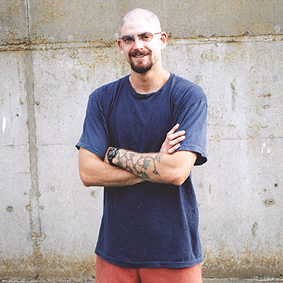
In addition, we want to wish everyone a Happy 2009! Less than one year from now, Jeff will be free again. In the meantime, we've got lots of work to do making sure that Jeff's transition is as easy as possible. Please continue your letters of support to Jeff, and donations to Jeff's education and release fund are constantly needed and greatly appreciated. Donation options, including Jeff's merchandise, are available:
http://freejeffluers.org/donate.html
http://freejeffluers.org/merchandise.html
Jeff will be expanding his wish list in the coming weeks and we will be sure to share that with you.
Thank you again for all your support and solidarity.
-Friends of Jeffrey Free Luers
Taking Power
By Jeffrey Free Luers - January 13, 2009
Alongside protecting the wild and fostering respect for our planet, one of the tenets of this movement is creating a sustainable future for our communities. In doing so, we must develop communities that have the ability to provide food, water, sanitation, resources and energy in a decentralized and autonomous manner.
We use energy everyday. It is easy to dismiss our use of electricity with romantic notions of primitivism or dismantling the capitalist system by dismantling the electric grid. But, these thoughts do not reflect the reality that over a third of all energy use in this country is residential.
Residential buildings alone consume 35% of all electricity in the U.S. (1). Of that, water heaters account for 15-30% of a households total energy consumption (2). Then there is lighting, computers, and appliances that consume energy even when not in use.
Even if people were willing to stop using computers and the internet, willing to stop taking hot showers, or cooking on a stove, and willing to start washing clothes by hand -- something I highly doubt, considering dedicated and hardline radicals have failed to make these changes -- we would still need a source of energy.
Consider this, if people did not have gas or electricity to cook with, the world would be forced to resort to cooking fires. If you think that's better than using electricity, imagine the entire city of Los Angeles cooking with fire 3 meals a day, releasing millions of tons of carbon dioxide into the atmosphere and particulate matter into the air. Not to mention the havoc and destruction the consumption of fire wood would have on the Angeles National Forest and other forested areas. And what about other community necessities that need electricity to function like hospitals?
As a movement we made mistakes romanticizing militant direct action without developing a structure to support prisoners and militant actions. We paid for that mistake with long prison sentences and traitors in our ranks. If we fail to develop a localized sustainable energy source, our failure could cost human lives.
In developed countries such as the U.S., solar power, though expensive, represents one of the greenest alternative energy sources. In fact, by covering an area 291 x 291 square miles with solar cells, we could supply all of the worlds present energy needs (3). That represents just 0.15% of the Earths land mass. Because of the versatility of photovoltaic cells, solar collection can be as simple as wiring buildings and houses for solar power with excess power being fed back into the community.
Again, while individual cost is prohibitive, corporations and local governments can be pressured to help fund solar conversion. Especially if they realize that doing so can save their community millions of dollars a year and put them on the path to energy self-reliance.
Likewise, wind power has the potential to drastically reduce CO2 emissions. In order to generate the same amount of electricity as a single megawatt wind turbine for 20 years, 26,000 tons of coal or 87,000 barrels of oil would have to be burned (4). A single one megawatt wind turbine displaces 2,000 tons of CO2 each year (based on current average U.S. utility mix) (5).
Moreover, wind power is a relatively cheap source of do it yourself electricity. While a fair amount of mechanical skill and knowledge of electrical systems is required to build a turbine, small scale turbines can be designed from recycled bicycle parts and neodymium magnets scavenged from computer hard drives for under $50 (6). Like photovoltaic systems, wind turbines can be attached to buildings or homes. They can also be placed in community gardens or other accessible areas.
In areas where wind or solar are not an option, electricity may be produced from biomass. Unfortunately, biomass can be a source of severe air pollution if not processed carefully. However, an area of promise is methane digester systems that break down animal or human waste into useable methane a natural byproduct of decomposition. While methane is a greenhouse gas 20-times more potent than CO2, when it is burned to create electricity it breaks down into CO2 in levels lower than coal.
While methanes release of CO2 is less than desired, through the natural breakdown of waste, methane would be produced and released. By harnessing this methane for electricity it can then be broken down into a less potent greenhouse gas. The use of biomass may therefore be an effective and environmentally friendly way of treating raw sewage as opposed to the water intensive method currently used.
By failing to work toward alternative energy methods in our communities we are virtually guaranteeing the continued use of fossil fuels and rising global temperature. We also continue to allow energy giants to make decisions for us.
Aside from initial investments and hard work, solar, wind and biomass energy is free. Governments do not control the sun, wind, or how much we shit. While some may argue that embracing alternative energy is a compromise that we shouldn't make, these same people continue to use electricity. By not developing alternative energy in our own backyards, we are just allowing energy giants to conduct business as usual.
Certainly, we need to reduce our use of energy. The best way to do that is to stop using appliances we don't need, and unplug the ones we do when we aren't using them. But, like it or not, since humans first used fire, we haven't stopped -- electricity is an extension of that. The sort of thing we can do is to create the cleanest, safest, sustainable, local applications of electricity production as possible. We, literally, need to take power out of government and corporate hands and put it in our own.
Citations: (1) U.S. Dept. of Energy, Office of Building Technology and Community Programs. RTS Core Databook. U.S. Dept. of Energy, 2000. Charts I. 1.2 and I. 1.3.
(2) David Johnston and Scott Gibson, Green From the Ground Up. The Taunton Press. 2008. Pg. 156.
(3) Bjorn Lomborg. The Skeptical Environmentalist: Measuring the Real State of the World. Cambridge University Press. 2001. Pg. 131.
(4) and (5) David Johnston and Kim Master, Green Remodeling: Changing the World One Room at a Time. New Society Publishers. 2004. Pg. 85.
(6) Scott Kellogg and Stacy Pettigrew, Toolbox for Sustainable City Living. South End Press. 2008. Pg. 163.
----------------------------
to join the free jeff luers email list, go to http://lists.riseup.net/www/info/freejeffluers
http://www.freejeffluers.org
http://freejeffluers.org/donate.html
http://freejeffluers.org/merchandise.html
Jeff will be expanding his wish list in the coming weeks and we will be sure to share that with you.
Thank you again for all your support and solidarity.
-Friends of Jeffrey Free Luers
Taking Power
By Jeffrey Free Luers - January 13, 2009
Alongside protecting the wild and fostering respect for our planet, one of the tenets of this movement is creating a sustainable future for our communities. In doing so, we must develop communities that have the ability to provide food, water, sanitation, resources and energy in a decentralized and autonomous manner.
We use energy everyday. It is easy to dismiss our use of electricity with romantic notions of primitivism or dismantling the capitalist system by dismantling the electric grid. But, these thoughts do not reflect the reality that over a third of all energy use in this country is residential.
Residential buildings alone consume 35% of all electricity in the U.S. (1). Of that, water heaters account for 15-30% of a households total energy consumption (2). Then there is lighting, computers, and appliances that consume energy even when not in use.
Even if people were willing to stop using computers and the internet, willing to stop taking hot showers, or cooking on a stove, and willing to start washing clothes by hand -- something I highly doubt, considering dedicated and hardline radicals have failed to make these changes -- we would still need a source of energy.
Consider this, if people did not have gas or electricity to cook with, the world would be forced to resort to cooking fires. If you think that's better than using electricity, imagine the entire city of Los Angeles cooking with fire 3 meals a day, releasing millions of tons of carbon dioxide into the atmosphere and particulate matter into the air. Not to mention the havoc and destruction the consumption of fire wood would have on the Angeles National Forest and other forested areas. And what about other community necessities that need electricity to function like hospitals?
As a movement we made mistakes romanticizing militant direct action without developing a structure to support prisoners and militant actions. We paid for that mistake with long prison sentences and traitors in our ranks. If we fail to develop a localized sustainable energy source, our failure could cost human lives.
In developed countries such as the U.S., solar power, though expensive, represents one of the greenest alternative energy sources. In fact, by covering an area 291 x 291 square miles with solar cells, we could supply all of the worlds present energy needs (3). That represents just 0.15% of the Earths land mass. Because of the versatility of photovoltaic cells, solar collection can be as simple as wiring buildings and houses for solar power with excess power being fed back into the community.
Again, while individual cost is prohibitive, corporations and local governments can be pressured to help fund solar conversion. Especially if they realize that doing so can save their community millions of dollars a year and put them on the path to energy self-reliance.
Likewise, wind power has the potential to drastically reduce CO2 emissions. In order to generate the same amount of electricity as a single megawatt wind turbine for 20 years, 26,000 tons of coal or 87,000 barrels of oil would have to be burned (4). A single one megawatt wind turbine displaces 2,000 tons of CO2 each year (based on current average U.S. utility mix) (5).
Moreover, wind power is a relatively cheap source of do it yourself electricity. While a fair amount of mechanical skill and knowledge of electrical systems is required to build a turbine, small scale turbines can be designed from recycled bicycle parts and neodymium magnets scavenged from computer hard drives for under $50 (6). Like photovoltaic systems, wind turbines can be attached to buildings or homes. They can also be placed in community gardens or other accessible areas.
In areas where wind or solar are not an option, electricity may be produced from biomass. Unfortunately, biomass can be a source of severe air pollution if not processed carefully. However, an area of promise is methane digester systems that break down animal or human waste into useable methane a natural byproduct of decomposition. While methane is a greenhouse gas 20-times more potent than CO2, when it is burned to create electricity it breaks down into CO2 in levels lower than coal.
While methanes release of CO2 is less than desired, through the natural breakdown of waste, methane would be produced and released. By harnessing this methane for electricity it can then be broken down into a less potent greenhouse gas. The use of biomass may therefore be an effective and environmentally friendly way of treating raw sewage as opposed to the water intensive method currently used.
By failing to work toward alternative energy methods in our communities we are virtually guaranteeing the continued use of fossil fuels and rising global temperature. We also continue to allow energy giants to make decisions for us.
Aside from initial investments and hard work, solar, wind and biomass energy is free. Governments do not control the sun, wind, or how much we shit. While some may argue that embracing alternative energy is a compromise that we shouldn't make, these same people continue to use electricity. By not developing alternative energy in our own backyards, we are just allowing energy giants to conduct business as usual.
Certainly, we need to reduce our use of energy. The best way to do that is to stop using appliances we don't need, and unplug the ones we do when we aren't using them. But, like it or not, since humans first used fire, we haven't stopped -- electricity is an extension of that. The sort of thing we can do is to create the cleanest, safest, sustainable, local applications of electricity production as possible. We, literally, need to take power out of government and corporate hands and put it in our own.
Citations: (1) U.S. Dept. of Energy, Office of Building Technology and Community Programs. RTS Core Databook. U.S. Dept. of Energy, 2000. Charts I. 1.2 and I. 1.3.
(2) David Johnston and Scott Gibson, Green From the Ground Up. The Taunton Press. 2008. Pg. 156.
(3) Bjorn Lomborg. The Skeptical Environmentalist: Measuring the Real State of the World. Cambridge University Press. 2001. Pg. 131.
(4) and (5) David Johnston and Kim Master, Green Remodeling: Changing the World One Room at a Time. New Society Publishers. 2004. Pg. 85.
(6) Scott Kellogg and Stacy Pettigrew, Toolbox for Sustainable City Living. South End Press. 2008. Pg. 163.
----------------------------
to join the free jeff luers email list, go to http://lists.riseup.net/www/info/freejeffluers
http://www.freejeffluers.org
Add Your Comments
Comments
(Hide Comments)
I am personally dismayed to find regressions in the hard-won understanding of our place in this world, of which this piece is an example, rearing their rather ugly heads.
Let me be clear: this statement represents a dangerous simplifying and lowering of analysis and understanding with regards to environmental sustainability - analysis and understanding that took a long time for even a few industrialized people to come to. It was a major breakthrough when Derrick Jensen stated in no uncertain terms that all industrial technology is non-sustainable, in that he wasn't doing so from a knee-jerk adherence to romanticized, so-called "primitive" guidelines, but rather from a place of critical reflection.
I don't feel this is the correct place to completely re-spell out why industrial technology isn't sustainable, it's been done more thoroughly and eloquently elsewhere. I will add this quote from "Environmental life-cycle assessment of multicrystalline silicon solar cell modules (Report number 95057)" to give a small example of why, however:
"Environmentally relevant substances which may be released in multicrystalline silicon PV module [AKA SOLAR PANNEL] production are fluorine, chlorine, nitrate, isopropanol, SO2, CO2, respirable silica particles and solvents.
Fluorine and chlorine may be emitted to the air as a component of dust particles by the best case silicon purification technology. ...
Fluorine and chlorine are also emitted to the water in all three cases ... resulting from neutralization of etching and texturing solutions and flue gases. Fluorine and chlorine contribute to the human toxicity, as does nitrate, which stems from neutralizing acids used in etching and texturing... Silica particles can be released in the mining and refining stage. If they are small enough to be inhaled they may cause the lung disease silicosis.
Emissions of solvents and alcohols contribute to photochemical ozone formation and both direct (the solvents itself) and indirect (ozone) respiratory problems." (Phylipsen GJM, Alsema EA. Website of the Department of Science, Technology and Society. http://www.chem.uu.nl/nws/www/publica/95057.htm. 2007)
Suffice in general to say here that this particular technology, and all industrial technology (by way of massively destructive metal mining and refining) IS NOT SUSTAINABLE, and more than a few of us know it already. What respectful human would willingly subject anyone in any location to the harmful effects of wastes emitted during this industrial manufacturing process? Or cover even "0.15%" of the land-mass of this planet for that matter? None that were truly respectful, but rather those hopelessly addicted to extravagant, extractive technologies, perhaps.
And that is the effect, if not the intended purpose, of this whole piece; to apologize for deadly addiction, and yes, to seek compromise. But not compromise in a place where it can be afforded. Compromise in the instance of our activities destroying the planet is not one that I can consent to, nor, I imagine, can those who continue to this day to live in an actually sustainable lifestyle.
Real sustainability has been dreamed of, guessed at, acted out and in many cases perfected by the majority of humans who have lived on this planet- the majority of humans being those that lived without electricity. No amount of pandering to those who wish sustainability was something else will make it that other thing. What is sustainable is determined by our environment, not us. What is not sustainable will destroy our environment, and us. The equation is fairly straight-forward.
The reference to the problem of the population of LA burning wood for all of their meals is indeed an apt and useful point to make, one indicative of the extreme complexity and misfortune of the situation we find ourselves in. Our environment is overburdened by massive populations with or without electricity. Under highly technological industry the destruction wreaked on the land is not necessarily felt as soon, but when it is felt it is felt more severely. It's true that an immediate adoption of primitive living skills by the entire current population isn't necessarily feasible, but THAT DOES NOT MAKE electricity a sustainable option! What that makes is a very sticky situation with no easy out or quick fix. The rules of environmental biology don't fly out the window in times of ethical crisis, these rules remain whatever bind we find ourselves in. The hard truth of the matter is that we need educated and consenting couples not having so many children, right now, so that in ~90 yrs (a significant period to allow for transitioning to various more immediately available sustainable activities) our populations will have drastically decreased and once healthy activities (like cooking with fire) can be resumed by all. That this plan is one that activists and organizers are having a hard time implementing doesn't magically make any other option sustainable in its place.
If I am to make any point, though, let it be this one: if our only choice is between a) rampantly and blatantly destructive industrial civilization or b) small-scale, localized, so-called "sustainable" industrial civilization, then this is no choice at all and humanity is (please forgive the crude term, but it is accurate) doomed.
If a well known and respected anarchist suggested that true statelessness was an overly-lofty and unrealistic goal, one that is nice to theorize about but that has never existed and will never be accomplished, and that while the army should be done away with the police can stay, I imagine the criticism thus generated would be endless. Good intention or no on their part, nothing less than authentic liberation should be settled for. Same goes for authentic sustainability.
I continue to wish the best of luck to Jeff in his endeavors, but I must respectfully disagree on this rather large point, and I hope the facts of the grave environmental situation we find ourselves in will be kept in mind.
-A Keefer
Let me be clear: this statement represents a dangerous simplifying and lowering of analysis and understanding with regards to environmental sustainability - analysis and understanding that took a long time for even a few industrialized people to come to. It was a major breakthrough when Derrick Jensen stated in no uncertain terms that all industrial technology is non-sustainable, in that he wasn't doing so from a knee-jerk adherence to romanticized, so-called "primitive" guidelines, but rather from a place of critical reflection.
I don't feel this is the correct place to completely re-spell out why industrial technology isn't sustainable, it's been done more thoroughly and eloquently elsewhere. I will add this quote from "Environmental life-cycle assessment of multicrystalline silicon solar cell modules (Report number 95057)" to give a small example of why, however:
"Environmentally relevant substances which may be released in multicrystalline silicon PV module [AKA SOLAR PANNEL] production are fluorine, chlorine, nitrate, isopropanol, SO2, CO2, respirable silica particles and solvents.
Fluorine and chlorine may be emitted to the air as a component of dust particles by the best case silicon purification technology. ...
Fluorine and chlorine are also emitted to the water in all three cases ... resulting from neutralization of etching and texturing solutions and flue gases. Fluorine and chlorine contribute to the human toxicity, as does nitrate, which stems from neutralizing acids used in etching and texturing... Silica particles can be released in the mining and refining stage. If they are small enough to be inhaled they may cause the lung disease silicosis.
Emissions of solvents and alcohols contribute to photochemical ozone formation and both direct (the solvents itself) and indirect (ozone) respiratory problems." (Phylipsen GJM, Alsema EA. Website of the Department of Science, Technology and Society. http://www.chem.uu.nl/nws/www/publica/95057.htm. 2007)
Suffice in general to say here that this particular technology, and all industrial technology (by way of massively destructive metal mining and refining) IS NOT SUSTAINABLE, and more than a few of us know it already. What respectful human would willingly subject anyone in any location to the harmful effects of wastes emitted during this industrial manufacturing process? Or cover even "0.15%" of the land-mass of this planet for that matter? None that were truly respectful, but rather those hopelessly addicted to extravagant, extractive technologies, perhaps.
And that is the effect, if not the intended purpose, of this whole piece; to apologize for deadly addiction, and yes, to seek compromise. But not compromise in a place where it can be afforded. Compromise in the instance of our activities destroying the planet is not one that I can consent to, nor, I imagine, can those who continue to this day to live in an actually sustainable lifestyle.
Real sustainability has been dreamed of, guessed at, acted out and in many cases perfected by the majority of humans who have lived on this planet- the majority of humans being those that lived without electricity. No amount of pandering to those who wish sustainability was something else will make it that other thing. What is sustainable is determined by our environment, not us. What is not sustainable will destroy our environment, and us. The equation is fairly straight-forward.
The reference to the problem of the population of LA burning wood for all of their meals is indeed an apt and useful point to make, one indicative of the extreme complexity and misfortune of the situation we find ourselves in. Our environment is overburdened by massive populations with or without electricity. Under highly technological industry the destruction wreaked on the land is not necessarily felt as soon, but when it is felt it is felt more severely. It's true that an immediate adoption of primitive living skills by the entire current population isn't necessarily feasible, but THAT DOES NOT MAKE electricity a sustainable option! What that makes is a very sticky situation with no easy out or quick fix. The rules of environmental biology don't fly out the window in times of ethical crisis, these rules remain whatever bind we find ourselves in. The hard truth of the matter is that we need educated and consenting couples not having so many children, right now, so that in ~90 yrs (a significant period to allow for transitioning to various more immediately available sustainable activities) our populations will have drastically decreased and once healthy activities (like cooking with fire) can be resumed by all. That this plan is one that activists and organizers are having a hard time implementing doesn't magically make any other option sustainable in its place.
If I am to make any point, though, let it be this one: if our only choice is between a) rampantly and blatantly destructive industrial civilization or b) small-scale, localized, so-called "sustainable" industrial civilization, then this is no choice at all and humanity is (please forgive the crude term, but it is accurate) doomed.
If a well known and respected anarchist suggested that true statelessness was an overly-lofty and unrealistic goal, one that is nice to theorize about but that has never existed and will never be accomplished, and that while the army should be done away with the police can stay, I imagine the criticism thus generated would be endless. Good intention or no on their part, nothing less than authentic liberation should be settled for. Same goes for authentic sustainability.
I continue to wish the best of luck to Jeff in his endeavors, but I must respectfully disagree on this rather large point, and I hope the facts of the grave environmental situation we find ourselves in will be kept in mind.
-A Keefer
Jeff's right, we can't achieve environmental sustainability in one step. It will take a lot of steps to get there from where we are now. But it won't happen unless we take all of our steps in the right direction, which currently we aren't. The reduced dependence on energy is one step, and the decentralization of energy production is another.
The decentralization of information is another critical step, which Jeff obviously is trying to contribute to by helping to educate people here. The causes of environmental unsustainability are much better understood than Americans are being led to believe, either through the commercial media or the public education system. The scientists who have made major discoveries into it have written books about it for people with high school educations, and those books are available through the public library system-- if only you know which ones you're looking for.
If anyone wants to send Jeff some books, or read some yourself, you could start with:
The Limits to Growth, about how exponential growth in a finite planetary environment is increasing our environmental impact faster than anyone expected,
The Limits to Growth--The 30 Year Update,
Entropy, about how the Laws of Thermodynamics affect the world's environmental economy in ways we can see, but don't naturally expect,
The Selfish Gene, about how genetic evolution makes species evolve by a process of elimination that favors the individuals whose genes suit them best to their living conditions,
Gaia, about how the natural environment keeps itself in balance by the combined adaptation of species to each other,
The Revenge of Gaia, about how humans are throwing off the balance of the global environment,
Human Natures, about how humans evolved enough intelligence to be able to throw off the environment out of balance, by affecting it in ways no other species could counteract, and
How the Mind Works, which is a very thorough introduction to the biology of human psychology.
(Or maybe Jeff has read some of these already-- it wouldn't surprise me.)
I write reference books for activists to condense all of this stuff, show how it relates to each other, and show where people can learn more about different topics. I have one complete book and parts of others posted on my website, I will have some free audio books posted soon, and I will also have some printed books for sale.
The decentralization of information is another critical step, which Jeff obviously is trying to contribute to by helping to educate people here. The causes of environmental unsustainability are much better understood than Americans are being led to believe, either through the commercial media or the public education system. The scientists who have made major discoveries into it have written books about it for people with high school educations, and those books are available through the public library system-- if only you know which ones you're looking for.
If anyone wants to send Jeff some books, or read some yourself, you could start with:
The Limits to Growth, about how exponential growth in a finite planetary environment is increasing our environmental impact faster than anyone expected,
The Limits to Growth--The 30 Year Update,
Entropy, about how the Laws of Thermodynamics affect the world's environmental economy in ways we can see, but don't naturally expect,
The Selfish Gene, about how genetic evolution makes species evolve by a process of elimination that favors the individuals whose genes suit them best to their living conditions,
Gaia, about how the natural environment keeps itself in balance by the combined adaptation of species to each other,
The Revenge of Gaia, about how humans are throwing off the balance of the global environment,
Human Natures, about how humans evolved enough intelligence to be able to throw off the environment out of balance, by affecting it in ways no other species could counteract, and
How the Mind Works, which is a very thorough introduction to the biology of human psychology.
(Or maybe Jeff has read some of these already-- it wouldn't surprise me.)
I write reference books for activists to condense all of this stuff, show how it relates to each other, and show where people can learn more about different topics. I have one complete book and parts of others posted on my website, I will have some free audio books posted soon, and I will also have some printed books for sale.
For more information:
http://www.newbookforanewworld.org
...you've got some misunderstandings about biology too.
First of all, if you'd care to read Entropy, by Jeremy Rifkin, you can see there's a much simpler reason solar panels are unsustainable: They're made of metal, and metal is a non-renewable resource. The same goes for all industrialized technology. The first two laws of thermodynamics guarantee that everything wears out eventually.
However, in that same book, and in other books, including Crossing the Rubicon, by Michael Ruppert, The Population Explosion, by Dr. Paul Erlich, Human Natures, by Dr. Erlich, The Limits to Growth-- The 30 Year Update, by the Club of Rome, and The Revenge of Gaia, by Dr. James Lovelock, you will find various references to the fact that a worldwide, localized, organic agricultural economy could only support somewhere between 1 and 2 billion people. The other 5 billion people in the world are being kept alive by the fossil fuels and industrialized technology that have enabled us to increase our food production, storage, and transportation.
So if you reject the continued use of industrialized technology outright because it conflicts with your political ideology that was founded in the 19th century, I'm asking you point blank: Which 5 billion people do you intend to kill to make your Anarchist revolution succeed? If you suggest anyone should die to make your political ambitions succeed, then I suggest we kill you first. If you aren't willing to die for your own political goals, don't plan on anyone else wanting to die for them. And don't be surprised if 5 billion people think your political ideology is bullshit. If your idea of a people's revolution means a revolution that the majority of people don't want to join, what does that make you exactly? A revolutionary elite?
Dr. Erlich has been saying ever since he discovered the population bomb in 1968 that the survival of the environment depends on well informed couples choosing to have small families. If we reduce the worldwide fertility rate to 1.85 children per woman-- meaning 37 children for every 20 women-- we can have the global population down to about 2 billion within 300 years. We have the resources we need to sustain our industrialized economy that long, so we can build down gradually and learn the skills and cultural values we need.
But well-informed means well-informed about the uncompromizing laws of physics and biology that REALLY govern the world, not well informed about political propaganda disguised as science. The Capitalists are already trying to use a politically biased version of science that omits facts that conflict with their ideology, and it isn't working for them either, is it? The laws of physics are so Anarchistic they don't even give a fuck about Anarchist ideology.
First of all, if you'd care to read Entropy, by Jeremy Rifkin, you can see there's a much simpler reason solar panels are unsustainable: They're made of metal, and metal is a non-renewable resource. The same goes for all industrialized technology. The first two laws of thermodynamics guarantee that everything wears out eventually.
However, in that same book, and in other books, including Crossing the Rubicon, by Michael Ruppert, The Population Explosion, by Dr. Paul Erlich, Human Natures, by Dr. Erlich, The Limits to Growth-- The 30 Year Update, by the Club of Rome, and The Revenge of Gaia, by Dr. James Lovelock, you will find various references to the fact that a worldwide, localized, organic agricultural economy could only support somewhere between 1 and 2 billion people. The other 5 billion people in the world are being kept alive by the fossil fuels and industrialized technology that have enabled us to increase our food production, storage, and transportation.
So if you reject the continued use of industrialized technology outright because it conflicts with your political ideology that was founded in the 19th century, I'm asking you point blank: Which 5 billion people do you intend to kill to make your Anarchist revolution succeed? If you suggest anyone should die to make your political ambitions succeed, then I suggest we kill you first. If you aren't willing to die for your own political goals, don't plan on anyone else wanting to die for them. And don't be surprised if 5 billion people think your political ideology is bullshit. If your idea of a people's revolution means a revolution that the majority of people don't want to join, what does that make you exactly? A revolutionary elite?
Dr. Erlich has been saying ever since he discovered the population bomb in 1968 that the survival of the environment depends on well informed couples choosing to have small families. If we reduce the worldwide fertility rate to 1.85 children per woman-- meaning 37 children for every 20 women-- we can have the global population down to about 2 billion within 300 years. We have the resources we need to sustain our industrialized economy that long, so we can build down gradually and learn the skills and cultural values we need.
But well-informed means well-informed about the uncompromizing laws of physics and biology that REALLY govern the world, not well informed about political propaganda disguised as science. The Capitalists are already trying to use a politically biased version of science that omits facts that conflict with their ideology, and it isn't working for them either, is it? The laws of physics are so Anarchistic they don't even give a fuck about Anarchist ideology.
For more information:
http://www.newbookforanewworld.org
"If you aren't willing to die for your own political goals, don't plan on anyone else wanting to die for them." I like that quote so much that I may steal it and use it as a sigline.
The problem with industrialized societies is that others "do" die for their political and economic goals. That is others who can not match those societies in terms of weaponry and disease immunity. While we are yapping about sustainability, "primitive" people around the world are being chased off their land in order for agricultural elites to slash and burn forests to grow more cattle or "fuel crops". While we sit at our computers, Third World miners die in unsafe mines mining the raw materials for our computers, personal electronics and weapons technology.
While we pig out at buffets, have children that we can't afford and the planet can't sustain, and burn up mor eenergy that most of the rest of the world. It ain't sustainable, folk, as most of us are aware.
In 1900, 41%[2] of the natural resources used in America (raw materials flowing into the US economy) were renewable. By 2007, only 13% of the natural resources used in the US were either renewable (5%)[3] or recycled (8%)[4]. Thus, 87% of the natural resources currently used in America are “nonrenewable”; supplies of these resources will peak, decline, and ultimately exhaust. (Our American way of life is unsustainable - evidence" by Chris Clugston)
The problem with industrialized societies is that others "do" die for their political and economic goals. That is others who can not match those societies in terms of weaponry and disease immunity. While we are yapping about sustainability, "primitive" people around the world are being chased off their land in order for agricultural elites to slash and burn forests to grow more cattle or "fuel crops". While we sit at our computers, Third World miners die in unsafe mines mining the raw materials for our computers, personal electronics and weapons technology.
While we pig out at buffets, have children that we can't afford and the planet can't sustain, and burn up mor eenergy that most of the rest of the world. It ain't sustainable, folk, as most of us are aware.
In 1900, 41%[2] of the natural resources used in America (raw materials flowing into the US economy) were renewable. By 2007, only 13% of the natural resources used in the US were either renewable (5%)[3] or recycled (8%)[4]. Thus, 87% of the natural resources currently used in America are “nonrenewable”; supplies of these resources will peak, decline, and ultimately exhaust. (Our American way of life is unsustainable - evidence" by Chris Clugston)
For more information:
http://www.lulu.com/davis4000_2000
Saving energy is essential if we wish for our planet to sustain the numbers we homo sapiens have swelled to. I have so far replaced every bulb with energy efficient ones, installed a heat pump air conditioner in the living room for heating through winter (much more economical than the wood burner that came with the house, I might add), and re insulated the whole house. Not only do I save money, but I now use two thirds less energy to heat my home :)
For more information:
http://www.airsolutionz.co.nz
We are 100% volunteer and depend on your participation to sustain our efforts!
Donate

$110.00 donated
in the past month
Get Involved
If you'd like to help with maintaining or developing the website, contact us.
Publish
Publish your stories and upcoming events on Indybay.
Topics
More
Search Indybay's Archives
Advanced Search
►
▼
IMC Network