







 Publish to Newswire
 Add an Event
From the Open-Publishing Calendar
From the Open-Publishing Newswire
Indybay Feature
Arab League meets in Cairo, Amr Moussa calls for Palestinian reconciliation
Arab League chief calls for urgent Palestinian unity talks
4 hours ago
CAIRO (AFP) — Arab League Secretary General Amr Mussa called on Wednesday for an immediate meeting of rival Palestinian factions, at the opening of an emergency session on how to deal with Israel's Gaza onslaught.
4 hours ago
CAIRO (AFP) — Arab League Secretary General Amr Mussa called on Wednesday for an immediate meeting of rival Palestinian factions, at the opening of an emergency session on how to deal with Israel's Gaza onslaught.
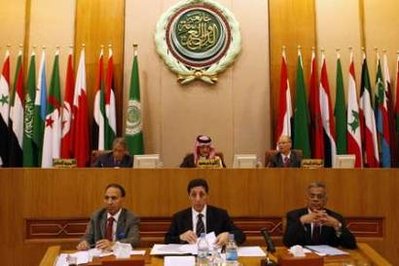
"We call on our Palestinian brothers to hold an immediate reconciliation meeting," Mussa told foreign ministers from the 22-member pan-Arab bloc seeking a response to Israel's five-day bombardment of the Hamas-controlled Gaza Strip.
The Israeli offensive has killed at least 390 people, including 42 children, and wounded more than 1,900 others since Saturday. Gaza-based militants have continued to fire their rockets, killing four Israelis.
Saudi Foreign Minister Prince Saud al-Faisal said Arab nations could not "extend their hand" to the Palestinians as long as they remained divided between Hamas in Gaza and president Mahmud Abbas's Fatah in the occupied West Bank.
"It's time for Palestinian factions to hold a decisive meeting that will lead to (forming) a government of national unity," Faisal said.
Hamas, which Israel says it is targeting for firing rockets at the Jewish state, has controlled the Gaza Strip since violently ejecting Fatah followers in June 2007.
The Islamists won Palestinian elections in 2006 but have since been boycotted by much of the West for refusing to recognise Israel.
Hamas pulled out of Egyptian-sponsored Palestinian reconciliation talks in November that were aimed at forming a non-factional Palestinian cabinet that would be acceptable to the international community.
Israel's pounding of Gaza began following the expiration on December 19 of a six-month truce with Hamas, also mediated by Egypt, and a renewal of Gaza-based rocket fire.
The League talks were taking place as Israel said it was mulling proposals for a truce in Gaza but ruled out a French-proposed temporary halt.
Palestinian ambassador to Cairo Nabil Amr said the League talks would seek to put a resolution before the United Nations Security Council condemning the violence and calling for an end to the bloodshed.
Abbas spokesman Nabil Abu Rudeina said the Palestinian leader was also in contact with members of the Security Council "in a bid to obtain a resolution ... as soon as possible."
While Arab public opinion is firmly against Israel's strikes, with tens of thousands taking to the streets to protest, Arab leaders have so far failed to take any decisions on the crisis.
"Arab nations could do a lot against Israel, but as they are divided, unfortunately they won't do anything," Mustapha Kamel al-Sayed, political science professor at Cairo University, told AFP.
Reflecting popular displeasure with the lack of Arab action, several protesters were arrested in front of the Arab League headquarters in downtown Cairo on Wednesday.
A Gulf Cooperation Council summit involving Bahrain, Kuwait, Oman, Qatar, Saudi Arabia and the United Arab Emirates held in Muscat on Tuesday deferred any decision on Gaza to the Cairo meeting.
Gulf regimes and Egypt have already stressed that the Palestinians should first resolve their own internal divisions.
Wednesday's League meeting will also discuss a Qatari proposal to hold an emergency Arab summit in Doha on how to deal with the Gaza crisis.
League official Hisham Yussef said that 10 Arab countries had officially accepted the idea of an extraordinary summit, with 14 required for a summit to be convened.
However, Egypt, which has been criticised by the likes of Lebanese Shiite movement Hezbollah for alleged complicity in the Gaza strikes and for not completely opening its Rafah crossing with Gaza, has said a summit is premature.
The Arab League, often a showcase more for divisions than displays of unity, will examine a report on the situation in the Gaza Strip before proposing an action plan, Arab diplomats said.
http://www.google.com/hostednews/afp/article/ALeqM5jbhKG1avIMuzkYafnrq6s2QDh4bA
The Israeli offensive has killed at least 390 people, including 42 children, and wounded more than 1,900 others since Saturday. Gaza-based militants have continued to fire their rockets, killing four Israelis.
Saudi Foreign Minister Prince Saud al-Faisal said Arab nations could not "extend their hand" to the Palestinians as long as they remained divided between Hamas in Gaza and president Mahmud Abbas's Fatah in the occupied West Bank.
"It's time for Palestinian factions to hold a decisive meeting that will lead to (forming) a government of national unity," Faisal said.
Hamas, which Israel says it is targeting for firing rockets at the Jewish state, has controlled the Gaza Strip since violently ejecting Fatah followers in June 2007.
The Islamists won Palestinian elections in 2006 but have since been boycotted by much of the West for refusing to recognise Israel.
Hamas pulled out of Egyptian-sponsored Palestinian reconciliation talks in November that were aimed at forming a non-factional Palestinian cabinet that would be acceptable to the international community.
Israel's pounding of Gaza began following the expiration on December 19 of a six-month truce with Hamas, also mediated by Egypt, and a renewal of Gaza-based rocket fire.
The League talks were taking place as Israel said it was mulling proposals for a truce in Gaza but ruled out a French-proposed temporary halt.
Palestinian ambassador to Cairo Nabil Amr said the League talks would seek to put a resolution before the United Nations Security Council condemning the violence and calling for an end to the bloodshed.
Abbas spokesman Nabil Abu Rudeina said the Palestinian leader was also in contact with members of the Security Council "in a bid to obtain a resolution ... as soon as possible."
While Arab public opinion is firmly against Israel's strikes, with tens of thousands taking to the streets to protest, Arab leaders have so far failed to take any decisions on the crisis.
"Arab nations could do a lot against Israel, but as they are divided, unfortunately they won't do anything," Mustapha Kamel al-Sayed, political science professor at Cairo University, told AFP.
Reflecting popular displeasure with the lack of Arab action, several protesters were arrested in front of the Arab League headquarters in downtown Cairo on Wednesday.
A Gulf Cooperation Council summit involving Bahrain, Kuwait, Oman, Qatar, Saudi Arabia and the United Arab Emirates held in Muscat on Tuesday deferred any decision on Gaza to the Cairo meeting.
Gulf regimes and Egypt have already stressed that the Palestinians should first resolve their own internal divisions.
Wednesday's League meeting will also discuss a Qatari proposal to hold an emergency Arab summit in Doha on how to deal with the Gaza crisis.
League official Hisham Yussef said that 10 Arab countries had officially accepted the idea of an extraordinary summit, with 14 required for a summit to be convened.
However, Egypt, which has been criticised by the likes of Lebanese Shiite movement Hezbollah for alleged complicity in the Gaza strikes and for not completely opening its Rafah crossing with Gaza, has said a summit is premature.
The Arab League, often a showcase more for divisions than displays of unity, will examine a report on the situation in the Gaza Strip before proposing an action plan, Arab diplomats said.
http://www.google.com/hostednews/afp/article/ALeqM5jbhKG1avIMuzkYafnrq6s2QDh4bA
We are 100% volunteer and depend on your participation to sustain our efforts!
Donate

$110.00 donated
in the past month
Get Involved
If you'd like to help with maintaining or developing the website, contact us.
Publish
Publish your stories and upcoming events on Indybay.
Topics
More
Search Indybay's Archives
Advanced Search
►
▼
IMC Network
(AP Photo/Amr Nabil)
----------------------------------------------------
Foreign Minister, Amr Moussa discuss developments in Palestinian territories
Dec 31, 2008 - 03:24 -
WAM Cairo, Dec. 31, 2008 (WAM) -- Foreign Minister, H.H. Sheikh Abdullah bin Zayed Al Nahyan, met here Tuesday evening with Arab League Secretary General, Amr Moussa. They discussed the situation in the Palestinian occupied territories, in the light of the continuous Israeli aggression, for the fifth consecutive day, against Palestinians in the Gaza Strip.
According to official source, Sheikh Abdullah also discussed with Moussa issues on the agenda of the emergency Arab foreign ministers meeting, which will start later Wednesday at the Arab League Headquarters here in Cairo to discuss ways to stop the Israeli military aggression against Palestinians in the Gaza Strip and to provide the necessary support for the Palestinian people.
The source added that Sheikh Abdullah and the Moussa stress the need to stop the Israeli aggression to spare the blood of Palestinians, return to the state of truce, reopen the border crossings and prepare the ground for dialogue among all Palestinian factions as quickly as possible.
UAE Ambassador to Egypt and Permanent Ambassador at the Arab League, Ahmed Ali Al-Mail, was present at the meeting.
According to Hisham Yusuf, director of the office of Arab League Secretary General, the ministerial meeting will discuss, among other issues, the Israeli aggression against Palestinians in Gaza, providing the necessary assistance to the Palestinian people and proposal by Qatar and Syria for the holding of emergency Arab summit to arrest the situation. He said ten Arab countries have informed the Arab League about their approval for the holding of the summit to discuss the Israeli massacre in Gaza.
WAM/SA
(AP Photo/Amr Nabil)
------------------------------------------------
Arab League urges united Arab stance on Gaza
Wed, 31 Dec 2008 16:13:06 GMT
Saudi Arabian Foreign Minister Saud Al-Faisal (R) and Arab League Secretary General Amr Moussa
Arab League Secretary General Amr Moussa has called on Arab states to take a stance on the deadly Israeli strikes on the Gaza Strip.
Addressing a summit of 22 Arab foreign ministers on Wednesday, Mussa said that Arabs should adopt a united stance against the attacks while calling on Palestinian factions to reconcile in a time of crisis.
“The weakness of the Arab position, and the divisions within the Palestinian ranks have all led to this disregard of the Arabs (internationally)," he said.
"We call on our Palestinian brothers to hold an immediate reconciliation meeting," the secretary general told the pan-Arab bloc.
The Israeli offensive on the Gaza Strip has killed at least 390 people, including 42 children, and wounded more than 1,900 others since Saturday.
Arab foreign ministers emergency meeting in Cairo, Egypt, Wednesday, Dec. 31
Failing to condemn the Israeli onslaught, Saudi Foreign Minister Prince Saud al-Faisal slammed the ongoing division between Hamas in Gaza and Mohmud Abbas's Fatah in the occupied West Bank, saying such a division has opened the door to Israel's attack.
“It's time for Palestinian factions to hold a decisive meeting that will lead to (forming) a government of national unity,” Faisal said.
For his part, Egyptian Foreign Minister Ahmed Aboul Gheit said his country is proposing a package to end the fighting. The proposal includes an immediate cease-fire and the reopening of the crossings to the besieged costal sliver.
The package also includes the deployment of European and Arab observers to oversee that the truce is being fully implemented by both Hamas and Israel.
MP/MMN
http://www.presstv.ir/detail.aspx?id=80044§ionid=351020502